

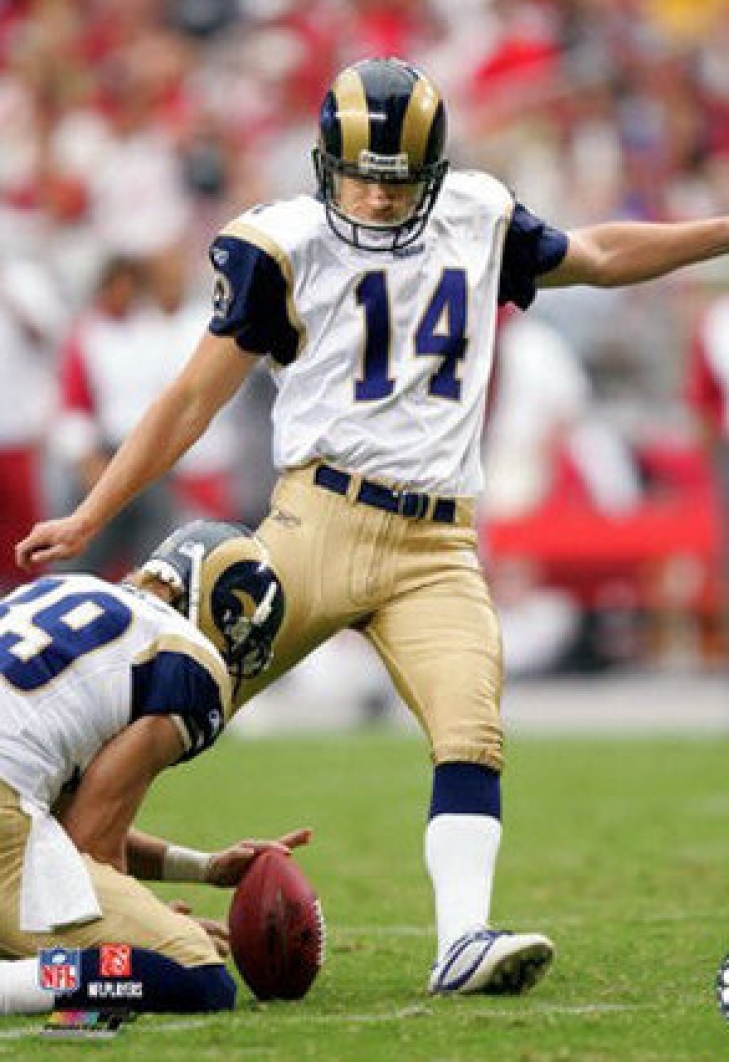
39. Jeff Wilkins
26. Steven Jackson
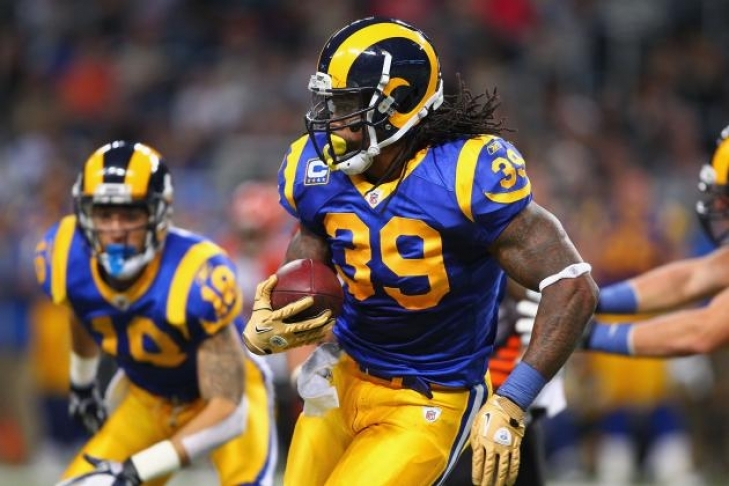
Steven Jackson had a good rookie season, but he was brought in to replace an aging Marshall Faulk, and he would take over as the starting Running Back in 2005. From there he would become one of the most consistent producers in Rushing Yards where from 2005 to 2012 he never had led than 1,000 Yards on the ground and two of his years would see him hit the 1,400 mark, both of those years was good enough for the top five. Jackson's best season by far was 2006 where he had not only 1,528 Rushing Yards (his best) but also had a 90 Reception year, which was by far and away from the best number he had in the air and combined he was the league leader in Yards From Scrimmage and All-Purpose Yards. He would be rewarded with a Second Team All-Pro and Pro Bowl Selection.
45. Marc Bulger
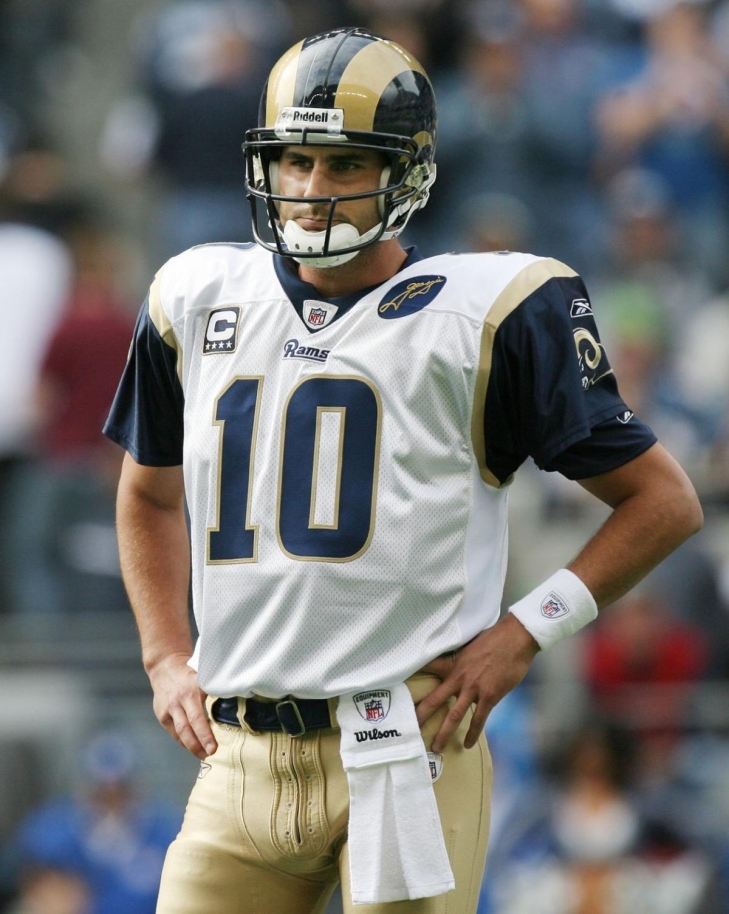
Marc Bulger had the dubious task of replacing Kurt Warner as the starting Quarterback for the St. Louis Rams, but it took some time for that to happen, which considering how long it took Warner to land the job was appropriate.
44. Adam Timmerman
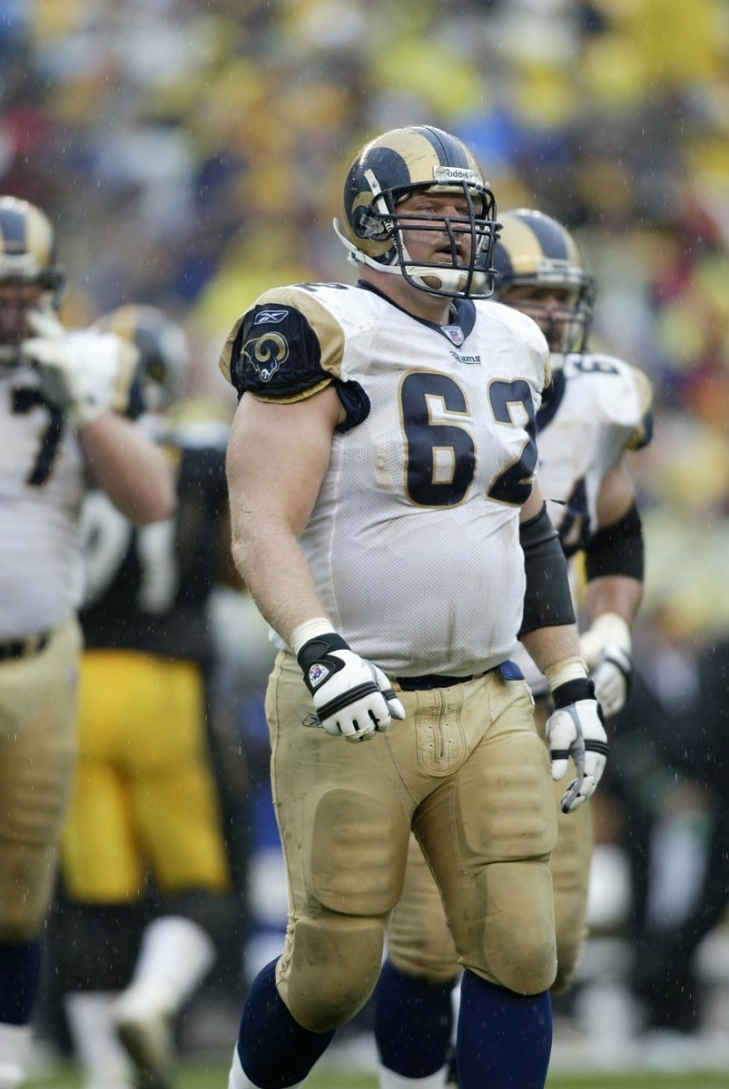
A Super Bowl Champion with the Green Bay Packers, Adam Timmerman signed with the St. Louis Rams where he helped protect the Offensive Line for the most exciting offenses of the late 1990s. Timmerman was a Pro Bowl Selection in 2001, and he would start 125 of his 126 games as a St. Louis Ram.
1. Aaron Donald
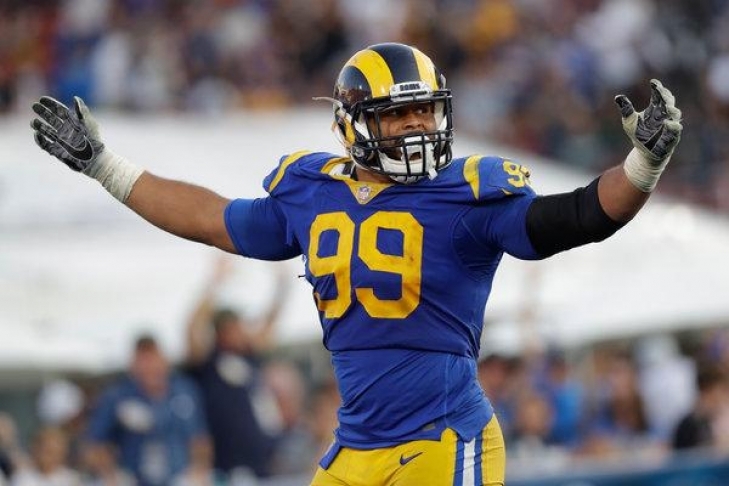
Selected 13th overall out of the University of Pittsburgh in the 2014 NFL Draft, Aaron Donald entered the professional ranks with legendary collegiate credentials. In his final season with the Panthers, Donald put together one of the most dominant individual campaigns in NCAA history, sweeping the ACC Defensive Player of the Year, Lombardi Award, Bronko Nagurski Trophy, Chuck Bednarik Award, and Outland Trophy. Despite initial concerns regarding his 6-foot-1, 280-pound frame, Donald shattered all expectations from the moment he stepped onto an NFL field, capturing the 2014 Defensive Rookie of the Year Award and earning his first of ten consecutive Pro Bowl selections.
What made Donald an absolute force of nature was a rare combination of explosive get-off speed, terrifying leverage, and relentless technique. Operating primarily from the interior defensive tackle position—a spot traditionally tasked with absorbing double-teams—Donald routinely disarmed offensive linemen with a lightning-fast first step and hand-combat mechanics that blew up plays before they could develop. His ability to generate edge-rusher-level pressure from the 3-technique alignment disrupted offensive schemes like no defensive tackle before him, forcing opposing coordinators to completely rewrite their game plans.
Following his stellar rookie year, Donald established himself as the indisputable premier defensive tackle in football, stringing together four consecutive First-Team AP All-Pro selections from 2015 to 2018. His steady trajectory reached new heights in 2017 when he captured his first AP NFL Defensive Player of the Year Award despite playing in just 14 games. Rather than plateauing after reaching the peak of his profession, Donald responded by putting together a 2018 campaign that stands among the greatest single seasons ever recorded by an interior lineman.
During that historic 2018 season, Donald led the NFL with a mind-boggling 20.5 sacks and 25 tackles for loss, setting the single-season sack record for a defensive tackle. Behind his game-breaking dominance, the Rams marched all the way to Super Bowl LIII. Joining Lawrence Taylor and J.J. Watt as one of only three players in league history to win back-to-back Defensive Player of the Year honors, Donald's individual brilliance carried Los Angeles back into national prominence. He followed that up in 2019 by capturing his fifth straight First-Team All-Pro nod while once again leading the league with 20 tackles for loss.
As the sport entered a new decade, Donald's dominance remained unchallenged. Named a unanimous choice for the NFL 2010s All-Decade Team, he kicked off the 2020s by capturing his third AP Defensive Player of the Year Award, tying Taylor and Watt for the most in NFL history, while topping the league with a 20 Approximate Value. In 2021, the Rams' aggressive, championship-caliber roster put it all together. Donald capped off his seventh consecutive First-Team All-Pro season by sealing Super Bowl LVI, pressuring Cincinnati's Joe Burrow on fourth down to secure the franchise's second Lombardi Trophy.
Following two more elite seasons that brought his First-Team All-Pro total to eight and extended his streak of Pro Bowl selections to a perfect ten-for-ten, Donald initially announced his retirement from professional football in March 2024. Leaving the game at age 32 with 111.0 career sacks, 176 tackles for loss, and 24 forced fumbles, he solidified his status as a first-ballot Hall of Famer and a consensus pick for the Mount Rushmore of defensive linemen.
However, the story of the legendary wrecking ball received an unexpected, blockbuster addition. In late August 2026, after two full seasons away from the gridiron, Donald sent shockwaves across the sporting landscape by officially coming out of retirement to re-sign with the Los Angeles Rams on a one-year deal. Drawn back by the competitive fire and the opportunity to pair with newly acquired pass-rusher Myles Garrett, Donald's return instantly elevated the Rams into heavy Super Bowl contention once again.
While head coach Sean McVay opted to ramp Donald up slowly—holding him out of the team's Week 1 clash in Australia to ensure peak physical readiness—his presence on the 2026 roster reaffirms his immortal bond with the organization. His decision to put the horns back on serves as the ultimate bonus chapter for a star who spent ten seasons dominating the interior line of scrimmage in Southern California.
Whether viewed through his initial ten-year sprint or his 2026 comeback, Donald's candidacy as the greatest player in Rams history is well earned. His uncanny ability to destroy passing pockets from the inside while remaining a dominant run defender forced NFL offenses to rethink how to protect the quarterback. Facing constant double- and triple-teams for a decade, he simply converted that extra attention into highlight-reel disruption.
Going into this season, Donald compiled 543 total tackles (340 solo, 203 assists), 111.0 sacks, 176 tackles for loss, 256 quarterback hits, 24 forced fumbles, and seven fumble recoveries. Let’s see what he adds in 2026!
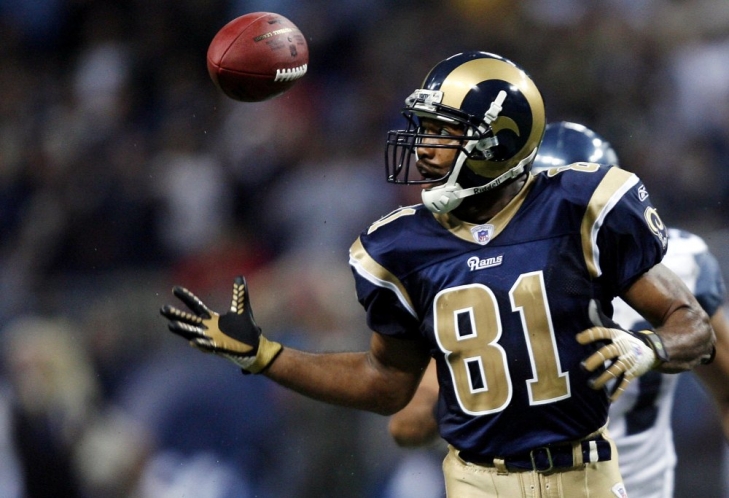
13. Torry Holt
14. Kurt Warner
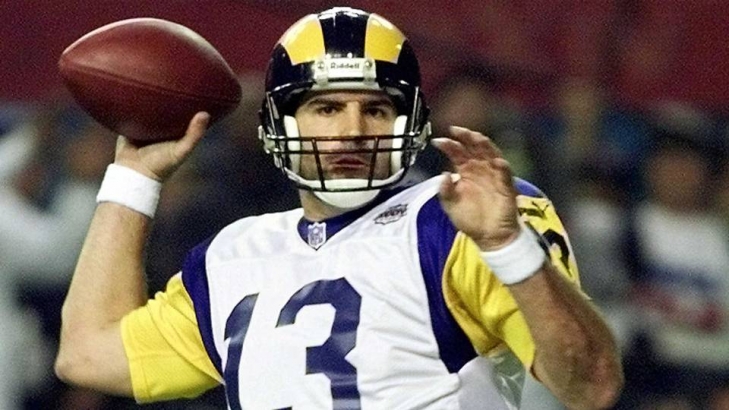
Like so many on the all-time Rams list, Kurt Warner was a hard one to place mainly due to the long existence of the franchise and the number of great players that they had. So when you have a player regardless of the caliber who was only there six seasons but when three of those campaigns were as spectacular as what Warner had from 1999 to 2001 he has to be on this list at a high spot. Though we understand why you might think this is not high enough, or maybe if you believe this is even too high!
10. Isaac Bruce
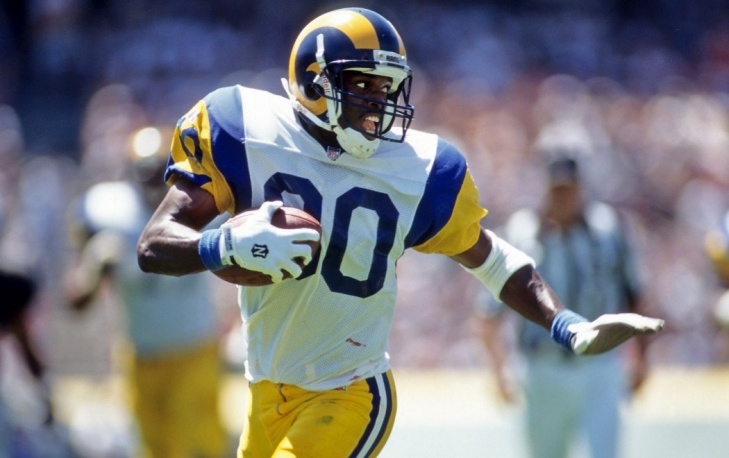
Isaac Bruce starred as the top Wide Receiver for the "Greatest Show on Turf," which is no small statement. A Second Round pick from the University of Memphis, Bruce exploded with a 1,781 Yard season with 13 Touchdowns. Amazingly, he was not a Pro Bowl selection that year but would be the next season when his 1,338 Yards led the NFL. In 1999, Bruce would catch the game-winning Touchdown in Super Bowl XXXIV, and his play was an integral part of the Rams return to Super Bowl the next season, although they would lose to the New England Patriots.
7. Jackie Slater
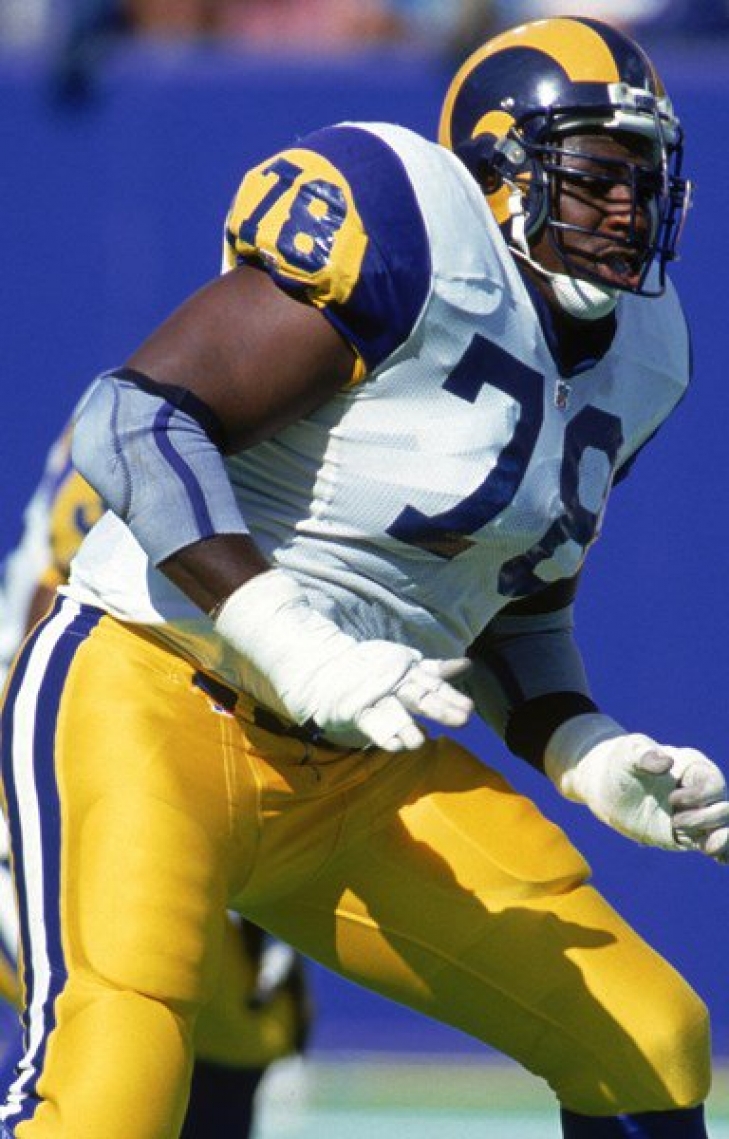
Selected in the third round (86th overall) of the 1976 NFL Draft out of Jackson State—where he played alongside Walter Payton—Jackie Slater arrived in Los Angeles as a backup before becoming the standard for offensive-line longevity. Spending his first three seasons primarily on special teams and as a reserve, Slater absorbed the professional game until taking over as the full-time starting right tackle in 1979. That year, he helped anchor an offensive line that led the Rams to an NFC Championship and a berth in Super Bowl XIV against the Pittsburgh Steelers.
Once entrenched at right tackle, Slater launched a reign of relentless durability that defined two decades in Southern California. From 1979 onward, he was a steady fixture on the edge, starting 211 regular-season games for the franchise. Opposing edge rushers struggled to solve his technique, as his combination of lateral footwork and brute strength neutralized the league's most fearsome pass rushers throughout the 1980s.
Slater earned seven Pro Bowl selections (1983, 1985, 1986, 1987, 1988, 1989, and 1990) and four Second-Team AP All-Pro honors. Whether blocking for Eric Dickerson during his record-breaking 2,105-yard rushing campaign in 1984 or protecting signal-callers like Vince Ferragamo and Jim Everett, Slater consistently anchored one of the league's most dominant front fives.
His 20-season career with a single franchise set an NFL record for offensive linemen, spanning 19 years in Los Angeles (1976–1994) and concluding with a single final game after the team relocated to St. Louis in 1995. By the time he retired, Slater had blocked for 24 different quarterbacks and 37 different running backs, leaving behind an unmatched standard of consistency and professional dedication.
In 1996, the franchise permanently honored his legendary service by retiring his #78 jersey. His transcendent career achieved ultimate gridiron immortality in 2001, when he was enshrined in the Pro Football Hall of Fame in Canton, Ohio.
6. Marshall Faulk
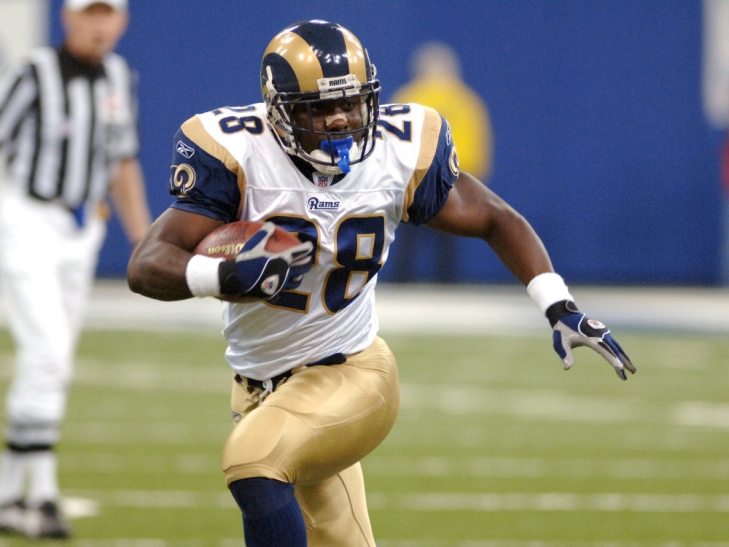
Traded from the Indianapolis Colts in the spring of 1999, Marshall Faulk arrived in St. Louis and immediately revolutionized the running back position. Already an elite dual-threat weapon during his five seasons with the Colts, Faulk elevated his skill set to unheard-of heights under head coach Dick Vermeil and offensive coordinator Mike Martz. His arrival helped transform a struggling franchise into "The Greatest Show on Turf"—the most explosive offensive machine in NFL history.
In his legendary 1999 debut season with the Rams, Faulk put together one of the most remarkable individual campaigns in gridiron history. Playing as both a traditional tailback and an unmatched slot receiver, he rushed for 1,381 yards and caught 87 passes for 1,048 receiving yards. By doing so, he became only the second player in NFL history (joining Roger Craig) to eclipse 1,000 rushing and 1,000 receiving yards in the same season, setting a then-NFL record with 2,429 yards from scrimmage.
Faulk’s versatility and processing speed made him the undisputed engine of the Rams' high-flying attack. Defenses couldn't match up against him, as he could slice through defensive lines between the tackles or split out wide to obliterate linebackers in single coverage. His relentless execution in both phases of the offense gave quarterback Kurt Warner the ultimate escape hatch, propelling St. Louis to a 13–3 record and the franchise's first Super Bowl title in Super Bowl XXXIV.
The dynamic back somehow raised the bar even higher over the next two seasons, producing an unprecedented three-year run of individual brilliance. Faulk captured the AP NFL Most Valuable Player award in 2000 after scoring a staggering 26 touchdowns in just 14 games, followed by winning three consecutive AP NFL Offensive Player of the Year awards from 1999 through 2001. During this historic peak, he earned three consecutive First-Team AP All-Pro selections and guided the Rams back to Super Bowl XXXVI.
Beyond his eye-popping statistical output, Faulk served as an extension of the coaching staff on the field. His elite football IQ allowed him to call out defensive coverages, adjust pass protection schemes at the line of scrimmage, and exploit subtle mechanical flaws in opposing front sevens. His rare vision, combined with pristine route-running precision out of the backfield, redefined expectations for modern all-purpose running backs for generations.
Faulk retired after the 2006 season with over 19,000 all-purpose yards and 136 touchdowns. The Rams retired his No. 28 jersey in 2007. In 2011, he entered the Pro Football Hall of Fame in his first year of eligibility. With the Rams, he compiled 6,959 rushing yards with 58 rushing touchdowns, 470 receptions for 4,071 receiving yards with 27 receiving touchdowns, and 11,030 yards from scrimmage.
5. Orlando Pace
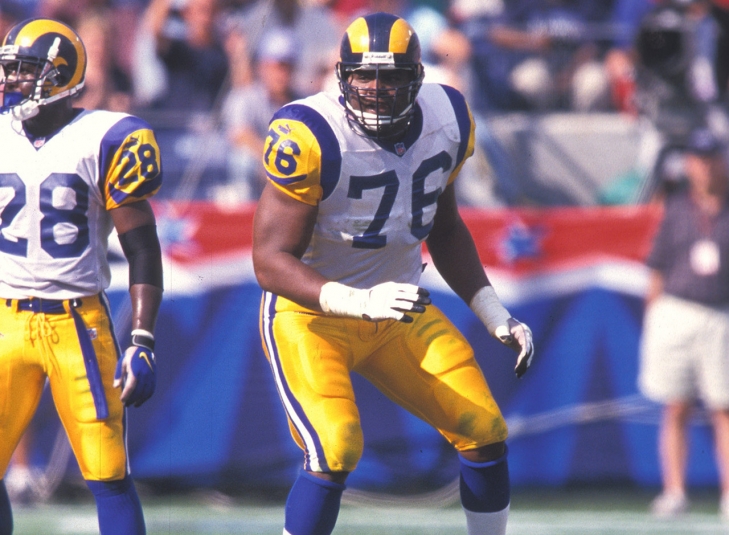
When the St. Louis Rams selected Ohio State offensive tackle Orlando Pace with the first overall pick in the 1997 NFL Draft, they weren't just picking a blue-chip prospect—they were laying the bedrock foundation for one of the most explosive offenses in pro football history. A two-time Outland Trophy winner and Lombardi Award recipient with the Buckeyes, Pace famously popularized the term "pancake block," flattening collegiate defenders with a combination of raw power, pristine footwork, and effortless lateral agility.
Stepping directly into the starting lineup at left tackle, Pace wasted no time proving that his rare athletic traits translated seamlessly to the professional level. While every great team boasts headline skill players, "The Greatest Show on Turf" required an unyielding anchor on the blind side to operate its intricate, deep-developing passing concepts. Pace provided exactly that, giving head coach Dick Vermeil and offensive coordinator Mike Martz the luxury of keeping extra receivers in the route progression without needing tight end or running back chips on his edge.
The breakout moment for both Pace and the franchise arrived during the magical 1999 season. Protecting unexpected breakout quarterback Kurt Warner, Pace put together a masterclass campaign, securing his first career Pro Bowl selection and First-Team AP All-Pro honors. His impenetrable pass protection allowed Warner to toss 41 touchdown passes and throw for 4,353 yards, culminating in a thrilling 23–16 victory over the Tennessee Titans in Super Bowl XXXIV to bring the Lombardi Trophy to St. Louis.
Pace elevated his game even further in 2000, delivering what was arguably the finest single-season performance by an offensive lineman of his era. Anchoring a unit that produced a staggering 7,075 total yards of offense, Pace posted a career-high 22 Approximate Value score from Pro Football Reference. His dominance continued into 2001, earning another First-Team AP All-Pro nod while guiding the Rams back to Super Bowl XXXVI and cementing his reputation as the NFL’s premier left tackle.
For seven consecutive seasons spanning from 1999 through 2005, Pace was an automatic Pro Bowl selection and the undisputed gold standard at his position. While teammates like Kurt Warner, Marshall Faulk, Isaac Bruce, and Torry Holt captured the national spotlight and posted dominant stat lines, Pace’s consistent, selfless effort in the trenches created the time and space for those weapons to flourish week after week.
Even as the Rams transitioned away from their championship core later in the decade, Pace remained the steadying heartbeat of the roster. Over his 12 seasons in St. Louis, he anchored lines for multiple coaching staffs, neutralizing the league's top pass rushers with startling consistency. Across 158 games in blue and gold, he surrendered remarkably few sacks, serving as a trusted leader and veteran mentor in the locker room.
After a brief final season with the Chicago Bears in 2009, Pace retired as one of football’s most decorated linemen. In 2016, he was inducted into the Pro Football Hall of Fame in Canton as a first-ballot honoree, capping a dominant career protecting the game's most explosive offense.
209. Steven Jackson
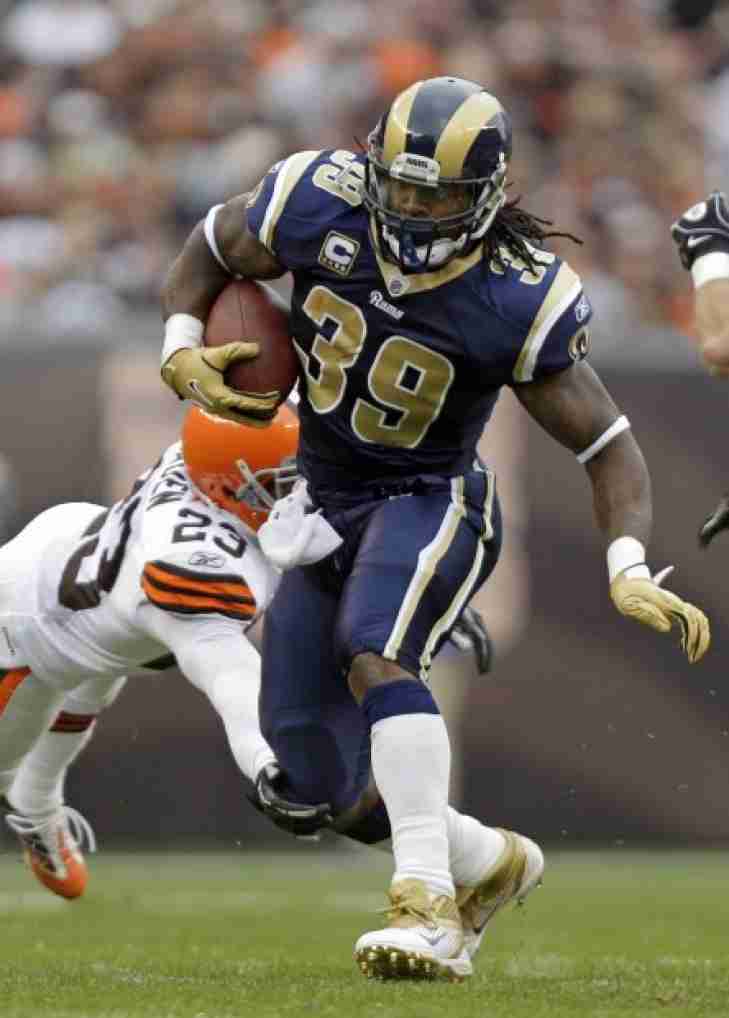
Steven Jackson is the all-time leading rusher for the Rams, passing no less than Eric Dickerson to do it. A model of consistency, Jackson recorded eight consecutive seasons in which he rushed for over 1,000 Yards, four of which saw him finish in the top ten overall, including a second-place finish in 2009.
2006 was actually a more productive season where the Running Back would finish with 1,528 Rushing Yards and another 806 in the air to give him 2,334 Yards from Scrimmage, the most in the National Football League that season.
With just over 15,000 Yards from Scrimmage over his career, Jackson might be worth a look as a preliminary nominee, but to make the Hall would be difficult despite how many Yards he accumulated.
Kurt Warner 2017 HOF Debate
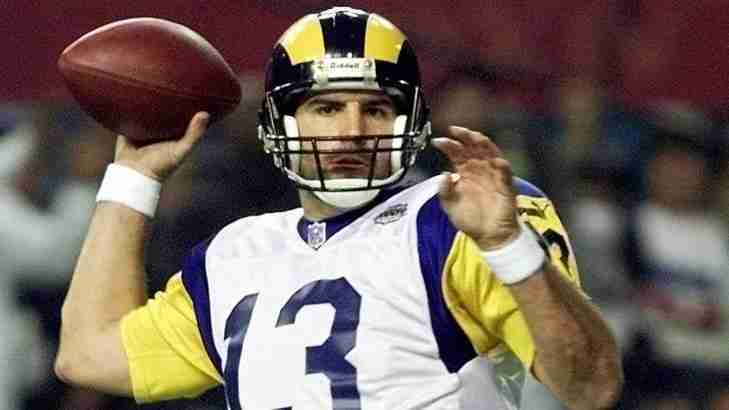
Committee Chairman: Spheniscus, this is the third time that Kurt Warner has made the Finalists but this time he is the best (and only Quarterback) in this group. His main target, Isaac Bruce is also here and as poetic as it is for them to both go in together, it won’t happen. There is an unspoken hierarchy here, and Warner has it over Bruce. My initial thought is one Ram going in and 18 camera shots at Brenda Warner during the induction ceremony.
Isaac Bruce 2017 HOF Debate
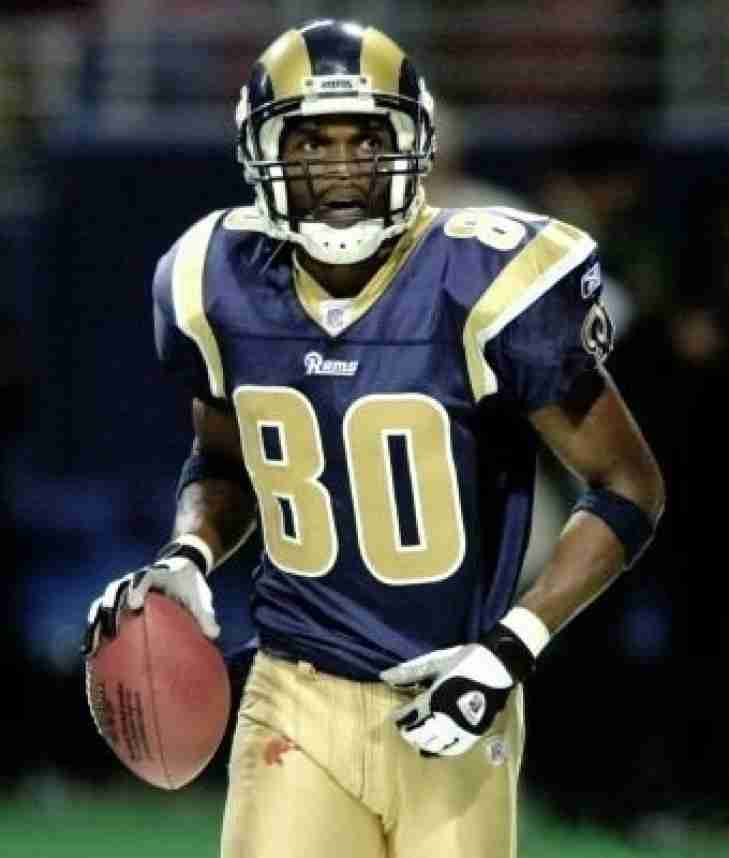
Committee Chairman: Spheniscus, we are turning our attention for the first of two times to the St. Louis Rams, specifically that “Greatest Show on Turf” team that was one of the most exciting squads to watch that I can remember. Now, I am going to try and talk about Wide Receiver, Isaac Bruce without moaning about how the great sports city of St. Louis got screwed for a city that just got another team that they won’t care about. Okay, I am going to try not to mention that again.
Mike Martz upset that T.O. is a HOF Finalist
Former St. Louis Rams Head Coach, Mike Martz, spoke with the St. Louis Post-Dispatch and was very candid about he felt about Owens being a Finalist, while his former receivers, Isaac Bruce and Torry Holt were not.
"You can't print how I felt when T.O. leapfrogged those two. That's just plain out-and-out ridiculous. If they big-timed it and did all that dumb stuff, they'd get in probably earlier. I think they'll eventually get in. I don't think that's an issue, but it's tragic that people think of them like that. If Marvin Harrison gets in, how could they not get in?
Look at their production. More importantly, look at their yards per catch. And then look at it consistently over a long period of time -- it'll compare to anybody. In some cases, nobody comes close. I mean nobody's even come close to what Torry did."
Along with Owens, Marvin Harrison is one of two Wide Receivers who made the Finalists for the Hall of Fame. Bruce and Holt did not make that cut this year.
For reference here are the key statistics for all four players:
| Receptions |
Receiving Yards |
Touchdowns |
Yards/Rec |
All-Purpose Yards |
|
| Owens |
1,087 |
15,934 |
156 |
14.8 |
16,276 |
| Harrison |
1,102 |
14,580 |
128 |
13.2 |
14,805 |
| Bruce |
1,024 |
15,208 |
91 |
14.9 |
15,347 |
| Holt |
920 |
13,382 |
74 |
14.5 |
13,456 |
While T.O. does seem to have the greater overall statistics, all four are Hall of Fame caliber and it is worth noting however that Owens is the only one without a Super Bowl Ring.
Martz might be upset over the perceived snub of his Wide Receivers, he does have two players, Quarterback, Kurt Warner and Offensive Lineman, Orlando Pace have made the final round.
On Saturday, the next class of the Pro Football Hall of Fame will be announced, and you can believe we will be watching intensely!
59. London Fletcher
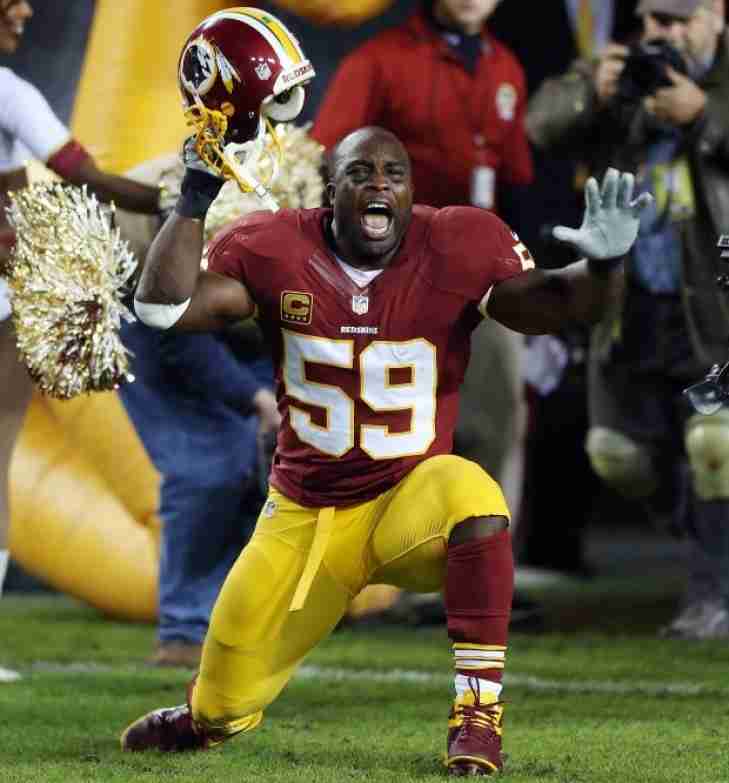
London Fletcher was a tackling machine who had accumulated over 2,000 Tackles in the National Football League. This is where Fletcher’s best chance for the Hall lies, as he was only a four-time Pro Bowl selection, a number that, right or wrong, does matter. Fletcher, however, does hold a resume with all those tackles, longevity, a Super Bowl Ring with the Rams, and a reputation as a locker room leader and off-field good guy.
For our money, nobody more intriguing was first eligible in 2019, and his overall resume is one of the most interesting on this list. Whether or not he ever receives any PFHOF consideration, the fact that he accomplished so much as an undrafted player from John Carroll will forever be impressive.
8. Torry Holt
Torry Holt's ranking was a challenging task, and it's understandable that opinions may vary on where he should be placed. However, we value your input and would like to hear your thoughts. While Holt's stats may not be better than those of his peers in the Wide Receiver position, he was the most consistent performer in the NFL during the 2000s. Holt played for the Rams for all but one season, catching 920 passes for 13,382 yards. He led the NFL in Receiving Yards twice and was a favorite target of Kurt Warner, the star Quarterback.
He was selected to the Pro Bowl seven times and ranked in the top ten in receiving yards eight times over his eleven-year career. Additionally, Holt was the youngest receiver to reach 10,000 and 11,000 yards, and if he had played for another year or two, his career stats would have been impossible to ignore. We are eager to see what the Football Hall of Fame will do with Torry Holt, especially now that Isaac Bruce has been inducted. It's likely that Holt will soon follow suit, though he has been waiting a while. Holt might be used to that, as he has lived in the shadow of others for years.
