
255. Ted Washington
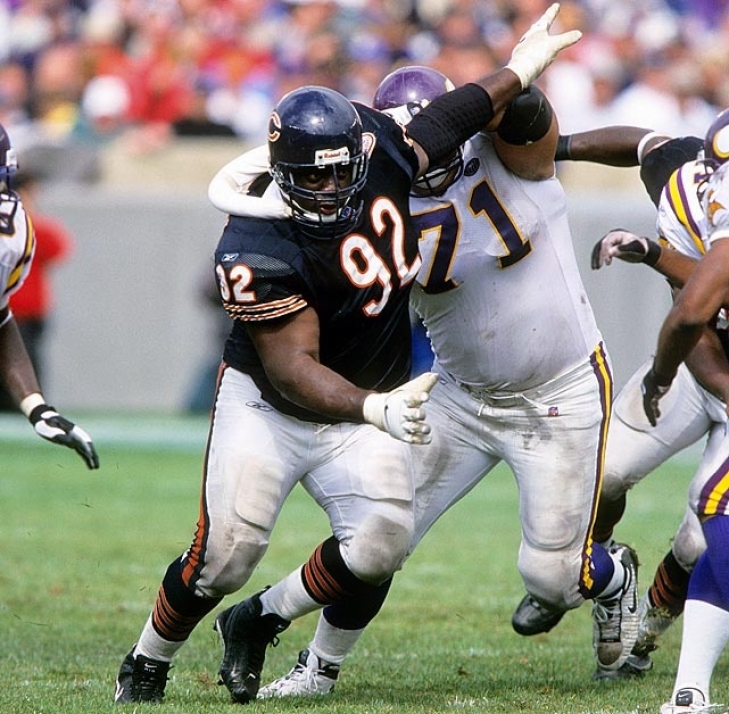
The term “Mountain of a Man” is often misused, but for the 375-pound Ted Washington, that was accurate.
“Mount Washington” was San Francisco’s late First Round Pick in 1991, and became their starting Nose Tackle in his second season. Traded to the Denver Broncos in 1994, Washington signed with the Buffalo Bills in 1995 where he had the best run of his career. With Buffalo, Washington went to three of his four Pro Bowls and became known as one of the best rush defenders in football. With his immense size, it was an arduous task, and once he got a hand on you, chances were that you were going to hit the dirt.
Washington’s best season was in 2001, his first of two seasons with Chicago where he was a First Team All-Pro and finished in the top ten in Approximate Value. He later was with New England, where he won a Super Bowl (XXXVIII) and closed out his career with two seasons each in Oakland and Cleveland. Considering his immense stature, the durability to last until 38 is a testament to Washington’s physical presence.
222. Charles Tillman
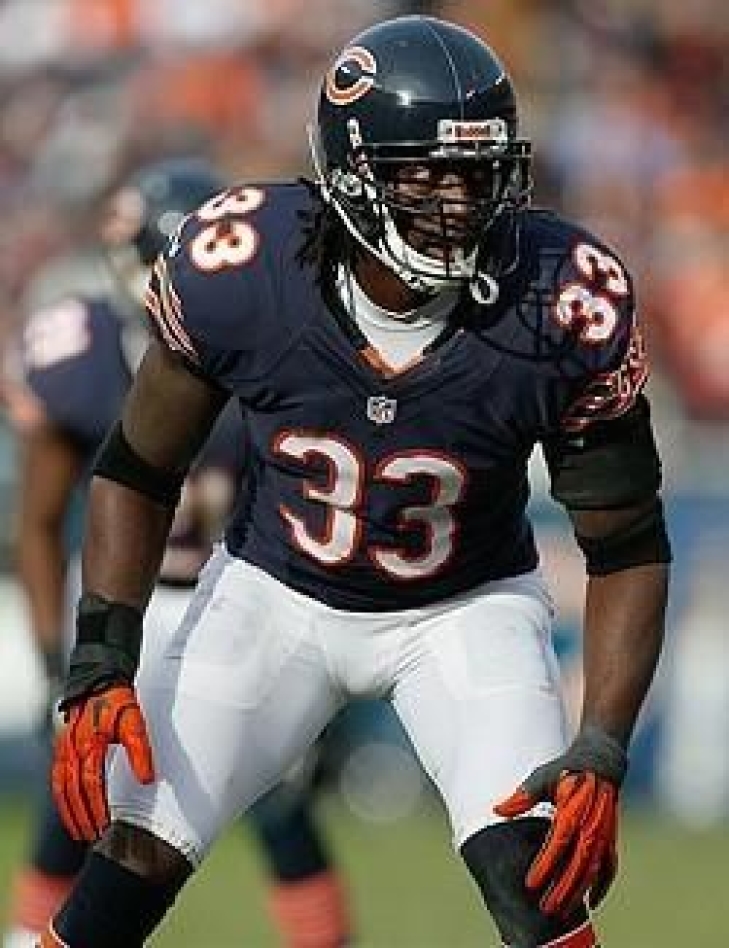
The Peanut Punch.
Every week in the NFL, there is a contest where the announcer references those three words when a defensive player punches the ball out of a carrier’s arm, resulting in a forced fumble. It is part of the football lexicon and is practiced by every defender in football. It all began with Charles “Peanut” Tillman.
From Louisiana-Lafayette, Tillman was Chicago’s Second Round Pick in 2003, and became their starting Left Corner as a rookie. A takeaway machine with his ball-stripping skills, Tillman also was a competent ball hawk who had 38 Interceptions, eight of which were returned for pick-sixes. Tillman was twice named to the Pro Bowl (2011 & 2012), the latter year where he co-led the NFL in Forced Fumbles (10), and Interception Return Touchdowns (3), and was a First Team All-Pro.
Peanut might be unlikely to enter Canton, but his imprint on the National Football League will forever be felt.
Robbie Gould
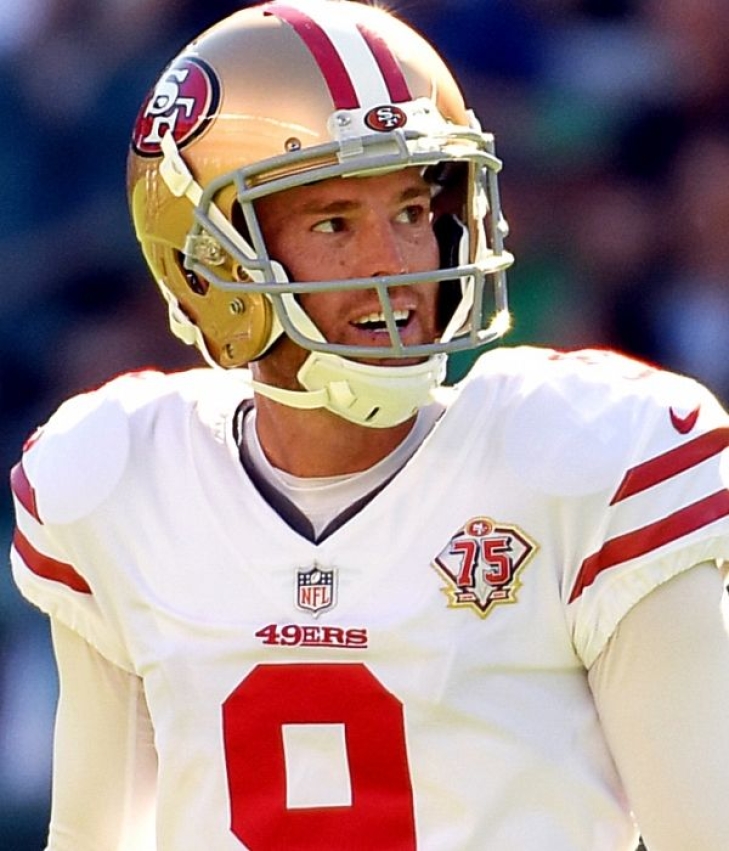
Robbie Gould is one of the most consistent kickers in NFL history. Although he was only a Pro Bowl and All-Pro player once, that doesn’t detract from his impressive career.
Gould was undrafted in 2005 from Penn State, but he signed with the Chicago Bears during the NFL season and won the starting job. He kept this position until he signed with the New York Giants 10 years later. During his time with the Bears, Gould had his Pro Bowl year in 2006, led the NFL in field goals, and was later named one of the 100 Greatest Chicago Bears.
After leaving the Giants, Gould joined San Francisco, where he continued his success as a top kicker. He was first in field goals in 2017 with 39, and in field goal percentage in 2018.
At the time of his retirement, he was eighth all-time in field goals with 447, and tenth in points with 1,961.
Alshon Jeffery
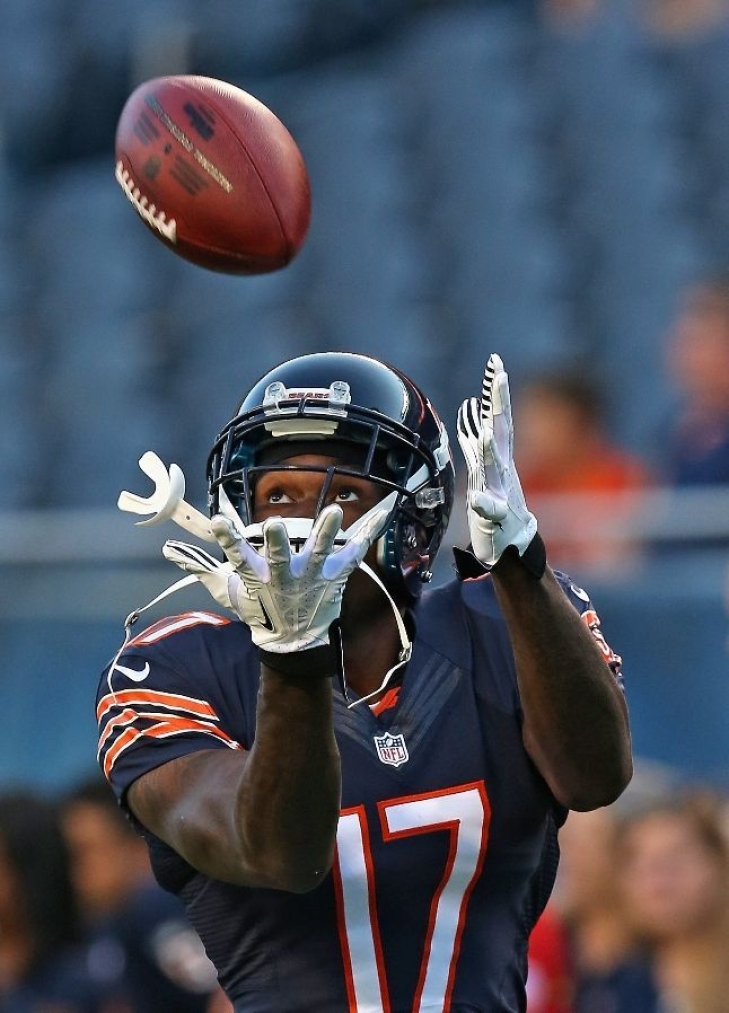
Alshon Jeffery was a standout player at South Carolina, earning an All-SEC selection. The Wide Receiver was selected by the Chicago Bears in the second round of the 2012 draft. In his rookie year, he recorded 367 yards. Jeffery's second year saw him explode into the Pro Bowl with a career-high 1,421 yards and 89 receptions. He followed this up with 1,133 yards and 10 touchdowns in his third year, but was never able to achieve 1,000 yards again. Jeffery played two more years with Chicago, breaking 800 yards in both of those seasons before moving on to the Philadelphia Eagles.
Although he was never able to replicate his best years in Chicago, Jeffery was now on a much better team and still a top option in the best position of his life. In his first year with the Eagles, he helped the team win the Super Bowl and scored Philly’s first touchdown of the game. Over his final three years, Jeffery battled injuries and eventually retired from the game after the 2020 season. However, with 6,786 yards, 46 touchdowns, and a Super Bowl win under his belt, Jeffery had a successful career.
RIP: Dick Butkus
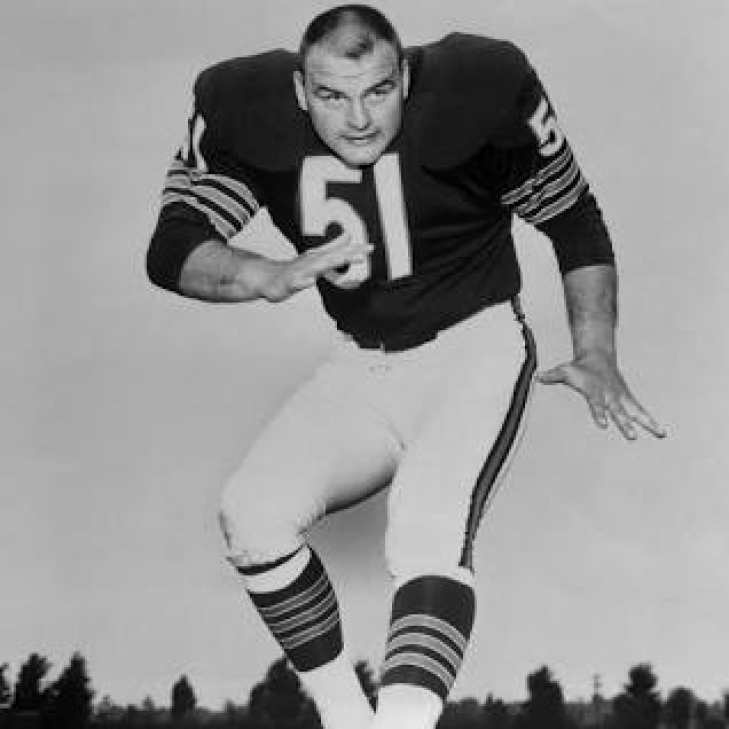
We lost a legend today
Chicago Bears icon, Dick Butkus, passed away today at the age of 80.
A beast at the University of Illinois, Dick Butkus was a two-time All-American who won the Big Ten MVP in 1963. Butkus stayed close to home as a pro, as he was taken with the third overall pick in 1965.
Chicago was not a powerhouse when Butkus played, but he was the reason to pay attention to the team. One of the most punishing tacklers in football history, offensive skill players were quaking with the knowledge that they could be on the end of a Butkus tackle. Butkus would define the middle linebacker position, and his versatility became a standard that only a few have come to match.
Butkus played in the NFL for nine seasons, and was a pro bowler for the first eight and a first team all-pro for five of them. He is also one of a handful of people who won the Defensive Player of the Year twice.
After Butkus retired, he would become a successful actor appearing in many commercials and television shows. He was chosen for the Pro Football Hall of Fame in 1979 and the College Football Hall of Fame in 1983. Butkus was also named to the 1960s and 1970s All-Decade Teams, and NFL 75th and 100th Anniversary Teams.
We here at Notinhalloffame.com would like to extend our condolences to the fans, friends and family of Dick Butkus.
Bright Spots for a Bears Team Building towards Contending
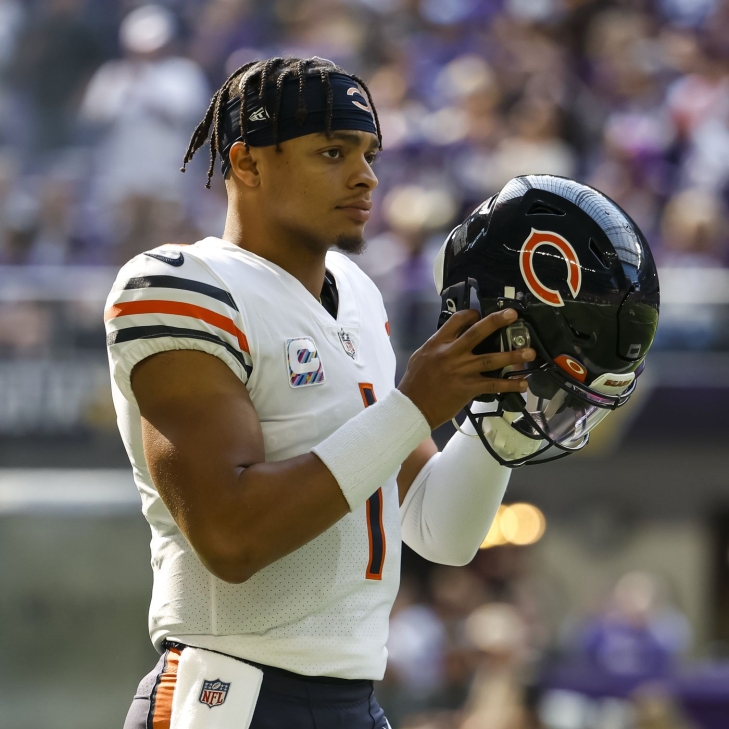
Entering the very late bye of Week 14, the Chicago Bears sported a humbling 3-10 record. The .231 percentage had Chicago ranked as the lowest team in the NFC, on par with the Denver Broncos, and only below the 1-11 Houston Texans. It’s not great company for a team with a good share of high-quality talents.
Regardless, this was never meant to be the season that the Bears surged towards the playoffs, as the CBS Sports preseason predictions suggest. In the NFC North, the Green Bay Packers were meant to be the top contender, but the Minnesota Vikings bulked up and the Detroit Lions are starting to realize the quality of the players at the team’s disposal.
Even if three wins were to be the final count for the Bears this season, it hasn’t been all bad. The 270 points for coming out of the bye was seven better than the Aaron Rodgers-led Packers, which is always nice. With five games lost by seven or fewer points, some by less than a field goal, the Bears certainly showed up more than the record would suggest.
There have been bright spots dotted around the 2022 season for Chicago, even if the season will end with the 17th game. Importantly, there’s good reason to be optimistic next season, especially once a high draft pick is secured.
Injuries and working out the receiver room
While the Chicago Bears have been able to stay mostly healthy overall, little irritating injuries have popped up at inconvenient times. Justin Fields missing one, Khalil Herbert going down just as he looked set to almost take the backfield for his own, and the double knockout of Bears defensive backs Kyler Gordon and Jaquan Brisker for two games all contributed to a somewhat stop-start feeling around the Bears this season.
Overall, though, the good take is that most key players and up-and-coming stars have been able to play the majority of the games. That said, this makes the receiving space that much more baffling. Darnell Mooney and Cole Kmet have become the main targets for Fields, sharing 111 targets over 13 games, but behind them, it’s anyone’s guess with Equanimeous St. Brown, Dante Pettis, and Chase Claypool seemingly the frontrunners of the other six or so candidates, but is largely ineffective.
Ground game gathering speed
If there’s been one outright shining light for the ’22 Bears, it’s been the run game. Perhaps the only frustrating element has been that Herbert hasn’t been allowed to take full command just yet. David Montgomery hit 641 yards and a 4.0 average through 12 starts. Herbert, in one start and ten games, collected 643 yards and a 6.0 average. To Montgomery’s credit, he’s picked up in the passing game, collecting 25 of 30 targets for a 9.8 average.
Of course, the star of the show has been Fields. Yahoo reports that Fields is hitting the highest yards per carry mark in a single season of any player at 125 carries coming into the bye. Accompanying this, a historic average of 7.1 yards per carry, as well as a franchise-record 67-yard stomp to score a touchdown against the Miami Dolphins.
However, one of the reasons why the receiving corps has been relatively hit-or-miss has been Fields getting hurried – which has also encouraged his absurd rushing figures. At the start of the season, the Bears’ O-line ranked nearly dead last, but legend Olin Kreutz sees flashes of potential from Teven Jenkins, perhaps even enough to one day earn him a Pro Bowl nod.
It’s been very slow going as far as a football season goes, but the starting set of Jenkins, Riley Reiff, Sam Mustipher, Cody Whitehair, and Braxton Jones has undoubtedly improved a great deal throughout the season. The number of pressures put on Fields has waned as the games have ticked along, and space is being made for the ground game to flourish.
Tanking for an opportunistic draft day
With four games to go, the Bears were tasked with facing the two leading Super Bowl contenders – the Buffalo Bills and Philadelphia Eagles – and then their divisional leaders. First to come, the Detroit Lions, somehow knocking around the wild card contention. Then, the leaders, the Vikings. Earlier in the season, the Bears lost by a single point to the Lions, and by seven to Minnesota.
So, it won’t come as a surprise that even the platform with the highest rating among all Illinois sports betting outlets was fairly undecided on the Bears even getting one more win. Also offering a $1,000 risk-free bet, the 9.6-rated BetMGM had the bears at -200 to get over 3.5 wins this season and +165 to remain on three. For the Bears, staying under that three-win mark wouldn’t be the worst thing.
As it stands, Chicago would likely get the second overall pick – even higher than when the team landed linebacker Chuck Howley. Naturally, the first-overall Texans would take the top quarterback, leaving the Bears with a potential star pass rusher, Will Anderson. However, with bolstering protection for Fields surely the priority, and the offensive lineman going mid-round in most mock drafts, perhaps a trade for even more value could come in.
All-in-all, 2022 is going to go down as a building season, and there’s been plenty to have Bears fans optimistic for the future.
NFL Profiles: Chicago Bears
The Chicago Bears are a professional American football team based in Chicago. The Bears compete in the National Football League as a member club of the league's National Football Conference North division
To both complement and supplement Fanduel.com's Super Bowl betting odds, we will be documenting all the key facts and figures surrounding your favorite teams. We will uncover the history, statistics, and relevant landmark moments. Alongside that, we uncover both players and staff from the current regime and days gone by to provide the overall fan-focused article you desire.
Our extensive NFL coverage turns its attention to Chicago Bears in this piece, so sit back and enjoy the read and prepare to get educated about everything you need to know regarding the Chicago Bears football team;
Fun Facts
- The Bears have retired 14 uniform numbers, which is the most in the NFL
- In the Pro Football Hall of Fame, the Bears have the most enshrined primary members with 30; the club also has had seven Hall of Famers spend a minor portion of their career with the franchise. Founder, owner, head coach, and player George Halas, halfback Bronko Nagurski, and Red Grange were a part of the original class of inductees in 1963
- The franchise saw 14 individuals inducted into the Hall of Fame from 1963 to 1967. Offensive tackle Jim Covert and defensive end Ed Sprinkle are the most recent Chicago Bear inductees, both being inducted as seniors as part of the Pro Football Hall of Fame's centennial class of 2020
- In 2012, Charles Tillman set the record for most forced fumbles in a single game with 4 against the Tennessee Titans. Also against the Titans, Chicago became the first team in league history to score a touchdown pass, a touchdown run, an interception return for a touchdown, and a blocked kick/punt for a score in the same quarter. Tillman and teammate Lance Briggs became the first pair in NFL history to return an interception for a touchdown in consecutive games against the Jacksonville Jaguars and Dallas Cowboys.
Club Background
Founded:
September 17, 1920
Team Colors:
Navy blue, burnt orange, white
Mascot:
Staley Da Bear
Nicknames:
- Da Bears
- The Monsters of the Midway
Stadium:
Soldier Field
Capacity:
61,500
Record Attendance:
66,944 (1994)
Owner:
Virginia Halas McCaskey
Recent History
Last Trophy:
NFC North 2018
All-time Top Scorer:
Robbie Gould is the Chicago Bears career leader in points scored with 1,207
Notable Former Players:
- Walter Payton
- Dick Butkus
- Bronko Nagurski
- Sid Luckman
- Gale Sayers
- Mike Ditka
- Bill George
- Clyde "Bulldog" Turner
- Doug Atkins
- Danny Fortmann
- Dan Hampton
- Richard Dent
- Jim Covert
- Brian Urlacher
- Mike Singletary
- Bill Hewitt
- Stan Jones
- Jay Hilgenberg
- Steve McMichael
- Devin Hester
- Joe Stydahar
- George Connor
- George McAfee
- Joe Fortunato
- Ed Sprinkle
- Ed Healey
- Olin Kreutz
- Lance Briggs
- Rick Casares
Notable Former Coaches:
- George Halas
- Hunk Anderson
- Luke Johnsos
- Paddy Driscoll
- Jim Dooley
- Abe Gibron
- Mike Ditka
- Dave Wannstedt
Record Signing:
Eddie Jackson agreed to a four-year, $58.4 million contract extension with the Bears in 2020
Current Performance
Last Five Results:
LLWLL
Last Five Finishing Positions:
2016 NFL NFC North 4th 3 13 0 — —
2017 NFL NFC North 4th 5 11 0 — —
2018 NFL NFC North 1st 12 4 0 Lost to Philadelphia Eagles in NFC Wild Card Game. —
2019 NFL NFC North 3rd 8 8 0 — —
2020 NFL NFC North 2nd 8 8 0 Lost to New Orleans Saints in NFC Wild Card Game. —
Chairman:
George McCaskey
Coach:
Matt Nagy
Notable Current Players:
Quarterbacks
- 14 Andy Dalton
- 1 Justin Fields
- 9 Nick Foles
Running backs
- 24 Khalil Herbert
- 32 David Montgomery
- 35 Ryan Nall
- 8 Damien Williams
Wide receivers
- 10 Damiere Byrd
- 84 Marquise Goodwin
- 17 Jakeem Grant
- 11 Darnell Mooney
- 12 Allen Robinson
Tight ends
- 80 Jimmy Graham
- 81 J. P. Holtz
- 87 Jesper Horsted
- 18 Jesse James
- 85 Cole Kmet
Offensive linemen
- 64 Alex Bars
- 75 Larry Borom
- 68 James Daniels
- 76 Teven Jenkins
- 67 Sam Mustipher
- 71 Jason Peters
- 73 Lachavious Simmons
- 65 Cody Whitehair
Defensive linemen
- 90 Angelo Blackson
- 96 Akiem Hicks
- 93 Margus Hunt
- 98 Bilal Nichols
- 95 Khyiris Tonga
Linebackers
- 99 Trevis Gipson
- 55 Bruce Irvin
- 45 Joel Iyiegbuniwe
- 92 Caleb Johnson
- 57 Christian Jones
- 44 Alec Ogletree
- 94 Robert Quinn
- 58 Roquan Smith
Defensive backs
- 26 Deon Bush
- 23 Marqui Christian
- 21 Xavier Crawford
- 38 Tashaun Gipson
- 4 Eddie Jackson
- 33 Jaylon Johnson
- 37 Teez Tabor
- 22 Kindle Vildor
Special teams
- 16 Pat O'Donnell
- 2 Cairo Santos
- 48 Patrick Scales
181. Brandon Marshall
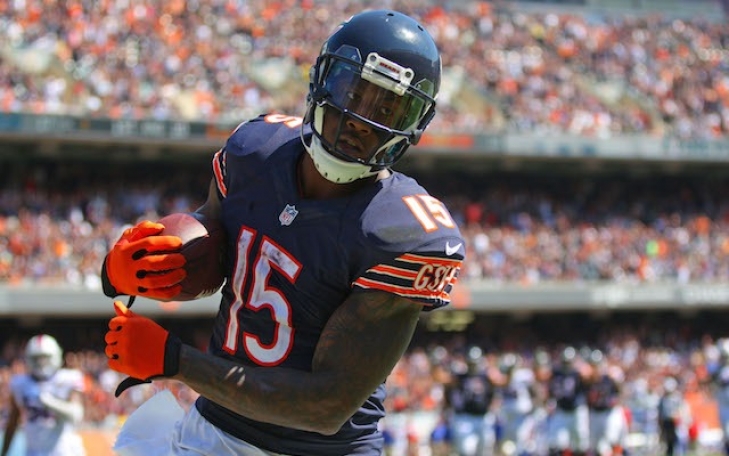
Brandon Marshall was a really good Wide Receiver, but was he a Hall of Fame wide out?
29. John Paxson
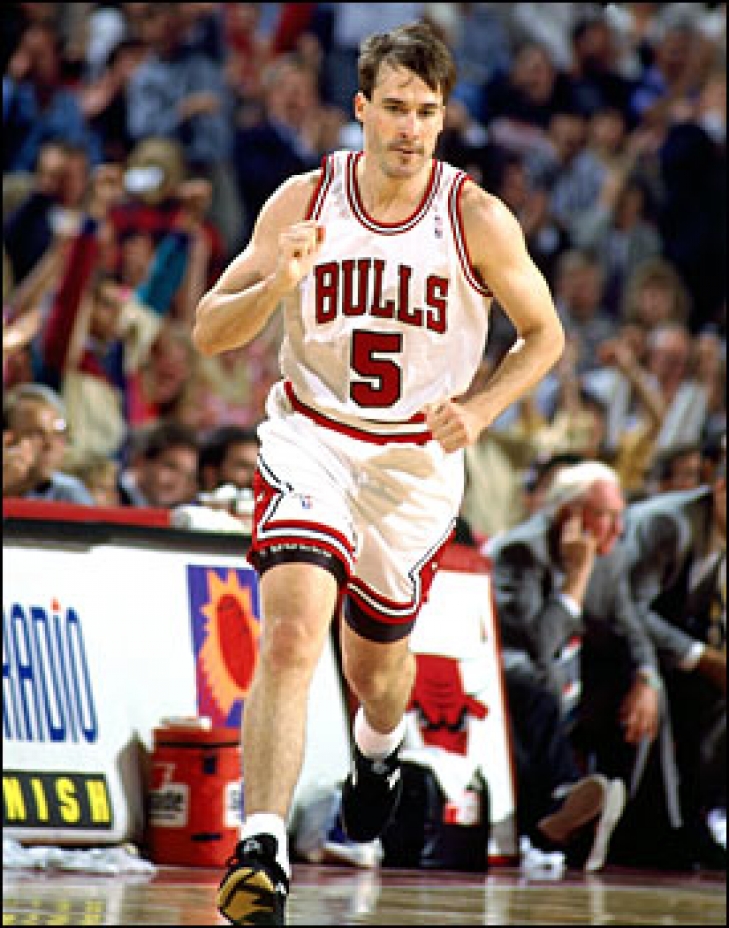
John Paxson was a two-time Second Team All-American at Notre Dame, and after two years with the San Antonio Spurs, he joined the Chicago Bulls as a Veteran Free Agent.
The Point Guard was the consummate team player, who was content to defer to the team's stars (namely Michael Jordan) for the team's greater good. It made him a background player in Phil Jackson's Triangle Offense, but he was a good shooter when called upon, and he was an underrated defensive player. Paxson was a starter on Chicago's first two NBA Championships (1991 & 1992) and a backup on their third (1993), and he twice had 10-plus PPG seasons (1986-87 & 1989-90). Retiring in 1994, Paxson averaged 7.6 Points over 645 Games, but, again, it was the things he did that never appeared on a stat sheet that made him valuable to Jordan and company.
After his playing career, Paxson became an Assistant Coach under Jackson, winning a fourth Championship Ring in 1996. He left that role after 1 year to become a broadcaster, but would later become the Bulls GM in 2003 and later be their Vice President of Basketball Operations.
339. Larry Morris
300. Beattie Feathers
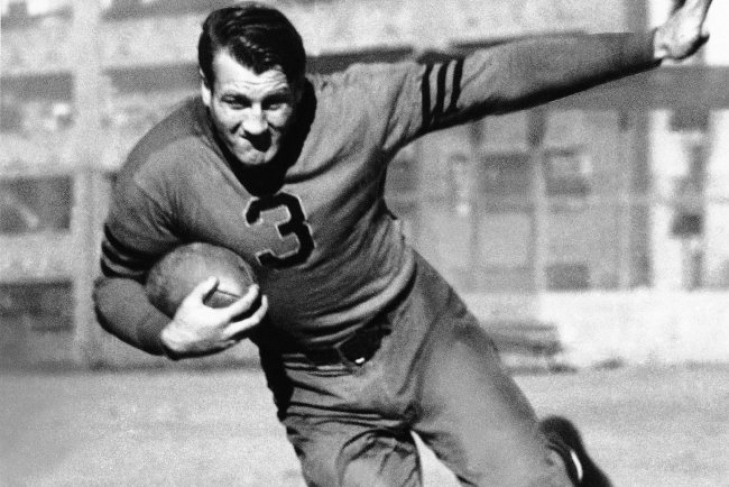
Playing his college ball at the University of Tennessee, Beattie Feathers would have an incredible rookie season with the Chicago Bears where in 1934 he would become the first 1,000 Yard rusher (though there are some football historians who dispute the accuracy) and he would also lead the league in All-Purpose Yards and Yards from Scrimmage and was a First Team All-Pro. In the six seasons he played after (with Chicago, Brooklyn, and Green Bay), he didn't tally as much as he did as a rookie, but that campaign was so incredible and historical that he deserves a spot here.
327. Willie Galimore
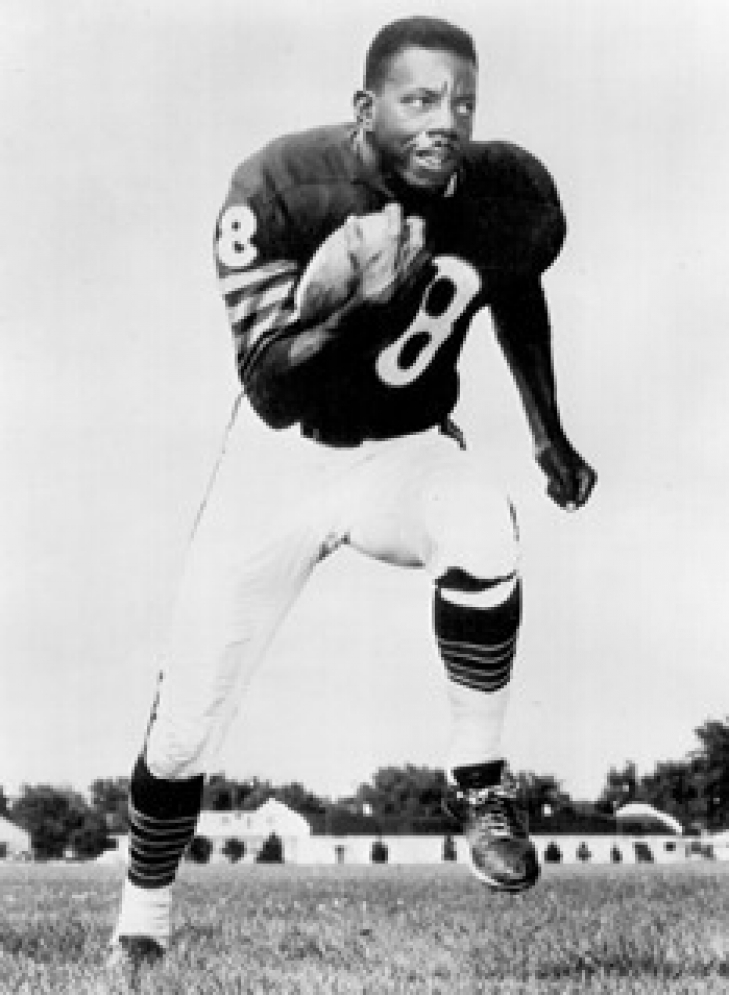
Considered to be one of the last great finds before the modern era of scouting, Willie Galimore was a 5th Round Draft Pick in 1957 from Florida A&M. Galimore was one of the quickest players in college, and that was the case when he went pro with the Chicago Bears. Galimore would play seven seasons in the NFL, all with Chicago, and he would accumulate 4,186 Yards from Scrimmage, with three seasons seeing him finish in the top ten in Rushing Yards. He would assist the Bears in winning the 1963 NFL Championship, which unfortunately would be the last game he ever played.
169. Harlon Hill
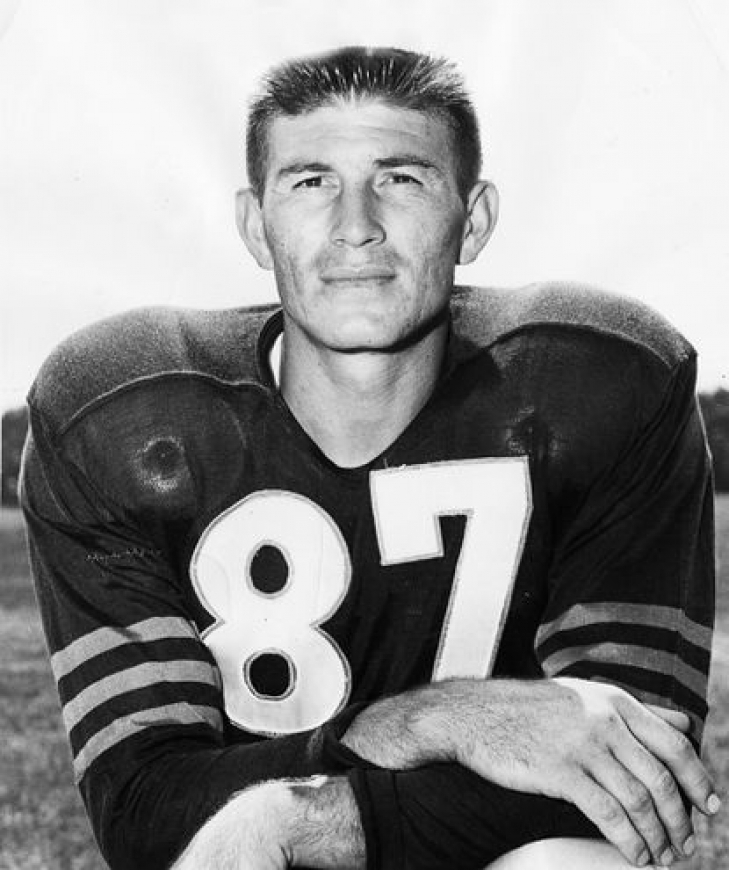
Harlon Hill was such a great player at the University of North Alabama that the MVP of Division II receives the Harlon Hill Trophy. But this isn't about college now, is it?
214. Ken Kavanaugh
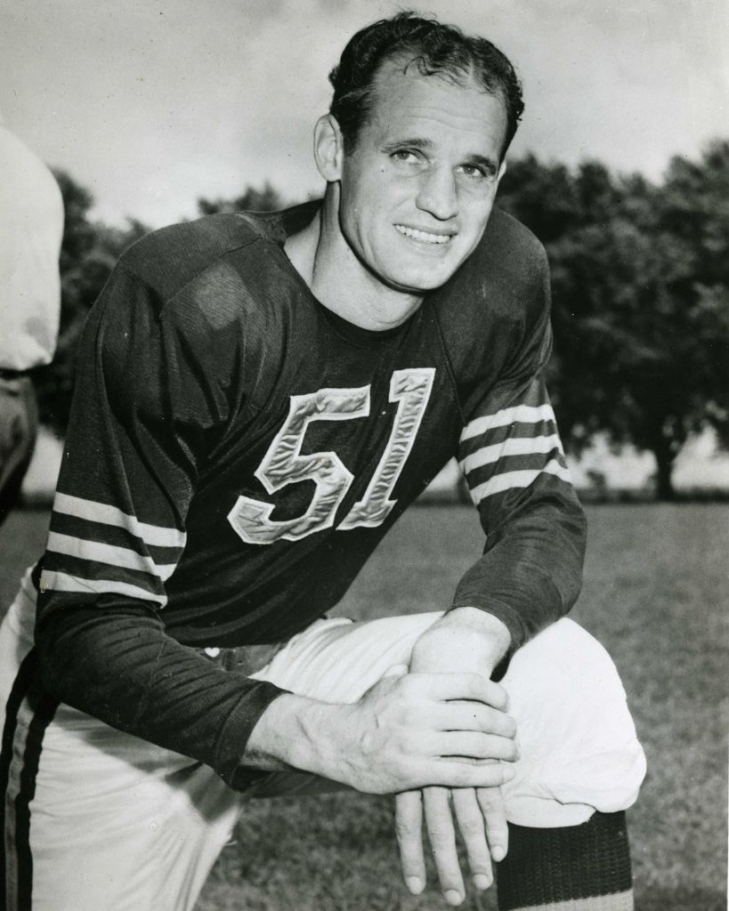
An SEC Player of the Year in 1939 with LSU, Ken Kavanaugh was chosen by the Chicago Bears the following year in the 3rd Round of the NFL Draft. The End would be a member of the dominant “Monsters of the Midway” where the won back-to-back NFL Championships (1940 & 1941), scoring a TD in the first one (which was the lopsided 73-0 dismantling of the Washington Redskins).
116. Wilber Marshall
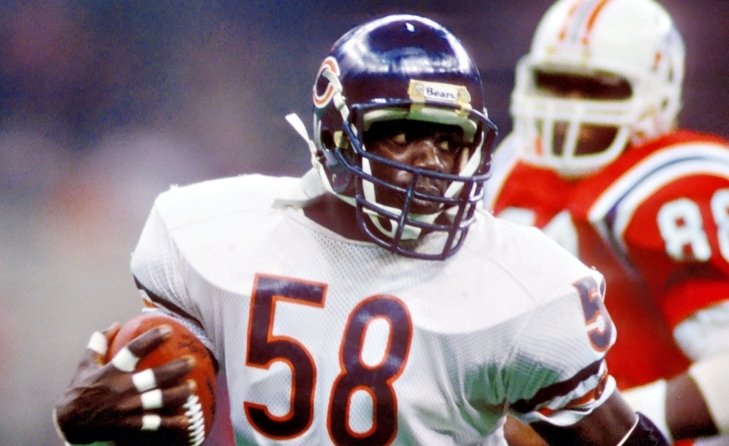
There was a time when a case could be made that Wilber Marshall was the best Linebacker in football. In 1985, he was a member of the most dominating team of the decade, the Super Bowl XX Champion, Chicago Bears. The year after, he was a First Team All-Pro, led the league in Approximate Value (23), and was a Pro Bowler for the first time. Marshall was overshadowed by some of his teammates (William Perry & Richard Dent), but those in the know saw Marshall as one of the most versatile outside linebackers in the NFL.
121. Rick Casares
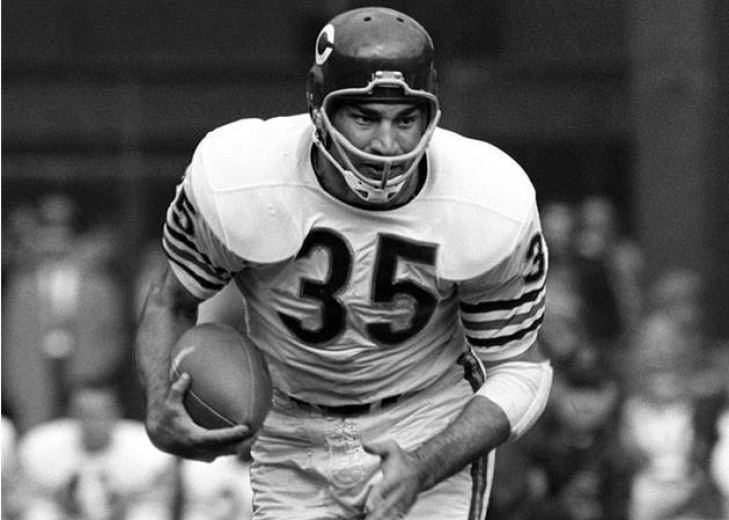
Rick Casares was drafted in the 2nd Round by George Halas' Chicago Bears in 1954, and after he served a year in the military, he would become one of the elite Fullbacks of the National Football League. Casares was a straight-forward rusher who was finished in the top ten in Rushing Yards in his first six seasons (1955-60), the first five of which would garner him a Pro Bowl Selection. Casares' best season by far was in 1956, where he led the league in Rushing Yards (1,126) and Rushing Touchdowns (12) and took the team to the NFL Championship Game, though they would be destroyed by the New York Giants in the game.
237. Bill Osmanski
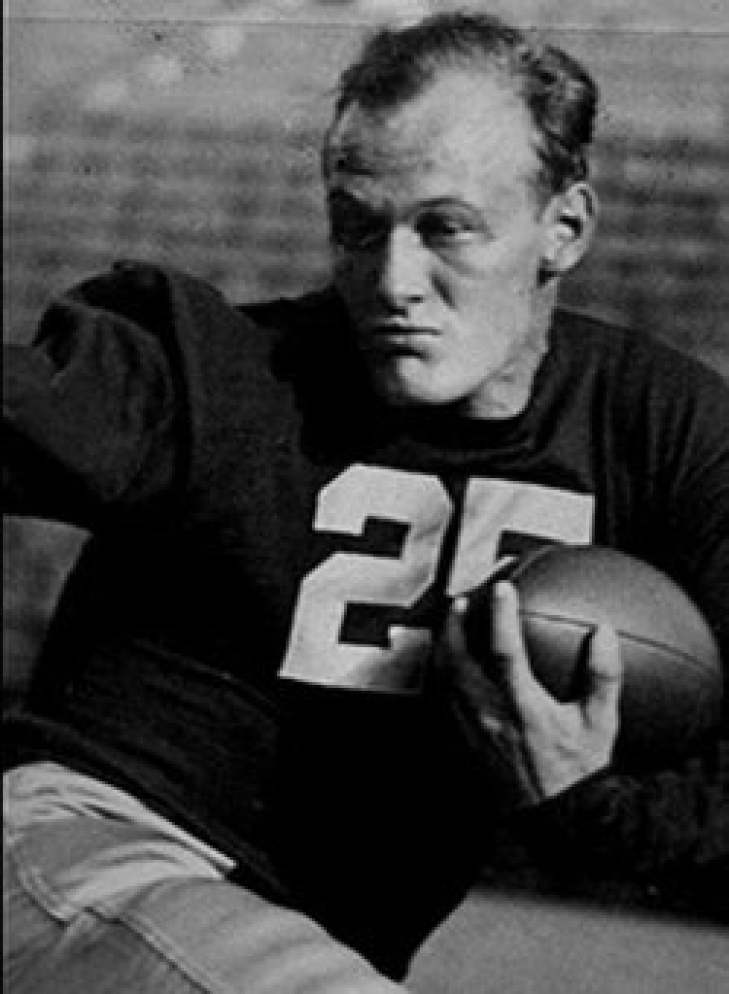
Coming to the NFL as the 6th Overall Pick in 1939, Bill Osmanski was a star at Holy Cross when that school was at its peak. The Fullback had one of the best starts of anyone at his position as the Chicago Bear would lead the NFL in Rushing Yards with 699, and in the 1940 NFL Championship, he rushed for 100 Yards in their 73-0 rout over the Washington Redskins. Osmanski would not have a year like that again, but he was still an integral part of the Bears and was a Pro Bowl Selection in his first three seasons.
174. Dick Barwegan
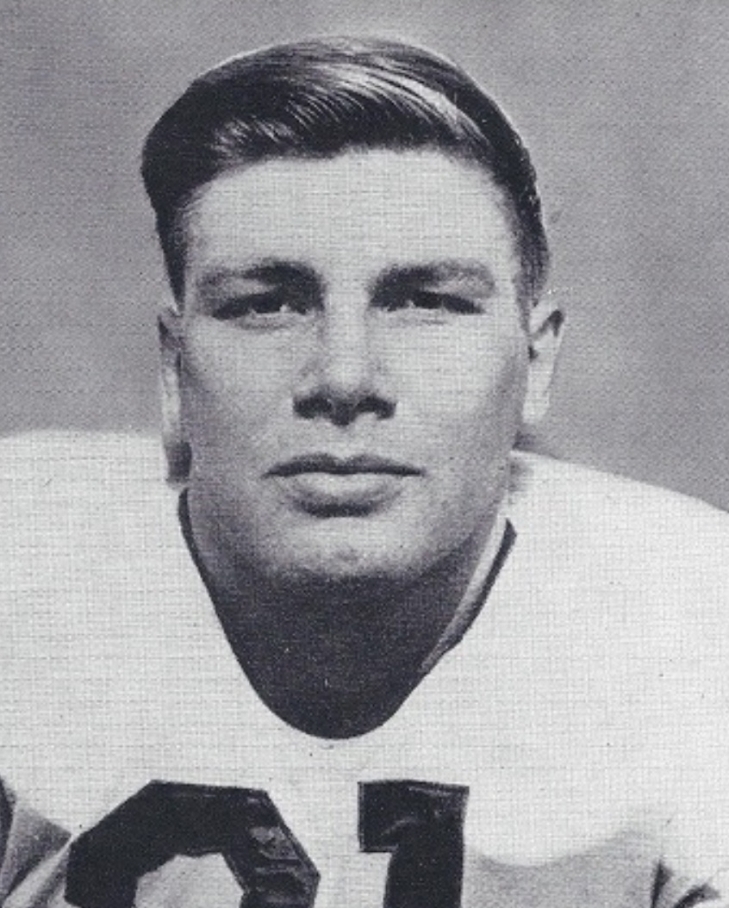
Dick Barwegan was an outstanding Pro Football player, but other than those who decided who should be on the 1950's All-Decade Team; he might be one of the most under the radar players in the history of the game.
127. Jim Benton
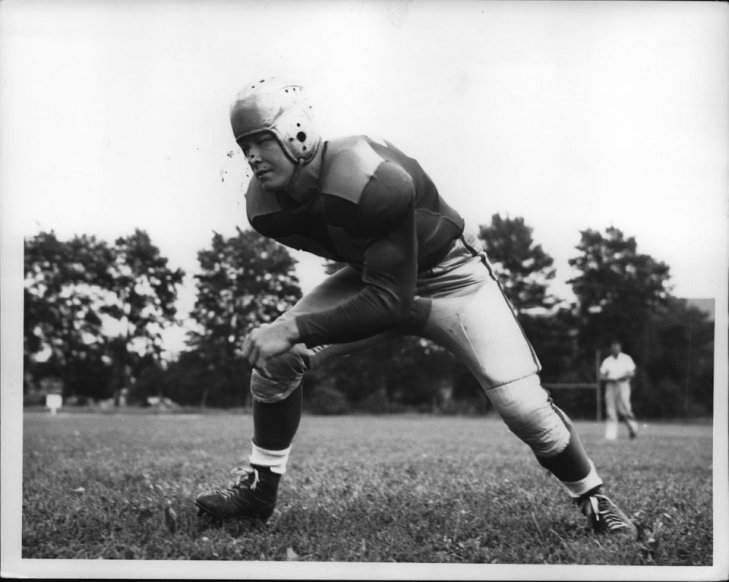
Selected in the 2nd Round out of the University of Arkansas in 1938, Jim Benton would go onto be one of the first great receivers in the history of the Rams franchise. Benton led the NFL in Yards per Reception as a rookie and was named to the Pro Bowl in his second season. He took 1941 off and returned to the NFL in 1942, and due to a heart murmur, he was not permitted to enlist in the U.S. Military for World War II. He was loaned to the Chicago Bears in 1943 as the Rams were unable to field a team due to a depletion of talent but returned in 1944 and 1945 and 1946 but together two excellent seasons where he was the NFL leader in Receiving Yards.
94. Joe Fortunato
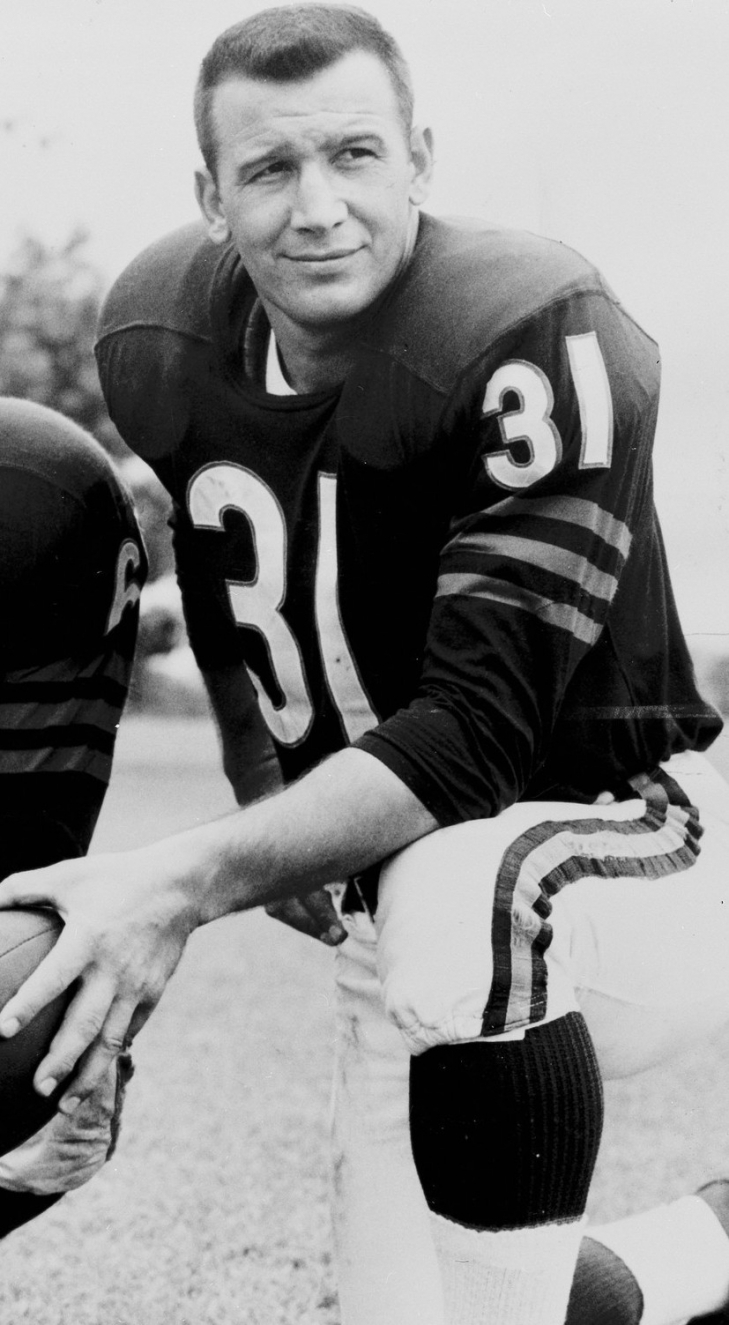
Joe Fortunato played his entire career with the Chicago Bears, the team that drafted him in the 7th Round in 1952.
While the Linebacker was chosen for the 1950's All-Decade Team, many of his accolades took place in the 1960s. Four of his five Pro Bowls came in the '60s, as did all three of his First Team All-Pro Selections. In regards to his team accomplishments, Fortunato was a vital component of the 1963 Bears Championship Team. He would record 16 Interceptions and recovered 22 Fumbles over his career, the latter of which was a record when he retired. Not too bad for a guy who looked undersized for his position!.