
10. Isaac Bruce
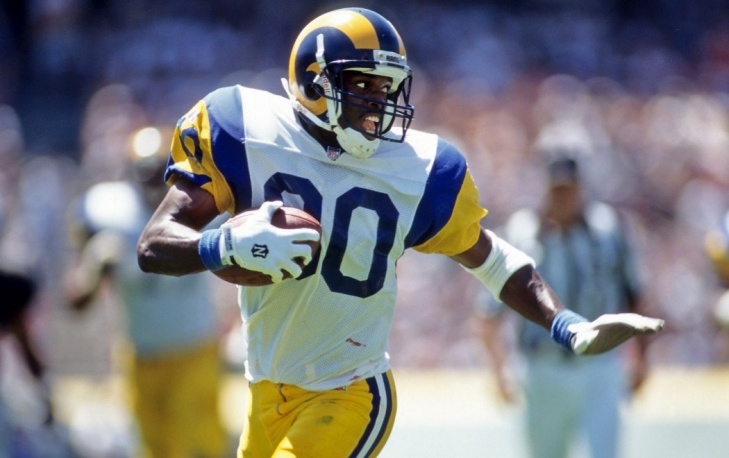
Isaac Bruce starred as the top Wide Receiver for the "Greatest Show on Turf," which is no small statement. A Second Round pick from the University of Memphis, Bruce exploded with a 1,781 Yard season with 13 Touchdowns. Amazingly, he was not a Pro Bowl selection that year but would be the next season when his 1,338 Yards led the NFL. In 1999, Bruce would catch the game-winning Touchdown in Super Bowl XXXIV, and his play was an integral part of the Rams return to Super Bowl the next season, although they would lose to the New England Patriots.
4. Jack Youngblood
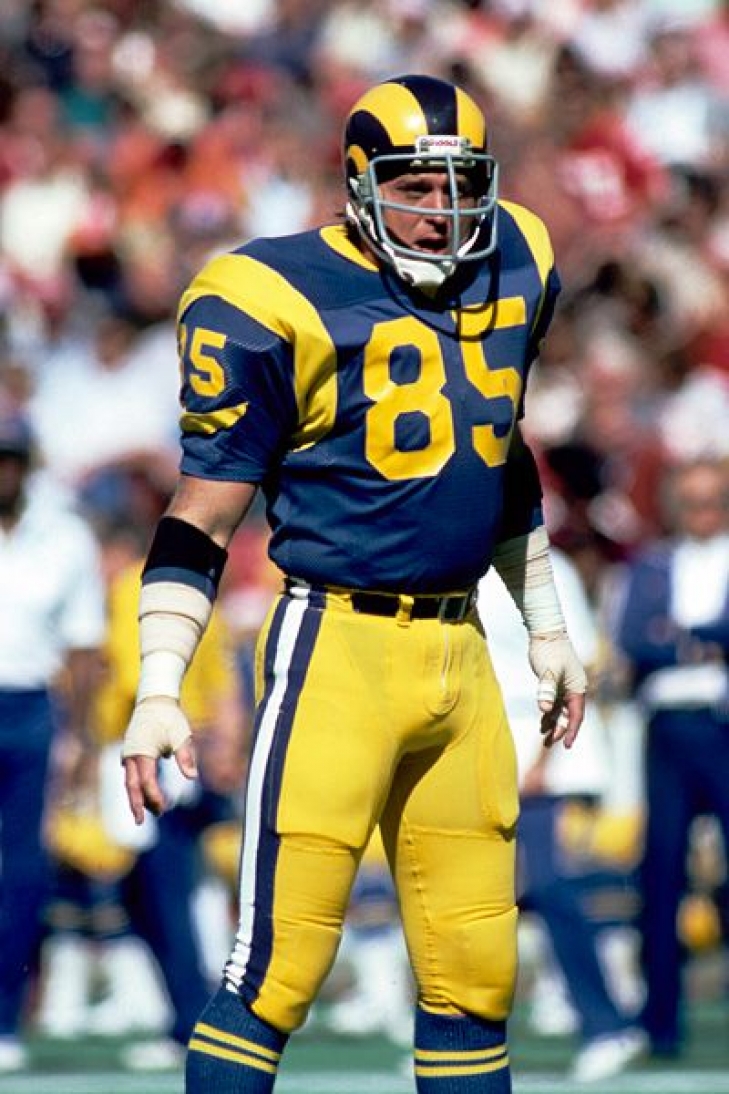
Jack Youngblood arrived in Los Angeles via the first round (20th overall) of the 1971 NFL Draft out of the University of Florida, where he was a consensus All-American and Outland Trophy finalist. Selected by the Rams to eventually fill the shoes of left defensive end Deacon Jones—arguably the most iconic and terrifying defensive force in franchise history—Youngblood faced immense pressure from day one. Considering the monumental expectation placed upon his shoulders, it is more than safe to say he did one hell of a job.
After learning as a rotational pass rusher during his first two seasons, Youngblood earned the full-time starting left defensive end job in 1973 following Jones' departure. He made an immediate splash, earning his first of seven consecutive Pro Bowl selections (1973–1979) while leading the Rams to a 12–2 record. Across that dominant seven-year stretch, Youngblood was selected as a First-Team AP All-Pro five times (1974–1976, 1978–1979), establishing himself as the premier edge defender of his era.
Operating with exceptional leverage, quick hands, and unrelenting motor, Youngblood terrorized opposing backfields throughout the 1970s and early 1980s. Though the NFL did not track sacks as an official individual statistic until 1982, retroactive film analysis by Pro Football Reference credits Youngblood with an astounding 151.5 career sacks—a total that ranks second in franchise history behind only Deacon Jones and sixth in all of professional football history.
In a brutal sport defined by its physical toll, Youngblood proved one of the toughest and most durable competitors to ever put on a helmet. Over his 14-year NFL career in Los Angeles, he played in 202 regular-season games and missed only one contest. His legendary streak of 201 consecutive regular-season games played stands as a Rams franchise record that may never be broken.
That extraordinary toughness reached mythic proportions during the 1979 postseason. After suffering a fractured fibula in the Divisional Round against the Dallas Cowboys, Youngblood refused to sit out, fitting his leg with a plastic brace to play every snap of the NFC Championship Game victory over Tampa Bay. Two weeks later, he suited up against the Pittsburgh Steelers in Super Bowl XIV, battling through the broken leg against Pittsburgh's powerful rushing attack. Although the Rams ultimately fell short, Youngblood's legend grew even higher in those two heroic performances.
Youngblood anchored the Rams' defensive front through two distinct eras, leading Los Angeles to seven consecutive NFC West titles (1973–1979) and five NFC Championship Game appearances. Following his retirement after the 1984 season, the Rams organization honored his fierce devotion by retiring his iconic No. 85 jersey and inducting him into the Rams Ring of Honor.
National immortality was secured in 2001 when Youngblood was inducted into the Pro Football Hall of Fame in Canton. Named to the NFL 1970s All-Decade Team, he remains the symbol of resilience, leadership, and defensive excellence in Rams history.
3. Deacon Jones
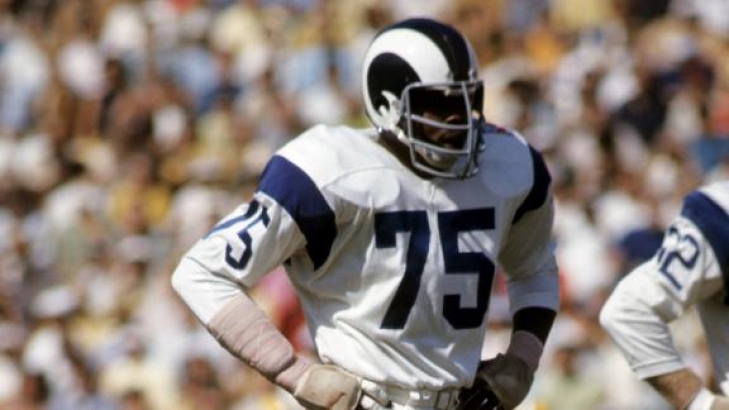
If this ranking were constructed purely on cultural weight, terrifying aura, and historical impact, David "Deacon" Jones would sit comfortably at the very top of the list. Honestly, he came exceptionally close to taking the crown.
Jones personally coined the phrase "sacking the quarterback," a term that redefined how defensive football was played, coached, and evaluated. Before Jones revolutionized the left defensive end position, pass rushers were primarily expected to hold the line and contain the run; Jones turned the edge into an explosive launching pad, transforming defensive players into marquee superstars and highlight-reel main attractions.
His entire legendary story began almost entirely by accident. Selected in the 14th round (186th overall) of the 1961 NFL Draft out of Mississippi Vocational College (now Mississippi Valley State) after starting at South Carolina State, Jones was drafted by scouting director Eddie Kotal primarily for his raw, unverified track speed rather than polished football acumen.
That gamble paid off in gold as Jones evolved into the engine of the "Fearsome Foursome"—alongside Merlin Olsen, Rosey Grier, and Lamar Lundy—forming the most feared defensive front of the 1960s. Utilizing his signature, brutal "head slap" technique to stun opposing tackles off the snap, Jones possessed a terrifying closing burst that left quarterbacks helpless in the pocket.
While the NFL did not officially track quarterback sacks during his playing era, retroactive film analysis by Pro Football Reference credits Jones with an extraordinary 159.5 sacks in a Rams uniform alone (and 173.5 across his career, ranking third all-time). In Los Angeles, he led the league in sacks in five different seasons between 1964 and 1969, including unbelievable 22.0-sack campaigns in both 1964 and 1968—achieved in 14-game regular seasons.
During his 11-year run with Los Angeles (1961–1971), Jones earned seven Pro Bowl selections and was named a First-Team AP All-Pro in five consecutive seasons from 1965 to 1969. He was named the NFL Defensive Player of the Year by the Newspaper Enterprise Association (NEA) in both 1967 and 1968, standing as the supreme defensive gatekeeper of his generation.
Despite the hefty—and completely deserved—praise he earned, the primary reason Jones did not claim the top spot on this list is that his total tenure in Los Angeles was slightly shorter than that of the franchise's other immortal icons. Traded to San Diego in 1972 before finishing his career with Washington in 1974, his overall body of work in a Rams uniform remains staggering, even if it ended earlier than expected. Unofficially, he had 159.5 sacks in Southern California.
National honors followed Jones at every turn. Enshrined into the Pro Football Hall of Fame in 1980 in his first year of eligibility, he was named to both the NFL 1960s All-Decade Team and the NFL 75th Anniversary All-Time Team. In 2009, the Rams organization officially retired his iconic No. 75 jersey, and in 2019 he was posthumously selected to the NFL 100th Anniversary All-Time Team.
2. Merlin Olsen
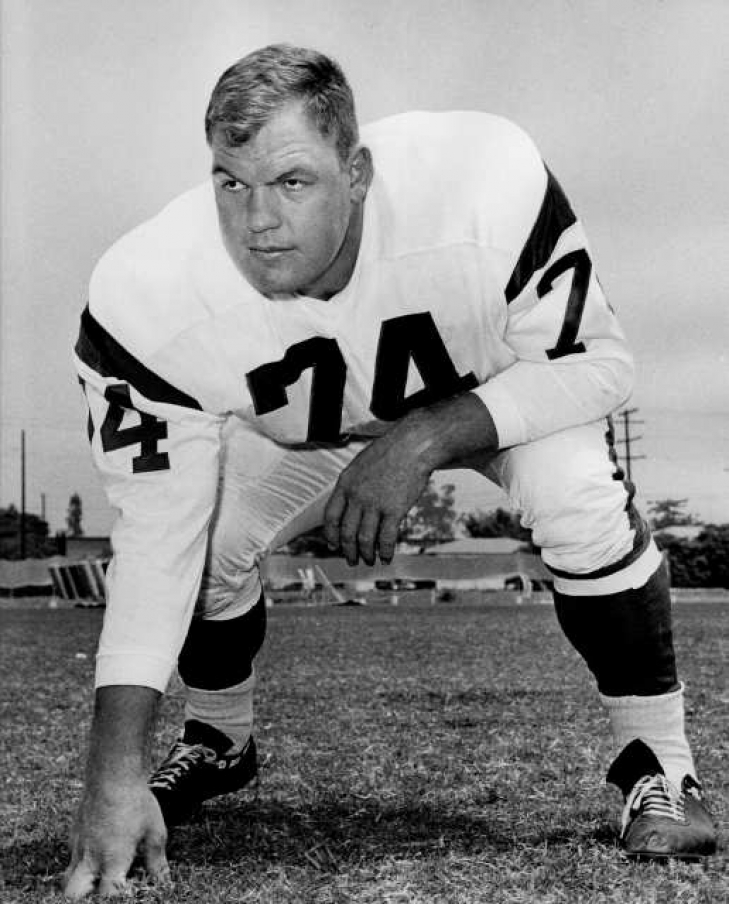
Chosen third overall out of Utah State in the 1962 NFL Draft, Merlin Olsen arrived in Los Angeles with towering expectations after sweeping the Outland Trophy and earning consensus All-American honors in his final college season. Stepping directly onto the professional gridiron, Olsen made an immediate impact as an elite interior disrupter. He earned a spot on the Western Conference Pro Bowl squad as a rookie, launching an incredible 15-year career that defined interior defensive line play for an entire generation.
That rookie selection was merely the beginning of an unprecedented individual run: Olsen was named to 14 consecutive Pro Bowls from 1962 to 1975, setting a league record for consecutive invitations that still stands today. As the left defensive tackle and intellectual anchor of the Rams' legendary "Fearsome Foursome"—alongside Deacon Jones, Rosey Grier, and Lamar Lundy—Olsen provided a rock-solid, disciplined counterweight to Jones' wild pass-rushing speed. Opposing offenses simply could not run the football up the middle against Olsen's supreme leverage and technique.
What elevated Olsen above his peers was a rare combination of physical strength, technical execution, and relentless durability. Standing 6-foot-5 and weighing 270 pounds, he controlled the line of scrimmage with uncanny balance, absorbing double teams while regularly collapsing pockets from the inside. Between 1966 and 1970, Olsen earned First-Team AP All-Pro honors in five consecutive seasons, establishing himself as the undisputed premier defensive tackle of his era alongside Bob Lilly and Alan Page.
In addition to five First-Team All-Pro selections, Olsen earned Second-Team All-Pro four times (1965, 1971–1973), maintaining elite production across three decades of football. His selfless, team-first leadership earned him the Bert Bell Award in 1974 as the NFL's Most Valuable Player, the Maxwell Football Club's recognition of the league's top player—and he became only the second defensive player ever to win the award. In typical humble fashion, Olsen accepted the trophy by deflecting credit and thanking defensive players everywhere for the recognition.
Olsen's remarkable durability saw him play 208 consecutive regular-season games for the Rams, never missing a single contest across his 15 years in Southern California. Whether anchoring the line during the defensive battles of the 1960s or leading Los Angeles to three straight NFC West division titles in the mid-1970s, he remained the franchise’s emotional heartbeat, locker-room standard, and tactical backbone.
After retiring following the 1976 season, Olsen transitioned seamlessly into a high-profile second career in entertainment and broadcasting. He became a household name off the field as an actor—starring in popular television series like Little House on the Prairie and Father Murphy—and served as a color commentator alongside Dick Enberg for NBC's top NFL broadcast crew.
National recognition followed Olsen's brilliant gridiron career at every turn. He was selected to both the NFL 1960s All-Decade Team and the NFL 1970s All-Decade Team, honoring his dominance across two distinct eras. Elected to the Pro Football Hall of Fame in 1982 in his first year of eligibility, his legendary No. 74 was retired by the Rams organization, permanently cementing his place in franchise lore.
Following his passing in 2010 at age 69, Olsen's legacy continued to earn historic recognition. In 2019, he was posthumously selected to the official NFL 100th Anniversary All-Time Team, taking his rightful place on the Mount Rushmore of defensive tackles. Before Aaron Donald's transcendent era, Olsen held the crown as the greatest player in Rams history—a consensus icon whose leadership and character set the gold standard for every player who put on the horns.
Olsen's enduring impact extended far beyond individual awards; he was the ultimate coach's player, leading purely by example. He handled the grueling demands of interior line play with absolute dignity, proving that a defensive tackle could play with brutal physical force without ever losing his sportsmanship or professional composure.
Statistically speaking, over his 208 games, he had 91 (unofficial) sacks.
15. Maxie Baughan
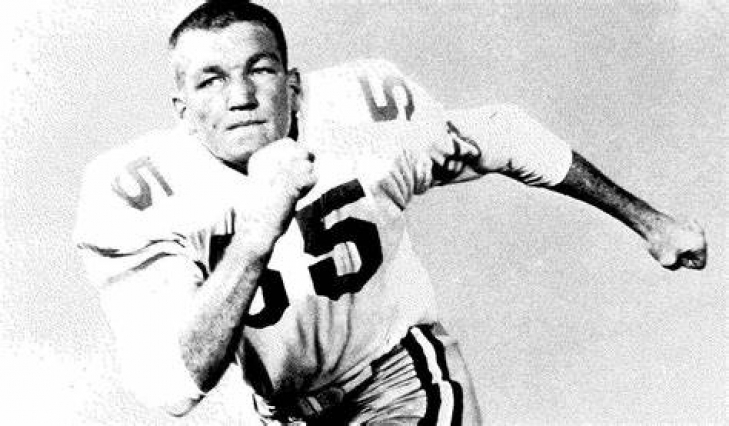
Maxie Baughan had a successful eleven-year career in professional football, making the Pro Bowl for nine of those years. Despite this, the Pro Football Hall of Fame has not recognized him as he deserves. Baughan started his career at Georgia Tech and played for the Philadelphia Eagles.
He was a key player in their championship-winning season in 1960, and his linebacker skills made him the team's best defender. He earned five Pro Bowl selections and was a First Team All-Pro while with the Eagles. However, as the team's fortunes declined, the Eagles traded Baughan to the Los Angeles Rams in 1966.
Baughan continued to play well for the Rams, earning four consecutive Pro Bowl selections and four Second Team All-Pros from 1966 to 1970. He was a great fit for the team's Head Coach, George Allen, who knew how to make the most of Baughan's skills. After an injury-plagued 1970 season, Baughan retired but later rejoined Allen as a player-coach in 1974.
Baughan's acrimonious departure from the Eagles likely delayed his induction into their franchise Hall of Honor until 2015. It's unclear when the Pro Football Hall of Fame will recognize him, if at all.
Should Maxie Baughan be in the Hall of Fame?
64. Henry Ellard
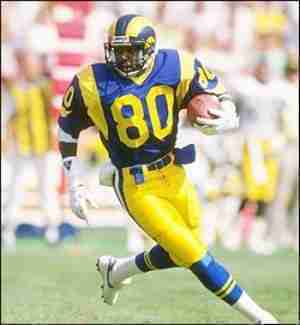
Generally, non-quarterbacks don’t have spectacular seasons in their 30s, but Henry Ellard did. In fact, he really didn’t become a star in the National Football League until he turned 27.
The first few years of Henry Ellard’s career were fairly nondescript, but he would then see his number called more often, and he responded with seven seasons of 1,000 yards or more. He became the Rams’ go-to receiver and would perform the same duty as a Washington Redskin. He excelled as a brilliant route runner, but his talents often went unnoticed in the Jerry Rice era.
What also hurts his Hall of Fame candidacy is that for all the yards he tabulated through passes, his touchdown tally (65) is relatively low. Without that sexy statistic and with only three Pro Bowl berths, this could explain why someone who accumulated so many yards (13,777) has not been given serious consideration for enshrinement.
Should Henry Ellard be in the Hall of Fame?
35. Roman Gabriel
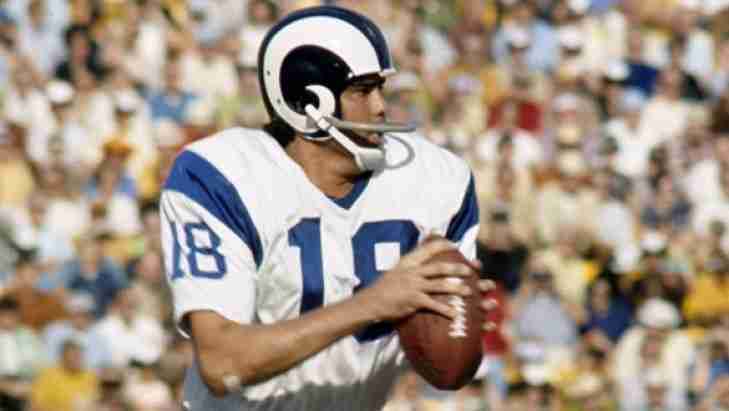
During the early 1960s, the Los Angeles Rams had a terrible reputation. This began to change when Roman Gabriel became their quarterback. By the late 60s, Gabriel had become one of the top quarterbacks in the NFL. He won the NFL's Most Valuable Player award in 1969 and helped the Rams become a respectable team and a legitimate championship threat. Gabriel's strong arm made him formidable, but he often played it safe to avoid turnovers. During the 1960s and early 1970s, Gabriel's touchdown-interception ratio of 201-149 was considered very good.
In 1972, Gabriel was traded to the Philadelphia Eagles, where he won his first Passing Yards Title with 3,219 yards and his second TD Title with 23 touchdowns. Statistically, this was the best year of his career, but he regressed afterward. He retired after the 1977 season with 29,444 passing yards.
Gabriel and other offensive stars from his time have struggled to make it into the Football Hall of Fame, possibly because their records were surpassed by the huge offensive statistics of the 90s and 00s.
Should Roman Gabriel be in the Hall of Fame?
51. Harold Jackson
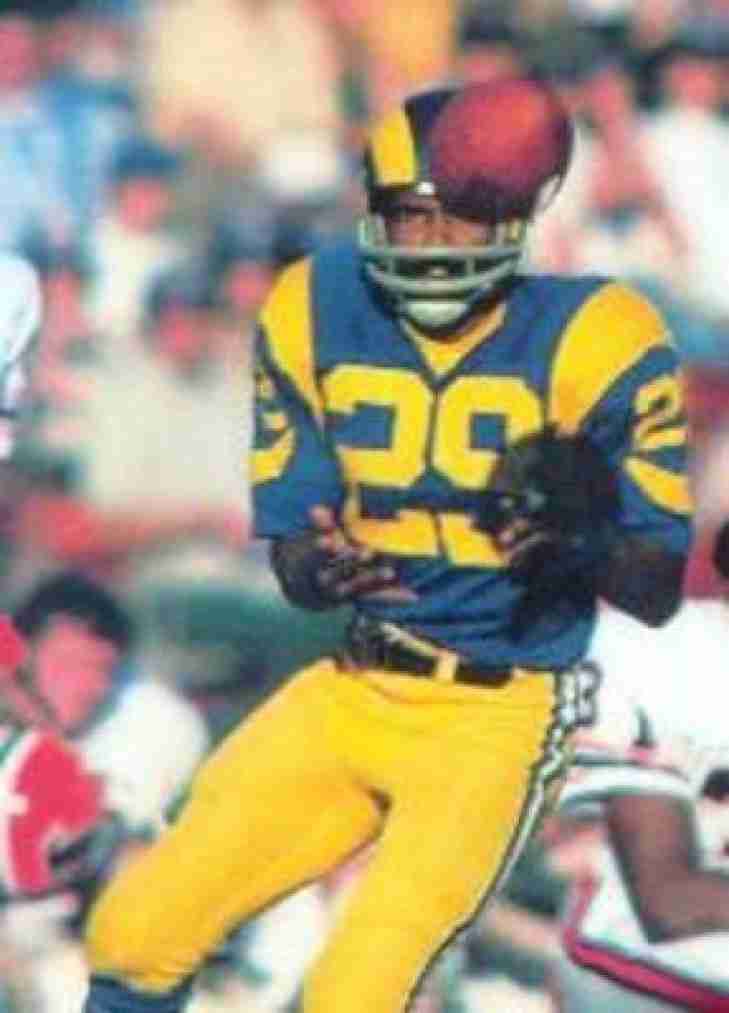
Harold Jackson had two great seasons in Philadelphia, leading the league in receiving yards in 1969 and 1973. It is too bad that Jackson was the only one playing well for those dreadful Eagles teams.
This isn’t to say that Jackson didn’t have good campaigns at other times in his career. He became a Ram and was part of a very good squad there. Ironically, he went from being hidden on a bad team to being overshadowed on a fairly good one, even despite finishing second in MVP voting in his first year there (1973). Jackson was a Red Zone Specialist and a serious threat throughout his career.
Harold Jackson’s career numbers are quite good (10,372 Yards and 76 Touchdowns), especially considering that he tallied most of his numbers at a time when Wide Receivers were not setting the NFL on fire. However, since he wasn’t selected to the 1970s All-Decade team, it is hard to see how he can make the Hall, especially since other great wideouts from the ’70s are still out.
Should Harold Jackson be in the Hall of Fame?
168. Roger Brown
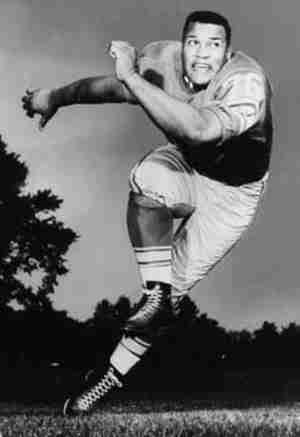
It is alleged that Roger Brown was the first legitimate 300-pounder in the National Football League. Today, this is commonplace, but Brown proved that a much larger man could be very athletic. It is also amazing that someone so big could be forgotten so quickly.
Brown was good, but he played alongside other greats of the sport. As a Detroit Lion, he played with Alex Karras, who got all the headlines. Later he would become a Los Angeles Ram and would be the fourth cog of the Ram’s Fearsome Foursome defense behind the big names of Deacon Jones and Merlin Olsen. Roger Brown may not have turned his name into a household one, but his size and skill made him one of the most feared Defensive Lineman in the league, and his Pro Bowls were earned and not by riding the coattails of his more famous teammates.
What would Roger Brown’s legacy be if he was the featured defensive star of his team? He was good enough to have been, but circumstances blessed him to play with the greats but cursed him to be in their shadows.
