

Committee Chairman
49. Chuck Muncie

Chuck Muncie was already a proven runner when the Saints traded him to the Chargers four games into the 1980 season, but off-field issues had made him expendable in New Orleans. He finished that year strong in San Diego with 659 rushing yards in 11 games, then had the best season of his career in 1981 under Don Coryell. Muncie ran for 1,144 yards and tied the then-NFL record with 19 rushing touchdowns while adding 43 catches for 362 yards, finishing with more than 1,500 yards from scrimmage and earning a Pro Bowl nod.
He was a big, powerful back with surprising agility who thrived in the Air Coryell scheme—defenses had to respect the deep passing game of Dan Fouts, Kellen Winslow, and Charlie Joiner, and he punished them underneath and between the tackles, often lining up in the single-back sets that defined the offense. That postseason he added 120 yards and a touchdown in the Epic in Miami overtime win over the Dolphins and another 94 in the Freezer Bowl loss to Cincinnati, helping the Chargers reach the AFC title game for the second straight year.
He made the Pro Bowl again in the strike-shortened 1982 season (569 rushing yards and eight touchdowns in nine games) and followed it with another productive year in 1983 (886 rushing yards, 12 touchdowns, and 42 catches). The production was real while it lasted, but the same issues that had followed him from New Orleans eventually caught up. Early in the 1984 season the Chargers tried to trade him to Miami; the deal fell through after he failed a drug test. San Diego released him, the league suspended him, and he never played in the NFL again.
In San Diego, he finished with y 4,546 yards from scrimmage and 45 touchdowns in only 51 games. The numbers were impressive for the stretch he was available, even if the career ended earlier than it should have.
He was later named to the Chargers’ 50th-anniversary team, recognizing the running back who gave the Air Coryell offense a legitimate ground threat for a few seasons before everything else got in the way.
48. Stan Humphries
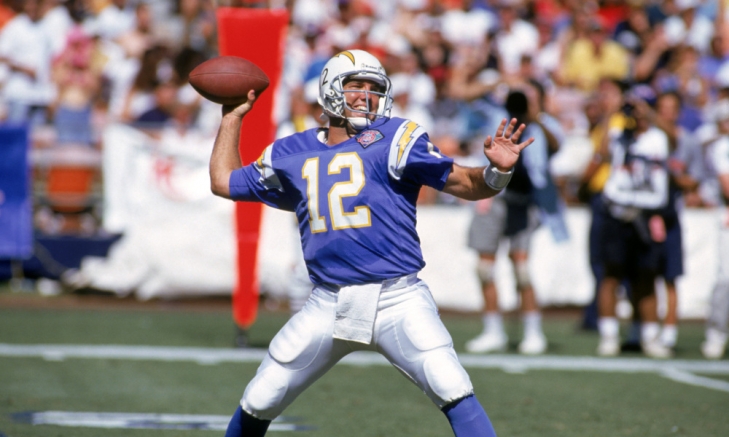
Stan Humphries is the kind of quarterback who gets overlooked until you remember he’s still the only one who ever got the Chargers to a Super Bowl. He spent his early years as a backup in Washington (including a Super Bowl ring as a spectator in 1991) before the Redskins traded him to San Diego prior to the 1992 season. He won the starting job right away, and even with a rough touchdown-to-interception ratio, he threw for 3,356 yards and helped turn a team that had gone 4-12 the year before into an 11-5 playoff squad—the only NFL team ever to reach the postseason after a 0-4 start.
Two years later he was back in the postseason, and this time he steered the Chargers all the way to Super Bowl XXIX. He wasn’t a flashy passer, but he was tough and competitive enough to keep the offense moving through a couple of gritty playoff wins, including a comeback against Dan Marino’s Dolphins and a road win over the Steelers. The Chargers got run over by San Francisco in the Super Bowl, but Humphries had done something no other San Diego quarterback had managed. He had another solid year in 1995 before concussions started piling up, and he was forced to retire after the 1997 season.
With the Chargers, he finished with roughly 17,000 passing yards, 89 touchdowns, and 84 interceptions. He wasn’t the most polished quarterback the franchise has had, but he got them closest to a championship.
The Chargers put him in their Hall of Fame in 2002, a fitting nod to the backup who showed up, took the hits, and became the only quarterback in team history to reach a Super Bowl.
47. Chuck Allen
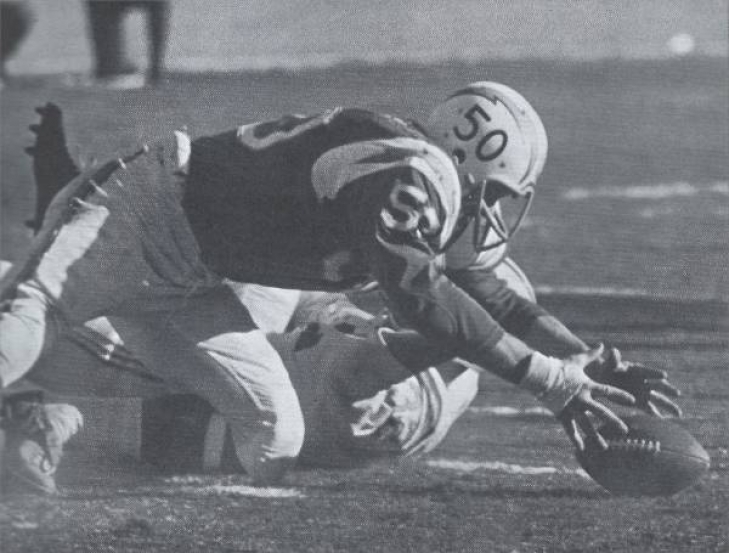
In the second year of the Chargers’ existence, Washington Linebacker, Chuck Allen was a very late Draft Pick (28thRound), so for him just to make the team was a bit of a long shot. Allen would accomplish a lot more than that.
46. Vincent Jackson
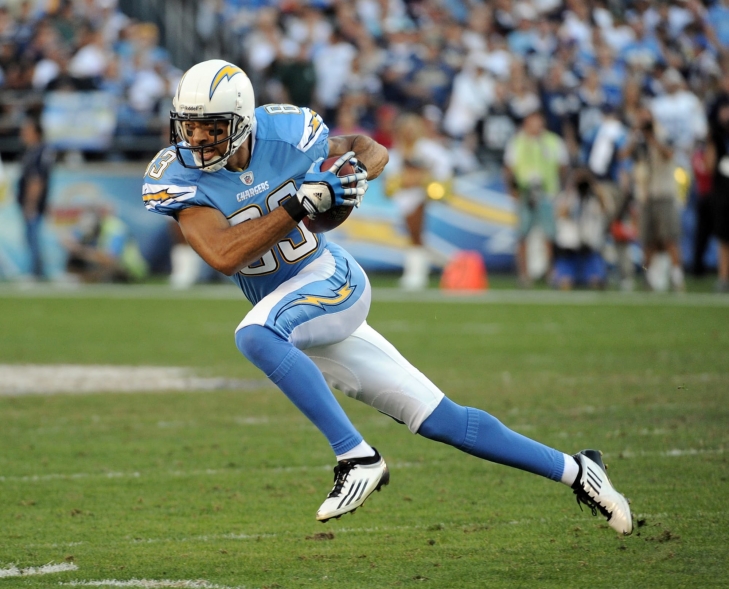
Vincent Jackson’s NFL start was slow after the Chargers took the Northern Colorado wide receiver in the second round of the 2005 draft. Injuries limited him to eight games as a rookie, and he barely saw the field, but he gradually earned more snaps and became a serious threat opposite the more established receivers on the roster. By 2008, he posted his first 1,000-yard season (1,098 yards and seven touchdowns), followed by another in 2009 (1,167 yards and nine scores), while earning his first Pro Bowl nod. He was a big, physical target who could win contested catches downfield and run intermediate routes, giving Philip Rivers a reliable option when the offense needed a vertical threat.
A contract dispute and subsequent suspension limited him to just five games in 2010, cutting short what looked like another strong year. He returned in 2011 and put up a third 1,000-yard season (1,106 yards and nine touchdowns) while earning a second Pro Bowl selection with the Chargers. The production was consistent when he was available, but the 2010 holdout left lingering frustration. After that season, he left for the Tampa Bay Buccaneers in free agency.
Across his seven years with the Chargers, he finished with 4,754 receiving yards and 37 touchdowns. He never earned a Chargers Hall of Fame induction, but the second-round pick who developed into a multi-year 1,000-yard receiver remains one of the franchise's most productive outside threats in the Rivers era.
