


Committee Chairman
47. Brendan Rodgers
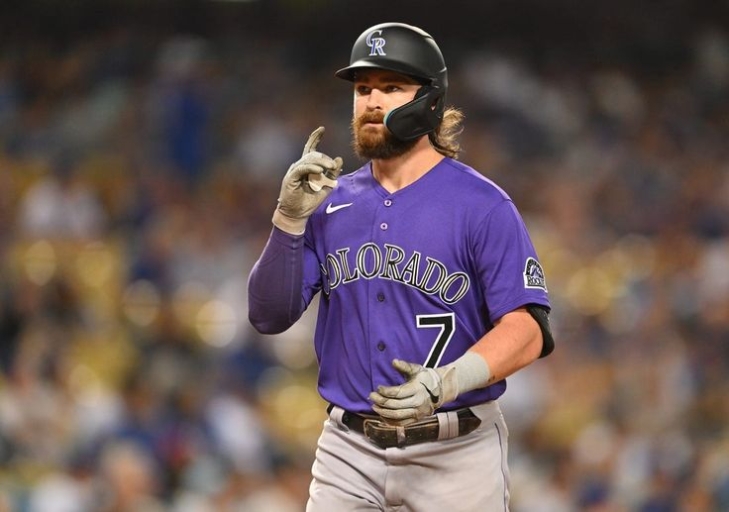
Selected third overall in 2015 as the heir apparent to the Rockies' middle infield, Brendan Rodgers carried the "can’t-miss" tag for years. While he eventually secured a starting role, his time in Denver hasn't been the smooth ascent many predicted; instead, it has been a stop-and-start journey.
Rodgers’ tenure reached its clear defensive peak in 2022, a season where he finally stayed healthy enough to showcase his pedigree. He didn't just play second base; he dominated it, leading all National League second basemen in defensive runs saved and total zone runs. His 2.9 defensive bWAR was an elite outlier that earned him a Gold Glove, proving he had the specialized range to turn hits into outs.
Offensively, he backed up his fielding with a career-high 140 hits and 63 RBIs, appearing to finally be the foundational pillar the front office envisioned a decade ago. However, Rodgers’ career has been defined as much by the trainer’s room as the diamond. Since his debut, he has battled a relentless string of setbacks, from shoulder surgeries to hamstring strains. This physical toll reached a frustrating high-leverage point in 2023, when a ruptured capsule in his left shoulder cost him nearly the entire season.
While he returned for a final 135-game stretch in 2024, hitting .267 with 13 home runs, the organization decided to move on after the season, declining to tender the infielder and ending his six-year stint in purple and black.
With the Rockies, Rodgers compiled 449 hits.
42. Ezequiel Tovar
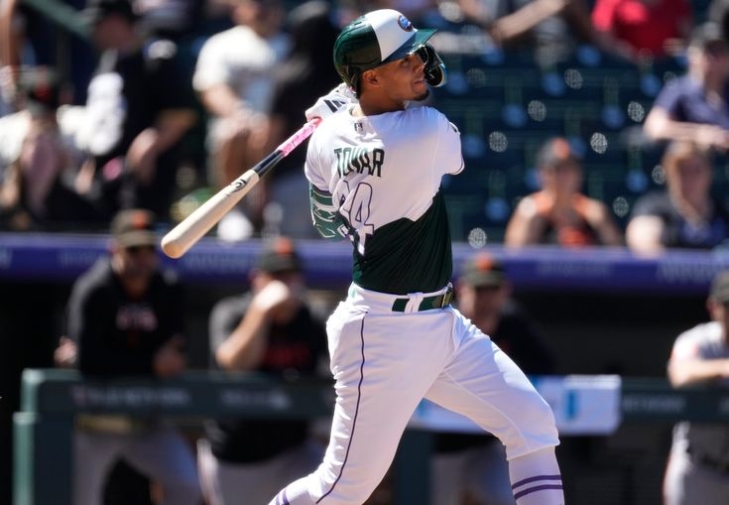
Signed as a teenage free agent in 2017, Ezequiel Tovar made his MLB debut in late 2022 and was the Rockies’ starting Shortstop the following season. Tovar had 143 Hits with 15 Home Runs, but elevated last season to 176 Hits, 26 Home Runs, and a .763 OPS. He also led the National League in At Bats (655) and Doubles (45), and won a Gold Glove.
During the 2024 campaign. That year, he established himself as a statistical outlier, leading the National League with 655 at-bats and 45 doubles while launching 26 home runs. He operated with a focused intensity that saw him secure his first Gold Glove, becoming the youngest shortstop in National League history to win the award.
However, the 2025 season tested his professional resilience. Tovar navigated a difficult summer defined by two significant injury stints, a hip contusion in April and a strained oblique in June, that limited him to 95 games.
As the 2026 season begins, the story in Colorado is centered on seeing who Tovar really is. He still needs to work on his on-base percentage, but his defense looks to be solid. Tovar has compiled 422 hits, 51 home runs, and 100 doubles entering 2026.
Our All Time Top 50 Cleveland Guardians have been revised to reflect the 2024 Season.
Yes, we know that this is taking a while!
As many of you know, we at Notinhalloffame.com are slowly generating the top 50 of each major North American sports team. That being said, we have existing Top 50 lists and consistently look to update them when necessary and based on necessity. As such, we are delighted to present our post-2024 revision of our top 50 Cleveland Guardians.
As for all of our top 50 players in baseball, we look at the following:
1. Advanced Statistics.
2. Traditional statistics and how they finished in the American League.
3. Playoff accomplishments.
4. Their overall impact on the team and other intangibles that are not reflected in a stat sheet.
Please note that our algorithm has changed, which yielded minor changes throughout the baseball lists.
Last year, the Guardians entered the season as a World Series contender, and competed in the American League Championship Series, losing to the New York Yankees in five. There was one new entry, though that was based on the new algorithm. There were also changes on the list, based on 2024.
As always, we present our top five, which had a major change based on the algorithm.
1. Nap Lajoie
2. Bob Feller
3. Tris Speaker
4. Lou Boudreau
5. Bob Lemon
You can find the entire list here.
On the top five, we have a brand new number one, based on our adjustments. Nap Lajoie takes over the pole position.
Jose Ramirez made a significant jump from #13 to #7.
Pitcher Shane Bieber remained at #47.
With the new algorithm, Catcher Steve O’Neill enters at #48.
We thank you for your continued support of our lists on Notinhalloffame.com.
49. Steve O'Neill
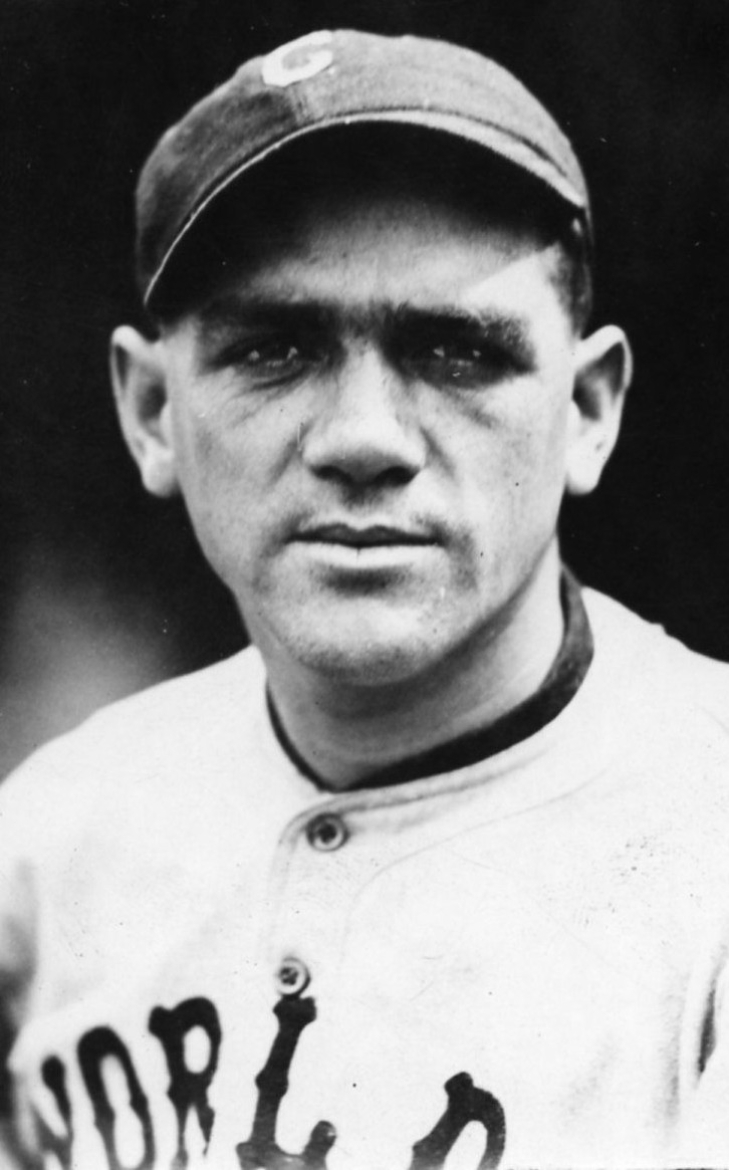
In the bruising, bare-knuckle world of early 20th-century catching, Steve O’Neill was the ultimate ironman of the Cleveland infield. Arriving in 1911, he didn't just occupy the space behind the plate; he anchored the franchise through its most transformative decade. Known for a defensive resilience that bordered on the supernatural.
O’Neill’s stay in Cleveland was defined by a steady evolution from a defensive specialist into a complete, high-frequency offensive contributor. While his reputation was built on being a wizard with the glove, smothering wild pitches and neutralizing the era's aggressive baserunners, his bat caught up to his elite fielding as the league moved into the 1920s. He reached a professional high-water mark in consistency starting in 1919, beginning a four-year run in which he recorded at least 100 hits annually. He was a model of specialized efficiency during the 1920 championship season, providing the veteran poise and steady-state production required to help the Indians secure their first World Series title.
The most profound aspect of his game was a late-career offensive surge that saw him bat over .300 for three consecutive summers from 1920 to 1922. His approach reached statistical outlier status in 1922, a season in which he hit .311 and drove in 65 runs while maintaining his legendary defensive standards. This performance earned him a sixth-place finish in the MVP voting, a rare and prestigious recognition for a catcher in that era. He possessed a specialized durability that allowed him to catch over 100 games in eight different seasons for Cleveland, serving as the primary engine for a pitching staff that relied on his tactical mind and physical toughness.
In 1924, he was traded to the Boston Red Sox, marking the end of a thirteen-year tenure that redefined the catching position for the franchise. With Cleveland, O’Neill compiled 1,071 hits and 467 RBIs while serving as the defensive anchor for the 1920 World Series title.
The organization provided the final punctuation to his legacy in 1951, inducting him into the franchise's Hall of Fame as part of the very first class.