


Site Admin
32. Johnny Mostil
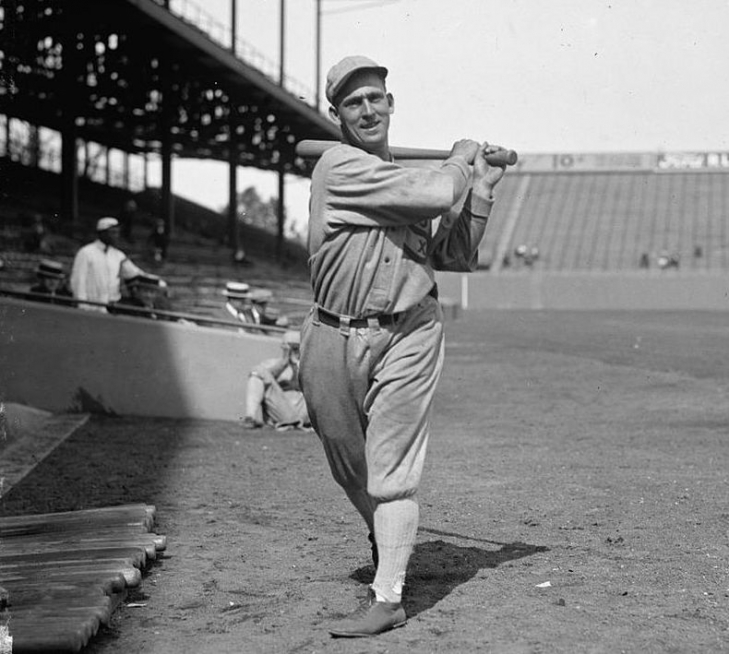
After a brief cup of coffee in 1918, Johnny Mostil spent several years refining his game in the minors before returning to Comiskey Park in 1921 as a fully formed catalyst. He matured instantly into a disciplined contact hitter with a vacuum for a glove, becoming a staple of the Chicago outfield. His peak was marked by a remarkable consistency at the plate, as he eclipsed the .300 mark in four separate seasons during the decade. He arrived as a raw speed prospect and evolved into a tactical weapon who understood that his primary job was to create chaos on the basepaths.
Mostil truly arrived in 1925, a season that ranks among the most complete by a leadoff hitter in franchise history. While he narrowly missed a .300 average, Mostil led the American League in runs scored (135), stolen bases (43), and walks (114), and this dynamic campaign earned him a second-place finish in the MVP voting, trailing only the legendary Roger Peckinpaugh. At that moment, he was the undisputed prototype for the modern center fielder.
Mostil was a defensive standout who used his elite quickness to shrink the massive dimensions of Comiskey Park, providing his pitchers with a sense of security rarely matched by his peers. He concluded his Chicago stay with 1,054 hits, 176 stolen bases, and a career .301 batting average, numbers that would have undoubtedly reached historic heights had his body not betrayed him.
The lights, unfortunately, began to dim on his career following that MVP-caliber peak. A harrowing combination of health problems and persistent injuries limited him to just 12 games in 1927. Although he showed immense grit by returning for a full campaign in 1928, the physical toll proved too great; injuries forced him out of the lineup early in 1929, and he would never again grace a Major League diamond.
31. Jack McDowell
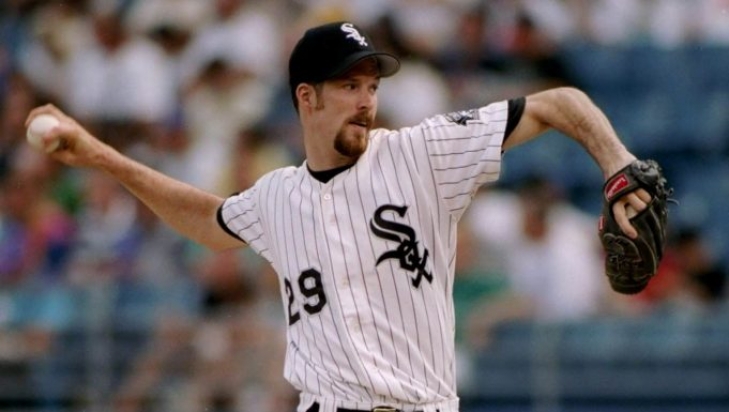
The fifth overall pick in 1987 didn't waste any time making his presence felt, debuting for four starts that same year. However, the path to greatness was briefly detoured by injury and a necessary 1989 rehab stint, forcing a maturation process that would eventually yield historic results. McDowell returned to the parent club in 1990 with a 14-win campaign that served as a loud harbinger for the decade to come. He arrived as a prospect with "stuff" and quickly evolved into a tactical leader who wanted the ball in every high-leverage situation.
The pinnacle of his career came in a three-year blitz from 1991 to 1993. During this stretch, "Black Jack" was a perennial All-Star and the defining workhorse of the American League, rattling off win totals of 17, 20, and a league-leading 22. After finishing as the Cy Young runner-up in 1992, he captured the trophy in 1993, anchoring an inspired Chicago staff that surged into the postseason. He showed off durability and an ability to finish what he started, leading the league in complete games and shutouts while providing a psychological edge that permeated the entire clubhouse.
Consistency and efficiency remained his hallmarks even as his pure velocity began to level off. In his final Chicago campaign in 1994, he still managed to lead the American League in strikeout-to-walk ratio, proving that his surgical control was as dangerous as his competitive fire. McDowell was a “big game” hunter, a pitcher who personified the gritty, blue-collar spirit of the South Side faithful.
The chapter finally closed on his South Side residency during the 1994 off-season, as the organization looked toward a future transition and dealt their Cy Young winner to the New York Yankees. He concluded his White Sox stay with a sterling 91-58 record and 918 strikeouts, a volume of production that firmly established him as the greatest right-handed ace of the New Comiskey era.
33. Jim Scott
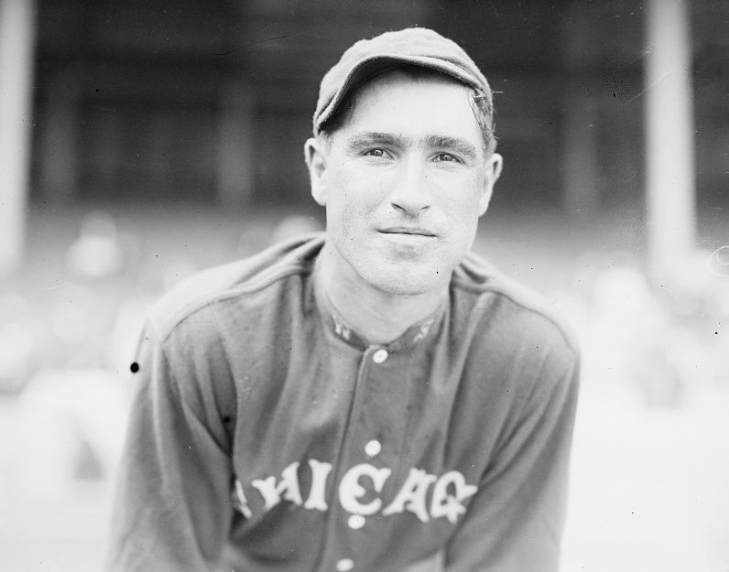
Arriving from the rugged landscape of Deadwood, South Dakota, Jim Scott debuted in 1909 and matured instantly into a reliable workhorse for the White Sox. He was the definition of a worker from the start, logging over 220 innings in each of his first three seasons. He arrived with a "clockspring" delivery that baffled hitters and quickly became the arm the organization leaned on to navigate the grind of the American League schedule. Though he suffered through a "hard luck" reputation, frequently victimized by a stagnant Chicago offense, his ability to consistently take the ball and keep his team in the game was the hallmark of his early years.
The absolute pinnacle of his career arrived in two distinct bursts of dominance. In 1913, after returning from an injury-shortened season, Scott authored a marathon campaign, pitching 312 innings and posting a sparkling 1.90 ERA. Despite his 20-21 record, MVP voters recognized his value, placing him 14th on the ballot for a season in which he allowed three or fewer earned runs in 39 consecutive starts—a Major League record at the time. He followed this in 1915 with his most decorated season, winning 24 games and leading the American League with seven shutouts, tying the great Walter Johnson for the league lead.
His identity was that of a quiet, intrepid professional who found unique ways to stay ahead of the game. Scott was a master of the breaking ball and was known to sportswriters as a wizard with the curve, using his legendary "mudball" to force hitters into weak contact. Whether he was stopping a 35-game hitting streak by Ty Cobb or throwing nine no-hit innings only to lose in the tenth, he played with a grit that earned him the respect of the entire league.
The chapter of his baseball life reached an abrupt and patriotic conclusion in 1917. While the White Sox were marching toward a World Series title, Scott left the team in mid-August to join the military after the United States entered World War I. He traded the mound for the uniform of his country, and while he technically shared in the 1917 championship, he spent the fall preparing for a different kind of service. He never returned to the Major Leagues as a player, but he left behind a career 2.30 ERA, a number that still ranks among the top twenty in the history of the sport.
30. Magglio Ordonez
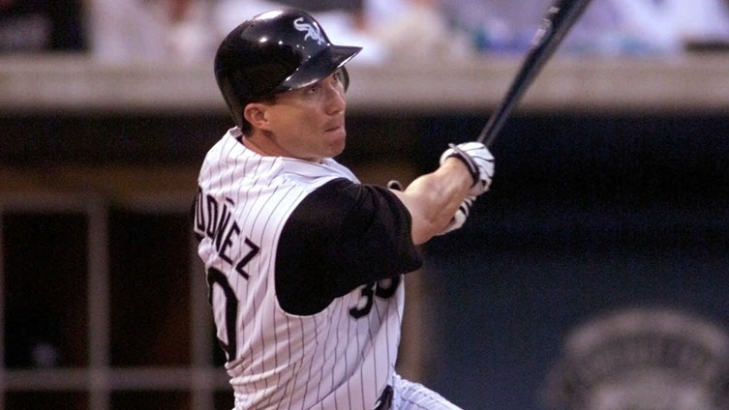
The long road from being a 1991 amateur signing finally reached its destination in 1997, but it was the 1999 campaign where Ordóñez truly matured into a franchise cornerstone. He took over right field and immediately brought a level the organization hadn't seen at the position in years. From 1999 to 2002, he was a model of run production, annually clearing the benchmarks of 30 home runs and 110 RBIs. He arrived as a prospect with high-ceiling potential and quickly became the high-leverage bat that opposing pitchers most feared in the Chicago order.
Efficiency was the hallmark of his game throughout the peak of his residency. Ordóñez wasn't a "three-true-outcomes" slugger; he was a surgical hitter who maintained a batting average over .300 for five consecutive seasons starting in '99. He earned him four All-Star selections and two Silver Slugger awards in a White Sox uniform, proving that his Advanced Quality was rooted in a rare combination of contact and power. He possessed a gap-to-gap approach that allowed him to anchor the middle of the order, serving as the primary engine for an offense that was consistently among the most dangerous in the junior circuit.
Whether he was driving a double into the left-center gap or launching a ball over the wall, Ordóñez played with a calm intensity that resonated with the South Side faithful. He concluded his Chicago chapter with 1,167 hits and 187 home runs, leaving the team with a stellar .307 career average. However, the final walk toward the exit was clouded by a complex set of circumstances.
The conclusion of his time in Chicago was as abrupt as it was painful. A collision with second baseman Willie Harris in May 2004 led to a significant left knee injury and bone marrow edema, a medical mystery that sidelined him for the majority of the season. With his contract expiring and concerns lingering about the long-term stability of his knee, the White Sox opted not to re-sign their star outfielder. Ordóñez entered free agency under a cloud of physical uncertainty, ultimately signing a massive deal with the Detroit Tigers in 2005.