

24. Andrew Luck
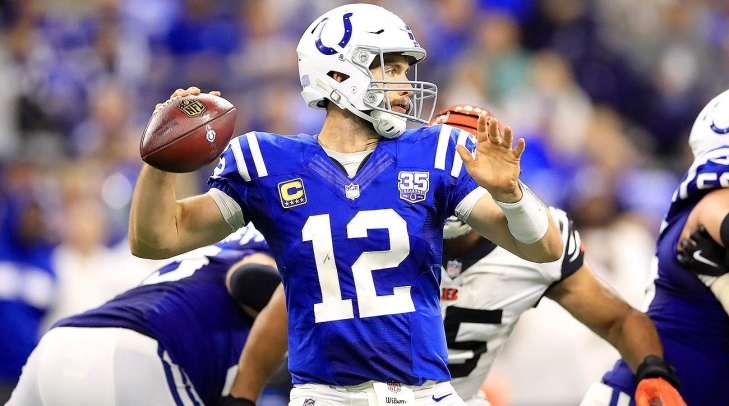
Exit Peyton Manning. Enter Andrew Luck.
Everybody knew that Andrew Luck was going to be the first overall pick in 2012, as it was widely believed that the Stanford superstar was going to be a difference-maker in the National Football League. The Colts, who had Peyton Manning, had to watch their stud Quarterback sit out that year, resulting in a terrible season and a #1 overall draft pick for Indianapolis, which of course led to Luck donning the horseshoe. How appropriate is that?
Luck’s early trajectory matched the highest expectations. He earned Pro Bowl selections in each of his first three seasons (2012–2014), elevating the team deeper into the postseason each year. His peak campaign arrived in 2014, when he led the entire NFL with 40 touchdown passes and threw for a franchise-record 4,761 yards while powering the Colts all the way to the AFC Championship Game. Possessing elite field vision, deep-ball accuracy, and the athletic strength to extend plays through heavy contact, Luck regularly carried entire game plans on his shoulders.
That physical style of play and porous pass protection eventually took a severe toll. A lacerated kidney and shoulder damage limited him to seven games in 2015, and after battling through the 2016 campaign, lingering shoulder issues forced him to miss the entire 2017 season following surgery. Luck mounted an inspiring return in 2018, delivering a stellar 39-touchdown performance that earned him his fourth Pro Bowl nod, the AP Comeback Player of the Year award, and another postseason victory.
Then came the moment that stunned the sporting world. In August 2019, at just 29 years old and on the eve of the regular season, Luck abruptly announced his retirement, citing the relentless cycle of injury and rehabilitation. Though his career ended far sooner than anyone anticipated, his talent and impact left an indelible mark on the era.
He threw for 24,671 Yards with a 171-83 TD-INT Ratio while also punching it in the end zone 14 times on the ground.
43. Ordell Brasse
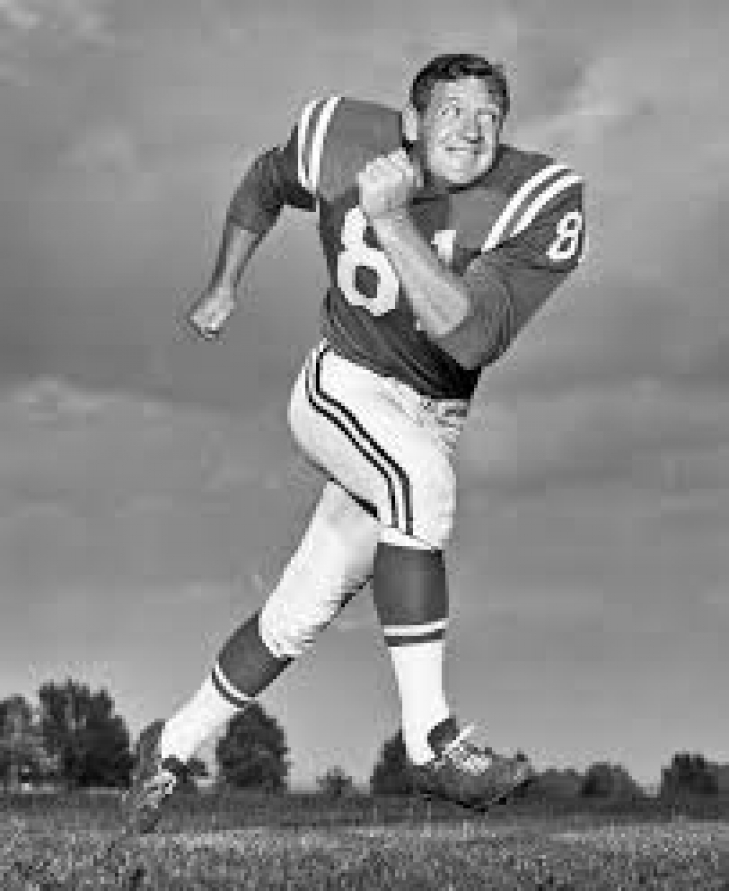
Drafted in the 14th round of the 1954 NFL Draft out of South Dakota, Ordell Braase took the scenic route to professional football stardom, working through military service and roster cuts before finally breaking into the Baltimore lineup in 1957. Once he arrived, the patient defensive end proved a master of longevity and technique, evolving from a trusted situational reserve during the Colts’ back-to-back 1958 and 1959 NFL Championship runs into an irreplaceable anchor on the right side of the defensive front.
Braase officially claimed the starting right defensive end spot in 1960, pairing with legendary defensive tackle Art Donovan and Hall of Famer Gino Marchetti to form one of the era’s most formidable pass-rushing fronts. Renowned for his disciplined edge setting and relentless motor, Braase consistently collapsed pockets and stifled sweep runs, serving as an on-field field general for Don Shula’s defense as his career progressed into his mid-30s.
Rather than slowing down with age, Braase saved his individual peak for the twilight of his career. In 1966 and 1967—at ages 34 and 35—he earned consecutive Pro Bowl invitations and Second-Team AP All-Pro honors, standing out as one of the NFL’s premier defensive ends through pure leverage and veteran savvy.
His final professional campaign in 1968 delivered one last team triumph, as Braase anchored a historically dominant Baltimore defense that surrendered just 144 points all season to capture the 1968 NFL Championship and earn a spot in Super Bowl III.
Over his 160 games in Baltimore, Braase had 80 sacks and seven fumble recoveries.
25. T.Y. Hilton

Drafted in the third round out of Florida International in the 2012 NFL Draft, Eugene Marquis "T.Y." Hilton arrived in Indianapolis with blazing sub-4.4 speed and immediately transformed into one of the most lethal deep-threat receivers of his generation. Though initially slotted into return duties and rotational work on special teams, injuries across the receiving corps quickly forced Hilton into the spotlight. He answered by striking up an instant, electric connection with rookie quarterback Andrew Luck, establishing himself as the primary weapon for a new era of Colts football.
Known as "The Ghost" for his remarkable ability to disappear behind secondaries and then suddenly appear wide open deep downfield, Hilton enjoyed a decade of excellence in Indianapolis. In his 10 seasons with the team, he achieved five 1,000-yard receiving seasons (2013–2016, 2018). His best year was in 2016 when he led the NFL with 1,448 receiving yards on 91 catches. This peak performance led to four straight Pro Bowl nominations from 2014 to 2017, cementing his reputation as one of the franchise's top wide receivers alongside Marvin Harrison and Reggie Wayne during the Indianapolis era.
Known as a big-game performer who famously torched the division-rival Houston Texans on a regular basis, Hilton’s production eventually slowed as injuries piled up toward the end of his tenure in Indy. After a final ten-game stretch with the Colts in 2021, Hilton spent a brief late-season stint with the Dallas Cowboys in 2022 before stepping away from the gridiron.
With the team, Hilton tabulated 9,691 yards with 53 touchdowns.
239. Ray Donaldson
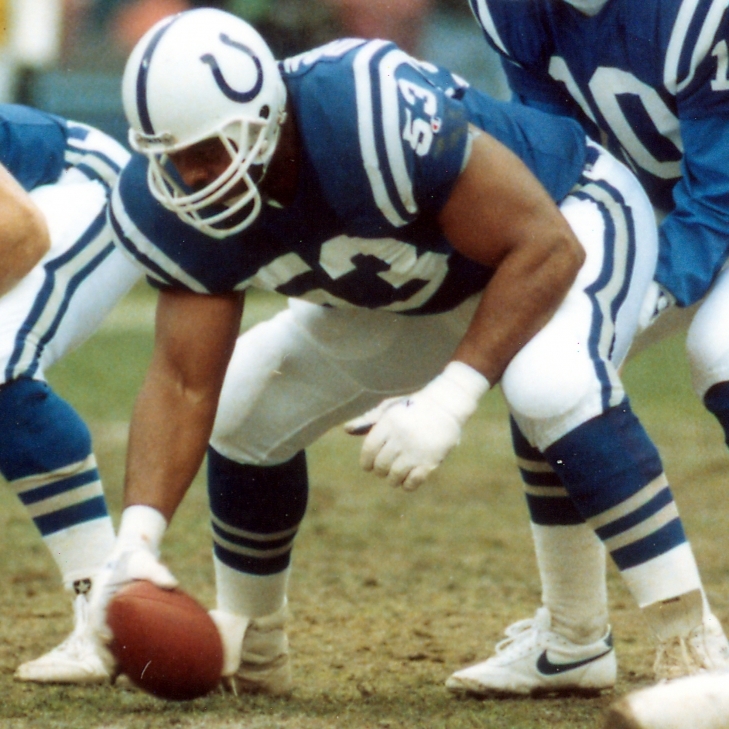
Ray Donaldson played 17 seasons in the NFL, the first 13 with the Baltimore/Indianapolis Colts, where he was their starting Center for 12 of them.
From 1986 to 1989, he was named to the Pro Bowl, and he was unquestionably considered to be one of the best Centers in the game. He later played for the Seattle Seahawks, then spent two more seasons with the Dallas Cowboys, both of which earned him a Pro Bowl Selection. He would stabilize that Cowboys O-Line to a win in Super Bowl XXX.
96. Cornelius Bennett
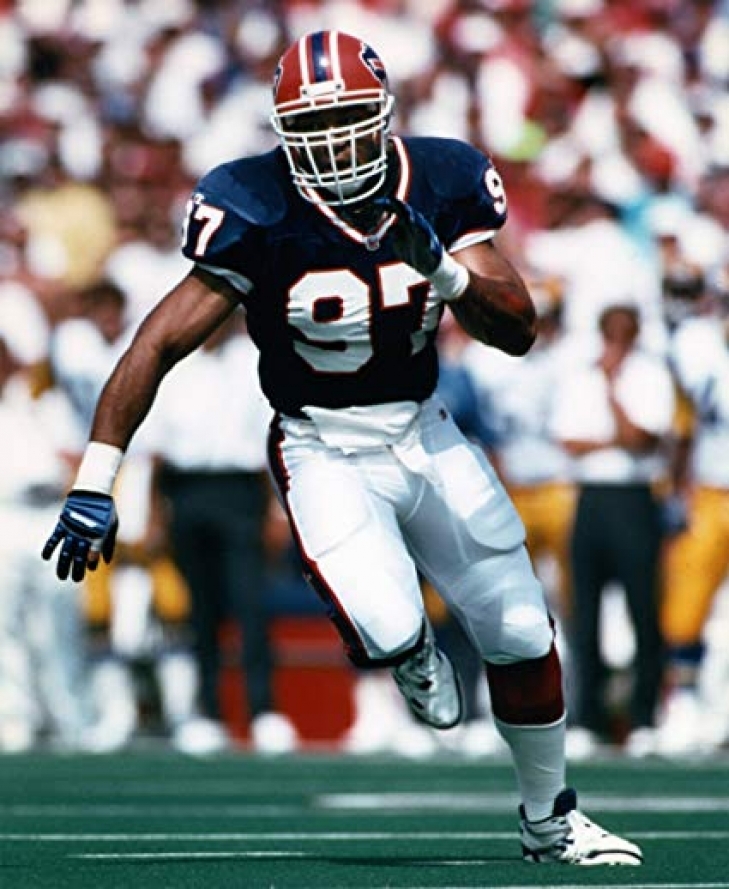
A complete beast at the University of Alabama, Cornelius Bennett was drafted second overall in 1987 by the Indianapolis Colts and, as part of a mega-trade, would become a Buffalo Bill. With the Bills, he would help them win four straight AFC Championships and was a five-time Pro Bowl Selection. One of those seasons saw Bennett named a First Team All-Pro, and UPI named him Defensive Player of the Year twice. Securing well over 1,100 Tackles over his career, the Bills may never have won a Super Bowl during Bennett's time there, but without the defensive stalwart, they never would have had four cracks at it. Considering his versatility as a Linebacker, he should have received at least a look from the powers that be.
113. Robert Mathis
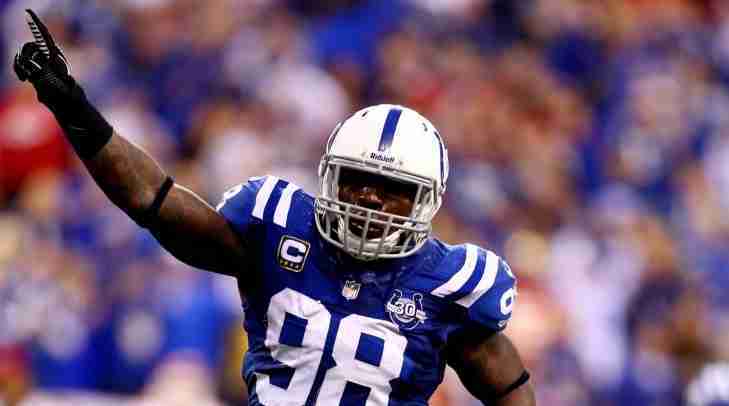
A member of the 100 Sack Club, Robert Mathis proved time and time again over his career that he was a certified beast on the pass rush.
Following a season where he was a vital part of a Colts defense that would win Super Bowl XLI, Mathis would be named to six consecutive Pro Bowls, culminating in 2013, when he would be named the AFC Defensive Player of the Year and lead the NFL in Sacks. Known for his way of evading blockers by getting them to commit to where he was no longer there, Mathis might have enjoyed the least amount of contact of anyone with 100-plus Sacks!
In a career spent entirely with the Indianapolis Colts, Mathis would net 123 Sacks with 527 Tackles.
Pat McAfee Abruptly Retires
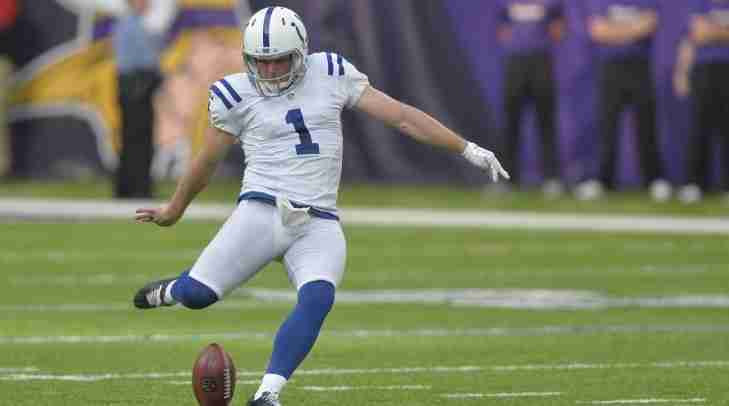
McAfee, who is only 29, was a very popular player amongst the Colts fans, both for his skill and for his quirky personality. He actually ranked third in jersey sales on the team. He retired from the NFL to join the growing website Barstool Sports.
The Punter is a former two time Pro Bowler and one time First Team All Pro Selection.
While we don’t see him as a Pro Football Hall of Famer, he is eligible in 2022 and we will be profiling him once our 2022 Football Futures are up.
We here at Notinhalloffame.com would like to congratulate Pat McAfee on a great career and wish him the best at Barstool Sports.
Now maybe we should get a former Punter to work for us!
23. Reggie Wayne
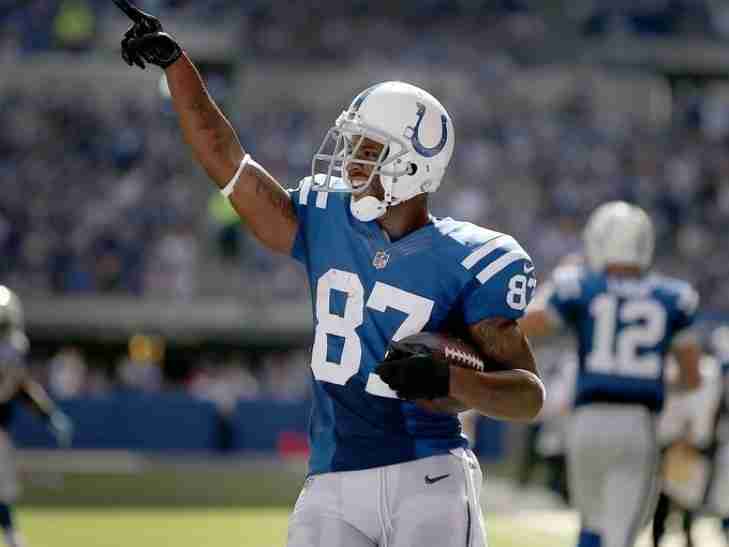
Drafted late in the First Round out of the University of Miami, Reggie Wayne was brought in to complement Marvin Harrison. It is safe to say he accomplished much more than that.
Wayne blossomed into an elite NFL Wide Receiver and exemplary route-runner, earning six Pro Bowl selections and leading the NFL in Receiving Yards in 2007. Spending his entire professional career with the Indianapolis Colts, Wayne was a large part of their Super Bowl XLI win, catching a 53 Yard Touchdown Pass in the first quarter. He went over 1,000 yards eight times in a season, finishing with 14,345 for his career. He also had another 1,254 Yards in the Playoffs, an exceptional number that should be celebrated on its own.
The Top 50 Indianapolis Colts of All-Time are now up
We are proud to present our Top 50 Indianapolis Colts, an organization with 2 Super Bowls, 2 NFL Championships and a rich history in two cities.
As always, we will give you a sneak preview of the top 5:
1. Peyton Manning
2. Johnny Unitas
3. Gino Marchetti
4. Marvin Harrison
5. Raymond Berry
The complete list can be found here and we encourage you to check it our and voice your opinions.
Up next will be the Top 50 Minnesota Timberwolves, and yes the #1 choice on that one was very easy!
Look for that soon!
42. Eric Dickerson
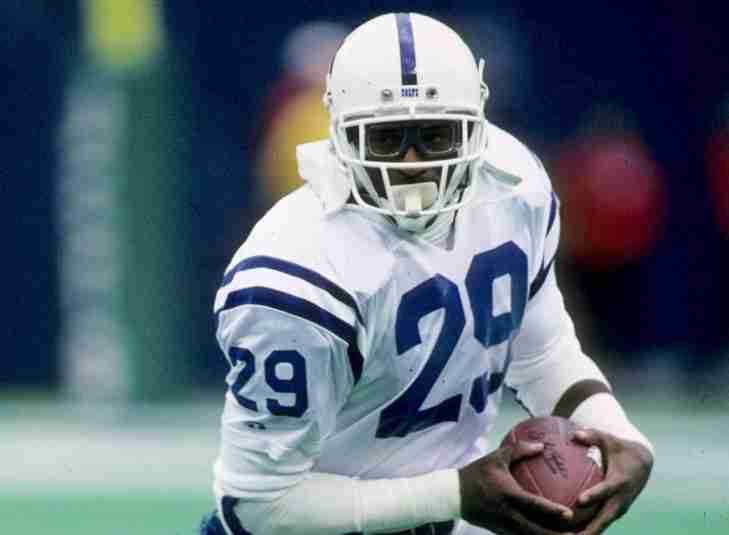
When a blockbuster three-team, ten-player trade rocked the NFL in October 1987, Eric Dickerson brought his iconic goggles, upright stride, and unmatched big-play explosiveness to the Hoosier Dome. Fresh off setting unbreakable rushing benchmarks in Southern California, the SMU star hit the ground running in Indiana, racking up 1,011 rushing yards in just nine games to power the Colts to their first AFC East title since relocating to Indianapolis.
Dickerson’s early years in horseshoe blue were nothing short of brilliant. In 1988, he put together his individual masterwork in Indianapolis, capturing the NFL rushing crown with 1,659 yards while carrying the offense on his back to earn his second consecutive First-Team AP All-Pro selection. He backed that up in 1989 with a 1,311-yard campaign, becoming the fastest runner in pro football history to reach 10,000 career rushing yards.
Yet for all his elite production, Dickerson’s tenure in Indianapolis was perpetually turbulent off the field. Bitter contract disputes, public feuds with management, and subsequent team suspensions strained his relationship with the front office and polarized fans. As injuries and age slowed his world-class speed in the early 1990s, his frustration grew, ultimately leading to a trade to the Los Angeles Raiders in 1992.
Despite the stormy exit, Dickerson’s peak brilliance in Indianapolis remains undeniable; he produced three 1,000-yard seasons and remains one of the most explosive pure ball-carriers ever to wear the uniform.
His overall legacy gained ultimate validation when he entered the Pro Football Hall of Fame in 1999, prompting the Colts to officially patch up the old wounds in 2013 by enshrining him in the Indianapolis Colts Ring of Honor. Stat-wise, Dickerson compiled 1,258 carries for 5,194 rushing yards, 32 rushing touchdowns, and 138 receptions for 1,082 yards.
50. Bert Rechichar
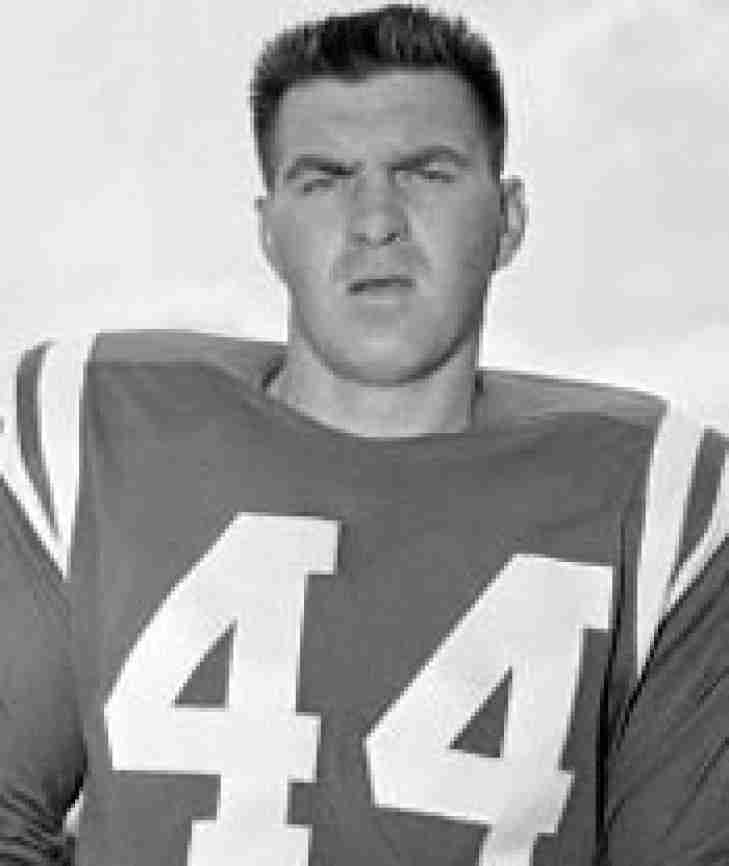
Long before specialized rosters ruled professional football, Bert Rechichar stood out as the ultimate multi-phase weapon in the early days of Weeb Ewbank’s Baltimore Colts. Selected 10th overall in the 1952 draft by Cleveland, Rechichar arrived in Baltimore in 1953 and quickly became a starter in the secondary. Known throughout the league as a bone-jarring, physically imposing safety, his instinctive range over the top gave Baltimore an aggressive backbone at the back end of their defense.
While his violent tackling set the tone on defense, Rechichar wrote his name permanently into football lore during his very first home game in Baltimore in 1953. Lining up against the Chicago Bears, he stepped back and drilled a staggering 56-yard field goal—a booming strike that shattered the previous NFL record by eight yards and stood as the longest field goal in league history for 17 years. Beyond his placekicking, Rechichar served as the team's primary return specialist and emergency punter, handling kickoffs, punts, and coverage duties with equal tenacity.
Rechichar’s individual peak in horseshoe blue came between 1955 and 1957, when he earned three consecutive Pro Bowl selections as one of the NFL’s premier safety anchors. He snagged 24 interceptions across seven seasons in Baltimore, frequently turning defense into instant offense alongside cornerbacks Carl Taseff and Don Shinnick.
His versatile contributions culminated in team triumphs at the decade's end, helping Baltimore secure back-to-back NFL Championships in 1958 and 1959 before finishing his career with brief stints in Pittsburgh and New York. With the Colts, Rechichar had 24 interceptions for 313 return yards, six fumble recoveries, 30 field goals made, 378 kick return yards, and two NFL Championship rings.
48. Duane Bickett
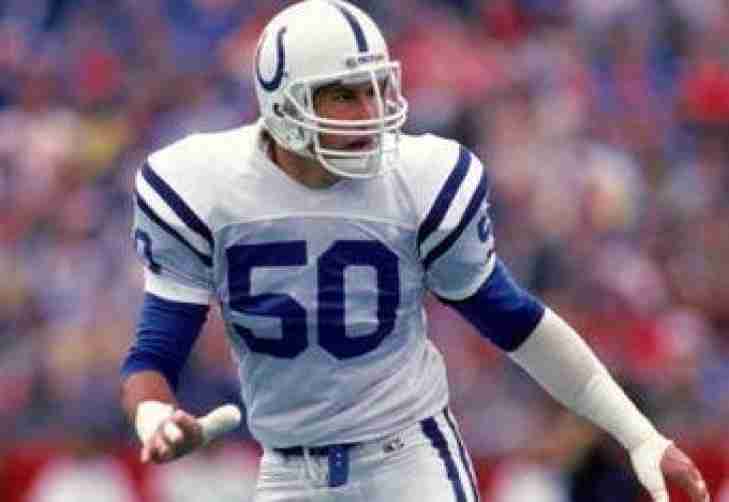
The Indianapolis Colts used the fifth overall pick in the 1985 NFL Draft on USC standout Duane Bickett, betting on a 6-foot-5, 251-pound athletic marvel who could redefine the right outside linebacker position. The move paid immediate dividends; Bickett stepped into the starting defense on day one and took the league by storm, amassing 141 tackles and 6.0 sacks to earn the 1985 AP NFL Defensive Rookie of the Year award.
Bickett’s versatility made him the central brain and primary disruptor of the Colts' late-1980s defense. An equal mix of edge pass rusher and instinctual coverage linebacker, he posted five seasons with at least 5.0 sacks in horseshoe blue. His individual peak arrived in 1987, when he compiled 8.0 sacks in just 12 games to earn both Pro Bowl and Second-Team AP All-Pro honors, anchoring an Indianapolis defense that captured the AFC East division title.
Remarkably durable across his nine active seasons in Indiana, Bickett started every single one of his 137 regular-season games for the franchise. Whether sniffing out screen passes, dropping back into hook zones, or collapsing pocket edges, his high football IQ and relentless effort made him one of the most respected linebackers of his era,
After racking up 50.0 sacks, nine interceptions, and 14 fumble recoveries in Indianapolis, Bickett spent the final three years of his 12-season NFL career with the Seattle Seahawks and Carolina Panthers.
47. Ted Hendricks
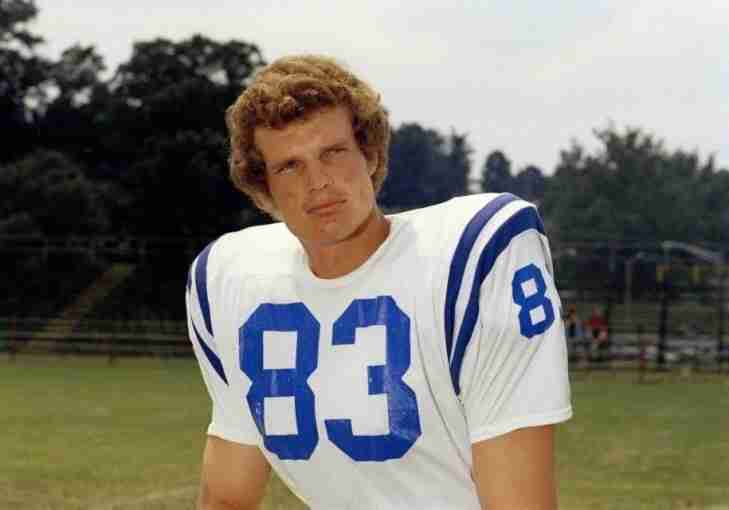
Standing 6-foot-7 with a range that redefined off-ball linebacker play in the late 1960s, Ted Hendricks arrived in Baltimore as a second-round pick out of Miami (FL) in 1989 and immediately earned his iconic nickname: "The Stork." With his towering height and immense wingspan, Hendricks transformed Don McCafferty's defense, using his frame to disrupt short passing lanes, smother sweep runs, and leap over field-goal units to block kicks with alarming frequency.
Hendricks stepped into a starting strongside linebacker role during his sophomore season in 1970, emerging as an indispensable centerpiece of Baltimore’s championship run. His spatial awareness and coverage skills were vital in Super Bowl V, where he helped bottle up the Dallas Cowboys' offense in a tight 16–13 victory to capture the first of his four career Super Bowl rings.
Over his final three seasons in Baltimore (1971–1973), Hendricks put together a dominant, peak-level stretch of linebacker play. He earned three consecutive Pro Bowl selections and a First-Team AP All-Pro nod in 1971, picking off 11 passes, recovering seven fumbles, and recording a safety in horseshoe blue. His knack for creating game-changing defensive turnovers in high-leverage moments made him one of the most feared defensive playmakers in pro football.
After the 1973 campaign, a contract dispute led to his departure for Green Bay and eventually the Oakland Raiders, where he became a legend, but he built the foundation of his Hall of Fame career in Baltimore across 70 consecutive regular-season games. Enshrined in the Pro Football Hall of Fame in 1990, Hendricks cemented his legacy as a uniquely gifted linebacker. In Baltimore, he recorded 11 interceptions for 126 return yards, seven fumble recoveries, and a defensive touchdown.
35. Dick Syzmanski
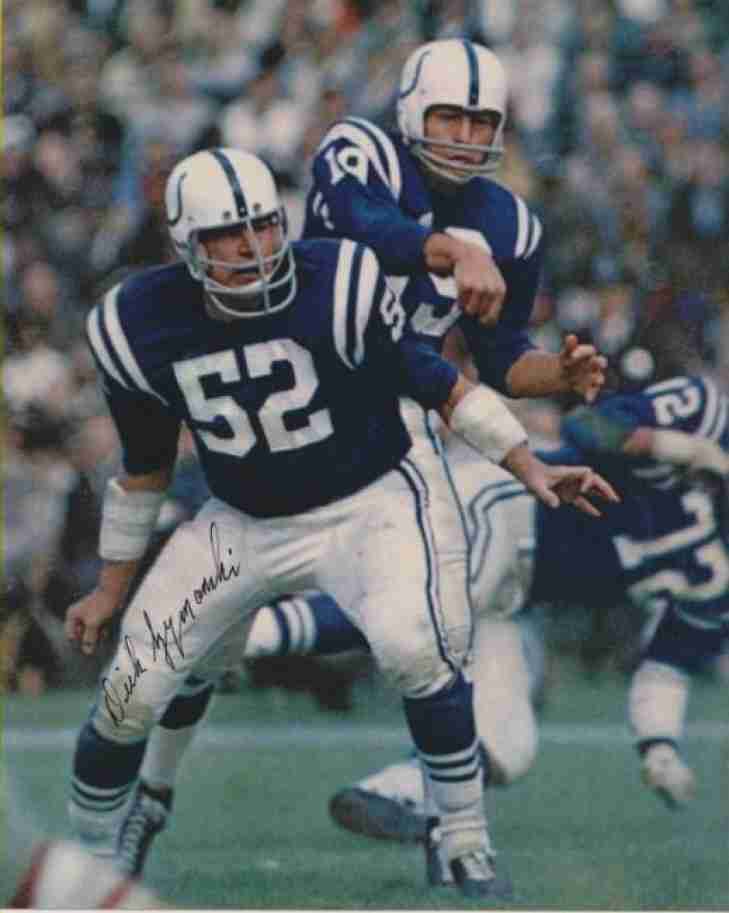
Few players in professional football history have personified two-way versatility like Dick "Sizzy" Szymanski, an iron-jawed pivot who could snap to Johnny Unitas on one drive and drop back to wallop opposing halfbacks on the next. Emerging from Notre Dame in 1955, Szymanski hit Baltimore like a physical revelation, jumping straight into the starting center spot as a rookie to earn Pro Bowl honors before putting his gridiron career on hold to serve his country in the U.S. Army.
After missing the entire 1956 season due to military service, Szymanski returned to a roster that needed his grit on the other side of the ball. Head coach Weeb Ewbank shifted him to middle linebacker for the 1959 and 1960 campaigns, where Szymanski flanked Don Shinnick and Bill Pellington to form one of the league's most punishing linebacking trios. His instinctive play inside proved vital during Baltimore's run to their second consecutive title in 1959, including a 31–16 victory over the New York Giants in the NFL Championship Game.
Returning to his primary center position in 1961, Szymanski re-established himself as one of the game's premier offensive line generals. Serving as the pre-snap caller and protector for Johnny Unitas, he played in 80 consecutive regular-season games from 1959 through 1964, earning two additional Pro Bowl invitations in 1962 and 1964 while anchoring a front line that powered Baltimore back to the top of the league.
Durable, tough, and fiercely loyal across 13 active seasons spent exclusively in horseshoe blue and white, Szymanski appeared in 155 regular-season games, winning three NFL Championship rings (1958, 1959, 1968) before transitioning directly into a multi-decade front office career with the franchise as a scout, personnel director, and general manager.
Syzmanski left the gridiron with 129 starts, 6 interceptions, and one of the most solid reputations in franchise history.
45. Bubba Smith
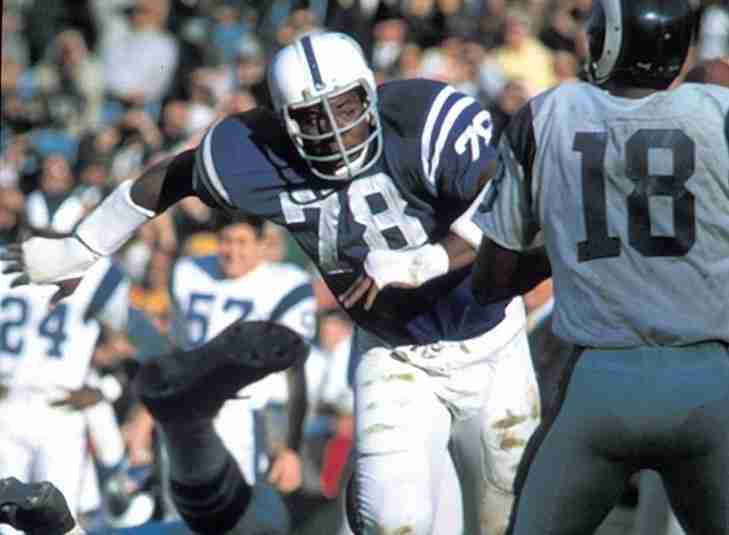
Long before pop culture knew him as the towering Moses Hightower in the Police Academy film franchise, Charles "Bubba" Smith struck genuine fear into opposing backfields as an imposing gridiron force. Selected first overall in the 1967 NFL Draft out of Michigan State, the 6-foot-7, 265-pound defensive end possessed a rare blend of length, explosive speed, and brute power that instantly transformed Don Shula’s defensive front in Baltimore.
Operating on the left side of Baltimore’s defensive trench, Smith became one of the premier pass rushers and edge setters in the National Football League. He earned Second-Team All-Pro recognition in 1968, helping anchor a defense that surrendered just 144 points all season en route to the 1968 NFL Championship. His individual production climbed even higher in 1970 and 1971, earning back-to-back Pro Bowl honors and culminating in a First-Team AP All-Pro campaign in 1971.
Smith’s defensive presence reached its apex during Baltimore’s march to glory in Super Bowl V. Teaming up with Billy Ray Smith Sr. and Fred Miller, his disruptive penetration harassed Dallas quarterbacks throughout the contest, holding the Cowboys' offense in check during a dramatic 16–13 victory to bring the Lombardi Trophy to Baltimore.
Though a tragic knee injury sustained during the 1972 preseason—after colliding with a steel yard-marker post on the sideline—forced him to miss the entire year and ultimately altered his athletic trajectory, his five-season playing run in Baltimore remains legendary.
He was traded to the Oakland Raiders in 1973 before finishing his career with the Houston Oilers. With the Colts, Smith accumulated 43 sacks in 69 games.
38. Billy Ray Smith
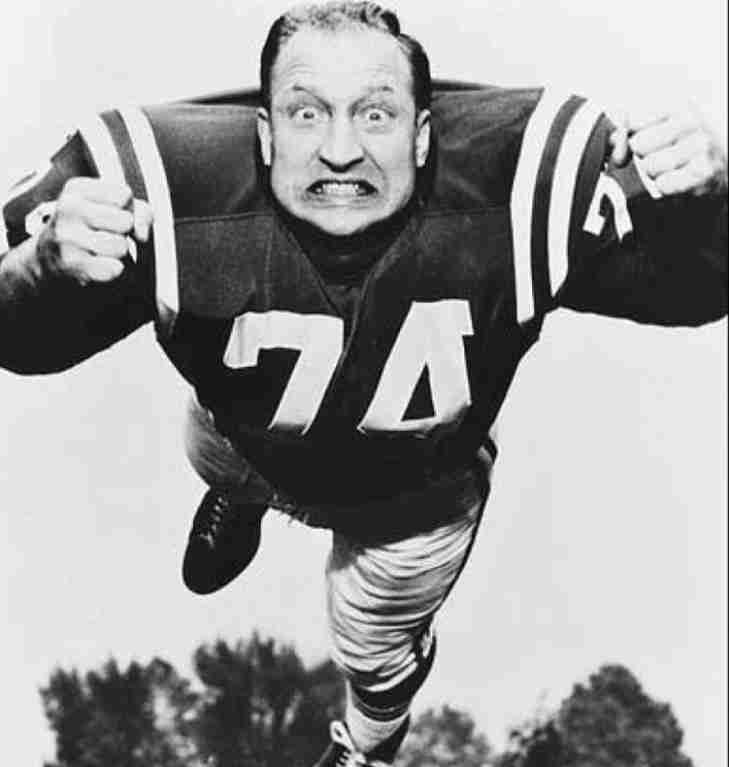
Long before he put the final exclamation point on his 13-year career in orange-squeezed Super Bowl V glory, Billy Ray Smith Sr. arrived in Charm City as a seasoned, battle-tested interior force. Drafted out of Arkansas in 1957, the Augusta native spent his early seasons with the Rams and Steelers before joining the Baltimore Colts in 1961. Smith instantly plugged into the defensive line rotation, bringing relentless leverage, technique, and an unrelenting work ethic that earned him the fond nickname "Rabbit"—a nod to his surprising quickness off the snap for a 250-pound defensive tackle.
Smith’s greatest asset was his rock-solid adherence to defensive fundamentals and unshakeable locker room presence. As a multi-year defensive captain under head coaches Don Shula and Don McCafferty, he anchored the interior alongside Bubba Smith and Fred Miller, establishing a stout front that neutralized opposing ground attacks. His individual peak arrived during the historic 1968 campaign, where he earned Second-Team AP All-Pro honors while helping power Baltimore's dominant defense to the 1968 NFL Championship title.
His career reached a storybook conclusion in 1970. Operating as the heart and soul of the defense at age 35, Smith helped guide the Colts through a gritty playoff run that culminated in Super Bowl V against the Dallas Cowboys. In a hard-hitting 16–13 victory, Smith’s interior wall held firm, securing the franchise's first Super Bowl ring and providing the veteran captain with a perfect fairy-tale exit from professional football.
Durable and steady across a decade for the Shoe, Smith appeared in 133 regular-season games for Baltimore, serving as a trusted leader through one of the most successful eras in team history. Retiring immediately after that Super Bowl V victory, Smith left the game as a two-time champion who set the benchmark for professionalism and defensive line play in Baltimore. He recorded 69.5 sacks in Baltimore.
49. Gene Lipscomb
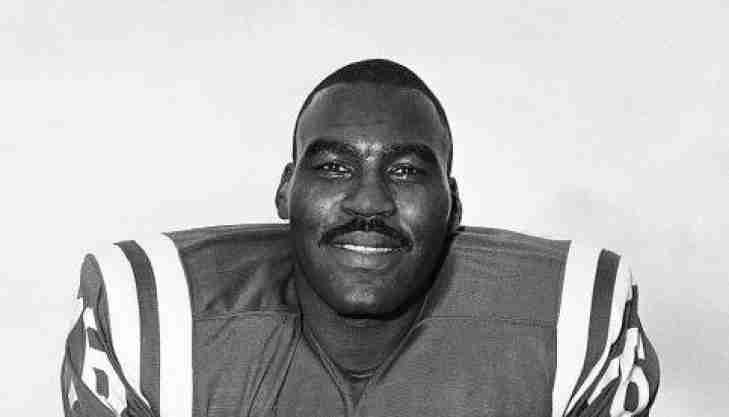
Standing 6-foot-6 and weighing a massive 288 pounds, Gene "Big Daddy" Lipscomb took one of the most improbable paths to professional football stardom in NFL history. Never attending college, Lipscomb honed his physical craft while serving in the United States Marine Corps before breaking into the league with the Los Angeles Rams as an undrafted free agent in 1953. After three seasons in Southern California where his immense potential was overshadowed by off-field friction, the Rams placed him on waivers in 1956—allowing Weeb Ewbank's Baltimore Colts to scoop up the towering defensive tackle for a mere $100 claim fee.
In Charm City, Lipscomb found structure, brotherhood, and immediate stardom. Lining up alongside Hall of Famers Gino Marchetti and Art Donovan, "Big Daddy" utilized a terrifying combination of lateral quickness and physical strength to obliterate opposing offensive lines. His signature move—a stinging slap to the earhole of holding blockers—and his unmatched range allowed him to pursue halfbacks from sideline to sideline. He led Baltimore in tackles during his second season and anchored a dominant interior front that powered the Colts to back-to-back NFL Championships in 1958 and 1959.
During those dual championship runs, Lipscomb operated as arguably the most dominant interior defender in pro football. He earned consecutive First-Team AP All-Pro selections and Pro Bowl nods in 1958 and 1959, then added Second-Team All-Pro honors in 1960. His ability to swallow up double-teams inside gave Baltimore’s linebackers complete freedom to flow to the ball, cementing his reputation as a defensive engine.
Traded to the Pittsburgh Steelers in 1961, Lipscomb played two final All-Pro-caliber seasons before his life was tragically cut short in 1963 at age 31.
34. Ryan Diem
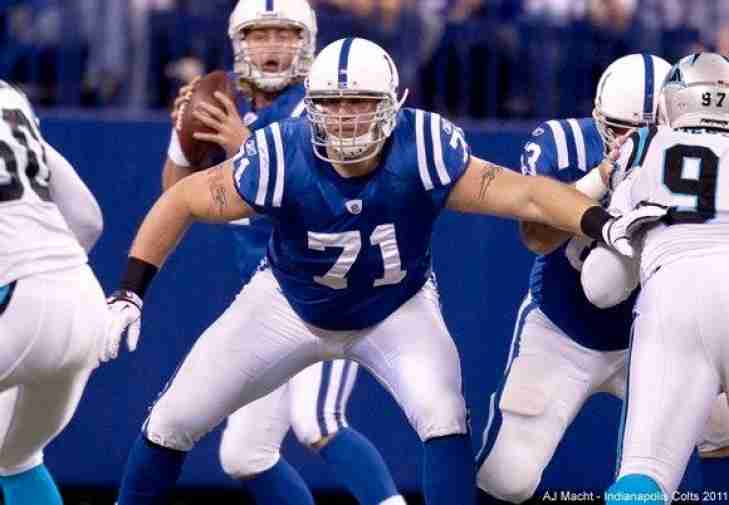
Drafted in the fourth round (118th overall) of the 2001 NFL Draft out of Northern Illinois, Ryan Diem arrived in Indianapolis as a powerful, 6-foot-6 interior prospect who quickly carved out a permanent home on the edge. After proving his mettle as a rotational guard in his debut season, Diem transitioned full-time to right tackle in 2002, securing a starting position he held with exceptional consistency for a decade.
Operating on the strong side of one of the most prolific offenses in pro football history, Diem provided crucial edge protection for Peyton Manning's lightning-fast pre-snap rhythm. Possessing a wide base and heavy hands, he locked down pass rushers while setting a physical edge for Edgerrin James and Joseph Addai in Howard Mudd’s zone-blocking scheme. While high-profile national awards often overlooked right tackles of his era, Diem’s steady reliability in pass sets allowed Manning to operate with complete comfort inside the pocket.
Diem’s quiet dominance was a cornerstone of Indianapolis' golden championship era. He anchored the right side of the front five throughout the 2006 postseason, culminating in a stellar blocking performance in the rain at Super Bowl XLI to help secure a 29–17 victory over the Chicago Bears and bring the Lombardi Trophy to Indianapolis.
Durable and unselfish across 11 NFL seasons, he retired after the 2011 season. Diem appeared in 157 regular-season games and made 150 starts in horseshoe blue, routinely battling through injuries to keep the Colts' high-octane offense operating at peak efficiency.
33. Jimmy Orr
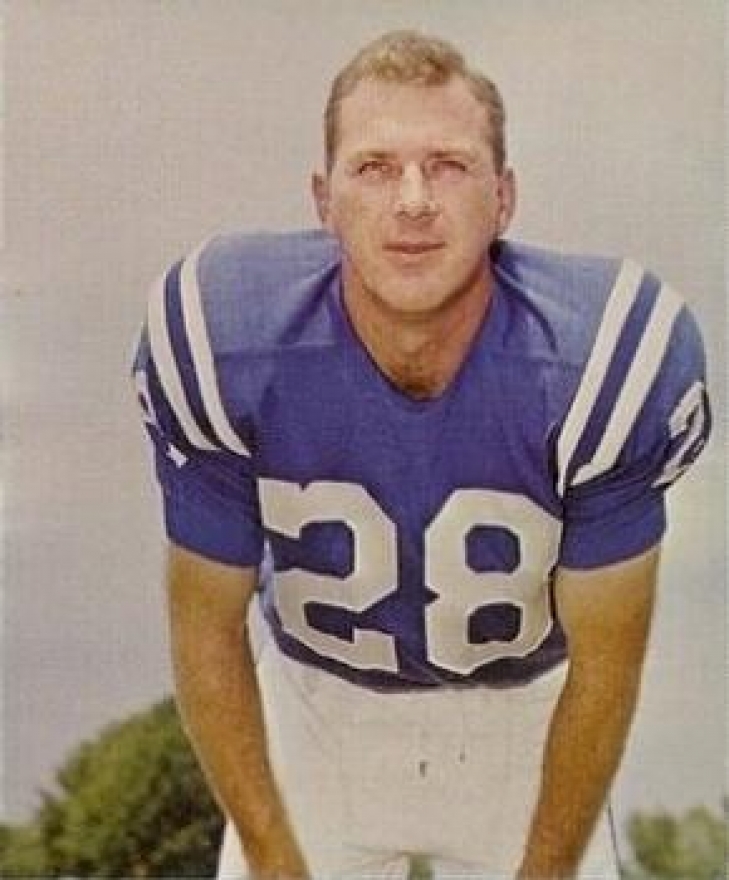
Long before he became Johnny Unitas' favorite downfield target in Charm City, Jimmy Orr proved his big-play pedigree in Pittsburgh. Drafted in 1958 out of Georgia, Orr captured AP NFL Rookie of the Year honors and earned a Pro Bowl bid with the Steelers before a blockbuster multi-player trade brought him to Baltimore in 1961. Lined up opposite Raymond Berry, Orr brought explosive field-stretching vertical speed that gave the Colts' offense an entirely new dimension.
Orr’s signature trait was his staggering big-play efficiency. Possessing exceptional boundary tracking and deep-ball acceleration, he led the entire National Football League in yards per reception twice during his ten seasons in Baltimore—averaging a ridiculous 21.7 yards per catch in 1964 and an incredible 25.6 yards per catch in 1968. Across his ten campaigns in horseshoe blue, Orr averaged 22.9 yards per catch, a mark that stands as one of the most explosive multi-year runs in pro football history.
His individual peak arrived in 1965, when he put together a dominant First-Team AP All-Pro season. With 45 receptions for 847 yards and 11 touchdown catches, Orr earned his second career Pro Bowl selection and established himself as one of the game’s premier flankers. He finished in the NFL's top ten in receiving yards three times during his Colts tenure (1962, 1964, and 1965).
Despite being famously missed by Earl Morrall on the infamous "flea-flicker" play in Super Bowl III while standing wide open in the end zone, Orr found ultimate narrative redemption two years later. In Super Bowl V against the Dallas Cowboys, Orr helped Baltimore secure a dramatic 16–13 victory, walking off the field for the last time as a Super Bowl champion.
With the Colts, Orr caught 256 passes for 5,859 yards and 50 touchdowns, averaging a stunning 22.9 yards per reception.
37. Don Shinnick
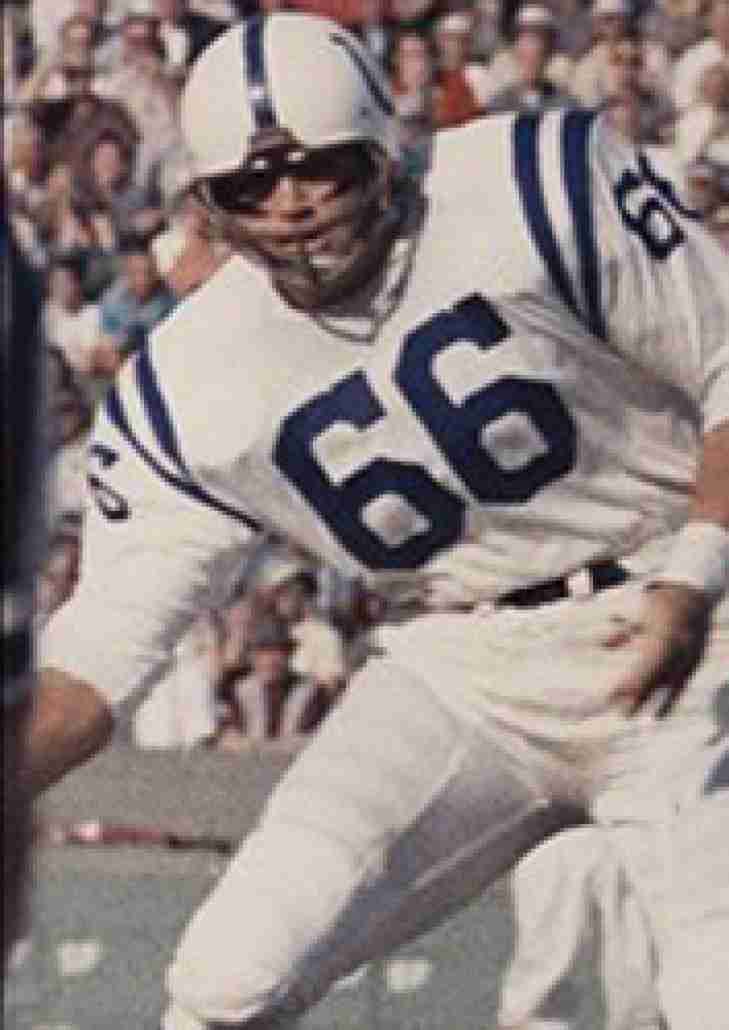
Selected in the second round (20th overall) of the 1957 NFL Draft out of UCLA—where he starred as a two-way fullback and linebacker—Don Shinnick stepped into Baltimore's linebacking corps with an extraordinary nose for the football. Joining Weeb Ewbank's defense alongside Bill Pellington and Gino Marchetti, Shinnick immediately solidified the interior, displaying rare spatial awareness and zone-coverage instincts.
Shinnick’s defining superpower was his unprecedented ability to drop into coverage and snatch opposition passes out of the air. While middle linebackers of the late 1950s were expected primarily to stuff the run, Shinnick revolutionized second-level pass defense. His career apex came in 1959, when he tied for the NFL lead with seven interceptions, earning Second-Team AP All-Pro honors while anchoring Baltimore's defense during their second consecutive NFL Championship run.
Beyond his coverage prowess, Shinnick stood as a relentless, bone-jarring tackler who consistently diagnosed plays before they unfolded. His diagnosing ability enabled Baltimore to capture back-to-back world titles in 1958 and 1959, culminating in his starting role on the 1968 NFL Championship team that reached Super Bowl III.
Loyal and durable across 13 active seasons spent exclusively in Baltimore, Shinnick played in 166 regular-season games for the franchise, picking off at least one pass in 12 of his 13 NFL campaigns. He finished with 37 interceptions for 255 return yards and nine fumble recoveries.
