


Site Admin
13. Lefty Grove
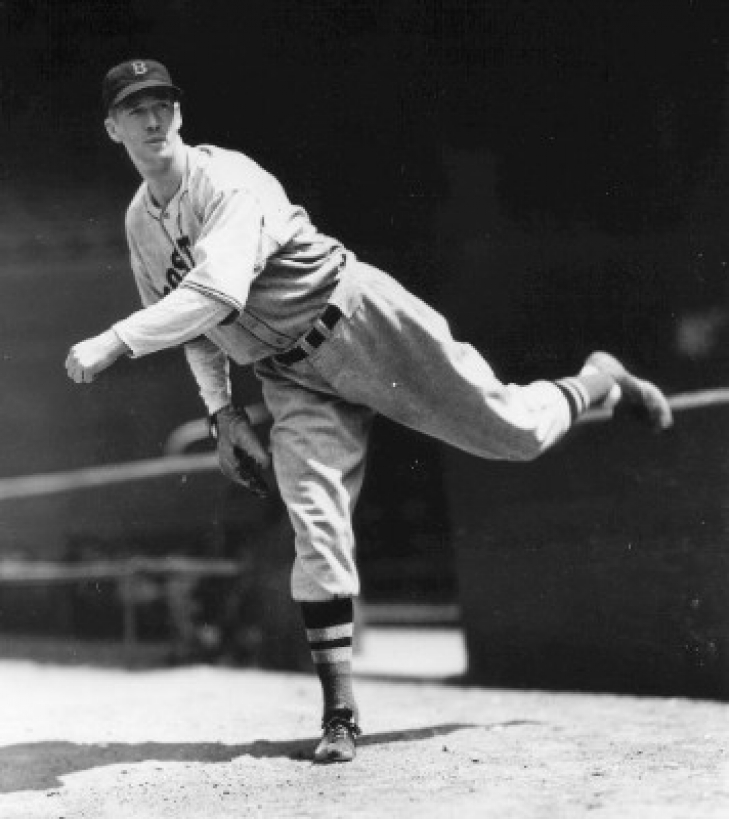
Lefty Grove arrived in Boston in 1934 under the shadow of a "fire sale" in Philadelphia and a disastrous first year at Fenway. Initially, it appeared the legendary southpaw was finished; plagued by arm trouble, he struggled to an 8–8 record and a career-worst 6.50 ERA. However, what followed was one of the most remarkable transformations in pitching history. Grove abandoned the raw power that had defined his youth and reinvented himself as the craftiest pitcher in the American League.
From 1935 to 1939, Grove became a statistical anomaly. Despite being in his mid-to-late 30s, he secured four ERA titles for the Red Sox (1935, 1936, 1938, and 1939). Even more impressive in advanced metrics, Grove led all AL pitchers in bWAR for three consecutive seasons (1935–1937), proving he was the most valuable arm in the league long after his supposed expiration date.
Though his strikeout totals dipped, Grove’s efficiency skyrocketed. He remained the staff ace for a Red Sox team on the rise, providing a veteran anchor for a clubhouse that would soon include icons like Ted Williams and Bobby Doerr. On July 25, 1941, at the age of 41, Grove achieved one final milestone in a Boston uniform: his 300th career victory, a 10–6 complete-game win over the Cleveland Indians at Fenway Park. It would be the final win of his career, a moment of legacy that cemented his status as a titan of the sport.
Grove retired after the 1941 season with a Boston record of 105–62, a winning percentage (.629) that showcased his ability to win even when he wasn't at his physical peak. Inducted into the Baseball Hall of Fame in 1947, he was later named a charter member of the Boston Red Sox Hall of Fame.
12. Tris Speaker
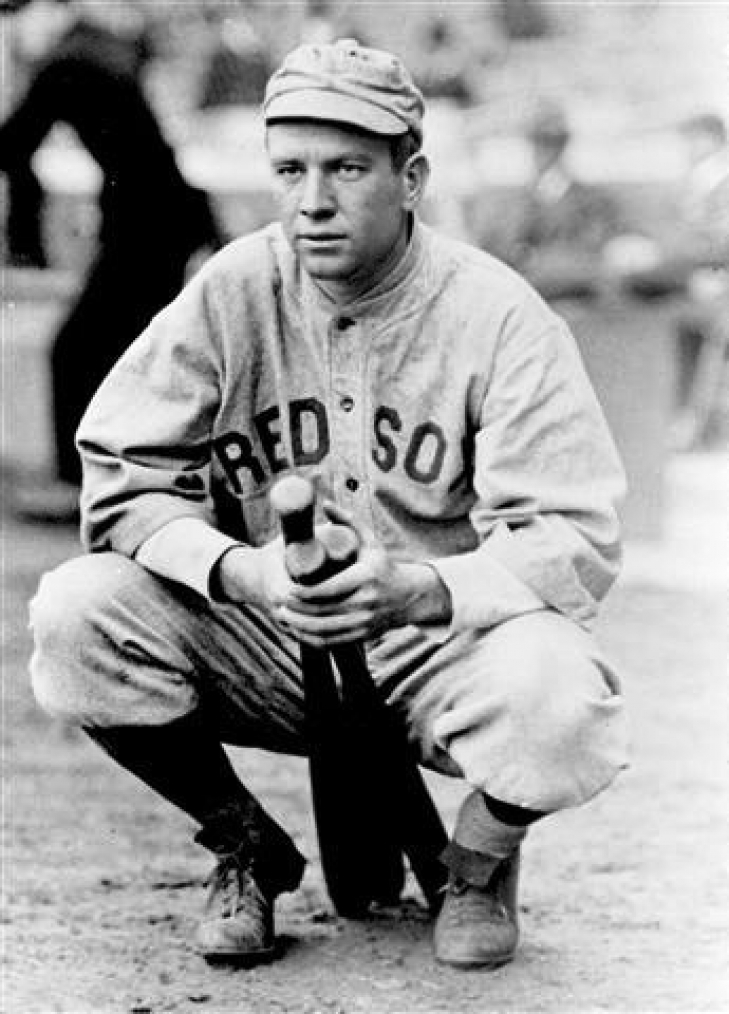
The Hall of Fame career of Tris Speaker began in Boston, where he debuted in 1907 and quickly entrenched himself as the starting center fielder by 1909. Known as the "Grey Eagle," Speaker revolutionized the position by playing an exceptionally shallow center field, a defensive innovation that allowed him to turn triples into outs and lead the league in outfield assists. Offensively, he was just as dominant, batting .309 in his first full season and embarking on a decade-long stretch where he became a fixture at the top of the American League leaderboards.
Speaker’s 1912 campaign stands as one of the greatest individual seasons in Red Sox history. That year, he batted a staggering .383 and led the American League in Doubles (53), Home Runs (10), and On-Base Percentage (.464). This rare power-and-patience profile earned him the AL MVP (Chalmers Award) and propelled Boston to a World Series Championship. His discipline was legendary; after 1910, Speaker never produced an OBP under .400 during his tenure in Boston.
Speaker was the engine behind two World Series titles in Boston (1912 and 1915), providing the clutch hitting and leadership that defined the franchise's early golden age. However, a contract dispute before the 1916 season led to a blockbuster trade to the Cleveland Indians, a transaction that Boston fans and historians would regret for generations. Despite the change of scenery, Speaker's impact on the Red Sox record books remained, leaving the city with 1,327 hits and an elite slash line of .337/.414/.482.
Speaker continued his assault on the record books in Cleveland, amassing another 1,965 hits and retiring as the all-time MLB leader in Doubles with 792, a record that still stands today. His defensive metrics were equally historic, as he remains the all-time leader in assists and double plays among center fielders.
Inducted into the Baseball Hall of Fame in 1937 (with the formal ceremony in 1939), Speaker was also honored as a charter member of the Boston Red Sox Hall of Fame.
8. Dwight Evans
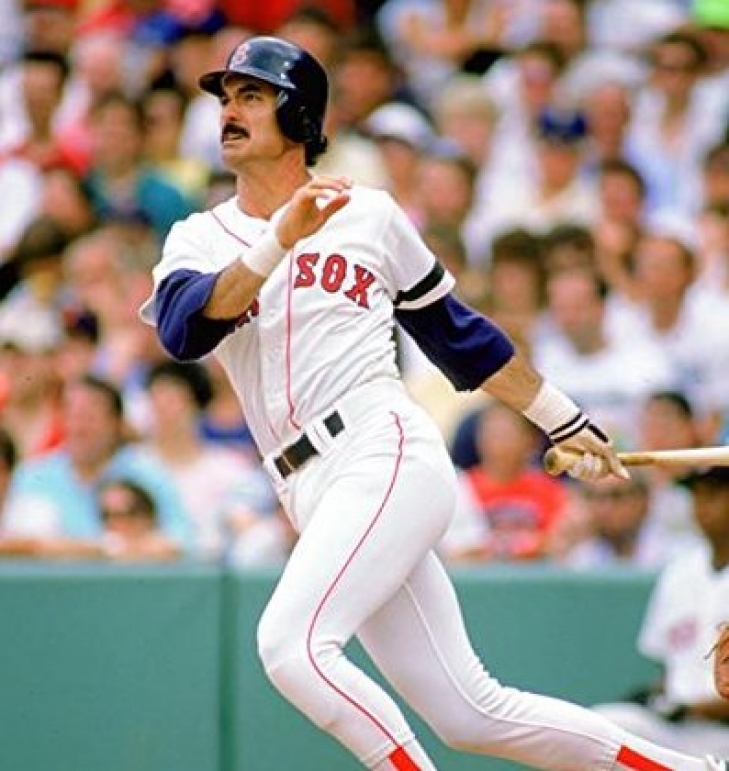
Dwight Evans may be one of the most underrated players in baseball history, a "Lifer" in spirit who spent 19 of his 20 seasons (1972–1990) patrolling right field at Fenway Park. Often overshadowed by Hall of Fame teammates like Carl Yastrzemski and Jim Rice, "Dewey" eventually proved to be the most well-rounded player of his era. In the Lab, Evans represents the rare "Two-Way Outlier”, a defensive vacuum who transformed himself into one of the most disciplined power hitters in the American League.
Defensively, Evans was the benchmark for a generation. Cemented as the starter in 1974, he immediately weaponized one of the greatest outfield arms in the history of the sport. His eight Gold Gloves are backed by both traditional and advanced metrics; he consistently finished atop his peers in assists and Total Zone runs. His defensive efficiency acts as a massive floor, providing elite value even during the years his bat was still developing.
As his career progressed, Evans’ offensive game reached a new echelon. Beginning in 1978, he reeled off eleven seasons of 20 or more home runs, including three campaigns surpassing the 30-mark. During the strike-shortened 1981 season, he proved his elite standing by sharing the AL Home Run Title (22) and leading the league in Walks. This patient approach made him an OPS pioneer; he led the American League in OPS twice (1981 & 1984) and remained a top-six fixture in that category throughout the mid-80s.
A three-time All-Star and two-time Silver Slugger, Evans was the quiet engine of the 1975 and 1986 World Series teams. His ability to combine high-volume power with league-leading patience, leading the AL in Walks three times. He concluded his Red Sox tenure with 2,373 hits, 379 home runs, and 1,346 RBIs, totals that place him among the inner circle of franchise greats.
Though he played his final season in Baltimore, Evans’ heart remained at Fenway, where he was inducted into the Red Sox Hall of Fame in 2000.
6. David Ortiz
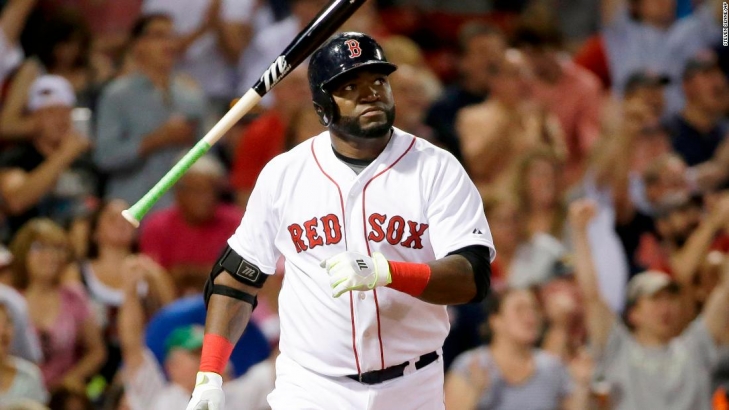
David Ortiz arrived in Boston in 2003 as a Minnesota castoff and left fourteen years later as a New England immortal. The legend of "Big Papi" began almost immediately; in his debut season, he powered 31 home runs and drove in 101, but it was the following year that he became the face of a revolution. As the anchor of the 2004 squad, Ortiz’s walk-off heroics in the ALCS earned him the ALCS MVP and paved the way for the Red Sox to finally "Reverse the Curse" and secure their first World Series title in 86 years.
For the next decade, Ortiz was the most feared power threat in the American League. He produced eight more seasons with 30+ home runs, including a massive 2006 campaign in which he set a franchise record with 54 home runs while leading the league in RBIs (137) and Walks (119). Despite the "DH penalty" often applied by voters, Ortiz’s offensive efficiency was so undeniable that he finished in the top five of the MVP voting for five consecutive seasons (2003–2007), proving he was more than just a slugger; he was an elite efficiency engine.
Ortiz’s ability to hit for average and maintain a disciplined eye was a hallmark of his game. A ten-time All-Star, he batted over .300 seven times in a Boston uniform and secured the AL On-Base Percentage title in 2007. His postseason resume, however, is what truly separates him from the pack. A vital part of three World Series titles (2004, 2007, 2013), Ortiz’s performance in the 2013 Fall Classic was otherworldly, earning him World Series MVP honors after batting a staggering .688 during the series.
Even in his final act, Ortiz refused to slow down, authoring what is widely considered the greatest "swansong" in baseball history. At age 40, he led the American League in Doubles (48), RBIs (127), Slugging (.620), and OPS (1.021). He retired at the absolute peak of his powers, leaving the game not because he had to, but because he had nothing left to prove. He finished his Red Sox career with 483 home runs and 1,530 RBIs, cementing his status as a "Lifer" in spirit, if not by technicality.
Inducted into the Baseball Hall of Fame in 2022 on his first attempt, Ortiz saw his Number 34 retired at Fenway Park just three years later. He remains the all-time postseason benchmark for the franchise, holding 17 home runs and a legendary reputation for high-leverage dominance. In the Fenway Lab, Ortiz isn't just a designated hitter; he is the singular force who turned the Red Sox into the most successful franchise of the 21st century.