

19. Gio Gonzalez
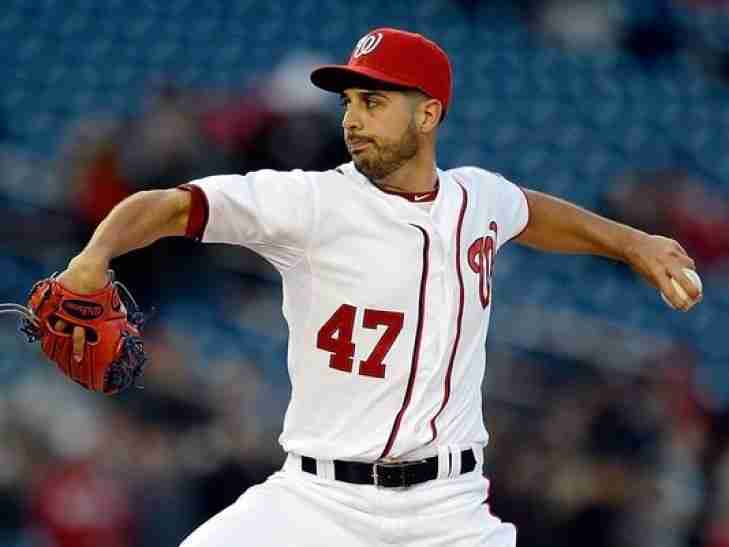
When the Washington Nationals executed a multi-player blockbuster trade with Oakland in December 2011 to acquire Gio Gonzalez, their intent extended beyond merely augmenting rotation depth. They sought a dynamic, high-velocity left-handed pitcher to complement Stephen Strasburg and to advance the franchise into its inaugural authentic era of contemporary contention. Equipped with an electrifying fastball and a distinctive, looping curveball that broke sharply as if it were dropping off a table, the southpaw performed immediately, establishing a remarkably resilient standard of durability in the District for nearly seven seasons.
Gonzalez’s debut campaign with the Nationals in 2012 was a display of top-tier dominance. He completely subdued National League batters, leading a 98-win, division-winning team with an impressive 21-8 record. His precise control resulted in a 2.89 ERA and a career-high 207 strikeouts, while leading the Senior Circuit in key stats like Fielding Independent Pitching (2.82 FIP) and strikeout rate (9.3 SO/9). This outstanding performance earned him his second straight All-Star selection, the Warren Spahn Award as the best left-handed pitcher, and an impressive third-place finish in NL Cy Young voting.
Although matching the flashy peaks of that legendary 2012 performance was challenging, Gonzalez built an extremely reliable and consistent baseline. He became the embodiment of a dependable workhorse in the rotation, consistently taking the mound and recording double-digit wins each full season in Washington. Even when his command faltered or walks increased, his skill in handling high-pressure situations and limiting home runs kept the Nationals competitive year after year.
That internal resilience set the stage for a remarkable late-career resurgence in the 2017 season. With veteran skill, Gonzalez delivered a superb comeback, pitching 201.0 tough innings over 32 starts to achieve a impressive 15–9 record. He posted a strong 2.96 ERA—his second-lowest ever—and limited opponents to a mere .216 batting average, leading the staff during another division title run and securing sixth place in the NL Cy Young voting.
With the organization in transition and his contract set to expire, the front office traded veteran lefty Gonzalez to the Milwaukee Brewers in August 2018. He played 213 games (all starts), with an 86–65 record, a 3.62 ERA, and a 1.28 WHIP. He pitched 1,215.1 innings and struck out 1,215 batters.
7. Stephen Strasburg
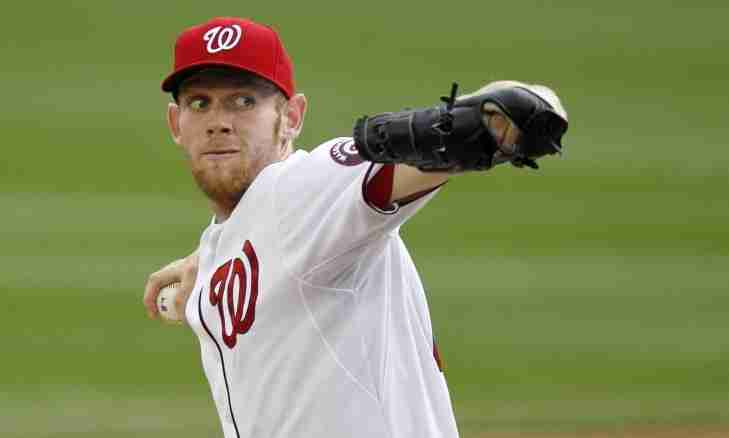
When Stephen Strasburg was selected first overall out of San Diego State in 2009, he arrived with a level of hype unmatched by any pitching prospect in the modern era. His highly anticipated 14-strikeout major league debut in 2010 solidified that mythos, but the intense spotlight quickly shifted toward organizational caution. Following his recovery from Tommy John surgery, the front office famously instituted a strict innings limit that shut him down prior to the 2012 postseason. While that decision ignited fierce national debate, the meticulous, long-term preservation of their prized ace ultimately paved the way for an unforgettable era of championship contention.
The careful workload management produced spectacular front-line rewards, transforming Strasburg into a dominant, high-leverage force atop the rotation. Weaponizing an explosive four-seamer, a devastating 12-to-6 curveball, and a heavy, diving changeup, he earned three All-Star selections and recorded five 15-win campaigns for Washington.
Returning to the mound in 2013 with the training wheels completely off, Strasburg silenced doubts about his durability by establishing himself as a true workhorse. He eclipsed the 180-innings mark for the first time, racking up 191 strikeouts and throwing his first career complete-game shutout, proving his elite arsenal remained intact post-surgery.
In 2017, he achieved a top-tier regular-season performance, posting an impressive 15–4 record with a 2.52 ERA. During that summer, he set a franchise record by recording 34 consecutive scoreless innings, led the National League with a strong 2.72 FIP, and finished as the runner-up for the NL Cy Young Award behind teammate Max Scherzer. His reputation for performing in high-stakes games was reinforced in October when he pitched seven outstanding, scoreless innings with 12 strikeouts in a crucial Game 4 of the NLDS against Chicago, despite battling illness.
That steady escalation culminated in a legendary, unforgettable 2019 masterpiece. Strasburg commanded the league with a career-high 18 wins, logged 209 innings with 251 strikeouts, and then orchestrated one of the most dominant individual postseasons in baseball history. With the Nationals facing elimination multiple times, Strasburg became the franchise's savior. He went an unblemished 5–0 with a microscopic 1.98 ERA over 36.1 postseason innings. His defining moment came in Game 6 of the World Series against Houston, where he gritted out 8.1 magnificent frames under maximum pressure to force a Game 7. Winning the World Series MVP trophy, he became the first player in modern baseball history to log five pitching wins in a single postseason without a loss, delivering Washington its coveted world championship.
Following that global triumph, Strasburg signed a massive seven-year, $245 million extension to remain a lifelong National. Tragically, the deal immediately turned into a catastrophic anchor for the franchise. The tremendous physical toll of his high-velocity mechanics caught up to him almost instantly, as he was diagnosed with severe, chronic nerve damage from thoracic outlet syndrome.
Over the remaining four years of his career, Strasburg made just eight painful, ineffective appearances, totaling only 31.1 innings on the mound after signing the contract. Because the $245 million was fully guaranteed, the massive luxury-tax hit severely hampered the front office’s ability to rebuild or pursue premium free agents, crippling the organization's financial flexibility as they tumbled into the basement of the NL East.
Despite an arduous, multi-year rehabilitation process that included the surgical removal of a rib and neck muscles, his body simply refused to cooperate. Realizing he could no longer perform at the major league level, Strasburg officially closed his playing chapter and announced his retirement from baseball in April 2024.
Strasburg made 247 starts, posting a 113–62 record with a 3.24 ERA, 1.10 WHIP, pitching 1,470 innings, and striking out 1,723 batters.
27. Ron Fairly
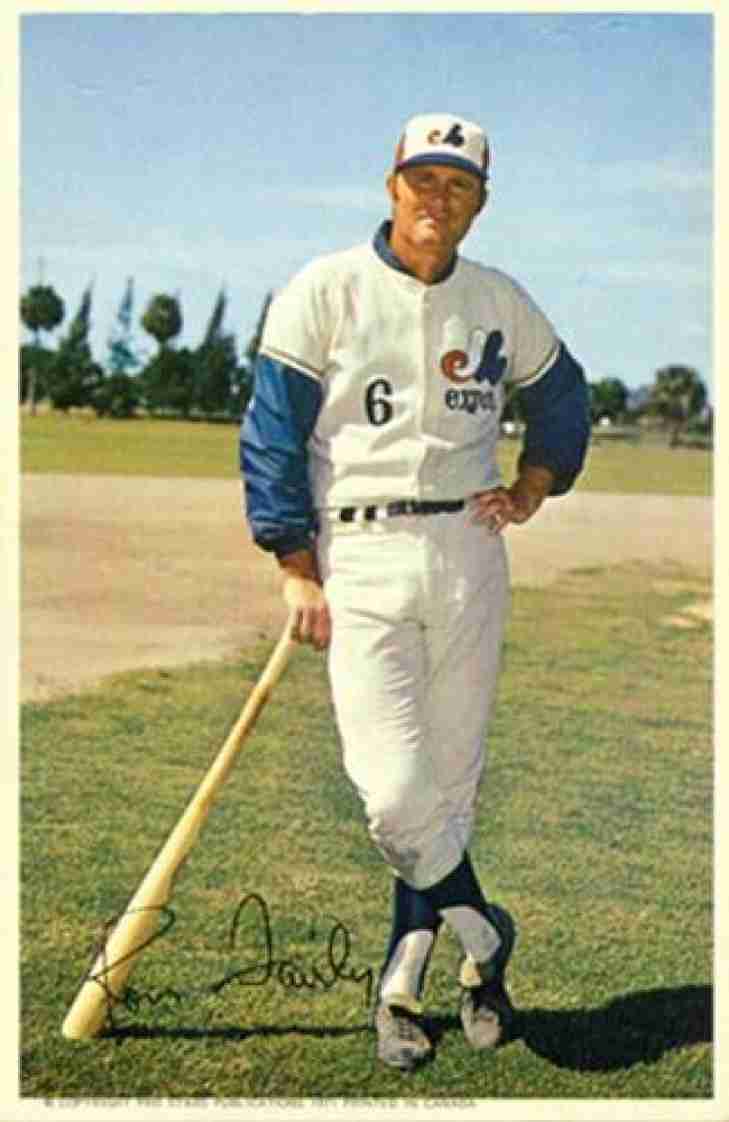
When the Montreal Expos traded for Ron Fairly in June of their inaugural 1969 season, they gained more than just a reliable hitter—they gained immediate credibility. With over ten years on the Los Angeles Dodgers, where he secured three World Series titles, the experienced first baseman and outfielder brought playoff experience and a steady presence to an expansion team navigating the tough National League.
While some aging veterans find it difficult to shift from being perennial winners to leading a young expansion team, Fairly welcomed the challenge and made Jarry Park his personal launching pad. His elite, highly disciplined batting approach kept him a tough opponent, as he excelled at working through deep counts and maintaining the offensive flow, often walking more frequently than striking out.
His first season in Canada established a strong foundation, but he reached an elite offensive peak in 1973. At 34, Fairly delivered a remarkable performance, hitting .298, with 17 home runs, and drawing 86 walks, resulting in a .422 on-base percentage. His clutch, high-pressure performance earned him his first career All-Star selection, demonstrating that his left-handed swing remained highly effective.
During his five-and-a-half seasons with Montreal, Fairly demonstrated remarkable consistency, hitting over 15 home runs twice and regularly achieving on-base percentages near or above .400. By the time he was traded to the St. Louis Cardinals late in the 1974 season, he had cemented his reputation as one of the best pure hitters in the franchise's early history.
With Montreal, Fairly amassed 623 hits, 94 doubles, 86 home runs, and 331 RBIs, with 430 walks and 257 strikeouts, posting a .276/.381/431 line—131 OPS+.
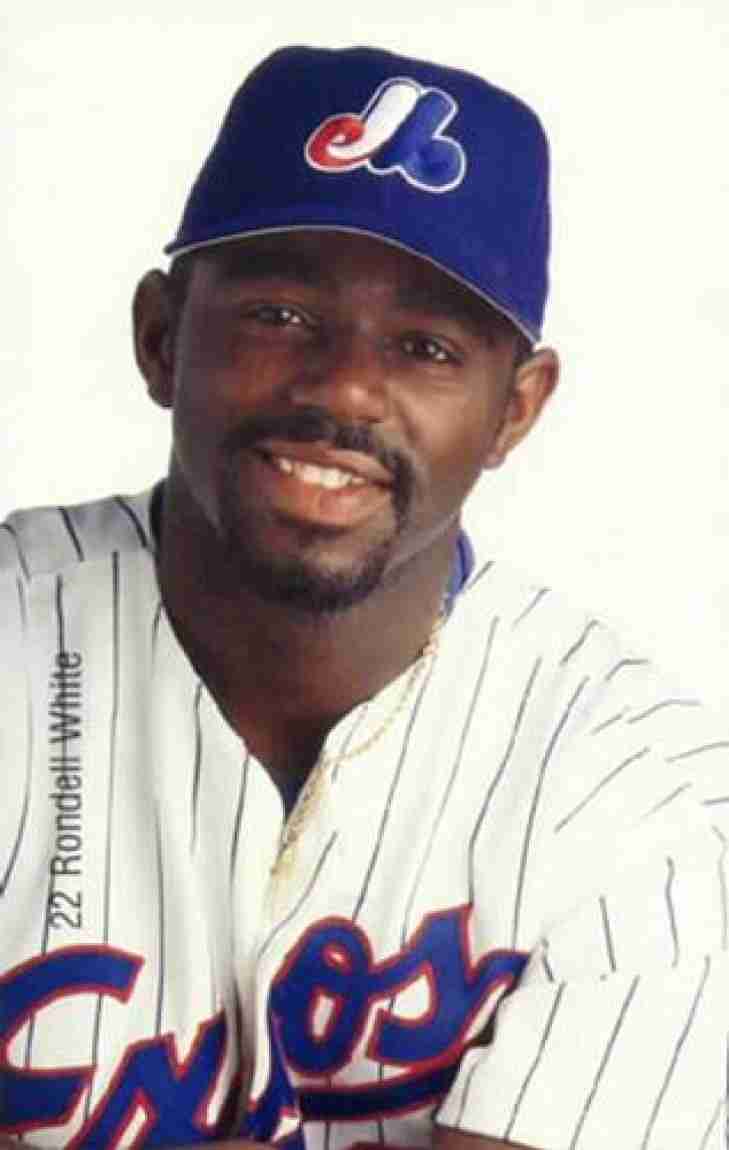
25. Rondell White
20. Livan Hernandez

Livan Hernandez was already renowned as a Cuban defector who earned both the NLCS and World Series MVP awards as a 22-year-old rookie with the 1997 Florida Marlins. He joined Montreal before the 2003 season following a trade from San Francisco. While many saw the move as a salary dump, Hernández viewed it as an opportunity for a remarkable, career-changing resurgence. Over the next four years, he became both literally and metaphorically the bridge that helped the franchise transition from Montreal to Washington.
His 2003 campaign for the Expos was a standout example of old-school volume pitching. During a time when modern baseball was quickly pulling starters earlier, Hernández ignored the trend and relied solely on his stamina. He overwhelmed opposing lineups by leading the National League with 233.0 innings pitched and eight complete games, finishing with a 15–10 record and a 3.21 ERA. In 2004, during the Expos' final summer in Quebec, he elevated his durability by pitching 255.0 innings, leading the league in nine complete games and 35 starts. This remarkable workload earned him his first All-Star selection and a Silver Slugger Award at the plate.
When the franchise officially relocated to the nation's capital ahead of the 2005 schedule, it was entirely fitting that the deathless right-hander threw the historic first pitch in Washington Nationals history. Hernández served as the face of the inaugural District squad, putting together a brilliant 15-win tour and leading the major leagues yet again with 246.1 grueling innings across 35 starts, securing a consecutive All-Star nod.
After a 2006 trade to Arizona and a short stint across multiple teams, Hernández made a notable return to Washington in late 2009 for a dramatic, late-stage career homecoming. He pitched with seasoned, soft-tossing accuracy, relying heavily on a nearly untouchable, changing-speed looping curveball and a low-80s sinking fastball, effectively defying aging norms. In 2010, he pitched 211 innings with a solid 3.67 ERA, serving as the main high-pressure reliever for the rebuilding Nationals before ending his storied chapter with the franchise in late 2011.
With Montreal/Washington, Hernandez compiled a 70–72 record, a 4.01 ERA, and a 1.35 WHIP. He threw 1,177.1 innings, recording 27 complete games, 5 shutouts, and 840 strikeouts.
32. Andres Galarraga
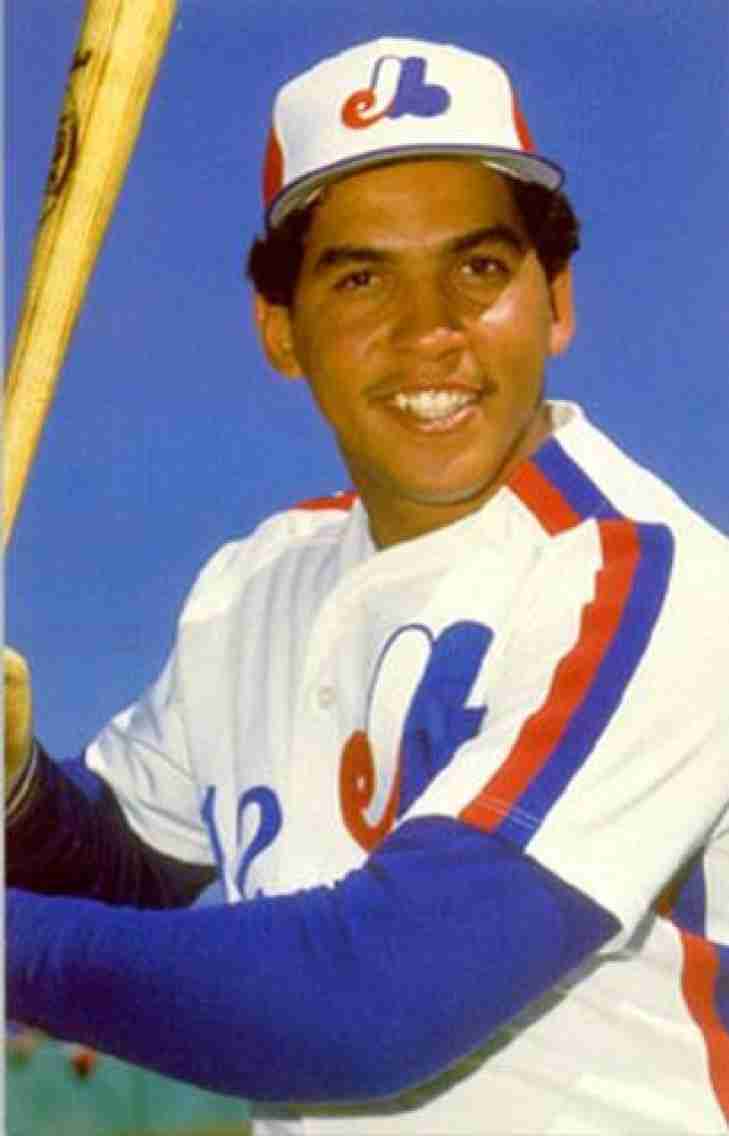
Long before he was launching tape-measure home runs into the thin air of Mile High Stadium, Andrés Galarraga was captivating fans in French Canada with a completely different brand of baseball. Signed out of Venezuela as an amateur free agent in 1979, the man globally known as "The Big Cat" initially made his mark not with jaw-dropping power, but with an impossibly agile glove. For a man of his imposing physical stature, Galarraga patrolled the first base bag with the grace of a shortstop, executing diving stops and picking low throws out of the Stade Olympique dirt with mesmerizing ease.
Once his offensive game caught up to his elite defensive instincts, he transformed into one of the most complete and feared first basemen in the National League.
The 1988 season is considered Galarraga’s peak with the Expos. He excelled against National League pitchers, delivering a breakout year that earned him his first All-Star nod, a Silver Slugger, and his first of two Gold Gloves in a row. The Big Cat led the Senior Circuit with 184 hits and 42 doubles, also hitting 29 home runs while maintaining a strong .302 batting average. Galarraga ranked seventh in MVP voting that year. His performance boosted Montreal’s offense and proved to the baseball world that he was more than just a great defender.
Despite his immense talent, Galarraga’s style of play also came with a significant amount of swing-and-miss. While he brought elite run-producing power to the middle of the lineup, he also led the National League in strikeouts for three consecutive seasons (1988–1990).
As his strikeout totals grew and a knee injury limited his 1991 performance, the struggling Expos faced a harsh reality. They couldn't afford to keep their star first baseman once he became a free agent, so they traded Galarraga to the St. Louis Cardinals for pitcher Ken Hill after 1991. Though he struggled there, reuniting with former Expos manager Don Baylor in Colorado sparked a legendary, MVP-level second half of his career. He would make a brief return in 2002 as an elder statesman before winding down his career after the 2004 season.
With Montreal, Galarraga had 906 hits, 171 doubles, 115 home runs, and 456 RBIs, along with a .269/.327/447 slash line (118 OPS+).
21. Larry Walker
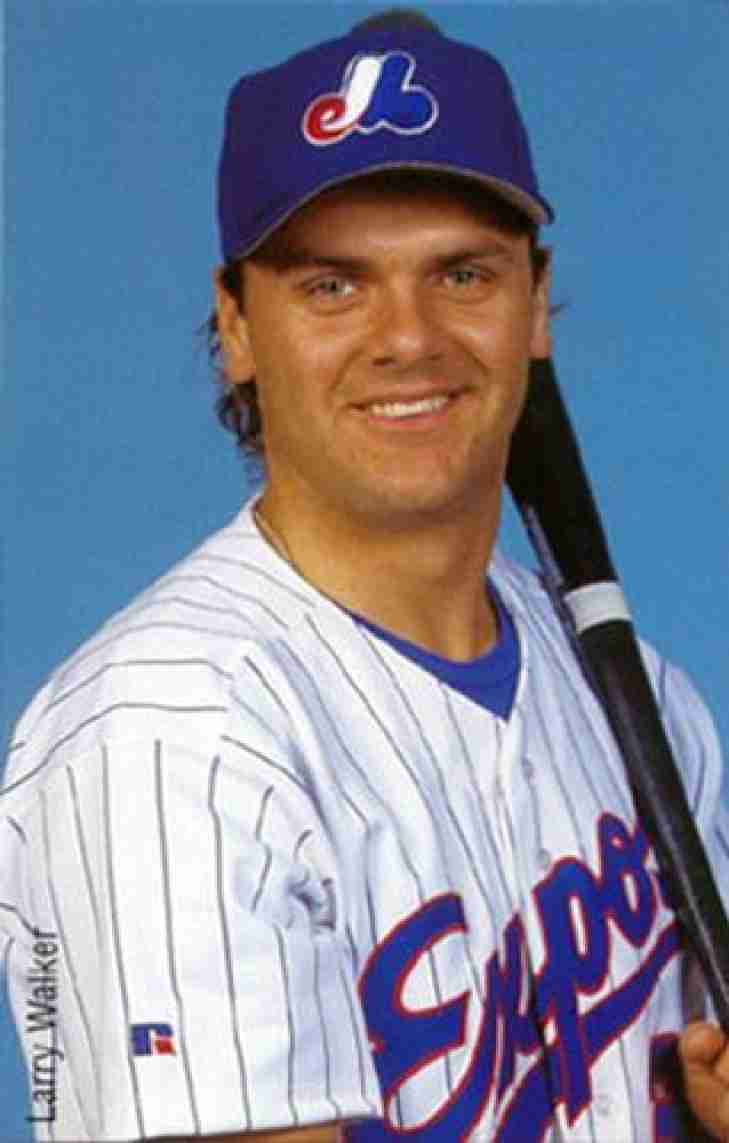
The rise of Larry Walker in Montreal remains one of the most brilliant chapters in the franchise's home-grown development. Discovered at a national training camp in Saskatchewan, the Maple Ridge, British Columbia, native was famously signed as an unheralded amateur free agent for a microscopic $1,500 bonus. Initially a raw athlete who had prioritized ice hockey for most of his youth, Walker underwent an extraordinary physical and technical transformation in the minor leagues. By the dawn of the 1990s, he had emerged as the gold standard for a true five-tool player, turning right field at Stade Olympique into his own highlight reel.
His early full seasons established him as a key foundational player in a rising, legendary Expos core. Walker combined broad athletic ability with a quick, aggressive left-handed swing. In a remarkable 1992 breakthrough, he overwhelmed National League pitching by hitting .301 with 23 home runs, earning his first Gold Glove and Silver Slugger awards, and becoming the only Canadian-born player to be named Expos Player of the Year. He maintained that high standard effortlessly in 1993, earning another All-Star selection and a second Gold Glove, solidifying his reputation as a globally recognized superstar.
Walker's remarkable 1994 schedule stands out as his top individual achievement in Canada. Despite suffering a severe rotator cuff injury that limited him to first base to safeguard his shoulder, his offensive performance remained exceptional. He batted an impressive .322 and led all of Major League Baseball with 44 doubles, providing a crucial role for a outstanding Montreal team that held the best record in baseball before the strike interrupted play.
Yet, within the organization’s broader historical ledger, the conclusion of his tenure remains one of the most painful "what-if" scenarios in sports history. Unlike a traditional trade market, the small-market franchise collapsed under financial constraints after the lockout. Desperate to slash payroll, the front office declined to offer arbitration to their superstar right fielder, which granted him free agency a year early. In April 1995, Walker took his final walk away from Quebec, signing a lucrative contract with the Colorado Rockies, where he would later capture a landslide National League MVP Award and three batting titles on his path to Cooperstown.
Walker, with Montreal, amassed 666 hits, 140 doubles, 14 triples, 99 home runs, and 384 RBIs. Using his elite speed, he stole 76 bases and posted a .281/.357/483 slash line—128 OPS+. He was inducted into the Canadian Baseball Hall of Fame in 2009 and the National Baseball Hall of Fame in Cooperstown as part of the Class of 2020.
22. Javier Vazquez
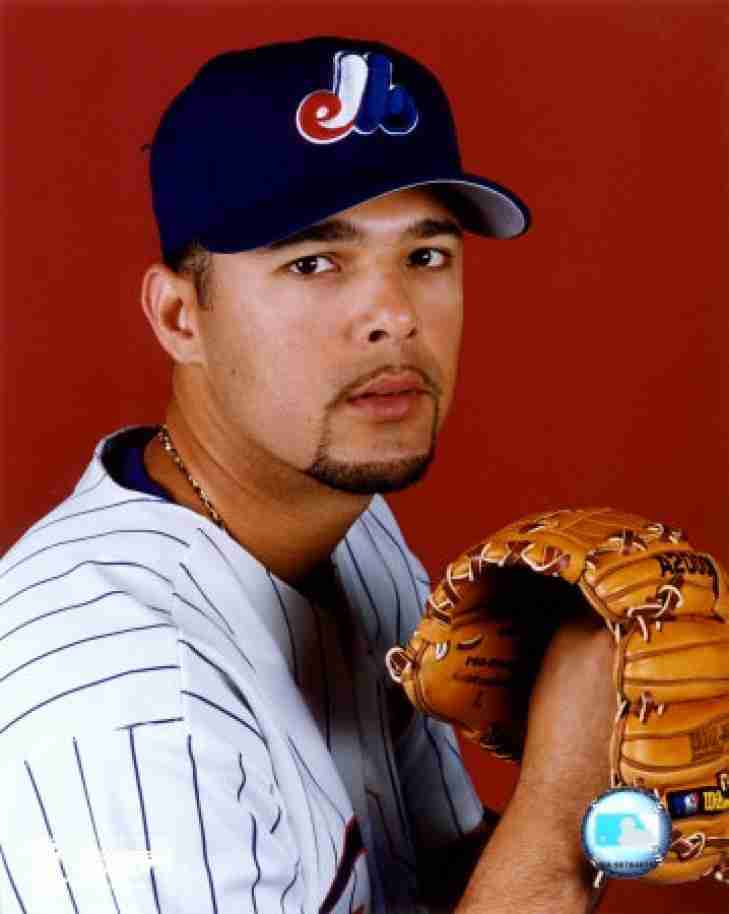
Javier Vázquez was picked by the Expos in the fifth round of the 1994 amateur draft from Puerto Rico and made his big-league debut as a 21-year-old rookie in 1998. With a consistent, smooth delivery, an explosive four-seam fastball, and a powerful slider, Vázquez quickly became a key frontline pitcher for a franchise that often faced challenges due to low payrolls and an unstable future in Quebec.
His early years with the Expos were a tough mix of developmental challenges and significant promise. After enduring a difficult, high-pressure 5–15 start in his 1998 rookie season, Vázquez changed his career path by improving his control around 2000. That year, he demonstrated impressive efficiency as a starter, pitching 217.2 innings in the regular season, securing 11 wins and striking out 196 batters.
Vázquez's consistent upward trajectory hit a peak during a remarkable 2001 breakthrough. He overwhelmed National League hitters with a standout season, finishing 16–11 with a sharp 3.42 ERA. He led the Senior Circuit with three complete-game shutouts and surpassed 200 strikeouts for the first time, striking out 208 batters. The following year, he continued with a career-high 230.1 innings pitched and followed up with another strong season in 2003. In his last summer with Montreal, Vázquez excelled with a 3.24 ERA and a franchise-best 241 strikeouts, ranking third in the National League, helping the high-performing, 83-win Expos team.
His historic legacy was sometimes affected by a key vulnerability in his pitching style—his susceptibility to contact. Vázquez had an aggressive approach, willing to pitch in the strike zone, which often led to him giving up many hits when his location was slightly off. This was evident in 2002, when, despite pitching over 230 innings, he allowed 243 hits, the most in the National League. Because he often pitched for small-market Montreal teams that lacked strong run support and bullpen help, this weakness resulted in a misleading 64–68 record, which doesn't fully reflect his dominance during his era.
With free agency pending and the franchise owned by Major League Baseball, the front office took advantage of his high market value. In December 2003, Montreal traded its ace to the Yankees for Nick Johnson and Randy Vazquez. Vázquez pitched across five more major league teams, surpassing 2,500 career strikeouts and becoming one of the most prolific Puerto Rican-born pitchers in history.
Vázquez appeared in 193 games for the Expos and posted a 64–68 record, a 3.99 ERA, and a 1.28 WHIP. He swallowed up a towering 1,229.1 innings, recording 1,076 strikeouts.
23. Rusty Staub
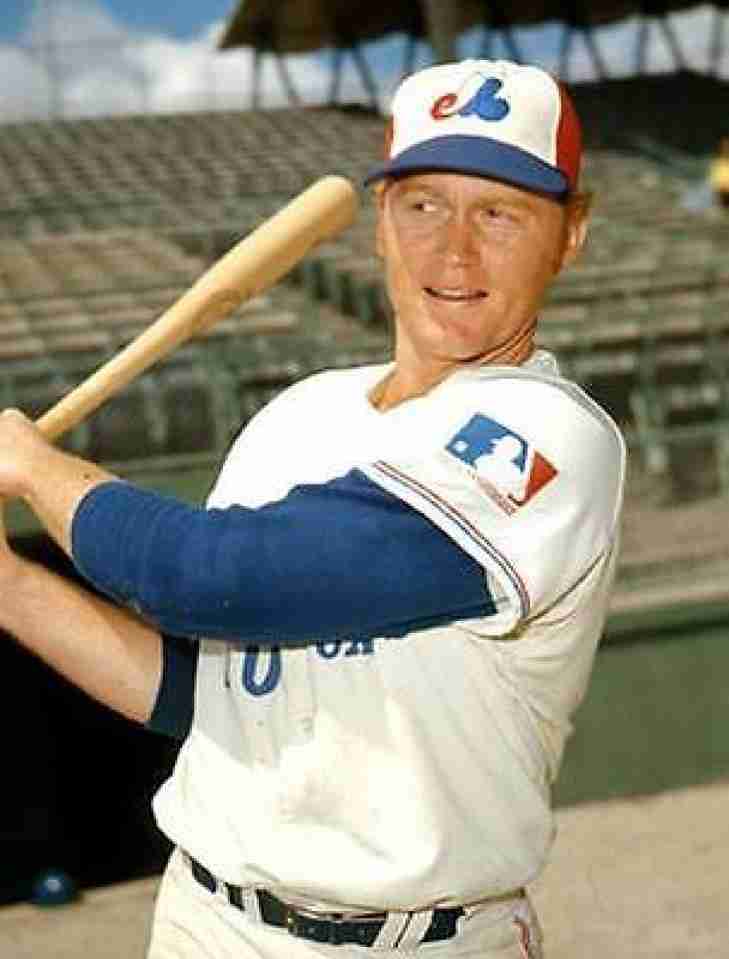
When the expansion Montreal Expos took the field for their inaugural season in 1969, they desperately needed an identity. They found it in Rusty Staub. With an unmistakable shock of red hair, an incredibly disciplined left-handed approach, and a genuine eagerness to learn French so he could converse directly with the fans, Staub didn't just become the young franchise’s first legitimate star—he became a cultural icon in Quebec. Completely embraced by the local faithful, who affectionately christened him Le Grande Orange, Staub turned Parc Jarry into his personal sanctuary during three of the most dazzling, high-volume offensive seasons the city would ever witness.
His introductory 1969 campaign in Canada was a masterclass in elite plate discipline and high-leverage execution. Staub completely paralyzed National League pitchers, launching 29 home runs, drawing an astonishing 110 walks, and batting a brilliant .302. He weaponized his deep understanding of the strike zone to generate a magnificent, league-leading .426 on-base percentage—an explosive franchise-record clip that set the gold standard for expansion team table-setters.
Far from a single-summer outlier, he sustained that elite efficiency through the next two calendars. In 1970, Staub clubbed a career-high 30 home runs and walked 112 times while driving in 94 runs. He backed it up in 1971 by playing in all 162 games, collecting a career-best 186 hits and batting .311. Across all three full seasons of his initial Montreal residency, he earned consecutive All-Star selections and was arguably one of the toughest outs in the Senior Circuit.
Yet, as the small-market Expos scrambled for roster depth, the front office made the highly unpopular decision to trade their franchise face to the New York Mets prior to the 1972 season. It broke the hearts of Montreal fans, but the deep-seated mutual adoration never truly faded. After a long, productive journey through New York, Detroit, and Texas, Staub engineered a brief, highly emotional homecoming in July 1979. Though it was just a short "cup of coffee" consisting of 38 games primarily as a veteran pinch-hitter, the roar of the Montreal crowd upon his return beautifully underscored his permanent place in the fabric of Canadian baseball history.
With the Expos, Staub appeared in 518 games. He accumulated 508 hits, 86 doubles, 78 home runs, and 289 RBIs. Driven by 310 walks against just 206 strikeouts, he generated an exceptional .296/.402/.481 slash line—good for an elite 146 OPS+.
13. Pedro Martinez
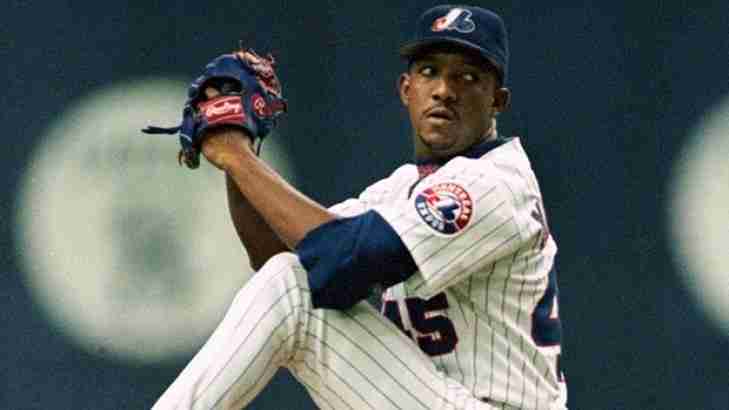
The trade that brought Pedro Martínez to Montreal before the 1994 season is a landmark moment in Expos history. Acquired from the Los Angeles Dodgers for second baseman Delino DeShields, this slender right-hander with an explosive, whip-like delivery quickly defied the idea that he was too slight to handle the physical demands of a major league starter. Over four remarkable summers in Quebec, Martínez evolved his raw, high-velocity pitches into a dominant force in the major leagues.
His debut before the Olympic Stadium crowd was immediately memorable. In the challenging 1994 season, Martínez served as a crucial yet overlooked driver for the remarkable Expos team, which led Major League Baseball with a 74–40 record before the players' strike unexpectedly ended their championship hopes. That summer, he posted an 11–5 record, demonstrating that his powerful fastball and developing changeup could consistently deceive top major league hitters.
As the organization was gradually compelled to dismantle its core due to increasing financial constraints, Martínez individually took on the burden of carrying the franchise. He achieved his first career All-Star selection in 1996 with 222 strikeouts, but this was just a preview of the extraordinary, record-breaking performance he delivered in 1997.
That 1997 campaign remains one of the most exceptional single-season pitching performances ever observed on a Major League mound. Martínez entirely incapacitated National League batters, transforming the strike zone into his personal domain. He achieved a remarkable 17–8 record while leading the major leagues with a microscopic, modern-era 1.90 ERA and delivering an extraordinary league-high of 13 complete games. He employed precise, high-pressure command to record an impressive 305 strikeouts over 241.1 innings, becoming the first right-handed pitcher since Walter Johnson in 1912 to reach the 300-strikeout threshold with an ERA below 2.00. This outstanding, elite performance designated him as the first—and only—pitcher in Montreal Expos history to be awarded the National League Cy Young Award.
Just as he established himself as a global superstar, the harsh realities of Montreal's small-market economics forced a change. Recognizing they lacked the financial means to offer their young star a market-value contract extension, the front office traded their key player to the Boston Red Sox in November 1997. Martínez would go on to achieve immortal status in baseball in New England, but the foundation of his legendary peak was laid during his time with the Expos.
Martínez was inducted into the Baseball Hall of Fame in 2015. As an Expo, he played 118 games (117 starts), with a 55–33 record, 3.06 ERA, and 1.09 WHIP. He pitched 797.1 innings, with 20 complete games, eight shutouts, 843 strikeouts, and a 135 ERA+.
17. Jose Vidro
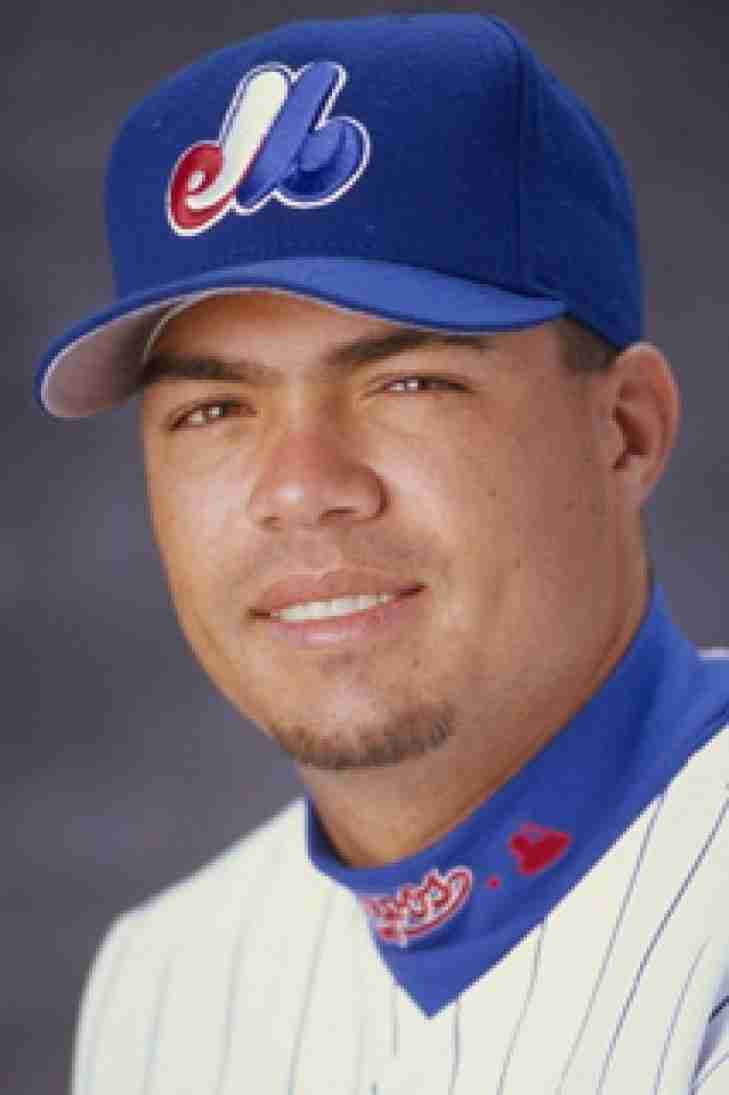
Jose Vidro, a proud Mayagüez native from Puerto Rico, was a switch-hitting second baseman who became one of the most challenging batters in the National League around the turn of the century. Although he didn't draw as much national attention as some of his more flamboyant, power-hitting peers, Vidro’s exceptional wrists and outstanding hand-eye coordination made the batter's box his domain of precise line-drive hitting.
His progression from a minor role to a key player peaked during an outstanding 2000 season. Vidro overwhelmed National League pitchers with a smooth, level swing from both sides of the plate, hitting an impressive 200 times and leading the league with 51 doubles. He also added a career-best 24 home runs and 97 RBIs, maintaining a hot .330 batting average. These achievements earned him his first All-Star appearance and cemented his status as a vital part of the organization.
Vidro consistently upheld an elite offensive level well beyond a single summer, demonstrating notable reliability. He showcased a series of high-average seasons, earning back-to-back All-Star selections in 2002 and 2003. His outstanding 2003 season—batting .310 with 36 doubles and a.397 on-base percentage—earned him the National League Silver Slugger Award as the league's top offensive second baseman. When the franchise moved to Washington before the 2005 season, Vidro played a vital role as a cultural link, anchoring the middle of the lineup during the Nationals' first season.
However, when considering the overall historical record, Vidro’s highest potential can sometimes be viewed with nuance. His bat was undeniably exceptional, yet his all-time franchise ranking is hampered by his weaker defensive stats. His bulky physique and ongoing lower-body injuries, such as chronic knee and ankle issues, notably restricted his lateral movement, making it difficult to reliably execute impressive double plays or make defensive plays that save runs.
Following the 2006 season, the front office traded the veteran infielder to the Seattle Mariners for Chris Snelling and Emiliano Fruto. Vidro hit 1,280 times with the Expos/Nationals, including 293 doubles, 115 home runs, and 549 RBIs, with a .301/.364/459 slash line (113 OPS+).
16. Jordan Zimmermann
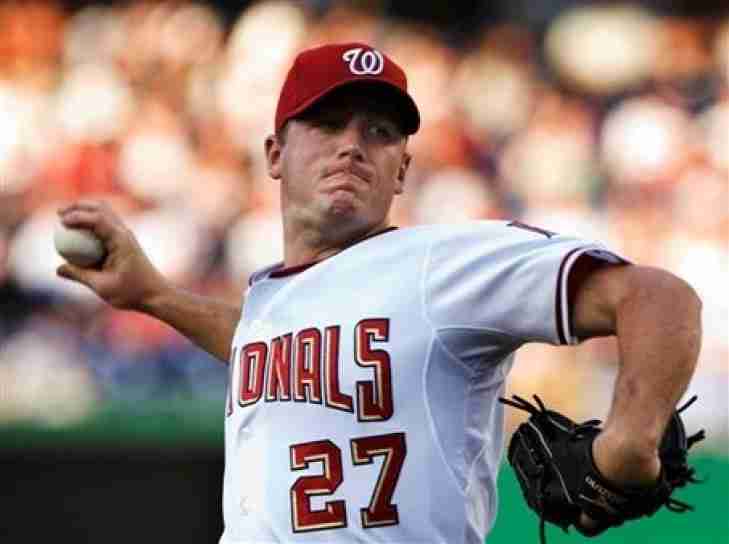
Jordan Zimmermann's rise in Washington mirrored the franchise’s transformation from an NL East afterthought to a powerhouse. Drafted in 2007 from Division III Wisconsin-Stevens Point, he needed little development. With a fierce competitive edge and a clean, high-velocity three-pitch repertoire, he bypassed minors to secure a spot in the 2009 rotation, establishing himself as a workhorse of the District's pitching staff.
Zimmermann’s early seasons showcased exceptional athletic resilience. After a promising rookie debut was abruptly halted by a torn UCL, necessitating Tommy John surgery, he managed a technically perfect recovery. In 2011, he returned with a remarkable 3.18 ERA. The following year, he demonstrated remarkable durability, pitching 195.2 innings with a 2.94 ERA, assisting Washington in winning its first-ever National League East division title.
Zimmermann reached the peak of his career with a remarkable 2013 season. He overwhelmed National League hitters with a powerful 92-95 mph four-seam fastball, a sharp slider he called his "baby cutter," and a looping 12-to-6 curveball. This diverse arsenal helped him record a 19–9 win-loss record, lead the league in victories and shutouts (2), and maintain a solid 3.25 ERA. These achievements earned him his first All-Star selection and a seventh-place finish in NL Cy Young voting.
Far from done, he crafted an exceptional personal masterpiece during a remarkable 2014 season, lowering his ERA to a career-low 2.66 and earning his second consecutive All-Star selection. He cemented his legacy in District sports history on the final day of that season by throwing a historic, stunning 104-pitch no-hitter against the Miami Marlins—the first no-hitter in modern Nationals history. This outstanding summer season also earned him a fifth-place finish in the AL Cy Young voting.
After a durable 2015 summer in which he pitched 200 innings, the highly sought-after free agent left the capital city to sign a large multi-year deal with the Detroit Tigers. Despite injuries and physical decline affecting his later years in the American League, his seven seasons in Washington stand as a prime example of consistent frontline performance.
Because he shared the marquee with high-profile aces like Stephen Strasburg and Max Scherzer, his clinical efficiency could occasionally be underrated on the national stage. Yet, as a National, Zimmermann has a stellar 70–50 record, 903 strikeouts, and a 3.32 ERA.
9. Tim Wallach
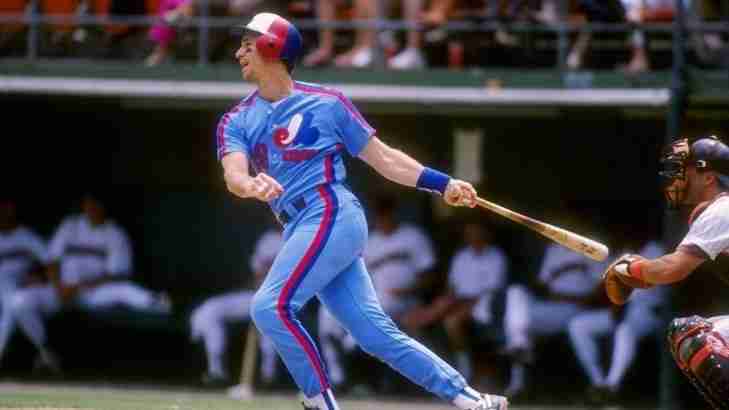
The story of 1980s baseball often overlooks the steady, hardworking players like Tim Wallach, who didn't seek the spotlight but played with quiet excellence. While many casual fans cheered for the more flashy stars in bigger markets, those who truly understood the game—like National League managers—knew Wallach’s value. It’s inspiring to see that those overlooked by the mainstream still recognized his importance, selecting him five times to represent the Montreal Expos in the All-Star Games and appreciating him as the solid foundation of a competitive team.
Drafted tenth overall in Montreal in 1979 from Cal State Fullerton, "Eli" shifted from an outfield position to establish himself as the greatest third baseman in Expos history. He consistently delivered elite run production, combining powerful extra-base hits with remarkable durability. As a key middle-of-the-order hitter, Wallach was known for his ability to crush National League pitching, hitting 204 home runs and driving in 905 runs during his impressive 13 seasons in Quebec.
His offensive performance peaked dramatically during a celebrated 1987 season. Wallach used his right-handed swing to lead the senior circuit with 42 doubles, while also hitting a career-high 26 home runs and an impressive league-leading 123 RBIs, earning himself a fourth-place finish in the NL MVP race. That summer, he received his second Silver Slugger Award, having previously won his first in a strong 1985 season when he hit 36 doubles and 22 home runs.
While his offensive stats are notable, Wallach's outstanding defensive abilities truly distinguish him from his peers. His quick reflexes, sharp lateral coverage, and perfect timing allowed him to excel at third base at Stade Olympique. These defensive skills earned him three Gold Glove Awards (1985, 1988, and 1990), and he regularly led National League third basemen in assists, double plays, and chances, offering crucial support to the Montreal pitchers.
By the end of his lengthy career in Canada, culminating in a December 1992 trade to the Los Angeles Dodgers, Wallach had established himself as a key figure in the organization's history. He left as the Expos' all-time leader in games played (1,767), hits (1,694), doubles (360), and total bases (2,728). During his time with Montreal, he also hit 204 home runs and drove in 905 RBIs, recording a .259/.317/418 slash line. In 2013, he was inducted into the Canadian Baseball Hall of Fame.
18. Marquis Grissom
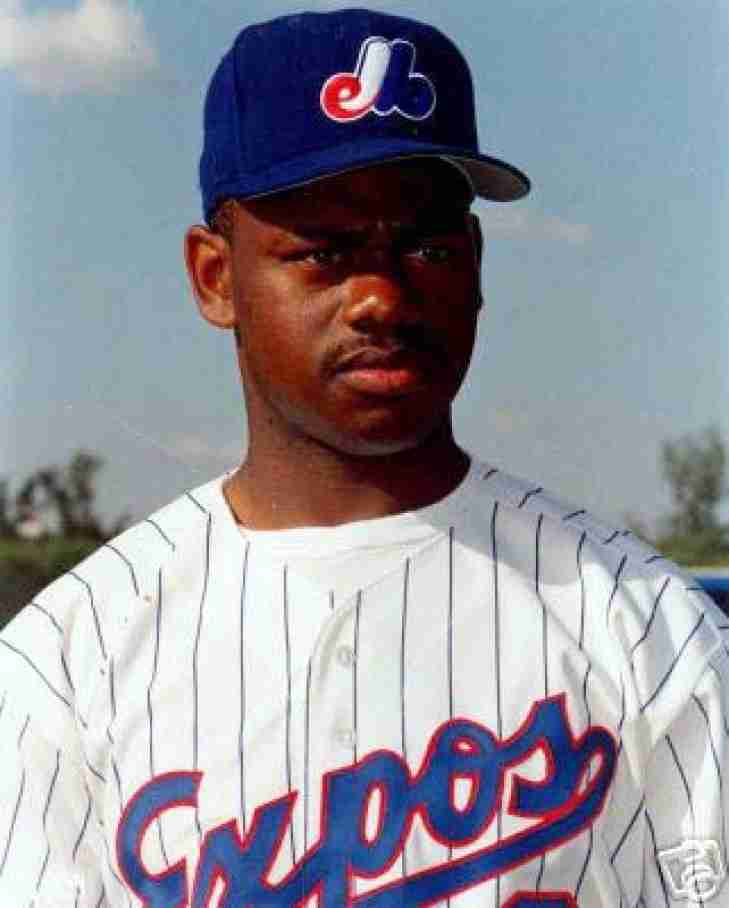
Marquis Grissom's rise in Montreal exemplifies dynamic outfield play. Drafted by the Expos in 1988 from Florida A&M, he debuted in late 1989 after minimal minor league time. With an explosive first step and great instincts, he made the leadoff spot at Stade Olympique a catalyst for chaos, establishing himself as a top two-way threat in the early 1990s.
His transformation into an elite table-setter was clearly demonstrated during consecutive league-leading seasons on the basepaths. Grissom overwhelmed National League pitchers by stealing an amazing 76 bases in 1991, and then set a career high with 78 stolen bases in 1992. His skill at generating runs out of nowhere provided manager Felipe Alou with a powerful offensive force that helped guide a talented, youthful Expos team, which was quickly learning how to dominate the Senior Circuit.
However, Grissom was much more than just a speed-focused player. His exceptional athleticism and precise route-running in center field made the large gaps in Olympic Stadium nearly impossible for opponents to exploit. His outstanding defensive skills earned him consecutive National League Gold Glove Awards in 1993 and 1994, and he reinforced his status with back-to-back All-Star appearances, establishing himself as an internationally recognized superstar. In the challenging 1994 season, he achieved 137 hits and 36 steals in 110 games, serving as a crucial leader for the Montreal team, which boasted baseball's best record before the strike.
Soon after the game resumed, the small-market franchise faced immediate financial constraints. Knowing they couldn't secure a long-term deal with their star outfielder, the front office made a blockbuster trade just before the 1995 season, sending Grissom to the Atlanta Braves. He quickly became a crucial part of his hometown team, famously catching the final out of the 1995 World Series to clinch the championship. Over his 17-year major league career, he accumulated numerous honors, including an ALCS MVP award in Cleveland, before retiring.
In Montreal, Grisson had 747 hits, 105 doubles, 23 triples, 48 home runs, and 238 RBIs. He posted a .273/.325/381 slash line and stole 266 bases.
1. Gary Carter
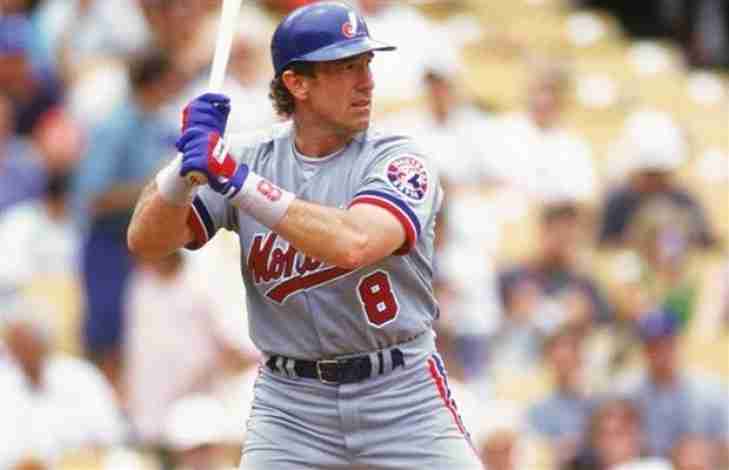
When thinking about the highest standards for defensive skill, durability, and passion behind the plate, you come across a player who truly embodied the competitive spirit of baseball in Canada. Gary Carter didn’t just lead the Montreal Expos into their first successful era; he was the lively heart and soul of a young team. With his warm, infectious smile and a powerful, aggressive swing, the player known as “The Kid” made the demanding role of catcher look like a nightly display of strong leadership. During his remarkable eleven seasons with Nos Amours, he became perhaps the most loved athlete in Canadian sports history and the clear top performer in the franchise's record books.
Making his primary arrival as a full-time regular during the 1975 campaign, the front office utilized his supreme athleticism across the outfield grass and behind the dish. Carter turned flashing his defensive tools into a strict daily routine, lashing 17 home runs and driving in 68 runs to secure The Sporting News Rookie of the Year honors, while finishing as a close runner-up for the official BBWAA National League Rookie of the Year trophy.
After a group of emerging talented players took over the outfield positions before the 1977 season, the management decided to move Carter behind the plate permanently. This change sparked a decade of exceptional defensive skill, significantly impacting how base runners in the National League approached their paths. Carter earned three straight Gold Glove Awards from 1980 to 1982, led the league in caught-stealing percentage three times, and topped all catchers in Total Zone Runs five times.
What truly made him a legendary figure in the inner circle was how his exceptional defensive skills kept a top-tier middle-of-the-order batter well protected. The peak of his amazing career in an Expos uniform shone brightly during a memorable 1982 season. That summer, Carter demonstrated incredible hitting prowess, setting a personal best with 29 home runs, 163 hits, and 97 RBIs, all while maintaining a solid .293 batting average and an impressive .381 on-base percentage. He led the team with an outstanding 8.6 bWAR — the highest single-season mark of his 19-year career — earning a well-deserved Silver Slugger award and finishing among the top five in the National League Most Valuable Player voting.
He matched that thunderous production with a league-leading 106 RBIs in 1984, commanding consecutive All-Star Game MVP trophies in 1981 and 1984 to cement his status as a national icon.
After the 1984 campaign, the small-market Expos faced huge stadium debt and tighter corporate budgets. With Carter entering the peak of a lucrative, long-term contract and management looking to pivot toward a total roster reconstruction, the front office initiated a highly jarring business exit that December. They orchestrated a blockbuster four-player trade that shipped their iconic centerpiece to the New York Mets for a package including Hubie Brooks and Floyd Youmans—a transaction that immediately allowed Carter to anchor the legendary 1986 Mets to a World Series crown.
While he famously returned to Montreal in 1992 for a nostalgic 95-game retirement tour—capping his career with a memorable game-winning RBI double in his final at-bat—his peak chapters belonged to the previous decade.
Carter played 1,503 total games representing the franchise; he accumulated exactly 1,427 hits, 274 doubles, 220 home runs, and 823 runs batted in, completely validated by a stellar 121 career wRC+ in La Belle Provence.
The BBWAA officially welcomed Gary "The Kid" Carter into the National Baseball Hall of Fame in 2003, and he proudly chose to enter Cooperstown wearing an Expos cap on his plaque. The organization beautifully matched that coronation by officially retiring his iconic number 8 that same summer, followed by a classy, highly respectful induction into the Washington Nationals Ring of Honor inside the nation's capital in 2010
10. Bryce Harper
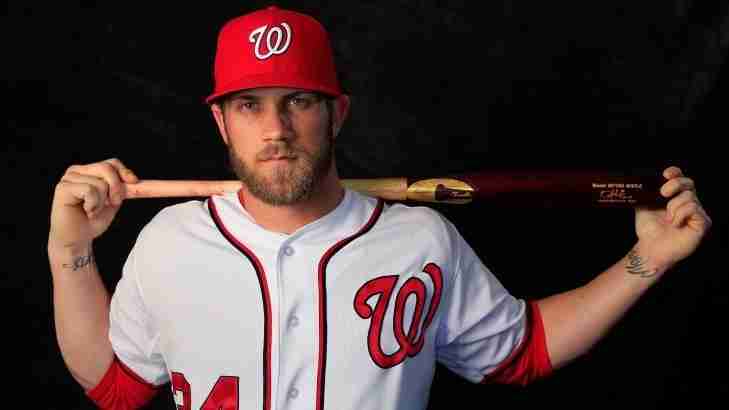
Few players in baseball history have ever shouldered the burden of expectation placed on Bryce Harper. At 16, appearing on the cover of Sports Illustrated as a prodigy, he was hailed as the "Chosen One" long before the Washington Nationals selected him with the first overall pick in the 2010 amateur draft. When he finally made his highly anticipated big-league debut in April 2012 at just 19, Harper didn’t just meet the immense hype—he weaponized a fierce, theatrical style of play that instantly electrified the nation's capital.
His 2012 arrival was an exceptional display of youthful vigor, characterized by assertive baserunning, diving catches, and a powerful, left-handed swing that produced 22 home runs, 98 runs scored, and an .817 OPS. His vigorous performance garnered him the National League Rookie of the Year Award and a position in the All-Star Game, playing a pivotal role in the franchise's evolution into a division champion and a consistent contender.
Harper was a notable box-office attraction in his own right, exhibiting a rare and charismatic star power that consistently drew spectators to Nationals Park. He was chosen to participate in the All-Star Game six times during his seven seasons in D.C., performing with a composed intensity and distinctive hair flips that established him as the most dynamic and esteemed icon of his generation.
Harper's remarkable talent culminated in a historic 2015 season, marked as one of the most dominant offensive performances in modern baseball. At only 22, he overwhelmed NL Pitching, winning the MVP unanimously after leading in home runs (42), runs (118), on-base percentage (.460), and slugging(.649). His 1.109 OPS and 198 OPS+, combined with a stellar 10.0 bWAR, topped MLB, making him the first MVP winner in Expos/Nationals franchise history.
Following that historic peak, the subsequent seasons were a thrilling, high-energy mix of prolific production and physical injuries. In 2016, opposing teams often chose not to pitch to him, intentionally walking him a record-tying 108 times—including six walks in a single game against the Cubs—causing his batting average to fall to .243 despite his hitting 24 home runs. He made a remarkable, MVP-level comeback in 2017, batting.319 with 29 home runs by August, but a dangerous slip on a wet first base resulted in a serious knee hyperextension, sidelining him for over a month.
Healthy again for his final season in Washington in 2018, Harper put on a show for the local fans. He won the Home Run Derby at Nationals Park in dramatic fashion and anchored the lineup by blasting 34 home runs and driving in a career-high 100 RBIs, while leading the major leagues with 130 walks to post an elite .393 on-base percentage.
After that campaign, Harper became the most sought-after free agent in years, transforming his impressive tenure with Washington into a landmark 13-year, $330 million deal with division rivals the Philadelphia Phillies. Although his departure disappointed fans who saw the Nationals win a World Series the following fall without him, his key contributions remain undeniable.
Harper appeared in 927 games for the Nats, accumulating 922 hits, 184 home runs, 521 RBIs, and 75 stolen bases while generating a stellar .279/.388/.512 slash line (139 OPS+).
Was he one of the best players in Nationals history?
Clown question, bro.
11. Dennis Martinez
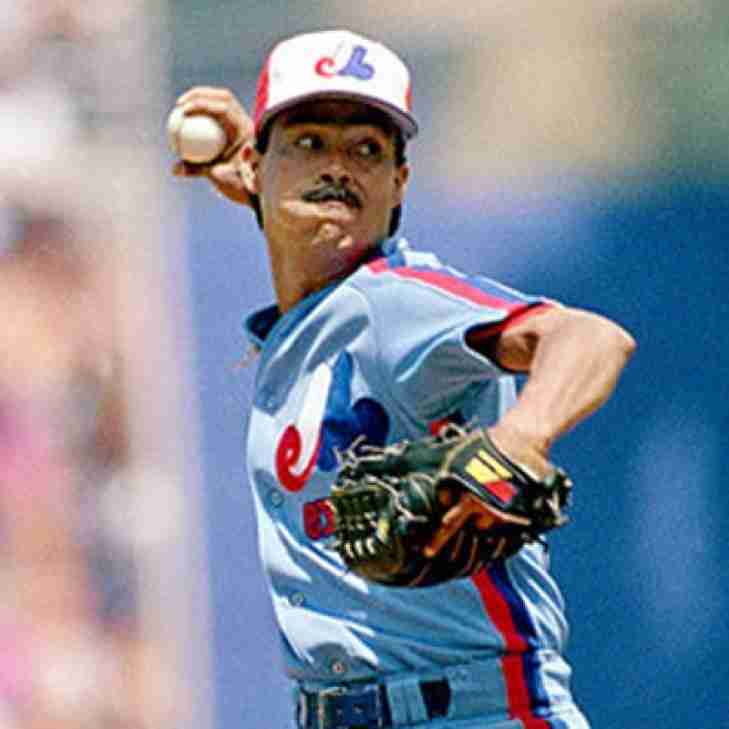
When Dennis Martínez arrived in Montreal mid-way through the 1986 season, he was a deeply respected veteran who had spent his career anchoring the Baltimore Orioles but was looking for a completely fresh start. The slender right-hander from Granada—the very first Nicaraguan-born player to ever reach the major leagues—instantly found a second home in Quebec. Over a spectacular late-career resurgence, "El Presidente" didn't just rebuild his trajectory; he orchestrated the finest, most elite pitching chapter of his 23-year big-league journey.
With a fantastic combination of sharp breaking balls, perfect control, and a passionate competitive spirit, Martínez became the dependable backbone of a young, lively Expos team. He consistently delivered an impressive streak of performances at Stade Olympique, earning three straight National League All-Star selections from 1990 to 1992. During this time, he regularly took on large workloads of over 200 innings, proudly serving as the steady anchor of the starting rotation.
Martínez’s late-career resurgence reached a truly memorable peak with a stunning 1991 performance. At 37, he dominated National League lineups, winning the NL ERA Title with a fantastic, career-best 2.39. He also led the league in complete games (9) and shutouts (5), finishing just outside the top spot in the NL Cy Young Award voting. This season truly highlighted his exceptional skill and resilience. The defining moment of that historic summer took place on July 28 at Dodger Stadium. In front of a stunned crowd in Los Angeles, Martínez authored the ultimate masterpiece of franchise history, retiring all 27 batters he faced to throw a flawless, 2–0 perfect game—a crowning theatrical achievement that permanently solidified his status as an absolute national hero in his homeland and a legend in Montreal.
Martínez maintained high-leverage performance during the 1993 season, concluding his lengthy tenure in Canada with precisely 100 wins and 973 strikeouts while playing for the Expos. After that season, he became a free agent and helped lead the Cleveland Indians to an American League pennant, surpassing 240 career wins.
In Montreal, he made 241 appearances (233 starts) with a 100–72 record, a microscopic 3.06 ERA, and a premium 1.15 WHIP. He threw 1,617.2 innings, recording 41 complete games, 18 shutouts, and 973 strikeouts. Martínez was inducted into the Canadian Baseball Hall of Fame in 2016.
5. Steve Rogers
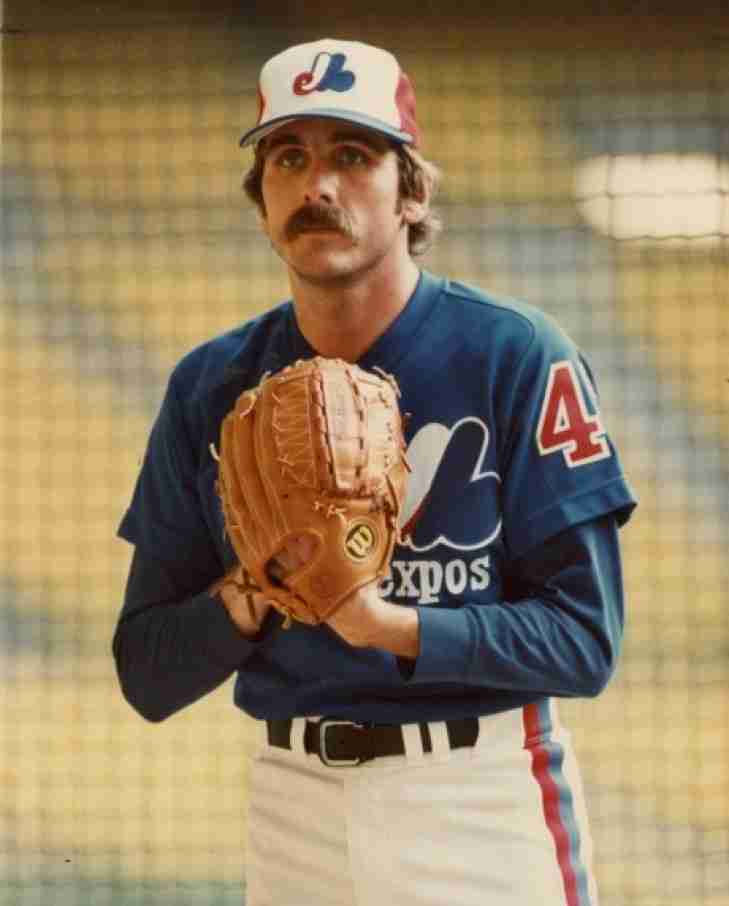
When Steve Rogers debuted in the major leagues in July 1973, he quickly provided the young Montreal Expos with something they had lacked since the team started: a true, homegrown ace. Coming from the University of Tulsa, this right-handed pitcher had an outstanding rookie season, going 10–5 with a mere 1.54 ERA in 17 starts. His immediate dominance over big-league batters pushed the Expos into an exciting late-season pennant race and earned him second place for the National League Rookie of the Year Award, marking the emergence of a remarkable talent.
After his initial surge, Rogers became the Nationals’ most dependable pitcher, renowned for his durability and precise control. Each season, he willingly took the mound, stabilizing a fluctuating Montreal rotation and often surpassing 200 innings. His peak physical endurance came in 1977, when he set franchise records by starting 40 games and pitching 301.1 innings. Rogers excelled at inducing ground balls, reducing setbacks, and consistently resisting opposing hitters.
The late 1970s and early 1980s represented his peak years, during which he consistently earned national recognition as a five-time National League All-Star. Rogers secured top-five finishes in Cy Young Award voting three times, utilizing a refined mix of heavy sinkers and consistent mechanics. In 1980, he led the league with 14 complete games and achieved two shutouts, with five in both 1979 and 1983, cementing his reputation as a pitcher who finishes what he starts.
Nothing captured the emotional peaks and valleys of his Montreal stay quite like the shortened 1981 postseason. Rogers was outstanding in the National League Division Series, posting a 2–0 record with an impressive 0.51 ERA, highlighted by a six-hit shutout against Steve Carlton and the defending World Series champions, the Philadelphia Phillies, in the decisive Game 5. Yet, just days later in the NLCS versus the Los Angeles Dodgers, he was brought in from the bullpen in the ninth inning of a tied Game 5, yielding a heartbreaking, pennant-winning home run to Rick Monday—an moment that tragically overshadowed his otherwise stellar October.
Undeterred by his October heartbreak, Rogers rebounded strongly in the 1982 season with his best campaign. Playing with a fierce determination, he finished with a 19–8 record, set a personal best with a 44.7 bWAR, and won the National League ERA title with a stellar 2.40. That summer, he highlighted his season by starting the 1982 All-Star Game in front of his enthusiastic home crowd at Olympic Stadium, finished second in the Cy Young voting, and became an enduring legend in Canadian baseball history.
Rogers retired in May 1985 due to shoulder injuries, ending his 13-year MLB career entirely with the Montreal Expos. He was the franchise’s career leader in wins (158), starts (393), innings pitched (2,837.2), complete games (129), and shutouts (37)—records still standing today. In the history of the franchise, Rogers symbolizes peak positional longevity and era efficiency, a fact confirmed by his induction into the Canadian Baseball Hall of Fame in 2005.
2. Tim Raines
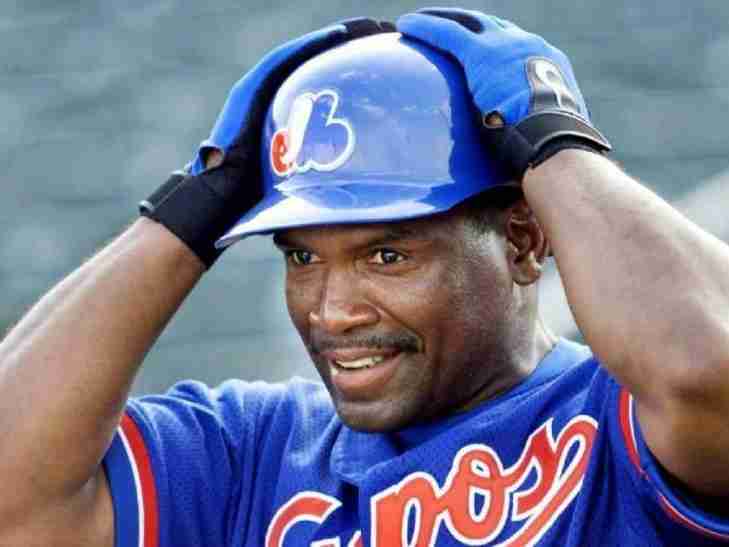
Had it not been for the parallel existence of Rickey Henderson in the junior circuit, a swift, switch-hitting left fielder from Florida would have spent the entire decade of the 1980s completely unchallenged as the premier leadoff weapon in the sport. Drafted by the Montreal Expos as an amateur infielder, Tim Raines did not merely adapt to the artificial turf of Olympic Stadium; he harnessed his exceptional footwork to neutralize National League catchers and energize the team of Nos Amours. During an exceptional initial 12-season career representing Quebec, the speedster appropriately nicknamed “The Rock” combined elite, high-efficiency base-stealing with impeccable zone discipline to establish himself as one of the most exciting and dominant figures of his era.
His debut in the senior circuit quickly changed how opposing managers organized their defenses. Raines made drawing walks and creating chaos on the bases a consistent part of his daily routine, leading the National League in stolen bases for four straight summers from 1981 to 1984—especially impressive with 90 steals in 1983 alone. While his blazing speed kept infielders on edge, it was his remarkable growth as a high-efficiency contact hitter that truly elevated him to baseball stardom. He earned seven consecutive National League All-Star selections from 1981 to 1987 and finished among the top ten in NL Most Valuable Player voting three times.
His standout moment in the 1986 season truly showcased his incredible talent, as he delivered a spectacular performance marked by outstanding hitting. That summer, Raines confidently dominated National League pitchers, winning the batting title with a remarkable .334 average. He also led the league with a fantastic .413 on-base percentage, achieved 194 hits, and stole 70 bases, earning him the well-deserved Silver Slugger Award.
After a 1990 summer highlighting 49 stolen bases, the Expos faced a financial crossroads and aimed to cut costs by shifting to a younger, cheaper payroll under GM Dave Dombrowski. With Raines nearing the end of his contract and seeking a long-term deal, the front office chose to maximize his value before losing him for nothing. In December 1990, they executed a blockbuster trade, sending Raines to the White Sox for Ivan Calderon and Barry Jones. He turned that departure into another productive decade in sports, earning two world-championship rings as a veteran and coach with the Yankees and White Sox, though his numbers never matched his peak output under the northern sky. Raines would, however, have a brief 47-game return in 2001, before retiring after the 2002 season.
Across his two stints totaling 13 seasons representing the club, he compiled 1,622 hits, 257 doubles, and 931 runs scored, entirely validated by an exceptional .301 batting average and a brilliant .391 on-base percentage. He remains the all-time, undisputed Expos/Nationals franchise leader in both triples (82) and stolen bases (635)—a total that includes a historic 84.7 percent success rate that stands as the gold standard for high-volume base runners
After initially stalling on the BBWAA ballot due to an early-career battle with substance abuse that he had beautifully overcome, his advanced efficiency numbers eventually sparked a massive analytical revolution among voters. It finally arrived in 2017 when, on his tenth and final year of eligibility, the writers overwhelmingly righted the historical ledger by triumphantly electing Tim "The Rock" Raines into the National Baseball Hall of Fame. He proudly chose to enter Cooperstown wearing an Expos cap on his plaque, a coronation beautifully matched that same summer when the organization officially retired his iconic number 30 alongside a classy, highly respectful induction into the Washington Nationals Ring of Honor.
4. Andre Dawson
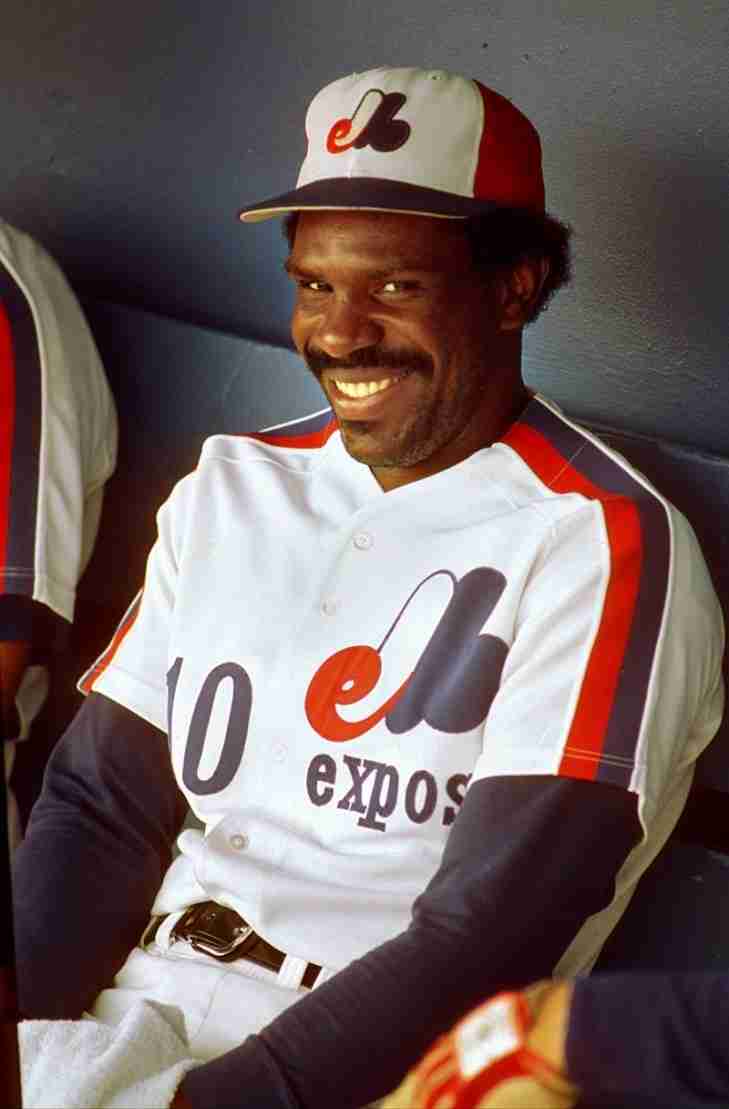
Arriving in Montreal as an unheralded 11th-round draft pick in 1975, Andre Dawson wasted little time transforming into the premier physical specimen of the Expos organization. Officially breaking into the everyday lineup in 1977, his rare combination of explosive bat speed and fluid athleticism earned him the National League Rookie of the Year honors. Dawson immediately anchored a young, ascending Montreal outfield, providing a dynamic blend of high-end run production and aggressive base-stealing that signaled the arrival of a generational cornerstone.
Throughout his eleven seasons in Quebec, Dawson established a benchmark of elite individual performance that frequently placed the Expos in the national spotlight. He was a consistent threat at the plate, intimidating National League pitching with 225 home runs, 838 RBIs, and a strong .802 OPS. Although he twice finished as the unfortunate runner-up for the National League MVP Award in 1981 and 1983, his offensive statistics consistently supported a low-protection Montreal lineup during the franchise's most competitive early periods.
Although catcher Gary Carter frequently garnered the majority of media attention and fan admiration in Montreal, the underlying data indicates that Dawson was the actual pivotal force behind the team's offensive productivity. He consistently outperformed Carter in major slugging categories, utilizing his rapid wrists to produce significant extra-base hits despite the expansive, pitcher-friendly confines of his home stadium. His role at the heart of the batting lineup provided the Expos with a vital identity, thereby maintaining their status as a formidable adversary within the National League East.
Defensively, Dawson was an exceptional outfielder, demonstrating mastery in his field. He patrolled the center and right fields with impressive agility and determination, utilizing his renowned closing speed and impeccably executed route-running to convert potential extra-base hits into straightforward outs. Equipped with an extraordinarily powerful throwing arm that effectively deterred opposing baserunners, Dawson earned six consecutive Gold Glove Awards from 1980 to 1985, thereby solidifying his reputation as one of the most comprehensive and highly efficient defensive outfielders of his era.
The inevitable departure occurred following the 1986 campaign, when the incessant impact of the Olympic Stadium's artificial turf compelled the impending free agent to seek a more forgiving, natural grass playing surface in order to preserve his deteriorating knees. Dawson famously signed a blank contract with the Chicago Cubs, initiating a second chapter that would immediately result in the attainment of the elusive 1987 Most Valuable Player award, which he had long deserved. He departed Montreal as a franchise legend, holding the club's unique record as the sole player to surpass both 200 home runs and 200 stolen bases while playing for the Expos.
Decades after the team's move south, Dawson's legacy remains preserved across franchise eras. He’s a true icon of Canadian baseball, confirmed when the Expos retired his No. 10 jersey before their departure. His immortal status was cemented in 2010, when he was inducted into the National Baseball Hall of Fame and the Washington Nationals Ring of Honor, securing his place at the top of the organization's history.
