

42. Bobby Thomson
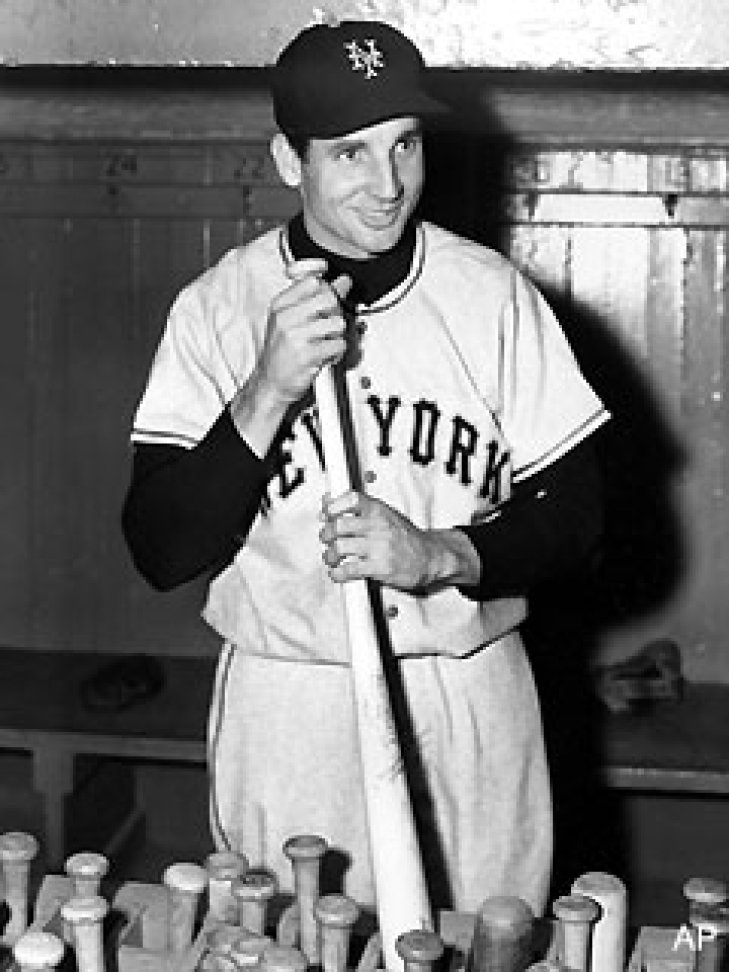
The legendary radio call from Russ Hodges remains frozen in time, an iconic burst of pure audio joy that will echo through the annals of sports history as long as the game is played. On October 3, 1951, Bobby Thomson stepped to the plate at the Polo Grounds in the bottom of the ninth inning of a deciding Game 3 tie-breaker, staring down Brooklyn Dodgers reliever Ralph Branca as his team trailed by two. With one violent, compact swing, the "Statten Island Scot" launched a line-drive home run into the left-field stands, authoring the walk-off "Shot Heard 'Round the World." That singular blast completed an improbable, historic regular-season comeback—erasing a seemingly insurmountable 13½-game deficit in mid-August to steal the National League pennant right out of their bitter rivals' hands. While the exhausted Giants would ultimately fall to the cross-town Yankees in the ensuing World Series, Thomson’s autumn miracle secured him an unmitigated passport to baseball immortality.
"The Giants win the pennant! The Giants win the pennant! The Giants win the pennant! Bobby Thomson hits a line drive into the lower deck of the left field stands... and the Polo Grounds is goes wild!" — Russ Hodges, October 3, 1951
Focusing solely on that historic afternoon in Upper Manhattan overlooks Thomson’s extensive playing credentials. Signed as an amateur free agent before the 1942 season, his progress was interrupted by World War II, when he served three years in the U.S. Army Air Forces. After returning, he quickly dominated minor league pitching and made a sensational debut in the majors in 1947, hitting 29 home runs and 154 hits, establishing himself as a powerful new presence in the New York lineup.
Thomson quickly confirmed his impressive debut by establishing himself as a top middle-order hitter, earning consecutive National League All-Star selections in 1948 and 1949. His offensive growth reached its peak during the 1949 summer, when he leveraged his quick wrists to achieve his first 100-RBI season with 109 RBIs and posted his only .300 batting season at .309. Standing 6-foot-2 and lean, Thomson had a highly adaptable athletic build, blending raw power with exceptional foot speed, which made him a valuable defensive player in both the outfield and at third base.
His standout moment on the diamond came during the memorable 1951 season, a summer when he played at a superstar level well before his October heroics. Thomson was a tireless offensive force for manager Leo Durocher, setting career highs with 32 home runs and 108 RBIs, and leading the league with 14 triples. His consistent ability to produce extra-base hits in the expansive Polo Grounds drew praise from national writers, who recognized his excellence by ranking him eighth in the National League MVP voting.
Thomson's impressive offensive performance persisted over the next two winters, with consecutive seasons of 24 and 26 home runs and surpassing 100 RBIs in both years, helping to shape a competitive New York team. However, aware of their strong position and aiming to give young outfielder Willie Mays an opportunity, the Giants’ front office orchestrated a major trade in February 1954, sending Thomson to the Milwaukee Braves for a package that included pitcher Johnny Antonelli. This move turned out to be perfectly timed; just weeks into spring training with his new team, Thomson suffered a fractured ankle that permanently reduced his lower-body explosiveness, preventing him from ever reaching an All-Star game again.
After a productive decade away, including a brief, emotional 42-game return with New York in 1957, Thomson officially retired, ending a 15-year major league career. He left with a .277 batting average, 1,171 hits, and 189 home runs in 1,141 games for the Giants.
44. Sal Maglie
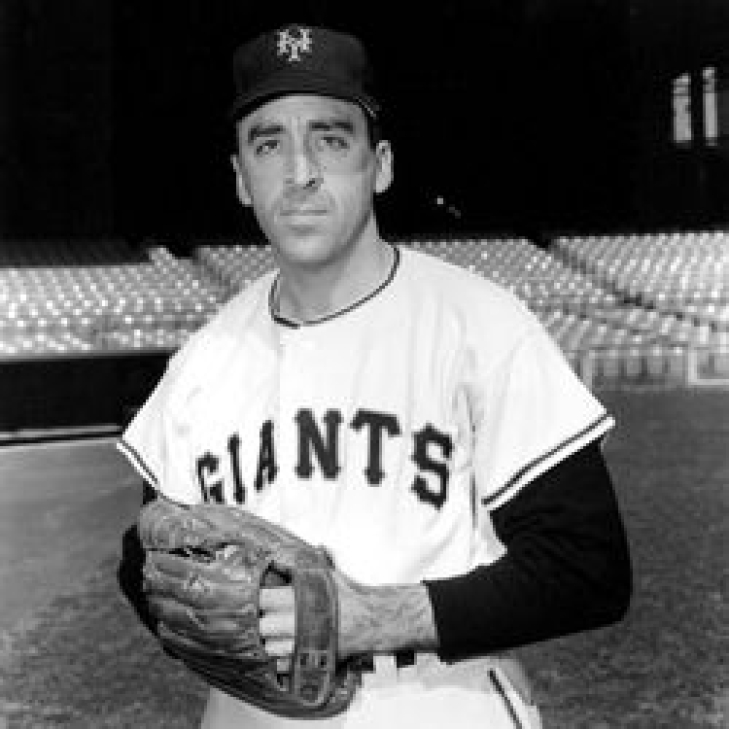
Sal Maglie's rise to major-league stardom was one of the most unpredictable and unusual stories of his time. It wasn't until he was 28 that he reached the big leagues, posting a solid 5–4 record with a 2.35 ERA for the New York Giants in the wartime 1945 season. Driven by a need for financial stability, Maglie took a risky move in 1946 by joining the Mexican League for a higher paycheck. This decision led to an immediate and strict ban from Commissioner Happy Chandler, effectively banning him from organized baseball. To make matters worse, his Mexican team soon went bankrupt, leaving Maglie stranded in independent semi-pro baseball for nearly five years during what should have been his physical prime.
When the commissioner finally lifted the ban in 1950, 33-year-old Maglie returned to the Polo Grounds mound, sporting a dark beard, an intimidating glare, and a fierce pitching style that earned him the nickname "The Barber." He used a sharp, sweeping curveball and a bold ability to target the inside corner near a batter’s chin, leading to a remarkable comeback. Maglie swiftly secured the 1950 National League ERA title with a 2.71 ERA and an impressive 18–4 record, establishing himself as the clear ace on Leo Durocher’s team.
"The Barber" was the ultimate big-game engine for the legendary 1951 "Miracle at Coogan's Bluff" squad. He paced the entire National League with 23 victories and a league-best 7.7 hits allowed per nine innings, grinding out 298 innings to carry the Giants to the pennant and finish fourth in the National League MVP voting.
Maglie beautifully sustained that frontline momentum with another All-Star showcase in 1952, winning 18 games with a sharp 2.92 ERA, further solidifying his reputation as one of the most feared competitors in the sport. Despite chronic, agonizing back issues that severely hampered his efficiency and volume over the next two summers, his veteran poise remained an invaluable asset. He made 32 gutsy starts in 1954, winning 14 games to guide the Giants to yet another National League pennant and then helped suppress the powerhouse Cleveland Indians in a four-game World Series sweep.
By 1956, due to his aging and ongoing physical issues, the small-market team had to put him on waivers, after which Cleveland claimed him. He later gained prominence with the Brooklyn Dodgers and New York Yankees. During his time with the Yankees, Maglie achieved an impressive 95–42 record, a 3.13 ERA, and 654 strikeouts in 221 games.
34. Buck Ewing
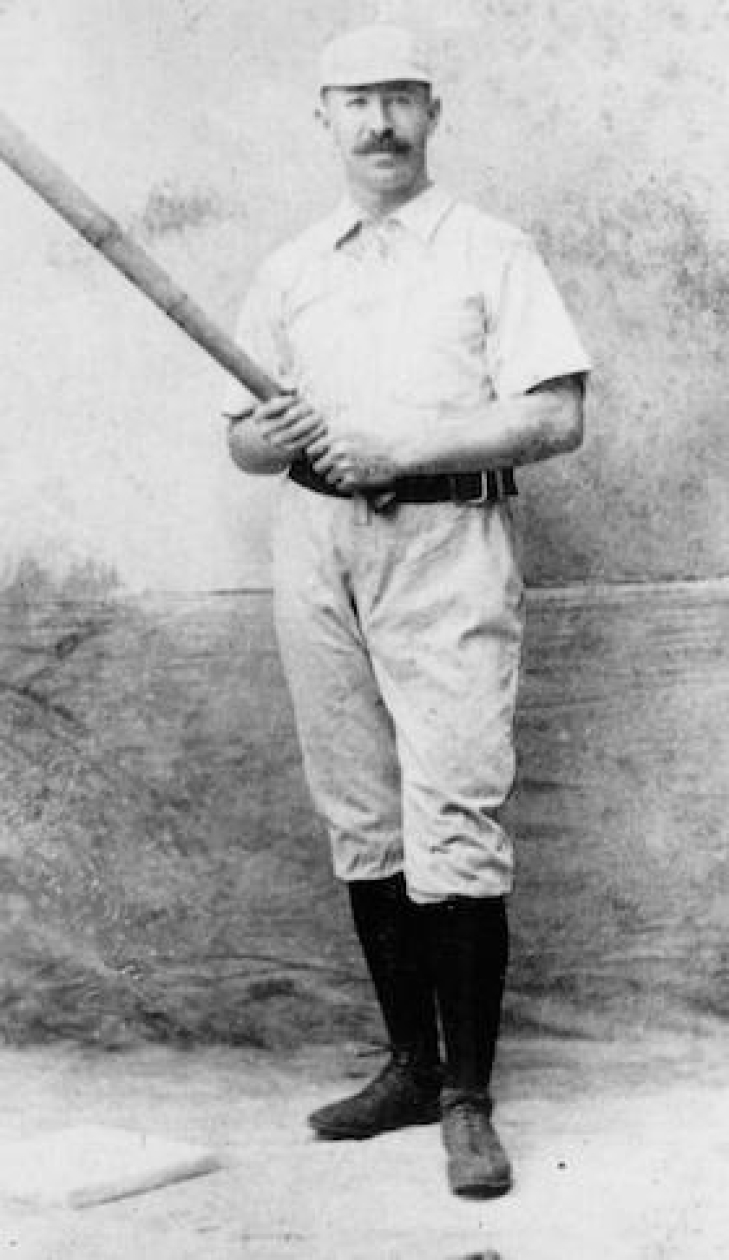
We have to go way back for this one, as Buck Ewing joined the Giants in 1883, after
A player with multiple defensive skills (he played at Catcher, Outfield, Second, and Third), Ewing began his career in the National League with Troy, where he played three seasons before the team folded, and he joined New York, the team where he became a star. Along with his defensive versatility (though he was at his best as a Catcher), Ewing was a competent hitter, batting over .300 in six of his first seven years with New York.
19th Century Baseball was not a power game, but Triples and Stolen Bases were in vogue, and Ewing could deliver. He was the league leader in Triples with 20 in 1894 and had 109 in total as a Giant. Ewing stole 178 bases on the base paths for New York, an astonishing number for a Catcher. Ewing was also a large part of the original version of the World Series, leading New York to titles in 1888 and 1889.
After 1989, Ewing was one of many players who jumped to the Players League, but with that organization lasting only one year, he was back to the Giants, playing there three more years before he was traded to Cleveland.
In 1939 Ewing was elected into the Baseball Hall of Fame by the Old Timers Committee.
28. Art Fletcher
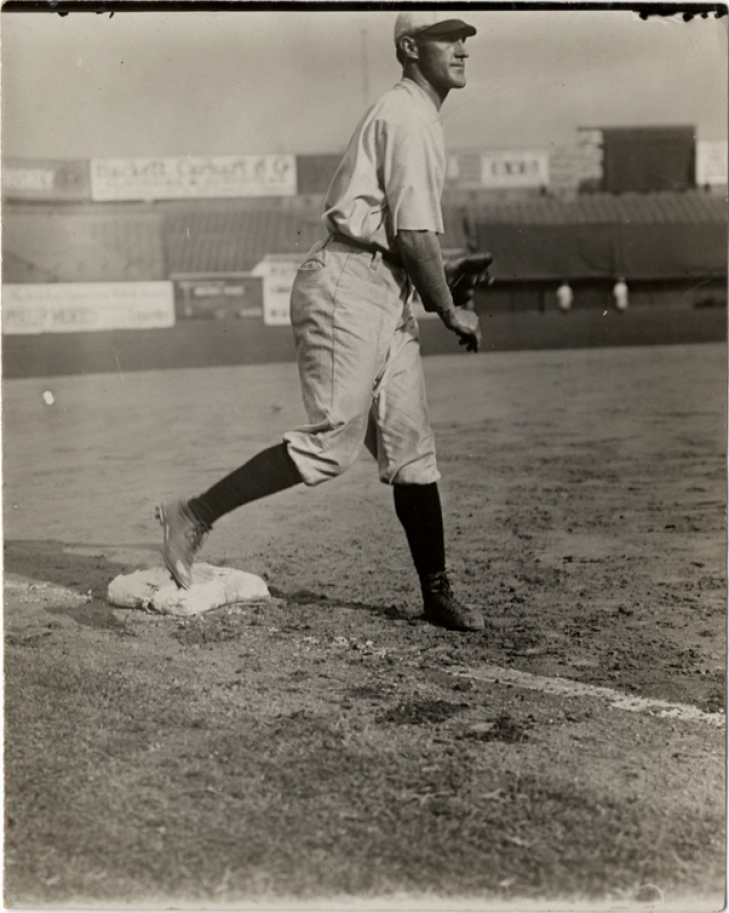
Art Fletcher is thought of more by baseball pundits for his time as a Coach for the New York Yankees, but as a player, he is arguably the greatest defensive player in Giants history.
Holding the franchise record for Defensive bWAR (25.9) and a three-time league leader in that stat, Fletcher was also first in Assists four times. Offensively, Fletcher was no star, but he accumulated 1,311 hits, batted .275 for New York, and mastered the selfless art of being hit by pitches, leading the NL in that statistic four times.
The Giants made the World Series (though lost) with Fletcher as their Shortstop four times. You have to be a pretty good ballplayer to be a starting Shortstop for that to happen.
35. Robby Thompson
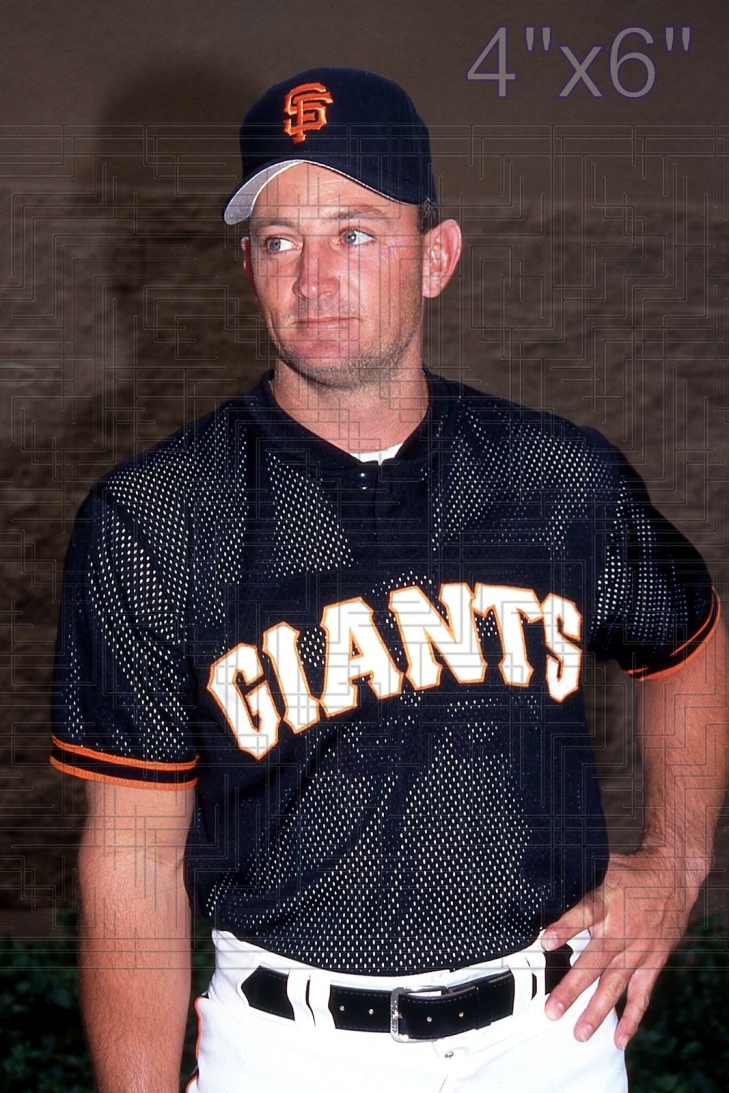
Robbie Thompson was chosen by the San Francisco Giants in the first round of the 1983 secondary phase draft from the University of Florida. The team quickly promoted him through the minor leagues to fill a long-standing infield need. Making his debut as the everyday second baseman in 1986, he skipped Triple-A entirely and looked perfectly at ease under manager Roger Craig's guidance. Robbie had an outstanding rookie season, hitting .271 with 141 hits and establishing himself as a lively, reliable leadoff hitter. His passionate style and readiness to give his all on the field instantly won over the fans at Candlestick Park, as he nearly took home the National League Rookie of the Year Award.
Over seven seasons, Thompson truly exemplified dependable, calm consistency for the Giants' lineup. Playing alongside shortstop Jose Uribe, he formed a trustworthy double-play duo that helped lead a strong team to win the 1989 National League pennant. Known for his durability, Thompson impressively recorded at least 110 hits in each of his first seven seasons. A two-time National League All-Star, he surprisingly had some power for a middle infielder of his time, consistently hitting double digits in home runs and serving as a determined leadoff hitter for stars like Will Clark and Kevin Mitchell.
His finest individual achievement on the field came during the historic 1993 season, a summer when everything fell into place for the veteran second baseman. Playing with a noticeable edge in Dusty Baker's first year as manager, Thompson made the most of his spot in a star-studded lineup to achieve career highs across multiple categories- 154 hits, 30 doubles, 19 home runs, and 65 RBIs. He complemented this offensive surge with an impressive .312/.375/496 slash line, earning a well-deserved Silver Slugger Award and finishing among the top 20 in the National League MVP voting.
That remarkable 103-win summer marked the peak of his defensive reputation. Known as a highly skilled and fearless infielder who consistently held his ground at second base to complete double plays despite sliding runners, Thompson gained national recognition by winning the 1993 National League Gold Glove Award. His exceptional lateral range and instinctive route selection established him as the best all-around second baseman in the senior circuit that year, exemplifying excellent positional play.
Sadly, that outstanding 1993 peak also marked the end of his prime physical years. The intense effort of his aggressive, determined playing style quickly caught up with him over the next three seasons, as age and a growing list of injuries gradually took away his durability. Between 1994 and 1996, Thompson faced frequent time on the disabled list, with only 193 sporadic appearances during those years as his body struggled to keep up. Recognizing that his time with the Bay had come to a close, he signed a free-agent deal with the Cleveland Indians before the 1997 season, but ongoing physical issues ultimately led to his retirement before he could even play a game for them.
Thompson spent his entire 11-year MLB career with the San Francisco Giants, collecting 1,187 hits, 119 home runs, and 445 RBIs in 1,304 games. His story is marked by consistent decade-long contributions and a historic peak in a single season. His legacy as a beloved lifer was cemented in 2008 when he was inducted into San Francisco's first Wall of Fame.
36. Hal Schumacher
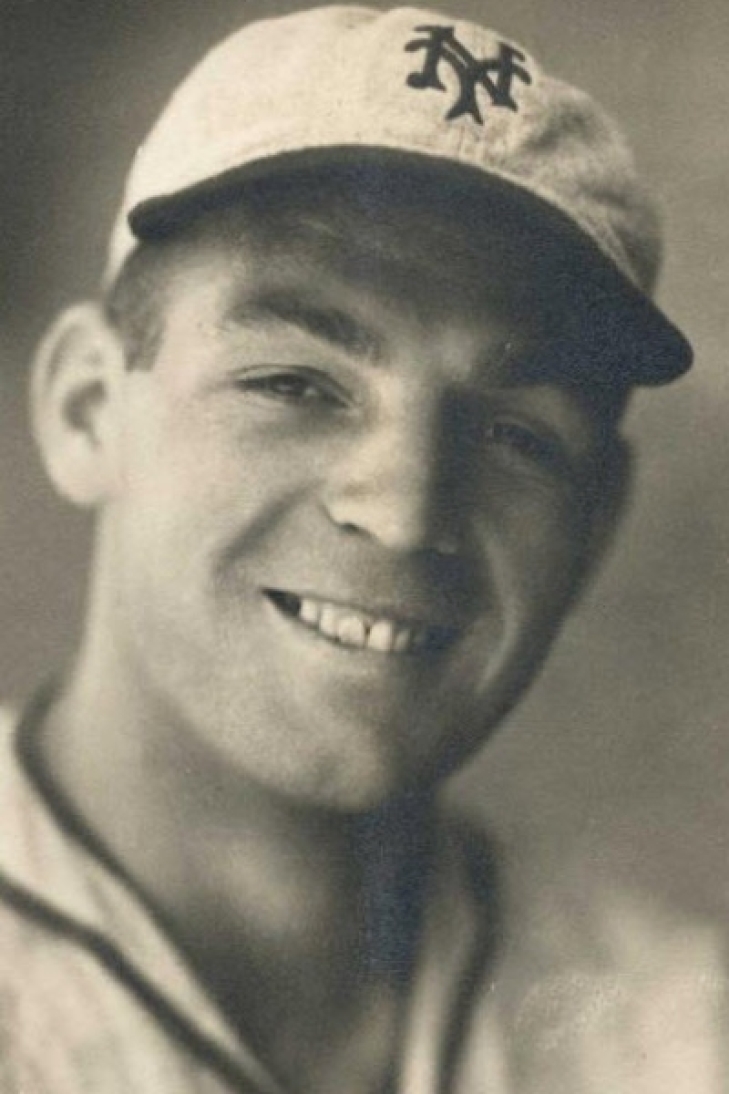
The story of the New York Giants in the 1930s is mainly centered on the legendary 'King Carl' Hubbell. However, the team's quick rise to becoming a strong National League contender was largely thanks to a dependable second pitcher. Signed in 1931 from St. Lawrence University by scout Art Devlin, with the condition that he could finish his degree, Harold ‘Prince Hal’ Schumacher brought a smart, businesslike attitude to manager John McGraw’s pitching staff. By the time Bill Terry became the manager, Schumacher was well-placed to serve as a powerful right-handed complement to Hubbell's left-handed skills, holding the second spot in the rotation as the team grew into a championship contender.
Schumacher’s breakthrough came during the notable 1933 season, a summer when he played at a top, frontline level. He ignited with a remarkable 19–12 record, a stellar 2.16 ERA, and leading the National League by allowing just 6.9 hits per nine innings. He carried this top form into the Fall Classic against the Washington Senators, delivering a brilliant five-hit complete game in Game 2 and driving in three runs. He also started the exciting, extra-inning Game 5 final, earning his only World Series ring and a spot in the first-ever 1933 Major League Baseball All-Star Game.
In his remarkable 1934 season, he reached new heights in the regular season, establishing himself as a dependable workhorse. He made a career-high 36 starts and pitched 297 innings, leading the team with 23 wins and only 10 losses. Beyond his pitching prowess, he was a versatile player, hitting six home runs and helping the Giants navigate a tough pennant race. His durability and reliability impressed national writers, earning him a ninth-place spot in the National League MVP voting.
Schumacher earned a second All-Star selection in 1935 after another strong 19–9 season. However, the demanding workload of nearly 940 innings before age 25 began taking a toll. After this intense peak, he became a reliable, middle-of-the-road starting pitcher for the rest of his career. Although he no longer reached 15 wins or matched his early statistical outliers, he remained a dependable player who consistently ate innings and helped keep a competitive New York team afloat in the standings.
His long-standing tenure with the club ended suddenly after the 1942 season, as a larger global conflict overshadowed baseball. Instead of remaining in the Giants' rotation, Schumacher prioritized his duty and joined the United States Navy to serve in World War II. He missed three key seasons, from 1943 to 1945, while serving honorably in the Pacific Theater as a lieutenant on the escort aircraft carrier USS Cape Esperance. He returned safely to Manhattan for a brief, final appearance in 1946, winning two complete games early in the summer before retiring from baseball at age 35.
Schumacher retired having spent his entire 13-year major league career exclusively in a New York Giants uniform, compiling a highly successful 158–121 record, 906 strikeouts, and a sharp 3.36 ERA across 391 appearances.
32. Brandon Crawford
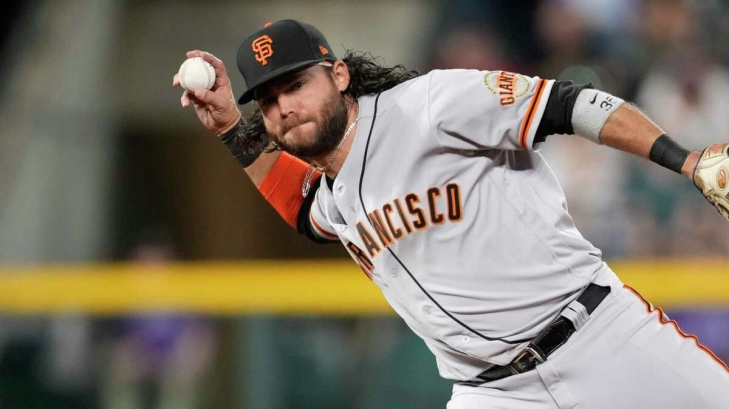
Having grown up in the East Bay hills of Pleasanton as a dedicated supporter of the San Francisco Giants, Brandon Crawford appeared virtually predestined to patrol the infield at Oracle Park. Selected by his hometown team in the fourth round of the 2008 draft from UCLA, the proficient shortstop rapidly advanced through the farm system to make his highly anticipated Major League debut in May 2011. He made an impressive initial impression on the baseball community by becoming only the sixth player in Major League history to hit a grand slam in his first professional game—an electrifying debut that underscored a special bond between the local athlete and his supporters.
Crawford’s arrival immediately resolved a decade-long defensive enigma for San Francisco, fortifying the most demanding position in the game precisely as the franchise entered its golden era. He became the definitive defensive cornerstone of the club’s renowned championship roster, offering exemplary reliability and exceptional instinctual coverage during the illustrious World Series titles of 2012 and 2014. Crawford consistently demonstrated his resilience under utmost pressure, notably exemplified by a historic postseason grand slam in the 2014 National League Wild Card Game against Pittsburgh, which significantly altered the game's dynamics and solidified his reputation as a key contributor in high-stakes contests.
Over the next decade, Crawford elevated shortstop defense through exceptional positional awareness and lateral coverage. His glove work gained national recognition, securing four National League Gold Glove Awards and two Wilson Defensive Player of the Year honors. He regularly led the league in assists and double plays. With an excellent internal clock and a precise, off-balance throw, he reliably handled grounders from third to second, providing a seasoned Giants pitching staff with a dependable infield defender.
While his glove established his basic identity, Crawford continually transformed into a strong offensive threat, surpassing expectations from early scouting reports that saw him as a light-hitter. He combined reliable defense with unexpected offensive flexibility, leading the National League with 11 triples in 2016 and exceeding 20 home runs twice in his career. His standout season came in 2021, when he experienced a remarkable late-career revival by batting a personal-best .298 with 24 home runs, helping his team set a franchise record with 107 wins and finishing fourth in the National League MVP voting.
The physical toll of anchoring the infield for more than a decade eventually caught up to him, as age and a mounting list of lower-body injuries caused a sharp statistical slowdown beginning in 2022. After a frustrating, injury-plagued 2023 season, the organization made the difficult emotional pivot to usher in a youth movement, leading to Crawford’s departure to the St. Louis Cardinals via free agency prior to the 2024 season.
Crawford accumulated 1,392 hits and 146 home runs in a Giants uniform.
31. Jeff Kent
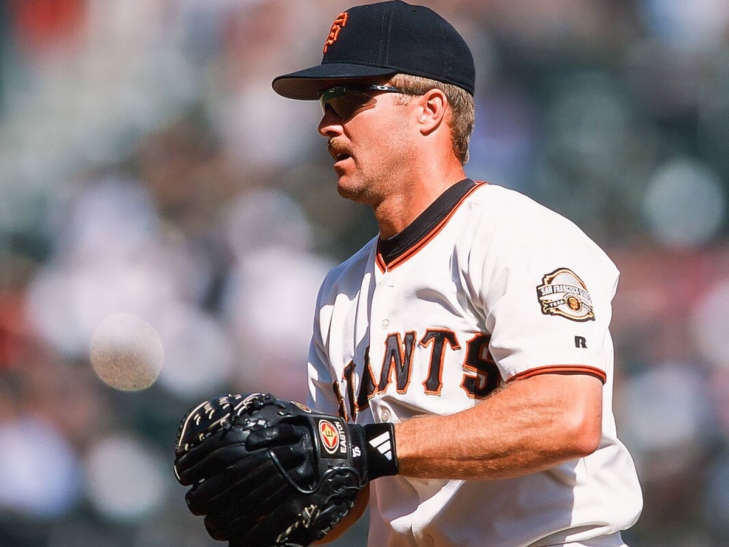
When the San Francisco Giants traded for Jeff Kent before the 1997 season, sending franchise legend Matt Williams to Cleveland, the reaction from local fans was mostly mixed. Until then, Kent had a decent but uninspiring tenure as a regular infielder for Toronto, New York, and Cleveland, showing occasional power but never seeming like a superstar. Few could have foreseen that moving to the West Coast would dramatically change his career, turning an underestimated journeyman into the leading power-hitting second baseman of his generation.
The move to San Francisco immediately elevated Kent's offensive performance to a new level of power. Placed at the core of Dusty Baker’s batting lineup, he set a standard for consistent elite run production, surpassing his National League peers. He achieved an impressive streak, hitting at least 23 home runs and totaling 101 or more RBIs in all six seasons with the Giants—highlighted by a 128-RBI season in 1998 and a career-best 37 home runs in 2002, during their pennant run.
Kent reached the peak of his individual greatness during the remarkable 2000 season, when he produced a standout performance on the field. He hit an impressive .334 with 33 home runs and 125 RBIs, vital in sustaining the Giants’ offense during crucial moments and securing the National League West championship. In an unexpected development, baseball writers honored his clutch efforts by awarding him the National League Most Valuable Player Award, surpassing his teammate Barry Bonds—a historic achievement that confirmed Kent's position as an elite, top-tier superstar.
The shared MVP race highlighted the complex and volatile nature of the San Francisco clubhouse during that time. Kent and Bonds had a notably cold relationship that sometimes erupted into public, physical disputes in the dugout. Despite this personal tension, both stars maintained professionalism on the field, creating one of the most formidable middle-of-the-order duos in baseball history, constantly challenging opposing pitchers to choose their approach.
Although some old-school purists occasionally criticized his glove, Kent strengthened his defense enough to stay a reliable presence on the infield, earning three straight All-Star selections and three Silver Slugger Awards while with the Giants. The inevitable departure came after the 2002 World Series; with his contract up and tensions lingering from a spring training wrist injury, Kent left for the Houston Astros as a free agent. He exited San Francisco with a career total of 1,021 hits, 175 home runs, and an impressive .903 OPS over 915 games.
He was inducted as the only member into the San Francisco Giants Wall of Fame in August 2009. His career reached its peak when the Contemporary Baseball Era Committee elected Jeff Kent to the Hall of Fame and the Giants retired his number 21 jersey, cementing his legacy.
38. Larry Jensen
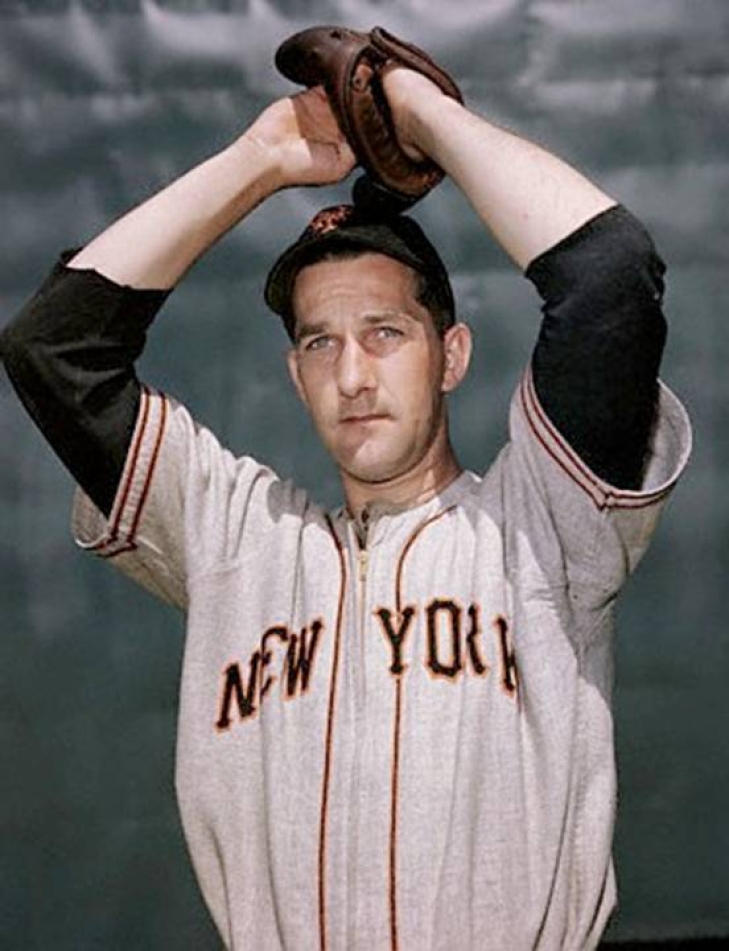
The onset of World War II significantly reconfigured the course of Larry Jansen’s athletic career, resulting in a substantial delay before he could attain his professional aspirations in the major leagues. Instead of progressing directly to the majors in his early twenties, the Oregon native dedicated much of the 1940s to excelling in the Pacific Coast League, notably achieving an extraordinary 30-win season for the San Francisco Seals in 1946. By the time the New York Giants acquired his contract, Jansen was already a 27-year-old novice prepared for the prominent stage of the Polo Grounds. Immediately affording him a position in manager Mel Ott’s starting rotation for the 1947 season, the precise right-hander swiftly demonstrated that his maturity was a considerable strength, exhibiting an immediate dominance over hitters in the National League.
His inaugural summer in Manhattan was remarkable, characterized by an exceptionally efficient rookie campaign during the post-war period. Employing an advanced, newly developed slider and demonstrating impeccable control, he achieved an impressive 21–5 record while leading the senior circuit with a distinguished .808 winning percentage. Jansen pitched 248 innings with a commendable 3.16 ERA, supported by a league-best 2.1 walks per nine innings. In most other seasons in baseball history, such immediate dominance would have ensured him the highest honors; however, he ultimately finished as a highly regarded runner-up for the Rookie of the Year Award, losing to a player who had been compelled to wait for his opportunity to play in the majors for a significantly different historic reason: Jackie Robinson.
He remained a premier front-line force as the calendar turned to the new decade, earning consecutive National League All-Star selections in 1950 and 1951. His refined approach on the mound was defined by an absolute refusal to beat himself with free passes; Jansen topped the National League in strikeout-to-walk ratio in both of his All-Star campaigns, highlighted by a phenomenal 1950 summer where he went 19–11 and paced the junior circuit with a microscopic 1.065 WHIP.
His highest statistical achievement was attained during the notable 1951 season, a remarkable summer in which Jansen leveraged his durability to lead the Giants through a distinguished pennant race. He made 39 appearances and pitched 278 innings of high-intensity play, securing the National League wins title by achieving a commendable 23–11 record, tying with teammate Sal Maglie for the league's top spot. Jansen was the integral force behind New York's remarkable late-summer rally to overcome a 13-game deficit against the Brooklyn Dodgers, consistently serving as a dependable and stabilizing presence whenever he pitched.
That unforgettable pennant race secured its place in baseball lore on October 3, 1951, in the deciding Game 3 of the National League tie-breaker series. Summoned from the bullpen by manager Leo Durocher in the top of the ninth inning, with the Giants trailing 4–1, Jansen delivered a clutch, scoreless relief performance to hold the line. His steady execution set the stage for the bottom of the frame, when Bobby Thomson blasted the legendary walk-off "Shot Heard 'Round the World." While Thomson’s home run remains the enduring image of that autumn afternoon, it was Jansen who officially walked off the mound as the winning pitcher of the most famous game in the sport’s history.
Tragically, the heavy workload of nearly 1,350 innings in his first five seasons severely damaged his arm. After 1951, persistent back injuries and shoulder inflammation led to a decline, and by 1954, during a championship season, Jansen was broken down, making only 13 appearances before being released. He left with a successful 120–86 record, 826 strikeouts, and a 3.44 ERA in 275 games with the Giants.
25. Bobby Bonds
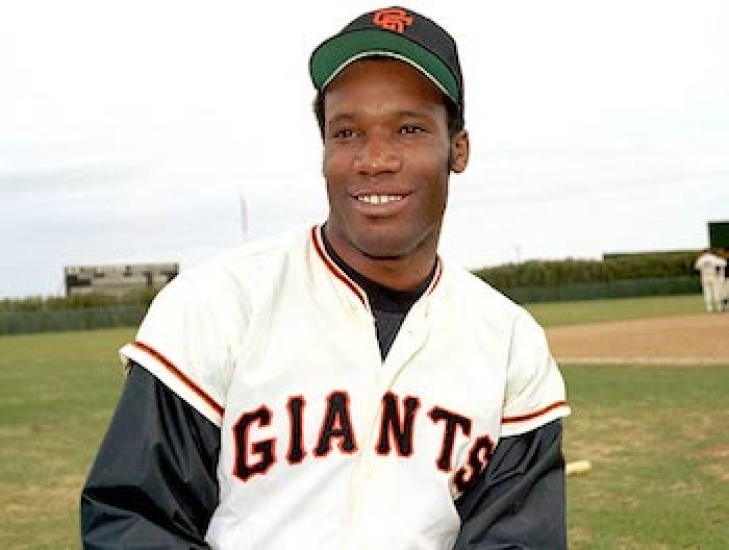
Long before sports used complex algorithms to track muscle movements and high-speed wheels, a pioneering right fielder emerged in Northern California, redefining the potential of a leadoff hitter. Signed by the San Francisco Giants from Southern California in 1964, Bobby Bonds didn’t simply wait to succeed his legendary teammate and mentor, Willie Mays. Debuting in June 1968—immediately making an impact with a historic grand slam in his first game—he took control of the top of the batting order, building an impressive seven-season peak that set the standard for the modern game.
Becoming a full-time regular in 1969 truly broke the mold of traditional, low-impact leadoff roles. Bonds made setting the table and clearing it look effortless, turning it into a consistent daily habit. He smashed 32 home runs and swiped 45 bases while pacing the National League with 120 runs scored. With that performance, he became just the fourth member in major-league history to join the exclusive 30-30 club.
He established the 30-30 milestone as a personal benchmark, achieving this feat an impressive five times throughout his career. Notably, in the 1973 regular season, he narrowly missed surpassing this milestone with a remarkable performance, hitting a career-high 39 home runs and stealing 43 bases. That particular season represents the pinnacle of his individual achievements within his regional tenure. Bonds decisively outperformed opposing National League teams, leading the Major Leagues with 131 runs scored and 341 total bases, and finishing in a close third place in the National League Most Valuable Player (MVP) voting.
Beyond his standard offensive damage, it was his elite instinct and high-velocity range on the grass that solidified his comprehensive value anchor. He combined a powerful arm with spectacular closing speed, capturing three National League Gold Glove Awards (1971, 1973, 1974) to prove he was a complete, two-way superstar.
However, Bonds was a highly aggressive pull-hitter whose advanced efficiency filters were frequently hindered by his historic strikeout volume; he led the senior circuit in strikeouts four times during his stay in San Francisco, setting a major-league record with 189 punchouts in 1970 that stood for over three decades. Furthermore, the front office grew increasingly anxious regarding long-term fiscal commitments amidst an organizational transition, triggering a sudden, highly shocking business exit.
In a November 1974 trade that stunned local fans, management initiated a definitive business departure by trading their 28-year-old superstar to the New York Yankees in a straight superstar swap for Bobby Murcer.
Bonds, who would later be the second player after teammate Willie Mays to reach 300 Home Runs and 300 Stolen Bases, was traded to the Yankees in 1974. During his time with the Giants, he accumulated 1,106 Hits, 186 Home Runs, and 263 Stolen Bases. In 2008, Bonds was part of San Francisco's first Wall of Fame Class.
26. Gaylord Perry
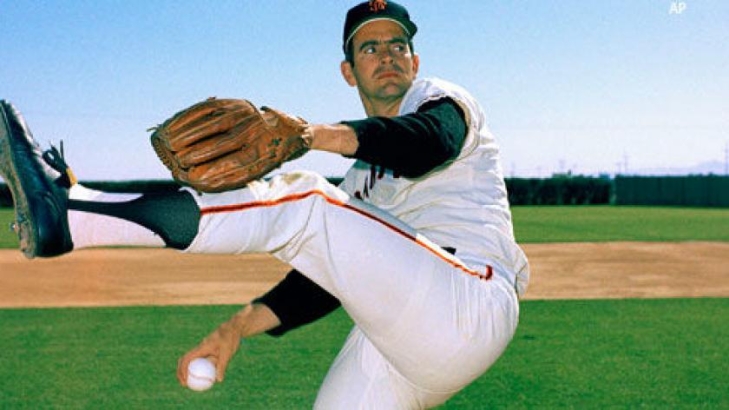
Gaylord Perry later became baseball's first pitcher to win a Cy Young Award in both leagues—excelling for Cleveland in the American League and San Diego in the National League. It’s easy for casual fans to overlook his remarkable ten-year stretch of consistent durability in Northern California. He made his major-league debut in April 1962, and initially faced challenges in securing a permanent spot, battling structural inconsistency and often pitching as an unpredictable reliever out of the bullpen. However, everything changed around 1964 when he fully mastered a highly controversial, grease-slicked spitball—an infamous pitch, real or imagined, that showcased his exceptional resilience and endurance.
His 1966 debut as a full-time, leading anchor immediately disrupted the senior circuit rankings. Perry made playing intense, high-stakes matches a disciplined daily practice, resulting in an impressive breakthrough. He ended the season with a 21–8 record, a sterling 2.99 ERA, and a career-high 201 strikeouts across 290.2 heavy frames to command his very first career All-Star selection.
This was just the beginning.
Perry established himself as a consistent presence at the top of the rotation, consistently maintaining an ERA below 3.00. He led the National League in innings pitched consecutively in 1969 (325.1) and 1970 (328.2). Additionally, he secured a place in the franchise's no-hit history by delivering a famous 1–0 game against Bob Gibson and the St. Louis Cardinals in September 1968.
The peak of his West Coast career came during an exceptional 1970 regular season. Perry delivered an outstanding display of durability, leading the major leagues with a career-high 23 wins and 29 complete games. His performance featured a historic run where he tied the franchise record with four straight shutouts and pitched 40 consecutive scoreless innings. His remarkable efficiency earned him a starting spot for the National League in the All-Star Game and a close second in the NL Cy Young Award voting behind Bob Gibson.
After a 1971 season where his wins dropped to 16, the front office became concerned about age. Believing that the 33-year-old starter had no more physical potential and that his prime was behind him, management made a heavily one-sided winter trade in November 1971, trading their star pitcher to the Cleveland Indians for Sam McDowell. This trade quickly gained a reputation as one of the worst in franchise history.
Although McDowell quickly faded on the West Coast, Perry turned his departure into a new chapter of national prominence, winning the 1972 AL Cy Young award in Cleveland and continuing his successful career for over a dozen more seasons, ultimately reaching 300 wins and 3,000 strikeouts.
Perry had 1606 strikeouts with a 134-109 record with the Giants, and he entered the Baseball Hall of Fame in 1991. San Francisco retired his number 36 in 2005, and three years later he was part of the Wall of Fame's first monstrous class.
24. Orlando Cepeda
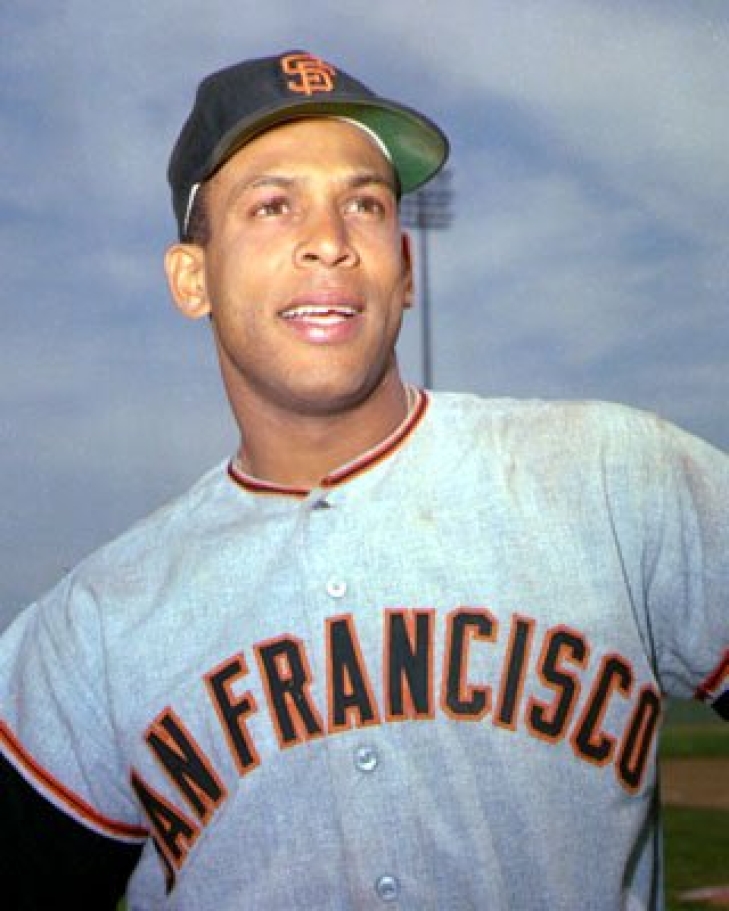
When mapping out the historical landscape of modern baseball, certain players act as monumental bridge figures, carrying the very identity of the sport across geographic and cultural borders. The mid-20th century marked a spectacular globalization of the major leagues, and at the absolute vanguard of that movement was a thunderous, incredibly charismatic young slugger from Ponce, Puerto Rico. When the Giants packing up their bags to abandon New York and establish a brand-new empire on the West Coast ahead of the 1958 calendar, they didn't just bring over established legends like Willie Mays; they introduced San Francisco to its very first homegrown West Coast icon. Universally celebrated as "The Baby Bull," Orlando Manuel Cepeda Pennes did not simply acclimate to the big leagues; he exploded onto the California grass to become one of the first true Caribbean superstars in baseball history.
His impressive 1958 debut immediately set a strong foundation for his reputation as a powerful hitter in the middle of the lineup. Cepeda made a habit of facing top-notch senior circuit pitchers with determination, delivering performances that deeply resonated with fans in the Bay Area. He consistently outplayed National League pitchers, batting an impressive .312, leading the league with 38 doubles, and also hitting 25 home runs with 96 RBIs. His outstanding achievements earned him the unanimous title of National League Rookie of the Year, confirming his rising status as a star in the league.
Cepeda sustained a dynamic baseline, starting a six-summer All-Star streak. He was a consistent offensive force, hitting over .300 six times in San Francisco.
The peak of his hardware-certified legacy was demonstrated during an exceptional 1961 regular-season campaign. That summer, The Baby Bull delivered an outstanding display of power, systematically hitting baseballs with remarkable force to lead the National League with a career-high of 46 home runs and 142 runs batted in, while maintaining an impressive .311 batting average. He was also the runner-up for the MVP.
Ahead of the 1964 campaign, Cepeda suffered a devastating knee injury during winter ball in Puerto Rico. Driven by an unyielding competitive fire, he powered through excruciating, constant pain to still hit 31 homers that summer, hidden so well that local fans had zero idea their first baseman was playing on a compromised lower half.
However, the accumulated damage triggered a catastrophic performance leak in 1965. The knee completely collapsed, stripping away his lower-body leverage and restricting him to just 33 games, where his metrics plummeted to a highly ineffective .176 average with a solitary home run.
By the time he returned to the active lineup ahead of the 1966 schedule, the internal relationship had reached a severe turning point. Haunted by persistent concerns regarding his defensive lateral movement and a highly publicized clash with manager Herman Franks, the front office initiated a definitive business exit in May. They executed a stunning, lopsided trade that shipped their former icon to the St. Louis Cardinals in exchange for pitcher Ray Sadecki. While the trade initially drew immense local skepticism, it beautifully unlocked a second prime for Cepeda on the Midwest turf, where he would instantly parlay his fresh start into a unanimous 1967 National League MVP crown and a World Series championship ring.
As a Giant, Cepeda had 1,286 hits, 226 home runs, 767 RBIs, and a .308/.352/.535 slash line. Cepeda entered the Baseball Hall of Fame as a Veteran's Committee entrant in 1999, and San Francisco responded that year by retiring his number 30. He was also part of the Giants’ first Wall of Fame group in 2008.
33. Johnny Antonelli
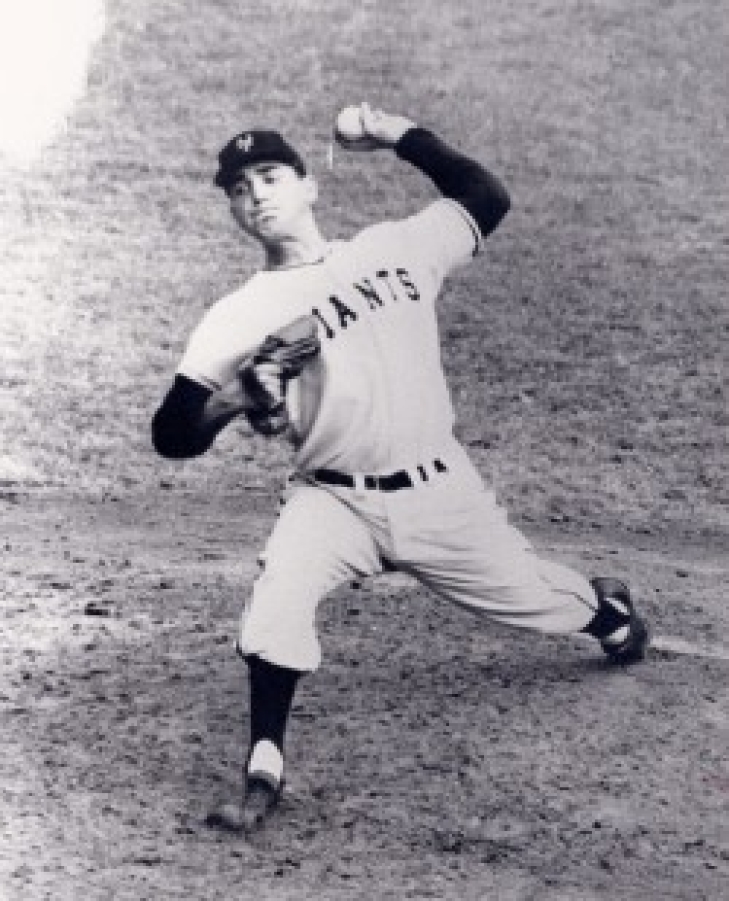
The story of Johnny Antonelli is one of the most fascinating tales from baseball’s classic "Bonus Baby" era. When the Boston Braves handed the high school phenom a record-shattering $52,000 contract in 1948, the rules mandated he stay on the major league roster immediately. This massive payout sparked intense resentment among veteran teammates who had spent years grinding for a fraction of that sum; notably, star pitcher Johnny Sain aggressively lobbied to deny the rookie his loser's share of the 1948 World Series purse. While Commissioner Happy Chandler eventually stepped in to secure Antonelli his $571.31 share, the young left-hander remained an isolated outsider in his own clubhouse, a status that only solidified after a two-year stint in the military when legend Warren Spahn convinced management that Antonelli was entirely expendable.
The turning point of his career arrived in February 1954, when the Braves packaged the young southpaw in a blockbuster multi-player trade to the New York Giants. Stepping into the Polo Grounds with an immense chip on his shoulder and something to prove to his detractors, Antonelli found the perfect ally in manager Leo Durocher. The change of scenery acted as an immediate catalyst, instantly unlocking the raw, explosive potential that had made him a teenage sensation and turning him into the undisputed anchor of the New York starting rotation.
His inaugural 1954 campaign with the Giants remains one of the most dominant single-season pitching masterpieces of the decade. Antonelli caught absolute fire, engineering a spectacular 21–7 record while leading the National League in ERA with a microscopic 2.30 mark and an era-dominating 178 ERA+. He capped off his historic summer by finishing third in the National League MVP race and earning The Sporting News Major League Pitcher of the Year honors—the highest individual accolade available before the creation of the Cy Young Award.
That magical summer culminated in absolute triumph during the 1954 World Series against the heavily favored Cleveland Indians. Antonelli was a force of nature under maximum pressure, throwing a magnificent, complete-game victory in Game 2 and coming out of the bullpen to lock down a crucial, high-leverage save in the Game 4 clincher to secure the sweep. His postseason poise provided a storied New York franchise with its final championship banner before its historic relocation to the West Coast.
Across the remainder of the 1950s, Antonelli remained entrenched at the top of the rotation, seamlessly transitioning with the club during their historic move to San Francisco in 1958. While neither he nor the team ever completely replicated the perfect storm of the 1954 campaign, he was a model of steady, high-efficiency durability, earning six National League All-Star selections and turning in two more 20-win seasons in 1956 and 1959. His sharp curveball and exceptional command made him a foundational pillar alongside Juan Marichal and Orlando Cepeda during the franchise's early California residency.
After the 1960 season, when the Giants traded him to the Cleveland Indians, he walked away from the game less than two years later at just 31. Antonelli left with a 108–84 record, 829 strikeouts, and a 3.13 ERA over 231 appearances.
22. Joe McGinnity
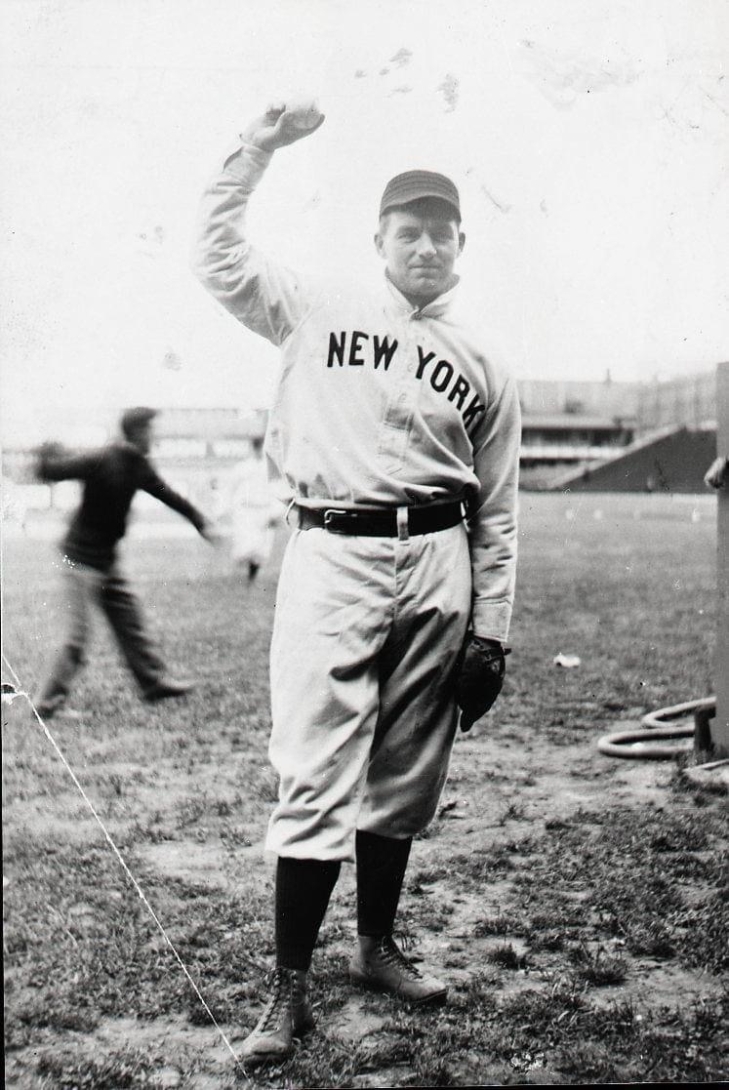
Joe McGinnity originally earned his immortal moniker, "Iron Man," because he worked in a heavy iron foundry during the winter months in Oklahoma. Yet once he followed his close ally and manager John McGraw from the collapsing American League Baltimore Orioles to Manhattan in July 1902, that nickname became the ultimate description of absolute, unadulterated physical endurance. While he spent his entire New York residency sharing the marquee with the elegant, high-profile Christy Mathewson, the stocky right-hander built a hardware-certified legacy of raw work volume that remains completely unmatched in the history of human anatomy.
His debut in 1903 as a regular in the New York rotation quickly established his remarkable durability. McGinnity made it a personal rule to take the mound under any conditions. He relied on a heavy, underhand-slanted "submariner" pitch that produced many ground balls and minimized shoulder strain. That summer, he set an unbreakable senior circuit record by pitching an astonishing 434.0 innings in 55 appearances, leading the league with 31 wins. Most famously, in August, he demonstrated extraordinary stamina by pitching—and winning—both games of a doubleheader three separate times in one month.
Far from an isolated incident in his career, he commendably substantiated this through constructing an exemplary regular-season performance in 1904. McGinnity demonstrated he was considerably more than a mere accumulator, providing an unambiguous demonstration of his skill in run prevention. He led the senior circuit with an outstanding, career-best 35 victories, a remarkable 0.96 WHIP, and nine shutouts, while earning the National League ERA title with an impressive 1.61 earned run average across 408.0 innings. Advanced efficiency metrics further corroborate the exceptional quality of this peak; he led the entire major leagues with an excellent 9.7 pitching bWAR, playing a pivotal role in the Giants' consecutive pennants and setting the foundation for their historic 1905 World Series victory over Philadelphia — during which he delivered a masterful, five-hit complete-game shutout in Game 4, instrumental in securing the world championship.
Assessing his profile within a comprehensive algorithmic review necessitates recognizing the abrupt and imbalanced decline in performance that ultimately brought his major league career to an end. McGinnity distinguished himself by leading the league in games pitched for five consecutive summers (1903–1907), yet the substantial and high-stakes workload ultimately resulted in a significant physical turning point. His efficiency started to diminish during the 1907 season, and his availability drastically declined in 1908 following a severe and debilitating fever that severely undermined his physical capabilities.
Recognizing a natural parting of the ways, the 37-year-old made a definitive business exit after the 1908 schedule, leaving the major leagues to become a minor-league owner, manager, and active pitcher—continuing to throw in the bush leagues well into his 50s.
McGinnity left the Polo Grounds with a remarkable record of 151–88, 255 complete games, and a stellar 2.38 ERA over seven seasons representing New York. The Old Timers Committee selected McGinnity for the Baseball Hall of Fame in 1946.
30. Johnny Mize
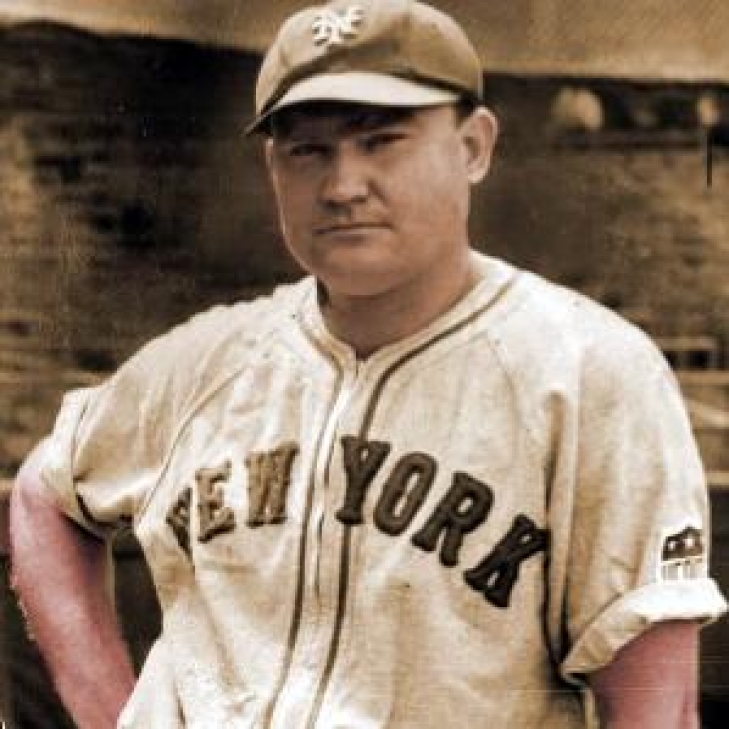
When the New York Giants found out their regular first baseman, Babe Young, was heading into military service, they quickly acted to secure the position. In December 1941, they completed a significant deal with the St. Louis Cardinals to acquire a top slugger's contract. John Robert Mize, already a star with a batting title and two MVP runner-up honors, was known as "The Big Cat" for his agile, graceful defensive footwork. The tall, left-handed hitter had a perfect, smooth swing at the Polo Grounds, combining immense power with excellent plate discipline.
In the 1942 campaign, he led the senior circuit with 110 RBIs and a strong .521 slugging percentage, while maintaining a solid .305 batting average and hitting 26 home runs to earn an All-Star selection. However, similar to his predecessor, his momentum was interrupted by the global conflict; Mize left for military service before the 1943 season, sacrificing three prime years of his athletic career to serve in the United States Navy.
Upon his eventual return to the active roster in 1946, any concerns that the extended hiatus had diminished his physical prowess were immediately dispelled. Although he was navigating his mid-30s, Mize reasserted himself as a formidable offensive threat, orchestrating a peak power performance that entirely transformed the franchise record books.
The absolute individual apex of his West Coast prelude erupted during a breathtaking 1947 regular-season masterpiece. That summer, The Big Cat put on an unadulterated clinic in elite bat control, lashing out a Major League-high 51 home runs while anchoring the senior circuit with 137 runs scored and 138 RBIs. Most historic of all, he achieved a feat that remains completely unmatched in the annals of modern baseball: Mize became the first and only player in major-league history to launch 50 or more home runs in a single season while striking out fewer than 50 times, fanning just 42 times all summer to secure a third-place finish in the National League MVP voting.
He proved his monumental output was no aberration by capturing a consecutive National League home run crown in 1948, mashing 40 round-trippers and driving in 125 runs.
Yet, because the Giants were eager to transition toward a younger, more dynamic core under management, a sudden transactional crossroads materialized midway through the 1949 schedule. In August of that year, the front office initiated a definitive business departure, trading their iconic veteran first baseman to the powerhouse New York Yankees across town in exchange for a cash package. While the trade closed the curtain on his time in a Giants uniform, it beautifully unlocked a golden late-career chapter in the American League, where Mize functioned as an elite pinch hitter and part-time weapon to help guide the Bronx Bombers to an unprecedented five consecutive World Series championships from 1949 to 1953.
As a Giant, Mize collected 673 hits, 157 home runs, and 475 runs batted in, completely validated by a stellar .299 batting average and a magnificent .390 on-base percentage. Mize was finally elected into the Baseball Hall of Fame in 1981 via the Veterans Committee.
27. Ross Youngs
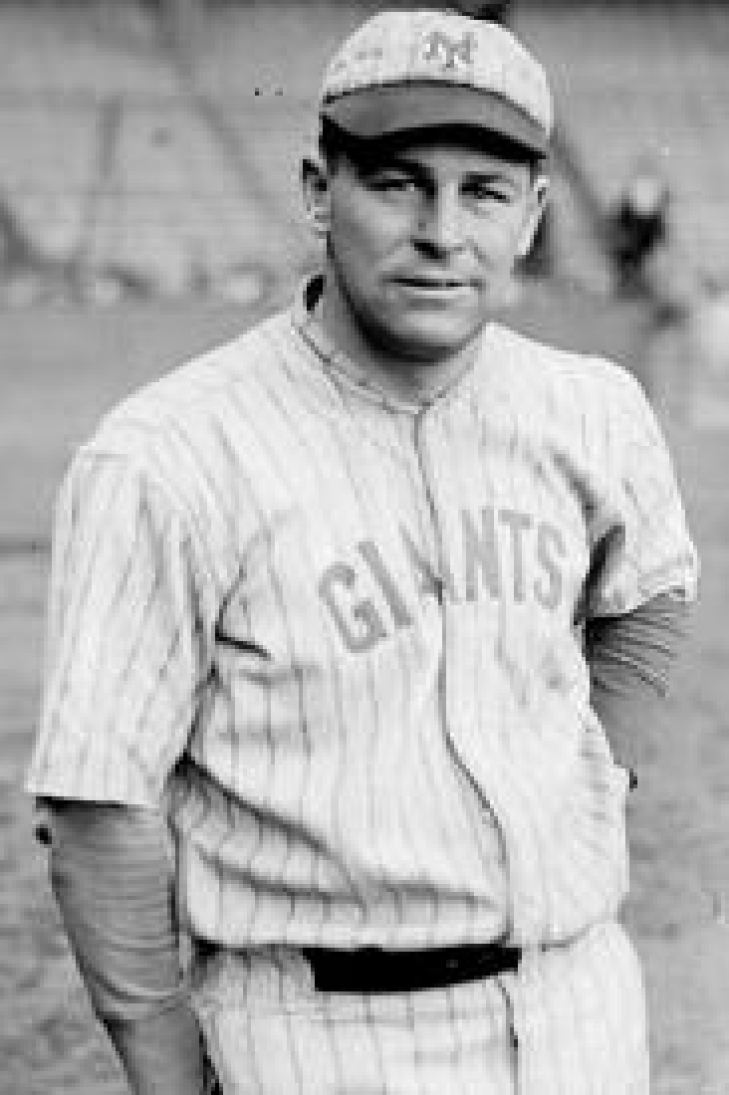
In exploring the history of the New York Giants during John McGraw's extensive leadership, names like Christy Mathewson and Bill Terry are often remembered. However, if you had visited McGraw’s office at the Polo Grounds in the 1920s, you'd see only two photos: one of Mathewson and another of a fiercely dedicated, widely admired right fielder who embodied the competitive spirit of the team's early success. Ross Youngs, known as “Pep," joined the team full-time in 1918 and quickly earned affection. Instead of relying on size or home run power, he combined aggressive, athletic play with exceptional contact hitting, forging a brief yet remarkable career that remains one of baseball's most touching stories.
After participating in seven games for New York in 1917, his initial 1918 season immediately established him as a regular at the forefront of the New York batting lineup. Youngs consistently executed powerful line drives and hastened beyond outfield throws, making it a daily habit, and achieved a commendable .302 batting average over 121 games. This foundational season commenced an extraordinary seven-year period during which he maintained averages well above .300, thereby establishing himself as one of the foremost catalysts within the National League.
During 1920, he achieved his highest individual offensive performance, batting .351 with 204 hits and 92 runs. He maintained this high contact level in the 1923 championship race, leading the league with 121 runs and contributing 200 hits to McGraw’s lineup. Although he never won a formal batting title, Youngs was frequently among the league leaders, leading the National League in times on base twice (1919 and 1920), thanks to his keen eye that resulted in a .399 on-base percentage over his career.
His high-octane style transferred to the grass of the Polo Grounds, where his defensive profile exhibited a compelling combination of high risk and high reward. Youngs demonstrated an exceptional throwing arm, leading all National League right fielders in assists on five separate occasions during his tenure. Nonetheless, his aggressive, wall-crashing pursuit of fly balls occasionally resulted in noticeable inefficiencies, leading the league in defensive outfield errors four times. Despite these mechanical errors, his vigorous energy and crucial baseline contributions enabled New York to secure four consecutive National League pennants, ultimately culminating in back-to-back World Series victories over the cross-town rival Yankees in 1921 and 1922.
Tragically, an unforeseen physical crossroads cut his brilliant prime short. During the 1924 season, Youngs contracted a streptococcal infection that ultimately triggered a severe, debilitating kidney disorder known as Bright's disease. He courageously played through the early stages of the illness, appearing in 95 games during the 1926 campaign while maintaining a remarkable .306 average despite his rapidly fading physical leverage.
By late summer, his condition worsened to the point where McGraw insisted he leave the team to rest. Youngs never took the field again, tragically passing away in October 1927 at the young age of 30.
The final chapter of his legacy arrived decades later, igniting a lingering analytical debate among baseball historians. In 1972, the Veterans Committee officially elected Ross Youngs into the National Baseball Hall of Fame. Because the committee at the time was heavily populated by his former Giants teammates—including Frank Frisch and Bill Terry—the selection faced immediate criticism from writers who argued that cronyism had compromised the voting standards, pointing to his abbreviated career totals of 1,491 hits and 42 home runs. Yet, looking past the post-career political friction reveals an undeniable peak of efficiency, anchored by a lifetime .322 batting average and a rock-solid 32.4 career position bWAR over just nine full seasons.
21. Frankie Frisch
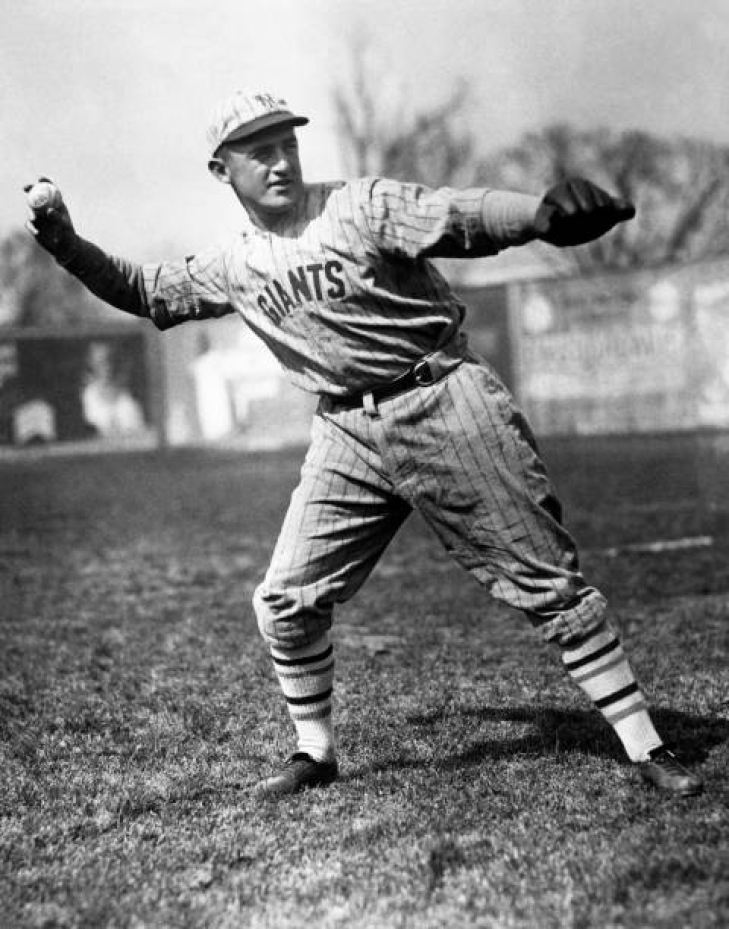
While baseball history rightfully lauds him as the fiery, dirt-stained general who marshaled the "Gashouse Gang" in St. Louis, it is a fascinating analytical truth that Frank Francis Frisch executed his absolute statistical and athletic apex in a New York Giants uniform. Discovered by legendary skipper John McGraw while starring as an unprecedented four-sport titan at Fordham University, the blindingly fast switch-hitter famously bypassed minor-league development entirely to step directly onto the Polo Grounds diamond in June 1919. Universally celebrated as the "Fordham Flash," Frisch did not merely adjust to the major-league learning curve; he weaponized a rare blend of blistering lateral range, high-contact barrel control, and relentless instincts to become the gold standard of McGraw’s modern infield machinery.
His debut as a full-time player in 1920 marked the start of a remarkable career, as he stole 34 bases and drove in 77 runs, helping to stabilize a team in transition. But that solid beginning was only a teaser for the incredible, award-winning performances he would deliver in the summers that followed. Frisch made collecting over 200 hits and challenging senior league pitchers his personal routine. In a stunning breakout in 1921, he had 211 hits with a fantastic .341 batting average and led the league with 49 stolen bases.
He convincingly supported his reputation with an even more formidable performance during the Fall Classic against the cross-town rival Yankees, dominating American League pitchers to achieve a remarkable .471 batting average and acquire his first World Series championship. Far from a transient anomaly, his exceptional accuracy at the plate persisted throughout the decade. Frisch demonstrated exemplary leadership in top-of-the-order execution, securing the league hit crown with an impressive, career-high 223 hits in 1923 while batting an impressive .348.
He followed that by leading the National League with 121 runs scored in 1924, a summer where he famously went 6-for-7 in a single 22–1 demolition of the Boston Braves. Remarkably, after his 1921 breakout, he never once batted under the .300 threshold nor recorded fewer than 20 stolen bases in any full season as a Giant, serving as the highly decorated captain of a squad that captured four consecutive National League pennants.
Despite Frisch’s status as a superstar and his considerable influence within the clubhouse, he was entirely subject to the tyrannical and volatile temperament of John McGraw. The catastrophic breaking point occurred late in a highly frustrating campaign in 1926; after a missed sign during an August road game, McGraw severely and publicly admonished his star captain in front of the entire roster. Deeply offended, Frisch effectively discontinued his participation with the team and departed via train to New York. Although he eventually returned to complete the summer, the personal relationship was irreparably fractured.
Seeking a dramatic structural reset, management orchestrated the most stunning, earth-shaking blockbuster trade of the decade that December. They executed a direct superstar swap, shipping their iconic 29-year-old captain to the St. Louis Cardinals in exchange for fellow future Hall of Famer Rogers Hornsby, who had similarly worn out his welcome with his own front office.
As a Giant, Frisch accumulated exactly 1,306 hits, 171 doubles, 64 triples, and 224 stolen bases, entirely validated by a spectacular .321 career batting average and a robust 38.0 franchise position bWAR. He entered the Baseball Hall of Fame in 1947.
18. George Davis
Tracing the foundational pillars of the San Francisco franchise back to its origins in Manhattan reveals that discerning historians focus on the rare, multi-dimensional catalysts who effortlessly dominated the sport during its initial significant structural transition. George Stacey Davis did not merely excel in defensive play across the diamond; he operated as one of the most formidable, high-efficiency switch-hitters of the 19th century. Acquired from the Cleveland Spiders through a strategic pre-season trade in March 1893, this exceptionally cerebral infielder arrived in New York at a pivotal moment when the sport underwent a radical transformation in its dimensions. When the league permanently moved the pitcher’s rubber to the modern distance of 60 feet, 6 inches, Davis effectively utilized the additional reaction time to commence a remarkable, decade-long tenure that culminated in establishing himself as an elite frontline superstar.
His impressive 1893 campaign in a New York uniform was a remarkable showcase of his talent and determination. Taking advantage of the larger field dimensions, Davis made run production a daily goal, smashing 33 doubles, 11 triples, and a career-high 11 home runs while driving in 119 runs. He consistently overwhelmed National League pitchers, hitting a bright .355 and slugging an impressive .531 over 132 games — a stunning display of his exceptional left- and right-handed hitting skills that perfectly suited the Polo Grounds.
Davis was far from just having a brief moment of success. Instead, he kept up that high-volume authority with steady, reliable performance over the next eight summers. During this time, he achieved an amazing streak of nine consecutive seasons batting well above the .300 mark. His versatile glove work was truly invaluable, offering great flexibility for the whole team. He could easily shift between third base, the outfield, and shortstop, and eventually made shortstop his regular position, earning a reputation as one of the best defensive players of his era.
Davis's 1897 season was truly outstanding, marking the pinnacle of his career. As the team's manager and star player, he delivered an incredible performance that year, leading the National League with a career-high 135 RBIs, batting an impressive .353, and stealing 65 bases. His speed and aggressive play on the bases made him a constant threat, often forcing opposing pitchers and catchers to rethink their strategies. It was a remarkable display of talent and leadership that fans and teammates alike admired.
As the century turned, a promotional war between the National League and the upstart American League made his residency chaotic. Frustrated by salary caps, the veteran star moved to the Chicago White Sox before 1902. He made a dramatic attempt to return to the Giants in 1903, but after four games, legal disputes pushed him back to Chicago, ending his days in Manhattan.
With New York, Davis had 1,432 hits, 241 doubles, 90 triples, and 867 runs batted in, paired with 357 stolen bases and a brilliant, combined .332 batting average in 1,114 games. Davis was inducted into the Baseball Hall of Fame in 1998 by the Veterans Committee.
20. George Burns
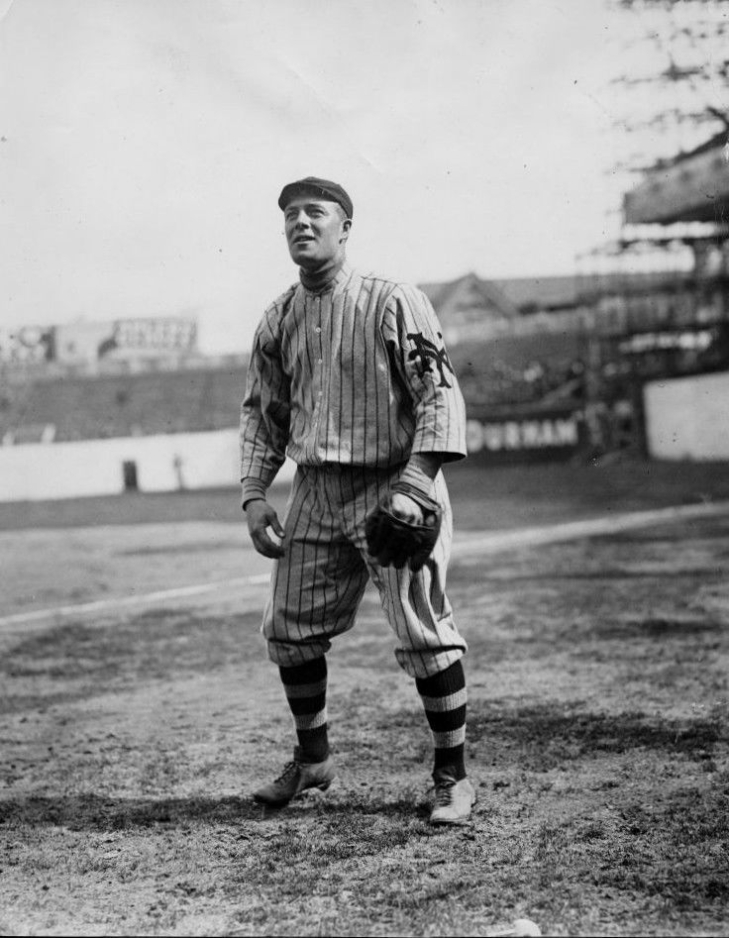
In this list, stars like Willie Mays, Barry Bonds, and Bobby Bonds often took the spotlight in the outfield decades ago. Meanwhile, the quiet, steady genius behind the club's Deadball Era success has faded into relative obscurity. Originally, George Joseph Burns was a minor-league catcher, but his exceptional speed and powerful throwing arm convinced legendary manager John McGraw to convert him into an outfielder when he joined the team full-time. Known as "Silent George" for his reserved nature, this highly durable left fielder spent nearly ten years as the sport's leading leadoff hitter. He used a hefty 52-ounce bat and a sharp eye to control the game, making him a formidable offensive force.
His debut as a regular in 1913 immediately raised the offensive standard of a championship-winning team, as he charmingly amassed 173 hits, 37 doubles, and 40 stolen bases. Burns made reaching base and scoring a daily habit, setting a durability record by playing 459 consecutive games over the following seasons, a major-league record for outfielders at that time.
The distinguished individual peak of his localized, hardware-certified legacy was prominent during an era in which he dominated the senior circuit's leaderboards. He systematically dismantled National League pitchers to lead the league in runs scored five times (1914, 1916, 1917, 1919, and 1920) and also paced the circuit in walks on five occasions. This remarkable achievement places him in an extraordinarily exclusive inner-circle club: Burns is one of only four players in Major League history to lead their league in both runs and walks at least five times, joining the ranks of Babe Ruth, Ted Williams, and Mickey Mantle.
Apart from his exceptional patience, his fast wheels caused chaos on the bases. Burns won two National League stolen base titles, including a standout 62 steals in 1914 that broke the team's single-season record. He was a tactful baserunner, stealing home 28 times in his career, which remains third all-time in Major League history behind Ty Cobb and Max Carey.
His career peak with the franchise came in the memorable autumn of 1921. After his initial two appearances in the Fall Classic earlier in the decade, Burns led the team to a World Series victory over the New York Yankees. He posted a strong .333 batting average with 11 hits and scored the winning run in Game 6, securing another world championship for McGraw.
After the 1921 coronation, McGraw decided to sell high on his veteran outfielder, trading him in winter for Heinie Groh at Cincinnati Reds. Although he enjoyed several more productive summers in Ohio and Philadelphia, eventually surpassing 2,000 career hits, his prime years stayed firmly associated with the Polo Grounds.
Representing the Giants, he compiled 1,541 hits, 248 doubles, 54 triples, and 334 stolen bases—a franchise record that stood for over fifty years until Willie Mays finally surpassed it in 1972.
15. Will Clark
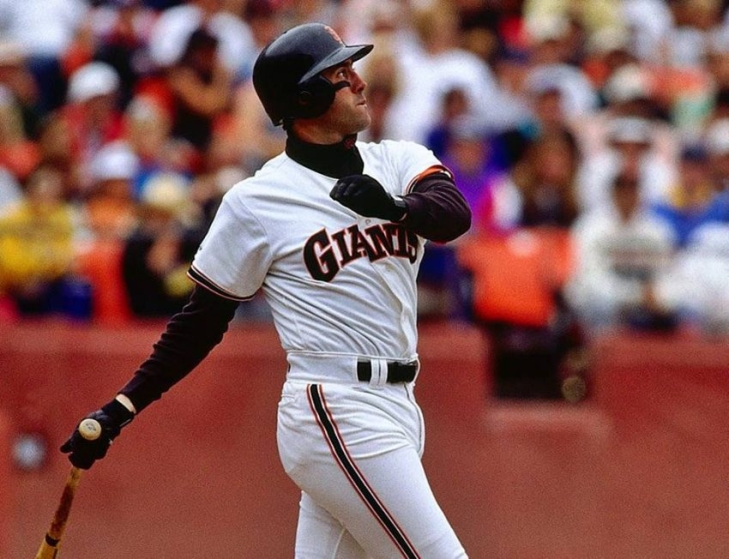
When a premier prospect enters the major leagues with a seamless, powerful, and aesthetically striking left-handed stroke, it is immediately compared to exquisite royalty. Will Clark was selected as the second overall pick in the 1985 draft from Mississippi State, bearing a substantial level of public anticipation that reached a peak when he hit a home run off future Hall of Famer Nolan Ryan during his very first major league plate appearance in 1986. Universally referred to as "The Thrill,” a nickname that encapsulated his fierce, intense competitive presence, Clark not only established a formidable presence on the field but also evolved into the quintessential high-energy focal point of a late-1980s baseball renaissance in Northern California. His career spanned multiple eras, notably contributing significantly to the San Francisco Giants' restoration to the pinnacle of the National League hierarchy.
His summer debut in 1986 was a promising beginning; however, the significant breakthrough occurred in 1987. Clark established a consistent routine of producing runs daily, hitting 35 home runs and contributing 91 RBIs with an impressive .308 batting average across 150 games. This outstanding performance contributed to securing a division title and earned him a fifth-place ranking in the National League Most Valuable Player (MVP) voting.
He maintained that upward trajectory into the 1988 schedule, setting an exemplary standard for high-volume durability by leading the entire National League with 109 runs batted in and 100 walks, while maintaining a batting average of .282 and achieving another fifth-place MVP finish.
His career reached its highest point during an incredible 1989 season, which truly defined his greatness. Clark delivered a stunning performance against National League pitchers, expertly working deep counts and earning a career-best 196 hits, along with 38 doubles, 23 home runs, and 111 RBIs in 159 games. His efficiency was unmatched, maintaining a remarkable .333 batting average and a notable .431 on-base percentage. Though he narrowly missed winning a batting title, he finished as a strong runner-up in the league's Most Valuable Player voting. His incredible skills and effort contributed directly to the team's historic success that October.
Clark delivered a legendary performance in the 1989 National League Championship Series against the Chicago Cubs, batting an impressive .650 with two home runs. Notably, he hit a dramatic, pennant-winning single off Mitch Williams in Game 5, earning the NLCS Most Valuable Player award and helping the Giants secure their first pennant in 27 years.
Far from a temporary peak, "The Thrill" maintained a spectacular baseline of elite multi-dimensional excellence over the next half-decade. He functioned as a dangerous, high-efficiency threat in the middle of the order while serving as a premier defensive hand at first base, rattling off five consecutive All-Star selections from 1988 through 1992.
He captured a second Silver Slugger Award in 1991 alongside a well-deserved Gold Glove Award, routinely hitting north of the .300 threshold with pristine mechanics that made him the absolute gold standard at his position.
Feeling that Clark’s minor statistical regression during the 1993 calendar prompted a highly emotional crossroads for the organization. With the front office navigating a massive transition toward a new ownership group and the historic arrival of Barry Bonds, the inevitable business exit materialized that winter.
Across his eight active seasons representing the franchise, Clark accumulated 1,278 hits, 241 doubles, 176 home runs, and 704 runs batted in alongside an exceptional .299/.373/.499 career slash line in 1,160 games. The Giants chose Clark for their inaugural Wall of Fame class in 2008, and in 2022, the team retired his #22.
