


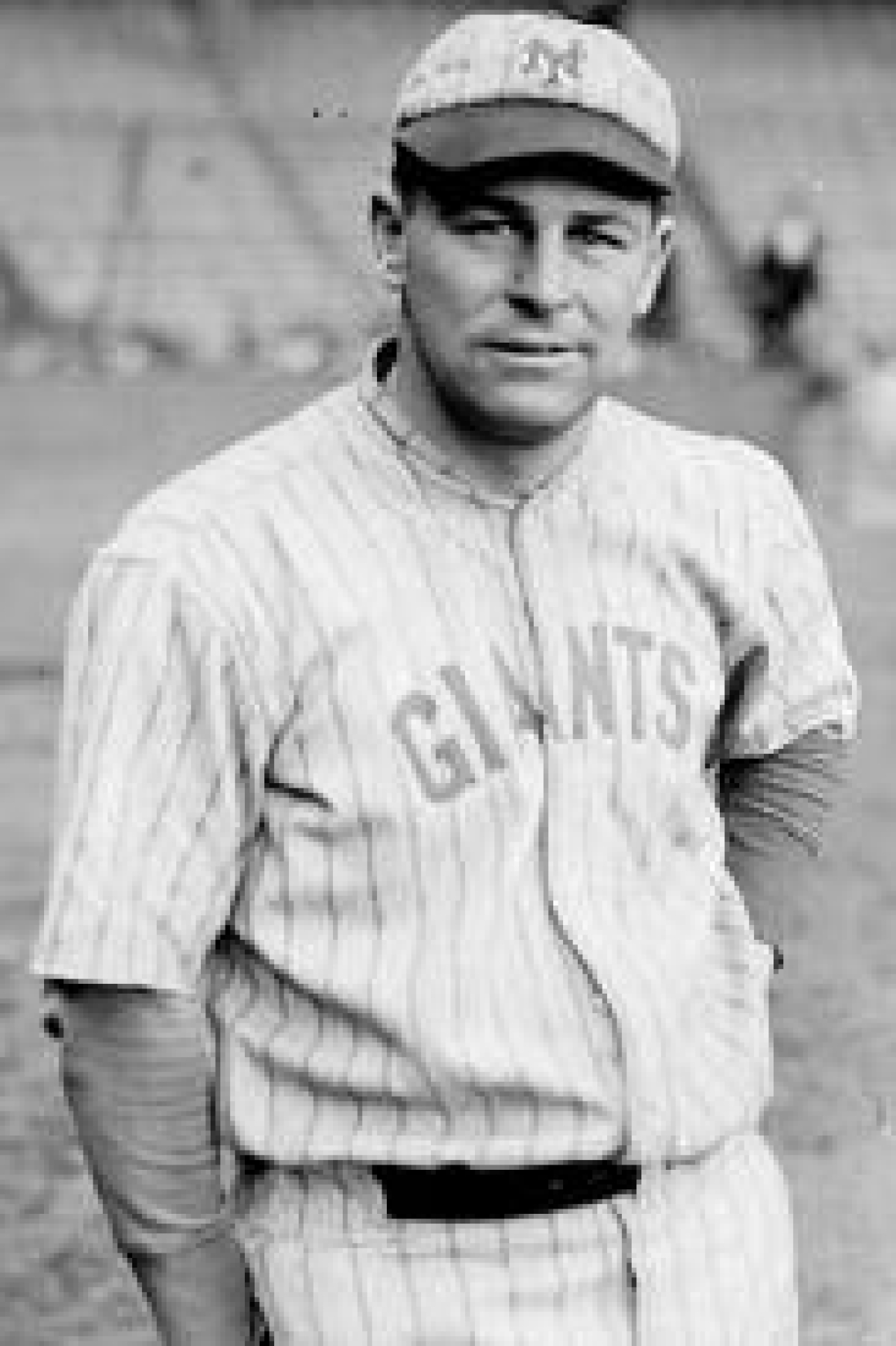


In exploring the history of the New York Giants during John McGraw's extensive leadership, names like Christy Mathewson and Bill Terry are often remembered. However, if you had visited McGraw’s office at the Polo Grounds in the 1920s, you'd see only two photos: one of Mathewson and another of a fiercely dedicated, widely admired right fielder who embodied the competitive spirit of the team's early success. Ross Youngs, known as “Pep," joined the team full-time in 1918 and quickly earned affection. Instead of relying on size or home run power, he combined aggressive, athletic play with exceptional contact hitting, forging a brief yet remarkable career that remains one of baseball's most touching stories.
After participating in seven games for New York in 1917, his initial 1918 season immediately established him as a regular at the forefront of the New York batting lineup. Youngs consistently executed powerful line drives and hastened beyond outfield throws, making it a daily habit, and achieved a commendable .302 batting average over 121 games. This foundational season commenced an extraordinary seven-year period during which he maintained averages well above .300, thereby establishing himself as one of the foremost catalysts within the National League.
During 1920, he achieved his highest individual offensive performance, batting .351 with 204 hits and 92 runs. He maintained this high contact level in the 1923 championship race, leading the league with 121 runs and contributing 200 hits to McGraw’s lineup. Although he never won a formal batting title, Youngs was frequently among the league leaders, leading the National League in times on base twice (1919 and 1920), thanks to his keen eye that resulted in a .399 on-base percentage over his career.
His high-octane style transferred to the grass of the Polo Grounds, where his defensive profile exhibited a compelling combination of high risk and high reward. Youngs demonstrated an exceptional throwing arm, leading all National League right fielders in assists on five separate occasions during his tenure. Nonetheless, his aggressive, wall-crashing pursuit of fly balls occasionally resulted in noticeable inefficiencies, leading the league in defensive outfield errors four times. Despite these mechanical errors, his vigorous energy and crucial baseline contributions enabled New York to secure four consecutive National League pennants, ultimately culminating in back-to-back World Series victories over the cross-town rival Yankees in 1921 and 1922.
Tragically, an unforeseen physical crossroads cut his brilliant prime short. During the 1924 season, Youngs contracted a streptococcal infection that ultimately triggered a severe, debilitating kidney disorder known as Bright's disease. He courageously played through the early stages of the illness, appearing in 95 games during the 1926 campaign while maintaining a remarkable .306 average despite his rapidly fading physical leverage.
By late summer, his condition worsened to the point where McGraw insisted he leave the team to rest. Youngs never took the field again, tragically passing away in October 1927 at the young age of 30.
The final chapter of his legacy arrived decades later, igniting a lingering analytical debate among baseball historians. In 1972, the Veterans Committee officially elected Ross Youngs into the National Baseball Hall of Fame. Because the committee at the time was heavily populated by his former Giants teammates—including Frank Frisch and Bill Terry—the selection faced immediate criticism from writers who argued that cronyism had compromised the voting standards, pointing to his abbreviated career totals of 1,491 hits and 42 home runs. Yet, looking past the post-career political friction reveals an undeniable peak of efficiency, anchored by a lifetime .322 batting average and a rock-solid 32.4 career position bWAR over just nine full seasons.

Comments powered by CComment