

49. Ferris Fain
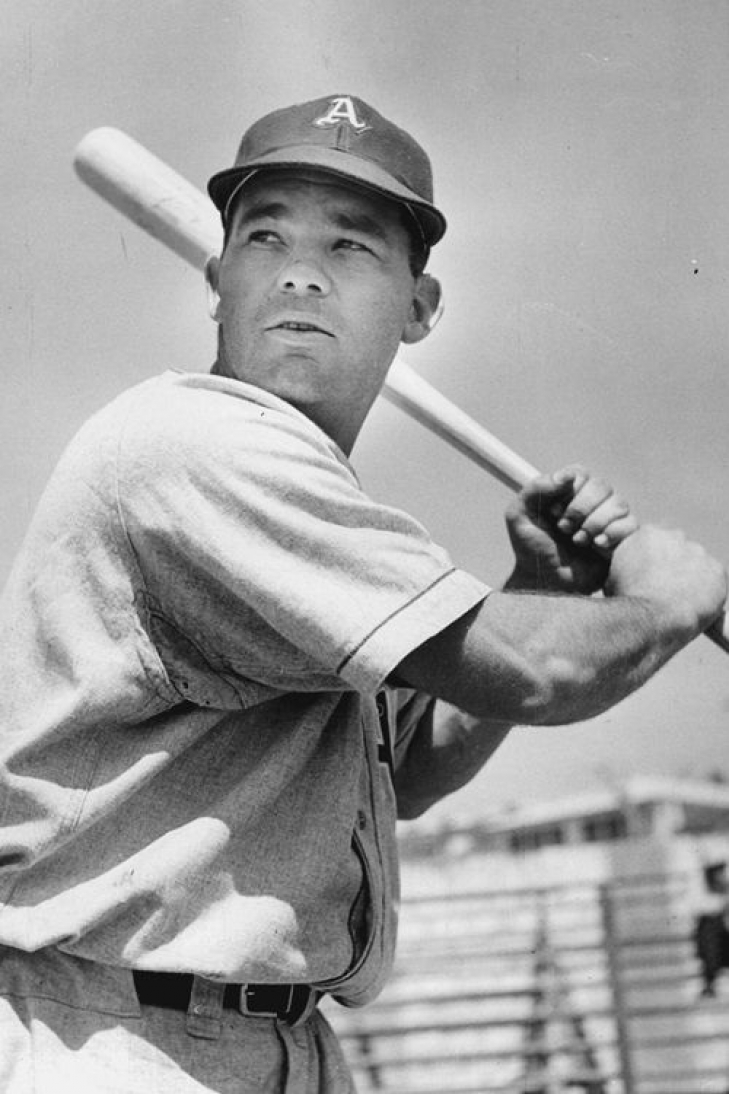
Ferris Roy Fain entered the majors with a reputation that preceded him, though it wasn't exactly the kind that traditional managers favored. The son of a professional boxer, Fain possessed a notoriously combustible, high-velocity temper and a complete willingness to speak his mind. He spent several long years refining his craft in the Pacific Coast League before Connie Mack finally brought the left-handed hitting first baseman to Philadelphia in 1947.
At 26, he brought a unique offensive style. Unlike typical mid-century first basemen who relied on power, Fain focused on a disciplined approach, turning walks into an art. He rapidly developed elite plate discipline from the top of the batting order. In his 1947 rookie season, Fain drew 95 walks, balancing a .244 batting average with a .368 on-base percentage. He became a nightmare for pitchers, heavily relying on walks and refusing to expand his strike zone.
During the 1951 schedule, Fain exhibited an exceptional offensive performance, leading the entire junior circuit with a commendable .344 batting average while also leading all of baseball with 107 bases on balls and an impressive .451 on-base percentage. Instead of experiencing a natural decline, he successfully defended his title during the 1952 season. Fain consistently baffled American League pitchers with a smooth, compact stroke, achieving a .327 batting average to secure his second consecutive American League batting title, complemented by a league-leading 43 doubles and earning another starting position in the Midsummer Classic.
Yet, focusing solely on his advanced offensive efficiency overlooks the incredible defensive vacuum he created at first base. Fain combined supreme athletic instincts with an exceptionally aggressive approach, routinely playing shallow to take away the bunt and leading American League first basemen in double plays turned on five separate occasions.
His regular-season output kept the Athletics competitive, but his fiery personality often clashed with the front office. Recognizing his trade value was highest, Philadelphia traded their two-time batting champion to the White Sox before 1953 in a blockbuster to inject youth into the roster.
In a Philadelphia uniform, Fain managed 831 hits, 585 walks, and a spectacular .425 career on-base percentage. Fain entered the Philadelphia Baseball Wall of Fame in 1997.
27. Max Bishop
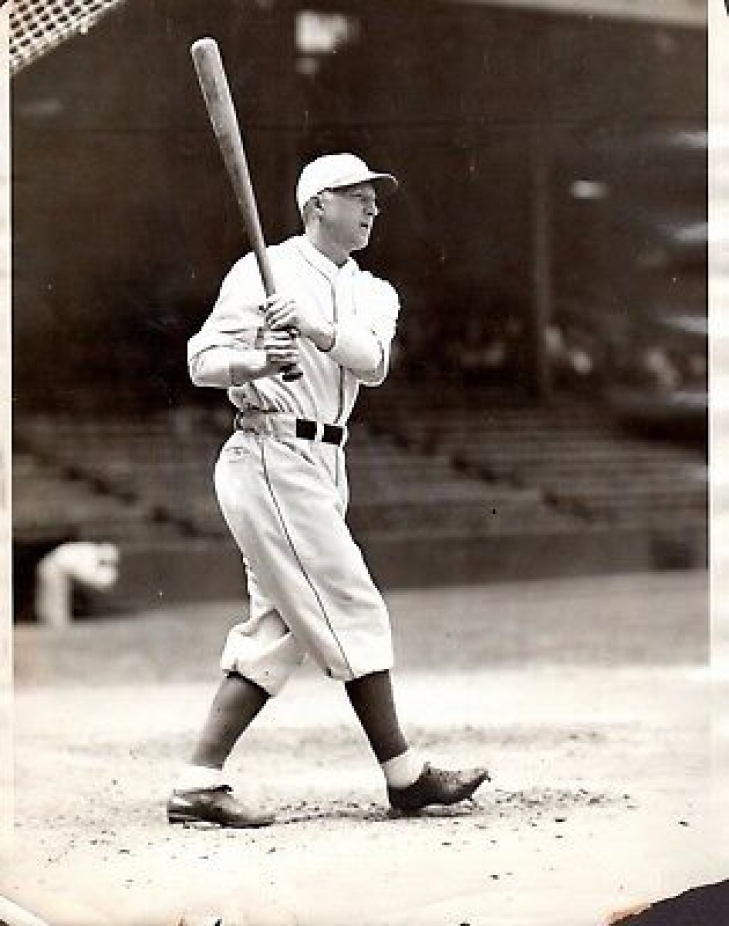
When Connie Mack established his second illustrious Philadelphia Athletics dynasty in the late 1920s, he assembled a roster featuring explosive, free-swinging Hall of Fame-caliber power. Nevertheless, to ensure the effective operation of this formidable lineup, the team required a highly disciplined and intensely focused lead-off batter. This role was fulfilled by Max Frederick Bishop. Renowned for his exceptional and precise strike zone discipline, earning the renowned nickname "Camera Eye”, Bishop’s decade-long service as a ball player who weaponized patience.
In 1924, Bishop secured the permanent starting position at second base, thereby providing Philadelphia with a highly valuable, versatile asset. Had the Rawlings Gold Glove Award been available during the transitional period between the dead-ball and live-ball eras, his collection of awards would have been substantial. He demonstrated an exceptionally flawless defensive technique, integrating superb footwork with an extraordinary sense of timing.
The comprehensive analysis of his defensive worth is substantial: he officially led the entire American League in Defensive bWAR during the 1931 season, ranked within the top ten on six additional occasions, and achieved the highest overall fielding percentage among his positional counterparts on three separate occasions.
Nevertheless, it was his innovative approach at the plate that genuinely perplexed opposing pitching staff. In an era where batters were encouraged to swing aggressively to escape the strike zone, Bishop regarded a base on balls as a home run. Although mainstream publications occasionally mischaracterized him as a light hitter owing to his modest .272 batting average with the Athletics, his capacity to generate offensive opportunities was historically exceptional.
Bishop achieved an impressive .423 on-base percentage over his decade-long tenure in Philadelphia, attaining six top-five positions in the American League OBP rankings. His unwavering patience was exemplified during the 1929 season, when he led the league with 128 walks, consistently creating opportunities for the formidable hitters behind him.
This distinctive blend of a low-variance foundational skill set and a flawless defensive record served as a pivotal catalyst during the franchise's golden era. Bishop provided stability at the top of the lineup, leading the Athletics to securing three consecutive American League pennants from 1929 to 1931, including consecutive World Series championships in 1929 and 1930. He participated in all 18 of those intense Fall Classic contests, executing his defensive responsibilities flawlessly across all 69 chances without a single error, thereby effectively counterbalancing a characteristically modest .182 postseason batting average with a highly profitable .316 on-base percentage.
The profound economic conditions of the Great Depression ultimately resulted in a rapid termination of his tenure in Philadelphia. With the front office urgently seeking liquidity to maintain the franchise's financial stability, Connie Mack arranged a significant roster liquidation after the 1933 season. Bishop was included among distinguished pitchers Lefty Grove and Rube Walberg, and was subsequently traded to the Boston Red Sox in exchange for a substantial cash sum and additional players.
20. Mickey Cochrane
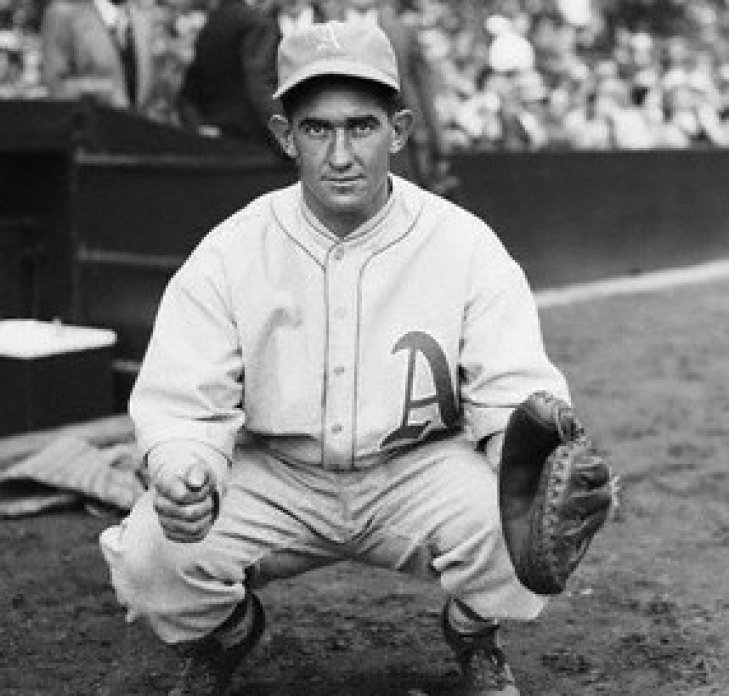
When Connie Mack surveyed the baseball landscape in late 1924, he knew his rebuilding Philadelphia Athletics required a dynamic center of gravity behind the plate to challenge the New York Yankees' emerging dominance. He found his man in the Pacific Coast League, aggressively prying Mickey Cochrane away from the Portland Beavers. Mack wasted absolutely no time, immediately thrusting the young backstop into the starting lineup for the 1925 campaign, igniting a run that permanently redefined the offensive baseline for the modern catcher.
Cochrane burst onto the major league scene with an impressive rookie summer, batting .331 and finishing tenth in the American League MVP voting. He effortlessly produced base hits as a left-handed hitter, combining excellent plate discipline with a crisp, line-drive swing.
During his nine outstanding seasons in Philadelphia, he broke the conventional expectations for a catcher by batting over .300 six times. His skill in controlling the strike zone was also renowned; he posted six seasons with an on-base percentage above .400, with his peak during his last year here when he led the entire American League with a remarkable .459 OBP.
Focusing solely on his offensive statistics overlooks the intense, motivating leadership that strengthened the team. Cochrane was a highly athletic and quick defender who neutralized base-stealers and played with a passionate, vigorous spirit. His exceptional defensive stance and relentless energy made him stand out, enabling him to lead all junior circuit catchers in Range Factor per Game for five straight seasons from 1925 to 1929.
The ultimate validation of this complete, all-around impact came during the 1928 season. Though it was a rare sub-.300 batting average (.293), his masterful handling of the pitching staff, and clutch intangibles were so deeply respected by voters that he captured the American League MVP Award.
With Cochrane as the clear emotional driving force, the historic core Mack developed around him matured completely. The Athletics demonstrated a true dynasty, winning consecutive World Series in 1929 and 1930, and securing another AL pennant in 1931.
The severe economic challenges of the Great Depression quickly affected the franchise. With attendance dropping sharply and limited funds, Mack decided to break up his star lineup. After the 1933 season, he sold Cochrane’s contract to the Detroit Tigers for a hefty $100,000. The legendary catcher demonstrated that his greatness was not tied to any one team, earning his second AL MVP award in 1934 and leading Detroit to a world championship as a player-manager in 1935.
He left Philadelphia having authored an astonishing .321/.412/.490 slash line alongside 1,317 hits and 108 home runs. The national baseball community delivered the ultimate punctuation to his historic legacy in 1947, overwhelmingly electing Cochrane into the National Baseball Hall of Fame. He was later inducted into the Philadelphia Baseball Wall of Fame in 1982 and permanently enshrined in the Athletics Hall of Fame as part of the 2021 class.
38. Jack Coombs
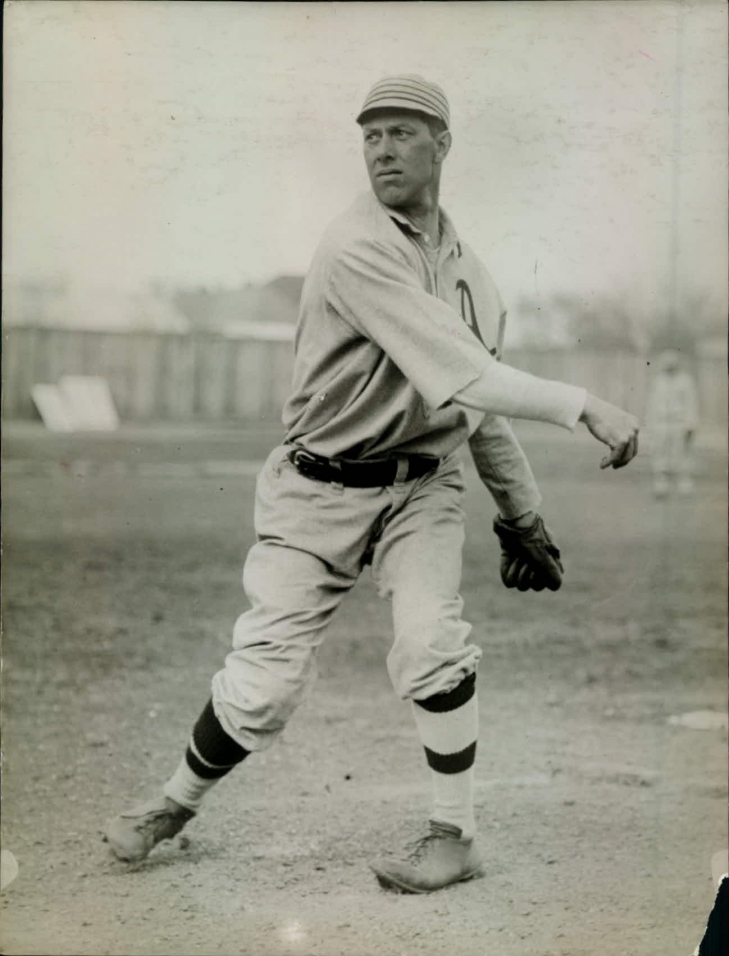
During the initial four years of his Major League career, Jack Coombs showed minimal indication that he would eventually rewrite the franchise record books. Upon his arrival in Philadelphia from Colby College in 1906, the right-handed pitcher epitomized an average, unrefined player. He maintained a perfectly balanced record of 35-35 entering the 1910 season, and when his early performances that spring were inconsistent, Connie Mack became sufficiently frustrated to demote him to the bullpen.
Then, baseball alchemy took place. According to dugout lore, during his exile to the relief corps, Coombs entirely rediscovered the release point on his overhand, drop-off-the-table curveball. Equipped with a new, deadly secondary pitch to complement his powerful fastball, he launched a summer streak unmatched in Athletics history.
Coombs rejoined the rotation and quickly became nearly unbeatable, dominating the A.L. like a natural phenomenon. He concluded the notable 1910 season with an astonishing 31-9 record, maintaining a minimal 1.30 ERA over an impressive 353 innings. During this period, he threw 13 shutouts, including a remarkable streak of 53 consecutive scoreless innings.
Fittingly, his regular-season mastery carried directly into October. Coombs single-handedly battered the Chicago Cubs in the 1910 World Series, throwing three complete-game victories in a span of just six days to carry Philadelphia to its first Title.
Instead of resting on his laurels, "Colby Jack" once again proved to be a relentless performer during the 1911 title defense. He secured his second straight American League wins title with 28 victories, despite the league's widespread offensive increase due to the new cork-centered ball, which caused his ERA to rise to 3.53 over 336.2 innings.
When the Athletics advanced to the Fall Classic to face the New York Giants, Coombs etched his name more deeply into baseball folklore. In a legendary, high-stakes duel, he out-slugged and outlasted the immortal Christy Mathewson on the mound, securing a signature postseason victory that helped secure back-to-back world titles.
He pushed through to secure another 21-win season in 1912, but the constant and extensive workload eventually wore him down. Before the 1913 season, Coombs contracted a severe typhoid fever, an illness so intense it nearly took his life and kept him out for most of the next two years. Realizing that the passionate right-hander was no longer at his peak physically, a financially strained Mack decided to release him. This move later allowed Coombs to make a successful second career as a veteran stabilizer for the Brooklyn Robins.
He concluded his dramatic, high-variance tenure in Philadelphia with a stellar 115-67 record, a 2.60 ERA, and 850 strikeouts. Coombs would be added to the Philadelphia Baseball Wall of Fame in 1992.
16. Bob Johnson

When Robert Lee "Indian Bob" Johnson made his debut as a 27-year-old rookie in 1933, he entered a team in decline. The renowned Philadelphia franchise, which had secured three consecutive pennants from 1929 to 1931, was being methodically dismantled by Connie Mack in an effort to prevent financial collapse. With legends such as Al Simmons and Jimmie Foxx departing, Johnson was tasked with carrying the responsibility for much of the team's offensive production alone, anchoring a roster that was rapidly deteriorating during a period of prolonged struggle in the American League.
Despite the challenging team environment, Johnson quickly proved himself as one of the most formidable and machine-like run producers in the sport. Playing in left field, this strong right-handed hitter mounted a relentless attack on American League pitching. He exceeded 20 home runs in each of his first nine seasons with Philadelphia—a rare consistency of power, culminating in three summers surpassing 30 homers, including a career-high 31 in 1940.
His offensive brilliance was rooted in a highly advanced approach at the plate. Johnson was more than just a pull-hitter taking advantage of short fences; he had an exceptional eye for batting, accumulating 853 walks compared to only 546 strikeouts while at Shibe Park. This top-tier discipline led to three seasons with an on-base percentage exceeding .400, maximizing his effectiveness even as opposing managers often pitched around him due to the lack of protection in the Athletics' lineup. Between 1935 and 1941, he achieved seven straight seasons with at least 100 RBIs, driving the offense with sheer determination.
Johnson, the sole bright spot for lean Philadelphia clubs, earned five All-Star selections during ten years, serving as a respected, quiet professional amid franchise overhaul. When traded to the Washington Senators after 1942, he left an enduring statistical legacy.
He left Philadelphia with 1,617 hits, 252 home runs, and a .298/.395/520 slash line. His volume and efficiency kept him high on the club's all-time list, fifth in hits and home runs, and third in RBIs with 1,040, behind Al Simmons and Jimmie Foxx.
15. Harry Davis
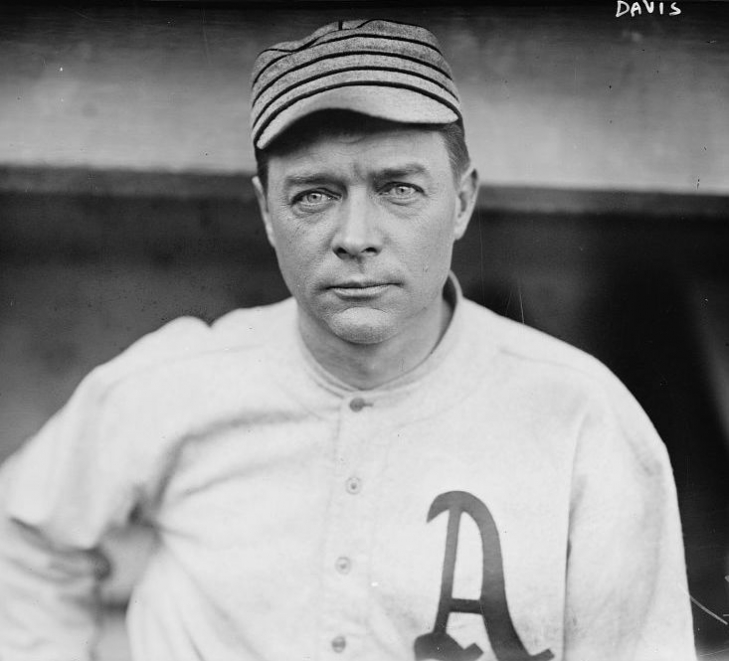
During the assembly of the original Philadelphia Athletics roster for the American League's inaugural season in 1901, Connie Mack looked to the minor leagues for a key addition. Harry Davis, aged 27 and seemingly prepared to retire after an inconsistent career across four National League clubs and a tenure with the Providence Grays, was identified as a promising talent. Mack recognized the potential in the right-handed infielder and persuaded Davis to relocate to Philadelphia. This decision catalyzed a revival, transforming Davis into one of the most formidable and enduring run producers of the dead-ball era.
Initially positioned at first base, Davis promptly emerged as the cornerstone of the early Athletics lineups. He adapted seamlessly to his new environment, achieving three consecutive summers with a batting average exceeding .300. While his patient approach did not always result in a high on-base percentage, settling at a modest .337 during his tenure, he compensated with exceptional line-drive power. He utilized his swing effectively to lead the American League in doubles on three occasions, consistently providing Philadelphia with a superior extra-base threat in the heart of the batting order.
That offensive value soared to a historic peak between 1904 and 1907. In an era characterized by deep fences and a soft, scuffed ball that made home runs extremely rare, Davis achieved an extraordinary feat by leading the American League in home runs for four consecutive seasons. His power was complemented by a precise efficiency with runners on base; he secured consecutive junior circuit RBI titles in 1905 and 1906, leading the offensive efforts for Mack’s early pennant contenders and establishing himself as the first authentic captain of the franchise.
As the decade progressed, his consistent presence within the clubhouse and leadership on the field served as a crucial bridge to the franchise's inaugural true dynasty. Although the younger and more athletic Stuffy McInnis would ultimately assume the daily responsibilities at first base, Davis continued to be an indispensable veteran. He made substantial contributions to the Athletics' consecutive World Series victories in 1910 and 1911, notably batting an impressive .353 in the 1910 Fall Classic against Chicago, thereby securing his first championship ring.
After managing Cleveland briefly in 1912, he returned as a coach and occasional defensive replacement. He played only 19 games from 1913 to 1917 but earned a third World Series ring with the 1913 team. He finished with 1,500 hits and 761 RBIs for Philadelphia, known as the foundational captain who helped modernize the Athletics.
14. Home Run Baker
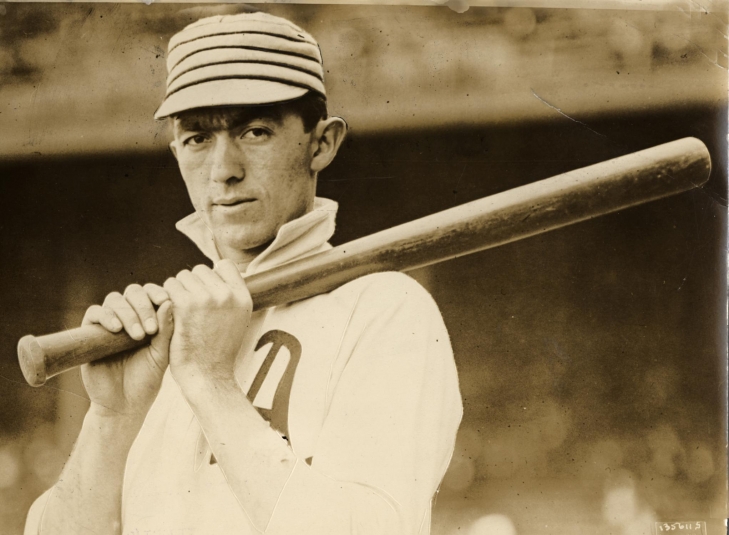
John Franklin Baker's arrival in Philadelphia before the 1908 season went unnoticed by most in Pennsylvania, with only quiet press mentions. He joined the Athletics as a minor league prospect to complete an earlier deal with Reading. However, everything changed in 1909 when manager Connie Mack gave the 23-year-old the starting role at third base. Baker brought a powerful, rare left-handed swing to the team, leading the American League with 19 triples as a rookie and quickly establishing himself as a distinctive talent.
In the 1910s, Baker established himself as the key member of the famed and efficient "$100,000 Infield” alongside Jack Barry, Eddie Collins, and Stuffy McInnis, forming the most renowned unit of the dead-ball era. His iconic nickname was earned during the 1911 World Series against the New York Yankees when he hit a go-ahead home run off star pitcher Christy Mathewson in Game 2, followed by a crucial, game-tying blast off Rube Marquard in Game 3. In a time when knocking the ball over the fence was uncommon, these clutch moments forever earned him the nickname "Home Run" Baker.
Modern fans might smile at the numbers that earned him four straight American League home run titles from 1911 to 1914—achieving totals of 11, 10, 12, and 9—but he was the clear power leader of his time. During this dominant four-year stretch, Baker was consistently in the MVP conversation, finishing among the top seven in balloting each summer. He was more than just a slugger; he was a disciplined, top-tier run producer who led the league in RBIs twice, with batting averages of .334, .347, .337, and .319.
That consistent performance in the regular season carried over smoothly to the sport's biggest stage. Baker was the driving force behind the Athletics' three world titles in 1910, 1911, and 1913. October was his time to shine, as he batted .409, .375, and .450 in those series, with nine hits in each to systematically break down opposing pitchers.
The powerful dynasty fell just as rapidly as it had risen. After a surprising sweep by the "Miracle Braves" in the 1914 World Series, Connie Mack launched a harsh, money-saving fire sale to stabilize the club's finances. When Baker demanded a fairer contract before the 1915 season, Mack refused to compromise. Baker then sat out the entire summer in protest, playing semi-pro baseball near his Maryland farm. Recognizing that this dispute was harming the league, AL President Ban Johnson urged Mack to resolve the deadlock, leading to Baker's contract being transferred to the New York Yankees before the 1916 season.
His numbers with the Athletics would see Baker accumulate 1,103 Hits, 48 Home Runs, and a Slash Line of .321/.375/.471.
Baker would enter the Baseball Hall of Fame in 1955 and the Philadelphia Baseball Wall of Fame in 1993.
6. Eddie Collins
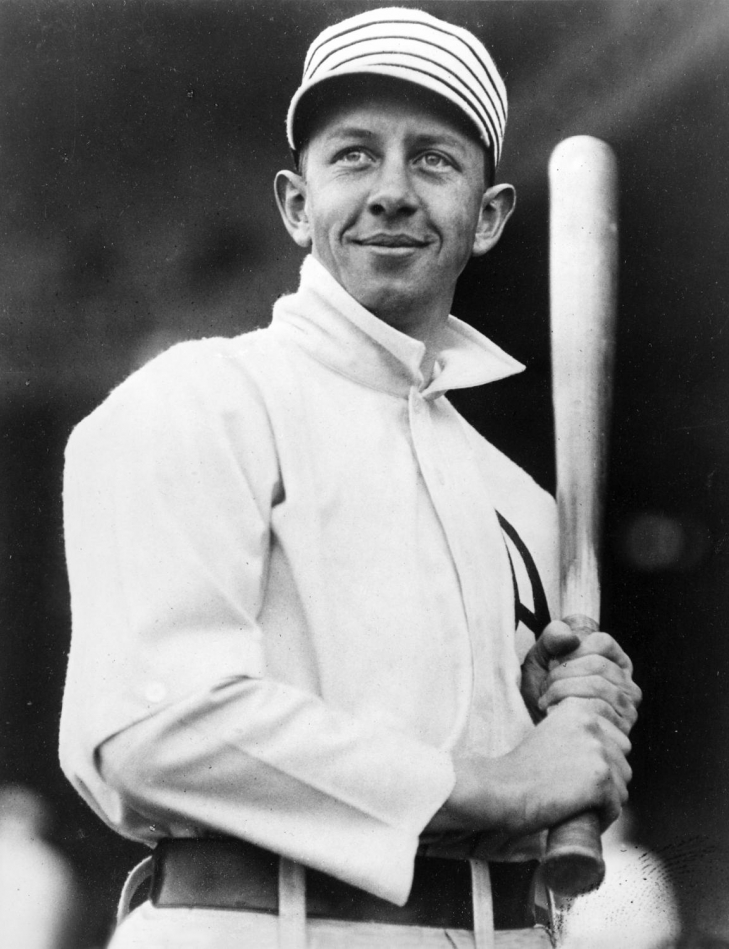
In 1906, Eddie Collins arrived in Philadelphia as a collegiate standout from Columbia University, signing under a local alias to protect his amateur eligibility. By 1909, he had emerged as the tactical brain of Connie Mack’s "$100,000 Infield," a second baseman whose mental acuity was matched only by his physical speed.
1909 was his first full season as a professional athlete, and he made the most of it. Collins achieved a significant milestone by batting .347 and stealing 63 bases. He reached an even more exceptional level in 1910, leading the American League with a career-high 81 stolen bases, becoming the first player in the history of the sport to surpass the 80-steal threshold. He contributed the dynamic energy that propelled the Athletics to three World Series championships in four years (1910, 1911, and 1913), establishing himself as a prominent figure of the Deadball Era, capable of influencing the game's tempo from the basepaths.
In 1914, Collins achieved an extraordinary level of individual recognition by producing an exceptional season that earned him the American League Most Valuable Player (MVP) Award. He demonstrated complete mastery of the game by leading the league in runs scored (122) for the third consecutive year and batting .344, thereby guiding the Athletics to their fourth pennant in five seasons. Nevertheless, the chapter in Philadelphia approached a pivotal juncture in 1915; amidst the imminent threat posed by the Federal League’s lucrative contracts, Connie Mack executed a significant transaction, transferring Collins to the Chicago White Sox for the sum of $50,000.
This would not be the end of Collins in Philadelphia.
After spending twelve productive seasons in Chicago, Collins’ return to Philadelphia in 1927 was a localized homecoming that brought his career full circle. Despite being 40 years old, he remained a sought-after professional mainstay, and he chose to reunite with Connie Mack to serve as a veteran player-coach for a rising Athletics squad. While he operated primarily as a tactical reserve, his localized value to the clubhouse was immeasurable as he mentored the next generation of Athletics legends. He reached a historic plateau of team success by serving as a professional mainstay on the 1929 and 1930 World Series championship rosters, making him the only player in franchise history to secure five championship rings with the team. He finalized his playing career after the 1930 season, departing as the only player in MLB history to spend at least 12 seasons with two different franchises.
As an Athletic, Collins compiled 1,308 hits, 337 stolen bases, and a .331 batting average. He was inducted into the Baseball Hall of Fame in 1939 and the Philadelphia Baseball Wall of Fame in 1987. The Athletics would also induct Collins into their franchise Hall of Fame in 2021.
5. Al Simmons
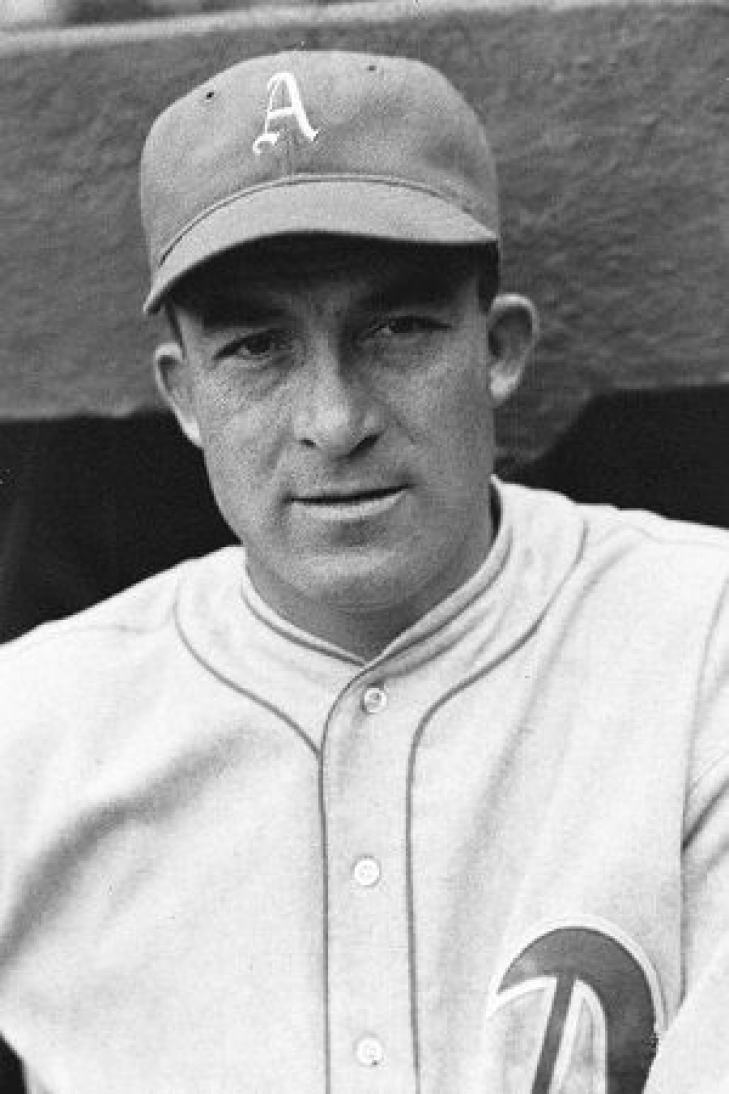
Al Simmons joined Philadelphia in 1924 after a standout run in the American Association, a right-handed outfielder with a peculiar "bucket-foot" hitting style that saw him step toward third base as he swung. While coaches initially tried to correct his localized mechanics, Connie Mack recognized a natural professional mainstay and let him be. As often was the case, Mack was right.
Following an impressive rookie campaign, Simmons achieved a historic milestone in 1925 by leading the American League with 253 hits and an exceptional .387 batting average. He concluded the season as the runner-up in the MVP race, solidifying his reputation as a formidable figure of the era who merged refined bat control with considerable power. In 1927, he attained another level of excellence by posting a career-high batting average of .392.
Simmons reached his ultimate peak between 1929 and 1931, establishing a lineup that secured three consecutive American League pennants. He delivered the high-impact performance that contributed to back-to-back World Series victories in 1929 and 1930, batting above .300 with multiple home runs in each Series. During this period, he demonstrated comprehensive mastery of the league, winning consecutive batting titles in 1930 (.381) and 1931 (.390). Over this three-year span, he averaged more than 150 RBIs per season, acting as the strategic centerpiece of a team often regarded by historians as comparable to the esteemed '27 Yankees.
Following the 1932 season, due to the localized economic pressures of the Great Depression. In a move that signaled the end of the dynasty, Connie Mack sold his contract to the Chicago White Sox as part of a $100,000 package deal. As an Athletic, Simmons would collect 1,827 Hits and belted 209 Home Runs with a Slash Line of .356/.398/.584.
Simmons would enter the Baseball Hall of Fame in 1953. Years later, in 1981, Simmons was inducted into the Philadelphia Baseball Wall of Fame and, in 2021, into the Athletics Hall of Fame.
13. Eddie Rommel
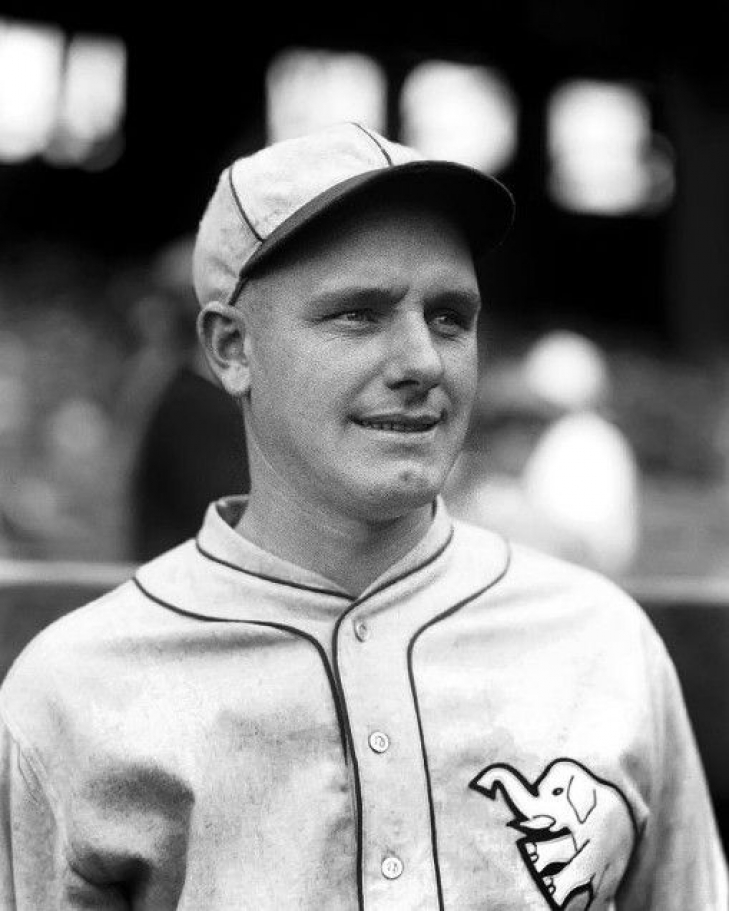
Connie Mack’s acquisition of Eddie Rommel prior to the 1920 season provided the Philadelphia Athletics with a pitcher who challenged the conventional mechanics of the period. Joining a roster still in the process of rebuilding following the disbandment of the 1910s dynasty, the right-hander brought with him an unconventional weapon: a dancing, unpredictable knuckleball. Unlike the high-velocity pitchers of the time, Rommel depended on exceptional precision and low spin, thereby introducing a style of play that transformed managerial strategies in utilizing their pitching staffs.
His breakthrough occurred in 1922, a season during which he single-handedly maintained the competitiveness of a developing Athletics team. Rommel led the American League with 27 victories and 41 complete games, pitching a substantial total of 293 innings. His capacity to confound hitters without relying on strikeouts, instead inducing weak contact and issuing very few walks, earned him a runner-up position to George Sisler in the American League Most Valuable Player voting. Later in his career, Rommel contributed to Philadelphia's victory in the 1929 World Series, where he secured a win in relief.
As the decade advanced, Rommel developed into an exceedingly adaptable asset for Connie Mack. During a period when pitchers were categorically classified as either starters or relievers, he adeptly bridged the distinction, often entering games in high-pressure relief roles prior to assuming his conventional position in the rotation on subsequent days. This dual role contributed to another league-leading season in 1925, during which he achieved 21 victories, many of which were obtained immediately from the bullpen to secure the outcomes of matches.
By the late 1920s, the Athletics had assembled a formidable roster comprising Jimmie Foxx, Al Simmons, and Lefty Grove. Although no longer the primary starting pitcher he was earlier in the decade, Rommel contributed as a seasoned veteran during the championship run. In the 1929 World Series against the Chicago Cubs, he assumed a pivotal relief role in Game 4, securing the victory on the mound as the Athletics orchestrated a historic ten-run comeback.
Rommel remained with the franchise until the conclusion of the 1932 season, retiring as a rare one-team "Lifer" during an era characterized by significant player movement. He concluded his thirteen-year career in Philadelphia with a record of 171-119 and was recognized as the first prominent practitioner of the knuckleball.
He was chosen for the Philadelphia Baseball Wall of Fame in 1996.
3. Eddie Plank
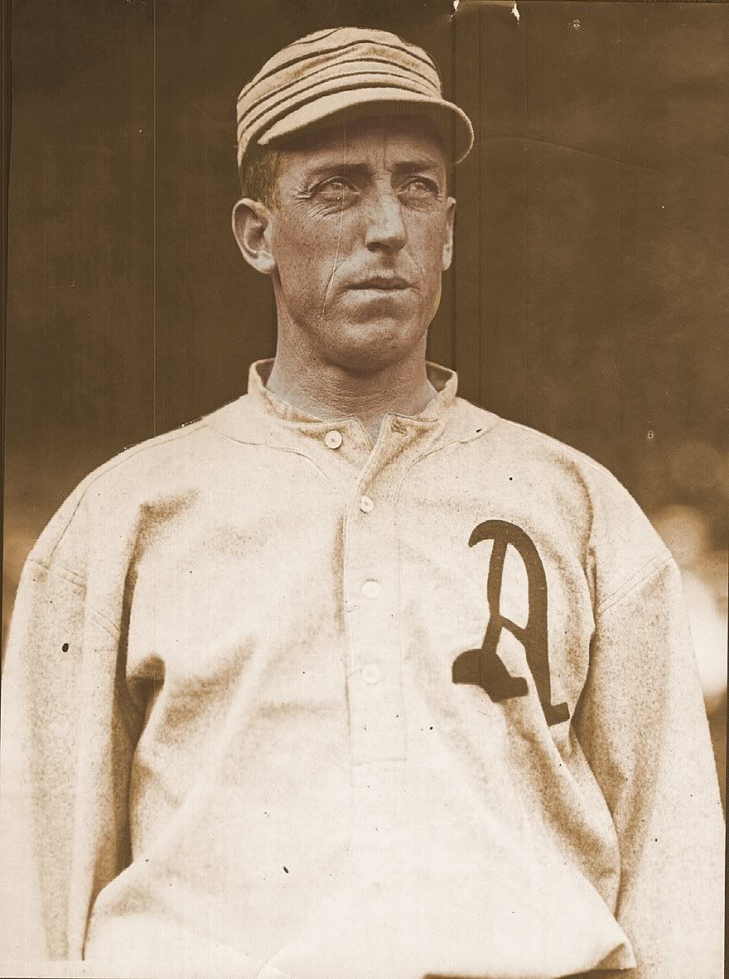
Eddie Plank arrived in Philadelphia in 1901, skipping the minor leagues to become a key part of Connie Mack’s famous pitching staff. As the leading left-hander of the Deadball Era, "Gettysburg Eddie" threw with a sidearm style and was known for a cross-fire motion that puzzled batters for more than ten years. Over 14 seasons with the Athletics, he was a central figure during multiple championship periods, setting franchise records for longevity and durability that still stand today.
After a successful 17-win debut in 1901, Plank achieved a historic milestone by recording four straight 20-win seasons from 1902 to 1905. He was the driving force behind the Athletics’ 1905 World Series appearance, demonstrating exceptional skill on the mound despite limited run support; he posted a 1.59 ERA across two complete games and notably faced off against the legendary Christy Mathewson of the New York Giants in one of the most intense pitching duels in baseball history.
Between 1910 and 1913, acting as the veteran anchor for a team that captured three world titles. While localized arm trouble sidelined him for the 1910 postseason, he returned to reach a new plateau in 1911, winning 23 games and securing a vital victory in the World Series to help the Athletics claim the championship. He followed this with a career-high summit of 26 wins in 1912 and another brilliant postseason performance in 1913, where he finally outdueled Mathewson in the World Series clincher to secure his second ring. During this peak, he was a giant of efficiency, leading the American League in shutouts twice and proving that his sidearm curveball was the most reliable weapon in the game.
Following the 1914 season, the organization faced a localized financial crunch and the emergence of the Federal League. After the Athletics were upset by the "Miracle Braves" in the World Series, Plank was released and signed a higher-paying contract with the St. Louis Terriers. Plank compiled a 284-162 record, a 2.39 ERA, and 1,985 strikeouts as an Athletic.
Plank was chosen for the Baseball Hall of Fame in 1946 and the Athletics Hall of Fame in 2021. Plank was also honored by the Philadelphia Baseball Wall of Fame in 1985.
2. Lefty Grove
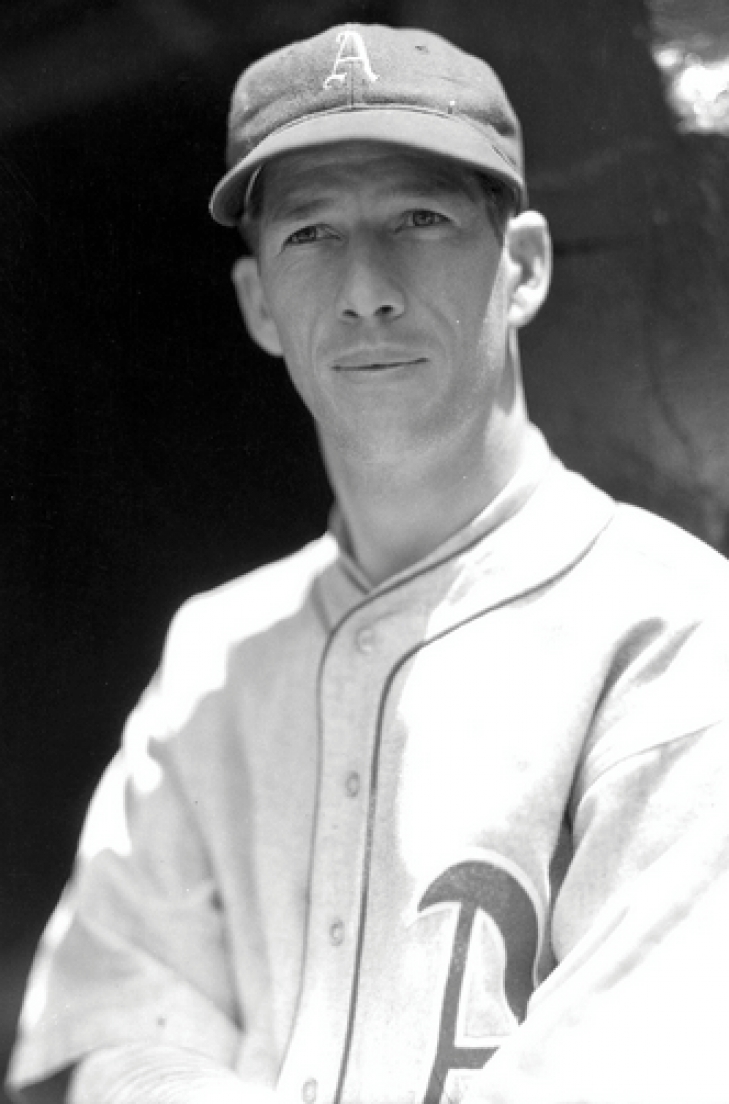
There were a lot of different players to consider when we were looking at the greatest Athletic of all-time.
8. Rube Waddell
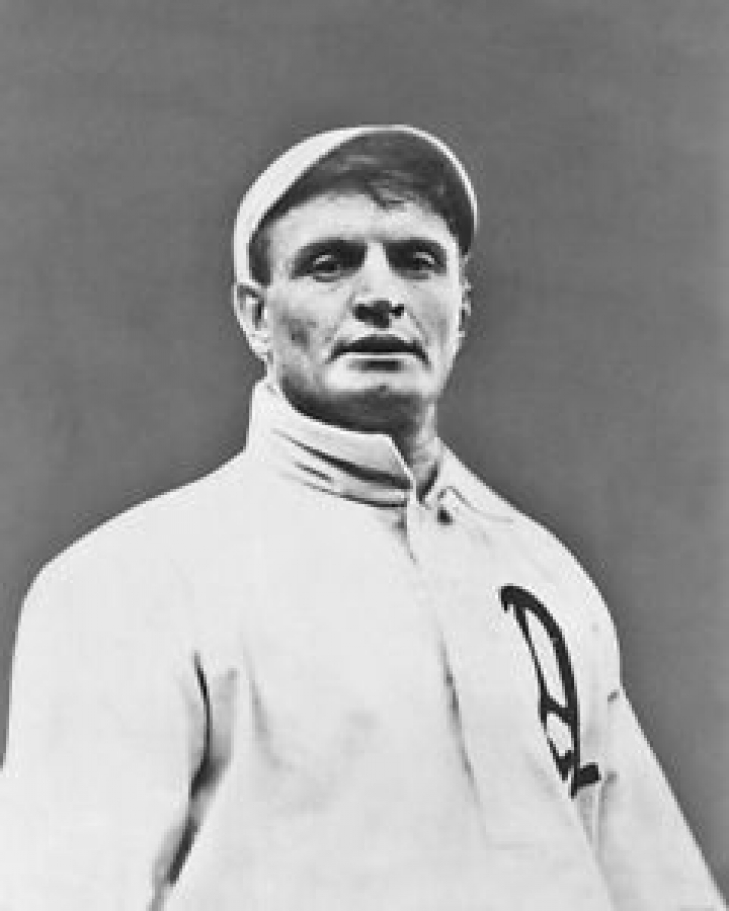
George Edward “Rube” Waddell arrived in Philadelphia in June 1902 under the patient, paternal watch of manager Connie Mack, who had previously managed the brilliant left-hander in the minor leagues. The Athletics were well aware of his reputation as an unpredictable eccentric, but Mack also recognized that beneath the erratic behavior lived a southpaw with unparalleled talent.
His time in Philadelphia was marked by an extraordinary ability to strike out batters, even in an era when contact was prioritized. Waddell set a historic standard by leading the American League in strikeouts during all six of his seasons with the team, including a remarkable 349-strikeout season in 1904 that remained a modern major league record for over sixty years. The 1905 season was his peak, as he achieved the rare AL pitching Triple Crown by leading the league in wins (27), strikeouts (287), and posting a 1.48 ERA. He was a dominant force on the mound, winning at least 20 games in his first four seasons with the team and leading the league in FIP four times.
His extraordinary talent was consistently overshadowed by a chaotic off-field life that often challenged the organization. Waddell's lack of emotional maturity, combined with a serious struggle with alcoholism, frequently distracted from his brilliance; he was known to abandon his team to chase fire engines, play marbles with kids under the stands, or go fishing unexpectedly. The conflict reached a critical point during the 1905 pennant race. After nearly single-handedly leading the Athletics to the World Series, he was sidelined for the entire Fall Classic due to a strange shoulder injury from a locker-room scuffle over a teammate's straw hat, fueling rumors that gamblers had paid him to sit out.
By the end of the 1907 campaign, his high-maintenance lifestyle and deteriorating relationships with his teammates forced Connie Mack’s hand. The Athletics sold the veteran star to the St. Louis Browns before the 1908 season. His personal demons quickly caught up to him, and he was out of the major leagues by 1910. He spent his final years drifting through the minors before his health collapsed, and he tragically passed away at just 37 from complications of tuberculosis and pneumonia.
With the Athletics, Waddell had a 131-82 record, 1,576 strikeouts, and a brilliant 1.97 ERA. Waddell was chosen for the Baseball Hall of Fame in 1946, and forty years later, his name was etched on the Philadelphia Baseball Wall of Fame. The Athletics would also select Waddell for their franchise Hall of Fame in 2021.
4. Jimmie Foxx
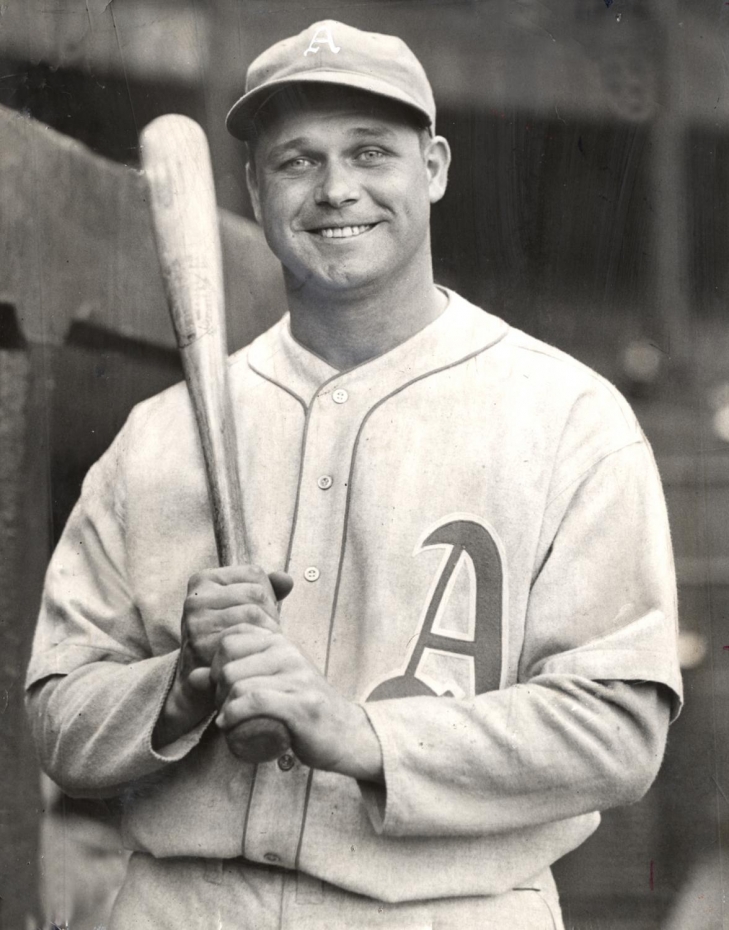
Jimmie Foxx came to Philadelphia in 1925 as a 17-year-old farm boy. He was signed by Connie Mack after being recognized as a local sensation in Maryland. Renowned for his extraordinary physical strength and a swing that generated legendary distance, he was considered the most formidable right-handed hitter of his time. During his 11 seasons with the Athletics, he functioned as the primary source of power for the concluding significant Philadelphia dynasty.
In 1929, Foxx achieved a historic milestone by hitting 33 home runs and leading the league with a .463 on-base percentage. His clutch performance drove the Athletics to their first World Series win in fifteen years, notably batting .350 in the Fall Classic against Chicago. Throughout the franchise's two consecutive championships, he demonstrated complete command of the postseason, finishing with a .344 World Series batting average with the A’s.
In 1932, Foxx achieved a peak of personal productivity, delivering one of the most statistically impressive seasons in sports history. He topped the American League in home runs with a career-best 58, just missing the single-season all-time record, while also leading in RBIs (169), slugging percentage (.749), and OPS (1.218). This exceptional display earned him his first MVP Award, an honor he secured again in 1933 after achieving a Triple Crown with a .356 batting average, 48 home runs, and 163 RBIs. At this height, he was a formidable power hitter, combining raw strength with a strategic approach that enabled him to lead the league in both batting and slugging.
If there was a weakness with Foxx, it was that he struck out a lot and led the league in that less-than-desirable metric five times as an Athletic.
Due to budgetary reasons, the First Baseman was traded to the Boston Red Sox after the 1935 season, and he would continue to be a great player, winning the AL MVP for the third time in 1938. As an Athletic, Foxx would post a sick Slash Line of .339/.440/.640 with 1,492 Hits and 302 Home Runs.
Foxx would enter the Baseball Hall of Fame in 1951, and was chosen for the Philadelphia Baseball Wall of Fame in 1979. Decades later, in 2021, Foxx was elected into the Athletics Hall of Fame.
