

42. Nels Potter
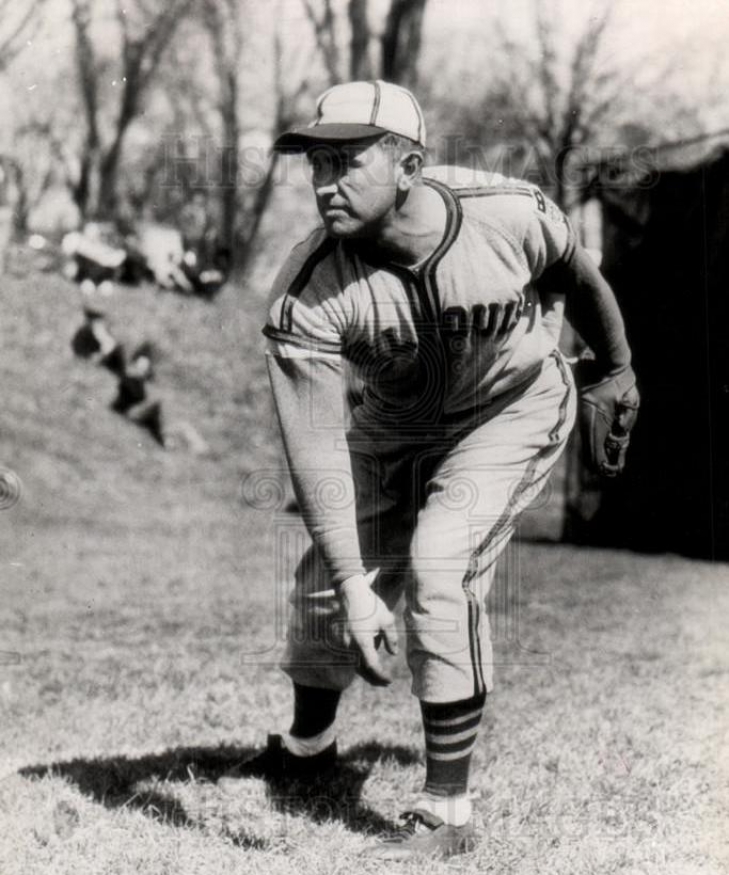
Nels Potter arrived in St. Louis as a 31-year-old journeyman, a screwball specialist who had struggled to find consistency until the Browns plucked him from the Red Sox organization in the 1942 Rule 5 Draft. In the high-pressure environment of wartime baseball, Potter didn't just find a home; he became the statistical engine that drove the Browns to their greatest heights.
Potter’s 1944 campaign remains a landmark in franchise history. As the Browns battled for their first American League Pennant, Potter delivered a 19–7 record and a career-best 5.7 bWAR, finishing ninth in the MVP voting. Though he was famously the first pitcher ever suspended for using a "foreign substance" (the spitball) earlier that year, he returned to lead the club into the World Series. On the game's biggest stage, he was nearly flawless, posting a 0.93 ERA in the Fall Classic—a performance that cemented his status as a big-game anchor.
While skeptics point to the diluted talent pool of the WWII era, Potter’s 1945 season silenced the critics. He was arguably even more dominant, posting a 2.47 ERA and a league-leading 1.097 WHIP, which earned him a staggering 7.2 bWAR—the second-highest mark in the American League. It was a masterclass in finesse and control that proved his success was rooted in skill, not just circumstance.
Age and the return of pre-war stars eventually slowed his momentum, leading to his sale back to the Athletics in 1948. However, Potter’s legacy is etched in the history books as the man who pitched the Browns into their only World Series.
