

13. Joe Carter
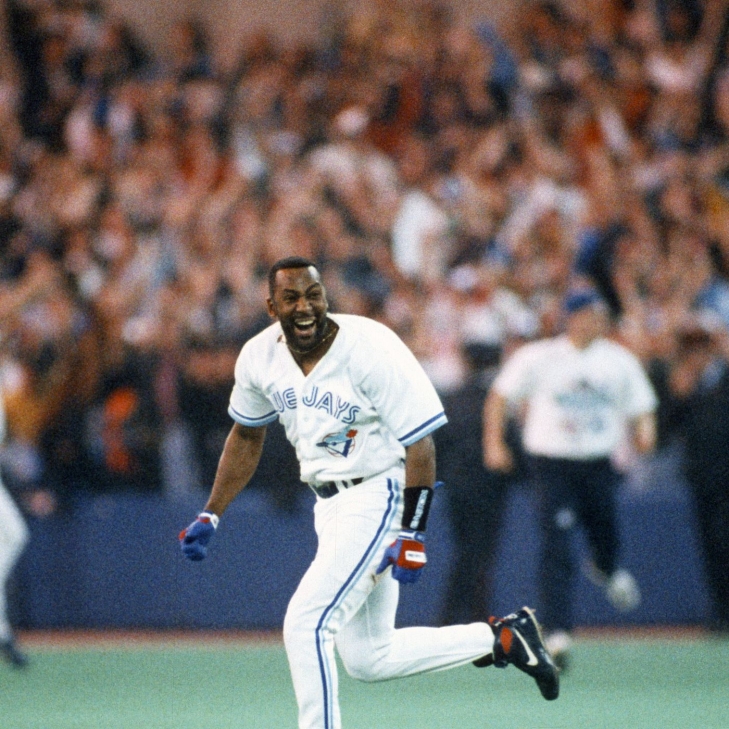
Assessing Joe Carter’s legacy in Canada involves balancing striking cinematic imagery with the concrete realities of contemporary baseball statistics. To many fans, he represents the quintessential symbol of the franchise's zenith. However, upon closer examination of his overall contribution through advanced metrics, a nuanced picture appears of a largely imperfect run-producer whose legendary stature significantly exceeds his analytical impact.
Arriving alongside Roberto Alomar in the historic December 1990 trade that sent Fred McGriff and Tony Fernández to San Diego, Carter immediately provided the Toronto Blue Jays with a formidable, high-profile middle-of-the-order hitter. He delivered precisely what the front office requested: sustained, formidable power. During a seven-season tenure in Ontario, the resilient outfielder averaged nearly 30 home runs annually, culminating in 203 home runs and 736 RBIs. Traditional award voters appreciated his impressive counting statistics; Carter’s consistent performance near the top of the American League in home runs and RBIs earned him two Silver Slugger Awards and consecutive top-five finishes in the AL MVP voting (fifth in 1991 and third in 1992).
His place in baseball immortality, however, was forged entirely in October. After helping propel Toronto to its first world championship in 1992, Carter led the lineup in the 1993 repeat charge. In the bottom of the ninth inning of Game 6 of the 1993 World Series, he connected on a low-and-inside slider from Philadelphia’s Mitch Williams, launching a majestic walk-off three-run home run into the left-field seats to clinch the title. Accompanied by broadcaster Tom Cheek's immortal call—"Touch 'em all, Joe! You'll never hit a bigger home run in your life!"—it remains the defining, most celebrated moment in Canadian sports history.
Yet, looking past the ticker-tape parades reveals the statistical paradox that keeps Carter from reaching the absolute top tier of franchise greats. While he hit cleanup for a powerhouse, his overall offensive efficiency was surprisingly limited. He had an incredibly aggressive, free-swinging approach; in no single season as a Blue Jay did he draw 50 walks or push his on-base percentage above .330. Because he routinely failed to get on base at an elite clip, his overall OPS in Toronto hovered around a sub-.800 mark—an incredibly low baseline for a premier 1990s slugger.
Furthermore, advanced metrics are unkind to his defensive work. Whether stationed in the outfield corners or filling in at first base, Carter was a severe defensive liability, routinely allowing runs. That combination of a low on-base ceiling and negative defensive value severely limited his overall contributions, leaving his lifetime bWAR in Toronto well under 10.
Carter remained an indispensable emotional leader for the club through the mid-1990s transition before finally hitting the open market and signing with the Baltimore Orioles following the 1997 campaign.
While analytical models will always view his overall efficiency with a critical eye, baseball is ultimately a game of moments—and Carter authored the grandest one of all. To ensure his permanent standing as a towering pillar of the organization's identity, the Blue Jays inducted him into the Level of Excellence at Rogers Centre, and he was proudly enshrined in the Canadian Baseball Hall of Fame. Carter had accumulated 1,051 hits, 203 home runs, and 736 RBIs while generating a .257/.310/.473 slash line (104 OPS+) for the club.
The Today's Era Committee announce the 10 Finalists to the Baseball HOF
It is a pretty big day in the Baseball Hall of Fame as the Today’s Game Era Committee has announced their 10 nominees for the Hall. This is one of four committees, which includes the Modern Baseball, Golden Days and Early Baseball. Specifically, the Today’s Game Era Committee comprises candidates whose contributions occurred from 1988 on. Along with the Modern Baseball Committee the Today’s Era Committee meets twice in a five year period. The last time they met was in 2016 where Commissioner Bud Selig and longtime Atlanta Braves Executive, John Scherholz.
The nominees include six former players, three managers and an owner.
Let’s take a look at the nominees!
Harold Baines: A six time All Star, Baines was an elite Designated Hitter who had 384 Home Runs and had 2,866 Hits over his career. Baines played 14 of 22 his seasons with the Chicago White Sox and he also spent time with Baltimore, Oakland, Texas and Cleveland. He is ranked #39 on Notinhalloffame.com.
Albert Belle: Belle was one of the most feared power hitters for a time and he would blast 381 Home Runs and he would lead the American League in that category in 1995. The five time All Star was a three time RBI leader and he was in the top three in AL voting three years in a row (1994-96). Belle played for Cleveland, the Chicago White Sox and Baltimore. He is ranked #56 on Notinhalloffame.com.
Joe Carter: Carter smacked 396 Home Runs but it was one that he hit in Game 6 to win the World Series for the Toronto Blue Jays that he will always be remembered most for. He was a six time all star who also played for the Chicago Cubs, Cleveland Indians, San Diego Padres, Baltimore Orioles and San Francisco Giants. He is not ranked on Notinhalloffame.com.
Will Clark: Clark was best known for his hitting prowess as a member of the San Francisco Giants where he would have four top five finishes in American League MVP voting. Clark retired with a .303 Batting Average with 284 Home Runs. He also played for Texas, Baltimore and St. Louis. He is ranked #58 on Notinhalloffame.com.
Orel Hershiser: The long time Los Angeles Dodger won the Cy Young in 1988 and was in the top four in voting three times. He was a three time All Star who won 204 Games and he also played for Cleveland, San Francisco and the New York Mets. He would be the MVP in the Dodgers 1988 World Series win and would later be the ALCS MVP for Cleveland in 1995. He is ranked #75 on Notinhalloffame.com.
Davey Johnson: Johnson helmed the New York Mets to the 1986 World Series and he was a two time Manager of the Year. He compiled a 1,372 and 1,071 record over stints with New York, Cincinnati, Baltimore, the Los Angeles Dodgers and Washington.
Charlie Manuel: Manuel would take the Philadelphia Phillies to back-to-back World Series appearances winning the first one in 2008. Manuel won an even 1,000 Games against 826 losses and he also managed the Cleveland Indians over his career.
Lou Piniella: Piniella was a pretty good player in his own right who played 20 years as a player but he is nominated here for his work as a Manager. He was a three time Manager of the Year who took the Cincinnati Reds to a surprise World Series win 1990. He also managed the New York Yankees, Seattle Mariners, Tampa Bay Devil Rays and the Chicago Cubs and he had a 1,835 and 1,713 record.
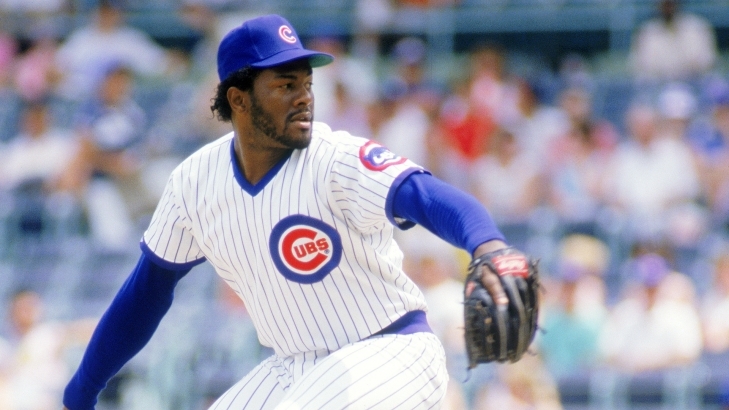
Lee Smith: Smith at one time was the all-time leader in Saves (with 478) and he was a seven time All Star who played for Chicago Cubs, Boston, St. Louis, the New York Yankees, Baltimore, California, Cincinnati and Montreal. He is ranked #35 on Notinhalloffame.com.
George Steinbrenner: The iconic and late owner of the New York Yankees was certainly hands on and wanted to win and as an owner the Yankees would win seven times.
Voting will take place on December 9 at the Winter Meetings in Las Vegas.
