

Our All-Time Top 50 Washington Nationals have been revised to reflect the 2023 Season
Yes, we know that this is taking a while!
As many of you know, we at Notinhalloffame.com are slowly generating the top 50 of each major North American sports team. That being said, we have existing Top 50 lists, and we always consistently look to update them when we can and based on necessity. As such, we are very happy to present our post-2023 revision of our top 50 Washington Nationals.
As for all of our top 50 players in baseball, we look at the following:
1. Advanced Statistics.
2. Traditional statistics and how they finished in Major League Baseball.
3. Playoff accomplishments.
4. Their overall impact on the team and other intangibles that are not reflected in a stat sheet.
Last year, the Nationals had another awful season and were not close to the playoffs. The poor year did not generate any changes in the Top 50, but as always, we acknowledge that we considered the 2023 Season.
As always, we present our top five, which (obviously) saw no changes:
1. Gary Carter
2. Tim Raines
3. Max Scherzer
4. Andre Dawson
5. Steve Rogers
You can find the entire list here.
We thank you for your continued support of our lists on Notinhalloffame.com.
Our All-Time Top 50 Washington Nationals have been updated to reflect the 2022 Season
Yes, we know that this is taking a while!
As many of you know, we here at Notinhalloffame.com are slowly generating the 50 of each major North American sports team. That being said, we have existing Top 50 lists out and we always consistently look to update them when we can and based on necessity. As such, we are very happy to present our post 2022 revision of our top Washington Nationals.
As for all of our top 50 players in baseball we look at the following:
1. Advanced Statistics.
2. Traditional statistics and how they finished in the National League.
3. Playoff accomplishments.
4. Their overall impact on the team and other intangibles not reflected in a stat sheet.
Last year, Washington was one of the worst teams in baseball, and the only player they had they improved his rank, was traded during the season.
As always, we present our top five, which was not affected by the last season:
1. Gary Carter
2. Tim Raines
3. Max Scherzer
4. Andre Dawson
5. Steve Rogers
You can find the entire list here.
Outfielder, Juan Soto, who was traded to San Diego during the season, moved to #14 from #17.
We welcome your input and comments and as always, we thank you for your support.
Our All-Time Top 50 Washington Nationals have been updated to reflect the 2021 Season
Yes, we know that this is taking a while!
As many of you know, we here at Notinhalloffame.com are slowly generating the 50 of each major North American sports team. That being said, we have existing Top 50 lists out and we always consistently look to update them when we can and based on necessity. As such, we are very happy to present our pre-2022 revision of our top 50 Washington Nationals.
As for all of our top 50 players in hockey we look at the following:
1. Advanced Statistics.
2. Traditional statistics and how they finished in the National League.
3. Playoff accomplishments.
4. Their overall impact on the team and other intangibles not reflected in a stat sheet.
Please note, that this is our first revision, reflective of the last year.
The Nationals went into full rebuilding mode, trading many of their stars during the season. There were no new entries, but were some rank elevations.
As always, we present the top five immediately, which has no changes.
1. Gary Carter
2. Tim Raines
3. Max Scherzer
4. Andre Dawson
5. Steve Rogers
You can find the entire list here.
Scherzer almost supplanted Raines at #2, and he completed the season with the Nationals, he likely would have.
Ryan Zimmerman moves up from #9 to #6. This could be the end of the climb for Zimmerman, as it is speculated that he might soon retire.
Infielder, Trea Turner, was traded to the Los Angeles Dodgers during the season. Despite, not playing all of the year with Washington, he was fantastic this year, and moves up to #14 from #22.
Juan Soto, who was this year’s National League MVP runner-up, rockets up to #17 from #36.
We welcome your input and comments and as always, we thank you for your support.
Our Top 50 All-Time Washington Nationals have been updated
As always, we here at Notinhalloffame.com continue to update our existing lists.
As we slowly put together our Top 50 all-time players for every major team we constantly continue to update our existing ones. For the second time, we are updating the first franchise 50 we ever posted, the Washington Nationals.
Since the last time we revised our Washington Nationals two things have changed.
The first is that since our last revision in two and a half years ago, we have relaxed the dependence on advanced statistic and put a higher reward on individual seasons. We think this allows for a more equitable balance on traditional and advanced metrics.
The second and of course obvious change is that two full seasons have passed. This list is now up until the end of the 2017 Season.
The entire list can be found here and we certainly encourage you to take a look at it and let us know your thoughts and opinions.
Prior to that we wanted to make you aware of a few major changes on the list since the last revision.
Max Scherzer debuts at #9. While his tenure with Washington has certainly been brief, three All Stars and two Cy Youngs already make him one of the most successful hurlers in Nationals history.
2014 Silver Slugger Anthony Rendon makes his first appearance at #22.
Other debuts on current Nationals are Daniel Murphy (#31) and Tanner Roarke (#35).
Other jumps in active Washington Nationals include Bryce Harper from #9 to #8, Steven Strasburg goes from #29 to #11 and Gio Gonzalez moves from #28 to #16.
Other debuts based on our revisions are Moises Alou (#38), Dan Schatzeder (#45) and Wilson Ramos (#47).
As you may have deduced, the entire list has been shuffled.
We will be unveiling the Top 50 All-Time Dallas Stars next.
26. Gary Carter
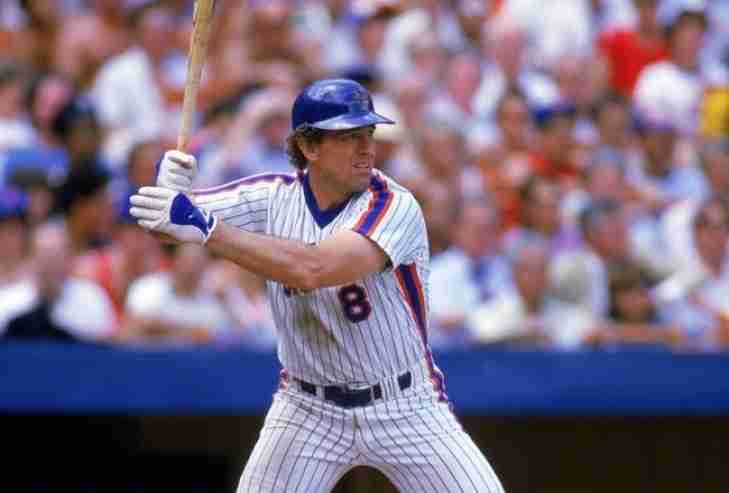
In December 1984, Gary Carter joined the Mets through a major trade with the Montreal Expos, which sent Hubie Brooks, Mike Fitzgerald, Herm Winningham, and Floyd Youmans to Canada. The Mets, an ascending team, lacked an experienced veteran behind the plate, and "The Kid”, considered the best catcher in baseball, came to New York to bring immediate championship experience.
Carter wasted no time, delivering an impressive debut in 1985 by matching his career high with 32 home runs and 100 RBIs, earning a sixth-place spot in the NL MVP voting. He built on this momentum in 1986 with a remarkable season, hitting 24 home runs and accumulating 105 RBIs, while also providing exceptional defensive intelligence that stabilized the pitching staff. His consistent ability to bat in the middle of the order earned him a well-deserved third-place finish in the MVP race, solidifying his status as one of the league's top catchers.
Beyond his basic stats, Carter became a legendary figure in New York through his pivotal moments in the 1986 postseason. He hit a walk-off single in Game 5 of the NLCS against Houston, hit two home runs in Game 4 of the World Series, and famously sparked the crucial two-out rally in the 10th inning of Game 6 with a clutch single to left field. Although he was selected as an All-Star four years in a row from 1985 to 1988 as a Met, his physical performance declined sharply during his last two years, as the demanding nature of catching heavily impacted his knees. He was released after the 1989 season.
While the rank of Carter might seem low, realistically, he was only good for the first half of his half-decade run
The Mets honored Carter with a franchise Hall of Fame induction in 2001, and he was enshrined in the Baseball Hall of Fame in 2003.
Awards = HOF? Part Twenty-Three: Gold Glove Catcher
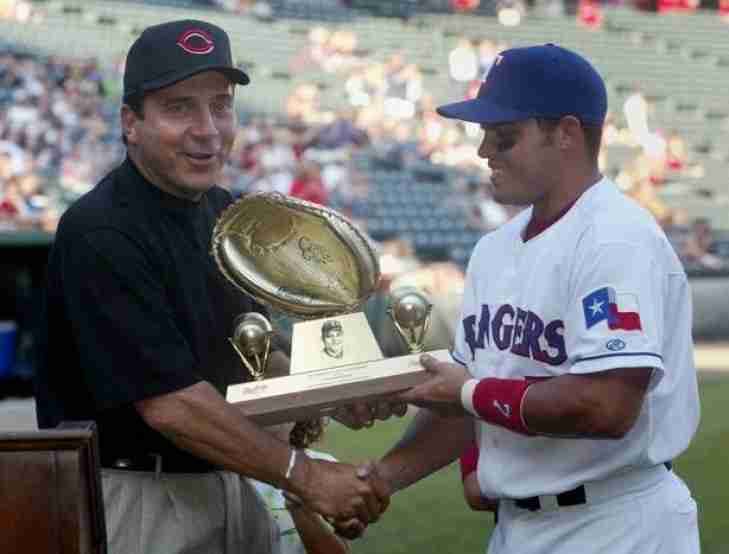
Needless to say, different awards in different sports yield hall of fame potential. In basketball, the team sport with the least amount of players on a roster, the dividend for greatness much higher. In baseball, it is not as much as a great individual season does not have the same impact.
The Top 50 Washington Nationals of All-Time are up
We have added another Top 50 list to one of the Big Four of North American Team sports.
1. Gary Carter
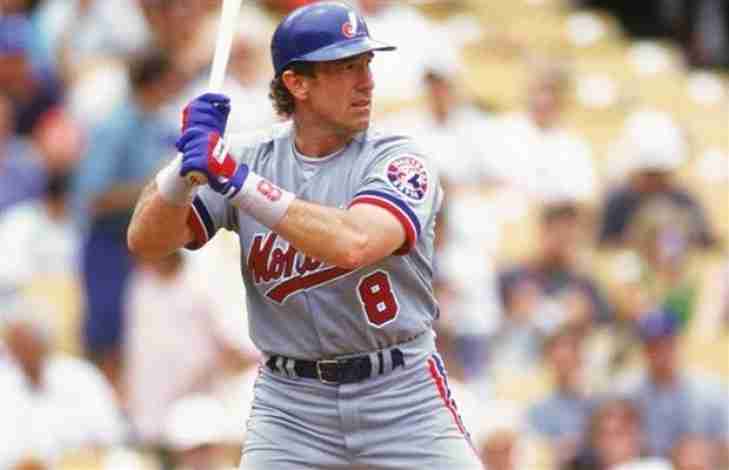
When thinking about the highest standards for defensive skill, durability, and passion behind the plate, you come across a player who truly embodied the competitive spirit of baseball in Canada. Gary Carter didn’t just lead the Montreal Expos into their first successful era; he was the lively heart and soul of a young team. With his warm, infectious smile and a powerful, aggressive swing, the player known as “The Kid” made the demanding role of catcher look like a nightly display of strong leadership. During his remarkable eleven seasons with Nos Amours, he became perhaps the most loved athlete in Canadian sports history and the clear top performer in the franchise's record books.
Making his primary arrival as a full-time regular during the 1975 campaign, the front office utilized his supreme athleticism across the outfield grass and behind the dish. Carter turned flashing his defensive tools into a strict daily routine, lashing 17 home runs and driving in 68 runs to secure The Sporting News Rookie of the Year honors, while finishing as a close runner-up for the official BBWAA National League Rookie of the Year trophy.
After a group of emerging talented players took over the outfield positions before the 1977 season, the management decided to move Carter behind the plate permanently. This change sparked a decade of exceptional defensive skill, significantly impacting how base runners in the National League approached their paths. Carter earned three straight Gold Glove Awards from 1980 to 1982, led the league in caught-stealing percentage three times, and topped all catchers in Total Zone Runs five times.
What truly made him a legendary figure in the inner circle was how his exceptional defensive skills kept a top-tier middle-of-the-order batter well protected. The peak of his amazing career in an Expos uniform shone brightly during a memorable 1982 season. That summer, Carter demonstrated incredible hitting prowess, setting a personal best with 29 home runs, 163 hits, and 97 RBIs, all while maintaining a solid .293 batting average and an impressive .381 on-base percentage. He led the team with an outstanding 8.6 bWAR — the highest single-season mark of his 19-year career — earning a well-deserved Silver Slugger award and finishing among the top five in the National League Most Valuable Player voting.
He matched that thunderous production with a league-leading 106 RBIs in 1984, commanding consecutive All-Star Game MVP trophies in 1981 and 1984 to cement his status as a national icon.
After the 1984 campaign, the small-market Expos faced huge stadium debt and tighter corporate budgets. With Carter entering the peak of a lucrative, long-term contract and management looking to pivot toward a total roster reconstruction, the front office initiated a highly jarring business exit that December. They orchestrated a blockbuster four-player trade that shipped their iconic centerpiece to the New York Mets for a package including Hubie Brooks and Floyd Youmans—a transaction that immediately allowed Carter to anchor the legendary 1986 Mets to a World Series crown.
While he famously returned to Montreal in 1992 for a nostalgic 95-game retirement tour—capping his career with a memorable game-winning RBI double in his final at-bat—his peak chapters belonged to the previous decade.
Carter played 1,503 total games representing the franchise; he accumulated exactly 1,427 hits, 274 doubles, 220 home runs, and 823 runs batted in, completely validated by a stellar 121 career wRC+ in La Belle Provence.
The BBWAA officially welcomed Gary "The Kid" Carter into the National Baseball Hall of Fame in 2003, and he proudly chose to enter Cooperstown wearing an Expos cap on his plaque. The organization beautifully matched that coronation by officially retiring his iconic number 8 that same summer, followed by a classy, highly respectful induction into the Washington Nationals Ring of Honor inside the nation's capital in 2010
Awards = HOF? Part Five: The Silver Slugger (Catcher) (MLB)
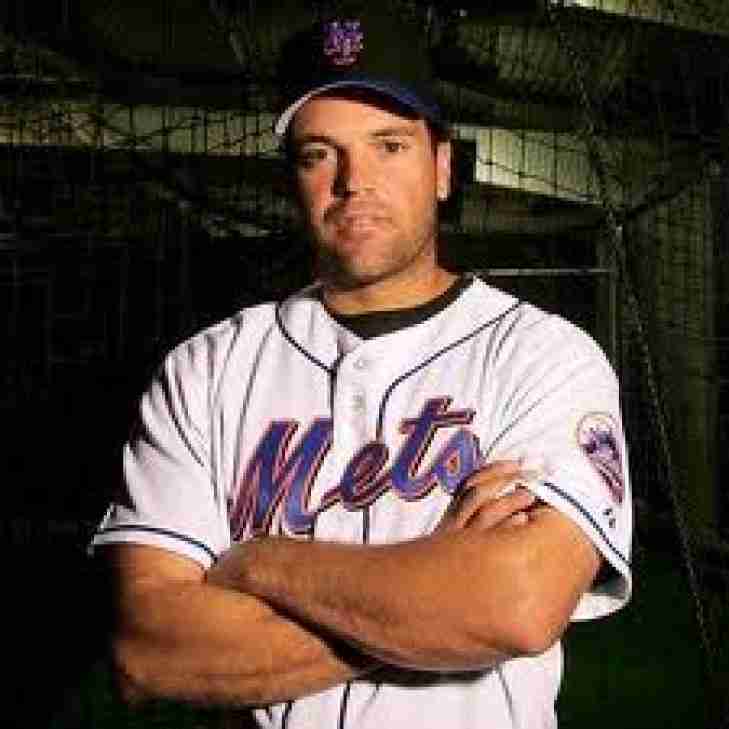
Needless to say, different awards in different sports yield hall of fame potential. In basketball, the team sport with the least amount of players on a roster, the dividend for greatness much higher. In baseball, it is not as much as a great individual season does not have the same impact.
