21. Marty Marion
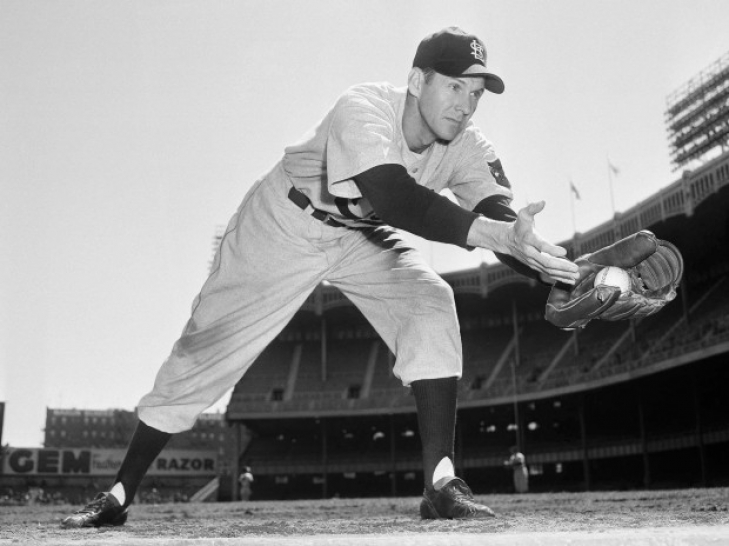
To grasp the extent of the St. Louis Cardinals' dominance in the 1940s, one needs to focus on the heart of their defense—shortstop Marty Marion. Standing at 6-foot-2 and Lanky, Marion redefined defensive play. Unlike most middle infielders of his time, who were stocky, his unusually long arms, broad wingspan, and extensive lateral coverage made him seem more like an inescapable defensive force on the field. It wasn't long before both opposing managers and teammates gave him a fitting nickname: "The Octopus."
While his peers boasted powerful bats, Marion primarily built the St. Louis dynasty through his exceptional glove work. He led the National League in Defensive bWAR three times and was a top contender with five runner-up finishes. Even decades after his final pitch, he ranks consistently in the top twenty all-time for defensive value in major league history. Although his career batting average of .263 and 36 home runs during his time with St. Louis seem modest today, they were quite impressive for a top shortstop of that era. His skill at hitting gaps for doubles and performing situational sacrifices made him a reliable presence in the lineup's lower end.
Marion’s career was profoundly shaped by WWII. A childhood leg fracture left him with a lasting disability, disqualifying him from military service. While many baseball stars headed off to fight, Marion remained a key pre-war figure in the majors. His exceptional fielding peaked in 1944, where he used his remarkable range to dominate offensively and led the team to 105 wins. His outstanding performance earned him the 1944 National League MVP, despite his limited batting. Marion wasn't just a regular-season marvel. He served as the defensive backbone of three World Series championship rosters (1942, 1944, and 1946), making him one of the winningest and most impactful core players in franchise history.
Marion’s impact in St. Louis went beyond his playing years, as he briefly managed the team during the 1951 transition season before ending his career with the St. Louis Browns. Over his impressive 11-year tenure with the Cardinals, he amassed 1,402 hits, 257 doubles, and was selected to the All-Star team eight times.
Marion was inducted into the Cardinals Hall of Fame in the first year of its existence in 2014.
57. Marty Marion
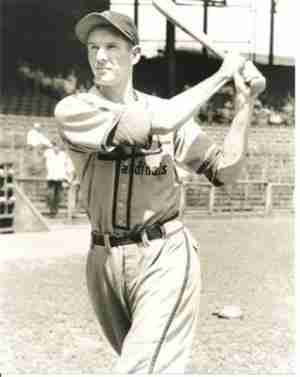
Marty Marion won the NL 1944 MVP based primarily on his leadership and fielding skills as opposed to anything he did with his lumber. His victory is certainly a reminder that there is a lot more to baseball than sexy offensive stats.
Marty Marion was taller than the average Shortstop of his era, but he used that to his advantage. He was deceptively quick, but he used his large wingspan to gobble up any ground ball that got remotely near him. He was called the “octopus”, and he would have used those tentacles to grab every Gold Glove Award….if they existed at the time. Marion usually batted at the bottom of the order, but he was consistent and an excellent bunter.
Marty Marion was not just a defensive wizard; he was a leader whose patience was evident when he became a manager and teacher to young ballplayers. It is often these traits that are pointed to when pundits and ex-colleagues point to Marty Marion and the Baseball Hall of Fame.
Should Marty Marion be in the Hall of Fame?
The Pre-Integration Committee selects...nobody
Specifically, this committee was tasked with choosing players/administrators who had their day in the sun prior to 1947, when the color barrier was finally broken.
To gain induction, a candidate must finish with at least 12 of the 16 votes (75%) from the committee. The highest finisher was Doc Adams with 10. Historically speaking, Adams has been uncovered as one of the father’s of the modern game and many of his innovations are still used today.
Former players, Bill Dahlen and Harry Stovey each received eight votes. This is especially notable for Dahlen, as he received ten on the last Pre-Integration vote three years ago.
The rest of the candidates received three votes or less. This includes former Cardinals owner, Sam Breadon, Pitcher, Wes Ferrell, former Cincinnati Reds President, August Hermann, Shortstop, Marty Marion, First Basemen, Frank McCormick, former St. Louis Brown Stockings owner, Chris von der Ahe and Pitcher, Bucky Walters.
When a candidate receives three or less, the exact tally is not disclosed.
An excellent commentary on this year’s group of candidates was done by our own DDT, which you can find here. It is definitely worth your time to read.
With that over, attention is heating up on a ballot led by Ken Griffey Jr., who many feel will enter on his first attempt.
Did the Pre-Integration committee get it right?
BASEBALL'S 2016 PRE-INTEGRATION ERA COMMITTEE BALLOT: ARE THERE ANY HALL OF FAMERS LEFT?