

43. Bryce Paup
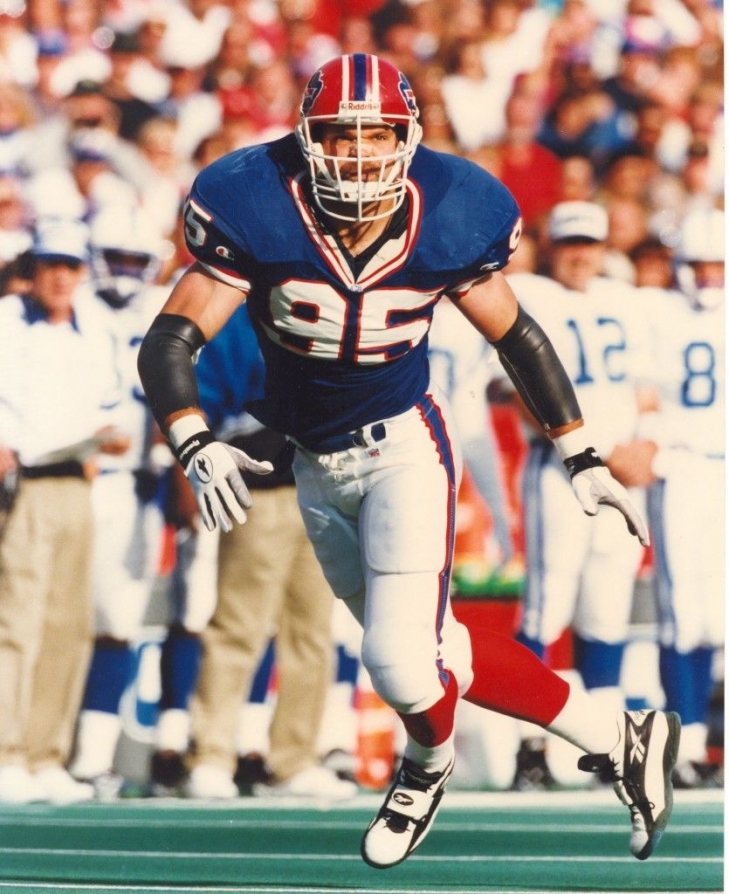
Signed by the Buffalo Bills in 1995 after five productive seasons in Green Bay, Bryce Paup arrived in Western New York as one of the most transformative free-agent additions in franchise history. Stepping onto Wade Phillips' defense opposite Hall of Fame defensive end Bruce Smith, Paup provided an unstoppable pass-rushing dynamic that ignited Buffalo's front seven.
Paup showcased a great blend of length, initial burst, and relentless hand technique. Playing mainly as a 3-4 left outside linebacker, his strength on film was turning speed into power; he often won one-on-one battles on the edge by dipping his shoulder under offensive tackles or using an explosive bull-rush to pressure the quarterback, making things difficult for the offense.
Paup had a memorable debut season in 1995, showcasing one of the most impressive single-season pass-rushing feats in NFL history. Exploiting situations where offenses focused extra blockers on Bruce Smith, Paup dominated backfields, leading the NFL with a career-best 17.5 sacks. He also tallied 89 tackles, three forced fumbles, and two interceptions. Paup made history as the first Bills player to receive the AP NFL Defensive Player of the Year Award, also earning First-Team All-Pro honors and his second Pro Bowl selection.
Paup remained a force on the edge over the next two seasons, anchoring Buffalo's linebacker corps. He logged 6.0 sacks and 11 tackles for loss in 1996, earning another Pro Bowl selection. He backed that up in 1997 with 9.5 sacks, three forced fumbles, and an interception in 15 starts, securing his third consecutive Pro Bowl nod as a Bill.
After the 1997 season, Paup joined the Jacksonville Jaguars as a free agent. Although his time with Buffalo was short, it represented the pinnacle of his career. During his three seasons with the Bills (1995–1997), he started all 45 regular-season games he played, recording 33.0 sacks, 215 tackles, six forced fumbles, two recoveries, and three interceptions.
50. Mario Williams
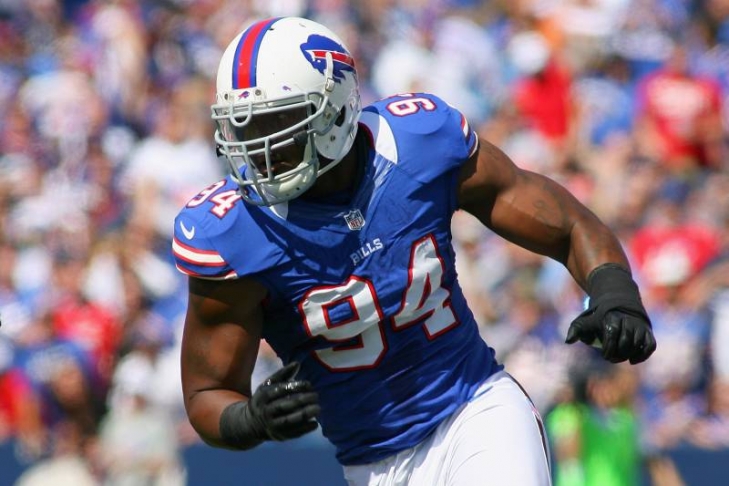
In 2002, Mario Williams was the first overall pick in the draft, and he played his first four seasons in football with the team that drafted him, the Houston Texans. Mario Williams signed a massive free-agent contract with the Buffalo Bills in March 2012. Landing in Western New York as the cornerstone of the defense, Williams immediately validated the record-breaking deal by establishing himself as one of the most dominant edge rushers in franchise history.
Williams was a rare physical specimen combining elite size, functional strength, and explosive initial quickness. Operating primarily as a 4-3 defensive end, his primary trait on tape was converting speed into power; he routinely overwhelmed offensive tackles with a punishing bull rush, using his long reach to disengage and collapse backfields toward the quarterback.
Williams made an immediate impact in his inaugural season in Western New York (2012), leading the Bills with 10.5 sacks despite competing through a wrist injury. In 2013, he received his third career Pro Bowl selection and Second-Team All-Pro honors after accumulating 13.0 sacks, including a franchise single-game record-tying 4.5-sack performance against the Carolina Panthers.
His remarkable peak came in 2014 when he played a vital role in Buffalo’s well-known "Cold Front" defensive line, teaming up with Marcell Dareus, Kyle Williams, and Jerry Hughes. Williams achieved a career-best 14.5 sacks, 19 tackles for loss, 18 Approximate Value (AV), and two forced fumbles. His outstanding performance earned him First-Team All-Pro honors and his fourth Pro Bowl selection, contributing to Buffalo leading the NFL in total sacks with 54.
Following a coaching change and scheme shift in 2015 (5.0 sacks), Williams was released and signed with division rival Miami for his final NFL season in 2016. Over his four years with the Bills (2012–2015), Williams started all 63 games, recording 43.0 sacks, 52 tackles for loss, 193 tackles, and seven forced fumbles.
34. Joe Cribbs
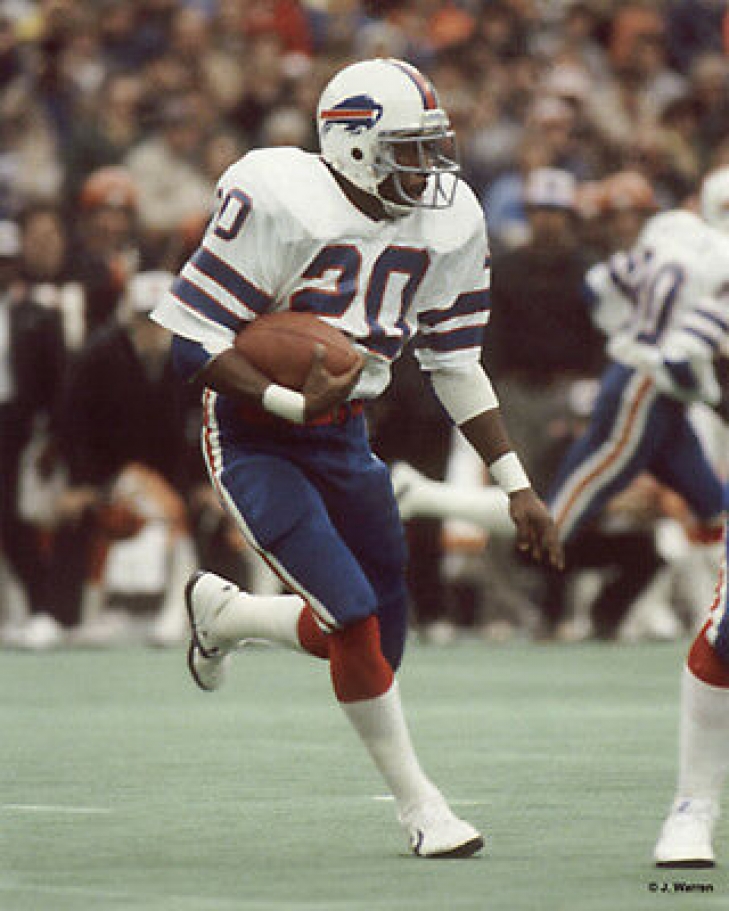
Drafted in the second round (29th overall) of the 1980 NFL Draft out of Auburn—where he was a First-Team All-SEC selection—Joe Cribbs arrived in Western New York as an instant offensive focal point. Functioning as a dual-threat weapon out of the backfield, Cribbs gave Buffalo a dynamic dual-threat running back who could slice through interior defensive lines or swing out wide as a lethal pass-catcher.
Cribbs relied on rapid lateral vision, smooth cutback agility, and soft hands out of the backfield. Equally dangerous between the tackles and in open space, he excelled at reading blocking schemes, pressing the hole, and accelerating into the secondary. As a receiver, Cribbs posed a mismatch for linebackers, running sharp wheel and angle routes that allowed him to turn short dump-off passes into massive gains downfield.
Cribbs made an immediate statement during his 1980 rookie campaign, rushing for 1,185 yards and 11 touchdowns while adding 52 receptions for 415 yards. Despite leading the league with 16 fumbles, his 1,600 yards from scrimmage helped lead Buffalo back to the playoffs and earned him UPI AFC Rookie of the Year honors alongside his first Pro Bowl selection.
Cribbs significantly improved his ball security while maintaining his elite production over the next three seasons. In 1981, he turned in 1,700 total scrimmage yards (1,097 rushing, 603 receiving) and 10 total touchdowns to earn his second Pro Bowl nod. After a strike-shortened 1982 season where he still rushed for 633 yards in just seven games, Cribbs returned to peak form in 1983, tallying 1,131 rushing yards and 57 receptions for 524 receiving yards to secure his third Pro Bowl selection. In each of his three Pro Bowl seasons, Cribbs ranked among the top 10 in the NFL in yards from scrimmage.
Seeking better compensation, Cribbs signed a contract with the USFL's Birmingham Stallions in 1983, jumping leagues to play the 1984 and 1985 USFL spring seasons. Following the resolution of legal disputes, he returned to the Bills in the fall of 1985, appearing in 10 games (399 rushing yards). Prior to the 1986 season, the Bills traded Cribbs' NFL rights to the San Francisco 49ers, bringing his time in Western New York to an official close.
With the Bills (1980–1983, 1985), Cribbs played in 64 regular-season games, accumulated 4,445 rushing yards, 1,783 receiving yards, 6,228 yards from scrimmage, and 36 total touchdowns.
17. Cookie Gilchrist
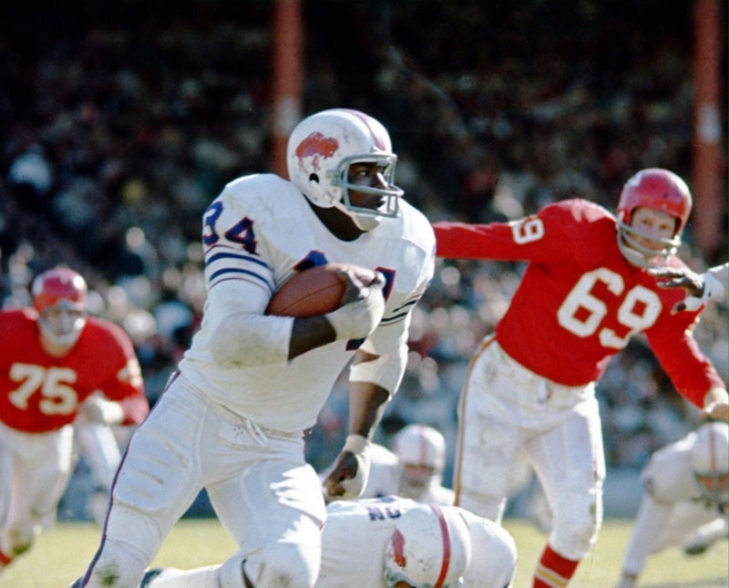
Carlton Chester "Cookie" Gilchrist embarked on one of the most unconventional journeys in football history. After initially signing a contract with the Cleveland Browns straight out of high school, which was then quickly revoked, Gilchrist chose to skip college and instead played in Canadian amateur leagues before entering the CFL. He spent six seasons in Canada, including winning a Grey Cup with the Hamilton Tiger-Cats in 1957, before making his NFL debut with the Buffalo Bills in 1962. Over the next three years, he became known for his fierce, uncompromising interior play.
Gilchrist was an unstoppable freight train, representing an imposing physical force ahead of his era. Combining the strides of a sprinter with formidable power, he did not circumvent defenders but rather ran directly through them. Serving as a robust fullback, he exhibited a rare capacity to efficiently punish tacklers in the gap, break arm tackles at the line of scrimmage, and accelerate away from defensive backs in the secondary. Furthermore, he contributed to the team by handling field goals and kickoff responsibilities during his early tenure in Western New York.
Gilchrist's arrival in 1962 transformed the AFL's offensive landscape. In his first year with the Bills, he became the AFL’s first 1,000-yard rusher, leading the league with 1,096 rushing yards and 13 touchdowns. His immediate dominance earned him the AFL Most Valuable Player honors.
In 1963, he achieved another historic milestone. During a December game against the New York Jets, Gilchrist set a then-record for pro football by rushing 243 yards and scoring five touchdowns in a single game. He concluded the season with 979 yards and once more led the AFL with 12 rushing touchdowns.
In 1964, Gilchrist concluded his short stint with Buffalo by winning his second AFL rushing title with 981 yards. He also led the league in rushing touchdowns (6) for the third year in a row. He performed especially well in the postseason, rushing for 122 yards in the 1964 AFL Championship Game, which helped Buffalo defeat San Diego and secure its first league title.
While Gilchrist's achievements on the gridiron were remarkable, his influence outside the sport was even more profound. An independently minded thinker and a pioneer in civil rights, Gilchrist consistently took a stand against systemic injustice throughout his life. In January 1965, following widespread segregation and discrimination faced by Black players upon their arrival in New Orleans for the AFL All-Star Game, Gilchrist organized and led a successful boycott. The players’ united stance compelled the league to relocate the game to Houston. Many years later, Gilchrist notably declined his induction into the Canadian Football League Hall of Fame, citing issues of racism and the exploitation of players.
Despite his on-field success, friction with head coach Lou Saban over playing time and team management led to his departure shortly after the 1964 title run. Gilchrist was traded to the Denver Broncos, where he logged his fourth career 1,000-yard-caliber season in 1965, before closing out his career with Miami and Denver in 1967. He was named the fullback on the AFL All-Time Team.
In three seasons with the Bills (1962–1964), Gilchrist played in 42 regular-season games, amassing 3,056 rushing yards and 31 rushing touchdowns while adding 502 receiving yards and four receiving scores. The Bills would finally choose Gilchrist for their Wall of Fame in 2017.
252. George Saimes
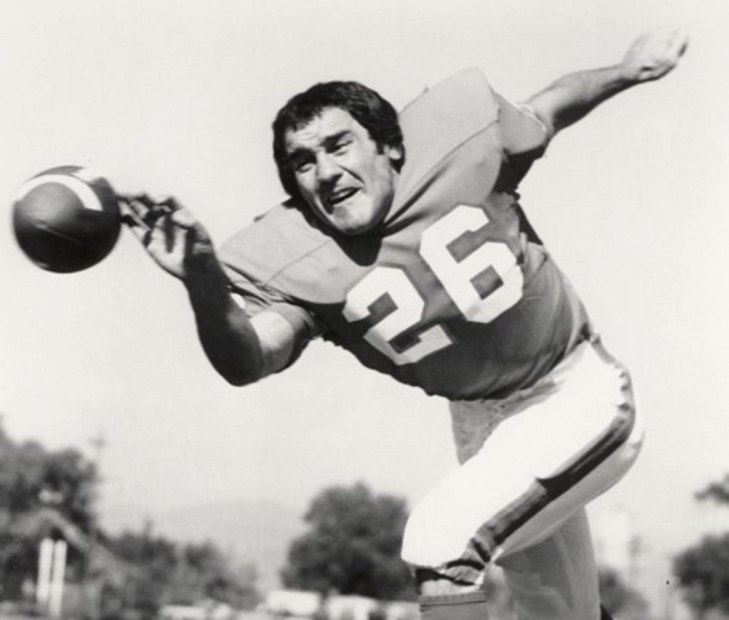
Born (and died) in the most football-like city on this planet, Earth (Canton, Ohio), George Saimes would sign with the Buffalo Bills in 1963 after playing collegiately at Michigan State.
Saimes wasted no time securing a starting Defensive Back job with Buffalo, and in his second season, he earned the first of three First All-Pro Selections (the others coming in 1965 and 1967). In 1964, Saimes also began a five-year streak of AFL All-Star Selections, though he treasured more that he and the Buffalo Bills won the AFL Championship that season and the year after.
Saimes would play for the Bills until 1969 and joined the Denver Broncos for three years after. He is a member of the AFL All-Time Team.
Writers of his day called him one of the best open-field tacklers, a skill that never goes out of style!
249. Mike Stratton
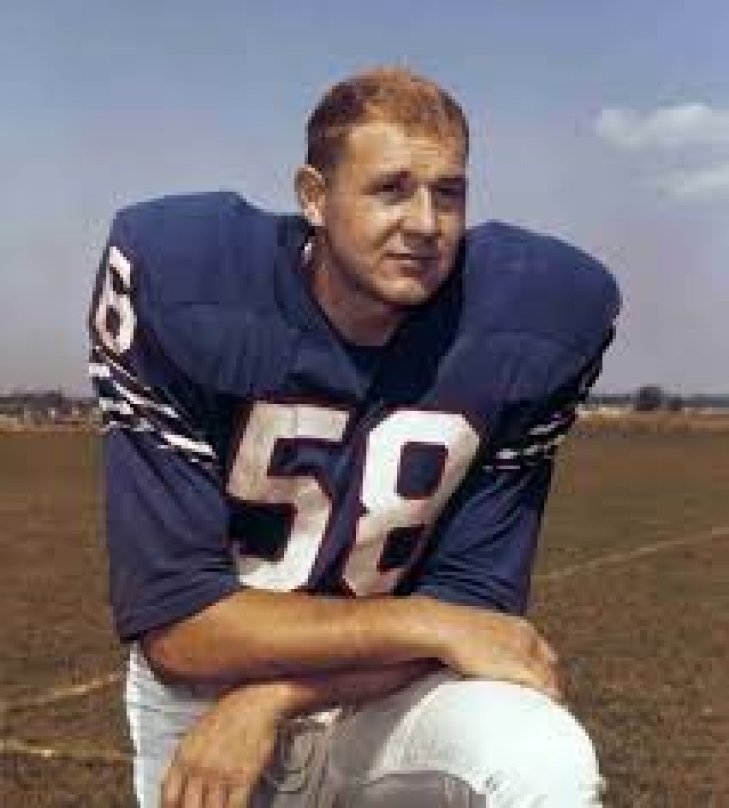
Mike Stratton was the leader of one of the best linebacking crews in the American Football League, though his accomplishments seem to have been forgotten in the game’s folklore. A 13th Round Pick from Tennessee in 1962, Stratton fit in immediately with the Buffalo Bills, settling in at Right Linebacker, and from 1963 to 1968, he was a perennial AFL All-Star with two of those years seeing him chosen for First Team All-Pro. Stratton was a massive cog in the Bills’ AFL Championship wins in 1964 and 1965, and in the former, he made "the hit heard round the world,” taking San Diego Chargers Running Back Keith Lincoln out of the game and changing the momentum of a game that Buffalo was losing in the first half.
Stratton would be named a Second Team All-AFL player and is recognized in the Bills Wall of Fame.
190. Tom Sestak
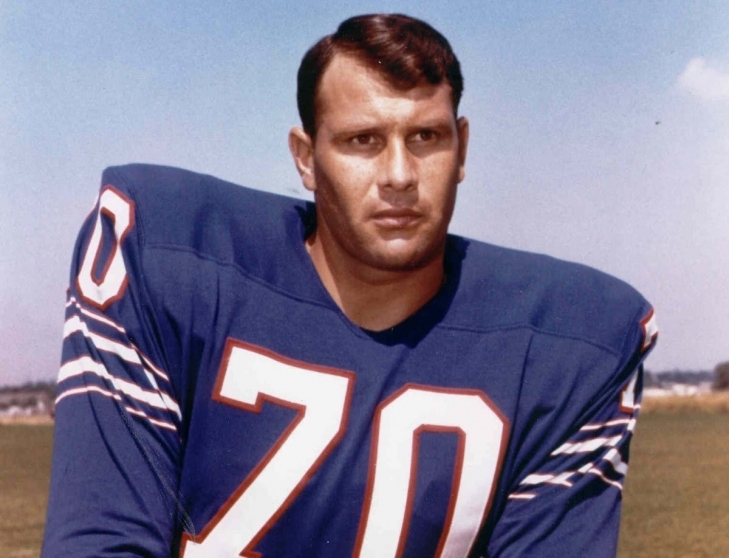
One of the most dominating Defensive Tackles of the AFL, Tom Sestak, joined the Buffalo Bills of the American Football League in 1962, where he quickly became the team's defensive anchor. Sestak was an AFL All-Star in his first four seasons, and in years two through four, he was a First Team All-Pro and was in the top ten in Approximate Value. The Bills won the 1964 and 1965 AFL Championships, and during that timeframe, Sestak and the Buffalo defense held opponents without a rushing touchdown in 17 straight games, a record that still stands. Knee problems would force an early retirement after the 1968 Season, but his play was strong enough to make the AFL All-Time Team.
208. Butch Byrd
We can't say enough about the AFL's Buffalo Bills defense of the 1960s, a unit that doesn't get the credit it should. This team won the 1964 and 1965 AFL titles, but most people remember four straight Super Bowl failures in the early 90s.
We remember.
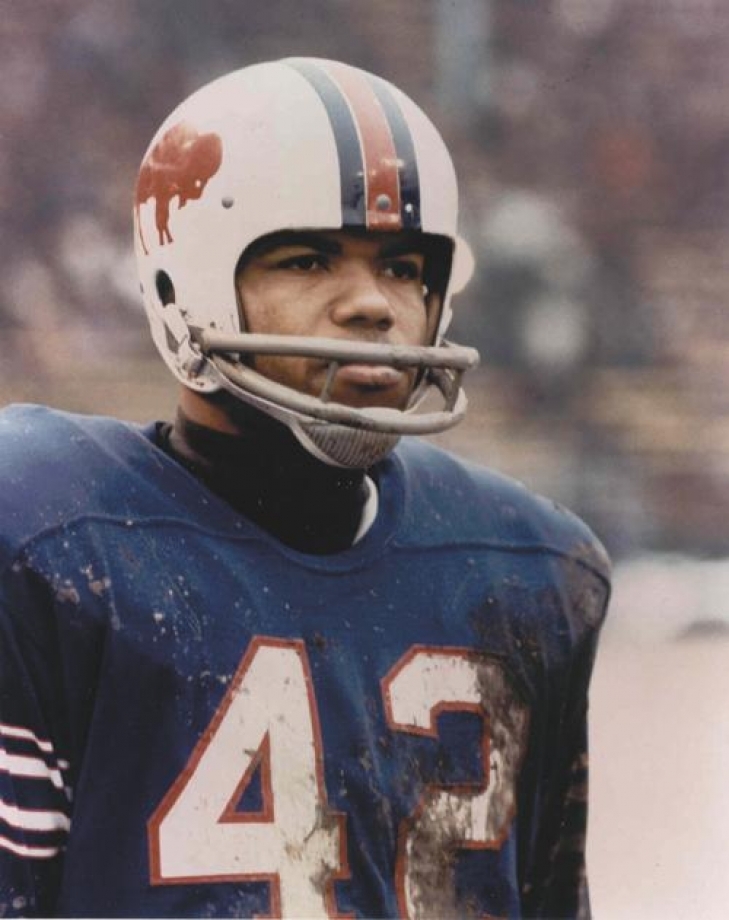
A member of the two back-to-back AFL Championships, Butch Byrd was a rookie on that first team, where the cornerback recorded 7 Interceptions and a career-high 179 Interception Return Yards. Byrd would never have a season with less than four picks as a Bill, which is impressive considering that opposing QBs wanted nothing to do with him.
Byrd would be a Second Team All-AFL Selection and was a five-time AFL All-Star. Also, the three-time First Team All-Pro is still the all-time leader in Interceptions and Interception Return Yards.
98. Cookie Gilchrist
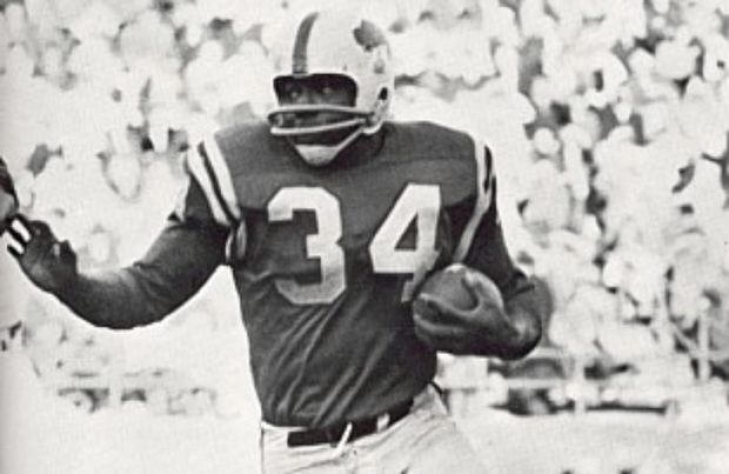
Cookie Gilchrist had a bizarre road to the pro football in the United States, and dare we say, had he never crossed the path of Paul Brown, the owner of the Cleveland Browns, he could have been a household name in the 1960s.
Gilchrist signed(what had to be an illegal) contract with the Cleveland Browns when he was still in high school. The Browns reneged, and he would forego college to play in an amateur league in Canada before he was old enough to play in the Canadian Football League. He played there for five years, winning a Grey Cup with the Hamilton Tiger-Cats, and in 1961 he would finally play pro in the United States when he traveled around Lake Ontario to play for the Buffalo Bills of the American Football League.
Gilchrist was an absolute phenom in his first three seasons in the AFL, where he would win the Rushing Title in 1962 and 1964 and led the league in Rushing Touchdowns in all three years. Both the AP and UPI named him the MVP, and in 1964 he rushed the Bills into an AFL Championship. After '64, he joined the Denver Broncos for two seasons (1965 & 1967), where he again finished first in rushing touchdowns in '65. He played one final year in Miami before retiring for good in 1968.
Any story on Gilchrist has to mention that he was an early civil rights leader, and he led a successful boycott of having the AFL All-Star Game in New Orleans, where segregation still occurred. He also refused induction into the Canadian Football League Hall of Fame, citing racist policies.
The only thing better than Cookie on the field was Cookie showing his character off of it.
115. Ruben Brown
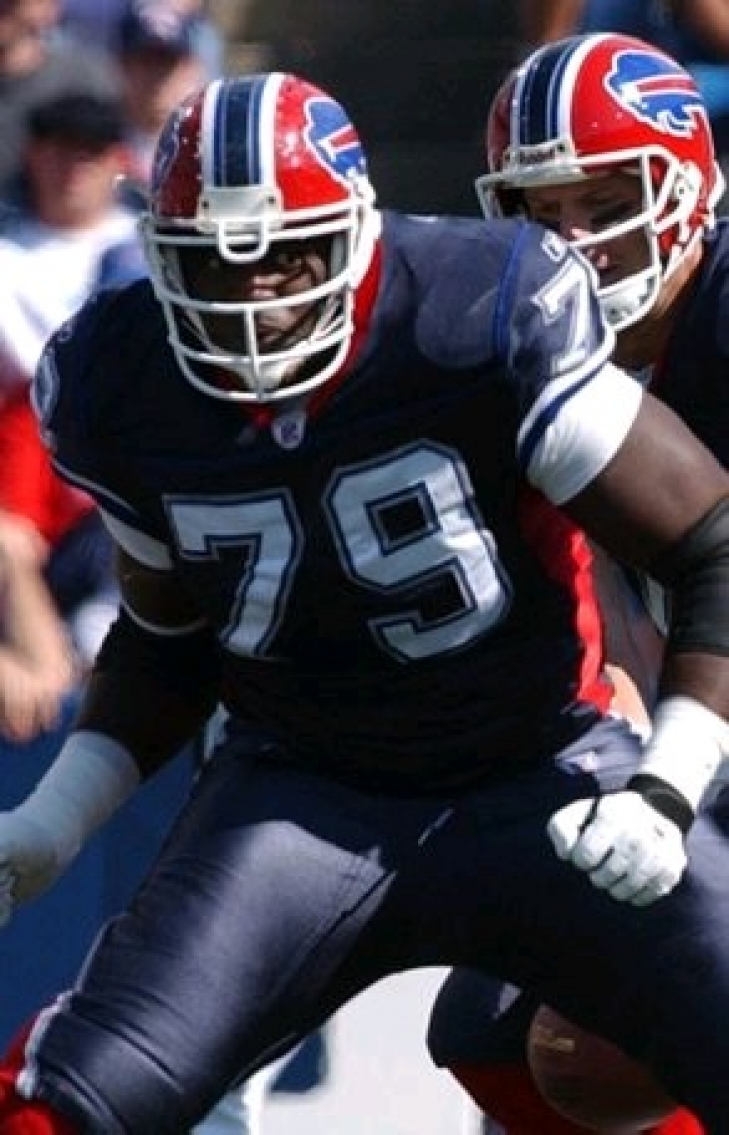
Ruben Brown played the majority of his career with the Buffalo Bills, where the 1st Round Pick would be named to the All-Rookie team and followed that up with eight more seasons in Buffalo, all of which would see the Left Guard named to the Pro Bowl.
Brown would play four more years in the NFL with the Chicago Bears, where he would earn his ninth Pro Bowl in 2006. Brown would overall play 181 Games, starting in all of them while also being named a Second Team All-Pro four times.
Having never been a Semi-Finalist, Ruben Brown could be the most disrespected nine-time Pro Bowl recipient ever. How is this player so anonymous in Hall of Fame conversations?
96. Cornelius Bennett
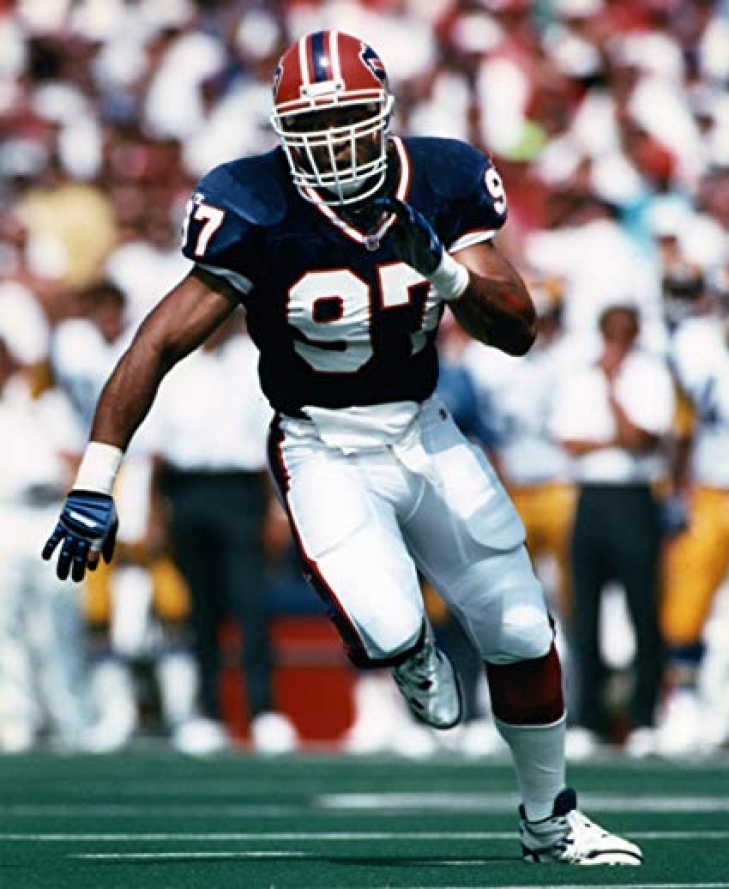
A complete beast at the University of Alabama, Cornelius Bennett was drafted second overall in 1987 by the Indianapolis Colts and, as part of a mega-trade, would become a Buffalo Bill. With the Bills, he would help them win four straight AFC Championships and was a five-time Pro Bowl Selection. One of those seasons saw Bennett named a First Team All-Pro, and UPI named him Defensive Player of the Year twice. Securing well over 1,100 Tackles over his career, the Bills may never have won a Super Bowl during Bennett's time there, but without the defensive stalwart, they never would have had four cracks at it. Considering his versatility as a Linebacker, he should have received at least a look from the powers that be.
118. Jack Kemp
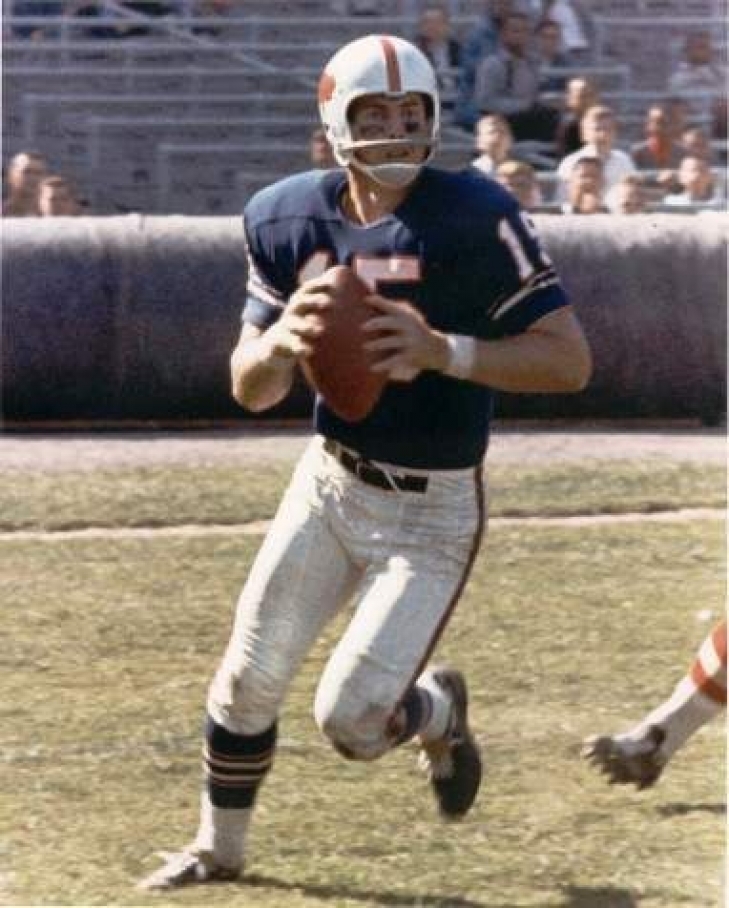
Jack Kemp was a late-round (17th) pick in 1957 by the Detroit Lions, but he never played a down for them and would find back-up work with the Pittsburgh Steelers that year. Kemp would later be on the taxi squad for both the San Francisco 49ers and New York Giants but would not see any action, though this would change with the formation of the American Football League.
The Buffalo Bills retire Thurman Thomas' number #34
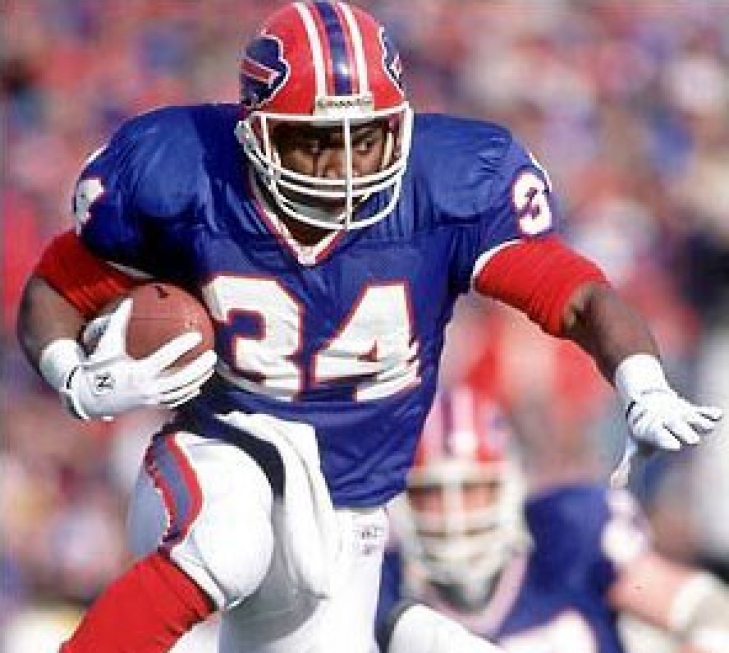
As most of the regular visitors to Notinhalloffame.com are aware we are (very) slowly putting together our top 50 players of every franchise in the “Big 4” of North American sports. After that is completed we will take a look at how each organization honors their past players and executives.
As such, for us to note that last night during halftime of the Buffalo Bills home loss to the New England Patriots that the number 34 of Thurman Thomas was retired.
Along with Jim Kelly and Andre Reed, Thomas was the running portion of a potent Bills offense that went to four straight Super Bowls. The Running Back would play 12 seasons for Buffalo and was named a Pro Bowler from 1989 to 1993 and was a First Team All Pro in 1990 & 1991. He would also lead the league in Yards from Scrimmage every season from 1989 to 1992 and was named the AP MVP and Offensive Player of the Year in 1991. As a Bill he rushed for 11,938 Yards, received 4,341 more Yards and had 87 Touchdowns.
This marks the third time the Buffalo Bills retired a number. Jim Kelly’s #12 was retired in 2001 and Bruce Smith’s #78 was retired in 2016. Thomas was inducted into the Pro Football Hall of Fame in 2007.
We here at Notinhalloffame.com would like to congratulate Thurman Thomas for earning this very impressive honor.
The Buffalo Bills to retire Thurman Thomas' number
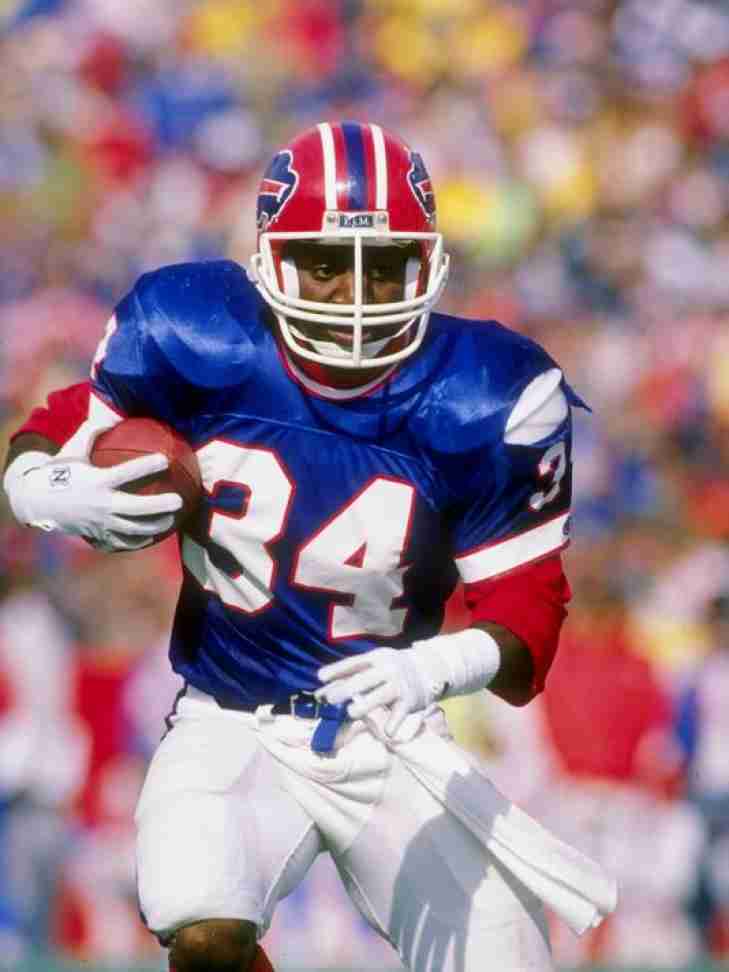
As most of the regular visitors to Notinhalloffame.com are aware we are (very) slowly putting together our top 50 players of every franchise in the “Big 4” of North American sports. After that is completed we will take a look at how each organization honors their past players and executives.
As such, it is important to us that the Buffalo Bills have announced that they will be retiring the number 34 of Thurman Thomas.
Thomas was a vital part of the AFC juggernaut that went to four straight Super Bowls from 1990 to 1993. A five time Pro Bowl and two-time First Team All Pro Selection, Thomas rushed for 11,938 Yards with 65 Touchdowns for Buffalo and he would add another 4,341 Yards Receiving with 22 Touchdown Receptions. From 1989 to 1992, he would be the league leader in Yards From Scrimmage. Thomas was named the league MVP in 1991 and e was chosen for the Pro Football Hall of Fame in 2007.
Thomas becomes the third player to have his number retired by the Bills. He joins fellow teammates Jim Kelly (12) and Bruce Smith (78).
We here at Notinhalloffame.com would like to congratulate Thurman Thomas on receiving this prestigious honor.
The Top 50 Buffalo Bills of All Time
The Buffalo Bills are the only team in NFL history to make the Super Bowl four times. Granted, the team from Western New York lost on all four occasions but over time the accomplishments involved to get there are celebrated more and more.
At present, this list reflects accomplishments up to the end of the 2015 season.
The list is based on traditional metrics advanced metrics, length of service, popularity, and post season performance.
The complete list can be found here, but for those who are curious immediately as to who the top five are, we’ll grant that immediately:
1. Bruce Smith
2. Thurman Thomas
3. Jim Kelly
4. Andre Reed
5. O.J. Simpson
Which team are we working on next?
We will turn our attention to the diamond and the Washington Nationals.
48. Lee Evans
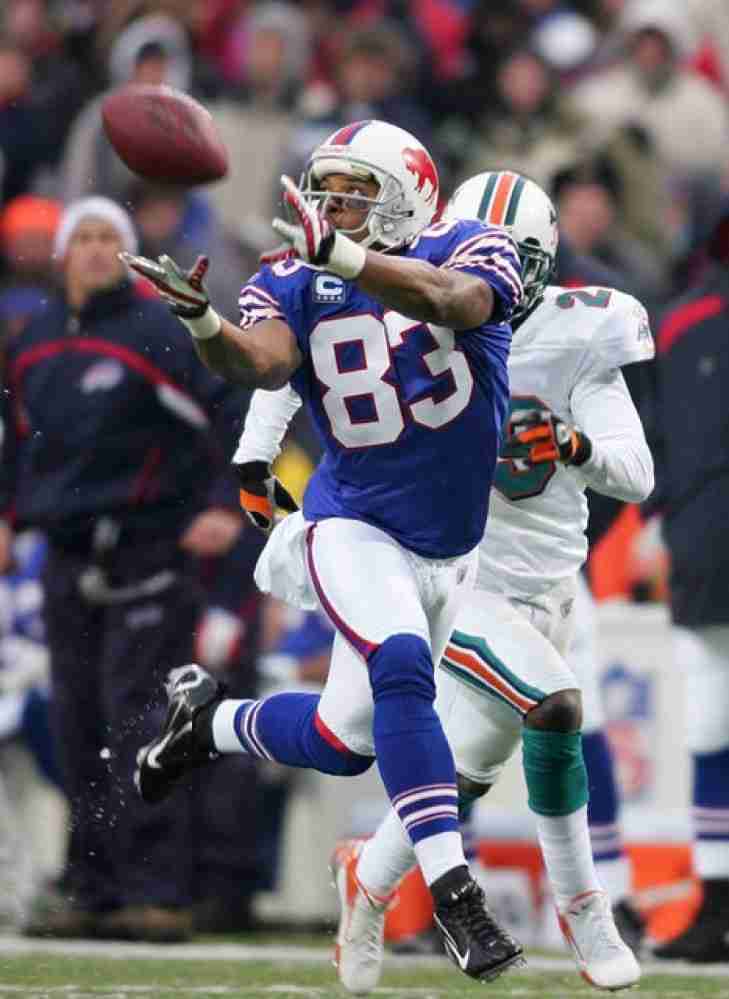
With the 13th overall pick in the first round of the 2004 NFL Draft, the Bills targeted Lee Evans out of Wisconsin with the hope of him becoming an explosive, pure deep threat. Operating as the primary perimeter target for a carousel of starting quarterbacks across seven seasons in Buffalo, Evans specialized in blowing past single-coverage and tracking deep passes over his shoulder.
Evans used his elite speed and quick gear-shifts to outrun defensive backs downfield. Mainly working along the boundary as a deep threat, his key skill was easily outrunning press coverage on go routes and deep posts. This made him a perfect target for deep-ball passers like J.P. Losman.
Evans’ career took a memorable turn on November 19, 2006, during a game against the Houston Texans. In just the first quarter, he made history by becoming the first NFL player to catch two touchdown passes over 80 yards in a single quarter—two nearly identical 83-yard scores! That quarter alone saw him rack up 205 receiving yards, setting a franchise record, and he finished the game with an impressive 265 yards, breaking the Bills' single-game receiving record. This remarkable performance showcased what a standout season 2006 was for Evans, when he caught 82 passes for 1,292 yards and eight touchdowns. He proved his consistency again in 2008 with a second 1,000-yard season, catching 63 passes for 1,013 yards and seven touchdowns, averaging an incredible 16.1 yards per catch.
Despite participating in run-focused offenses and facing frequent quarterback turnovers, Evans showed impressive durability, appearing in 109 straight games for Buffalo at the start of his career. After seven seasons with the Bills from 2004 to 2010, he was traded to Baltimore in 2011, where he played his last NFL season before retiring.
As a Bill, Evans played 112 games (104 starts), with 377 receptions, 5,987 yards, and 43 touchdowns.
47. Fred Jackson
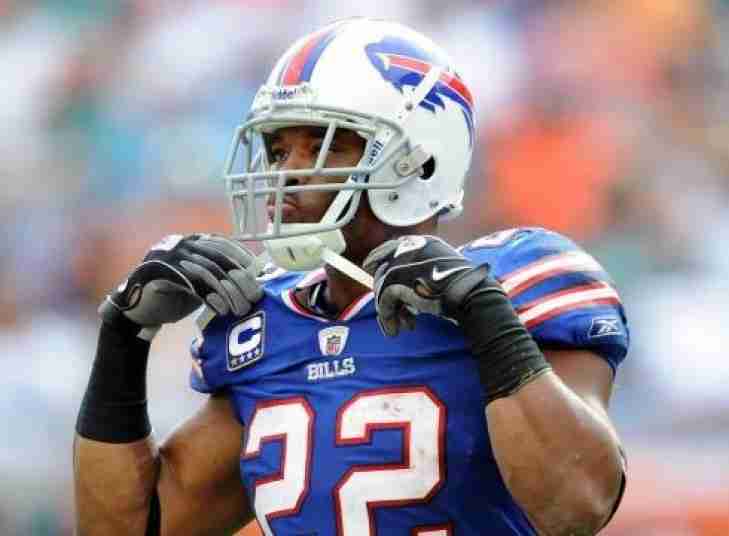
Unsigned out of Division III Coe College in 2003, Fred Jackson took the hardest possible road to the NFL, starring in indoor football and grinding through NFL Europe with the Rhein Fire before finally catching on with the Buffalo Bills' practice squad. Making his NFL debut as a 26-year-old rookie in 2007, Jackson defied conventional career arcs to become one of the most productive and beloved running backs in modern franchise history.
Jackson exhibited a composed running style, superior vision, and remarkable resilience in pass protection. Predominantly operating from single-back and I-formation formations, his paramount characteristic was his versatility; he maneuvered with a low center-of-gravity advantage between the tackles while functioning as a natural, highly dependable receiver and an assertive contributor on special teams.
Jackson solidified his legacy within the NFL during the 2009 season. Establishing himself as Buffalo's primary offensive contributor, he accumulated 1,062 rushing yards and undertook kick-return responsibilities, amassing 1,014 kickoff return yards. Consequently, he became the inaugural player in NFL history to achieve 1,000 rushing yards and 1,000 kickoff return yards within a single season. He concluded the year as the NFL's leading all-purpose yardage holder with an impressive total of 2,516 yards, thus earning the team's Most Valuable Player award.
Despite sharing backfields with players such as Marshawn Lynch and C.J. Spiller throughout his career, Jackson consistently exceeded expectations. He surpassed 1,000 yards from scrimmage on five occasions in Buffalo (2008, 2009, 2011, 2013, 2014). His most productive rushing period occurred in 2011, when he averaged 5.5 yards per carry and accumulated 934 rushing yards over just 10 games before a leg injury prematurely ended what was on track to be an All-Pro season.
After eight seasons with the Bills (2007–2014) and a final year in Seattle, Jackson retired, having played 122 games (61 starts) with 5,746 rushing yards, 2,897 receiving yards, 1,014 return yards, and 39 touchdowns.
38. Will Wolford
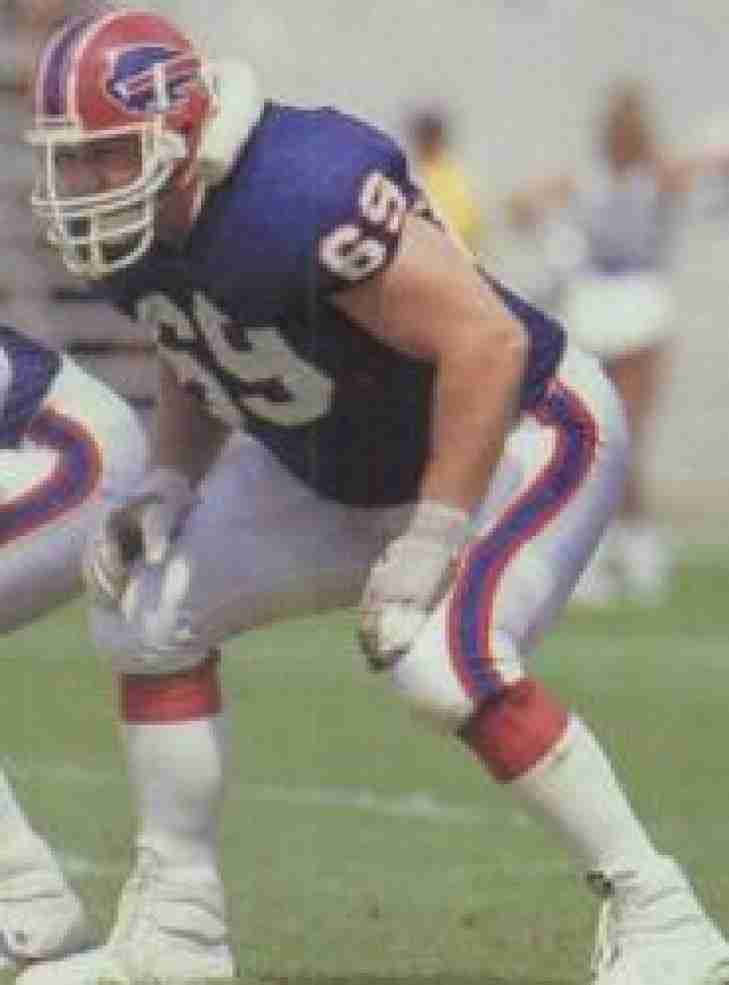
With the 20th overall pick in the first round of the 1986 NFL Draft out of Vanderbilt, Will Wolford arrived in Western New York as an instant plug-and-play contributor along the offensive line. Starting immediately as a rookie, Wolford anchored the front five during the franchise's transformation into an AFC powerhouse, providing the top-tier protection and push that defined Buffalo’s high-powered K-Gun offense.
Wolford possessed ideal length, lateral mobility, and raw functional strength. After starting his career at right guard, he quickly kicked out to left tackle—a transition that unlocked the full potential of Buffalo's passing game. Wolford excelled in pass protection with a smooth kick-slide and strong punch to absorb edge rushers, while displaying the mobility to pull out into space and seal perimeter lanes for off-tackle runs.
Wolford earned PFWA All-Rookie Team honors in 1986 while starting all 16 games at right guard. Following his move to left tackle, he established himself as Jim Kelly’s trusted blindside enforcer and a core component of the offensive front.
During his prime in Buffalo, Wolford earned two Pro Bowl selections (1990 and 1992) alongside a Second-Team All-Pro honor in 1992. He served as an indispensable anchor throughout Buffalo’s postseason dominance, starting in three consecutive Super Bowls (XXV, XXVI, and XXVII) while clearing path after path for Hall of Fame running back Thurman Thomas.
Following the 1992 season, Wolford became a restricted free agent. The Indianapolis Colts lured him away in March 1993 by offering a three-year, $7.65 million contract containing famous "poison pill" clauses—including a guarantee that he would be paid more than any other offensive player on the team—making him the highest-paid offensive lineman in NFL history at the time. Unable to match the unique terms without destroying their salary structure, the Bills allowed Wolford to sign with Indianapolis, where he spent three seasons before wrapping up his career with the Pittsburgh Steelers.
He started all 102 games that he played in Buffalo.
27. Stew Barber
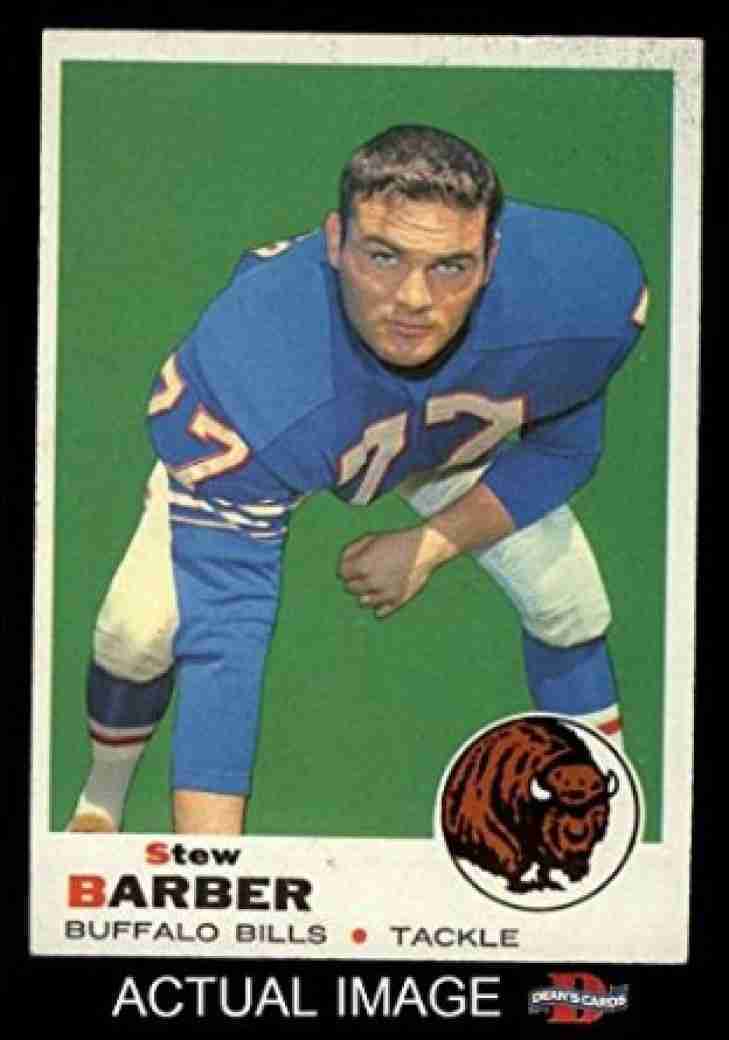
Drafted out of Penn State in 1961, Stewart "Stew" Barber originally signed with Buffalo as a linebacker. It didn't take long for head coach Lou Saban to realize Barber's potential on offense, shifting him to the trenches, where he became the primary architect of the team's pass protection and edge blocking for nearly a decade.
Barber possessed a rare blend of linebacker agility and trench-warfare strength. Settling in at left tackle, he excelled at setting wide, immovable bases against the league's fastest pass rushers, keeping the pocket clean for Jack Kemp. In the run game, his athletic mobility allowed him to seal off defensive ends on the perimeter, creating massive cutback lanes for heavy-hitting backs like Cookie Gilchrist.
Barber locked down the left tackle spot in 1962, earning his first career AFL All-Star selection during a season that saw Buffalo introduce its high-powered offensive attack.
His prime coincided directly with Buffalo's back-to-back AFL Championship runs in 1964 and 1965. Barber was named a First-Team All-AFL selection in 1964 after leading an offensive line that paved the way for Cookie Gilchrist and captured the franchise's first league title. He backed that up in 1965 with his second First-Team All-AFL nod, keeping Jack Kemp protected through a 23–0 championship shutout of San Diego.
Barber remained a model of elite performance, racking up five total AFL All-Star selections (1962, 1964–1967) and adding a Second-Team All-AFL honor in 1966.
Spending his entire nine-year professional career (1961–1969) exclusively with the Bills, Barber played in 122 regular-season games, anchoring the line through the greatest decade in the organization's early history before retiring on the eve of the AFL-NFL merger. In 1998, the organization recognized his contributions to their early dynasty by inducting Barber into the Buffalo Bills Wall of Fame.
31. Ted Washington
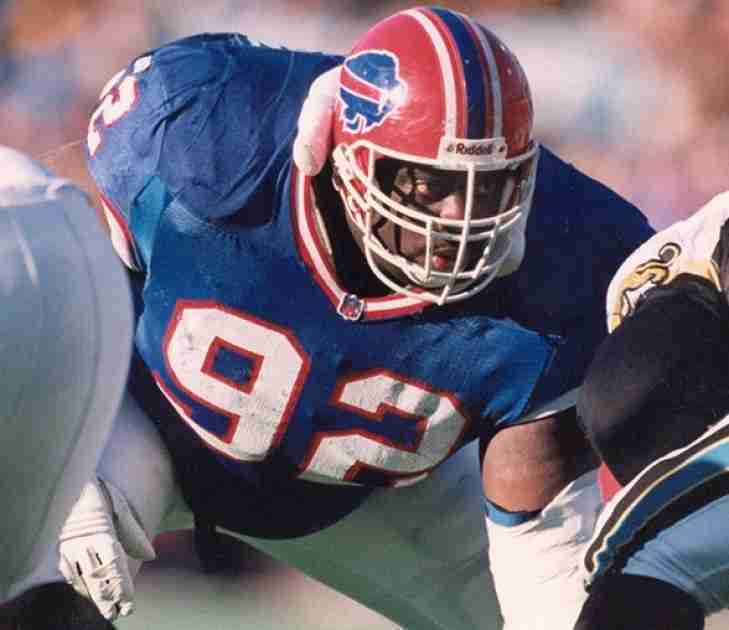
Ted "Mt. Washington" joined the Buffalo Bills as an unrestricted free agent in 1995, following periods with San Francisco and Denver. He arrived in Western New York as a formidable presence. At 6 feet 5 inches and over 365 pounds, Washington was the key pillar of Buffalo's 3-4 defense, delivering the most outstanding and commanding phase of his 17-year NFL career.
At his size, Washington redefined what it meant to play nose tackle in the 3-4 scheme. Lined up head-up over the center, he was virtually impossible to move with a single block, regularly absorbing double and triple teams without giving up an inch of ground. His ability to reset the line of scrimmage inside allowed pass rushers like Bruce Smith to operate on the edges, while leaving linebackers clean to flow freely and make plays in the run game.
Although nose tackles generally don't achieve flashy stats, Washington consistently contributed in the box score during his six seasons in Buffalo. Partnering with Pat Williams to create the well-known interior duo called "The Package," Washington led a run defense that consistently ranked as one of the AFC's toughest to face.
His peak came in the late 1990s, when he earned three Pro Bowl selections (1996, 1997, and 2000) and was named Second-Team All-Pro in 1997. Despite his large physique, Washington showed impressive durability and ability to collapse the pocket, missing no games throughout his time with the Bills.
After the 2000 season, the Bills faced a significant salary-cap crisis. Washington was released in March 2001 after refusing a second restructuring pay cut. He then signed with the Chicago Bears, earning a First-Team All-Pro honor and eventually winning Super Bowl XXXVIII with the New England Patriots before retiring in 2007.
In Buffalo, Washington played and started in 96 regular-season games, recorded 378 combined tackles and 19.5 sacks.
