

9. Boog Powell
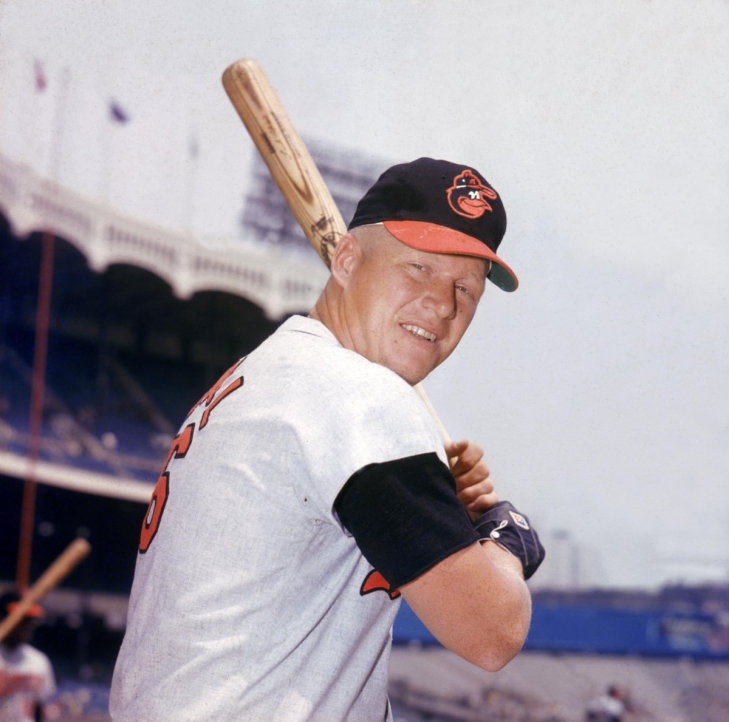
In the golden era of the Baltimore Orioles, few figures loomed as large—physically or culturally—as John Wesley "Boog" Powell. A massive, 6-foot-4 presence at first base, Boog was the primary power engine for the great championship teams of the late 1960s and early 70s. With a nickname born of childhood mischief and a swing that could launch mammoth home runs into the far reaches of Memorial Stadium, he was the definitive fan favorite of a generation.
Signed as an amateur free agent in 1959, Powell debuted for Baltimore just two seasons later and quickly established himself as a premier run-producer. Over the next 14 years, he would record eight seasons with at least 20 home runs, including three campaigns where he cleared the 100-RBI plateau. His peak coincided with the franchise’s most dominant stretch; from 1968 to 1971, Boog reeled off four consecutive All-Star selections. During this run, he authored his finest season in 1969—batting a career-high .304—before following it up with a masterful 1970 campaign that earned him the American League MVP.
Powell’s left-handed bat was the cornerstone of the Orioles' "Big Three" alongside the two Robinsons. He was instrumental in securing the 1966 and 1970 World Series titles, often saving his most clutch performances for October. Over his postseason career, Boog tallied six home runs and 18 RBIs, homering in the first two games of the 1970 Fall Classic to set the tone for the championship.
By the time he was dealt to Cleveland in 1975, Boog had compiled a legendary Orioles resume: 303 home runs, 1,063 RBIs, and a .465 slugging percentage. Inducted into the Baltimore Orioles Hall of Fame in 1979, he remains one of the most beloved icons in franchise history—a "gentle giant" whose power put the Orioles on top of the world
94. Boog Powell
History has given the pitching staff much of the credit for the Baltimore Orioles’ World Series runs in 1966 and 1970, but it was the heavy-hitting Boog Powell who was the favorite of Maryland fans.
Boog Powell was built like a bull. The power hitter easily won the hearts of Baltimore with his booming home runs and nice demeanor. He batted cleanup for over a decade and solidified the lineup, providing much-needed offense for the pitching-heavy Orioles. He was a good clutch hitter, and though he committed his share of errors, he was able to prevent many miscues for his infielders by scooping up many a low throw.
Boog Powell got injured a bit and missed a handful of games each season. This prevented him from increasing his career hit and power numbers, which would have made him a better Hall of Fame candidate. Powell did win an MVP and was a runner-up another year, but he was occasionally accused of having his popularity outweigh his ability, which may explain his low Hall vote.
