


Committee Chairman
17. Chase Headley
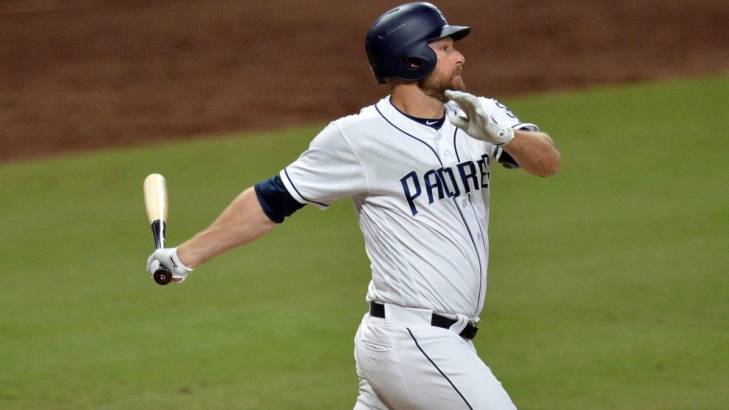
After a decorated college career at the University of Tennessee, Chase Headley translated his success as a Volunteer into a highly regarded second-round pick by the San Diego Padres in the 2006 amateur draft. The switch-hitter showed advanced skills that helped him quickly progress through the minor leagues, earning a brief call-up to the majors late in the 2007 season. Although he started 2008 back in the minors, he made his way back to Southern California by June, quickly earning an everyday role in the lineup. Initially moved to left field to fit veteran roster needs, he eventually returned to his natural position at third base.
Headley’s early Padres career showed steady growth, culminating in a standout 2012 season. He hit a career-high 31 home runs, led the league with 115 RBIs, and posted a .279/.376/498 slash line with an .875 OPS. Despite a weak offense, he earned a Silver Slugger and finished fifth in MVP voting. His defense also improved, winning a Gold Glove in 2012, strengthening San Diego's infield.
After slipping back to his regular production in 2013, Headley was traded mid-year in 2014 to the Yankees. New York would send him back after the 2017 Season, and Headley briefly returned to San Diego before he was released in May.
With the Padres, Headley contributed 87 home runs, 879 hits, and batted .263.
18. Ed Whitson
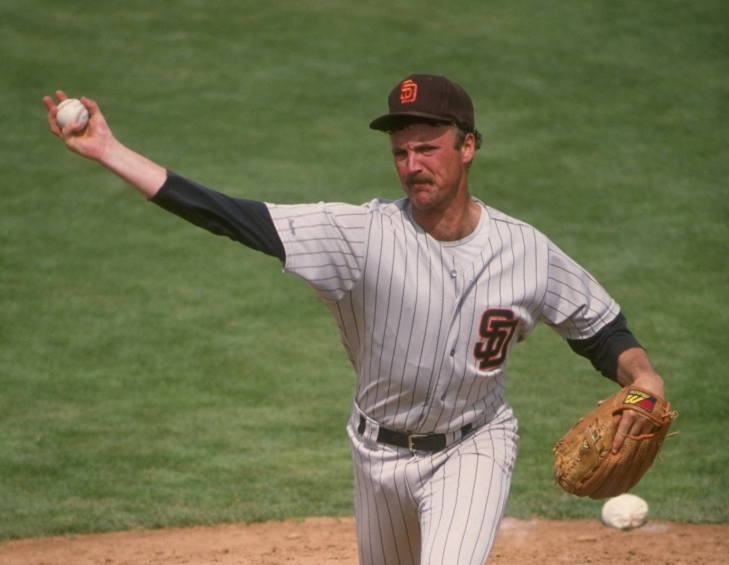
Few pitchers in baseball history have experienced a more divided relationship with two fan bases than Ed Whitson. To the Bleacher Creatures in New York, he symbolizes a turbulent, high-pressure free-agent signing gone wrong. Conversely, in Southern California among the familiar palms, he built a respected legacy as one of the most durable starters of his era. Over 15 major league seasons, Whitson's career was marked by two distinct phases with the San Diego Padres—transforming from a hard-throwing middle-of-the-rotation pitcher to a skilled, soft-tossing master of pitch sequencing.
Acquired from Cleveland ahead of the 1983 schedule, his introductory summer in San Diego was a frustrating trial. Whitson struggled to find his rhythm, fighting mechanical inconsistency to wrap up the year with a modest 5–7 record and an elevated 4.30 ERA. The definitive breakthrough erupted the following spring, catalyzed by an accidental discovery. After cutting his finger on a soda bottle, Whitson was forced to alter his grip, inadvertently developing a devastating palm ball. Armed with this new off-speed weapon, he turned efficiency into a strict daily routine during the historic 1984 campaign. Whitson cruised to a 14–8 record, cutting his ERA to a tidy 3.24 while anchoring a 1.180 WHIP across 213.2 innings. His newfound consistency drove the Padres to their first National League pennant, highlighted by a clutch, five-hit performance over eight innings in Game 3 of the NLCS to rescue San Diego from elimination against the Chicago Cubs.
That postseason exposure increased his market value, resulting in a lucrative free-agent transfer to the New York Yankees. However, following a highly volatile and media-intensive tenure in the Bronx, the front office orchestrated a mid-season intervention in July 1986, trading to re-acquire Whitson for Jack Murphy Stadium. To be candid, his immediate return to the venue was an unequivocal failure. Distraught by his experiences in New York, he struggled through the rest of the 1986 calendar year, recording a dismal 1–7 win-loss record with an inflated 5.59 ERA.
While the 1987 schedule yielded only marginal progress, Whitson fully rediscovered his mechanics by 1988, posting a dependable 13–11 record and a 3.77 ERA to stabilize a rebuilding rotation. The absolute evolutionary zenith of his career emerged during a brilliant, late-career resurgence as the decade drew to a close. Operating primarily as a "junkball" technician who relied on cerebral and zone manipulation rather than raw velocity, Whitson dominated the National League throughout the 1989 and 1990 calendars. He compiled a combined 30–20 record over those two summers, managing to push his individual earned run average well below the three-run threshold in consecutive campaigns.
His 1990 regular-season masterpiece stands as one of the most statistically dense pitching campaigns in local history. At age 35, Whitson went 14–9 with a spectacular 2.60 ERA, logging 228 innings across 32 starts. Advanced analytical filters heavily celebrate this specific peak; he generated a massive 7.0 bWAR that summer, pacing all National League hurlers and verifying his standing as an elite frontline force.
Regrettably, that workload marked his last productive peak. The physical toll hit him in 1991, causing his mechanics to decline. At 36, facing physical decline, he retired, ending his career.
Whitson had a 77-72 Record with a 3.69 ERA with the Padres.
What to Watch Out for this NHL season
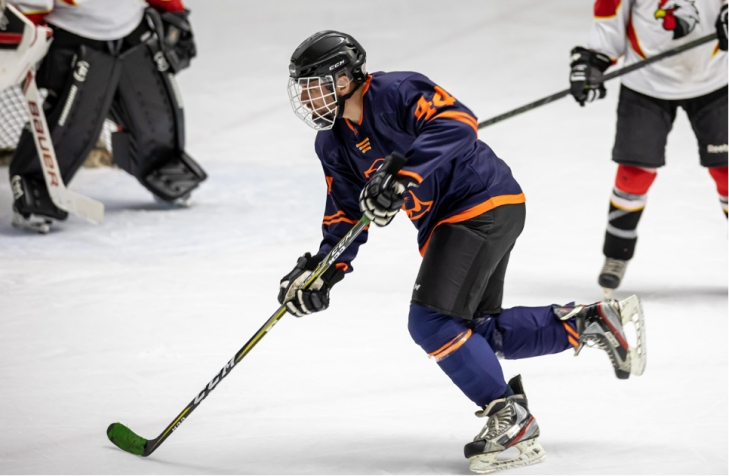
After a couple of disruptive years where Covid made traveling between US and Canada difficult, NHL is finally easing back into the new normal. And if all goes well, we will have our Stanley Cup champion in the spring of 2022. You therefore have plenty of great games to look forward to as we enter the next stage of the season and head towards the Stanley Cup Playoffs.
NHL features the best of American and Canadian hockey. 32 teams competing in around 56 games. With many victories and losses already, 2022 is bound to be a thrilling part of this year’s season, and there are four teams that are looking particularly strong.
Will Tampa Bay make history?
The last two NHL seasons, Florida Tampa Bay Lightning has won, yet no team has ever won Stanley Cup three times in a row, which means Tampa Bay could make hockey history this year - but they have a long way to go. Colorado Avalanche, Vegas Golden Knights and Florida Panthers are all looking dangerous, and many experts believe the winner is to be found among them. If you already have a strong sense of who that might be, then you can bet on them on https://betting.com/us/nhl. In the past year we have seen many US states legalizing the practice, and in Canada it is legal. Sports betting has therefore become hugely popular among hockey fans. It’s simply a fun way to take an active part in the NHL season.
Will the Beijing Olympics affect the season?
With the winter Olympics fast approaching, there has been a lot of talk about what NHL players might go and what that will mean for their teams. Some people have wondered what will happen to the NHL league, or if they will get to see their favorite stars on the ice, competing for international glory. Sadly, Covid has yet again brought disruptions into the sports world. For this reason, the NHL league has decided not to send any players to the Olympics. But the good news is that there is now a higher chance that regular NHL games of this season will go ahead as planned. No stars will have to leave their teams behind.
Anticipated upcoming games
There are many thrills in store for hockey fans this year. Avalanche has some great games coming up – from fighting Coyotes to testing their abilities against the Kings. And if you want to see Tampa Bay Lightning in action outdoors, you have a chance to do so on 26 February 2022 when they play against Nashville Predators at Nissan Stadium in Nashville. Overall, the winter will be packed with matches on an almost daily basis, so you do not need to worry about getting bored. Now is the time to get geeky about hockey history. Spend some time remembering all the best moments and use that knowledge to predict the legends of the future. It’s a fun way to pass time between games.
13. Benito Santiago
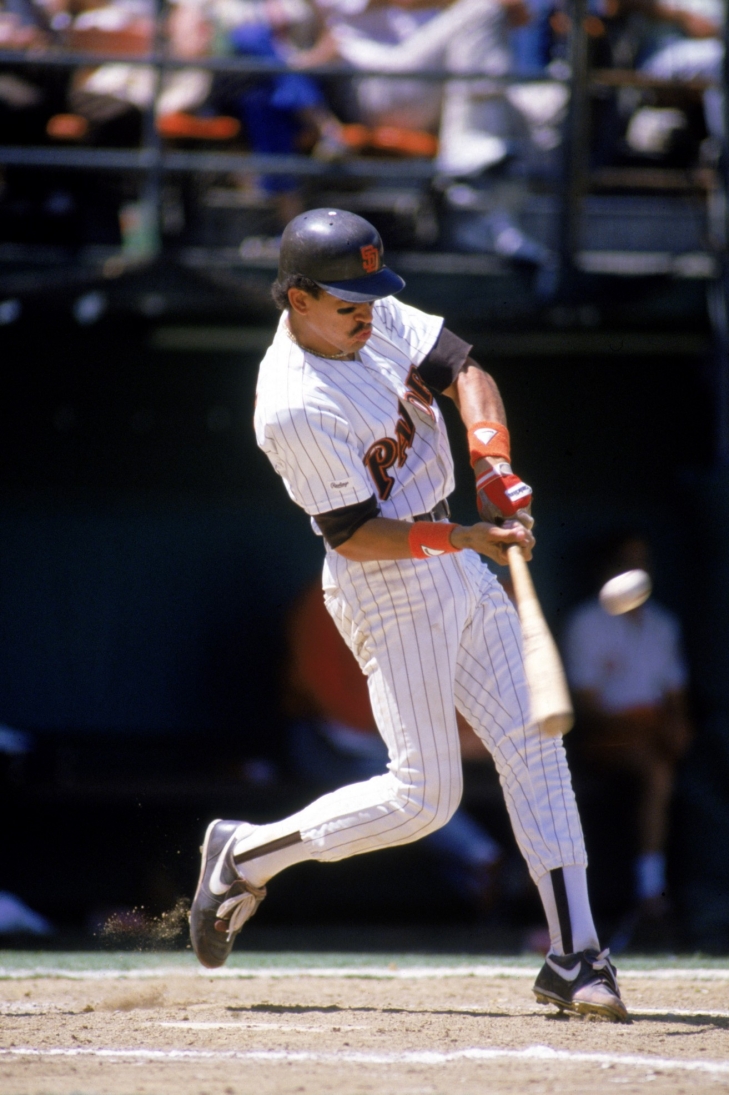
The extensive span of a twenty-year career in Major League Baseball across nine different teams can easily evoke the misconception of a typical journeyman. Although Benito Santiago eventually acclimated to the nomadic nature of such a career, his initial arrival in Southern California was met with national anticipation typically reserved for generational icons.
Signed from Puerto Rico as a teenager in 1982, the dynamic catcher made a brief appearance in 1986, spanning 17 games, preserving his rookie status and laying the foundation for one of the most electrifying and paradigm-shifting rookie seasons the sport has ever seen. Upon assuming the regular starting role in 1987, Santiago not only cemented his place in the lineup but also ascended to the status of a national sensation, orchestrating a historic, record-setting 34-game hitting streak that remains the longest ever recorded by a modern catcher. His spectacular 1987 summer yielded a robust .300 batting average, 33 doubles, and 18 home runs, earning him a unanimous selection as the National League Rookie of the Year alongside his first career Silver Slugger Award.
However, honestly assessing his performance means going beyond the initial impressive display. Santiago consistently showed strong raw power, never hitting fewer than 10 home runs in any full season with the Padres. Nonetheless, his offensive effectiveness was greatly hindered by an overly aggressive, free-swinging style. It was as if he refused to take walks, often widening his strike zone, which led to a sub-.300 on-base percentage (.299) during his time with San Diego. Opposing pitchers soon understood they could target his aggressive, high-velocity swing, making it impossible for him to match his rookie-year effectiveness again.
His primary authority was his multi-dimensional value behind the plate. Santiago revolutionized defense with raw athleticism and a high-velocity arm, routinely gunning down base stealers from a kneeling position. His artistry earned him three consecutive Gold Gloves (1988–1990), and he ranked in the top ten for defensive bWAR in the National League three times. A human highlight reel, he secured four All-Star selections (1989–1992) and four Silver Sluggers with the Padres. However, his defense was occasionally volatile; he was error-prone, leading NL catchers in miscues three times as his instincts sometimes outpaced his precision.
Following the 1992 Season, Santiago joined the expansion Florida Marlins, leaving them with 758 Hits, 85 Home Runs, and a Defensive bWAR of 8.9.
While Santiago was a popular figure in San Diego, it is hard to rank him any higher, as he had a sub-three OBP with the Padres, and while he was praised for his defense, he was at times error-prone.
