


Site Admin
37. Gary Walker

After spending his first four professional seasons with the Houston Oilers and Tennessee Titans, Gary Walker arrived in Jacksonville before the 1999 campaign as a marquee interior defensive line addition. Bringing a squat, explosive 6-foot-2, 324-pound frame, the former Auburn standout stepped straight into a starting role, offering a rare blend of nose-tackle leverage and penetrating quickness.
Walker made an instant mark during his debut season, anchoring an interior front that fueled a franchise-best 14–2 regular season and a trip to the AFC Championship Game. He set a career high with 10.0 sacks from defensive tackle in 1999, routinely collapsing pockets from the inside and establishing himself as one of the AFC’s premier interior pass rushers.
Despite battling through offensive double-teams over the next two campaigns, Walker remained a reliable focal point on the defensive line. Starting 46 of his 47 games, he racked up 28 tackles for loss and forced three fumbles, consistently disrupting run plays before they could develop. His steady disruption culminated in 2001, when he recorded 5.0 sacks and 54 total tackles to earn his first Pro Bowl selection.
Cap space pressures forced his exit following the 2001 season, leading him to sign with the expansion Houston Texans, where he earned a second consecutive Pro Bowl selection in 2002 before completing his 11-year NFL career. In his pro career in North Florida, Walker amassed 22.5 sacks, 140 total tackles, and 28 tackles for loss.
36. James Stewart
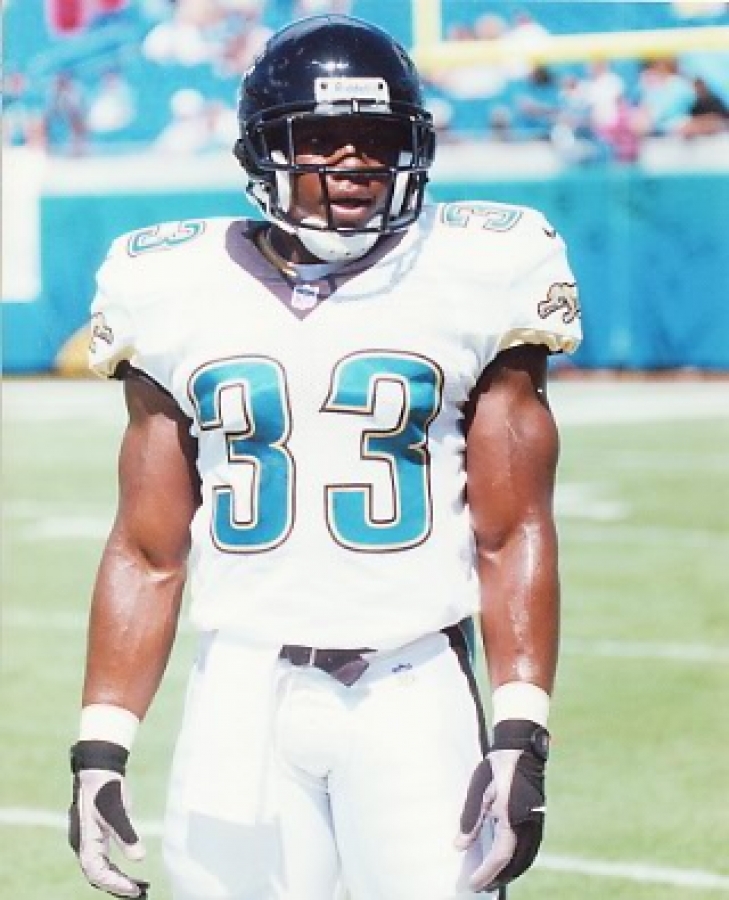
James Stewart entered the league as a foundational piece for the expansion franchise when he was taken 19th overall from Tennessee. A physical, between-the-tackles runner listed at 6-foot-1 and 224 pounds, he carried a heavy operational load during the club's inaugural campaign, leading the backfield with 525 rushing yards and scoring the first rushing touchdown in team history.
Stewart played an integral role in Jacksonville’s rapid ascent to contention, operating as a reliable short-yardage finisher and dual-threat option. During the 1996 Cinderella postseason run to the AFC Championship Game, his inside running provided crucial balance alongside Mark Brunell's scramble drills. In an October 1997 matchup against Philadelphia, Stewart etched his name into team record books by rushing for five touchdowns in a single game—a franchise record that still stands.
Despite sharing backfield touches after Fred Taylor arrived in 1998, Stewart remained a critical red-zone weapon. His final year with the organization in 1999 yielded his most efficient production, as he amassed 931 rushing yards and crossed the goal line 13 times on the ground for a 14–2 squad that reached another AFC title game.
Entering free agency after five seasons, Stewart signed with the Detroit Lions in 2000 and produced two 1,000-yard campaigns before injuries forced his retirement after the 2002 season. In Jacksonville, Stewart had 65 carries for 2,951 rushing yards, 33 rushing touchdowns, 101 receptions for 828 receiving yards, and five receiving touchdowns.
33. Aaron Beasley
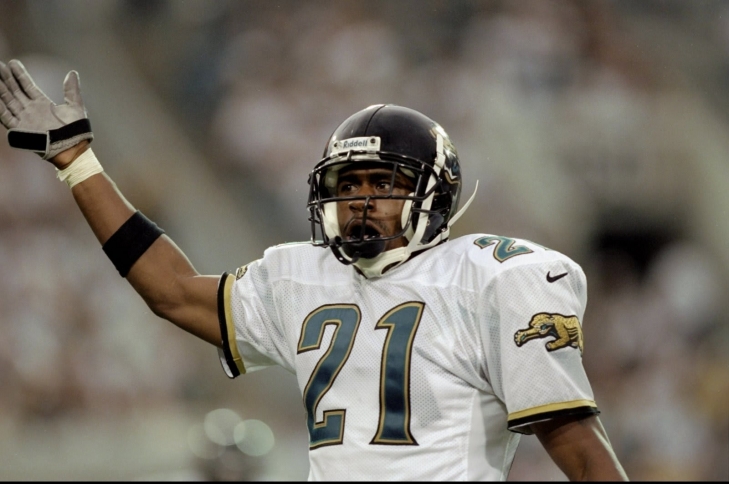
Taken in the third round (63rd overall) of the 1996 NFL Draft out of West Virginia, Aaron Beasley overcame an initial stretch of bad luck to become a cornerstone of Tom Coughlin’s secondary. Nagging injuries limited the defensive back to nine games in each of his first two professional campaigns, but his ball skills and instincts were evident whenever he took the field.
Once healthy in 1998, Beasley earned a full-time starting role and became one of the league's top big-play cornerbacks. His breakout arrived in 1999, coinciding with Jacksonville's 14–2 regular season. Playing with outstanding anticipation and recovery speed, Beasley intercepted six passes and led the NFL with 200 interception return yards, bringing two back for touchdowns—including a 90-yard pick-six against the San Francisco 49ers.
Beyond his coverage work, Beasley was an unusually effective blitzing corner. He routinely disrupted backfields off the edge, accumulating 7.5 sacks and forcing six fumbles during his six seasons with the organization. His physical tackling and range made him a vital defender during the team's late-1990s playoff runs.
Contractual changes led to his departure following the 2001 season, after which he signed with the New York Jets before completing his nine-year NFL career with Atlanta. With the Jaguars, Beasley produced 15 interceptions for 290 return yards, two defensive touchdowns, 7.5 sacks, 305 total tackles, six forced fumbles, and four fumble recoveries.
Season 1 Episode 1: Stars on 45, Stars on 45