


Site Admin
41. Al Oliver
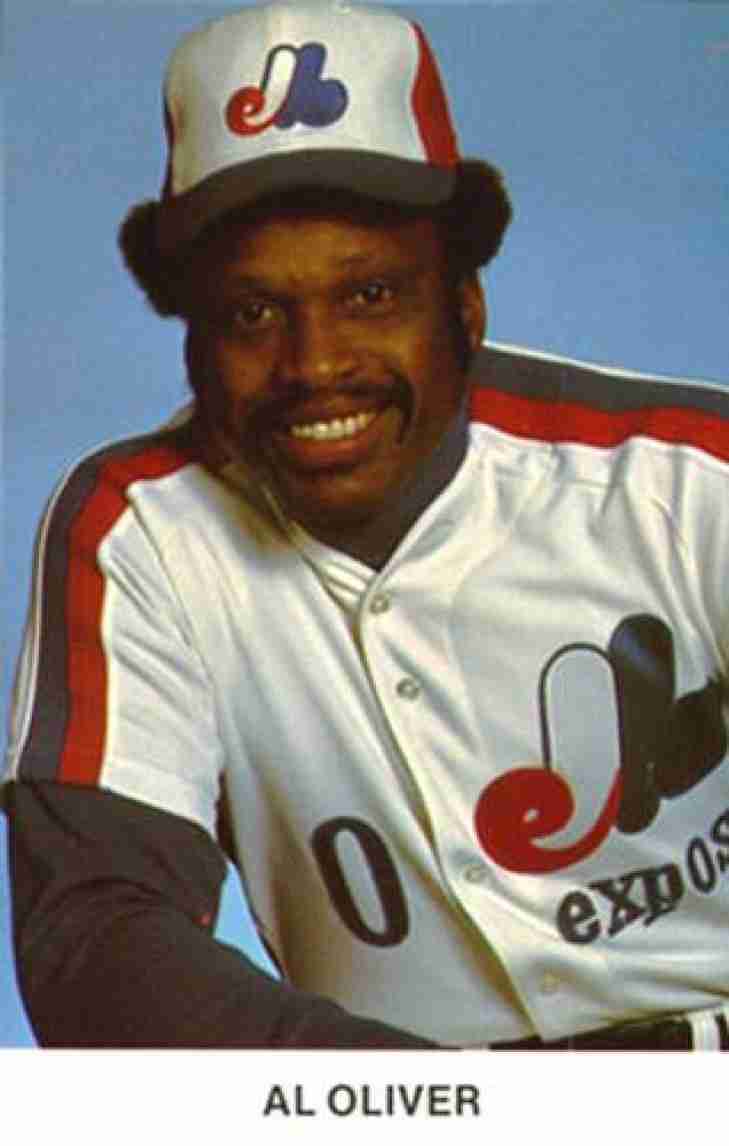
When the Montreal Expos traded third baseman Larry Parrish to the Texas Rangers in March 1982, they did so to acquire a pure, unadulterated hitting machine. Al Oliver, affectionately known as "Scoop," was a highly seasoned, vocal leader who had spent a decade lashing line drives all over the National League. Though he would only spend two seasons wearing the tri-color cap, Oliver treated Canadian fans to a pair of the most historically concentrated and dominant offensive exhibitions ever witnessed in the franchise's history.
His inaugural 1982 campaign in Montreal stands as a clinic of batting prowess. Oliver completely paced the league with a sparkling .331 batting average to capture the National League batting title. He terrorized opponents with a career-high 204 hits, while also leading the league in doubles (43), RBIs (109), total bases (317), and extra-base hits. This offensive explosion earned him an All-Star nod, a Silver Slugger, and a highly competitive third-place finish in the National League MVP voting.
Rather than showing signs of regression at age 36, he backed up his stellar debut with an equally impressive 1983 follow-up. Oliver earned another All-Star selection, again leading the National League in doubles (38) while batting a crisp .300 with 84 runs batted in. He remained a highly disciplined, contact-oriented presence in the middle of the order, striking out only 44 times in 617 plate appearances to serve as the team’s most reliable offensive engine.
Yet, for all his batting genius, Oliver’s time in Montreal was heavily countered by a stark defensive reality. Forced to play first base on the unforgiving Stade Olympique turf, he was a persistent liability. He led all National League first basemen in errors in both 1982 (17 errors) and 1983 (15 errors), routinely negating a portion of his brilliant run production with defensive miscues. As a result, the Expos traded the aging veteran to San Francisco in February 1984.
In his two seasons with the Expos, Oliver accumulated 389 hits, 81 doubles, 30 home runs, and 193 RBIs, posting a spectacular .316/.355/469 slash line—good for an exceptional 131 OPS+.
7. Stephen Strasburg
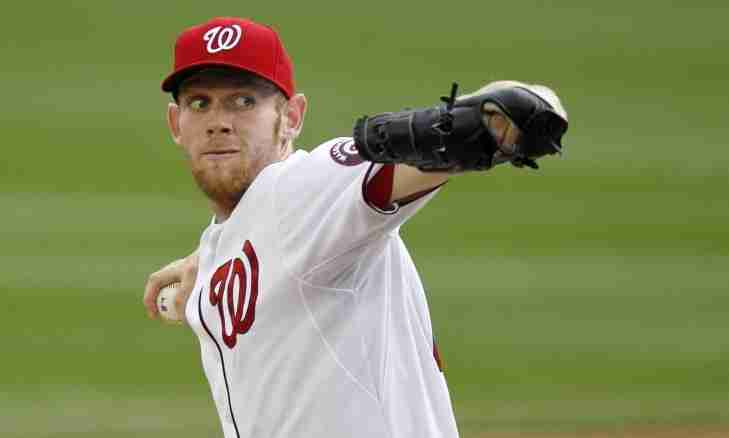
When Stephen Strasburg was selected first overall out of San Diego State in 2009, he arrived with a level of hype unmatched by any pitching prospect in the modern era. His highly anticipated 14-strikeout major league debut in 2010 solidified that mythos, but the intense spotlight quickly shifted toward organizational caution. Following his recovery from Tommy John surgery, the front office famously instituted a strict innings limit that shut him down prior to the 2012 postseason. While that decision ignited fierce national debate, the meticulous, long-term preservation of their prized ace ultimately paved the way for an unforgettable era of championship contention.
The careful workload management produced spectacular front-line rewards, transforming Strasburg into a dominant, high-leverage force atop the rotation. Weaponizing an explosive four-seamer, a devastating 12-to-6 curveball, and a heavy, diving changeup, he earned three All-Star selections and recorded five 15-win campaigns for Washington.
Returning to the mound in 2013 with the training wheels completely off, Strasburg silenced doubts about his durability by establishing himself as a true workhorse. He eclipsed the 180-innings mark for the first time, racking up 191 strikeouts and throwing his first career complete-game shutout, proving his elite arsenal remained intact post-surgery.
In 2017, he achieved a top-tier regular-season performance, posting an impressive 15–4 record with a 2.52 ERA. During that summer, he set a franchise record by recording 34 consecutive scoreless innings, led the National League with a strong 2.72 FIP, and finished as the runner-up for the NL Cy Young Award behind teammate Max Scherzer. His reputation for performing in high-stakes games was reinforced in October when he pitched seven outstanding, scoreless innings with 12 strikeouts in a crucial Game 4 of the NLDS against Chicago, despite battling illness.
That steady escalation culminated in a legendary, unforgettable 2019 masterpiece. Strasburg commanded the league with a career-high 18 wins, logged 209 innings with 251 strikeouts, and then orchestrated one of the most dominant individual postseasons in baseball history. With the Nationals facing elimination multiple times, Strasburg became the franchise's savior. He went an unblemished 5–0 with a microscopic 1.98 ERA over 36.1 postseason innings. His defining moment came in Game 6 of the World Series against Houston, where he gritted out 8.1 magnificent frames under maximum pressure to force a Game 7. Winning the World Series MVP trophy, he became the first player in modern baseball history to log five pitching wins in a single postseason without a loss, delivering Washington its coveted world championship.
Following that global triumph, Strasburg signed a massive seven-year, $245 million extension to remain a lifelong National. Tragically, the deal immediately turned into a catastrophic anchor for the franchise. The tremendous physical toll of his high-velocity mechanics caught up to him almost instantly, as he was diagnosed with severe, chronic nerve damage from thoracic outlet syndrome.
Over the remaining four years of his career, Strasburg made just eight painful, ineffective appearances, totaling only 31.1 innings on the mound after signing the contract. Because the $245 million was fully guaranteed, the massive luxury-tax hit severely hampered the front office’s ability to rebuild or pursue premium free agents, crippling the organization's financial flexibility as they tumbled into the basement of the NL East.
Despite an arduous, multi-year rehabilitation process that included the surgical removal of a rib and neck muscles, his body simply refused to cooperate. Realizing he could no longer perform at the major league level, Strasburg officially closed his playing chapter and announced his retirement from baseball in April 2024.
Strasburg made 247 starts, posting a 113–62 record with a 3.24 ERA, 1.10 WHIP, pitching 1,470 innings, and striking out 1,723 batters.
19. Gio Gonzalez
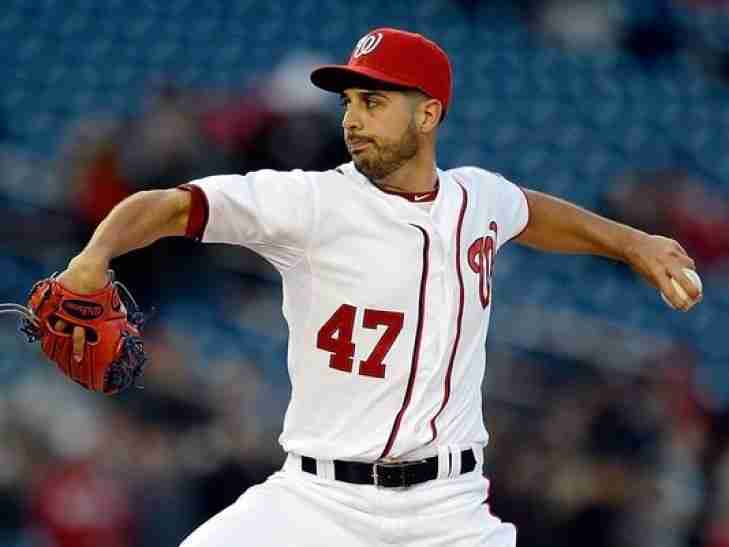
When the Washington Nationals executed a multi-player blockbuster trade with Oakland in December 2011 to acquire Gio Gonzalez, their intent extended beyond merely augmenting rotation depth. They sought a dynamic, high-velocity left-handed pitcher to complement Stephen Strasburg and to advance the franchise into its inaugural authentic era of contemporary contention. Equipped with an electrifying fastball and a distinctive, looping curveball that broke sharply as if it were dropping off a table, the southpaw performed immediately, establishing a remarkably resilient standard of durability in the District for nearly seven seasons.
Gonzalez’s debut campaign with the Nationals in 2012 was a display of top-tier dominance. He completely subdued National League batters, leading a 98-win, division-winning team with an impressive 21-8 record. His precise control resulted in a 2.89 ERA and a career-high 207 strikeouts, while leading the Senior Circuit in key stats like Fielding Independent Pitching (2.82 FIP) and strikeout rate (9.3 SO/9). This outstanding performance earned him his second straight All-Star selection, the Warren Spahn Award as the best left-handed pitcher, and an impressive third-place finish in NL Cy Young voting.
Although matching the flashy peaks of that legendary 2012 performance was challenging, Gonzalez built an extremely reliable and consistent baseline. He became the embodiment of a dependable workhorse in the rotation, consistently taking the mound and recording double-digit wins each full season in Washington. Even when his command faltered or walks increased, his skill in handling high-pressure situations and limiting home runs kept the Nationals competitive year after year.
That internal resilience set the stage for a remarkable late-career resurgence in the 2017 season. With veteran skill, Gonzalez delivered a superb comeback, pitching 201.0 tough innings over 32 starts to achieve a impressive 15–9 record. He posted a strong 2.96 ERA—his second-lowest ever—and limited opponents to a mere .216 batting average, leading the staff during another division title run and securing sixth place in the NL Cy Young voting.
With the organization in transition and his contract set to expire, the front office traded veteran lefty Gonzalez to the Milwaukee Brewers in August 2018. He played 213 games (all starts), with an 86–65 record, a 3.62 ERA, and a 1.28 WHIP. He pitched 1,215.1 innings and struck out 1,215 batters.
33. Jeff Fassero
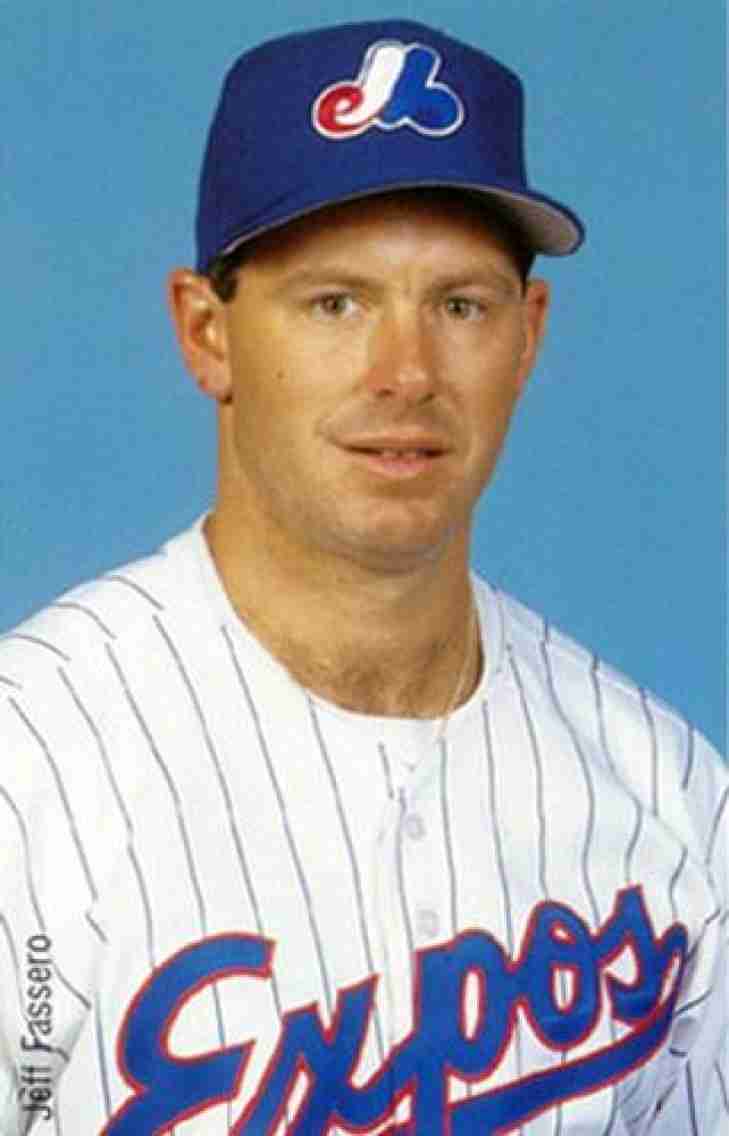
The journey of Jeff Fassero is one of the most remarkable stories of perseverance in modern baseball history. Selected in the 22nd round of the 1984 draft by the St. Louis Cardinals, the left-hander spent a grueling seven years grinding through the minor leagues, occasionally wondering if his big-league dream would ever materialize. By the time he finally made his major league debut with the Montreal Expos in 1991, he was already 28 years old. Yet, far from a late-career afterthought, Fassero quickly evolved from a reliable left-handed reliever into one of the most dominant, high-leverage starting pitchers of the mid-1990s NL East.
His transition from the bullpen to the starting rotation ahead of the 1993 campaign completely unlocked his potential. Utilizing a deceptive, late-moving slider and a highly effective splitter, Fassero established himself as a frontline workhorse. He paced the rotation with a stellar 12-5 record and a microscopic 2.30 ERA across 23 starts, helping lay the groundwork for Montreal's legendary run the following year. During the star-crossed 1994 season, he remained a model of efficiency, going 8-6 with a 2.99 ERA over 138.2 innings to anchor a rotation that carried baseball's finest record before the strike cut the season short.
While the front office systematically dismantled the roster in the strike's aftermath, Fassero remained a steady, competitive anchor in Quebec. His absolute masterpiece in an Expos uniform materialized during the 1996 campaign. He completely paralyzed National League hitters, hurling a career-high 231.2 innings and logging 15 victories with a sharp 3.30 ERA. He racked up 222 strikeouts—the fourth-most in the Senior Circuit—to earn a well-deserved ninth-place finish in the National League Cy Young Award voting.
Knowing they would be unable to meet his contract demands as free agency loomed, Montreal traded the veteran lefty to the Seattle Mariners in October 1996 in a multi-player swap.
With Montreal, Fassero played in 231 games (107 starts), posting a 58–48 record, 3.20 ERA, and 1.21 WHIP. He pitched 885.1 innings, with five complete games, three shutouts, and 750 strikeouts, achieving a 125 ERA+.
