


Site Admin
24. Bob Bailey
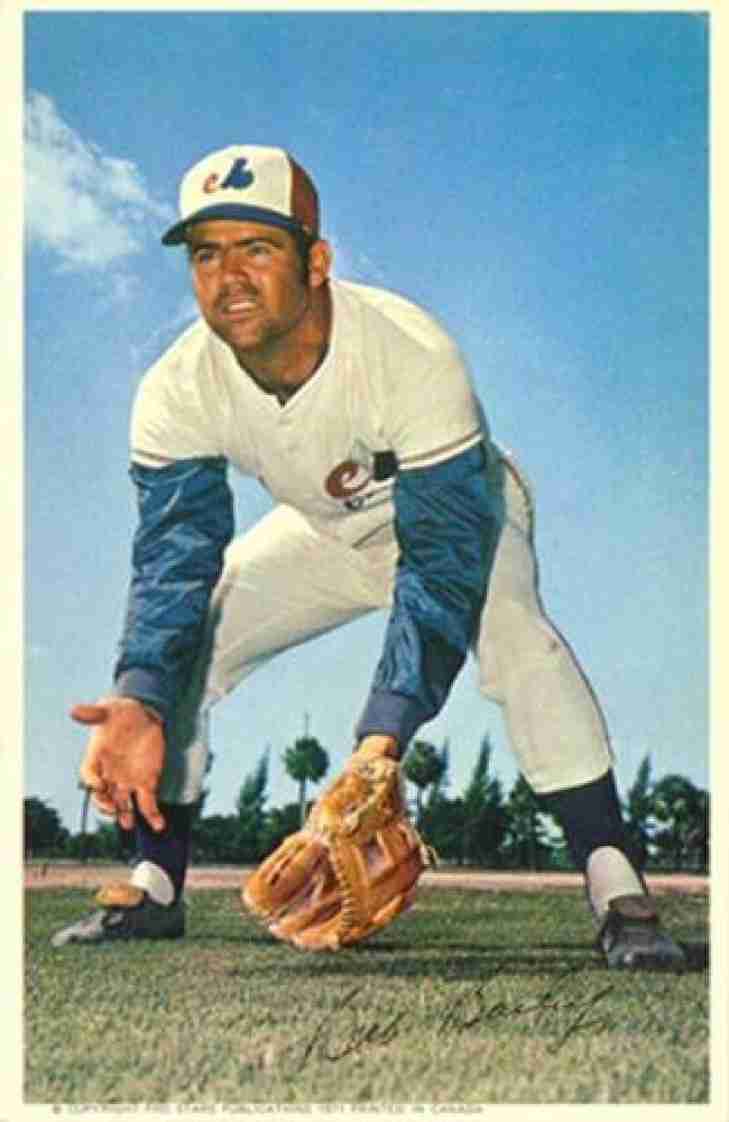
In 1961, the Pittsburgh Pirates signed high school star Bob Bailey from Woodrow Wilson High in Long Beach, California, with a hefty $175,000 "bonus baby" contract. This large sum set high expectations that the teenage Bailey struggled to meet in Pittsburgh. After seven years, split between Pittsburgh and the Dodgers, he was seen as a promising prospect whose power never translated to the major leagues. However, everything shifted when the expansion Montreal Expos purchased his contract from the Dodgers in late October 1968.
In Montreal, Bailey didn't just rebuild his career—he became a foundational, historic pillar of the young franchise. Batting fifth in the team’s inaugural regular-season game on April 8, 1969, at Shea Stadium, he etched his name into baseball lore by driving a Tom Seaver pitch into the gap for a two-run double, recording the first base hit and the first runs batted in in Montreal Expos history.
His first year in Canada was a solid baseline campaign (.265 BA, 9 HR), but his 1970 sophomore season was an offensive elevation. Initially a utility player with no clear defensive position, Bailey forced his way into a full-time role by completely dominating National League pitching. He hit a career-high 28 home runs and drove in 84 runs in just 352 at-bats, adding 72 walks to achieve a remarkable .287/.407/597 slash line. His 1.004 OPS was a historic, era-adjusted achievement—an outstanding 167 OPS+ that would've ranked third in the National League behind Willie McCovey and Rico Carty if he had had enough plate appearances to qualify.
Bailey was a key run-producer for the Expos over five years, not just a one-season success. He surpassed 20 home runs three times, with 26 in 1973—driving in 86 RBIs—and 20 again in 1974. As a disciplined and patient hitter, he often worked deep counts and drew 100 walks in 1974, helping to keep Montreal’s early lineups moving. Additionally, he became the first player in franchise history to reach 100 home runs while with the Expos.
Although his defensive skills at third base became more limited over the years—drawing regular criticism from teammates and management—his offensive output continued to be highly regarded. When Montreal shifted to "Phase II" of their development in 1975, emphasizing a younger, speed-oriented team, Bailey spent one last summer as a veteran reserve before being traded to Cincinnati that winter. He retired as the franchise’s all-time leader in nearly every major offensive statistical category.
With Montreal, Bailey had 791 hits, 116 doubles, 23 triples, 118 home runs, and 466 RBIs. He drew 502 walks versus 607 strikeouts, posting a .264/.368/437 slash line and a strong 127 OPS+.
28. Ian Desmond
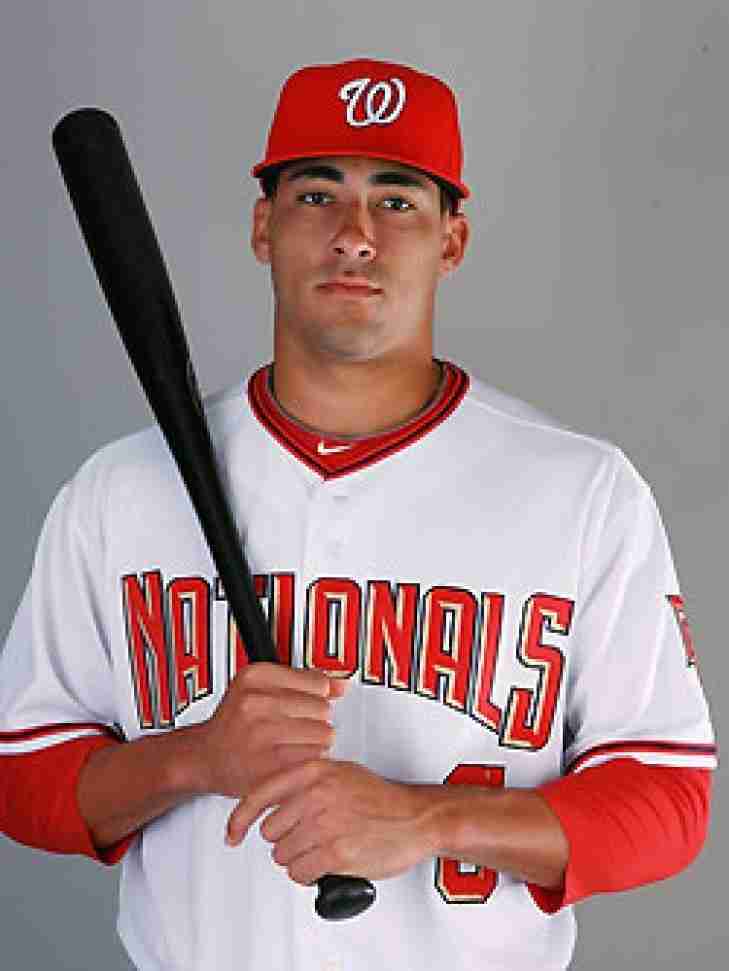
When the Montreal Expos moved to Washington in 2005 to become the Nationals, the franchise needed to develop a new wave of local talent to build its identity. Ian Desmond emerged as a key figure in this effort. Drafted in the third round of 2004, the athletic shortstop advanced through the minor leagues during the franchise’s transition and made his debut in late 2009. Over the following six seasons, Desmond became the dynamic, power-hitting centerpiece of the Nationals’ middle infield, pushing the offensive limits for the position in Washington.
His ascent to prominence emerged as a true showcase of power and speed. After overcoming early defensive struggles, Desmond unlocked elite offensive performance in 2012. He dominated National League pitching by hitting a career-high .292, with 25 home runs and 21 stolen bases, earning his first All-Star selection and Silver Slugger Award. His dynamic middle-of-the-order play was a key factor in Washington's remarkable 98-win season, leading to the franchise's first National League East division title.
Instead of viewing that breakout summer as a standalone highlight, Desmond maintained an impressive offensive level, achieving three consecutive 20/20 seasons from 2012 to 2014. He earned three consecutive Silver Slugger Awards at shortstop—placing him among the franchise's elite—and continued to be a constant, high-impact threat on the bases. Even as his strikeout count increased and his walk rate stayed modest, his capacity to produce game-changing power from a key defensive position established him as one of the most formidable shortstops of his time.
His seven-season residency in Washington drew to a close after the 2015 campaign, when he declined a qualifying offer to enter the free-agent market. While he would go on to earn another All-Star nod in Texas and play several productive seasons in Colorado.
As a National, Desmond had 917 hits, 178 doubles, 110 home runs, and 432 RBIs. He also stole 122 bases and posted a .264/.312/.424 slash line.
26. Bryn Smith
30. Ellis Valentine
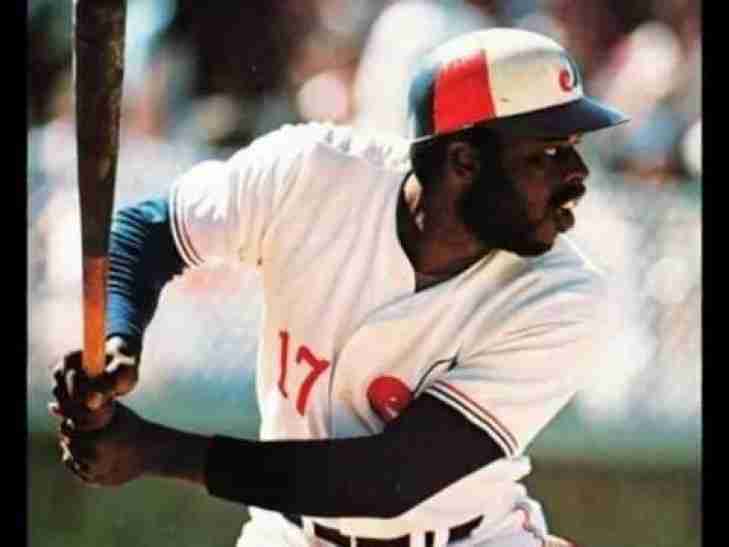
In the late 1970s, the Montreal Expos boasted an outfield that was the envy of baseball—a young, dynamic trio of Andre Dawson, Warren Cromartie, and Ellis Valentine. Among them, Valentine possessed perhaps the most tantalizing ceiling. Selected in the second round of the 1972 draft out of Los Angeles, he developed into a physical marvel who paired a fluid, high-velocity swing with what was universally considered the most feared throwing arm in the game. From his post in right field, Valentine turned throwing out tagging runners into a spectator sport, routinely unleashing absolute frozen ropes that defied belief.
His peak years in Canada were a spectacular display of all-around baseball talent. He exploded onto the national radar in 1977, putting together an individual masterpiece at just 22 years old. Valentine hit a sparkling .293 with 25 home runs and 76 RBIs, earning his first career All-Star selection.
He continued his impressive performance in 1978, earning a Gold Glove Award for his defensive excellence. That year, he led the National League with 25 home runs. By 1978, after hitting another 21 home runs, he achieved three straight summers of over 20 homers, solidifying his reputation as a top middle-of-the-order hitter.
Yet, Valentine’s journey in Montreal was also defined by a sudden, devastating physical setback. In May 1980, he was struck in the face by a pitch from Roy Thomas, which shattered his cheekbone. The injury sidelined him for more than a month and, more critically, altered his aggression at the plate as he struggled to regain his previous comfort level against inside pitching.
In May 1981, amid reduced offensive output and increasing behind-the-scenes tensions, the front office leveraged his market value to trade him to the New York Mets for promising closer Jeff Reardon. Valentine displayed moments of his former brilliance in New York and Texas, yet he struggled to fully recover the steady excellence of his peak before injury.
In Montreal, Valentine played 663 games, with 676 hits, 121 doubles, 95 home runs, and 374 RBIs. He posted a .283/.342/462 line (121 OPS+) and recorded 59 outfield assists, showcasing his strong arm.
