


Site Admin
45. C. J. Wilson

The transformation of C.J. Wilson from a volatile, colorful relief weapon into a durable, front-line starting ace stands as one of the most brilliant developmental triumphs of the Rangers' modern era. Drafted as a starter out of Loyola Marymount in 2001, the eccentric, left-handed pitcher was quickly routed to the bullpen early in his big-league journey, where his fierce competitive streak and heavy, biting arsenal made him an unpredictable but highly effective late-inning factor.
For years, Wilson operated as a versatile, high-intensity chameleon in the Texas bullpen, working as a setup man before eventually sliding into the closer role following the trade of Éric Gagné in 2007. He spent his early summers piling up appearances, flashing a premium-cut fastball and a looping breaking ball to log 52 saves for the franchise—including a 24-save season as the primary ninth-inning protector in 2008. Yet, despite his relative success in short bursts, the analytical staff and Wilson himself maintained that his true professional calling lay in a return to a traditional starting workload.
Before the 2010 season, manager Ron Washington finally gave the left-hander a chance to join the starting rotation, the opportunity he had been eager for. The decision paid off immediately, dramatically transforming the team's prospects. Wilson skipped over typical transitional challenges, quickly becoming a reliable, high-usage pitcher. In his first full season as a starter, he threw 204 innings, earned 15 wins, and posted a 3.35 ERA, leading the Rangers to their first American League pennant in franchise history.
That outstanding starting performance reached a historic peak during his final summer in Arlington in 2011. Wilson dominated opposing hitters across the junior circuit, anchoring the top of the Texas rotation with a stellar 16–7 record and a career-best 2.94 ERA. He led the majors with 34 starts and struck out 206 batters, earning his first American League All-Star spot and finishing sixth in the AL Cy Young voting, helping a hungry Rangers team return to the World Series.
Following that breathtaking individual peak, Wilson hit the open market as a premium free agent that winter, signing a lucrative multi-year blockbuster contract across the division with the Los Angeles Angels. Wilson appeared in 325 games (68 starts). He compiled a winning 40–35 record alongside a stellar 3.60 ERA and a 1.30 WHIP. He ate up 710.2 innings, recording 52 saves and 597 strikeouts.
42. Bert Blyleven
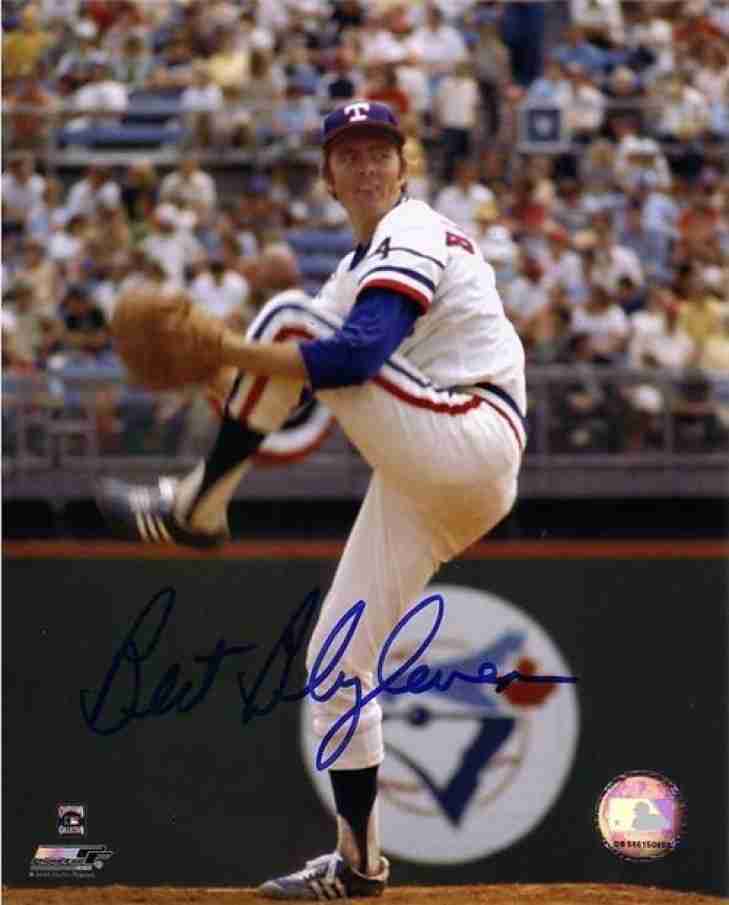
When the Texas Rangers made a big mid-season trade with Minnesota in June 1976 to bring Bert Blyleven to their team, they weren't just acquiring a talented pitcher—they were gaining one of the most graceful and powerful curveballs the sport has ever witnessed. Known as the "Frying Dutchman,” he played with a precision and intensity on the mound that made him a true threat, captivating American League batters despite the scorching Texas heat.
Although Blyleven’s final win-loss record in Arlington was a balanced 23–23, focusing only on wins overlooks how close he was to pitching perfectly. He often suffered from poor run support from a transitioning Rangers lineup, losing close games despite showcasing exceptional skill in preventing runs. During his two seasons in North Texas, he consistently shut down opposing offenses, posting an impressive 2.76 ERA in 1976 and maintaining it with a 2.72 ERA in 1977.
What really set his performance apart in the Lone Star State was his exceptional command of the strike zone and his efficiency on the mound. Blyleven mastered the art of controlling baserunners, earning the American League WHIP title in 1977 with an impressive 1.07. His exacting control led to very few walks; he issued only 50 walks in 234.2 innings that summer and recorded five shutouts.
His spectacular individual peak with the franchise reached its theatrical pinnacle on September 22, 1977. Stepping onto the mound at Anaheim Stadium, Blyleven completely paralyzed the California Angels lineup, spinning a historic 6–0 no-hitter that serves as the ultimate exclamation point on his brief stay.
The cost-conscious Rangers packaged him to Pittsburgh after the 1977 season in the first four-team trade in major league history. While he would go on to win World Series rings with the Pirates and Twins, Blyleven's time in Texas represented a period of pure, unadulterated individual dominance.
In his brief stay in Texas, Blyleven made 54 appearances (all starts). He compiled a 23–23 record, a stellar 2.74 ERA, and a tidy 1.11 WHIP, with 321 strikeouts. In 2011, Blyleven was inducted into the Baseball Hall of Fame.
33. Jeff Burroughs
31. Nelson Cruz

Nelson Cruz’s journey to becoming a top MLB power hitter was anything but straightforward. Overlooked as a young talent and moving across three teams before establishing himself with Texas, this strong right-handed slugger didn’t have his first full, elite season until he was 28. However, once he realized his considerable potential, the player widely called "Boomstick" transformed into one of the most daunting, clutch middle-of-the-order hitters in the history of the Lone Star franchise.
Cruz built his offensive reputation on sheer raw power, consistently terrorizing American League pitchers with an explosive right-handed swing. This approach turned the expansive gaps of the Ballpark in Arlington into his personal launching pad. He served as a thunderous pillar during the team’s most successful era, hitting at least 20 home runs in five straight seasons for Texas. His outstanding regular-season performance earned him two AL All-Star selections (2009 and 2013), with a high volume of home runs and a commanding .500-plus slugging percentage that forced opposing managers to craft entire game plans around his bat.
However, examining Cruz only through his regular-season stats misses the legendary reputation he built in October. He saved his most spectacular and historic performances for the postseason, becoming the key offensive player in securing two consecutive American League pennants.
His postseason peak was spectacular during the 2011 ALCS against the Detroit Tigers. Cruz delivered an unforgettable performance, earning the ALCS MVP award by hitting a record six home runs and driving in 13 RBIs over six games. This included the first walk-off grand slam in postseason history during Game 2. He used that hot streak to tie the modern MLB record with eight total home runs in a single postseason, cementing his legendary status in Texas playoff history.
After accepting a 50-game league suspension in August 2013 stemming from the Biogenesis investigation, Cruz played the final week of that season, then became a free agent in the winter. The team's front office decided not to offer him a long-term contract, which led him to sign with Baltimore and later play for Seattle and Minnesota. Interestingly, he experienced his most productive home run seasons during his late thirties while playing for these teams.
In an eight-year run with Texas, Cruz compiled 773 hits, 147 doubles, 157 home runs, and 489 RBIs while generating a stellar .268/.327/.495 slash line (115 OPS+).
