


Site Admin
352. Nadine Strauss

351. Swin Cash

41. Jon Matlack
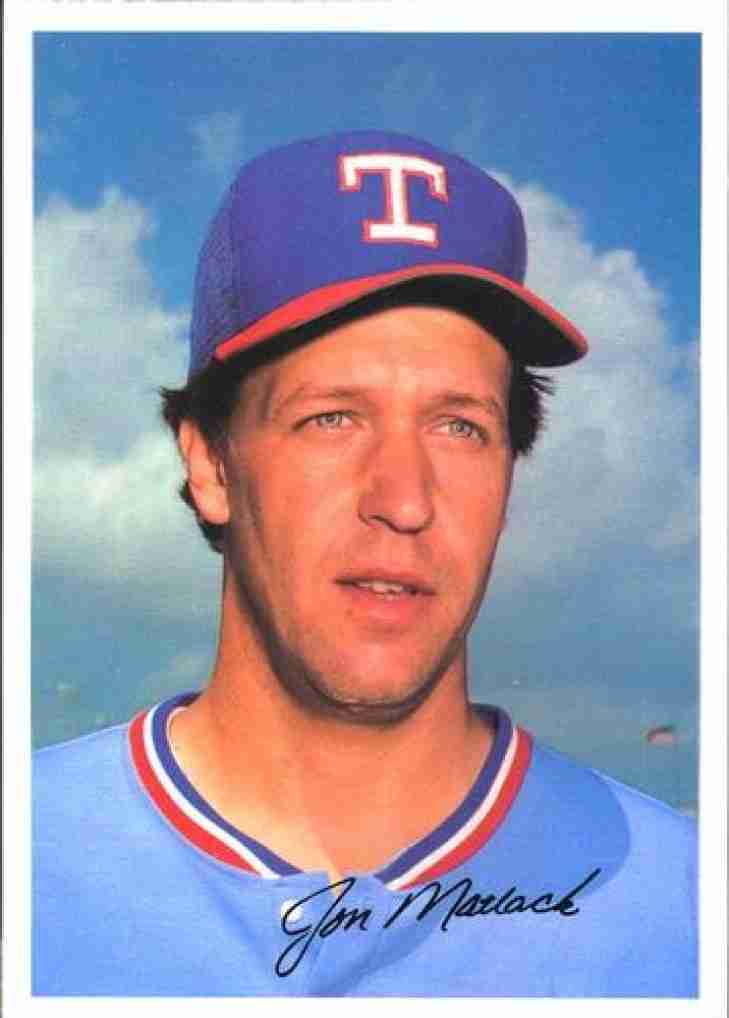
When Jon Matlack arrived in Arlington ahead of the 1978 season, he did so as part of one of the most complex, history-making blockbusters ever executed—the first four-team trade in major league history. Having already established himself as a three-time National League All-Star, a Rookie of the Year, and a pennant-winning co-ace with the New York Mets, the smooth-throwing left-hander brought an exceptional, top-tier pedigree to the Texas Rangers' pitching staff.
Although no longer at his peak of early-1970s National League dominance, Matlack quickly became a reliable, high-leverage asset for a Texas team striving to climb the competitive American League West. He adapted effortlessly to the intense summer heat at Arlington Stadium, using his excellent control, a sharp breaking ball, and strong pitching instincts to consistently keep batters guessing.
His early years with the team showcased reliable durability in the starting rotation. In his debut 1978 season, Matlack pitched 226.1 tough innings, recording 15 wins, 12 complete games, and 3 shutouts—just what the Rangers expected. He continued to perform well in 1979, with another 15 complete games and a solid 3.30 ERA, demonstrating that his move to the American League was smooth and successful.
As he entered his thirties and the Rangers began to reshuffle their pitching staff, Matlack showcased a remarkable, unheralded level of versatility. Over his final three summers in Texas, he masterfully alternated between the starting rotation and the bullpen. Whether he was taking the ball for a Sunday start or coming out of the bullpen as a late-inning fireman to preserve a slim lead, he executed his assignments with quiet, level-headed professionalism. His multi-dimensional efficiency peaked in 1980, when he split 34 appearances between starts and relief outings to log 10 wins and a tidy 3.68 ERA over 164.0 innings.
Matlack played three more seasons before retiring after the 1983 campaign. With Texas, he posted a 43–45 record, a 3.42 ERA, and a 1.25 WHIP. He compiled 828.0 innings, striking out 493 batters.
47. Jose Guzman
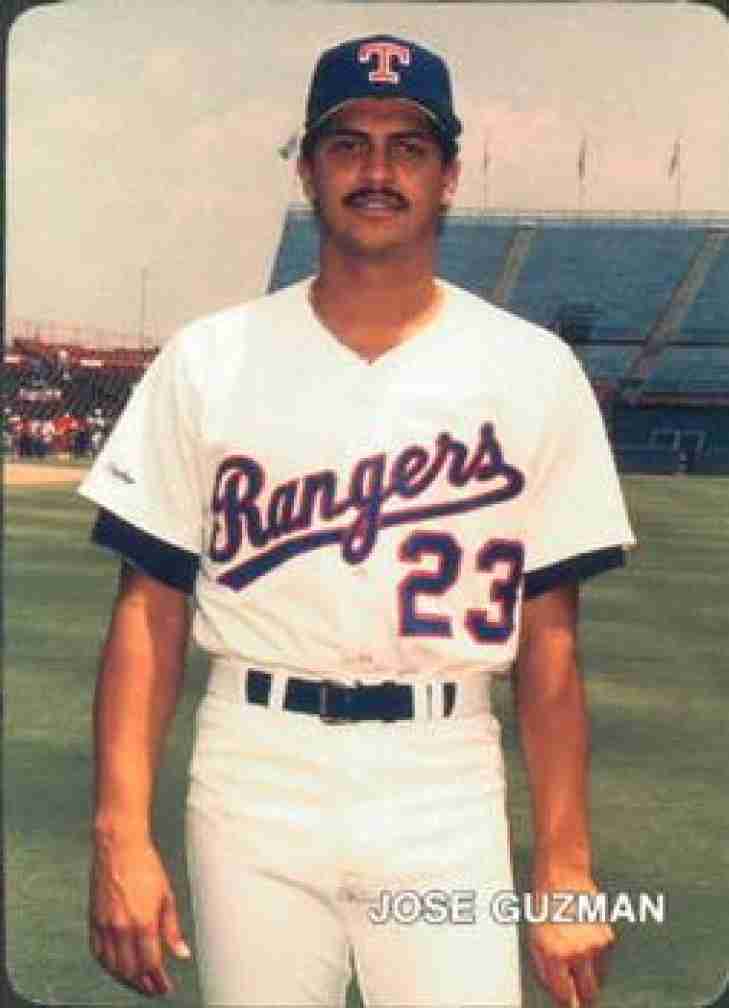
When José Guzmán signed with the Texas Rangers as an undrafted free agent from Puerto Rico in 1981, few predicted his dramatic, high-leverage performances at Arlington. He debuted in 1985 at age 22, quickly becoming a key part of a young Rangers team. With a fastball in the low 90s and a sharp slider, Guzmán spent about a decade providing frontline skill and resilience.
Guzmán’s early years in Arlington were characterized by heavy workload, with a focus on durability. By 1986, as a regular starter, he often pitched long, consuming large innings. He exceeded 200 innings in both 1987 (208.0 IP) and 1988 (206.0 IP), recording back-to-back double-digit win seasons. His aggressive, power-oriented pitching style resulted in high strikeout rates for his time, frequently ranking in the top ten in the American League for strikeout density (SO/9) and constantly challenging opposing batters.
Just as he was establishing himself in Texas, disaster struck. Severe shoulder injuries derailed his momentum, causing him to miss the 1989 and 1990 seasons.
Guzmán's comeback to Arlington in 1991 is a shining example of emotional resilience. Considered finished by many, he fought his way from the minors to orchestrate a remarkable and historic revival. He led the 1991 rotation with a 13–7 record and a stellar 3.09 ERA, a high-pressure performance that earned him the American League Comeback Player of the Year Award. He built on this success with an even more impressive season in 1992, securing a career-high 16 wins, pitching 224.0 demanding innings, and ranking fourth in the league with 179 strikeouts.
Following that triumphant 1992 showcase, the veteran right-hander tested the free-agent market, signing with the Chicago Cubs, where he famously came within one out of throwing a no-hitter at Wrigley Field before re-aggravating the shoulder woes that would ultimately close his big-league career.
As a Ranger, Guzmán appeared in 159 games (152 starts). He compiled a 66–62 record alongside a rock-solid 3.90 ERA and a 1.34 WHIP. He logged 1,013.0 innings of work, recording 715 strikeouts.
