


Site Admin
43. Dan Schatzeder
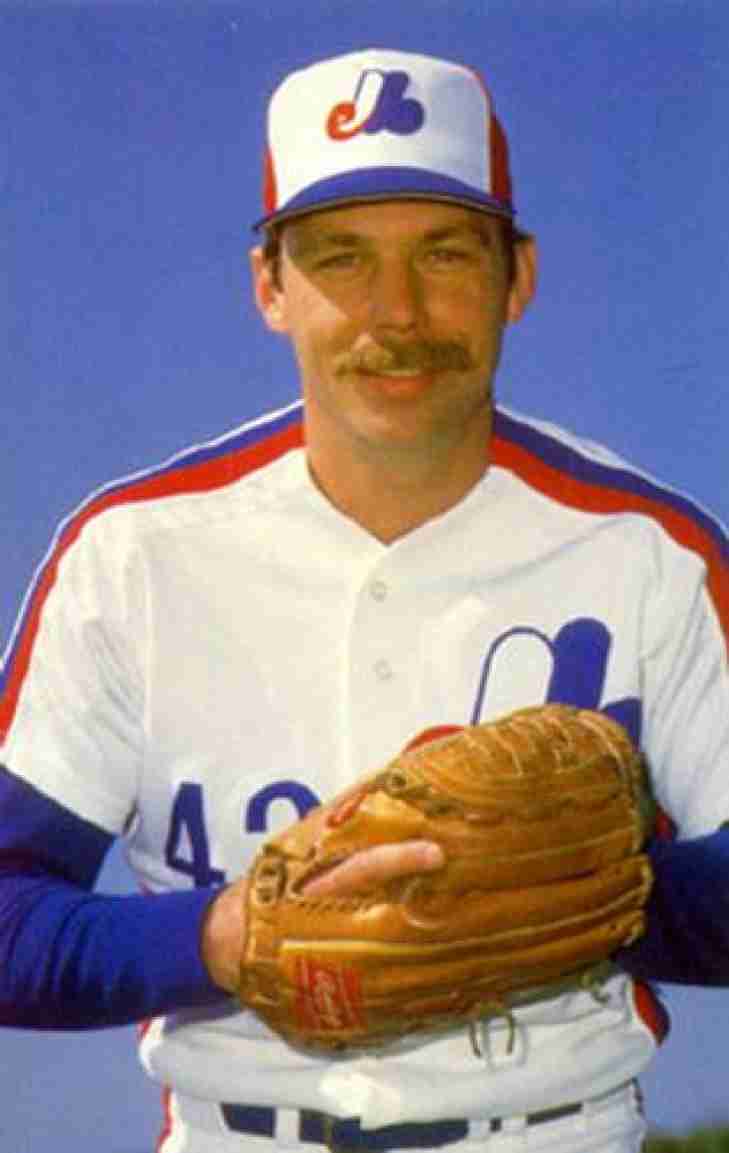
While star players and award-winning closers often make headlines, the true backbone of championships and competitive eras is built by versatile pitchers who fill every role on the staff. For eight seasons, spanning two separate periods with the Montreal Expos, left-hander Dan Schatzeder proved to be the ultimate utility pitcher. Whether stepping in to start unexpectedly, covering multiple innings out of the bullpen, or facing a tough left-handed hitter in a critical late-game situation, "Schatz" consistently responded with a dependable, hard-working style that exceeded what his basic stats might suggest.
His first stint with the Expos in the late 1970s showcased remarkable versatility. Drafted in the third round of 1976, the young southpaw rapidly advanced to the majors, taking on a vital swingman role. His standout achievement from this period was during the impressive 1979 season, where Schatzeder completely shut down National League hitters. He split his time between starting and relieving, finishing with a 10–5 record and a stellar 2.83 ERA over 162 innings. His effectiveness greatly contributed to a 95-win Montreal team that pushed the eventual champion "We Are Family" Pirates to their limits.
Despite his value, the Expos traded Schatzeder to Detroit after the 1979 season. After brief stints in Detroit and San Francisco, he returned "home" to Montreal in 1982 to begin his second, highly productive five-year residency. During this second chapter, Schatzeder transitioned more permanently into a high-volume reliever and spot starter. He routinely absorbed heavy innings loads and proved far more valuable than his surface wins and losses suggested, consistently posting solid ERA+ marks that kept the Expos competitive in a tough NL East.
What truly set Schatzeder apart in Quebec was his exceptional skill with a bat. Before the widespread use of designated hitters, he was recognized as one of the best hitting pitchers in baseball. As a real offensive threat, Schatzeder posted an impressive .260 batting average in Montreal and was often used as a pinch-hitter in crucial moments. His competence at the plate provided his managers with significant tactical options late in games, offering an extra layer of value that typical pitching statistics may miss.
The Expos traded veteran lefty Schatzeder to Philadelphia in 1986, and he won a World Series with Minnesota in 1987. As an Expo, he appeared in 213 games (79 starts), with a 37–31 record, 3.52 ERA, and 1.29 WHIP. Over 692.2 innings, he struck out 401 batters.
35. Moises Alou
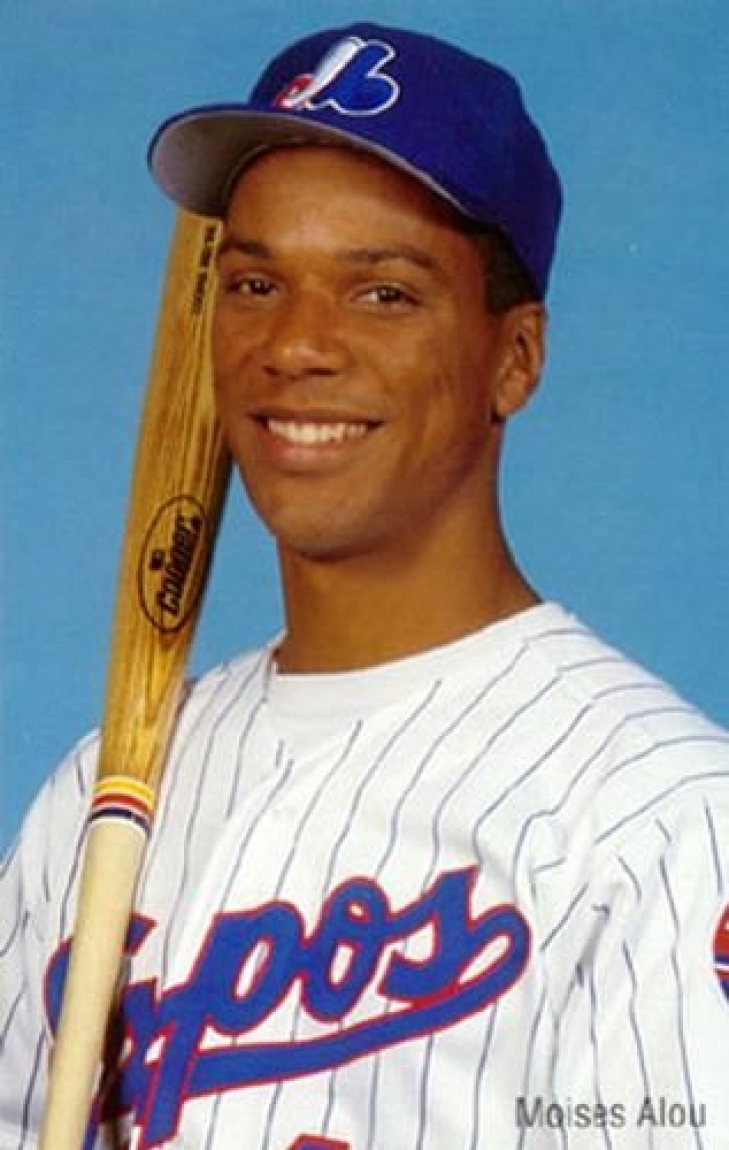
This transaction stands out as one of the most notable footnotes in franchise history. In August 1990, the Montreal Expos traded pitcher Zane Smith to the Pittsburgh Pirates for Moises Alou, who was initially listed as the "Player to be Named Later." At that moment, Alou was a promising but inexperienced prospect, having only played two major league games. By the time he left Montreal six years later, he had become widely known and had secured his role as the focal point of an exceptional, world-class outfield, guided directly by his father, legendary manager Felipe Alou.
Alou’s rise in Montreal showcased exceptional bat speed and physical resilience. After recovering from a severe ankle injury in 1993 that ended his season, he returned in 1994 to deliver a standout performance. He dominated National League pitching, hitting .339 with 31 doubles, 22 home runs, and 78 RBIs in just 107 games. His outstanding offense earned him his first All-Star appearance, a Silver Slugger Award, and a third-place finish in NL MVP voting, helping the Expos maintain baseball’s best record before the strike brought play to a halt.
Far from a single-summer peak, Alou remained a premier, high-leverage force in the middle of the order. He backed up his breakout campaign by hitting .273 with 21 home runs in 1996, helping guide a transitioning Expos roster to a highly competitive 88-win season. He possessed a beautifully balanced right-handed swing and a rare knack for delivering in critical situations, routinely punishing pitchers who dared to challenge him with runners on base.
However, as was common during this period of Montreal baseball, the financial constraints of a small-market team ended his tenure early. Knowing they couldn't compete with the high offers from free agency, the team saw their star outfielder leave after the 1996 season. Alou then signed with the Florida Marlins, contributing immediately to their 1997 World Series victory, and went on to have an outstanding 17-year career in Major League Baseball.
Alou played 594 games with the Expos, amassing 598 hits, 122 doubles, 84 home runs, and 335 RBIs. He stole 51 bases and posted a .292/.354/483 slash line with a 124 OPS.
37. Tanner Roark
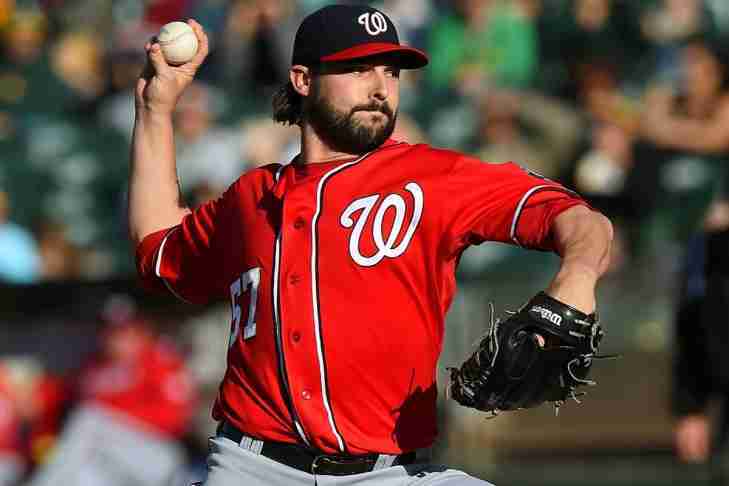
Every memorable pitching staff features its high-priced aces and highly touted prospects. However, a sustained championship run relies on underrated, gritty workhorses. In Washington, Tanner Roark exemplified that quiet dependability. Traded in 2010 from the Texas Rangers for Cristian Guzman, the right-hander was known for his heavy sinker, sharp slider, and no-nonsense attitude, earning him the nickname "The Diesel." Though often overshadowed by stars like Max Scherzer and Stephen Strasburg, Roark reliably took on vital innings to anchor the Nationals' rotation during their most successful period.
His rise in Washington exemplifies a strategic opportunity turn. After a strong bullpen debut in late 2013, Roark secured a rotation spot in 2014 and experienced an outstanding breakout year. He dominated National League hitters, finishing 15–10 with an impressive 2.85 ERA and a tiny 1.092 WHIP, ranking eighth in the league. When the Nationals added Max Scherzer the next winter, Roark was willingly moved back to the bullpen for much of 2015 to make room for the star-studded rotation. Instead of complaining, he stayed prepared, adapting to different roles and eventually regaining his spot as a starter.
The 2016 campaign marked Roark's finest individual achievement in the Nation’s Capital. Returning to the rotation full-time, he pitched with intense focus and high leverage, setting a career high with 16 wins and logging 210 innings during the regular season. His excellent performance resulted in a 2.83 ERA, earning him tenth place in the National League Cy Young Award voting and confirming his status as a top-tier, front-of-the-rotation starter.
Although his efficiency slightly declined in his last two summers in the District—leading to higher walk rates and more hits allowed—his competitive spirit never faltered. He consistently proved to be a durable, ball-distributing player who often kept Washington in the game. After the 2018 season, as the franchise shifted to a new pitching strategy, the Nationals traded the veteran right-hander to the Cincinnati Reds for Tanner Rainey.
With the Nationals, Roark appeared in 182 games (141 starts), posting a 64–54 record, 3.59 ERA, and 1.20 WHIP. He pitched 930.1 innings, struck out 732, and had a 114 ERA+.
39. Daniel Murphy

Some free-agent signings aim to develop the team for the future, while others serve as powerful accelerants. When the Washington Nationals signed Daniel Murphy to a three-year, $37.5 million deal in December 2015, they expected a seasoned hitter emerging from a remarkable postseason with the New York Mets. Instead, they experienced two and a half seasons of some of the most precise and efficient hitting ever seen in the nation's capital. From his first day in a Nationals uniform, Murphy established himself as a surgical offensive specialist, approaching the batter's box with the finesse of an artist.
Murphy's 2016 debut campaign in Washington was a showcase of exceptional offensive skill. Using a newly optimized, launch-angle-focused strategy that reduced wasted swings, he overwhelmed National League pitchers. He maintained a batting average around .350 well into summer, ultimately finishing with a remarkable .347 to win the National League hits title. That season, he hit a career-best 25 home runs, drove in 104 RBIs, and led the Major Leagues with a .595 slugging percentage and 47 doubles. His clutch hitting and offensive prowess earned him his first Silver Slugger Award and a narrow second place behind Kris Bryant in the NL MVP voting.
Instead of declining after his standout season, Murphy maintained his elite level in 2017. He posted a remarkable .322 batting average, hit 23 home runs, accumulated 43 doubles, and drove in 93 RBIs to defend his Silver Slugger award. He was named an All-Star in consecutive years while playing for the Nationals, acting as a formidable, high-contact hitter in the lineup that compelled pitchers to pitch to Bryce Harper and Ryan Zimmerman.
Eventually, the intense physical strain from his demanding swing took a toll on him. Murphy had microfracture knee surgery after the 2017 postseason, which postponed his 2018 debut and visibly affected his lateral movement. As Washington dropped out of the playoff race and Murphy neared free agency, the front office traded the veteran second baseman to the Chicago Cubs in August 2018.
In two years in D.C., Murphy had 427 hits, 97 doubles, 54 home runs, and 225 RBIs. With 103 walks and 137 strikeouts, he posted a .329/.380/543 line and a 139 OPS+.
