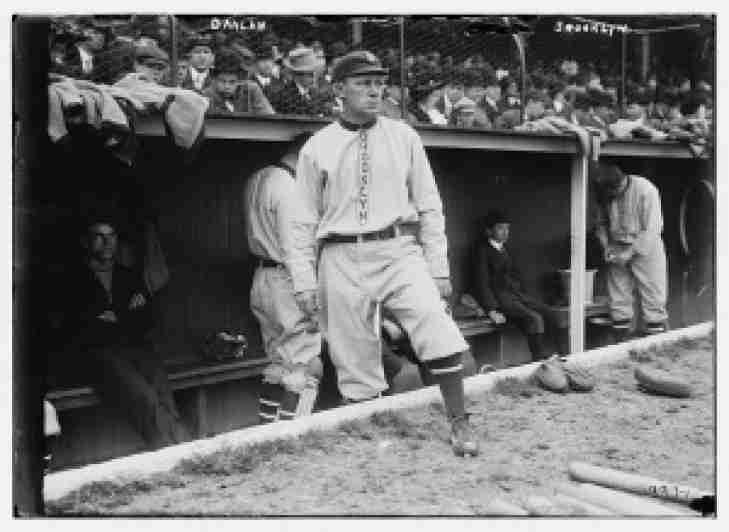
27. Wes Ferrell
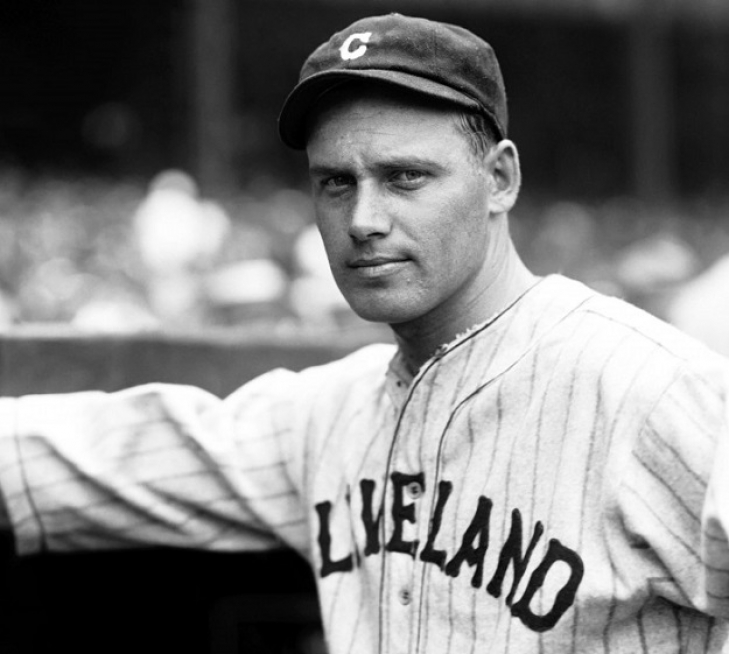
Wes Ferrell’s career shifted from a slow burn to an inferno after a brief, two-game audition in the late 1920s. He secured a permanent spot in the rotation by 1929 and immediately evolved into the league's premier workhorse. Between 1929 and 1932, he anchored the staff with a relentless accumulation of victories, winning at least 21 games every summer and leading the American League in complete games in 1931. He was a model of specialized durability, navigating the era’s high-scoring environment with a sophisticated mix of pitches and mental toughness, allowing him to shoulder nearly 300 innings annually during his physical prime.
The most extraordinary aspect of his tenure was an offensive capability that surpassed that of almost every contemporary in his position. Ferrell was a master of the bat, possessing a specialized swing that made him a viable threat whenever he stepped into the box. This was never more evident than in 1933, when he struggled with a rare losing record on the mound, yet his craftsmanship at the plate remained elite. He was a high-frequency producer who recorded 19 home runs and 100 RBIs during his Cleveland years, figures that prompted the club to experiment with him in the outfield to keep his bat in the lineup. He famously set a then-record with nine home runs in 1931, a feat he punctuated by tossing a no-hitter against the Browns that same spring.
Ferrell remained the emotional center of the rotation through the transition into the 1930s, utilizing a workmanlike approach to secure over 100 wins for the organization. Whether he was grinding through a 13-inning complete game or lacing a double as a pinch-hitter, he competed with a focused intensity that made him a local standout. He proved that a player could become a franchise pillar by mastering the rare, high-leverage art of being a two-way star long before the term was common.
The Indians dealt their embattled ace to Boston, where he would eventually capture another 20-win season and further cement his hitting legacy. He left the North Coast with a 102-62 record and a 3.67 ERA while hitting 19 home runs and maintaining a .274 average. The organization inducted Ferrell into the Cleveland Guardians Hall of Fame.
15. Wes Ferrell
Athletes are competitive by nature, but 99.9 percent of them paled to the competitive juices of Wes Ferrell. He was known to get violent whenever he lost and take it out on himself and inanimate objects. He may have been animated himself at times, but his teammates have always said they wanted him on their side.
Wes Ferrell’s first four years as a regular in the Indians’ rotation saw him win twenty games. He would do so again on two more occasions, utilizing a brilliant fastball and an assortment of pitches. He was one of the only pitchers to retire with a winning percentage over .600, and he did so as an innings-eating starter. Ferrell also may be one of the game’s greatest hitting pitchers as he has decent power numbers and a lifetime .280 average.
His numbers began to decline sharply as his arm gave out, and he was not able to make the career numbers that would have ensured him a Cooperstown plaque. If he had similar metrics in the last thirty years, he would likely not have to fight for that spot in Cooperstown
Should Wes Ferrell be in the Hall of Fame?
The Pre-Integration Committee selects...nobody
Specifically, this committee was tasked with choosing players/administrators who had their day in the sun prior to 1947, when the color barrier was finally broken.
To gain induction, a candidate must finish with at least 12 of the 16 votes (75%) from the committee. The highest finisher was Doc Adams with 10. Historically speaking, Adams has been uncovered as one of the father’s of the modern game and many of his innovations are still used today.
Former players, Bill Dahlen and Harry Stovey each received eight votes. This is especially notable for Dahlen, as he received ten on the last Pre-Integration vote three years ago.
The rest of the candidates received three votes or less. This includes former Cardinals owner, Sam Breadon, Pitcher, Wes Ferrell, former Cincinnati Reds President, August Hermann, Shortstop, Marty Marion, First Basemen, Frank McCormick, former St. Louis Brown Stockings owner, Chris von der Ahe and Pitcher, Bucky Walters.
When a candidate receives three or less, the exact tally is not disclosed.
An excellent commentary on this year’s group of candidates was done by our own DDT, which you can find here. It is definitely worth your time to read.
With that over, attention is heating up on a ballot led by Ken Griffey Jr., who many feel will enter on his first attempt.
Did the Pre-Integration committee get it right?
BASEBALL'S 2016 PRE-INTEGRATION ERA COMMITTEE BALLOT: ARE THERE ANY HALL OF FAMERS LEFT?