


Site Admin
12. Peter Boulware
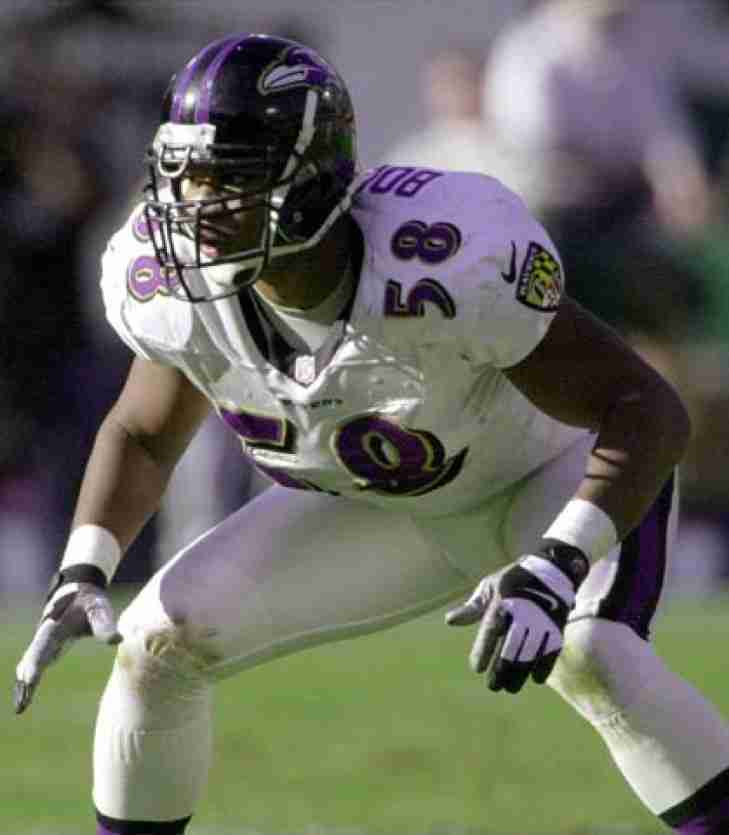
Selected fourth overall in the 1997 NFL Draft from Florida State, Peter Boulware joined the Ravens as a dynamic edge rusher, aimed at energizing a young franchise. Playing alongside Ray Lewis in the front seven, Boulware utilized explosive speed to establish himself as the team's primary edge defender and laid the foundation for the aggressive defenses that came after.
Boulware had a deadly mix of a quick first step, long reach, and smooth corner-turning skills. Mainly playing outside linebacker in 3-4 schemes or rushing as an end in nickel formations, he excelled at beating offensive tackles with speed to the outside before dipping his shoulder to reach the quarterback. His relentless motor also enabled him to pursue plays from behind, making him a quick-impact player in passing situations.
Boulware made a strong start as a rookie in 1997, disrupting backfields to achieve 11.5 sacks. His quick impact earned him the AP NFL Defensive Rookie of the Year award and indicated Baltimore was assembling a formidable defensive squad. He continued his success with 8.5 sacks in 1998, earning his first Pro Bowl, and then recorded 10.0 sacks in 1999, securing a second straight Pro Bowl and Second-Team All-Pro recognition.
In the notable 2000 season, Boulware was a crucial pass-rusher for the legendary defense that set the 16-game record with only 165 points allowed. He recorded 7.0 sacks during the regular season and contributed an additional three in the postseason, helping them secure victory over the New York Giants in Super Bowl XXXV.
Boulware hit his career peak in 2001 with a franchise-record 15.0 sacks, leading the AFC. He continued to be a top edge rusher over the following two seasons, earning Pro Bowl honors in 2002 and 2003, with a total of 15.5 sacks during those years.
Severe knee problems caused him to miss the entire 2004 season. He returned in a limited role in 2005, recording 2.5 sacks, but injuries ultimately ended his career early. Boulware appeared in 126 regular-season games, amassing 70.0 sacks, 401 tackles, and 14 forced fumbles.
10. Chris McAlister
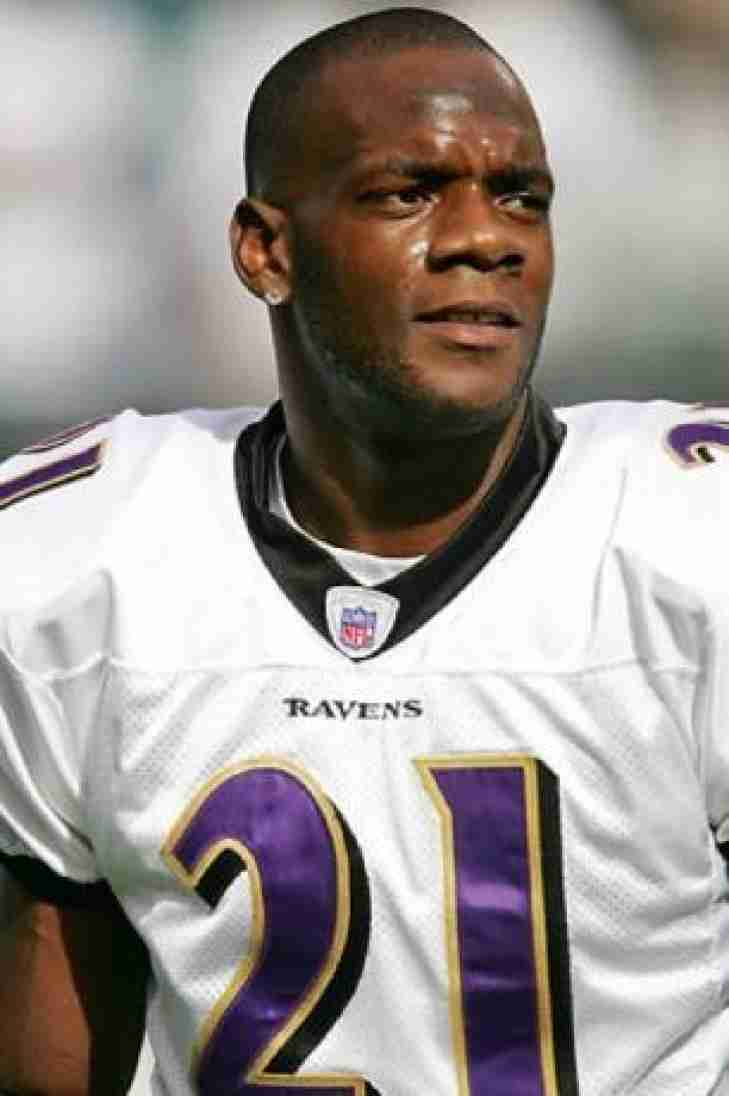
Chris McAlister, drafted 10th overall in 1999 from Arizona, joined Baltimore with ideal size, exceptional speed, and strong confidence, fitting perfectly into the secondary. Playing opposite Duane Starks and supported by safety Rod Woodson, he became a true shutdown cornerback, capable of isolating the opponent's primary receiver, which enabled defensive coordinator Marvin Lewis to generate pressure upfront.
McAlister had a rare physique for a cornerback around 2000. Instead of backing away, he specialized in press-man coverage, utilizing his long arms and strong jam technique at the line to disrupt receivers early. Once the ball was in the air, his agility and speed made him a scoring threat, often turning turnovers into long returns.
McAlister made a strong debut as a rookie in 1999, intercepting five passes and deflecting 21 throws. The next season, he became a key part of the top-ranked 2000 defense, recording four interceptions, including a 98-yard touchdown return against the Jets, and securing another pick in the postseason as Baltimore advanced to and won Super Bowl XXXV.
In 2002, he made another legendary play against Denver by catching a failed Jason Elam field goal in the back of the end zone and returning it 107 yards for a touchdown as time ran out in the first half, setting a then-NFL record.
In 2003, McAlister's dominance peaked as he allowed few completions on the perimeter, returned an interception 83 yards for a touchdown, and earned his first First-Team All-Pro honor and first Pro Bowl appearance. He extended his contract in 2004 and maintained his elite performance, earning Second-Team All-Pro honors that year and a Pro Bowl selection in 2006, with six interceptions including two returned for touchdowns.
Injuries hindered his last two seasons in Baltimore before he was released after the 2008 season. After a short final period with New Orleans in 2009, McAlister retired from football. Over 10 seasons with the Ravens, he recorded 26 interceptions, 5 defensive touchdowns, 138 pass deflections, and appeared in 3 postseason games, totaling 135 regular-season appearances. Following his career, he faced financial difficulties publicly, but his reputation as a top-tier boundary defender endures.
8. Joe Flacco
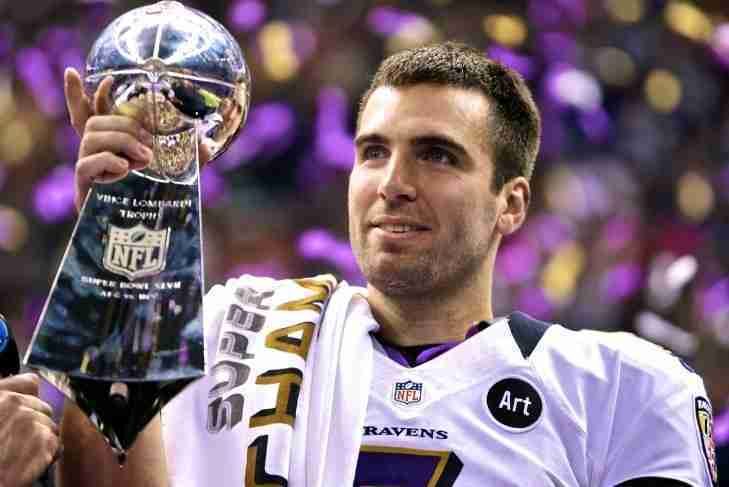
Selected 18th overall in the 2008 NFL Draft out of Delaware, Joe Flacco was thrown straight into the fire as a rookie under new head coach John Harbaugh. Bringing a towering frame, elite arm strength, and a quiet demeanor to the Baltimore huddle, Flacco stabilized a position that had been a revolving door since the franchise's inception, leading the Ravens to the postseason in each of his first five seasons.
Flacco was built like a classic pocket passer. He possessed one of the strongest arms in the league, capable of stretching defenses downfield with high-velocity vertical boundary throws to receivers like Torrey Smith, Anquan Boldin, and Jacoby Jones. Flacco utilized his arm strength to launch deep passes, driving the ball through cold January winds and giving his offense big-play potential. His unflappable, calm demeanor under pressure earned him the nickname "January Joe" for his playoff performances.
Flacco's first season in 2008 set a strong foundation for his career. As the starting quarterback from the beginning, he threw for 2,971 yards and helped Baltimore achieve an 11-5 record. He became the first rookie in NFL history to win two postseason games on the road and reach the AFC Championship. Over the next three seasons, his consistent performance led Baltimore to consecutive 12-win seasons in 2010 and 2011, maintaining the team's status as a championship contender.
His defining moment came in the 2012 postseason, showcasing one of the most memorable playoff performances by an NFL quarterback. The highlight was the famous "Mile High Miracle"—a 70-yard touchdown pass to Jacoby Jones in the final minute to tie the game against Denver. Over four playoff games, Flacco accumulated 1,140 passing yards, 11 touchdowns, and no interceptions. He concluded his remarkable run by earning Super Bowl XLVII MVP after beating San Francisco 34-31.
In 2014, Flacco had another impressive season under offensive coordinator Gary Kubiak, passing for a career-high 3,986 yards and 27 touchdowns, and leading a playoff upset against the Pittsburgh Steelers. He also set the franchise record for single-season passing yards in 2016, with 4,089 yards, becoming the key player in the offense.
Following a hip injury in 2018 that opened the door for Lamar Jackson to lead the offense, Flacco's eleven-year stint in Baltimore concluded. He subsequently played for Denver, the Jets, Philadelphia, Cleveland (where he earned the 2023 Comeback Player of the Year award), Indianapolis, and Cincinnati.
Flacco set all-time franchise records with 38,245 passing yards and 212 touchdown passes, while compiling a legendary 10-5 postseason record.
7. Haloti Ngata
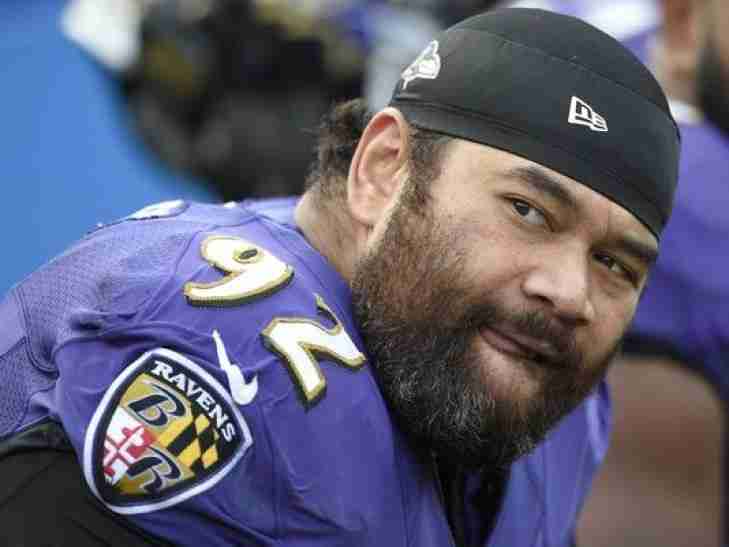
When the Baltimore Ravens selected Haloti Ngata 12th overall in the 2006 NFL Draft out of Oregon, they were not looking for a stats-chasing finesse lineman. They wanted a massive, immovable anchor around which a defense could operate. Across his nine seasons with the Ravens, Ngata delivered exactly that, bringing rare athletic movement to a 340-pound frame and providing the crucial interior foundation for Baltimore's secondary era of defensive dominance.
A mountain of a man at 6 feet 4 inches and 340 pounds, Ngata possessed physical traits that made single-blocking him an impossible proposition for opposing centers and guards. Combining raw bench-press power with remarkably light feet, he excelled at taking on double-teams at the line of scrimmage, effectively walling off interior gaps so linebackers Ray Lewis and Bart Scott could flow freely to the ball. Beyond plugging run lanes, his lateral quickness allowed him to slide across multiple alignments—playing 0-technique nose tackle, 3-technique defensive tackle, or 5-technique end—while generating pocket-collapsing interior pressure.
Ngata entered the starting lineup as a rookie in 2006, making an immediate impact on a defense that led the NFL in total yards allowed. His first significant national recognition came in 2008, when he earned Second-Team All-Pro honors after helping a unit that allowed only 81.4 rushing yards per game reach the AFC Championship Game.
His peak stretch of dominance came between 2009 and 2013, when he earned five consecutive Pro Bowl nods. During the 2010 season, Ngata put together a monster campaign, racking up a career-high 5.5 sacks and 63 tackles to earn his first First-Team All-Pro selection. He repeated as a First-Team All-Pro in 2011, proving virtually unblockable in both run defense and pass-rush situations.
Ngata was a key figure in the franchise's Super Bowl XLVII victory in 2012. Despite dealing with minor injuries, he was the main force on the defensive line during the playoffs, effectively clogging lanes against Indianapolis, Denver, New England, and San Francisco, helping him earn his championship ring.
After nine seasons with Baltimore, Ngata played three years for the Detroit Lions and one last season with the Philadelphia Eagles before retiring in 2019. In 135 regular-season games for the Ravens, he recorded 25.5 sacks, 447 tackles, four forced fumbles, and five interceptions—a notable defensive stat line for a nose tackle of his size.
The franchise recognized his dominant tenure by inducting him into the Baltimore Ravens Ring of Honor in October 2021.
