Site Admin
46. Ed Brinkman
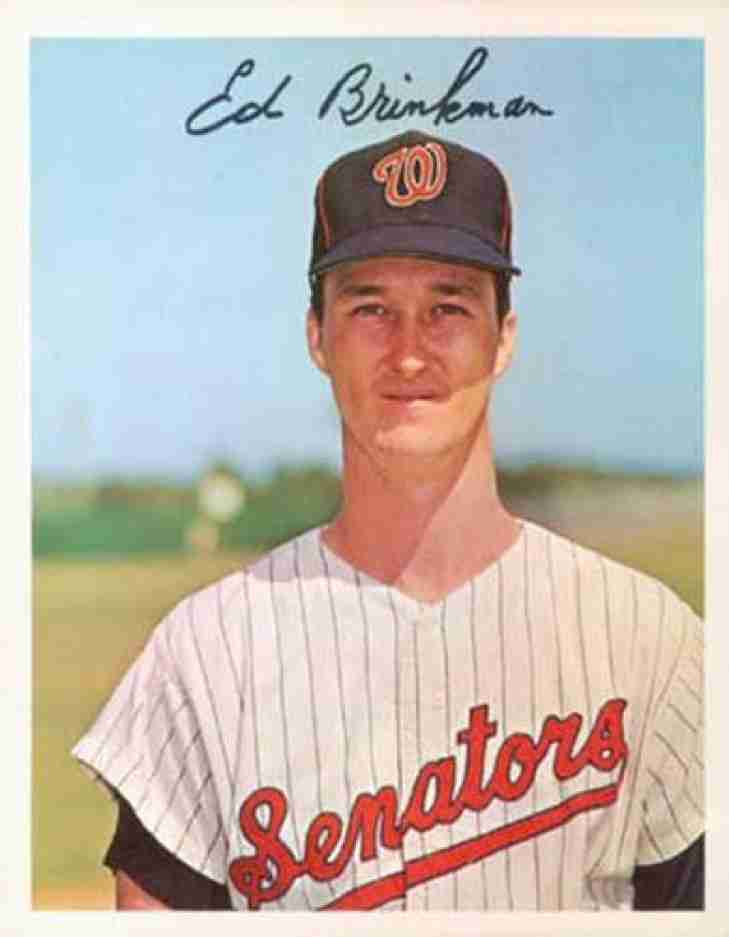
Long before modern analytics revealed the significant, hidden value of preventing runs, Ed Brinkman mastered defensive geometry at shortstop. Signed as an amateur free agent in 1961 by the expansion Washington Senators, this agile and reliable infielder became the team's defensive cornerstone as it struggled to establish itself in the American League, consistently demonstrating defensive skills that amazed opposing managers.
Brinkman’s offensive profile was modest, mainly serving as a bottom-of-the-order hitter focused on contact and advancing runners. However, once on the field, he dramatically changed how he played. With outstanding lateral range, swift reflexes, and excellent instincts, "Brink" transformed the six-hole into a no-hit zone for opponents.
His outstanding defensive skills reached an elite level under manager Ted Williams. Brinkman excelled in the junior circuit's advanced metrics, leading the American League in Defensive bWAR twice while with Washington—recording a top 2.8 dWAR in 1969 and a strong 2.7 dWAR in 1970. His on-field technique was impeccable; in 1970, he led all AL shortstops in games, assists, and double plays, demonstrating he was a vital part of the Senators' pitching success.
That decade-long residence in the nation's capital ended just before the franchise headed to Texas. In December 1970, Washington traded Brinkman to the Detroit Tigers as a key part of a blockbuster deal for ex-Cy Young winner Denny McLain. Ironically, Brinkman achieved his greatest team success, along with his only All-Star and Gold Glove awards, while playing for Detroit. He famously set a major league record by playing 72 consecutive errorless games at shortstop in 1972.
Because he was traded exactly one year before the Senators moved to Arlington to become the Rangers, Brinkman never wore the Texas uniform. Still, as a ten-year veteran with a significant place in the franchise's history from the Washington era, his legendary defensive skills remain a key part of the organization's roots.
37. John Wetteland

In December 1996, John Wetteland signed a lucrative free-agent deal with the Texas Rangers, bringing top-tier high-leverage credentials. Just after winning the 1996 World Series MVP with the New York Yankees, this fierce, hard-throwing right-handed closer was added to secure the team's dominance in the American League West. Over the last four seasons of his career, he fulfilled that role with precise efficiency.
Wetteland effectively closed the opposition's batting lineup by utilizing a predominantly fastball and an incisive slider, which he relied on even more following elbow surgery prior to the 1999 season. He distinguished himself as a reliable and consistent presence at the rear of the Texas bullpen, surpassing the 30-save mark in each of his four seasons with the team. Moreover, he played a pivotal role in transforming the club into a multiple-time division champion, earning consecutive American League All-Star selections in 1998 and 1999, while continuously surpassing his own team records.
His individual production peaked during those back-to-back pennant chases. He racked up 42 saves with a pristine 2.03 ERA in 1998, then followed it up with a career-high 43 saves in 1999. His relentless efficiency during that 1999 individual showcase helped lead the Rangers to a 95-win division championship, earning him a sixth-place finish in the American League Cy Young voting. By the time he completed his final major-league appearance in 2000, he had accumulated 150 saves in a Rangers uniform, establishing a benchmark that cements his status as the franchise's all-time saves leader.
With Texas, Wetteland made 248 relief appearances and compiled a 20–12 record alongside a stellar 2.95 ERA, a 1.18 WHIP, and a franchise-record 150 saves. He threw 253.1 innings, with 248 strikeouts. He was officially inducted into the Texas Rangers Hall of Fame in 2005.
370. Lisa Ryzih

369. Irene Vecchi