


Site Admin
44. Brian Dozier
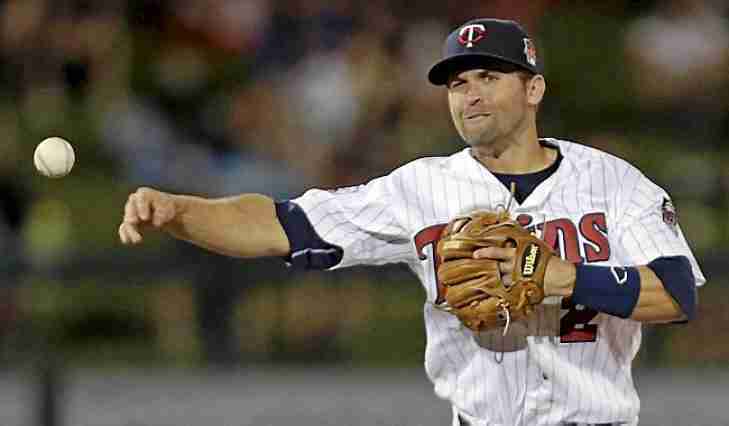
Playing his college ball at Southern Mississippi, Brian Dozier debuted in 2012 as a hard-nosed infielder who would completely redefine the power dynamic at second base for Minnesota. While historically the position was reserved for slap hitters and table-setters, Dozier operated as a true middle-of-the-order threat with an elite pull-side stroke.
Dozier broke out during his 2015 All-Star campaign, hitting 28 home runs and establishing himself as a top run-producer. In 2016, he reached a career Peak, hitting 42 home runs that set the American League record for a primary second baseman. He combined power with a sharp eye and speed, earning AL MVP votes from 2015 to 2017 and showing his ability to lead a lineup.
Dozier was a versatile athlete who impacted the game in multiple ways. He excelled on the basepaths and at the plate, finishing in the top ten in Power-Speed five times and in the top five in runs scored three times. His glove work matched his offensive value; he earned the Wilson Defensive Player award in 2013 and won an American League Gold Glove in 2017.
In July 2018, the rebuilding Twins traded Dozier to the Los Angeles Dodgers in exchange for Logan Forsythe and prospects Devin Smeltzer and Luke Raley. With Minnesota, Dozier had 928 Hits, 167 of which were Home Runs.
40. Zoilo Versalles
Zoilo Versalles first wore the Washington uniform in 1959 at age nineteen. Hailing from Havana, he was a lean, explosive talent who soon became the team's defensive cornerstone as it shifted to the Upper Midwest. Nicknamed "Zorro," he was the infield's high-energy heartbeat, leaving a statistical mark characterized by a remarkable peak that surpassed most shortstops of the 1960s.
Let’s look at that 1965 AL MVP, where Zorro might be one of the most unlikely MVPs in league history.
That year, Versalles led the American League in bWAR (7.2), runs scored (126), doubles (45), and triples (12). He showcased total command of the diamond, earning his second Gold Glove and leading the Twins to their first pennant in Minnesota. It was an incredible year for Versalles, whose claim for that year’s MVP was solid.
Versalles’ time in the Twin Cities was characterized by a notable statistical anomaly: his performance outside the 1965 peak was significantly different. Although he was a regular player from 1961 to 1967, his offensive productivity was often limited, as shown by his .296 on-base percentage in Minnesota. In 1965, he achieved a remarkable milestone that represented nearly half of his overall impact with the team, but he struggled to replicate that MVP-caliber performance in subsequent seasons. He was a dynamic player who could influence a game with his glove and speed, but his batting fluctuated.
He was traded to the Los Angeles Dodgers after the 1967 season, leaving behind 1,164 hits.
Versalles’s position may seem very low, especially for a former MVP, but the overall look at his numbers necessitates his place here.
The Twins inducted Versalles into their Hall of Fame in 2006.
41. George McBride
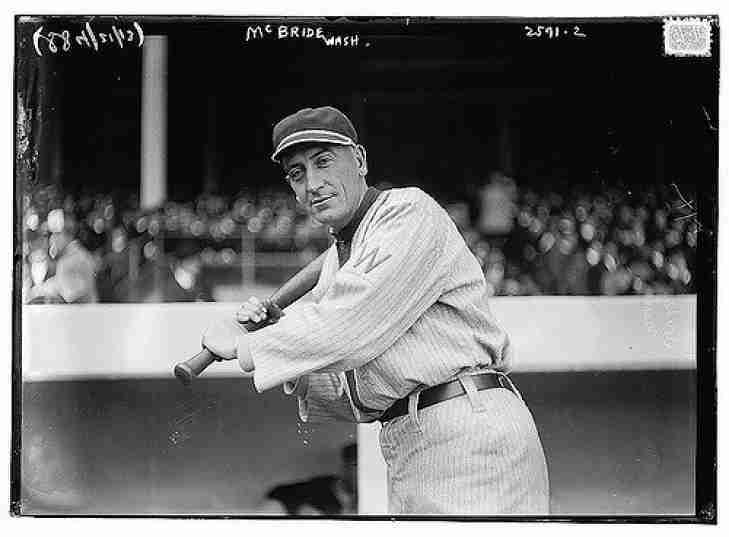
George McBride assumed the shortstop role in Washington in 1908, serving as a reliable player who spent over ten years anchoring the infield behind Walter Johnson. During an era characterized by rugged field conditions and a focus on small-ball, McBride was a top-tier defensive mainstay.
McBride's tenure was marked by a defensive run nearly historic in magnitude. Well before modern analytics could quantify it, he excelled on the field, leading the American League in Defensive bWAR four times. He recorded seven seasons with a Defensive bWAR over 2.0, including two outstanding seasons surpassing the 3.0 threshold. His positioning and range earned such respect that he remains 25th all-time in career Defensive bWAR in Major League history, a clear sign of a player who turned run prevention into an exact science.
Conversely, McBride was a non-threat at the plate. He was a textbook "good glove, no hit" player, never batting higher than .235 in any season during his entire time in Washington. Yet his defensive value was so immense that the league couldn't ignore him; he received MVP votes for four consecutive years from 1911 to 1914, peaking with a fourth-place finish in 1912.
McBride played less frequently from 1917 to 1920, playing in fewer than 20 games in the last three seasons. As a Senator, McBride compiled 1,114 hits, a .219 batting average, and an elite 23.3 Defensive bWAR.
39. Rick Aguilera
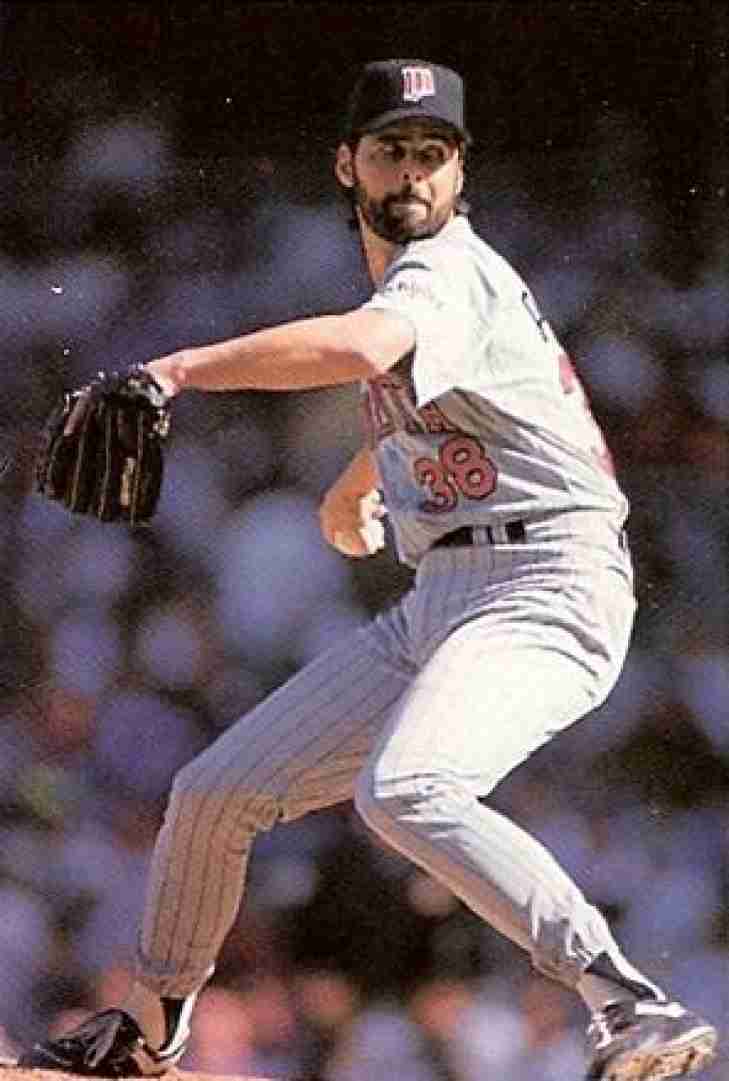
Rick Aguilera arrived in the Twin Cities in July 1989 as a primary piece of the blockbuster trade that sent Frank Viola to the New York Mets. Initially, Aguilera operated as a professional mainstay in the rotation, fulfilling his wish to remain a starter for the final 11 games of that season. However, the organization recognized a high-leverage potential in his electric stuff, transitioning him to the bullpen in 1990—a move that would fundamentally alter the franchise's trajectory and secure his place as a Minnesota legend.
After becoming the full-time closer in 1990, he demonstrated exceptional efficiency by recording 32 saves, showcasing a strategic coaching decision. His performance peaked even further in 1991, when he tied the franchise record with 42 saves and secured his first of three straight All-Star selections.
Aguilera’s legendary status peaked during the 1991 World Series. As a dominant pitcher, he recorded three saves in the ALCS and closed Game 1 of the Fall Classic. He also made history in Game 3 when, in the top of the 12th inning, he was brought in as a pinch-hitter with the bases loaded—marking the first pitcher to do so in a World Series since Don Drysdale in 1965.
In 1995, Aguila was traded to the Red Sox during the season; he returned as a free agent in 1996 and initially re-entered the rotation as a veteran starter. After one season back in the rotation, where he recorded eight wins, he returned to his hallmark closer role for his final years in the Twin Cities, continuing to pile up saves until a mid-season trade to the Chicago Cubs in 1999.
As a Twin, Aguilera posted a 40-47 record and 254 saves. He was inducted into the Twins Hall of Fame in 2008.
