
3. Rickey Jackson

Rickey Jackson arrived with the Saints as a second-round pick out of Pittsburgh in 1981 and stepped into the starting lineup at left outside linebacker right away. The physical style showed up immediately. He led the team in tackles as a rookie and added eight unofficial sacks before the stat became official the next year. From then on, he became the most consistent and productive linebacker the franchise had ever had, rarely missing a game and producing at a high level against both the run and the pass. The Saints had never posted a winning season before he arrived, and his presence on the edge gave the defense a tone it had lacked.
The production stayed strong through the early and mid-1980s. Jackson posted double-digit sack totals in 1983, 1984, and 1985 while earning Pro Bowl selections each of those years. He finished near the top of the league in tackles during several of those seasons and forced turnovers at a high rate. The defense improved around him, and the Saints finally reached the playoffs for the first time in franchise history in 1987. Jackson’s ability to set the edge and rush the passer made it harder for opposing offenses to run or throw without accounting for him on every snap. By the middle of the decade, he had already established himself as one of the more complete outside linebackers in the NFL.
He maintained that level of play into the late 1980s and early 1990s as part of the group known as the Dome Patrol. Alongside Pat Swilling, Sam Mills, and Vaughan Johnson, Jackson formed one of the league’s more physical and productive linebacker units. The four of them combined size, speed, and toughness in a way that made the middle of the field difficult to attack. Jackson earned another Pro Bowl nod in 1986 and remained a core starter even as the roster changed around him. In 1989 he was involved in a serious car accident that fractured his cheekbone and required surgery. Doctors expected him to miss several weeks, but he returned after only two games with his jaw wired shut and wearing a special helmet for protection. He still finished the season with 7.5 sacks and played through the rest of the year without missing additional time. The toughness that defined his career showed up clearly in that stretch.
The peak recognition arrived in the early 1990s. Jackson earned Pro Bowl selections in 1992 and 1993 while posting 13.5 and 11.5 sacks in those seasons. He led the NFL in fumble recoveries in 1990 and again in 1991, and he continued to force fumbles at a high rate throughout his Saints years. Across his first six seasons, he regularly ranked among the league leaders in tackles, and the cumulative numbers kept climbing. The combination of pass-rush production and run defense made him a problem that opposing coordinators had to scheme around every week. The Dome Patrol as a whole helped turn the Saints into a consistent playoff contender for the first time in franchise history, with Jackson serving as the longest-tenured and most decorated piece of that unit.
Jackson played through the 1993 season with New Orleans and then signed with the San Francisco 49ers for his final two years. In San Francisco, he shifted primarily to defensive end and helped the team win Super Bowl XXIX. His time with the Saints ended after 1993. With New Orleans, he finished with 115 sacks, 1,104 tackles, 38 forced fumbles, and 27 fumble recoveries across 195 games. He did so while earning six Pro Bowl selections and five second-team All-Pro honors, and missing only two games in 13 seasons.
Jackson entered the Pro Football Hall of Fame in 2010, becoming the first player inducted primarily for his contributions with the Saints. He had already been elected to the Saints Hall of Fame in 1997 and was named an inaugural member of the Saints Ring of Honor in 2013. The second-round pick who arrived as a rookie starter anchored the Dome Patrol and played through a wired jaw left as the franchise’s most productive linebacker and one of the more durable and impactful defensive players in team history.
2. Jahri Evans

When a quarterback like Drew Brees is throwing the ball as often as he did, the right side of the offensive line has to hold up. Jahri Evans handled that job for the Saints from the moment he arrived. The fourth-round pick out of Bloomsburg in 2006 stepped into the starting lineup at right guard as a rookie and never came out. He played every game that first season and maintained that availability for the rest of his time in New Orleans.
Evans earned his first Pro Bowl selection in 2009 and followed it with five more straight nods through 2014. From 2009 to 2012, he was a first-team All-Pro each year, and he added a second-team selection in 2013. Those peak seasons lined up with the Saints’ most productive offensive stretches. In 2009, the line kept Brees clean enough for the team to start 13-0 and win Super Bowl XLIV. Evans started every game that year, including the postseason, and the protection allowed Brees to complete over 70 percent of his passes in the regular season. The next three seasons produced similar results: high completion percentages, big yardage totals, and Evans remaining one of the league’s more consistent interior linemen.
He stayed durable through the middle of the decade. Evans started every game from 2006 through 2012 and missed only a handful of contests across the rest of his Saints career. The combination of power in the run game and technique in pass protection made him a reliable piece next to Brees. Defenses rarely found easy pressure up the middle when he was on the field, and the Saints’ offense stayed near the top of the league in scoring during most of those years. He finished in the top ten in Approximate Value twice, which is uncommon for a guard, and the recognition matched the on-field steadiness.
The Saints released Evans after the 2015 season. He returned for one more year with the team in 2016 before finishing his career with a single season in Green Bay in 2017. His primary run in New Orleans ended after that 2016 campaign. With the Saints, he started 169 regular-season games and all 10 playoff games he appeared in, including the Super Bowl XLIV win. He earned six Pro Bowl selections and four first-team All-Pro honors. Evans was inducted into the Saints Hall of Fame in 2020. The fourth-round pick from a Division II school stepped in as the starting right guard as a rookie and left as one of the most decorated interior linemen in franchise history, a key piece of the line that protected Brees during the Super Bowl run and the high-volume years that followed.
1. Drew Brees

Drew Brees spent his first five seasons with the San Diego Chargers, where the accuracy and decision-making showed up early enough to earn a Pro Bowl selection in 2004. The Chargers drafted Philip Rivers the following year, and Brees was coming off shoulder surgery that made other teams cautious about his long-term health. He signed with the New Orleans Saints before the 2006 season, a move that reshaped both his career and the franchise's direction.
He arrived in a city still recovering from Hurricane Katrina. The Saints had spent the previous season playing in San Antonio and Baton Rouge because the Superdome was not ready, and questions lingered about whether the team would remain in New Orleans long-term. Brees responded by leading the NFL in passing yards with 4,418 and earning a first-team All-Pro nod in his first year. The shoulder held up under a heavy workload, the offense moved the ball consistently, and the Saints reached the NFC Championship Game. From the outset, he became one of the more visible public faces of the city’s recovery, not just the quarterback on the field. He showed up at community events, spoke openly about the city’s progress, and gave fans a reason to believe the team and the place were moving forward together.
The production stayed high the next two seasons. In 2007, he threw for 4,423 yards and 28 touchdowns while completing 67.5 percent of his passes. The following year he posted 5,069 yards and 34 touchdowns, finishing just short of the single-season passing-yards record at the time and earning another Pro Bowl selection. The Saints went 8-8 and missed the playoffs, but the volume and efficiency made clear that the offense could rank among the league’s best when the supporting cast stayed healthy. Brees completed enough short and intermediate throws that defenses could not simply load the box without giving up easy gains underneath. Those seasons also kept the Saints in the conversation as a competitive team rather than a rebuilding one, which mattered in a city that had already lost so much.
The clearest peak came in 2009. Brees completed 70.6 percent of his throws for 4,388 yards and 34 touchdowns while throwing only 11 interceptions. The Saints started 13-0, finished 13-3, and earned the top seed in the NFC. In the playoffs, they beat the Cardinals and Vikings before facing the Colts in Super Bowl XLIV. Brees completed 32 of 39 passes for 288 yards and two touchdowns, earned Super Bowl MVP, and the Saints won 31-17. It was the franchise’s first championship, arriving in a city that had faced questions about its long-term future only a few years earlier. The win gave New Orleans a civic moment that went beyond football; the parade and the celebrations felt like confirmation that the city could still host big events and rally around something positive after the storm.
He followed the title with another strong season in 2010, throwing for 4,620 yards and 33 touchdowns as the Saints returned to the playoffs. The next year produced his highest individual volume. In 2011, Brees completed 71.2 percent of his passes for 5,476 yards and 46 touchdowns, leading the NFL in both yards and scores while earning Offensive Player of the Year honors. The Saints went 13-3 again, though the season ended with a playoff loss. The combination of accuracy and volume that year remains one of the more remarkable individual seasons by a quarterback in the modern era, with Brees spreading the ball across multiple receivers while protecting it at a high rate. Even in the years that followed, his presence kept the offense ranked near the top of the league in scoring and kept fans engaged through stretches when the defense struggled.
Brees stayed at that level through the middle of the decade. He threw for more than 5,000 yards again in 2012, 2013, and 2016, and he led the league in passing yards four times between 2011 and 2016. Completion percentages stayed above 68 percent in most of those seasons, and touchdown totals regularly landed in the mid-30s or higher. The Saints reached the playoffs in several of those years, and Brees continued to add Pro Bowl selections. The offense under Sean Payton relied on quick decisions and precise timing routes, and Brees remained the constant even as the receivers and offensive line changed around him. In 2012, he threw for 5,177 yards and 43 touchdowns. The following year he posted 5,162 yards and 39 scores while completing 68.6 percent of his passes. Those years produced more Pro Bowl recognition and kept the Saints competitive in the NFC South even when other parts of the roster fluctuated.
Even in seasons when the team record fluctuated, Brees kept the offense among the league leaders in scoring. The timing and anticipation that defined his game let him get the ball out quickly under pressure, and his completion percentage rarely dipped below the high 60s once the system was fully in place. He also continued to show up around the city in ways that went beyond game days. After the Super Bowl win, he stayed involved in local causes, and his consistency on the field gave the franchise a face that fans could trust year after year. That combination of on-field production and off-field presence made him one of the more recognizable athletes in New Orleans for more than a decade.
Injuries began to limit his availability in 2019 and 2020. He still completed more than 70 percent of his passes in both seasons and posted efficient numbers when he played, but his volume dropped, and his shoulder issues returned. He started 11 games in 2019 and 12 in 2020 before retiring after the 2020 season. His time with the Saints ended there. With New Orleans, he finished with 68,010 passing yards and 491 touchdowns across 15 seasons. He earned 12 Pro Bowl nods, one first-team All-Pro, and four second-team selections, and he led the league in passing yards seven times and touchdowns four times.
At the time of his retirement, Brees held the NFL record for career passing yards, with the large majority of that total coming in New Orleans. He also ranked second in career touchdown passes. The numbers reflected both the longevity and the efficiency that defined his years with the Saints. He entered the Pro Football Hall of Fame in 2026 and was inducted into the Saints Hall of Fame. The quarterback who arrived after shoulder surgery and a change of teams left as the player who delivered the franchise’s first Super Bowl, gave the city a sustained stretch of competitive football, and became one of the more lasting symbols of its recovery and resilience.
224. La'Roi Glover
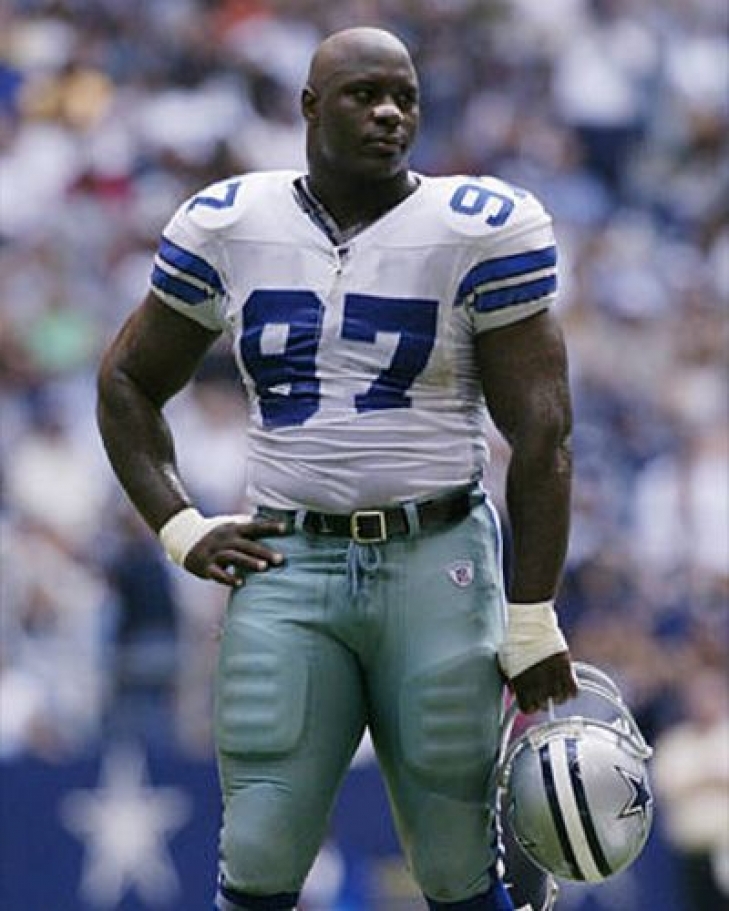
From San Diego State, La’Roi Glover took a longer path to NFL stardom. He was a 5th-round pick in the Oakland Raiders draft, but they cut him a year later, and the New Orleans Saints picked him up. In New Orleans, he became a star, and in 2000 he would be named a First Team All-Pro, NFL Alumni Defensive Lineman of the Year, and the NFC Defensive Player of the Year. The ferocious pass-rusher had 17.5 Sacks would also lead the league.
Glover began a six-year Pro Bowl run that extended into his time with the Dallas Cowboys, with whom he signed in 2002. Glover would be named to the Second Team All-2000s roster. He retired with 83.5 Sacks over his career.
#15 Overall, Cameron Jordan, New Orleans Saints, Defensive End, #7 Defensive Lineman/Linebacker: Pass Rusher

2025 Pre-Season Rank #14, 2024 Pre-Season Rank #21, 2023 Pre-Season Rank #27, 2022 Pre-Season Rank #25, 2021 Pre-Season Rank #36, 2020 Pre-Season Rank #42. Peak Period: 2017-21
Cameron Jordan is one of the many players on this list whose second half seems to eclipse his first, and isn't that a stunning statement considering that he was a 2010s All-Decade Player? He had a six-year Pro Bowl streak snapped in 2022, but has eight in total, and a healthy number of career Sacks (132) and Tackles for Loss (175). His Hall of Fame case is also bolstered by his association with only one team, the New Orleans Saints, where he has been a leader on and off the field for over a decade.
Jordan begins the 2026 season and announced that this would be his last. A ninth Pro Bowl is possible, and if he gets that along with significant behind the line of scrimmage stats, his chances for Canton will rise, but despite the solid resume, bigger names in similar roles could overshadow him. How many times have we seen that before?
Reggie Bush & Marques Colston to the New Orleans Saints HOF

The New Orleans Saints have announced that former players, Reggie Bush and Marques Colston will be inducted into their franchise Hall of Fame.
Reggie Bush was drafted 2ndoverall in 2006 and the former USC Trojan was viewed by many as the savior of the franchise coming off the Saints return to exile following a season playing on the road after Hurricane Katrina. Bush may not have put forth the statistical impact that was expected, but he was a bona fide threat on every single play and opened up the offense in ways that few can do. Bush would be a key figure in the Saints Super Bowl XLIV Championship win and he would accumulate 4,968 All-Purpose Yards with 33 Touchdowns.
Marques Colston was also drafted in 2006, but he was chosen in the 7thRound from Hofstra. The Wide Receiver would play all 10 of his seasons with the Saints and he is the franchise’s all-time leader in Receptions (711), Receiving Yards (9,759) and Touchdowns (72).
The two former players are joined by former Louisiana Governor, Kathleen Blanco who worked to keep the Saints in New Orleans following Hurricane Katrina and expediting the repair of the Superdome.
We here at Notinhalloffame.com would like to congratulate the newest members of the New Orleans Saints Hall of Fame.
Lance Moore Retires. Saints HOF perhaps?
Five days after signing with the Atlanta Falcons, Wide Receiver, Lance Moore has announced his retirement from Professional Football.
Undrafted in 2005 out of the University of Toledo, Moore would sign on with the New Orleans Saints and made the active roster for six games in 2006. He would build himself up to the number three starter and worked his way up the starter, building himself up to be a part of why the Saints got to, and won Super Bowl 44. Moore would have 2 receptions for 21 Yards and a 2 Point Conversion in that big game.
In 2012, Moore would have his biggest season, catching 75 passes for 1,041 Yards and 6 Touchdowns. He would leave New Orleans and finish off his career with the Pittsburgh Steelers and Detroit Lions.
He retires with 389 Receptions with 4,816 Yards and 44 Touchdowns.
While we have no illusion that Lance Moore will be considered for the Pro Football Hall of Fame, the New Orleans Saints Hall of Fame is within his grasp and could be there in the next ten years.
Hall of Fame or not, we here at Notinhalloffame.com would like to thank Lance Moore for his gridiron memories and we wish him the best in the next stage of his life.
A look at Morten Andersen's PFHOF Snub

Now that the Baseball Hall of Fame Class of 2016 has announced their class has done the same. We were hopeful to do this prior to the announcement of the actual inductees, but life, as it often does simply got in the way!
Saying that, we felt it was worth our time to take a look at the 2016 Nominees and debate whether they should have gotten in (or not) and look to the future of the Pro Football Hall of Fame.
76. Pat Swilling

The New Orleans Saints offense has been good for so long that people have forgotten that when they finally put decent teams together in the early ’90s, it was on the strength of their defense. Pat Swilling was a big part of those squads.
Pat Swilling was an excellent pass rusher who was brilliant at rushing the passer. As New Orleans’ resident sack superstar, he five times (and another with Detroit) achieved double-digit totals in that category. Swilling reached his high water mark in 1991, when he led the league in Sacks and captured the NFL Defensive Player of the Year Award.
Pat Swilling was one of the most tenacious defenders of all time, but despite making the playoffs often, his respective teams never made it to the second game. Had he been able to extend more in the playoffs, it is very possible that he could have been at least a Hall of Fame Finalist at one point. Swilling might be among the most disrespected defensive players in football, and that includes his own fanbase.
Should Pat Swilling be in the Hall of Fame?
The New Orleans Saints add two more to their HOF

As such it is news to us that last night the New Orleans Saints inducted two new members into their Hall of Fame.
Kick/Punt Return Specialist, Tyrone Hughes played for the Saints from 1993 to 1996 and in each season he led the National Football League in a return category. Hughes was the Punt Return Yards leader in ’93 and in 1994 to 1996 he would be the league leader in Kick Return Yards. In total, Hughes accumulated 6,777 Return Yards and was named to the Pro Bowl in 1993.
Joining Hughes is Michael Lewis who played for the franchise from 2001 to 2006. Like Tyrone Hughes, Lewis was primarily a returner who in 2002 led the NFL in Punt Return Yards, Kick Return Yards and All-Purpose Yards and not surprisingly was named a First Team All Pro and Pro Bowl Selection that season. Overall as a Saint, would tally 7,955 All-Purpose Yards.
The addition of Hughes and Lewis to the Saints Hall of Fame is also noteworthy as both are natives of the Crescent City.
We here at Notinhallofame.com would like to congratulate the newest class to the New Orleans Saints Hall of Fame.
200. Darren Sharper

Although he became more known for the sexual assault case in 2014 (which alleged that he was a serial rapist), Darren Sharper was known mostly on the gridiron for his defensive skills and for leading the National Football League in Interception Return Yards three times.
Sharper would also lead the NFL in picks twice, return Touchdowns three times, and was a five-time Pro Bowler who helped the New Orleans Saints win their first Super Bowl. Does this eliminate any issues that he had in his personal life? We were curious to find out, but we think we know the answer.
