

Committee Chairman
31. Bobby Mitchell
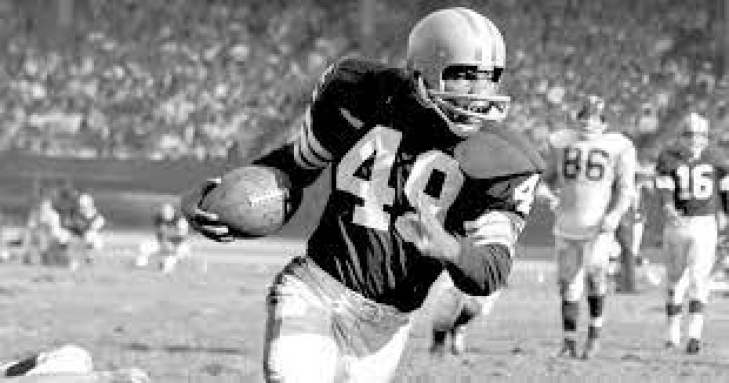
Selected in the seventh round of the 1958 NFL Draft out of Illinois, Bobby Mitchell became another iconic discovery by head coach Paul Brown. Boasting electric 9.5-second 100-yard-dash speed, Mitchell immediately stepped into the Cleveland backfield alongside Jim Brown, creating one of the most explosive, dynamic rushing duos in football history.
Cleveland utilized Mitchell as a versatile and multifaceted player. Capable of scoring at any moment he possessed the ball, he positioned himself at halfback, extended out wide as a pass receiver, and served as the team's primary kick and punt return specialist. During his four seasons in Ohio, Mitchell accumulated an impressive total of 5,916 all-purpose yards, consistently ranking within the top six league-wide in all-purpose yards each season. His exceptional speed on the periphery complemented Jim Brown's formidable interior power, propelling the Browns' offense to consecutive winning seasons and securing a place in the 1957 NFL Championship Game.
Despite his significant productivity and popularity, Mitchell was traded after the 1961 season. In pursuit of a formidable full-time fullback to complement Jim Brown, Cleveland exchanged Mitchell to Washington for the rights to Heisman Trophy recipient Ernie Davis. Tragically, Davis was diagnosed with leukemia shortly after the trade, which prevented him from ever participating in an NFL game. Concurrently, the transaction bore substantial historical significance: Washington was the last remaining segregated team in the NFL, and owner George Preston Marshall faced substantial pressure from the federal government to desegregate. Mitchell thus became the first African American star in the history of the Washington franchise.
Switching to a full-time flanker in his new environment, Mitchell achieved a Hall of Fame level, leading the league in receiving yards twice and earning four Pro Bowl selections. Over four seasons with Cleveland (1958–1961), he played 48 games, totaling 2,297 rushing yards, 1,462 receiving yards, and 38 touchdowns.
27. Walt Michaels
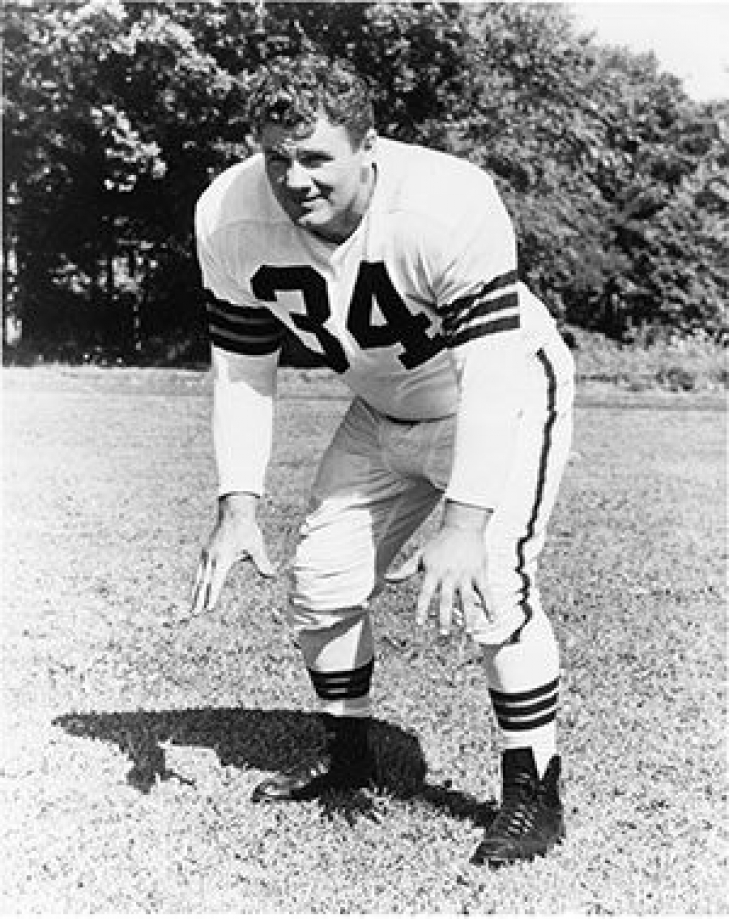
Drafted out of tiny Washington & Lee in the seventh round of the 1951 NFL Draft, Walt Michaels took a roundabout path to becoming a Cleveland icon. Before he ever played a down in the regular season, the Browns traded him to Green Bay. Michaels logged a solid rookie year with the Packers, but Paul Brown quickly realized he had let a talent slip away. Before the 1952 campaign, Brown traded three players back to Green Bay to re-acquire Michaels—a decision that paid massive dividends for the franchise.
Inserted into the middle of the defense, Michaels evolved into the cerebral leader and signal-caller for Paul Brown’s unit. Operating as a pre-snap coordinator on the field, he called the defensive plays with sharp instincts, combining tactical awareness with punishing tackle-to-tackle physical play.
Michaels anchored the defense through Cleveland's championship runs in 1954 and 1955. His relentless coverage and run defense helped shut down opponents’ game plans, including a memorable two-interception performance in the 1954 NFL Championship Game victory over Detroit.
His individual dominance gained league-wide recognition in the second half of the decade. Michaels rattled off five consecutive Pro Bowl selections from 1955 through 1959, consistently ranking among the game's premier linebackers. While official tackle statistics were not tracked during his era, film study and team records indicate he was regularly the team's leading tackler.
After ten seasons in Cleveland (1952–1961), Michaels stepped away from the team, later putting on the pads for one final season in 1963 with the AFL's New York Jets—a franchise he would eventually lead as head coach years later.
With Cleveland, Michaels appeared in 118 regular-season games, picking off 11 passes and recovering eight fumbles while playing in five NFL Championship Games. The organization inducted him into the Cleveland Browns Legends in 2006.
30. Brian Sipe
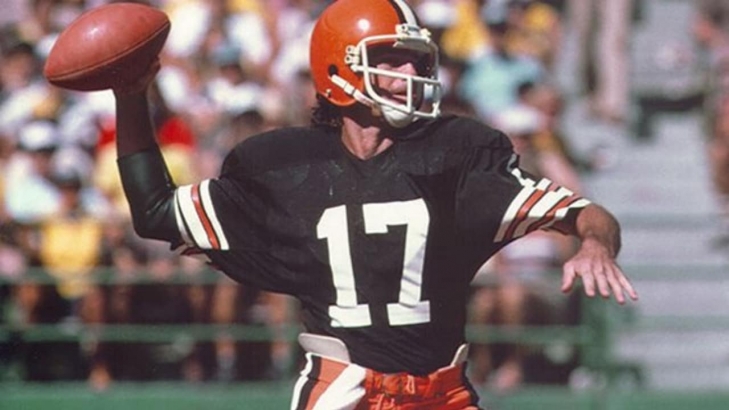
Selected in the 13th round of the 1972 NFL Draft out of San Diego State, Brian Sipe faced a long, unheralded path to NFL stardom. He spent his first two years tucked away on Cleveland's taxi squad before earning a spot on the active roster, serving strictly as a backup for two more seasons while making just seven sporadic starts.
Promoted to full-time starter status in 1976, Sipe endured several years of mid-table results before hitting his stride at age 30. His true breakout arrived in 1979, when he paced the NFL with 28 touchdown passes while throwing for 3,793 yards. Armed with a penchant for fourth-quarter magic, Sipe directed late-game comeback after late-game comeback, birthing the beloved "Kardiac Kids" era that electrified Northeast Ohio.
Everything clicked at a historical level in 1980. Sipe put together one of the finest passing seasons of his era, throwing for 4,132 yards, 30 touchdowns, and just 14 interceptions while leading the league with a 91.4 passer rating. Behind his calm demeanor in high-leverage moments, Cleveland captured the AFC Central crown, and Sipe was rewarded with First-Team All-Pro honors, a Pro Bowl selection, and the NFL Most Valuable Player award.
The team regressed over the next few seasons, and a strike-shortened 1982 campaign saw Sipe temporarily benched. He rebounded in 1983, throwing for 3,566 yards and 26 touchdowns, but contract negotiations stalled after the season. Sensing a shift within the organization, Sipe opted to sign with the New Jersey Generals of the upstart USFL, ending his decade-long run in Cleveland and retiring from football a year later.
Over 10 seasons in Cleveland (1974–1983), Sipe started 112 games and compiled 23,713 passing yards and 154 touchdown passes, retiring as the franchise's all-time leader in both categories. The Browns permanently celebrated his legacy by naming him a Cleveland Browns Legend in 2002.
29. Joe DeLamielleure
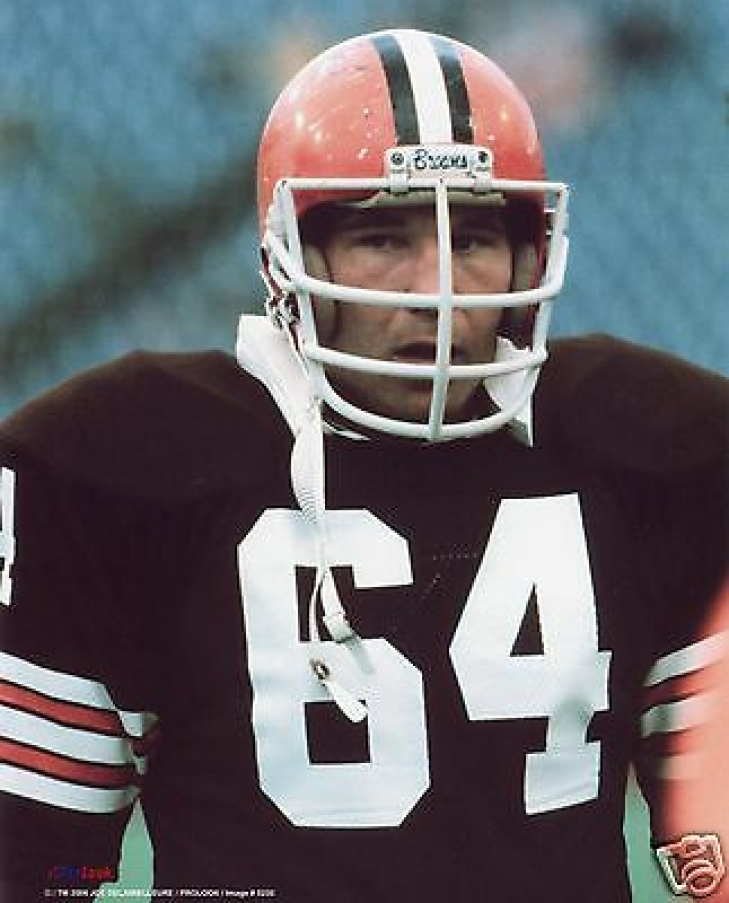
After building a Hall-of-Fame resume in the 1970s as a core member of Buffalo's famous "Electric Company" offensive line, Joe DeLamielleure headed west to Cleveland before the 1980 season in a high-profile trade.
The veteran guard made an immediate, history-making impact in his new uniform. In his first year with the Browns, DeLamielleure anchored the interior pass protection for Brian Sipe during his NFL MVP campaign. In doing so, he achieved a unique milestone in league history: becoming the first offensive lineman to block for both a 2,000-yard rusher (O.J. Simpson in 1973) and a 4,000-yard passer (Sipe in 1980). His elite play earned him his sixth consecutive Pro Bowl selection alongside a Second-Team All-Pro nod, helping push the "Kardiac Kids" to the AFC Central division title.
DeLamielleure’s blue-collar work ethic and durability fit seamlessly into Cleveland's football culture. He served as a steadying force on the offensive line over the next four seasons, earning another Second-Team All-Pro selection in 1983 while mentoring younger linemen in the locker room.
Following his release ahead of the 1985 season, DeLamielleure returned to Buffalo for one final year before retiring from professional football.
Across five seasons in Cleveland (1980–1984), he started all 73 regular-season games he appeared in, bringing an intense, steady presence to the Browns' offensive front. His combined legacy across both franchises culminated in his induction into the Pro Football Hall of Fame in 2003, and the Browns permanently recognized his contributions by inducting him into the Cleveland Browns Ring of Honor.
