


Committee Chairman
34. Chip Banks
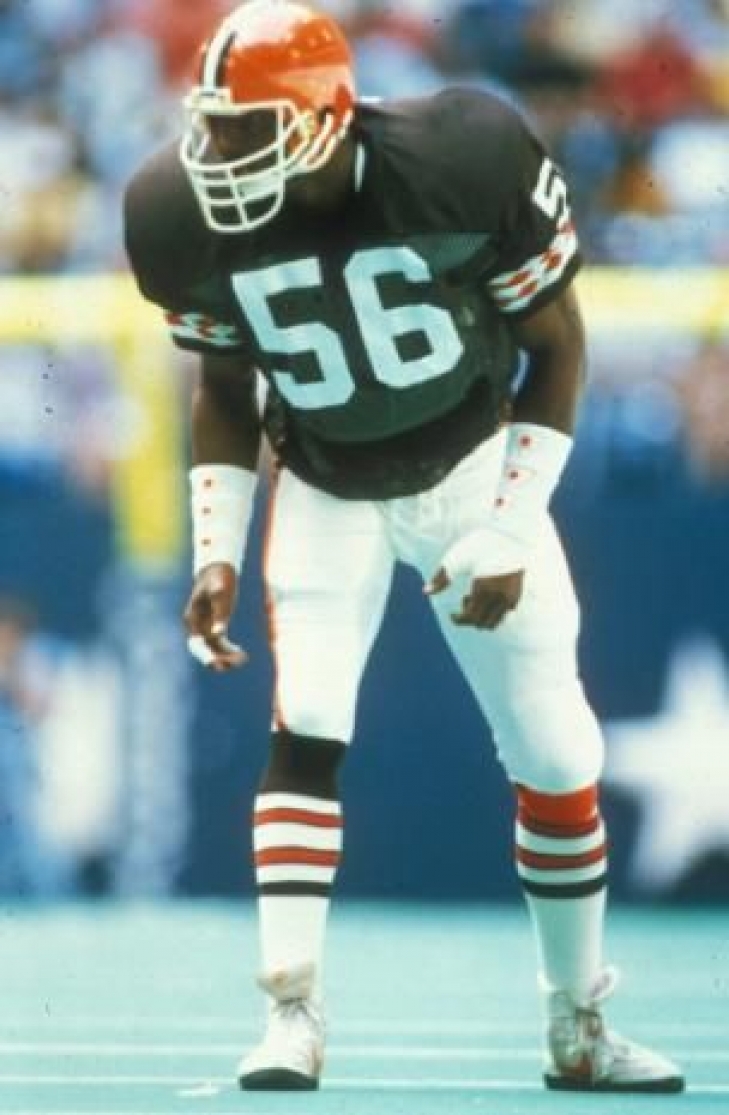
Selecting Chip Banks with the third overall pick in the 1982 draft paid immediate dividends for a Cleveland defense looking for a game-changer at linebacker. The USC product stepped onto the professional stage unfazed by the transition and put together a dominant inaugural campaign. Banks captured the AP NFL Defensive Rookie of the Year award while earning his first Pro Bowl selection, showcasing a rare blend of length, closing speed, and sideline-to-sideline pursuit.
Over his five seasons in Ohio, Banks established himself as one of the premier outside linebackers in the game. He was a versatile cornerstone of Marty Schottenheimer's defense, equally capable of setting the edge against the run, dropping into pass coverage, or blitzing the quarterback. From 1982 through 1986, he made four Pro Bowl appearances and earned First-Team All-Pro honors in 1983, solidifying a stretch when his name was consistently mentioned alongside the elite defenders of his era.
Banks played a key role in Cleveland's resurgence as a conference power, contributing to consecutive playoff runs in 1985 and 1986, and reaching the 1986 AFC Championship Game. In 1985, he achieved a career-best 11 sacks, showcasing his talent for disrupting pass blocking when given the chance on the edge. Over his five years with the Browns, he posted double-digit Approximate Value ratings in four seasons, consistently delivering strong performances.
Despite his superstar trajectory on the field, friction between Banks and the Cleveland front office began to simmer over contract demands. Fearing an impending holdout and a protracted negotiation, the Browns traded him to the San Diego Chargers ahead of the 1987 season as part of a high-profile draft-day swap. His business conflicts followed him to the West Coast, culminating in Banks sitting out the entire 1988 season during a contract holdout before resuming his career with the Indianapolis Colts.
With Cleveland, Banks started all 73 regular-season games he appeared in, racking up 27.5 sacks, five interceptions, and six fumble recoveries.
33. Jerry Sherk
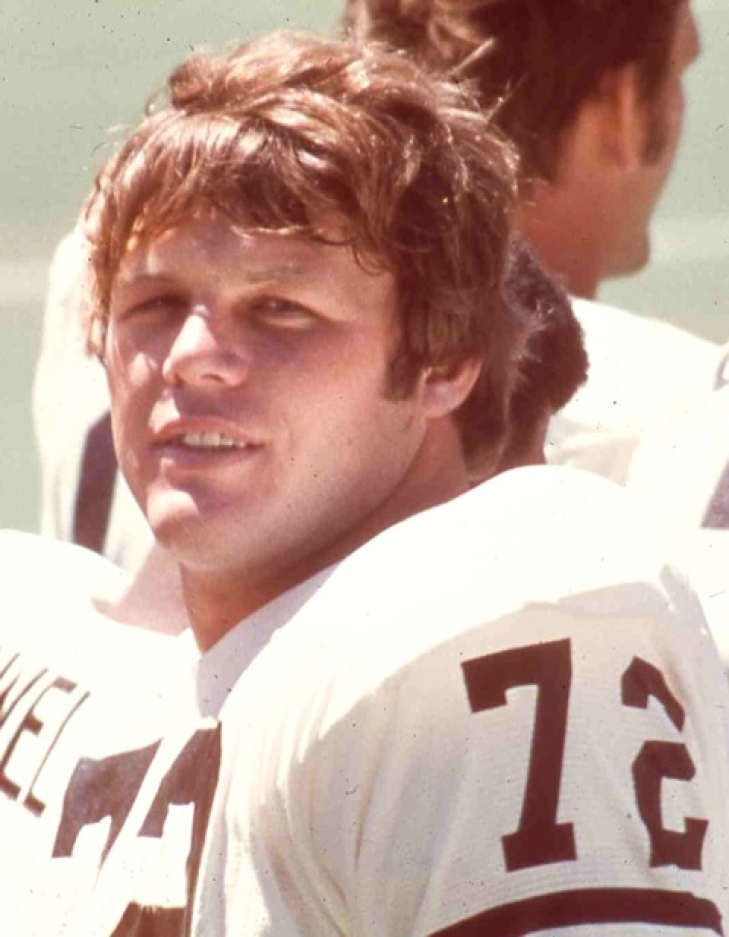
Taken in the second round of the 1970 NFL Draft out of Oklahoma State, Jerry Sherk stepped into Cleveland's defense as an immediate factor along the interior. While the 1970s lacked the championship hardware of previous decades for the Browns, Sherk served as the primary anchor for the franchise's defensive front throughout the entire era.
He won the starting right defensive tackle job as a rookie and quickly established himself as a dominant force against both the run and the pass. Combining raw wrestling strength with explosive lateral quickness, Sherk consistently collapsed the pocket from the inside. Over a stellar four-year stretch from 1973 to 1976, he earned four consecutive Pro Bowl selections, capping that run in 1976 with First-Team All-Pro honors and the Newspaper Enterprise Association (NEA) NFL Defensive Player of the Year award.
Sherk was among the most effective interior pass rushers of his generation. Though sacks did not become an official NFL statistic until 1982, retroactive film study credits him with 69.5 career sacks in Cleveland, including four seasons in which he cracked double digits. His relentless motor kept the Browns competitive through a transitional era, providing a steadying presence amid roster turnover and coaching changes.
A severe knee infection suffered in 1979 nearly ended his career, limiting him to just one game that season. Sherk fought his way back, returning to play three final seasons primarily as a designated pass rusher and veteran mentor before ending his career after the 1981 campaign.
Across 12 seasons spent entirely in Cleveland (1970–1981), Sherk played in 156 regular-season games and recorded 12 fumble recoveries alongside his 69.5 sacks.
28. Frank Minnifield
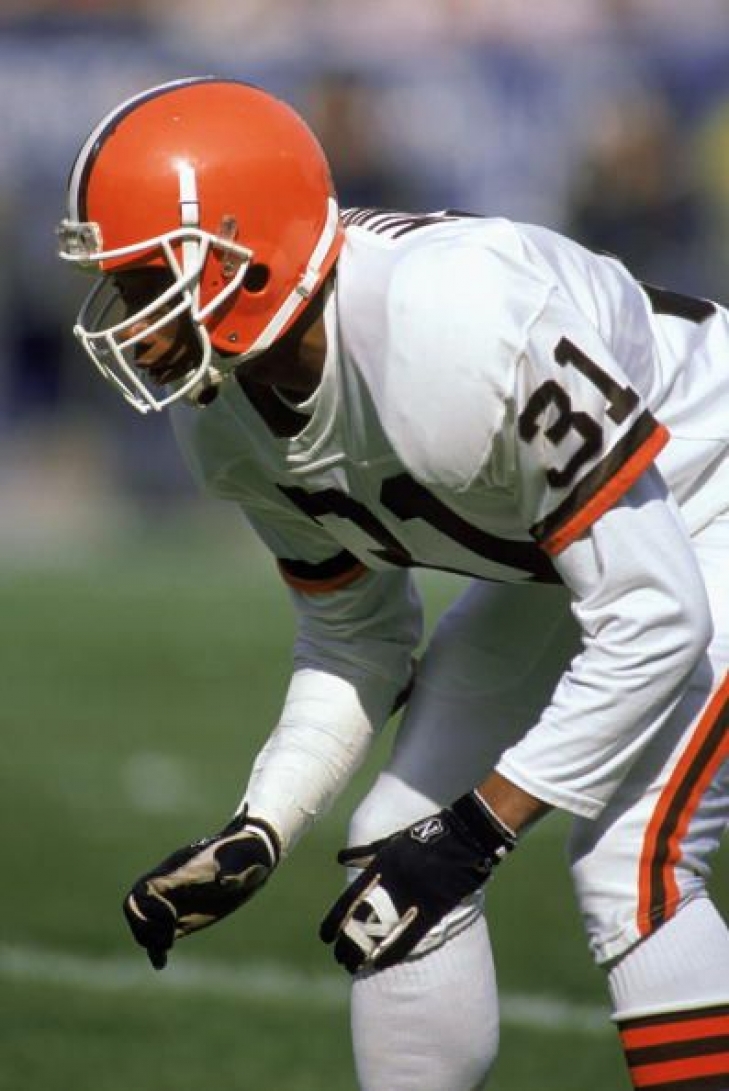
Frank Minnifield, initially overlooked by NFL teams from Louisville, took an unconventional path to professional football. He began in the USFL with the Chicago Blitz and Arizona Wranglers, demonstrating early on that his 5-foot-9 stature did not hinder his ability to excel in pass defense. During contract disputes, Minnifield filed and won a lawsuit against the USFL, which nullified his contract and allowed him to sign with Cleveland as a free agent in 1984.
The Browns put him on the field right away, and Minnifield responded with an All-Rookie campaign at cornerback. Playing with an ultra-physical, press-man style, he made up for his modest stature with fiery aggression, incredible leaping ability, and a willingness to deliver bone-jarring hits on boundary receivers and ball carriers alike.
By 1986, Minnifield had become a household name, earning four consecutive Pro Bowl selections from 1986 to 1989. Alongside Hanford Dixon on the opposite side, they formed the league's top cornerback duo. Defensive coordinator Marty Schottenheimer often relied on single coverage for both, freeing the front seven to focus on stopping the run. Minnifield’s career peaked in 1988 when he received First-Team All-Pro honors, with Second-Team All-Pro recognition in 1987 and 1989.
Alongside Dixon, Minnifield helped birth a franchise identity when the two began barking at their defensive teammates during training camp drills. That energy spilled directly into the bleachers at Municipal Stadium, creating the legendary "Dawg Pound" culture that remains the heart and soul of the fan base to this day.
A severe knee injury limited Minnifield to just seven games in 1990, stripping away some of his signature suddenness. He fought through injuries over his final two campaigns, serving as a respected veteran leader before hanging up his pads after the 1992 season.
Across nine seasons spent entirely in Cleveland (1984–1992), Minnifield picked off 20 passes and recovered seven fumbles. The team named him a Cleveland Browns Legend in 2005.
32. Bernie Kosar
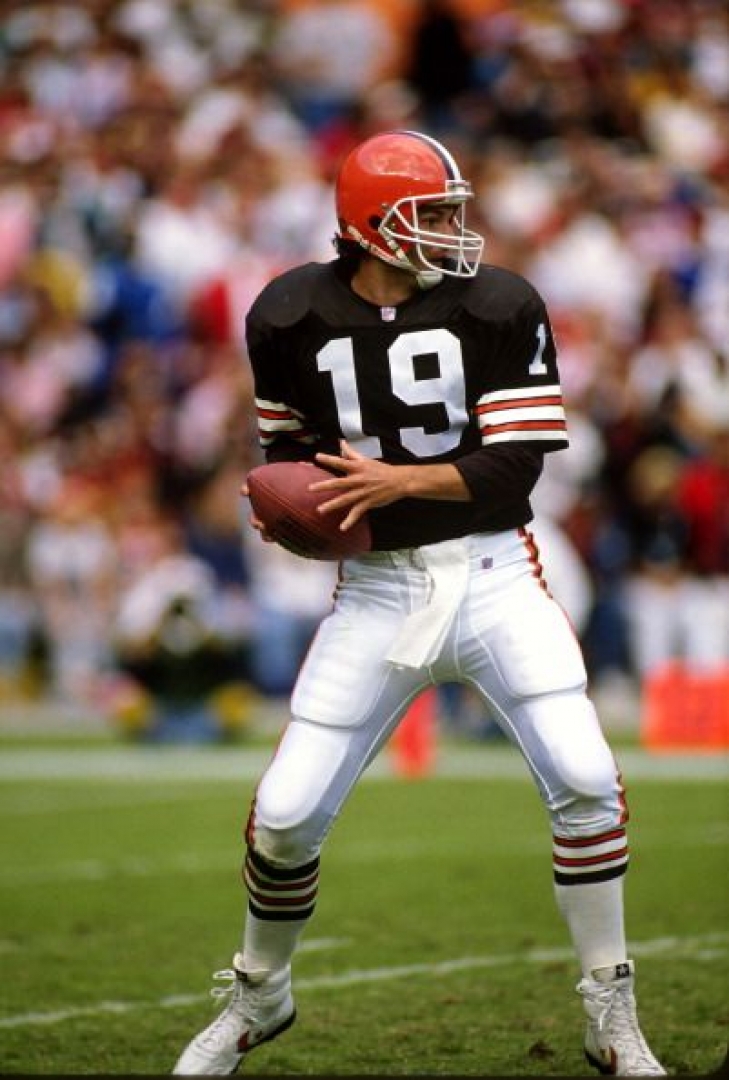
His arrival in 1985 wasn't just a football transaction; it was a cultural event in Northeast Ohio. By bypassing the traditional NFL draft to force his way home to Cleveland, the local kid from Boardman High School instantly became a symbol of hometown pride. Kosar’s mastery of the pre-snap line-of-scrimmage check—dubbed "Bernie-ball"—gave the Browns a cerebral edge that compensated for his lack of foot speed. He dissected defenses with an unorthodox sidearm delivery, throwing receivers open before they even broke. Under his stewardship, Municipal Stadium transformed into an electric venue, and Kosar’s signature No. 19 jersey became the undisputed uniform of the region.
Drafted out of Miami via the 1985 Supplemental Draft, Bernie Kosar arrived in Cleveland as the savior-in-waiting for his boyhood team. He sat behind veteran Gary Danielson for the first month of his rookie season, but an injury to Danielson in Week 5 thrust the 21-year-old into the starting spot. Despite a rigid pocket presence and awkward mechanics, Kosar processed coverage packages at lightning speed, steering the Browns to an 8-8 record and a playoff berth while establishing himself as the undisputed leader of the offense.
With Kosar at the helm, Cleveland transitioned into a pass-oriented power during the peak of the Marty Schottenheimer era. His finest individual campaign came in 1987, when he threw for 3,030 yards and a career-best 22 touchdowns in only 12 games during a strike-shortened season, earning his lone Pro Bowl selection and leading Cleveland back to the AFC Title Game. He posted two more 3,000-yard passing seasons in 1989 and 1991, cementing his reputation as one of the most intelligent field generals in football.
The emotional intensity of those late-1980s playoff games only strengthened the special bond between Kosar and the city. Fans fondly remember his thrilling matchups against John Elway’s Denver Broncos in the 1986, 1987, and 1989 AFC Championship Games. Even during tough losses—like the memorable 1986 "Drive" game, where Kosar threw for 259 yards, and the 1987 "Fumble" game, where he amazed everyone with 356 yards and three touchdowns—Kosar always played with remarkable composure and determination under huge pressure. He wasn’t just a quarterback managing the game; he was like an on-field coach, carrying the hopes of a city eager for a championship, in a time when quarterbacks didn’t often have that kind of influence.
His tenure in Cleveland ended abruptly and emotionally. Tensions flared after Bill Belichick took over as head coach in 1991, as Belichick's rigid, control-oriented system collided with Kosar's audibling style. After benching Kosar for Vinny Testaverde midway through the 1993 season, Belichick cut the veteran quarterback outright in November—a move that shocked the fan base. Kosar quickly caught on with the Dallas Cowboys, stepping in to win a crucial game in relief of an injured Troy Aikman and earning a Super Bowl XXVIII ring before closing out his career in Miami as Dan Marino's backup.
As a Brown, Kosar started 105 games, compiling 21,904 passing yards, 116 touchdowns, and 87 interceptions while bringing the franchise to five consecutive postseason appearances. The team inducted him into the inaugural class of the Cleveland Browns Legends in 2001.
