


Committee Chairman
27. Carl Pavano
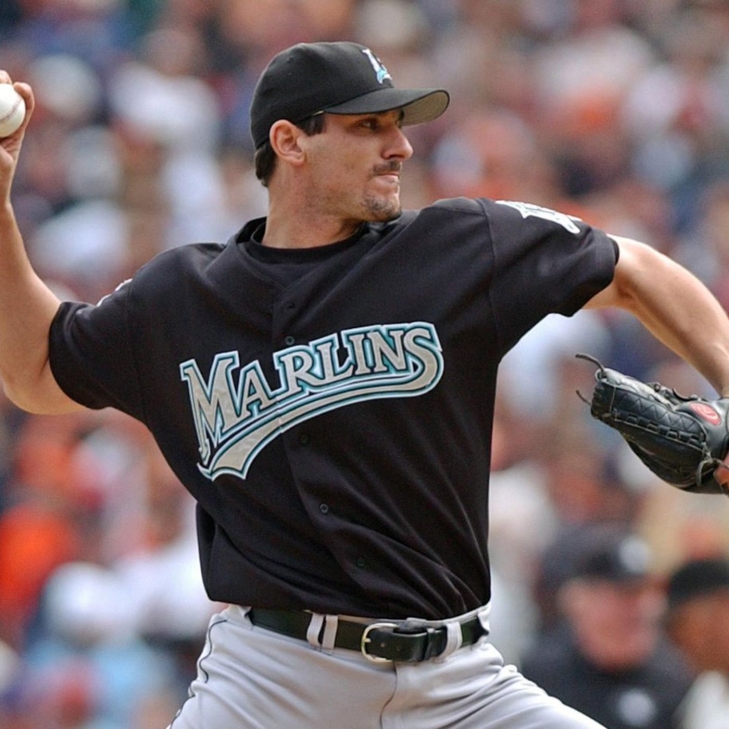
Carl Pavano arrived in Florida during the 2002 season after a trade with the Expos, a pitcher whose career was later defined by health struggles in New York but reached its peak in the sun of Miami. While he began his tenure as a versatile arm moving between the rotation and the bullpen, he quickly emerged as a reliable workhorse.
After a solid introduction in late 2002, Pavano spent 2003 proving his durability by logging over 200 innings for the first time. While his regular season record of 12-13 was modest, he saved his best work for the postseason. He operated as a versatile weapon for manager Jack McKeon, appearing in eight games and posting a stellar 1.40 ERA over 19.1 innings. His brilliance in the World Series against the Yankees, where he allowed only one run over eight innings in Game 4, was vital in securing the franchise’s second World Series championship.
Pavano followed that with his best season, going to his only All-Star Game and posting career-highs in Wins (18), ERA (3.00), Innings (222.1), and WHIP (1.174). With a sixth-place Cy Young finish, his stock had never been higher, and you know what that means. Pavano got paid big time: by the New York Yankees.
With the Marlins, Pavano had a record of 33-23 with 313 Strikeouts.
26. Miguel Rojas
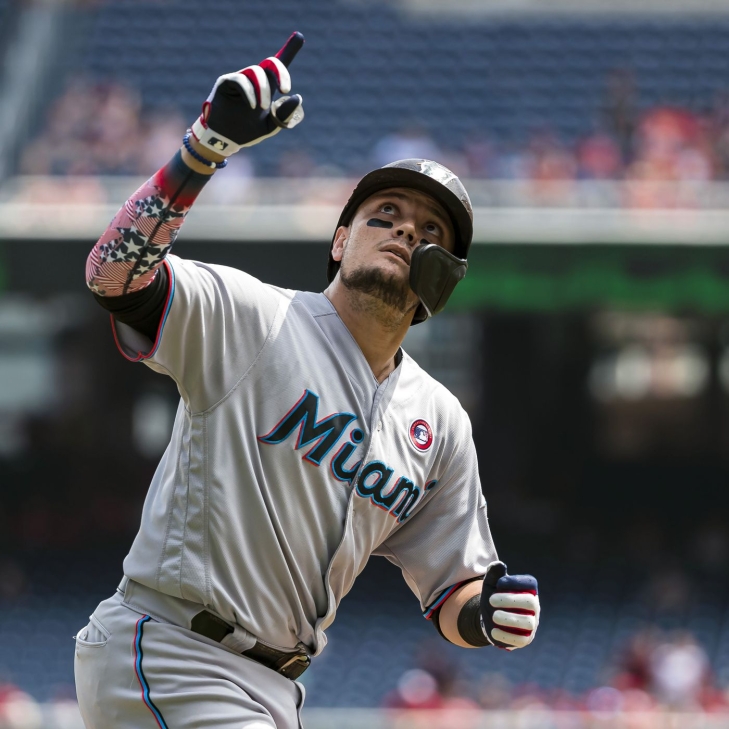
Miguel Rojas joined the Marlins in late 2014 through the same seven-player blockbuster that brought Dee Strange-Gordon to Miami. Initially viewed as a defensive specialist from the Dodgers' system, he arrived in Florida with a reputation for elite glovework and a modest bat.
Between 2015 and 2017, Rojas served as a versatile insurance policy, playing various infield positions and mainly functioning as a defensive substitute at shortstop. His value was evident in 2017 when he hit .290 despite dealing with a thumb injury, demonstrating his capacity for a larger offensive role. In 2018, he became the regular shortstop, playing a career-high 153 games and setting personal records for hits and home runs. During the shortened 2020 season, he achieved a career-best .304 batting average and helped lead the young Marlins team to an unexpected postseason appearance. Known as the team's unofficial “Captain," he brought stability to the organization and eventually secured a multi-year extension, reaffirming his position as the franchise's rebuilding face.
In January 2023, he was traded back to his original club, the Los Angeles Dodgers, in exchange for Jacob Amaya. As a Marlin, Rojas compiled 707 hits, a .268 batting average, and 269 RBIs.
24. Juan Pierre
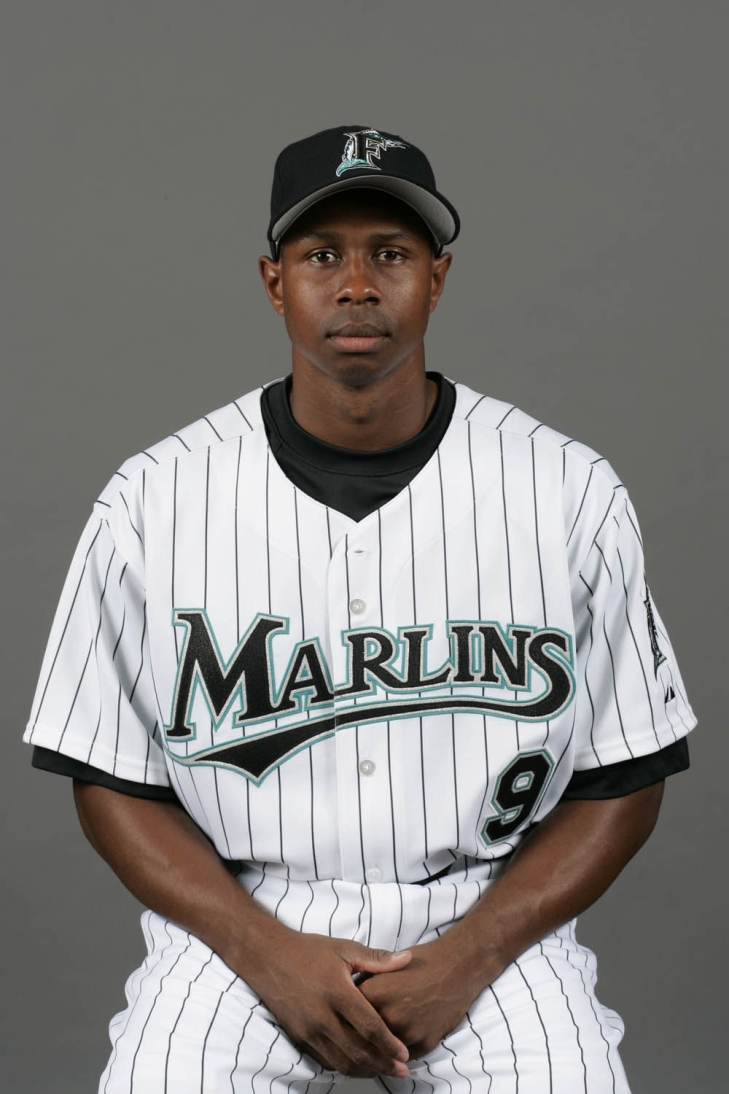
Juan Pierre joined South Florida via a major trade with the Rockies in late 2002, bringing a relentless speed the franchise hadn't experienced since Luis Castillo. As a left-handed center fielder who often roamed the basepaths, he swiftly became the team's offensive catalyst.
In 2003, Pierre fully excelled as the leadoff hitter, playing in all 162 games and leading the National League with 65 stolen bases. His offensive contributions included 204 hits and a .305 batting average. However, his biggest impact was in the postseason, where he played a crucial role in securing the World Series title. He posted a .333 batting average against the Yankees and was a constant challenge for opposing catchers during the championship series.
In 2004, he led the majors with 221 hits. He demonstrated a remarkable level of durability, becoming the only league player to play every inning of every game that year, a rare accomplishment. He posted a .326 batting average, along with 12 triples and 45 stolen bases, earning MVP votes and cementing his status as a dependable professional with seemingly endless stamina. During this peak, he was an impressive technical hitter, famously going weeks without striking out.
After a productive 2005 campaign where he swiped 57 bases, the organization moved him to the Cubs in a cost-cutting trade. He returned for a final swan song in 2013, providing a veteran presence and adding to his career totals before retiring at the end of the year. Overall, Pierre compiled 682 hits, 190 stolen bases, and a .295 batting average.
25. Derrek Lee
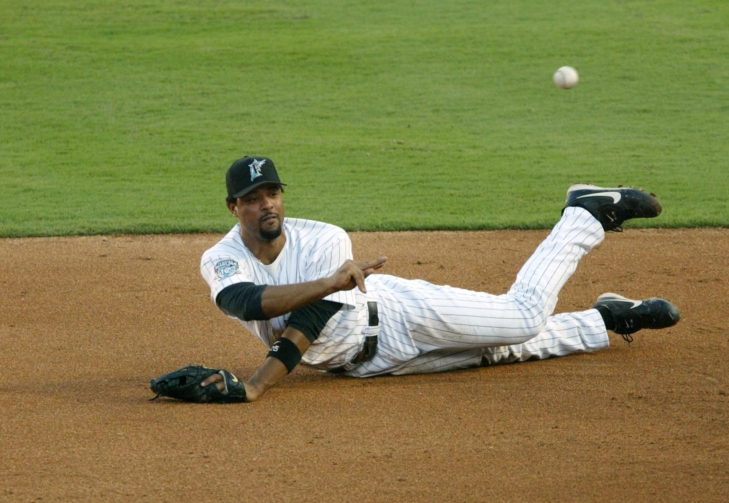
When the Marlins did their first fire sale, Derrek Lee was one of the prizes in return, coming over from the Padres as the centerpiece of the return for ace Kevin Brown. Standing 6-foot-5, he was a physically imposing first baseman who initially struggled to find his rhythm in the big leagues.
The first two seasons in the Marlins organization were a struggle, but by 2000, he had a breakout in 2000, belting 28 home runs and batting .281. Between 2001 and 2002, he continued to produce at a steady rate, averaging over 20 homers a year while showcasing an athletic range at first base that was rare for his size, but it was in 2003 that Lee had his best season in a Marlins uniform.
In that season, he hit 31 home runs and drove in 92 runs, while his glove work earned him his first Gold Glove Award. He was a force during the postseason, notably making a spectacular grab in Game 5 of the World Series to help preserve a crucial win. During this stretch, he was a tactical giant who provided the defense and power necessary to stun the Yankees and secure the title.
The end of his run as a Marlin was easy to predict. Much as he arrived in “Fire Sale 1.0”, he departed in “Fire Sale 2.0”. Lee was traded to the Chicago Cubs, where he had his best run in baseball. With the Marlins, he had 734 hits, 129 home runs, and a .264 batting average.
