


Committee Chairman
7. Sandy Alcantara
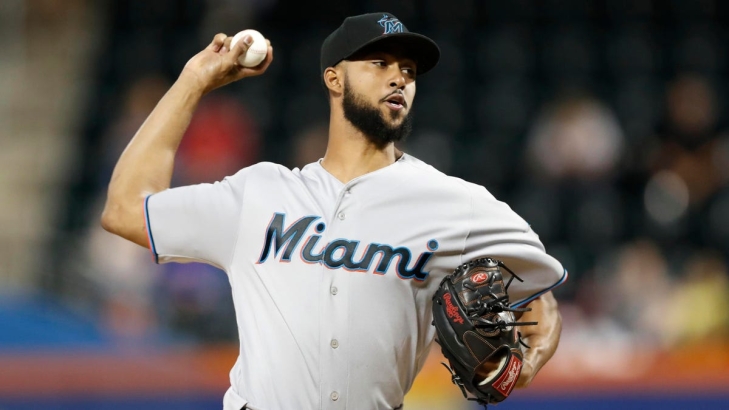
Sandy Alcantara arrived in Miami following a 2017 trade with the Cardinals, a high-upside right-hander who had only eight major league games to his name. While he spent much of his early career proving that a pitcher’s win-loss record is an unreliable narrator, he eventually established himself as the most durable and dominant force in the National League, at least for one season anyway.
After becoming a permanent starter in 2019, he demonstrated a high-frequency ability to pitch deep into games, yet famously led the National League with 14 losses despite showing the organization he was their best arm. He remained a professional mainstay through the shortened 2020 campaign and the 2021 season, in which his 3.19 ERA was again undermined by a poor record. This, however, was about to change.
In 2022, the Dominican hurler mastered the strike zone to become the first Marlin to win the National League Cy Young Award. He led the majors in innings pitched (228.2) and complete games (6), recording a stellar 2.28 ERA and a sub-1.00 WHIP. It looked to be only up from there, but a traumatic injury threatened to derail his prime. After a 2023 season where he struggled with localized command issues and ultimately underwent Tommy John surgery, he missed the entirety of the 2024 campaign. However, he showed the organization his grit by returning for the 2025 season and immediately reassuming his role as a professional mainstay. While his first year back from surgery featured the expected up-and-down results as he regained his feel, he still logged over 170 innings and recorded 11 wins, proving that his durable frame could still handle a significant workload.
Entering 2026, Alcantara is healthy and is arguably at a crossroads in his career.
34. Robb Nen
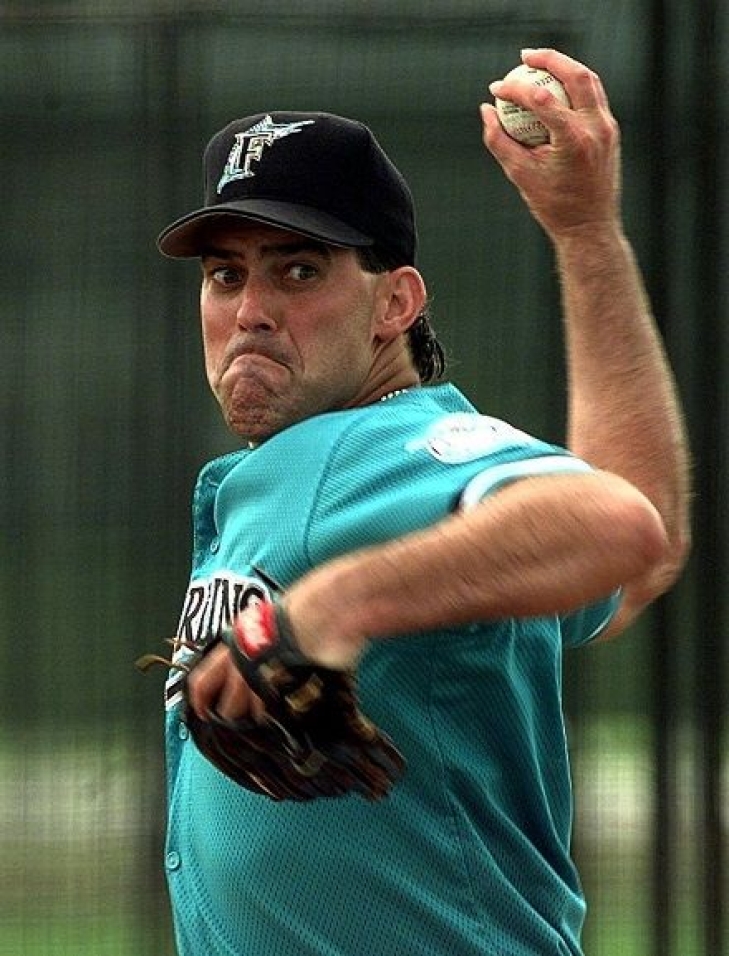
Robb Nen came to Florida in 1993 as an unrefined power pitcher from the Texas Rangers, acquired during the Marlins' first season for Cris Carpenter. With a toe-tap delivery and a high-speed fastball, he shifted from a struggling starter to the franchise’s most dominant early closer.
Following a challenging debut in 1993, the organization repositioned Nen to the bullpen to maximize his electric arm and mitigate the risk of injury. He reached a new level of efficiency in 1994, recording 15 saves during the strike-shortened season, and subsequently experienced a breakout campaign in 1996. During that season, he delivered an exemplary performance in relief, posting a 1.95 ERA and securing 35 saves while striking out 92 batters in just 74 innings. He swiftly established himself as a key figure in late-inning relief, demonstrating that his "Terminator" slider was an indispensable asset for a rising contender.
Nen will be most remembered by Marlins fans for their historic 1997 season. Despite his regular-season ERA exceeding three, he matched his career high in saves with 35. He was instrumental in providing the crucial bridge to victory during the postseason, recording four saves throughout the playoffs. His journey in Florida culminated in a legendary moment in Game 7 of the 1997 World Series, where he pitched 1.2 innings of scoreless relief across the 9th and 10th innings, reaching 102 mph on the radar gun—to preserve the Marlins’ hope for their eventual walk-off victory in the 11th.
Following the World Series win, Nen was one of the many players traded, with San Francisco being his destination. He departed as the franchise’s all-time leader in appearances and remains the all-time saves leader with 108.
30. A.J. Ramos
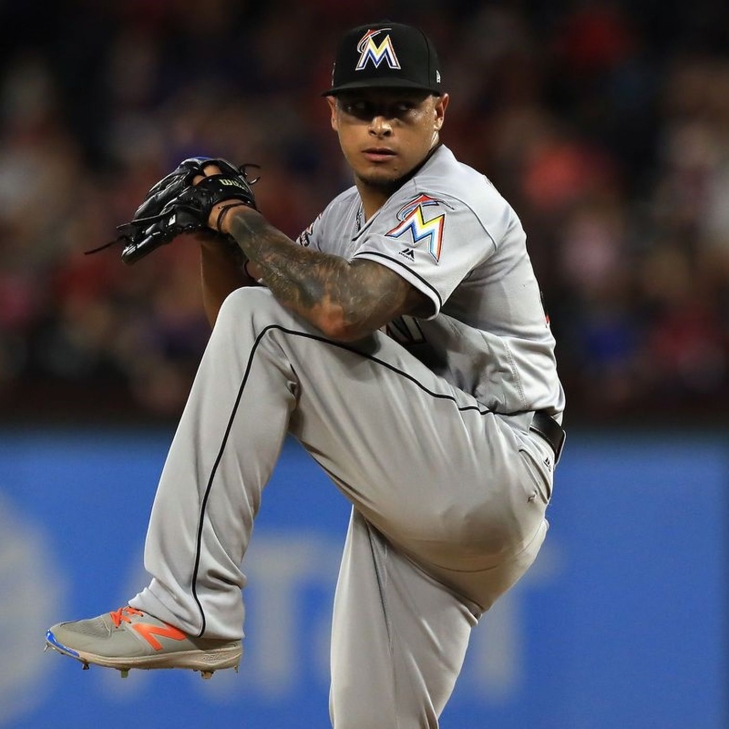
A.J. Ramos came to Miami as a 21st-round pick, initially overlooked as a late-round choice from Texas Tech. Despite the odds, he became one of the most dependable pitchers in Marlins’ bullpen history. Known for his strikeout ability and deceptive delivery, he served as a flexible reliever bridging the middle innings and the ninth, eventually assuming the full-time closer role.
Ramos made his debut for the Marlins in 2012, finishing with an impressive 7-0 record and a 2.11 ERA across 68 games. By 2015, after filling in for the ninth inning, he was promoted to closer, achieving 32 saves and demonstrating that his high-strikeout ability was a key strength for the end of the bullpen.
In 2016, he successfully converted his first 24 save opportunities, a franchise record, and earned his first All-Star selection. He finished the campaign with a career-high 40 saves, posting a 1.67 home ERA and establishing himself as one of the premier late-inning threats in the National League.
Following the franchise’s familiar pattern of retooling before a contract reached its peak value, the organization traded him to the New York Mets in exchange for Merandy Gonzalez and Ricardo Cespedes. Ramos would finish 175 Games for Miami with 92 Saves.
29. Cody Ross
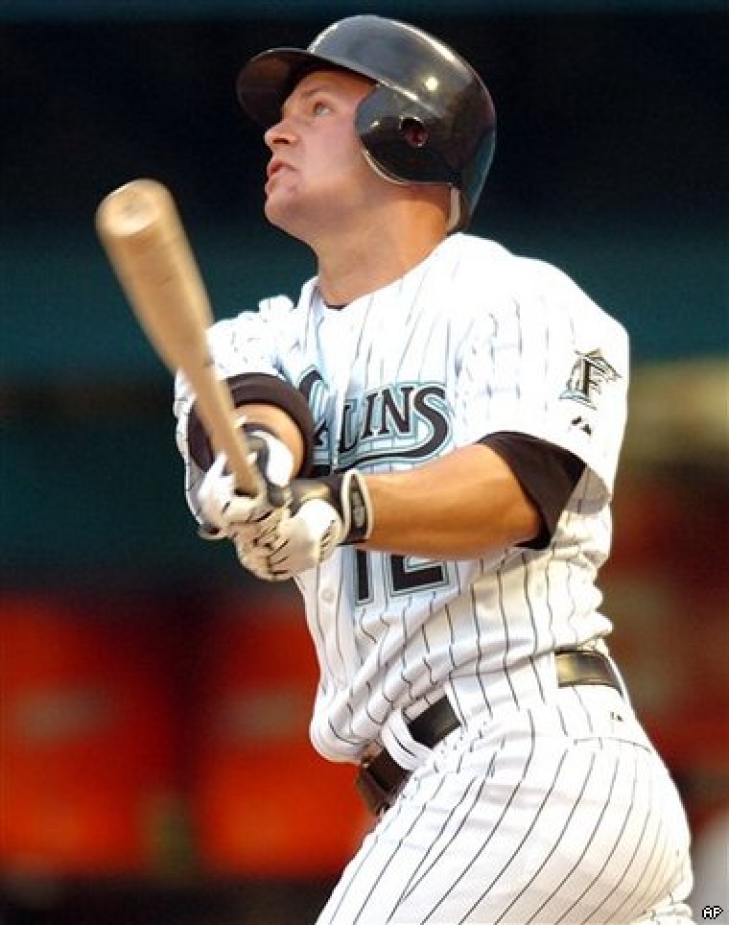
Cody Ross arrived in Florida in early 2006 as a nomadic outfielder searching for a permanent home after brief stops in Detroit, Los Angeles, and Cincinnati. The Marlins purchased his contract in May of that year, and he quickly proved he belonged in the big leagues.
After appearing in 157 games across 2006 and 2007, Ross demonstrated a knack for finding the gaps and clearing the fences. He became a fixture in the lineup in 2008, belting 22 home runs with a .260 average. He followed that with an even more productive 2009, recording a career-high 24 home runs and 90 RBIs while batting .270.
During the Marlins' cost-cutting, he was placed on waivers and was claimed by the San Francisco Giants. While the Marlins moved on from his salary, Ross went on to become a national hero in the Bay Area, earning NLCS MVP honors and a World Series ring.
As a Marlin, Ross had 80 Home Runs with 503 Hits.
