


Committee Chairman
The St. Louis Blues will induct Pavol Demitra, Mike Liut and Keith Tkachuk to their Hall of Fame

Regular visitors of Notinhalloffame.com know that we are slowly working on the top 50 of every major team in the NHL, NBA, NFL and MLB. Once that is done, we intend to look at how each team honor their past players, coaches and executives. As such, it is important to us that the
St. Louis Blues have announced that Pavol Demetria, Mike Liut and Keith Tkachuk will comprise their second full class.
Pavol Demetria was traded from the Ottawa Senators in 1996 and the Slovak would blossom two years later with an 89-Point season. Demetria continued to be a point-per-game player with St. Louis, and would win the Lady Byng in the 1999-00 Season and played in three All-Star Games. He signed with the Los Angeles Kings in 2005 after scoring 493 Points in 494 Games. Tragically, this is a posthumous induction, as he was one of the players killed in the Lokomotiv Yarozlavl plane crash in 2011.
Mike Liut played his first two seasons of pro hockey with the Cincinnati Stingers of the WHA, and when that league folded, he joined the St. Louis Blues, who owned his NHL rights. Liut immediately took over as the Blues primary Goalie, and held that for five-and-a-half years before he was traded to Hartford. Liut’s first three seasons in St. Louis were excellent, peaking in the 1980-81 Season where he was the runner-up for the Hart, and the Lester B. Pearson winner. He had a 151-139-52 record with a 3.59 GAA for the team.
Traded from the Phoenix Coyotes during the 2000-01 Season, Keith Tkachuk spent the second half of his career (save for 13 Games in Atlanta) with the Blues where he scored 427 Points. He was an All-Star twice as a Blue.
The Blues Hall of Fame was incorporated last year with a large class that comprised Red Berenson, Scotty Bowman, Berne Federko, Bob Gassoff, Glenn Hall, Brett Hull, Dan Kelly, Al MacInnis, Barclay Plager, Bob Plager, Chris Pronger, the Solomons, Brent Sutter and Garry Unger
The team will honor the three during their home game on January 20 against the Washington Capitals.
We here at Notinhalloffame.com would like to congratulate the impending members of the St. Louis Blues Hall of Fame.
The Contemporary Era Baseball Committee names their Finalists
Hall of Fame season continues with the Baseball Hall’s announcement of the eight names on the Contemporary Baseball Era Committee for Managers/Executives/Umpires. The Committee will meet on December 3 at the Winter Meetings in Nashville, and the results will be shared that night at 7:30 on MLB Tonight on the MLB Network.
To enter the Hall, the candidate must receive 75 percent of the 16-person group.
Here are the nominees:
Cito Gaston: Gaston managed the Toronto Blue Jays for 12 seasons, and he helmed to back-to-back World Series wins in 1992 and 1993. Making history as the first African-American Manager to win a World Series, Gaston has a career record of 894-837, and is a member of the Toronto Blue Jays Level of Excellence.
Davey Johnson: Johnson managed 17 seasons in the Majors, with his career-highlight leading the New York Mets to a 1986 World Series Championship. Johnson won two Manager of the Year Awards (1997 & 2012) and had a record of 1,372-1,071.
Jim Leyland: Leyland is a three-time Manager of the Year (1990, 1992 & 2006), and led the Florida Marlins to their improbable 1997 World Series title. With a career record of 1,769-1,728 and helmed the United States to victory in the 2017 World Baseball Classic.
Ed Montague: Montague served as an Umpire from 1974 to 2009 and was the Crew Chief in four World Series.
Hank Peters: Peters worked 42 years as a Baseball Executive, first becoming a General Manager with the Kansas City Athletics helping them build their dynasty. He would later serve as the GM in Baltimore, where he constructed their 1983 Championship squad. He later rebuilt the Cleveland Indians into a power in the 90s.
Lou Piniella: A 23-year veteran as a Manager, Piniella brought Cincinnati a World Series in 1990, and was a three-time Manager of the Year (1995, 2001 & 2008). He had a lifetime record of 1,835-1,712.
Joe West: West umpired from 1976 to 2021, officiating a record 43 years and 5,460 Games. He worked six World Series and ten League Championship Series.
Bill White: White was the first African American President of a League, having served in that capacity in the NL from 1989 to 1994.
You know that we will be paying attention December 3!
Which Las Vegas Aces saw their Hall of Fame chances increase?
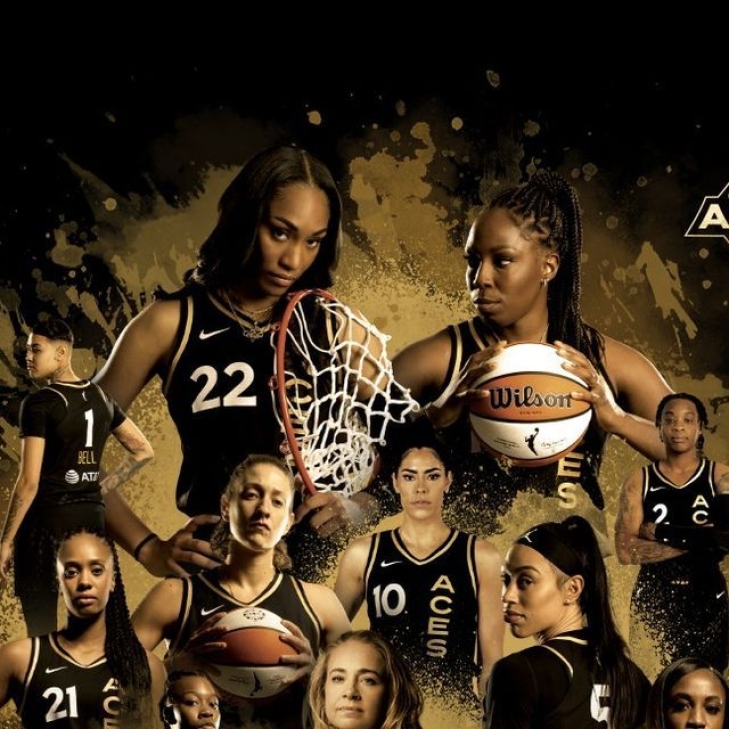
The Las Vegas Aces are a special team, having just won their second straight championship, and could be a squad that has a chance to be a WNBA dynasty.
Whenever a title is won, it naturally helps key players make their respective Halls of Fame, and this win could help bring five women closer to Springfield.
Despite not winning what would have been her third MVP (she finished third) A’Ja Wilson is the team’s star, leader, and arguably the new face of the league. She has only played six seasons, but the Basketball Hall does not have any minimum level of service. No eligible player in either the WNBA or NBA who is a two-time MVP and two-time Champion will fail to gain enshrinement. She might be well under 30, but Wilson is a first ballot entrant now!
Wilson is Las Vegas’ certifiable star, but one player can win a title alone. Chelsea Gray, who is a nine-year veteran, added a fifth All-Star this year, and is a three-time WNBA Champion, two with the Aces and her first with the Los Angeles Sparks in 2018.
Jackie Young, who arguably was Las Vegas’ second best player this season, is not a Hall of Famer yet, but the number two on a dynasty can walk into a Hall (see, Pippen, Scottie). At only 26, the best should be yet to come for Aces’ Guard.
Kelsey Plum, who is one of Vegas’ most popular stars, might be helped the most. Approaching 30, Plum has only been an All-Star two times, but like the others, is not a repeat champion. Her resume is already bolstered by her popularity (that shouldn’t matter, but it does), and the fact that she is the all-time NCAA scoring leader, and remember that the Hall looks at all aspects of a player’s career.
The Basketball Hall of Fame can reward people multiple times, and Becky Hammon is on her way to becoming a member of that elusive club. Hammon, who was already inducted into the Hall as a player, has now coached the Aces to two Titles, and was already. A successful Assistant Coach in the NBA with the Spurs for many years, proving that a woman could succeed in that role.
An honorable mention is Mark Davis, who bought the team in 2021, and has already won two titles. Under his watch, the Aces built the WNBA’s first state of the art training facility, rivaling that of any league. The Hall will not likely honor someone with such a short run, but no owner in the WNBA rivals Davis’ impact.
How to Write an Essay on the Cultural Impact of the 1968 Olympics Black Power Salute
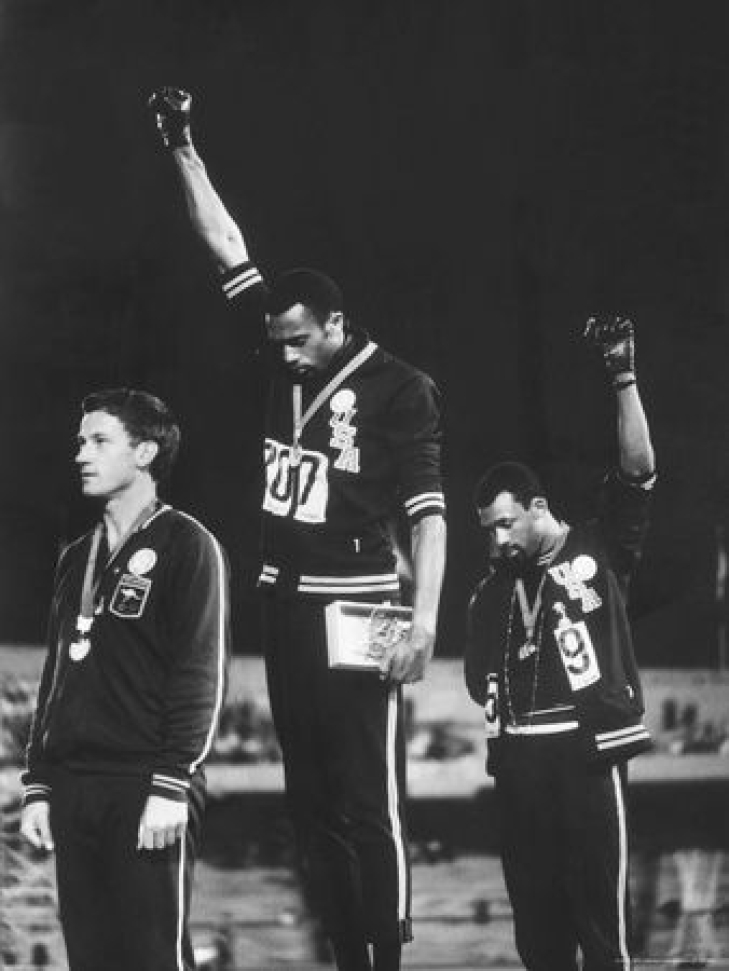
In 1968, a powerful moment unfolded at the Olympics, leaving an indelible mark on society’s fabric. It was more than a sports event; it was a bold stage for a silent scream against racial injustice. As the American national anthem echoed through the stadium, two athletes, Tommie Smith and John Carlos, stood with bowed heads and raised fists, clothed in black gloves. This peaceful yet profound gesture, known as the Black Power salute, echoed around the world, symbolizing a fight far beyond the athletic tracks - a struggle for equality and justice that still resonates in the corridors of history.
Background of the 1968 Olympics
The 1968 Olympics were not just another sporting event. Set against a tumultuous backdrop of global upheavals, protests, and the civil rights movement, the games were a stage for athletic prowess intertwined with social commentary. Mexico City buzzed with anticipation, welcoming athletes who were not just contenders for Olympic medals but also representatives of diverse global realities.
Tommie Smith and John Carlos emerged as figures of historical prominence among these athletes. Their participation symbolized more than athletic competition—a subtle echo of larger societal battles. For those seeking a deeper understanding of this historical moment, custom essays for sale or history essay services can provide valuable insights. The stage was set, and the world watched as history unfolded, intertwining sports with cultural and political expressions.
The Black Power Salute: An Act of Protest
As the medal ceremony began, a palpable tension filled the air. Tommie Smith and John Carlos, adorned with their hard-earned medals, stood on the podium, barefoot, heads bowed, each with a raised fist ensheathed in a black glove. The stadium fell into a hush as the Star-Spangled Banner played, and the athletes' silent protest reverberated through the arena.
Their act was a symbol, a non-violent cry against racial inequality and injustice. However, the aftermath was swift and severe. The athletes faced immediate backlash, entangled in controversy, demonstrating the era's charged atmosphere and the profound implications of their silent statement.
Historical and Social Context
In 1968, the winds of change and turmoil swept across the globe, marked by protests, civil rights movements, and a fervent cry for equality. Within the United States, the struggle against racial discrimination and for civil rights was reaching a fevered pitch. The assassinations of Martin Luther King Jr. and Robert Kennedy added to the social upheaval, fueling the flames of change and resistance.
Against this backdrop, the silent protest at the Olympics found its place and meaning. The global stage amplified the gesture, turning the athletes' quiet statement into a deafening call that echoed across borders and societies.
Media’s Role and Coverage
The media played a crucial role in broadcasting the Black Power salute to a global audience, acting as the lens through which the world witnessed this poignant moment of protest. Newspapers, television broadcasts, and radio stations became conduits, transmitting images and narratives that shaped public perception.
However, media portrayal varied, with some outlets echoing the athletes’ call for justice, while others fueled criticism and controversy. This dichotomy in coverage highlighted the media's power in influencing discourse and perceptions, demonstrating its pivotal role in disseminating and framing the historical and cultural significance of the protest.
Public and Official Reactions
The reactions to the Black Power salute were as diverse as they were impassioned. The public sphere buzzed with voices of support, empathy, outrage, and disapproval. Some saw the act as a heroic stand against racial injustice, while others perceived it as a divisive political statement unfit for the apolitical arena of the Olympics.
Officially, the response was stringent. The International Olympic Committee swiftly condemned the act, leading to the expulsion of Smith and Carlos from the Olympic Village. This mosaic of reactions painted a vivid picture of the era's tumultuous struggle with race, politics, and societal values.
Long-Term Impact on Sports and Activism
The Black Power salute of 1968 left an indelible legacy, redefining the intersection of sports and activism. It illuminated the power of the athletic stage as a platform for social and political expressions, inspiring subsequent generations of athlete activists.
This profound moment underscored the capability of sports to transcend beyond the realms of physical competition, permeating the broader spheres of societal discourse and change. The echo of this protest continues to resonate, shaping the dynamic interplay between athletic platforms and the ongoing global dialogue on justice, equality, and human rights.
https://unsplash.com/photos/mF9m6BRHCtg
Comparisons with Modern Instances of Athlete Activism
Modern sports arenas continue to be powerful stages for athlete activism, echoing the legacy of the 1968 Black Power salute. Today’s athletes, armed with extensive social media presence, wield influence that transcends beyond the field. Parallels can be drawn with instances like Colin Kaepernick’s knee-taking protest, resonating with similar tones of dissent and calls for justice.
While the essence of protest remains, the modes and platforms have evolved, showcasing a dynamic continuum in the athlete’s role as a harbinger of societal discourse, change, and awareness in the face of prevailing global issues and injustices.
Writing the Essay: Structure and Key Points
Crafting an essay on this poignant historical event involves thoughtful organization and articulation of key points. Begin by structuring the narrative cohesively, ensuring a flow that guides the reader through the historical journey effectively. Incorporate research meticulously, allowing facts and perspectives to paint a vivid picture of the era and the event’s significance.
If navigating through this process feels daunting, consider seeking guidance from the best assignment help websites. They offer invaluable support in aligning your thoughts, research, and expression into a compelling and informative essay that resonates with the depth and impact of the 1968 Black Power salute.
Conclusion
The 1968 Black Power salute stands as a monumental symbol of resistance and advocacy for equality, its reverberations echoing through time. Its cultural significance remains deeply ingrained, reminding us of the powerful intersection of sports and social activism. In the tapestry of historical discourse, it encourages ongoing reflection and dialogue, urging us to contemplate its enduring relevance and the persistent echoes of its call for justice and equality in today’s society.
