

Our Top 50 All-Time New York Yankees are now up
We here at Notinhalloffame.com have completed our next all-time top 50, this time that of the New York Yankees.
As for all of our top 50 players in baseball we look at the following:
- Sabremetric tallies while with that team, mostly WAR.
- Traditional metrics and how they finished in their respective league overall.
- Playoff accomplishment.
- Their overall impact on the team and other intangibles not reflected in a stat sheet.
Saying all of that, as.
The complete list can be found here, but as always we announce our top five in our news. They are:
One hell of a top five wouldn’t you say?
So which team is up next?
We are sticking with Baseball and it will be five time World Series Champion, the Cincinnati Reds
As always, we here at Notinhalloffame.com thank you for your support.
16. Bernie Williams
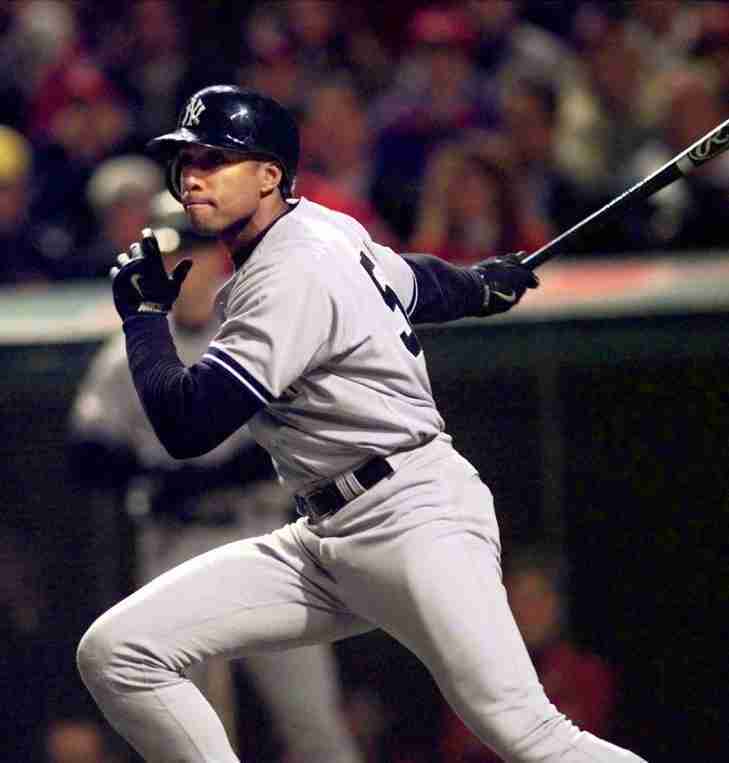
In July 1991, Bernie Williams’ debut didn't cause immediate excitement. The quiet, classical guitar-playing center fielder from Puerto Rico initially faced trade rumors and owner George Steinbrenner's intense skepticism. However, by maintaining consistent performance at the center of the field, the switch-hitter gradually shifted from a fragile trade asset to a key, dependable member of the modern Core Four era.
His career gained momentum in the mid-1990s. Williams used a well-balanced hitting style, blending disciplined plate discipline with the skill to hit extra-base hits from either side of the batter's box. He truly made his mark nationally during the 1996 postseason, where he led the Yankees’ lineup confidently, earning the ALCS MVP with a .474 batting average and three home runs against Baltimore. His performance was crucial in securing the Yankees’ first World Series title in 18 years.
That breakthrough sparked a remarkable five-year period of peak performance. Between 1997 and 2001, Williams earned five straight All-Star nods and four Gold Glove Awards for his smooth fly ball tracking in center field. His regular-season performance hit a record high during the iconic 1998 season. Williams dominated American League pitchers with a league-leading .339 batting average, also hitting 26 home runs, aiding a 114-win team in chasing another championship.
During the Yankees’ historic three-peat championship run from 1998 to 2000, Williams established himself as the ultimate high-leverage performer in postseason play. While other stars received much of the attention, his offensive contributions truly made the difference, highlighted by a record-breaking 80 RBIs in the playoffs. He remained a key middle-of-the-order hitter into the early 2000s, earning a Silver Slugger Award in 2002 after posting a .333 batting average and setting a career-high 204 hits.
His sixteen-year tenure in the Bronx, the only major league team he played for, ended smoothly after the 2006 season. He retired with 2,336 hits, 287 home runs, and a career slash line of .297/.381/.477, placing him among the franchise's top five in doubles, walks, and total bases.
The Yankees retired his number 51 in 2015.
IF I HAD A VOTE IN THE 2013 BASEBALL HALL OF FAME ELECTION, PART 1: A HISTORIC REFERENDUM
Note: Part 1 of this two-part series goes into detail—considerable detail—to examine both the overstuffed ballot and, more comprehensively, the atmosphere of moral dudgeon surrounding the suspected and admitted usage of PEDs by players on previous ballots and especially by players eligible for the Hall for the first time this year. If you want only to read the players' evaluations, skip to Part 2.
55. Bernie Williams

We admit we made a mistake not ranking Bernie Williams last year. Were we rebelling against a Yankee bias, or was it that we just considered him just not good enough? Regardless, that is the beauty of Baseball is that you can easily reevaluate what you may have missed the first time. Lord knows it happens all the time during the actual balloting process for the Hall of Fame.
Maybe our initial thought was that the Yankees themselves were confused about Bernie Williams, too. He had some power, but was not a primary threat in that department. He was fast, but did not steal many bases. For years, New York did not know where to bat him in their lineup. Eventually, they knew what they had: a very consistent hitter who had decent enough pop in his bat to place in the cleanup role. He batted over .300 eight consecutive seasons (including a batting title) and had very respectable slash numbers in that period. He won the Gold Glove four times, and his career postseason numbers (remember, he was a Yankee, so there was a lot) were virtually identical to his regular season tallies.
Williams hit near the ten percent mark on his first year of eligibility, which was enough to keep him on the ballot, but not enough to consider him a serious threat for the Hall. Our guess is that the career Yankee will stay at the bottom of the eligible candidates for a while.
