

Committee Chairman
34. Ozzie Smith
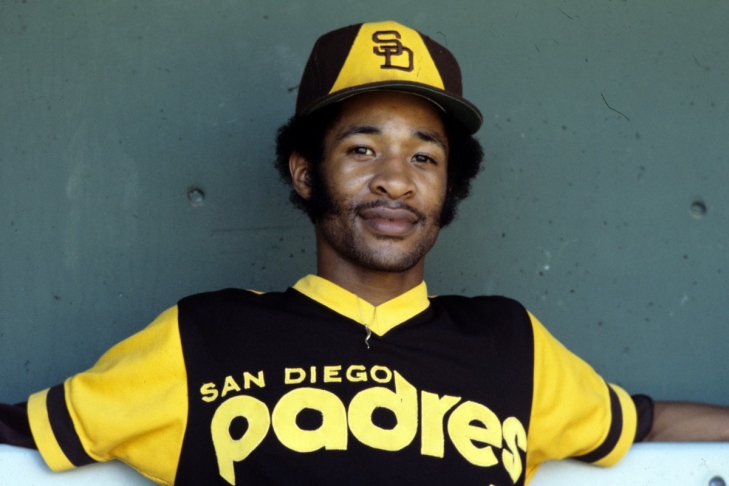
When we look at baseball history over the long haul, it’s easy to fall into the trap of hindsight bias, viewing a legend's career only through the lens of their ultimate success. Many fans forget that Osborne Earl Smith originally flourished on the lush fields of Southern California. Drafted by the San Diego Padres in 1977, this exceptionally agile shortstop didn’t need years in the minors; he jumped straight onto the major league stage, showcasing a uniquely daring and acrobatic style of infield defense. However, reflecting on his career honestly means acknowledging both sides—during his impactful but brief four-year stint in San Diego, he was a figure of both admiration and debate. While his incredible display of athleticism delighted local fans, his inconsistent and low-efficiency batting caused significant concern within the front office, ultimately leading to a historic trade that the organization would regret for many years.
His impressive debut in 1978 truly stands out as a remarkable highlight in his local history. Smith transformed aggressive contact and base running into powerful tools, hitting an admirable .258, stealing 40 bases, and even executing his signature pre-game backflip to finish as the near runner-up for the National League Rookie of the Year award. He consistently dominated opposing running attempts, leading all National League shortstops with a record-breaking 621 assists in 1980, and earning back-to-back Gold Glove Awards in 1980 and 1981. Modern analytics strongly support his outstanding defensive skills during this peak period; he led the entire league with a fantastic 3.8 defensive bWAR in 1980, proving he was an elite defender even before turning twenty-six.
To be fair, when considering his place on the franchise leaderboard, we need to acknowledge the significant offensive leaks that greatly impact his local ranking. After his rookie season, his hitting performance sharply declined, becoming a real challenge. Smith's batting average fell to a disappointing .211 in 1979—famously beginning the summer with an tough 0-for-32 streak—before posting fairly unimpressive numbers of .230 in 1980 and .222 in 1981. Over his 583 games for San Diego, he maintained a challenging .231 batting average, along with a low on-base percentage (.295) and a relatively insignificant .278 slugging percentage.
Management was deeply concerned about the idea that the light-hitting shortstop might never be able to handle the rigors of major-league pitching over time. This worry grew more intense, leading to a sense of desperation for a better player. Things reached a boiling point during a very heated and public contract dispute after the 1981 season. During this tense period, his agent famously placed a newspaper ad, seeking other opportunities for his client. With their relationship completely broken, the team decided to part ways in December 1981. They made a bold move by trading the young shortstop to the St. Louis Cardinals in exchange for Garry Templeton, marking a significant change for both teams.
The Padres thought they were selling high on a one-dimensional hitter; however, Cardinals manager Whitey Herzog unlocked Smith's offensive potential, helping him adjust his swing. Smith amassed over 2,400 career hits, becoming a top leadoff hitter and winning a 1982 world title. He left the Padres with 516 hits, 64 doubles, and 147 stolen bases, primarily known for his early defensive prowess.
While his eventual walk toward the Cooperstown rafters in 2002 features a St. Louis cap on his plaque, the foundational brilliance of "The Wizard" was undeniably forged right on the San Diego infield.
6. Manny Machado
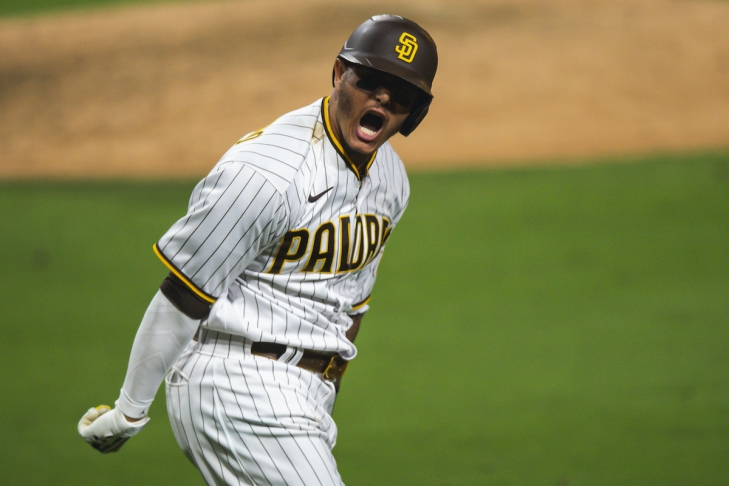
When creating a historical hierarchy for a Major League franchise, the exact moment an organization changes its course often hinges on a single bold decision. For the San Diego Padres, that pivotal moment came before the 2019 season. Traditionally hesitant to compete aggressively for top-tier talent, the front office broke that pattern by signing Manny Machado to a record 10-year, $300 million free-agent deal. Machado, who had already proven himself as a perennial All-Star with the Baltimore Orioles and a postseason performer with the Los Angeles Dodgers, combined Gold Glove defense with middle-of-the-order power, immediately boosting San Diego's hopes for a championship.
Machado's 2019 debut season in Southern California established a strong foundation, with 32 home runs despite adapting to a new environment and finishing with an OPS just below .800. His true status as a superstar was confirmed during the pandemic-affected 2020 season, when he delivered an exceptional offensive performance. Machado transformed his standard performance into a stellar regular-season showing, batting .304 with 16 home runs and 47 RBIs over 60 games, earning his first National League Silver Slugger and finishing third in MVP voting.
Despite the 2021 Padres’ well-publicized collapse at the end of the season, Machado stayed consistent as a reliable, low-variance presence. He earned a spot in the All-Star game thanks to an impressive season with 28 home runs and 106 RBIs. His personal best and increased national attention peaked during an outstanding 2022 season. With key players absent, Machado led the team back to the playoffs by hitting .298, with 32 homers, 102 runs scored, and 109 RBIs.
His advanced efficiency filters fully disrupted Senior Circuit pitching, securing him a superb second-place finish in the National League MVP voting. After a minor, injury-affected decline in 2023 when his OPS fell to .782, he bounced back strongly in 2024, hitting 29 home runs and driving in 105 RBIs to earn his second Silver Slugger award as a Padre.
Machado begins the spring after a highly disciplined and durable 2025 season that firmly established his spot on the franchise's Mount Rushmore. Demonstrating exceptional longevity, he played 159 games last summer, recording 169 hits, 33 doubles, and 27 home runs. He drove in 95 runs and showed consistent offensive performance throughout the season, earning his seventh All-Star nod as the National League's starting third baseman and winning his third Silver Slugger award.
33. Mark Davis
Mark Davis began his major league career as a starting pitcher, moving through Philadelphia and San Francisco without attracting much attention nationally. That unremarkable start changed during the 1987 midseason when the San Diego Padres acquired the left-hander in a blockbuster trade that sent Kevin Mitchell to the Giants. Although he finished that summer with respectable performances out of the San Diego bullpen, no one in Southern California could have foreseen the historic, award-winning peak that was about to unfold on the Jack Murphy Stadium field.
His major transformation happened before the 1988 campaign when manager Larry Bowa permanently appointed him as the closer. Davis developed a disciplined routine for closing out National League opponents, relying heavily on his exceptionally sharp, high-velocity breaking ball. That season, he recorded 28 saves with a remarkable 2.01 ERA, earned his first career All-Star selection, and ended the year without giving up a single extra-base hit in his last 22 appearances.
The peak of his hardware-certified legacy emerged during a remarkable summer in 1989, within a regular season distinguished by its breathtaking excellence. Simply put, Davis recorded one of the most dominant single-season performances by any relief pitcher in the history of the sport. During that summer, he treated the ninth inning as his personal isolation chamber, appearing in 70 games and destroying National League lineups. Davis led the senior circuit with 65 games finished and achieved a staggering, franchise-record 44 saves in 48 opportunities, maintaining an impressive 1.85 ERA and an elite 1.05 WHIP over 92.2 high-leverage innings. Advanced efficiency metrics further substantiated the exceptional quality of his dominance, as he led the league with a superb 5.8 Win Probability Added (WPA) and notably did not allow a single one of his 19 inherited runners to score during the final month of the pennant race.
Those numbers easily secured him a consecutive All-Star nod, a sixth-place finish in the National League MVP voting, and the ultimate crown: the 1989 National League Cy Young Award. He became just the fourth closer in baseball history to capture the honor, creating a peak so rare that no NL reliever would win the award again for another 14 years.
Following his Cy Young coronation, Davis' contract expired, and with his market value at an all-time high, the front office lacked the financial flexibility to retain him. He orchestrated a definitive business exit by signing a lucrative free-agent deal with the Kansas City Royals, but the transition proved catastrophic. His command completely deserted him on the Midwest turf, where his ERA ballooned past five, and he lost his closer job within months.
While he eventually returned to the Padres during the 1993 schedule in a highly nostalgic attempt to recapture old magic, the reunion yielded no results; he was highly ineffective over a brief span of frames before management initiated his final release early in 1994.
With the Padres, Davis had a 14-20 record, 78 saves with a 2.75 ERA over 230 games.
The Hall of Fame clock on Ben Roethlisberger begins
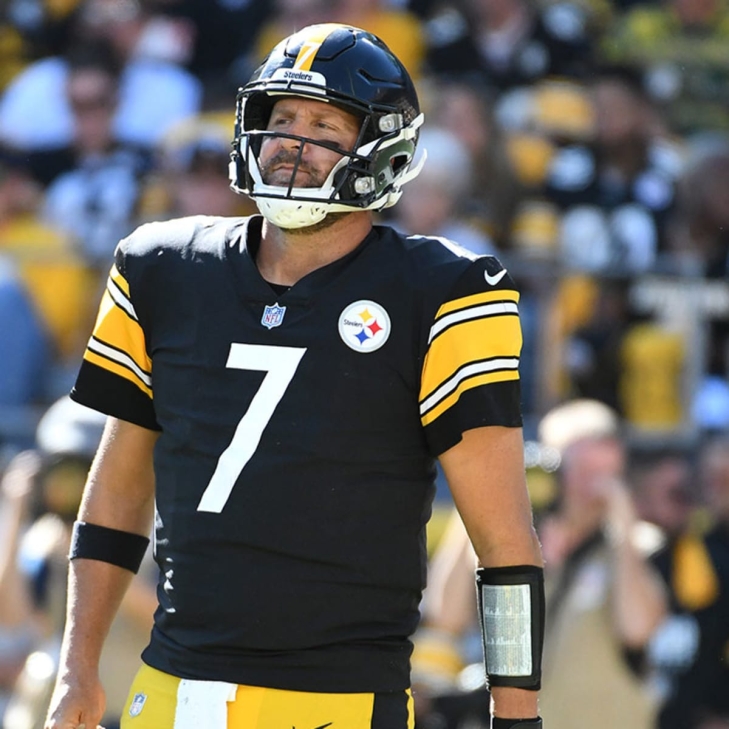
It is the end of an era in Pittsburgh.
Following the Steelers’ playoff defeat to Kansas City, the time to debate in earnest the Hall of Fame candidacy of Ben Roethlisberger has begun.
The Quarterback has the statistical make-up for a Canton bust, even in this inflated era.
Roethlisberger is also a two-time leader in Passing Yards, and went to six Pro Bowls. He leaves with 64,088 Passing Yards (fifth all-time), 418 Touchdown Passes (eighth all-time) with an Approximate Value of 208 (14th all-time). The biggest metric that a Quarterback is based on, Super Bowl wins, is also on Roethlisberger’s resume with two.
The negative that will dog Roethlisberger is his past sexual assault allegations, which had they happened in the #MeToo era would be discussed far more than it is.
If we were to enter a guess at this time, Roethlisberger will get in quickly, but the first year might elude him as only five can enter from what will perpetually be a loaded group of Finalists from which to pick, especially if Eli Manning and Philip Rivers are still on the ballot. If our own data is to be believed (and we would like to think it does), we had Roethlisberger as the #9 most deserving active player going into the 2021 Season, and number three at Quarterback.
We here at Notinhalloffame.com would like to wish the best in the post-playing career of Ben Roethlisberger.
