


Committee Chairman
23. Andy Van Slyke
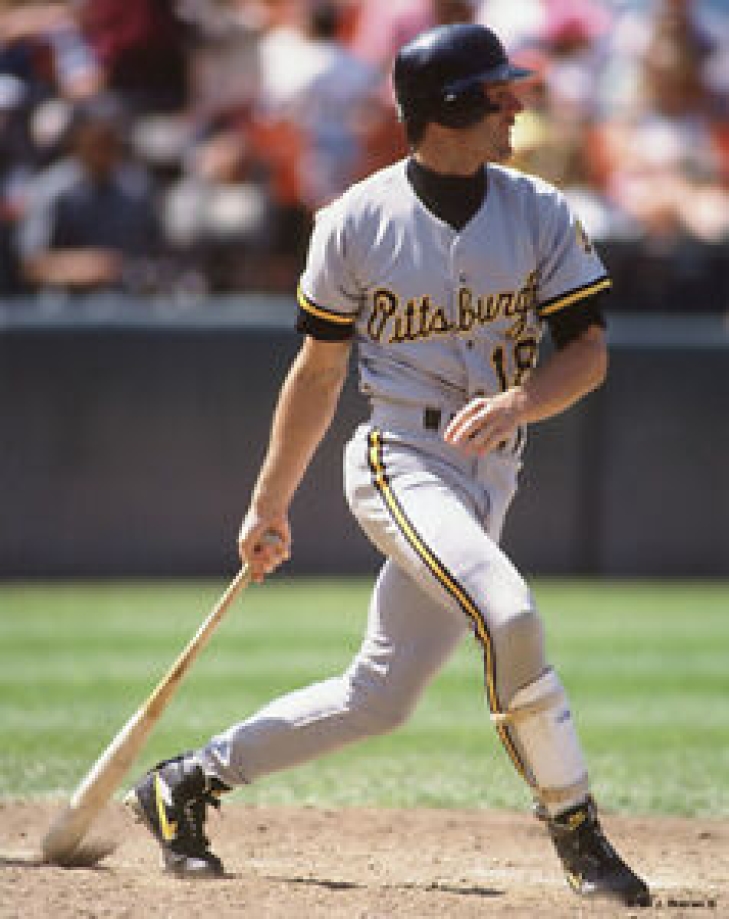
The early 1990s Pittsburgh Pirates are often remembered for Barry Bonds' rise, but the team's emotional and defensive anchor patrolled beside him. Coming from the St. Louis Cardinals in a 1987 trade for Tony Peña, Andy Van Slyke made Three Rivers Stadium his home. With sharp wit, a strong work ethic, and determination to catch every fly ball, the blonde center fielder became a fan favorite in Western Pennsylvania.
His true breakthrough as a versatile star occurred during an exceptional 1988 season, where his offensive output hit a league-leading peak. Van Slyke delivered an impressive at-bat performance, leading the National League with 14 triples and setting personal bests with 25 home runs, 100 RBIs, and an impressive .506 slugging percentage. He dominated the postseason awards, earning his first Gold Glove and Silver Slugger awards, and finished a notable fourth in the NL MVP voting.
Although a severe offensive decline slowed his batting that summer, his defense stayed an elite, high-impact asset that changed games fundamentally. Van Slyke established center field as a true no-fly zone, leveraging an exceptional, powerful throwing arm and perfect tracking instincts to earn five straight Gold Gloves from 1988 to 1992.
As the Pirates became the leading force in the National League East, Van Slyke regained his top-tier status at the plate. He secured consecutive All-Star selections in 1992 and 1993, shining brightly during the 1992 pennant race. Acting as the spark for a team that won its third straight division title, he led all of Major League Baseball with 199 hits and 45 doubles, achieving a career-high .324 batting average. This performance earned him his second Silver Slugger award and a fourth-place finish in MVP voting.
Sadly, the devastating loss in the 1992 NLCS against Atlanta marked the beginning of the decline of that legendary team core. During his last two seasons with the team, Van Slyke was significantly hampered by a series of severe lower-body injuries that diminished his famous speed and lower-half strength. As the franchise entered a cold, small-market rebuilding phase, he officially left club duty earlier than planned, signing a free-agent deal with the Baltimore Orioles before quietly retiring a year later.
He accrued 1,108 Hits, batted .284 with 127 Home Runs for Pittsburgh.
21. John Candelaria
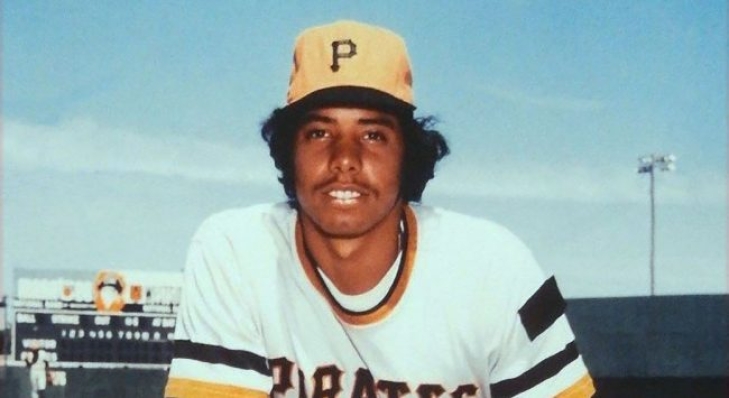
The 1970s "Lumber Company" era of Pittsburgh baseball is celebrated for its powerful, high-speed offense, with star sluggers often taking center stage. Behind that strong offense was a 6-foot-7 left-handed pitcher who methodically dominated National League lineups with calm, precise skill. John Robert Candelaria, known as "The Candy Man" by fans, brought a distinctive Brooklyn-inspired confidence to the mound. Drafted in 1972 after walking away from basketball, the lanky southpaw used an unorthodox, high-leverage cross-fire pitch that effectively neutralized opposing hitters, making him one of the most underrated starting pitchers in franchise history.
His quick rise through the farm system led to a remarkable debut in 1975, but it was his second season in 1976 that truly established his status as a top-tier pitcher. Candelaria made run prevention a consistent part of his game, highlighted by a historic moment on August 9 when he baffled the division-rival Cincinnati Reds with a stunning 2-0 no-hitter at Three Rivers Stadium, the first no-hitter by a Pirate in the city since 1907.
His peak physical performance and individual dominance reached its height in a stunning 1977 showcase, which remains a classic example of analysis. Candelaria delivered an exceptional pitching performance, achieving an impressive 20-5 record that led all major leagues with an .800 winning percentage. He dominated the National League by posting a league-leading 2.34 ERA and a flawless 1.071 WHIP, while consistently overpowering hitters and leading the league with a low 2.0 walks per nine innings, earning his first All-Star selection and finishing fifth in the Cy Young voting.
Candelaria's impact extended beyond a brief peak, offering exceptional durability to the rotation for ten years. He was a crucial, high-impact leader on the memorable 1979 "We Are Family" world championship team, winning 14 regular-season games and pitching six outstanding one-run innings to help secure a key win over Cincinnati in Game 1 of the NLCS. During his long initial tenure in Steel City, he recorded six more seasons with at least 11 wins, consistently dominating top hitters with precise control.
Tragically, rising tensions with management over his playing time and salary demands led to a mid-season trade to the California Angels in 1985, marking the end of his main tenure with the black and gold. However, demonstrating his strong emotional connection to the community, Candelaria returned to the Pirates for a short, nostalgic stint in the 1993 season to conclude his extensive major league career.
With the Pirates, Candelaria had a 124-87 Record, a 3.17 ERA, and fanned 1,159 batters.
25. Lloyd Waner
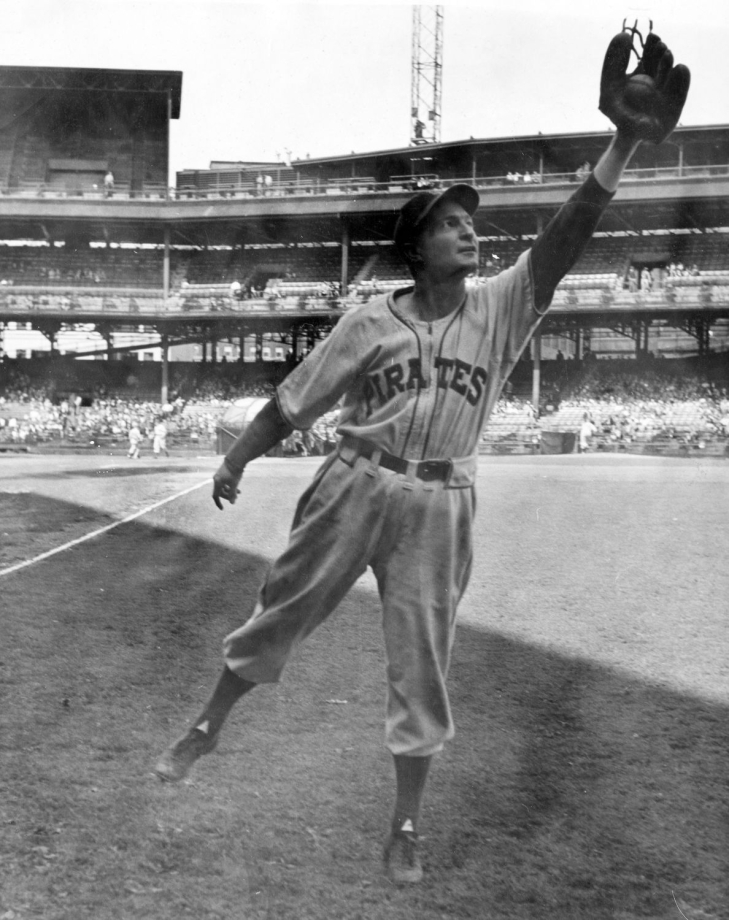
Lloyd Waner, a 5-foot-9, 150-pound Oklahoma native, was a contact hitter known as "Little Poison,” with a short, quick right-handed swing. Often paired with his Hall of Fame brother Paul, he specialized in line drives and contact hitting, contrasting with power sluggers and making contact hitting a season-long routine.
His debut appearance during the 1927 campaign remains one of the most explosive and prolific in Major League history. If the Rookie of the Year award had been available then, Waner would have won it by an overwhelming margin. As a 21-year-old rookie, he consistently overwhelmed National League pitchers, hitting a career-best .355 and leading the league with an impressive 133 runs scored. He achieved an astonishing 223 hits, establishing a rookie benchmark that kicked off a remarkable decade of leading the lineup with outstanding table-setting skills.
While he never quite eclipsed that spectacular rookie batting average again, Waner remained a model of unshakeable, low-variance consistency for the next ten summers. He cleared the coveted .300 threshold nine more times in a Pittsburgh uniform and orchestrated four distinct 200-hit masterclasses.
He possessed elite spatial awareness on the basepaths, routinely stretching singles into extra bases, as highlighted by a brilliant 1929 season in which he paced all of baseball with a career-high 20 triples.
However, when examined with modern, advanced run-creation filters, his overall analytical evaluation hits a clear limit. Despite his localized hit volume, "Little Poison’ lacked the power to clear the fence, hitting only 24 home runs in his extensive career. Additionally, his highly aggressive style meant he seldom took free passes, drawing just 151 walks in total, resulting in a low walk rate and a career on-base percentage of .354. Although he had excellent speed on the field, he was surprisingly cautious on the bases, rarely posting large stolen base numbers.
As aging and declining contact skills appeared in the late 1930s, the organization signaled a transition, trading the franchise icon to the Boston Braves in early 1941. Waner, showing his strong community ties, returned to the Bucs briefly during 1944-1945 World War II rosters to finish his career.
With Pittsburgh, Waner had 2,317 hits, 1,143 runs scored, and a stellar .319 batting average across 1,803 games. He entered the Baseball Hall of Fame in 1967 via the Veterans Committee.
The Houston Astros add Terry Puhl and Tal Smith

Regular visitors of Notinhalloffame.com know that we are slowly working on the top 50 of every major team in the NHL, NBA, NFL and MLB. Once that is done, we intend to look at how each team honor their past players, coaches and executives. As such, it is news to us that the Houston Astros have announced two new members, Terry Puhl and Tal Smith will enter their franchise Hall of Fame.
The two will be inducted on August 13, during their home game against Oakland.
Playing 14 of his 15 seasons in baseball with the Astros, Canadian born outfielder, Terry Puhl was an All-Star in his first full season in 1978. Puhl would not repeat an appearance to the mid-season classic, but he would have two more seasons tabulating over 150 hits and would steal 20 or more bases six times. The Canadian would accumulate 1,357 Hits for the Astros.
Smith was with the Astros from day one, serving in various capacities before ascending to the role of General Manager in 1975. Names The Sporting News Executive of the Year in 1980, Smith entered the private sector afterward, but returned to the Astros as the Director of Operations in 1994, and stayed until 2011.
We here at Notinhalloffame.com would like to congratulate Terry Puhl and Tal Smith for their impending induction.
