
The Naismith Basketball Hall of Fame names its 2026 Preliminary Nominees

The Naismith Basketball Hall of Fame has announced the preliminary candidates for the Class of 2026, and as always, it is a very long list that few have gone into great depth to discuss.
We like to change that.
The Finalists will be chosen on February 9 as part of the NBA All-Star weekend. Following that, on April 5th, during NBA All-Star Game weekend, the Naismith Basketball Hall of Fame Class of 2026 will be announced.
Here is a complete list of all of the participants:
NORTH AMERICAN NOMINEES:
Rick Barnes (COA). Barnes is the current Head Coach of the Tennessee Volunteers and took Texas to the 2003 Final Four. He was the 2019 Naismith Coach of the Year, a four-time Big 12 Coach of the Year, and has over 800 wins in a career that also included coaching George Mason, Providence, and Clemson.
Gene Bartow (COA). Bartow had a career record of 647-353 as the Head Coach at Central Missouri State, Valparaiso, Memphis State, UCLA, and UAB. He was a one-time MVC Coach of the Year, a three-time Sun Belt Coach of the Year, and is a member of the College Basketball Hall of Fame.
Tom Chambers (PLA). A former Hall of Fame Finalist, Chambers went to four All-Star Games and was a two-time Second Team All-NBA Selection as a Seattle SuperSonics. Also playing for San Diego, Phoenix, Utah, Charlotte, and Philadelphia, Chambers scored 20,049 Points.
Jamal Crawford (PLA). Jamal Crawford won three Six Man of the Year Awards (one with Atlanta and two with the Los Angeles Clippers) and finished in the top five in voting three other seasons. An expert ball handler, Crawford had 19,419 NBA Points over a 20-year career that also saw him play for Chicago, New York, Golden State, Portland, Minnesota, Phoenix, and Brooklyn.
Joey Crawford (REF). Crawford was an NBA Referee from 1977 to 2016 and worked 50 NBA Finals Games. He was a controversial figure in the NBA, known for his confrontational and aggressive approach to assessing technical fouls.
Terry Cummings (PLA). Cummings was the 1983 Rookie of the Year with the San Diego Clippers but is best known for his time in Milwaukee, where he was twice an All-Star. Also playing for San Antonio, Seattle, Philadelphia, New York, and Golden State, Cummings had 19,460 Points.
Bobby Dibler (REF). Dibler refereed in the NCAA, where he worked 14 NCAA Tournaments, three Final Fours, and two National Championship Games.
Mark Few (COA). Few are arguably the most important men in Gonzaga's history; as of this writing, he is still their head coach. He took the Bulldogs to two Final Fours (2017 & 2021) and won 19 WCC Tournaments. He is also a two-time Naismith Coach of the Year and a 12-time WCC Coach of the Year.
Robert Foley (COA). Foley compiled 980 wins as a high school coach in Massachusetts, a state record. He coached for 61 years.
Mike Gminski (PLA). Gminski was an All-American and ACC Player of the Year at Duke and went on to play 15 seasons in the NBA, with stops in New Jersey, Philadelphia, Charlotte, and Milwaukee.
Blake Griffin (PLA). Griffin was one of the most exciting players in the first half of the 2010s and came as advertised from his National Player of the Year campaign in 2009 in Oklahoma. Known for his powerful dunks and prolific rebounding, Griffin made the Los Angeles Clippers must-watch basketball. He won the 2011 Rookie of the Year, was a five-time All-NBA Selection (three Second Team and two Third Team), and a six-time All-Star.
Anfernee Hardaway (PLA). Twice named the Great Midwest Player of the Year when he was at Memphis, Hardaway would have an excellent run professionally with the Orlando Magic, going to four All-Stars and earning two First Team All-NBAs, and was close to being one of the most popular players in the sport. He also logged time with Phoenix, New York, and Miami, and was a Gold Medal winner on the 1996 U.S. Olympic Men’s Team.
Herman Harried (COA). Playing his college ball at Syracuse, Herman Harried would become a very successful high school coach at Lake Clifton in Baltimore City, where he has taken the school to six State Championships.
Robert Horry (PLA). “Big Shot Rob” was one of the best clutch players ever, winning seven NBA rings (two with Houston in 1994 & 1995, three with Los Angeles in 2000, 2001 & 2002, and two with San Antonio in 2005 & 2008. He still owns the record for the most three-point shots made without a miss.
Marques Houtman (PLA). Houtman brought both Massachusetts Dartmouth and Stonehill College to their respective Sweet Sixteens, and he would later take Cape Verde to its first medal, winning Bronze at the 2007 FIBA African Championships. He played professionally in Portugal.
Joe Johnson (PLA). Johnson played professionally first for the Boston Celtics and then the Phoenix Suns, but it was the third team, the Atlanta Hawks, where he made his most significant mark. Johnson went to six of his seven All-Stars in ATL, with his seventh coming when he was a Brooklyn Net. Johnson scored 20,407 Points and also played for Miami, Utah, and Houston.
Kevin Johnson (PLA). Johnson played his college ball at California and was drafted seventh by Cleveland, but was traded soon after to Phoenix, where he played the rest of his career. With the Suns, Johnson was a four-time Second Team, one-time Third Team All-NBA Selection with three All-Stars, and he scored 13,127 Points and 6,711 Assists in the Association.
Marv Kessler (COA). Known for his wit and basketball acumen, Kessler was a coach for Adelphi University before serving as an advance scout for Detroit, Washington, Portland, and Sacramento. Over the last two decades, clubs brought him in to improve overall efficiency.
Bill Laimbeer (PLA). One of the most disliked players on the court (unless he was your teammate), Laimbeer was one of the “Bad Boys” of the Detroit Pistons, who won back-to-back NBA Championships in 1989 and 1990. Individually, he was a four-time All-Star, one-time Rebounding Champion, and had 10,400 career boards. Following his playing career, Laimbeer became a successful coach in the WNBA, winning three titles with Detroit.
Mike Leonardo (COA). Leonardo coached Marist in New Jersey to a 209-46 record with 20 of his players receiving Division I scholarships.
Maurice Lucas (PLA). A member of the All-Time ABA Team, Lucas was better in the NBA as he was a four-time All-Star (three with Portland and one with New Jersey) and was an NBA Champion in 1977 with the Trail Blazers. He also played for New York, Phoenix, Los Angeles, and Seattle, and had 14,857 Points and 9,306 Rebounds over his pro career.
Jack Madden (REF). Madden is a retired NBA referee who officiated eight NBA Finals.
Shawn Marion (PLA). “The Matrix” played 16 seasons in the NBA, accruing four All-Stars and an NBA Championship in 2011 with the Dallas Mavericks. Marion compiled 17,700 Points and 10,101 Rebounds over his career, which also saw him play for Phoenix, Miami, Toronto, and Cleveland.
Rollie Massimino (COA). Massimino is best known for being the Head Coach at Villanova, where he led the Wildcats to the NCAA Championship in 1985. He was also the HC at Stony Brook, UNLV, and Cleveland State, with an overall record of 816-462. Massimino is a member of the College Basketball Hall of Fame.
Bob McKillop (COA). McKillop was the Head Coach at Davidson from 1989 to 2022, where he led the school to 13 regular season championships and eight conference championships. He had a record of 634-380, was a ten-time conference coach of the year, and boasts a 100% graduation rate.
Gary McKnight (COA). One of the most successful Coaches on the high school level, McKnight led Mater Dei High School to a National Championship, 11 California State Titles, and 39 League Titles.
Paul Mihalak (REF). Mihalak was an NBA referee from 1969 to 1997, refereeing over 2,000 Games and 123 Playoff Games. After he retired from refereeing, he became a mentor to younger officials.
Steve Moore (COA). Moore was a nine-time NCAC Coach of the Year and had a combined record of 867-253 over stints coaching Muhlenberg (1981-87) and Wooster (1988-2020). At the time of his retirement, his 867 Wins were second all-time in Division III.
Bill Morse (COA). Morse guided Fort Hays State (1982-91) to consecutive NAIA National Championships (1984 & 1985) and had a stellar record of 235-65.
Dick Motta (COA). Motta helmed Weber State to three Big Sky Titles (and a Big Sky Coach of the Year), but his best work was in the NBA, where he coached the Washington Bullets to a championship in 1978. He was also the NBA Coach of the Year in 1971 with the Chicago Bulls and was the HC in the NBA for Dallas, Sacramento, and Denver.
Jack Nagle (COA). Nagle was Marquette’s Head Coach from 1953 to 1958 and arguably put the school on the map. He later became a successful Scout.
Bruce Pearl (COA). Pearl began his Head Coaching career at Southern Indiana (1992-2001), then moved on to Milwaukee (2001-05), where he led the Panthers toa Division II Championship. He moved on to Tennessee (2005-11) and, finally, to Auburn, where he led the Tigers to two NCAA Final Fours. He has an overall record of 706-268, and is a nine-time conference Coach of the Year.
Jim Phelan (COA). Phelan coached Mount St. Mary’s from 1954 to 2003, posted a record of 830-524, and won the NCAA College Division Championship in 1962. He is a member of the College Basketball Hall of Fame.
Don Richardson (COA). Richardson was the Head Coach at Southwest Magnet High in Macon from 1971 to 1990, had a record of 463-90, and won six State Championships.
Doc Rivers (COA). Nominated for the second time, Rivers is the current Head Coach of the Milwaukee Bucks and holds an NBA Championship, having led the Boston Celtics to a title in 2008. A former Coach of the Year, Rivers was named one of the NBA’s 15 Greatest Coaches. He is also a former Head Coach of Orlando, the Los Angeles Clippers, and Philadelphia, and is currently eighth all-time in Wins.
Dave Robbins (COA). A member of the College Basketball Hall of Fame, Robbins was the Head Coach at Virginia Union from 1978 to 2008, where he led the school to three NCAA Division II Championships and 14 CIAA Titles. He had a lifetime record of 713-194.
Lee Rose (COA). After a productive career as the Head Coach of Transylvania, Rose took over as the HC at UNC-Charlotte, bringing them to a Final Four. He returned to the Final Four with a second team, Purdue, and later served as South Florida’s Head Coach. His overall record was 388-162.
Brandon Roy (PLA). Roy was the 2006 Pac-10 Player of the Year at Washington, had an explosive start, won the 2007 Rookie of the Year, and then went on a three-year streak of All-Star seasons. Sadly, Roy’s knees let him down, and he was out of basketball before he was 29.
Kelvin Sampson (COA). Sampson first became a Head Coach at Montana Tech, where he led his school to three Conference Tournament wins. Washington State later hired him and then hired him as the HC at Oklahoma, where he led the Sooners to a Final Four and four Big 12 Tournament championships. Currently, Sampson is the Head Coach at the University of Houston, where he has led the Cougars to two Final Fours. As of this writing, he has 808 wins.
Scott Skiles (PLA). Skiles was the 1986 Big Ten Player of the Year at Michigan State, and he would take his skills to the NBA, playing for Milwaukee, Indiana, Orlando, Washington, and Philadelphia. He was the 1991 Most Improved Player of the Year.
Harry Statham (COA). Statham was the Head Coach at McKendree from 1966 to 2018, compiling a record of 1,122-513.
Amar’e Stoudemire (PLA). Stoudemire was a six-time All-Star and five-time All-NBA Selection (one first Team and four Second Team) who had 15,994 Points and 6,632 Rebounds in a career with Phoenix, New York, Dallas, and Miami. After his NBA career ended, he moved to Israel and won two Premier League Titles.
Jerry Welsh (COA). Welsh was the Head Coach at SUNY Potsdam, where he had a record of 494-141 from 1968 to 1991 and won two National Championships in 1981 and 1986.
Buck Williams (PLA). Williams won the 1982 Rookie of the Year Award and was a three-time All-Star in his time with the New Jersey Nets. He also played for Portland and New York, was a four-time All-Defensive Selection (two First Team and two Second Team), and had 16,784 career Points and 13,017 Rebounds.
Shelden Williams (PLA). Williams had a journeyman’s career in the NBA, but at Duke, he was a two-time NABC Defensive Player of the Year, a consensus All-American in 2006, and the Blue Devils' all-time leader in Rebounds and Blocks.
WOMEN’S NOMINEES:
1996 U.S. Women’s National Olympic Team: This was one of the most dominant squads in Olympic history, averaging a 20-point-plus differential throughout the tournament. They beat Brazil in the Finals. The team consisted of Jennifer Azzi, Ruthie Bolton-Holifield, Teresa Edwards, Venus Lacy, Lisa Leslie, Rebecca Lobo, Katrina McClain, Nikki McCray, Carla McGhee, Dawn Staley, Katy Steding, and Sheryl Swoopes, with Tara VanderVeer as their Head Coach.
Leta Andrews (COA). Andrews holds the record for the most wins by a high school basketball coach, with 1,416. She has also been a Finalist five times and is already a member of the Women’s Basketball Hall of Fame.
Jennifer Azzi (PLA). Azzi was the Naismith Basketball Player of the Year in 1990, leading Stanford to a National Championship. She was also on the gold medal-winning 1996 Olympic Women’s Team and won two more gold medals at the FIBA World Championship (1990 & 1998). She was also inducted into the Women’s Basketball Hall of Fame and was a Naismith Basketball Finalist in 2023.
Lynn Norenberg Barry (CONT). Following her career as a player at William & Mary, Barry would eventually work as an enforcement representative for the NCAA and, from 1985 to 1996, as the Assistant Executive Director for U.S.A. Basketball. A five-year stint as a Special Advisor to the WNBA followed this.
Lisa Bluder (COA). Bluder was the Head Coach for Drake (1999-2000) but is best known for her time as Iowa’s HC (2000-24), where she led the Hawkeyes to two Final Fours, five Big Ten Tournament wins, and three Big Ten Coach of the Year awards. She had an overall record of 889-394.
Elena Delle Donne (PLA). Delle Donne was a superstar at the University of Delaware, where she was a two-time All-American. Professionally, she split her WNBA career between Chicago and Washington, winning a WNBA Title with the Mystics. She also won two WNBA MVPs, was a four-time First Team All-WNBA Selection, and a seven-time All-Star. She was also on the United States team that won the 2016 Gold Medal.
Cheryl Ford (PLA). Ford was a two-time WAC Player of the Year at Louisiana Tech and professionally won three WNBA Championships with the Detroit Shock. She won the 2003 WNBA Rookie of the Year Award, was a four-time All-Star, and twice led the league in Rebounds per Game.
Wanda Ford (PLA). Ford made history at Drake as the first woman to record over 1,500 Rebounds, finishing with a then-record 1,887. She later worked professionally in Europe and South America for 16 years.
Bridgette Gordon (PLA). Gordon led the Tennessee Lady Volunteers to two NCAA Championships (1987 & 1989), the latter of which saw her win the Tournament MOP. She also won the 1989 SEC Female Athlete of the Year and Player of the Year and a Gold Medal at the 1988 Olympics. She is a member of the Women’s Basketball Hall of Fame.
Chamique Holdsclaw (PLA). Holdsclaw won three consecutive NCAA Championships at Tennessee (1996-98) and individually was a back-to-back Naismith College Player of the Year (1997 & 1998). Professionally, she went to six WNBA All-Star Games and won one Scoring Title and two Rebounding Titles in a career spent with Washington, Los Angeles, Atlanta, and San Antonio. She is already in the Women’s Basketball Hall of Fame.
Bettye McClendon (REF). Playing basketball at Tuskegee Institute in the early 50s, McLendon stayed in athletics all of her life in coaching capacities, and would later make history as the first woman to officiate a men’s college basketball game (Morris Brown College vs Clark College in 1980). She also officiated Division II tournaments in the early 1980s.
Suzie McConnell (PLA). A member of the Women’s Basketball Hall of Fame, McConnell was a star at Penn State, and the Guard would later play 13 seasons for the Cleveland Rockers of the WNBA, where she was a First Team All-WNBA Selection in 1998. She also won Gold with the U.S. in the 1986 FIBA World Championship and the 1988 Olympics.
Taj McWilliams-Franklin (PLA). McWilliams-Franklin won two WNBA Titles (one with Washington and one with Minnesota) and was a six-time WNBA All-Star. She also won a FIBA World Championship Gold Medal with the United States in 1998.
Candace Parker (PLA). Considered one of the greatest women’s players of all time, Candace Parker won a truckload of awards at the University of Tennessee, capped by leading the Lady Vols to two National Championships. Professionally, Parker led three different teams to WNBA Titles (Los Angeles, Chicago, and Las Vegas), and she also won a Defensive Player of the Year Award, two MVPs, was a seven-time First Team All-WNBA, and went to seven WNBA All-Star Games. She also led the United States to two Olympic Gold Medals.
Ticha Penicheiro (PLA). Penicheiro played most of her WNBA career with the Sacramento Monarchs, where she won a league title in 2005. A two-time WNBA First Team Selection and four-time All-Star, Penicheiro led the WNBA in Assists seven times. She is a member of the Women’s Basketball Hall of Fame.
Ruth Riley (PLA). Riley took Notre Dame to an NCAA Championship in 2001 and was also the Naismith College Player of the Year. She later won two WNBA Titles and was a two-time All-Star with the Detroit Shock. She also competed for Miami, San Antonio, Chicago, and Atlanta.
Tom Shirley (COA). Shirley is the current Head Coach at Thomas Jefferson University, and is currently the active leader in Division II Wins with over 900. He is a three-time CACC Coach of the Year.
Michelle Snow (PLA). Snow played college ball at the University of Tennessee and had a long career in the WNBA, where she was a two-time WNBA All-Star and was the 2003 WNBA Most Improved Player.
Mike Thibault (COA). Thibault coached in the WNBA for 20 years (Connecticut, 2003-12 & Washington, 2013-22) and is a three-time WNBA Coach of the Year, with a WNBA Title with the Mystics in 2019. He also owns two NBA rings as an Assistant Coach with the Lakers and two Olympic Gold Medals as an Assistant on Team U.S.A. (2008 & 2024).
Marian Washington (COA). She was inducted into the Women’s Basketball of Fame after her role as Kansas’s Head Coach for 30 years (1973-2004) with an overall record of 560-363.
Chris Weller (COA). Weller coached the Lady Terps at Maryland from 1975 to 2002, where she led them to two Final Fours, was named Naismith College Coach of the Year, and compiled a record of 499-286. She is also enshrined in the Women’s Basketball Hall of Fame.
Andrew Yosinoff (COA). Yosinoff is in his 49th year as a coach at Emmanuel, with over 900 wins.
CONTRIBUTOR NOMINEES:
Marv Albert: Albert is one of the most recognized basketball analysts in history, having called games from the early 1960s to the early 2020s, working nationally for most of that time. YES!!!
Pete Babcock: An executive for 42 years (serving in various capacities for the San Diego Clippers, New Orleans Jazz, Denver, Atlanta, Los Angeles Lakers, Milwaukee, Toronto, and Cleveland, with his best work as the President of the Nuggets and Hawks, where he rebuilt their squads into contenders. He also worked for USA Basketball.
Bernie Bickerstaff. Bickerstaff was a long-time Assistant Coach and Head Coach in the NBA, working for San Diego, Capital/Washington (where he won a title as an Assistant Coach), Denver, Charlotte, Chicago, Portland, the Lakers, and Cleveland. He later became an Executive with the Cavaliers (where he won a second ring in 2016) and is currently an advisor to the Detroit Pistons. Bickerstaff also served the NBA in various consulting capacities.
Tal Brody. Brody played collegiately at Illinois, but after competing at the Maccabiah Games in Israel, he was asked to stay, which led to a successful career in which he put Maccabi Tel Aviv and Israeli basketball on the map, a tagline he is known for.
Vic Bubas. Bubas was the Head Coach at Duke, where he went to three Final Fours, won four ACC Tournaments, and was a three-time ACC Coach of the Year. He would later become Vice President of the university and was later the commissioner of the Sun Belt Conference. Bubas is a member of the College Basketball Hall of Fame.
Tremaine Dalton. Dalton is the Technical Director of the NBA Basketball School in Portugal and founded The Process Basketball, a basketball skill development program.
Mike D’Antoni. D’Antoni had a long and travelled career as a Coach throughout the NBA and Europe. In the United States, he is best known for leading Phoenix to two Conference Finals and his runs as the Head Coach for New York and Houston, and he is also a two-time NBA Coach of the Year. D’Antoni also won two Italian Leagues as Benneton Trevioso’s HC, and he owns two Olympic Gold Medals as an Assistant Coach for the United States.
Bill Duffy. Duffy is one of the most successful Basketball player agents ever.
Mike Fratello. Fratello was the 1986 NBA Coach of the Year with the Atlanta Hawks and, over his career, also helmed Cleveland, Memphis, and the Ukrainian National Team. He later became a commentator, notably for TNT, where he became best known.
Bob Gibbons. Gibbons is an American talent scout specializing in American high school players. He also ranks the nation’s top 150 players.
Robert Gonzalez. Gonzalez is the founder of the Telmex Telcel Basketball Youth League in Mexico.
Simon Gourdine. In the 1970s, Gourdine was the NBA's Deputy Commissioner, helping broker the merger between the NBA and ABA. Later, he served as the General Counsel for the National Basketball Players Association and briefly as its Executive Director.
Tim Grgurich. Grgurich had a lengthy run as a Coach in the NCAA (Pittsburgh 1975-80 & UNLV 1994-95) and as an Assistant Coach in the pros with stops in Seattle, Portland, Phoenix, Dallas, and Milwaukee. He won an NCAA Championship as an Assistant Coach at UNLV and an NBA Championship with Dallas in 2011.
Dennis Jackson. A successful Assistant Coach, Jackson created P.L.A.Y. Inc. (Planned Learning Achievement for Youth), a non-profit organization for minority student-athletes.
Junius Kellogg. Kellogg was the first African-American to play for Manhattan, and he is best known for his role in exposing the CCNY point-shaving scandal of 1950-51.
Johnny “Red” Kerr. A talented basketball player in his own right (he was a three-time All-Star), Kerr became a legend in Chicago as a color commentator for over forty years.
Dan Lynch. Lynch was the Head Coach at St. Francis College for 20 years is here for his promotion of the use of three-point field goals.
Elmo Mahoney. Mahoney and his brother Ken developed the breakaway rim, which used a coil spring to let the rim bounce back without breaking the glass. A simple invention, but one that ensured the flow of the game continued.
Ken Mahoney. See above.
Jack McCloskey. A former Head Coach of the Portland Trail Blazers, McCloskey gained his biggest fame as the General Manager of the Detroit Pistons, where “Trader Jack” assembled a team that won back-to-back NBA Championships (1989 & 1990).
Jon McGlocklin. McGlocklin was an All-Star (1969) and NBA Champion with Milwaukee; he stayed with the team after he retired in 1975 as a broadcaster, a role he held until 2021
Alex McKenchie. McKenchie is regarded as one of the top physiotherapists in sports, and his work in basketball stretched 20 years with the Los Angeles Lakers and Toronto Raptors. For his efforts, he has six NBA Championship Rings (five with Los Angeles and one with Toronto).
Johnny Most. Most was a legendary sportscaster in Boston whose raspy calls rang in the ears of Celtics fans from 1953 to 1990. He was awarded the Curt Gowdy Award posthumously.
Dennis Murphy. Murphy was the co-founder of the American Basketball Association, which introduced the 3-Point shot, the Slam Dunk Contest, and the first seven-figure contract in sports.
Curly Neal. One of the most popular and recognized players in Harlem Globetrotters history, with his bald head and infectious smile. The team's prime ballhandler for 22 years, he played in more than 6,000 games in 97 countries.
Jim Riswold. Riswold was the marketing genius behind the Air Jordan ads and the “Bo Knows” campaign of the 1990s.
Ermer Robinson. Robinson played for the Harlem Globetrotters in the 1940s and was the player who scored the game-winning basket in the 1948 game against the Minneapolis Lakers. He later served as Head Coach in the American Basketball League.
Will Robinson. Robinson broke barriers as the first African-American Head Coach in the NCAA when he accepted the role at Illinois State in 1970. He was also a scout for the Detroit Pistons for 28 years and won two Championship Rings with the team.
Gene Shue. Shue has one of the most complete resumes of anyone here. Considered the man who pioneered the spin move, Shue was a five-time NBA All-Star who played for Philadelphia, New York, Fort Wayne/Detroit, and Baltimore, and later a two-time NBA Coach of the Year with nearly 800 Wins.
Oris “Dino” Smiley. Smiley is the Director and Commissioner of the Drew League, the National Pro-Am Basketball Summer League based in Los Angeles.
Scott Tarter. Tarter founded the Dropping Dimes charity to help former ABA players in need.
Sonny Vaccaro. Vaccaro is a retired sports marketing executive who worked for Nike and later Adidas. It was Vaccaro who signed Michael Jordan to Nike and helped promote the legendary Air Jordan shoes. He was profiled on ESPN’s 30 for 30 and was played by Matt Damon in the 2023 film, “Air, " which detailed that transaction.
Donnie Walsh. Walsh is best known for his time as the General Manager of the Indiana Pacers (1987-2005). Under his watch, Indiana made six Conference Finals.
World Wheelers. The World Wheelers are a unicycling basketball outfit that often performs at halftime shows.
INTERNATIONAL NOMINEES:
David Blatt (COA). Blatt played his pro ball in Israel and would stay in Europe as a Coach, where he helmed clubs across the continent, such as Maccabi Tel Aviv, Dynamo Moscow, Benetton Treviso, and Olympiacos. His coaching accomplishments include the FIBA EuroBasket Championship (Russia), the EuroLeague Championship (Maccabi Tel Aviv in 2014), and the EuroCup with Darussafaka in 2018.
Jean-Jacques Conceicao (PLA). From Angola, Conceicao took his country to seven AfroBasket Championships (1989, 1992, 1993, 1995, 1999, 2001 & 2003) and in 2011 was named the Most Valuable African Player of All Time. He played club ball in Portugal, winning 10 League Championships (seven with Benfica and three with Portugal Telecom). He is already a member of the FIBA Hall of Fame.
Mirza Delibacis (PLA). Delibacis represented Yugoslavia internationally, and the Shooting Guard won Gold in the 1980 Summer Olympics and two EuroBasket Gold Medals (1975 & 1977). He also won a EuroLeague Championship with Bosna on the club level in 1979. Delibacia is also part of the FIBA Hall of Fame.
Jorge Garbajosa (PLA). Garbajosa won a plethora of medals while representing Spain (Gold in the 2006 FIBA World Cup, Silver in the 2008 Olympics, and one Gold, two Silvers, and a Bronze in EuroBasket) and on the club level won two Spanish Cups (TAU Ceramica 1999 and Unicaja 2005), and two Italian Cups with Benetton Treviso (2002 and 2003). The 2006 Mr. Europa winner also played briefly for the Toronto Raptors and is currently the President of FIBA Europe.
Marc Gasol (PLA). Gasol is in the International category as he won two FIBA World Cups (2006 & 2019), two FIBA EuroBaskets (2009 & 2011), and two Silver Medals in the Olympics (2008 & 2012). However, his accomplishments in North America are stellar: he was a three-time All-Star, a Defensive Player of the Year (2013), and an NBA Champion with the Toronto Raptors in 2019.
Andrew Gaze (PLA). Gaze is a member of the FIBA Hall of Fame and, in 1991, was named one of FIBA’s 50 Greatest Players. A 14-time NBL scoring champion and 21-year veteran with the Melbourne Tigers, he won seven league MVPs and two league titles. He was also briefly with the San Antonio Spurs in 1999, where he won an NBA Championship.
Panagiotis Giannakis (PLA). Giannakis is also enshrined in the FIBA Hall of Fame, and as a player for Greece, he helped his nation win Gold in the 1987 EuroBasket. He played 22 years in the Greek League, with his best run coming with Aris, where he captured seven straight Greek League Championships. He is also a seven-time Greek Cup Winner, and after his playing career ended, he had a successful run in Greece as a Coach.
Giuseppe Gieregia (PLA). Giergia represented Yugoslavia internationally and captured Silver in the 1963 and 1967 World Cups. He played 19 years for Zadar in the Yugoslav League, winning five league titles.
J.R. Holden (PLA). Undrafted from Bucknell, Holden was solicited to play for ASK Broceni in Latvia, but would later join CSKA Moscow, playing there for a decade (2002-11). Holden helped them win nine Russian League Titles, four Russian Cups, and two EuroLeague Championships. He would also compete for Russia, winning a Gold Medal at the 2007 EuroBasket.
Dusan Ivkovic (PLA). A FIBA Hall of Fame inductee, Ivkovic played ten seasons for Radnicki Belgrade in the Yugoslavian League. Although the Point Guard had a nice career and was nominated as a player, he had far more success as a coach at the club level and for Yugoslavia and Serbia, winning three EuroBasket Gold Medals and a FIBA World Gold Medal in 1990. Why wasn’t he nominated as a Coach?
Andrei Kirilenko (PLA). An All-Star with the Utah Jazz in 2004, Kirilenko has a long NBA career and was recognized by his home country (Russia) as Player of the Year four times. Kirilenko led Russia to a EuroBasket Gold Medal in 2007 and took CSKA Moscow to two league championships.
Vladimir Kondrashin (COA). For years, Kondrashin was the Head Coach of the Soviet Union, guiding them to Gold at the 1972 Olympics, the 1974 FIBA World Cup, and the 1971 EuroBasket. He has already been inducted into the FIBA Hall of Fame.
Marcos Leite (PLA). Representing Brazil for years, Leite brought home a Silver Medal at the 1970 World Cup, Bronze at the 1978 World Cup, Gold at the 1984 AmeriCup, the 1971 Pan American Games, and the 1971, 1973, and 1983 South American Championships.
Ettore Messina (COA). Already in the FIBA Hall of Fame, Messina is one of the most successful coaches in European club history. He won four EuroLeague Championships (1998 & 2001 with Virtus Bologna and 2006 & 2008 with CSKA Moscow) and continues to coach today with Olimpia Milano in the Italian League.
Juan Carlos Navarro (PLA). Playing most of his professional career with FC Barcelona, Navarro is one of the most decorated players in Spanish League history, winning a EuroLeague MVP (2011), two EuroLeague Championships (2003 & 2010), eight Liga ACB Titles, and was an All-Decade EuroLeague player in the 2000s and 2010s. Internationally, he helped Spain win Gold in the 2006 FIBA World Cup, the 2009 and 2011 EuroBasket, and Silver in the 2008 and 2012 Olympics.
Andrés Nocioni (PLA). Nocioni has an eight-year NBA career (Chicago, Sacramento, and Philadelphia) and represented Argentina on the world stage. For his country, he won Gold at the 2004 Olympics, Gold in the 2001 and 2011 AmeriCup, and Silver at the 2002 World Cup.
Fabricio Oberto (PLA). An NBA Champion with the San Antonio Spurs in 2007, Oberto had a lot of success on the world stage for Argentina. He was a member of the 2004 Olympic Gold Medal-winning team, won Silver in the 2002 World Cup, and also owns Gold Medals in two FIBA AmeriCups (2001 & 2011) and the 1995 Pan American Games.
Jose Ortiz (PLA). Ortiz was the 1987 Pac-10 Player of the Year at Oregon State and played two years with the Utah Jazz. He represented Puerto Rico on multiple occasions, winning Gold at the 1985 AmeriCup, 1991 Pan American Games, the 1994 Goodwill Games, and five Centrobasket tournaments.
Amaury Pasos (PLA). Pasos was named one of FIBA’s 50 Greatest Players in 1991, and he led Brazil to a World Cup title in 1959, where he was the tournament MVP. He won a second World Cup in 1963, four FIBA South American Championships, and two Olympic Bronze Medals.
Modestas Palauskas (PLA). Palauskas led the U.S.S.R. to Gold at the 1972 Olympics, the 1967 and 1974 FIBA World Cup, and three FIBA EuroBasket (1965, 1967 & 1969). The Lithuanian is also a member of the FIBA Hall of Fame and was named one of FIBA’s 50 Greatest Players.
Togo Soares (PLA). Soares is listed as a player, but we assume the Hall meant to list him as a coach, which is where he had a plethora of success. A member of the FIBA Hall, Soares coached Brazil to two FIBA World Cup Gold Medals (1959 & 1963), a Bronze in the 1960 Olympics, and five FIBA South American Championships.
Penny Taylor (PLA). From Australia, Taylor was a three-time WNBA All-Star and three-time WNBA Champion (all with the Phoenix Mercury. Internationally, she won two Silver Olympic Medals (2004 & 2008) and was the 2006 FIBA World Championship MVP in the year Australia won the tournament.
Amaya Valdemore (PLA). Valdemore played internationally for Spain, where she was part of the 2013 EuroBasket winning team. Winning eight Spanish League Championships on the club level, Valdemore played three years in the WNBA with the Houston Comets and was a champion in all three seasons.
Ranko Zeravica (COA). Zeravica worked his way up the Yugoslavian coaching ranks and became their Head Coach in 1965. Two years later, he led his team to a Silver Medal at the 1967 FIBA and then Silver at the 1968 Mexico City Olympics. Zeravica then brought Yugoslavia to the pinnacle with a Gold Medal at the 1970 FIBA Worlds and Gold again at the 1980 Moscow Olympics. He is a member of the FIBA Hall of Fame.
WOMEN’S VETERAN NOMINEES:
1982 Cheyney State NCAA Final Four Team (TEA): Cheyney State was a shock Final Four Team coached by C. Vivian Stringer. She took the small Pennsylvania school to the final game, where it lost to Louisiana Tech.
Molly Bolin (PLA). Bolin was one of the biggest stars of the Women’s Professional Basketball League in the late 70s, the first pro basketball league for women. She was a three-time league All-Star and was the Co-MVP in 1980.
Alline Banks Sprouse (PLA). Banks Sprouse starred for Nashville Business College for over a decade, winning seven tournament MVPs between 1939 and 1950. She is already a member of the Women’s Basketball Hall of Fame.
Edmonton Commercial Grads (TEA). Competing from 1912 to 1940, the Grads are believed to have a winning percentage of 96.2 percent and dominated on both sides of the Atlantic.
Fort Shaw Indian School (TEA). Originally comprised of seven Native American students from various tribes who attended the Fort Shaw Indian School Girls School in Montana, the team would be crowned World Champions at the 1904 St. Louis World Fair by defeating teams from around the globe.
John Head (COA). Head was the Coach at Nashville Business College, winning 11 AAU National Championships, two World Championships, and a Pan American Games Gold. He had a record of 689-94.
Yolanda Laney (PLA). Laney was the star of Cheyney State, who made their improbable run to the Final Four in 1982. The team has already been inducted into the Hoops Hall.
Nashville Business College (TEA). Coached by John Head, NBC existed for 20 years and won the AAU Women’s Championship 11 times.
Patsy Neal (PLA). Neal played for the famed Weyland Baptist College from 1956 to 1960, which won the AAU National Championship in 1957 and 1958, finished second in 1960, and third in 1958. She also helped the United States win Gold at the 1959 Pan American Games.
Lometa Odom (PLA). A member of the Women’s Basketball Hall of Fame, Odom was a member of the famed Wayland Baptist dynasty who won 131 consecutive games from 1953 to 1956. She was a three-time AAU All-American, the 1956 AAU Tournament MVP, and won a Gold Medal in the 1955 Pan-American Games.
Hazel Walker (PLA). Considered one of the best women’s amateur players of the 1930s, Walker led Tulsa Business College to an AAU Championship in 1934. In her 14 years in the AAU, Walker was named either a First Team or Second Team selection. She has already been inducted into the Women’s Basketball Hall of Fame.
Rosie Walker (PLA). Walker propelled Panola College to two NJCAA Titles (1977 & 1978) and was later a two-time All-America at Stephen F. Austin. Professionally, she led the Nebraska Wranglers to the Women’s Professional Basketball League in 1981, and internationally, she was part of the 1979 Gold Medal Team at the Pan American Games.
Valerie Walker (PLA). A member of the impactful Cheyney State team under C. Vivian Stringer, who reached the first NCAA Championship final, went on to play professionally in Europe for 13 years. Walker is already a member of the Women’s Basketball Hall of Fame.
VETERAN NOMINEES:
1936 U.S. Men’s Olympic Team: The Americans won the first Olympic Basketball Tournament, defeating Canada for the Gold. The team was Sam Balter, Ralph Bishop, Joe Fortenberry, Tex Gibbons, Francis Johnson, Carl Knowles, Frank Lubin, Art Mollner, Donald Piper, Jack Ragland, Willard Schmidt, Carl Shy, Duane Swanson, and Bill Wheatley. Jimmy Needles coached them with Gene Johnson as his assistant.
1972 U.S. Men’s Olympic Team: This was the first American team that lost the Gold Medal at the Olympics, but it was controversial, as they lost to the Soviet Union by one point, in a game that had questionable rules interpretations and possible political corruption. The Americans never accepted their Gold Medal. Henry Iba coached the team that had Mike Bantom, Jim Brewer, Tommy Burleson, Doug Collins, Kenneth Davis, James Forbes, Tom Henderson, Dwight Jones, Robert Jones, Kevin Joyce, Tom McMillen, and Ed Ratleff.
1976 U.S. Men’s Olympic Team: The United States was undefeated (7-0) and defeated Yugoslavia to win the Gold Medal. The roster in Montreal consisted of Tate Armstrong, Quinn Buckner, Kenny Carr, Adrian Dantley, Walter Davis, Phil Ford, Ernie Grunfeld, Phil Hubbard, Mitch Kupchak, Tom LaGarde, Scott May, and Steve Sheppard. Dean Smith coached the squad.
Frank J. Basloe (PLA). Basloe was an early barnstormer, forming his first team in 1903 at the age of 1903. His teams (most commonly known as Basloe’s Globe Trotters) had a record of 1,324 wins and 127 losses over 20 years (1903-21). He later owned teams in the New York State League and later, was the league president. Basloe also wrote a successful book about his experiences called “I Grew Up With Basketball.”
Malcolm Brown (PLA). Unknown. Seriously, we wonder if they are referring to a man with that name who was the first Athletic Trainer in Providence College history, an African American who held that job from 1933 to 1939, and who is in that school’s athletic Hall of Fame, but why list him as a player?
Boid Buie (PLA). Buie played at Tennessee State and later for the Harlem Globetrotters, where he was known for playing at a high level with only one arm.
Mack Calvin (PLA). Calvin was a five-time ABA All-Star and three-time First Team All-ABA Guard who played for the Los Angeles Stars, The Floridians, the Carolina Cougars, and the Virginia Squires. He also saw NBA action with the Lakers, Spurs, Jazz, and Cavaliers.
Jim Chones (PLA). Chones left Marquette after his All-American season early for the ABA, where he played for the New York Nets and the Carolina Cougars. He later played in the NBA for Cleveland, the Los Angeles Lakers (where he won the NBA Title in 1980), and Washington. Following his playing career, he would become a broadcaster for the Cleveland Cavaliers.
Jack Coleman (PLA). From the University of Louisville, Coleman went on to play in one All-Star Game and was a two-time NBA Champion with the Rochester Royals.
Dan Donoher (COA). A member of the College Basketball Hall of Fame, Donoher was the Head Coach at Dayton from 1964 to 1989, where he had a 437-275 Record and won the 1968 NIT. He was also an Assistant Coach on the U.S. Team that won Gold at the 1984 Olympics.
Leroy Edwards (PLA). Edwards was an All-American at the University of Kentucky in the 1930s and the 1935 Helms Player of the Year. Professionally, he was a three-time NBL MVP, a two-time NBL champion with the Oshkosh All-Stars, and a six-time First Team All-NBL Selection. Arguably, he is the best player before 1950 not in the Hall of Fame.
Leo Ferris (CONT). Ferris founded the Buffalo Bisons (now the Atlanta Hawks), signed the NBL’s first black player (Pop Gates), and became the NBL President in 1948. He led the negotiations for the merger between the NBL and BAA, which created the NBA, and it was his idea to introduce the 24-second shot clock, which revolutionized the sport.
World B. Free (PLA). An All-Star in 1980 with the San Diego Clippers, Free scored 17,955 Points in a career that also saw him play for Philadelphia, Golden State, Cleveland, and Houston.
Travis Grant (PLA). Grant was a beast at Kentucky State, where the Forward led the Thorobreds to three straight NAIA Championships (1970-72) and was a two-time NAIA Tournament MVP. He later played pro ball with the NBA's Lakers, the ABA's San Diego, Kentucky, and Indiana.
Bobby “Showboat” Hall (CONT). Hall joined the Harlem Globetrotters in 1949, and six years later, he was one of their top attractions. He remained with the team until he retired in 1974.
Cam Henderson (COA). Henderson (who also coached football) was the Head Basketball Coach at Muskingum (1920-23), Davis & Elkins (1923-35), and Marshall (1935-55), where he posted an overall record of 621-234. He guided the Thundering Herd to an NAIA Championship in 1947.
Robert Hopkins (PLA). Hopkins became the all-time leading scorer in NAIA (3,758) in his four years at Grambling, a record he held until 1972. He later competed for four seasons in the NBA with the Syracuse Nationals and was enshrined in the College Basketball Hall of Fame.
Marques Johnson (PLA). Johnson was recently considered in the North American era and is now in the Veterans’ category. An NCAA Champion at UCLA, where he was the National College Player of the Year, Johnson was a one-time First Team All-NBA and two-time Second Team All-NBA Selection, and a five-time All-Star who mainly played with Milwaukee. He averaged 20.1 Points per Game, and also played for the Los Angeles Clippers and Golden State.
Roger Kaiser (PLA). A two-sport star at Georgia Tech (he was also a star baseball player), Kaiser was a two-time scoring leader in the SEC (1960 & 1961), and led the Yellow Jackets to their first NCAA Tournament berth in 1960. He later played for Washington and New York/Philadelphia of the ABL. Perhaps, he should be listed as a Coach, as he won four NAIA Championships (one with West Georgia and three with Life University).
Larry Kenon (PLA). Kenon was the 1973 Mountain Valley Conference Player of the Year at the University of Memphis, and he turned pro with three straight ABA All-Stars and an immediate ABA Championship with the New York Nets. He later played in the NBA, earning two All-Star selections as a San Antonio Spur and also playing for Golden State and Cleveland.
Kentucky Wesleyan 1966, 1968 & 1969 (TEA). Kentucky Wesleyan was a late 1960s dynasty that won the Division II Championship in 1966, 1968, and 1969.
Butch Lee (PLA). Born in Puerto Rico and raised in the Bronx, Butch Lee played collegiately at Marquette. He took the Golden Eagles to an NCAA Championship in 1977, where he was also named the Final Four Most Outstanding Player, and the year after, he won the AP Player of the Year. He played professionally for Atlanta, Cleveland, and the Lakers and made history as the first Puerto Rican and Latin American player in the NBA.
Abe Lemons (COA). Lemons had an overall coaching record of 594-343 with Oklahoma City, Pan American, and Texas, and led the Longhorns to an NIT Championship in 1978.
Henry Logan (PLA). When Logan agreed to play for Western Carolina in 1964, he became the first African-American to play basketball for a North Carolina University. Logan also won Gold for Team U.S.A. at the 1967 Pan-American Games and would win an ABA Title in 1969 with the Oakland Oaks.
Loyola of Chicago 1962-63 (TEA). The winners of the 1963 NCAA Championship were also the first to break the “gentleman’s agreement” where NCAA teams would not field more than two black players at a time. They have already been inducted as a team into the College Basketball Hall of Fame.
Billy Markward (CONT). A Spanish-American War veteran, Markward returned to the United States to play semi-pro basketball but later coached the Roman Catholic High School in Philadelphia for 41 years. His teams won 20 championships, and over 200 of his players went on to play college basketball.
Bill Melchionni (PLA). Melchionni helped Philadelphia win an NBA Title in 1967, but he is best known for his time in the ABA with the New York Nets, where he was a three-time All-Star, three-time Assists leader, and two-time ABA Champion.
Francis Meehan (PLA). Meehan was 6’ 7”, which at the time made “Stretch” one of the tallest players in college hoops. The Seton Hall Center would play pro ball throughout the 1920s.
Lucias Mitchell (PLA). Mitchell led Kentucky State to three consecutive NAIA Championships (1970-72) and was also a National Coach of the Year in the first two of those seasons. He was also the first African-American elected to an office of the National Association of Basketball Coaches.
Richard Mullins (PLA). Unknown. We think this might refer to a player who attended the University of Kansas in the 1920s and won two AAU Championships in the early 1930s with the Phillips 66 Team.
Willie Naulls (PLA). Naulls was a two-time First Team All-PCC Small Forward at UCLA, who went to four All-Star Games and won three NBA Championships with the Boston Celtics.
Ben Newman (COA). Newman was a part-owner of the Toronto Huskies and helped push the game of basketball in the region.
Don Otten (PLA). Otten began his professional career with the Tri-Cities Blackhawks in 1946 and was the NBL Most Valuable Player in 1949. He also played for Washington, Baltimore, Fort Wayne, and Milwaukee.
Louis Pieri (CONT). Pieri owned the Providence Steamrollers of the Basketball Association of America (1946-49) and later became the minority owner of the Boston Celtics from 1950 to 1964.
William J. Reinhart (CONT). Considered one of the original masterminds behind the fast break offense, Reinhart was the Head Coach at Oregon (1923-35) and put that program on the map. Later, he did the same at George Washington and combined had a 499-338 record. He was also a successful football and baseball coach for both schools.
Mel Riebe (PLA). Riebe played professionally in the 1940s, first with Cleveland of the NBL and then for the Cleveland Rebels, Boston Celtics, and Providence Steamrollers of the BAA. He was a two-time NBL Scoring Champion.
Glenn Roberts (PLA). Roberts was a beast at Emory and Henry where he scored 1,531 Points in 80 Games, a tremendous feat in the 1930s. His impact was so significant that his school’s combined record (also including against semi-pro teams) was 90-14. The secret to success was that Roberts was one of the first players to use the jump shot, a practice that is commonplace today but was revolutionary then. He later won an NBL Championship with Akron in 1939.
Holcombe Rucker (CONT). Rucker was the Playground Director in Harlem for New York City Parks & Recreation, and it was from his mind that the New York City Pro-Am basketball tournament came to be. A basketball enthusiast, Rucker’s vision became the beacon of streetball legend, and the Holcombe Rucker Basketball Court is still the most famous street court in the world.
Kenny Sailors (PLA). Sailors, a member of the College Basketball Hall of Fame, led the University of Wyoming to a National Championship in 1943 and won the Tournament Most Outstanding Player. He later played professionally in the BAA with Cleveland, Chicago, Philadelphia, and Providence, and in the NBA for Denver, Boston, and Baltimore.
Bernard “Red” Sarachek (CONT). Sarachek was lauded for his ball-handling teaching and work as an Athletic Director at Yeshiva University. He mentored future coaching legends Red Holzman, Lou Carnesecca, and Jack Donohue.
Fred Schaus (CONT). Schaus has one of the most complete resumes of any candidate. A decent player for Fort Wayne and New York in the early 1950s, where he was a one-time All-Star, Schaus later coached West Virginia before joining the Lakers as an Assistant Coach in 1960. He was later elevated to General Manager, where he built the team that won the 1972 NBA Championship. Following that, he went to Purdue as their Head Coach and brought them to the 1974 NIT Championship.
Paul Silas (PLA). An NCAA Rebounding Champion at Creighton, Silas played professionally for 16 seasons (St. Louis/Atlanta, Phoenix, Boston, Denver, and Seattle). He was a two-time All-Star and three-time NBA Champion (two with Boston and one with Seattle). He later had a long run as an NBA Head Coach.
Ralph Simpson (PLA). Simpson went to five consecutive ABA All-Star Games as a member of the Denver Nuggets and was a one-time First Team All-ABA Selection.
Dick Van Arsdale (PLA). Van Arsdale played most of his career with the Phoenix Suns, where he was a three-time All-Star Shooting Guard.
Tom Van Arsdale (PLA). Like his twin brother, Dick, Tom Van Arsdale was also a three-time NBA All-Star. He played for Detroit, Cincinnati/Kansas City/Omaha, Philadelphia, Atlanta, and Phoenix.
Cleo “Chico” Vaughn (PLA). Vaughn played in the NBA for the St. Louis Hawks and Detroit Pistons and later was an All-Star in the ABA for the Pittsburgh Pipers, the team he led to an ABA Title.
Lambert Will (CONT). Will is considered by some to be the true inventor of the game of Basketball, citing alleged photos and letters, and that James Naismith took components from Will’s idea to develop the game.
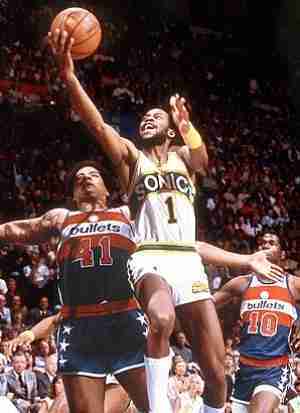
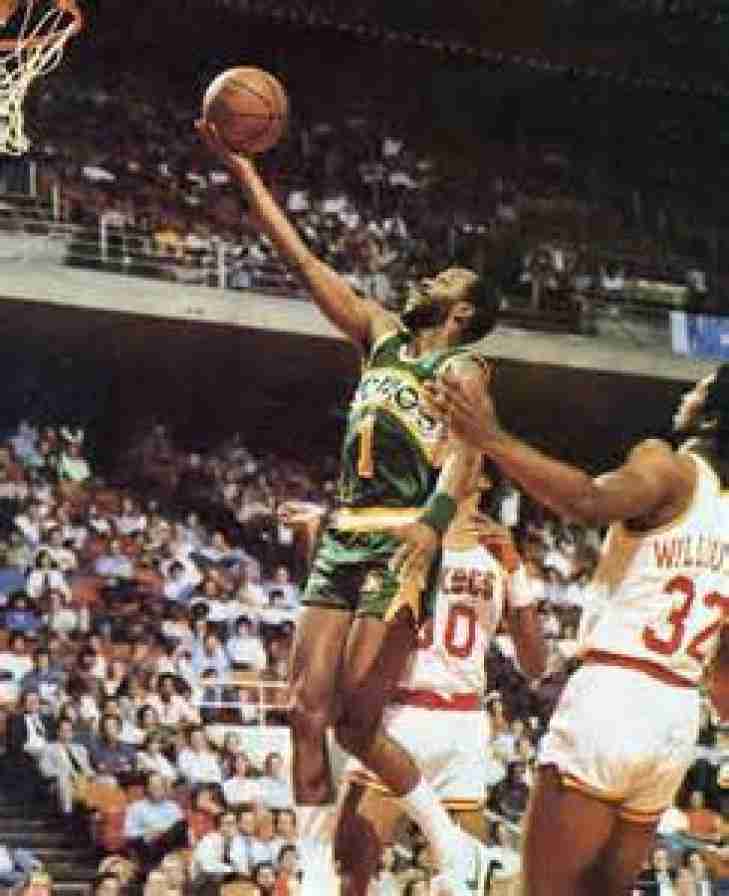
Gus Williams (PLA). Williams’s best years in the sport were with Seattle, where he went to two All-Star Games and won the NBA Championship. He also logged time with Golden State, Washington, and Atlanta.
John Williamson (PLA). Williamson helped guide the New York Nets to two ABA Championships. The Guard also played for Indiana and Washington.
Max Zaslofsky (PLA). One of the best players not to be enshrined, Zaslofsky was a First Team All-BAA/NBA selection in his first four years with the Chicago Stags and the BAA scoring champion in 1948.
We will try to add more details to these players, coaches, and contributors as we move forward!
Notinhalloffame List Update: 1-10 on Basketball Revised
The problem with running a Hall of Fame-related website is that many of the big ones we cover all have announcements within months of each other. The backbone of what we do is list-related, so this results in a long push to revise what we already have; specifically, now with our Football and Basketball Lists.
At present, we have a minor update as we have completed the first ten of the 2024 Basketball List, which you can comment on and vote on:
The new 1 to 10:
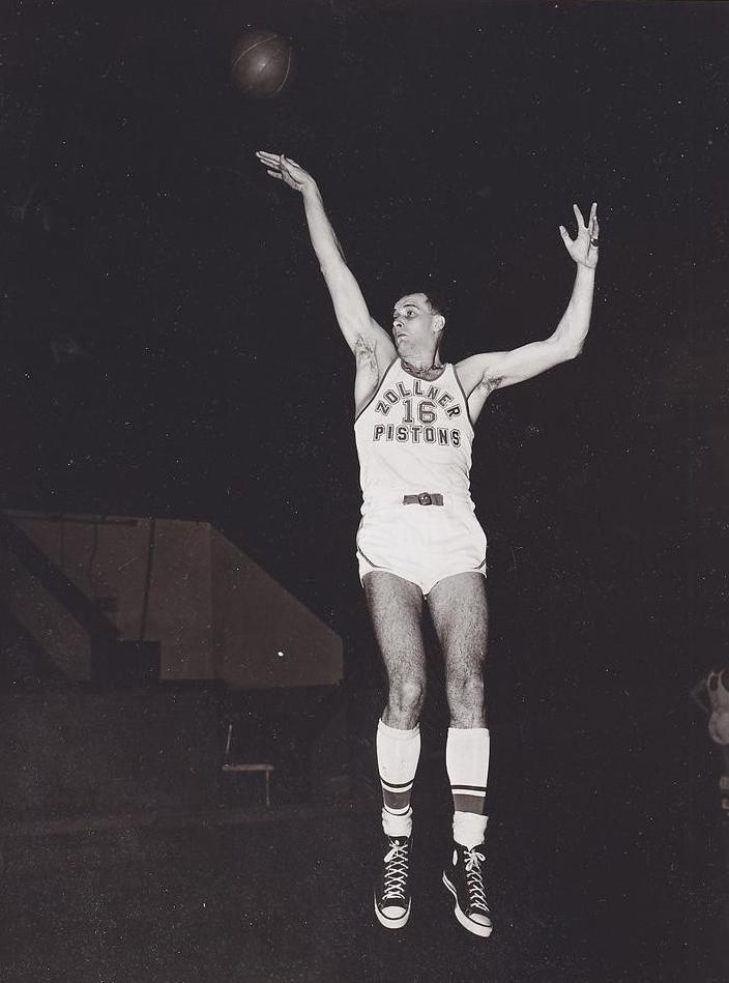
1. Larry Foust
2. Shawn Kemp
3. Max Zaslofsky
4. Buck Williams
5. Gus Williams
6. Kevin Johnson
7. Marques Johnson
8. Mark Price
9. Bill Laimbeer
10. Mark Aguirre
Rankings are impacted annually based on your comments and votes.
Thank you all for your patience. We will soon unveil more changes to the football and basketball lists.
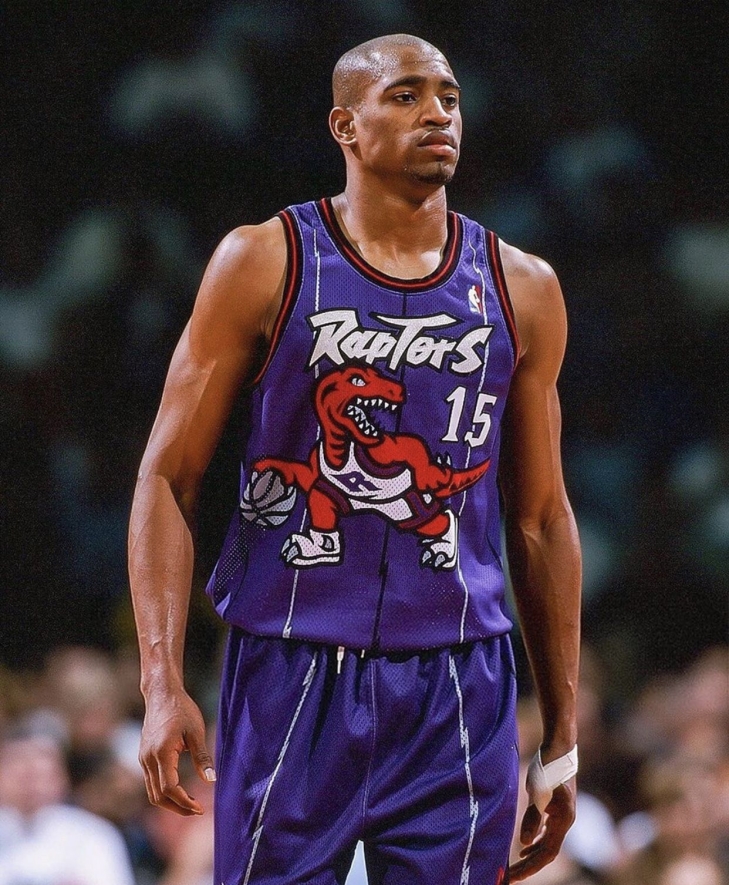
Our Notinhalloffame.com Basketball List has been updated. Vince Carter now #1.
Days after we completed our amendments of those to consider for the Pro Football Hall of Fame, we finished those our revisions on the Notinhalloffame.com Basketball List.
The first thing that we obviously do with the Basketball List is remove those who were inducted. This took out:
Dirk Nowitzki
Dwyane Wade
Pau Gasol
Tony Parker
We then added those who are worthy who are now eligible for the first time in 2024.
Nowitzki, Wade, Gasol and Parker were ranked 1,2,3 and 5 respectively, which means that we will be seeing a significant change in our top ten.
With those remaining, we factored votes and comments that came from all of you, to alter ranks.
The entire list (115 in total) can be found here, but we always present our top ten!
As is often the case, the #1 spot belongs to a first-year eligible player, and it is no exception now, as Vince Carter is on our mountaintop. While there are obvious flaws in his candidacy, namely his leadership in the first half of his career, this is a man who cemented basketball in Canada, made the Raptors, and was an eight-time All-Star. The man synonymous with spectacular dunks, also is an Olympic Gold Medalist with Team U.S.A.. Carter might not be the best #1 we have ever had, but he is by far and away the best new entrant.
A former #1, and member of the 25th Anniversary Team, Max Zaslofsky, moves up two spots to #2. Zaslofsky was one of the best players in the late 1940s.
At #3, is Larry Foust, who like Zaslofsky would need to enter via a Direct-Elect Veterans Committee. Rising from #8, Foust has his highest ranking yet, and he brings to the table eight All-Star selections from the 1950s.
Chauncey Billups returns to the top five, climbing two to #4. The former NBA Champion (and Finals MVP) with the Detroit Pistons went to five All-Stars and won World Championship Gold with the United States.
At #5 is Shawn Kemp, who has encountered some legal issues lately, moved up from #7. Kemp was a six-time All-Star, five of which were with the Seattle SuperSonics, and he was also a three-time Second Team All-NBA player. Like Billups, he won World Championship Gold while representing the U.S..
Three-time All-Star and four-time All-Defensive player, Buck Williams, moves from #9 to #6.
Previous Finalist, Kevin Johnson, shot up from #11 to #7. Johnson was a four-time Second Team All-NBA Selection.
Gus Williams had a nice gain from #13 to #8. Williams won an NBA Title with Seattle and was twice an All-Star.
Former Point Guard, Mark Price, enters the top ten at #9, three spots form his previous rank at #12. He was a four-time All-Star and four-time All-NBA Selection.
Rounding up the top ten is Marques Johnson, who also rose on the list, with his jump coming from #14. Johnson was a five-time All-Star, and a College Player of the Year at UCLA, where he won a National Championship.
Aside from Carter, there are only two new entrants on the list, which are:
Joakim Noah, a former Defensive Player of the Year and NCAA Champion with Florida, who debuts at #37.
The underrated and long-serving Tyson Chandler, makes his first appearance at #40.
You know what we want you to do!
Cast your votes, offer your opinions, and as always, we thank you for your support!
7. Gus Williams
11. Gus Williams