


Site Admin
8. Chipper Jones
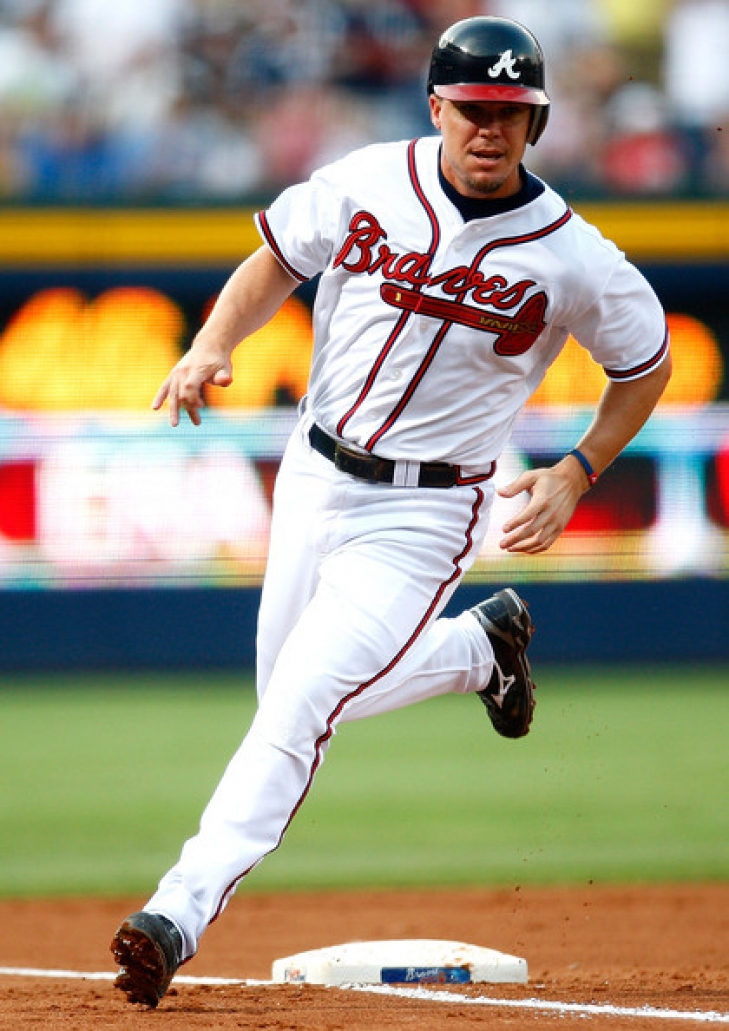
While the Atlanta Braves of the 1990s and early 2000’ will always (and should be) known primarily for the elite starting pitching, Chipper Jones had the perfect path to greatness from the number one draft pick in 1990 to first ballot Hall of Fame inductee in 2018.
Jones was an Atlanta Brave during his entire career, winning the World Series in his rookie season (1995). The loaded organization was expected to win more championships, and though they did not, it wasn’t for lack of effort from the Third Baseman, who proved to be one of the most consistent players in the game for years. Jones would belt 468 Home Runs over his career with five 30-Home Run seasons and nine 100-RBI seasons with 1,623 in total. He also hit for average, winning the Batting Title in 2008 with a .364 average, with nine .300 seasons and a career Slash Line of .303/.401/.529 with 2,726 Hits.
Along with that consistency, the eight-time All-Star finished six times in the top ten in National League MVP voting. This included winning the coveted award in 1999.
Without question, Chipper Jones is the best position player the Braves have had in the past thirty years. Atlanta retired his number 10 in 2013 and inducted him into their franchise Hall of Fame the same year.
9. Tom Glavine
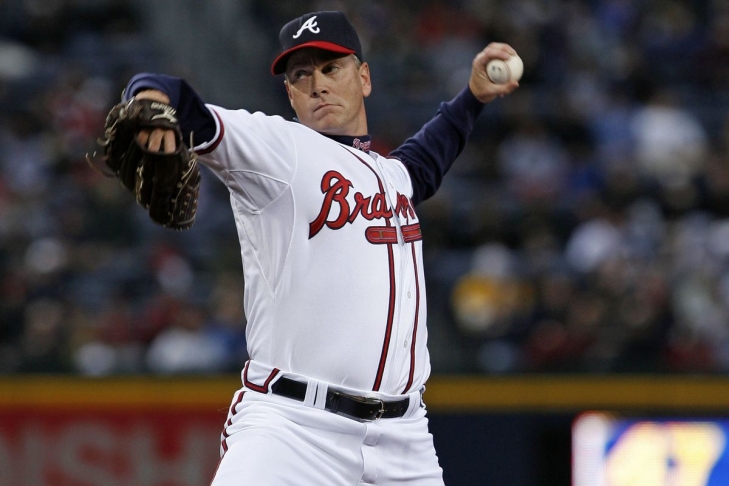
Along with Greg Maddux and John Smoltz, Tom Glavine was part of a devastating Hall of Fame trio that dominated starting pitching in the 1990s.
It wasn’t all wine and roses for Glavine when he started, as his first few seasons were a mixed bag, but in 1991, he would break out with a league-leading 20 Wins with a 2.55 ERA and a Cy Young Award win. Glavine would prove this wasn’t a fluke as he led the NL in Wins the next two seasons, finished second and third in Cy Young voting, and, in 1995, anchored the Braves to a World Series win, where he won the World Series MVP. The second half of the 90s proved to be just as good as he would have two more 20 Win seasons (both league-leading), and he would win his second Cy Young in 1998 while finishing second in 2000.
As an Atlanta Brave, Glavine won 244 Games with 2,091 Strikeouts and had eight All-Star Game appearances. He was also a very good hitter, as shown by his multiple Silver Slugger Awards. Glavine would leave Atlanta to sign with the Mets, but he would return to Atlanta for his final season in 2008.
Glavine would enter the Baseball Hall of Fame on the first ballot in 2014, four years after his number 47 was retired by the Braves. Atlanta would also induct Glavine into their Hall of Fame in 2010.
7. John Smoltz
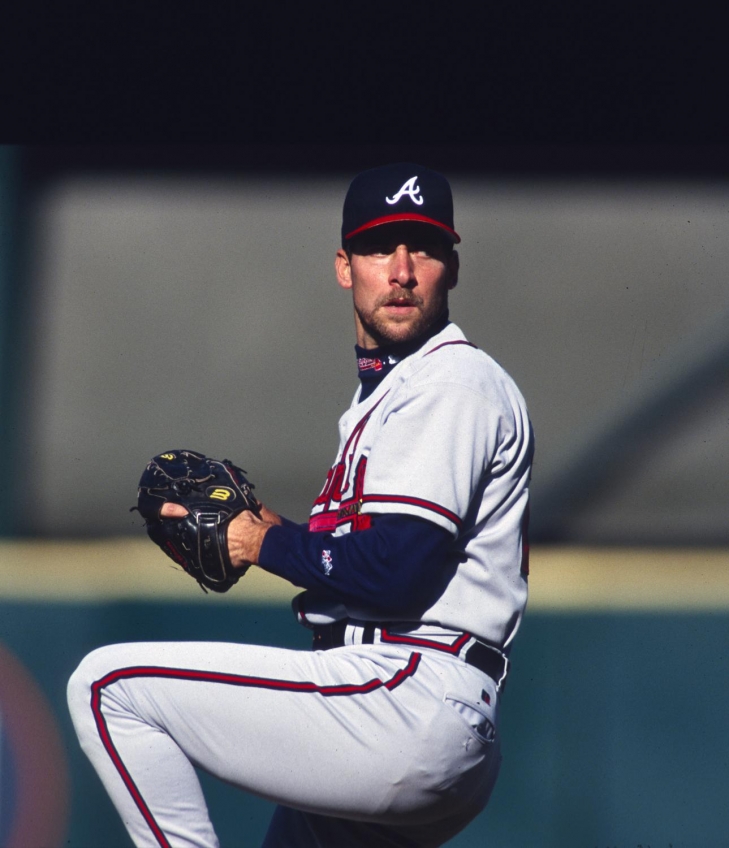
The Atlanta Braves essentially stole John Smoltz when they traded what was left of Doyle Alexander to the Detroit Tigers for him, and doesn’t the latter wish he could have that one back?
Smoltz would go eight All-Star Games and is the only Pitcher in history to record 200 Wins and 150 Saves. The righthander would establish himself as an elite Pitcher in the 1991 postseason, where he went 2-0 in the NLCS and had a 1.26 ERA in the World Series. Smoltz would again have a strong playoff in 1992, going 3-0 and earning NLCS MVP.
As part of a triumvirate of greatness with Greg Maddux and Tom Glavine, the Braves had the best rotation in baseball in the 1990s, although they only have one World Series win (1995) to show for it. Like Maddux, Smoltz would win the Cy Young as a Brave (1996), and he would also lead the National League in Strikeouts twice. Smoltz is one of the few pitchers to whiff 3,000 batters for one team (3,011), and he racked up 210 Wins playing for the Atlanta.
What really made Smoltz unique was his return from injury after sitting out the 2000 season, when he became a closer. He would have three seasons of 55, 45, and 44 Saves respectively, and he would be named the Rolaids Reliever of the Year in his 55 Save season, a number that was good enough to lead the league.
This is quite a versatile resume, isn’t it?
John Smoltz was inducted into the Baseball Hall of Fame in 2015, his first year of eligibility. Three years earlier, Atlanta retired his number 29 and inducted him into their Hall of Fame.
6. Phil Niekro
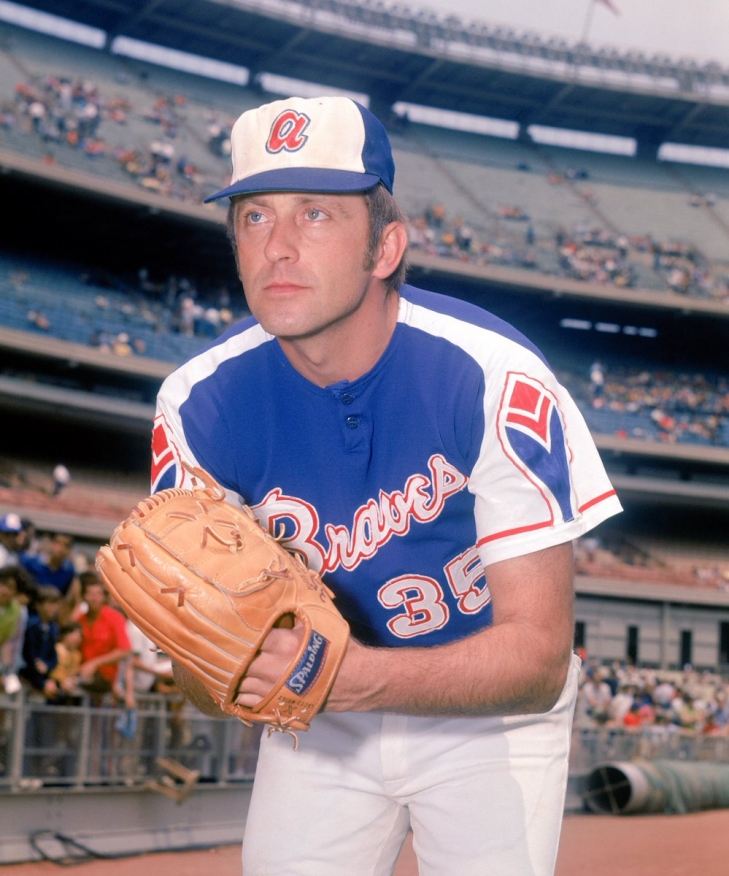
Phil Niekro played an incredible 24 seasons in the Major Leagues, 20 of which took place in a Braves uniform, and seemingly no matter how old he was (and how old he looked), he defied Father Time much longer than any Pitcher had the right to.
The secret to his success was the knuckleball, a pitch that is hard to master but does not take as much toll on your arm. Niekro would debut in 1964 and found himself a permanent fixture on the Atlanta rotation in 1967, the season in which he won the ERA Title, and he would break out in 1969 with a 23 Win season and a second-place finish in Cy Young voting.
The 1970s would prove to be very good for the knuckleballer as he would have three more seasons of top-ten Cy Young voting, two seasons where he was the National League leader in Wins, yet it also included a strange stretch, 1977-80 where he would finish first in Losses, but was also first in Innings Pitched in the first three of those years. Basically, Niekro was really good but had limited support during this period, as, bluntly, the Braves were not very good! Still, Niekro persevered, and he had another All-Star season in 1982. The Braves thought Niekro was done after 1983, and they released him, but he went on to play four more seasons, including a final start for the Braves in 1987.
Overall, Niekro would win 268 games, go to four All-Star Games, and win five Gold Gloves for the Braves.
Phil Niekro was inducted into the Baseball Hall of Fame in 1997, and two years later, he was part of the first Braves Hall of Fame Class. Atlanta also retired his number 35 in 1984.