

Site Admin
14. Bid McPhee
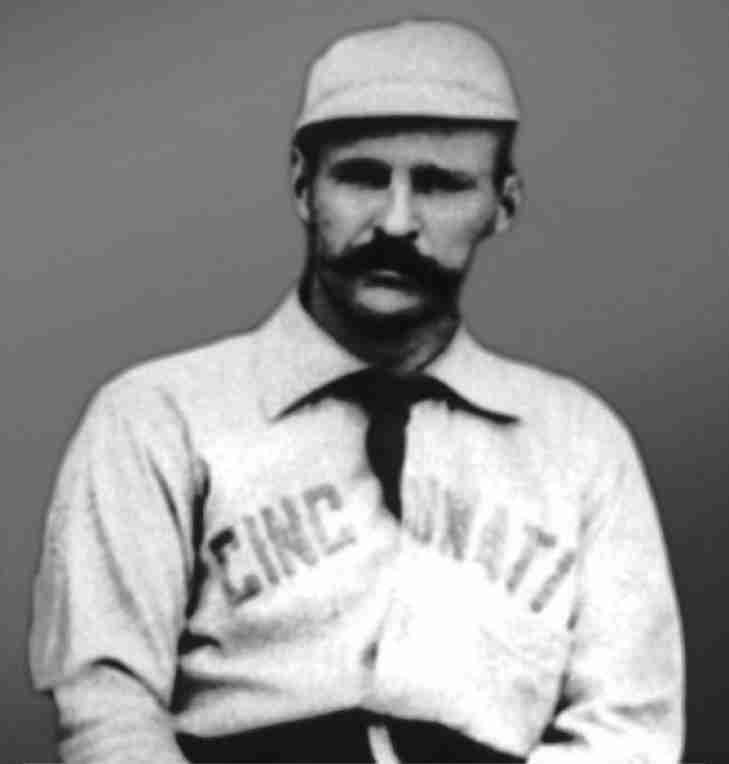
McPhee’s tenure in Cincinnati began in 1882, and over the next eighteen seasons, he became the ultimate lifer, never once donning another uniform. He was far more than a defensive specialist, accumulating 2,258 career hits and serving as a consistent leadoff threat with a keen eye and surprising power for the era. However, his true brilliance was found in the field. He famously resisted the introduction of the baseball glove until the very end of his career, claiming that the leather hindered his ability to feel the ball and make the lightning-fast transitions required at the keystone.
The statistical evidence of his defensive dominance is staggering, even by modern standards. McPhee led the league in double plays turned 11 times and remains the all-time career leader for second basemen in putouts. He was a master of positioning and anticipation, finishing in the top ten in defensive bWAR ten times throughout his career. He wasn't just reacting to the play; he was dictating it, pioneering the art of the double-play pivot and showing a level of durability that saw him average nearly 130 games a season at a time when the schedule was significantly shorter.
His identity was synonymous with Cincinnati baseball during its formative years. Whether he was bare-handedly snaring a liner or navigating the rough-and-tumble baserunning of the 19th century, McPhee was the steady pulse of the organization. He concluded his long journey in 1899, leaving behind a resume that redefined the expectations for his position. He proved that the second base bag could be a place of both high-volume production and elite artistry, a lesson that the game took to heart long after he hung up his cleats.
For decades, McPhee was a forgotten giant of the Deadball Era, but the passing of time only highlighted the magnitude of his achievements. Recognition finally arrived on a national scale in 2000, when he was posthumously inducted into the Baseball Hall of Fame. Locally, the Reds ensured his place in the pantheon of Queen City greats by inducting him into the franchise Hall of Fame in 2002.
18. Heinie Groh
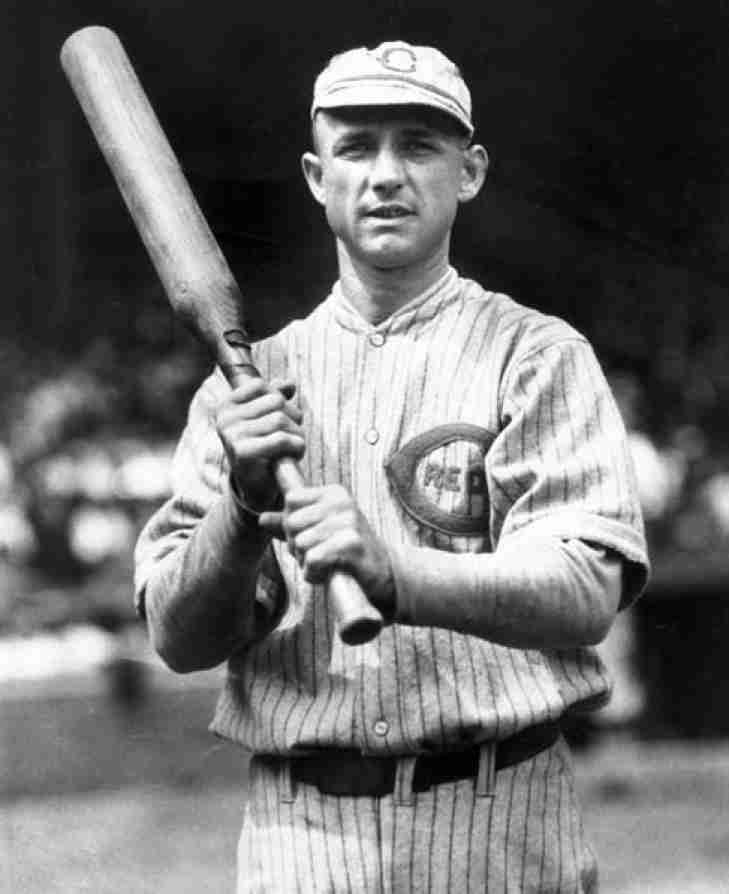
When Heinie Groh settled into the Reds' lineup in the mid-1910s, he brought a level of offensive ingenuity that quickly made him the premier leadoff threat in the National League. His signature bottle bat allowed him to control the zone with unparalleled precision, maturing into a master bunter and a high-contact hitter who simply refused to give away an at-bat. He was a nightmare for opposing pitchers, twice leading the league in on-base percentage and putting together four seasons with a batting average over .300. He arrived as a young talent and evolved into a foundational piece of the roster, providing the table-setting skills that powered the Cincinnati offense for nearly a decade.
The pinnacle of his career arrived in 1919, a season in which Groh reached the absolute peak of his powers. That year, he led the National League in OPS (.819) and served as the on-field general for a Reds team that captured the World Series title. While he was short in stature, he played with a giant-sized intensity on the diamond, particularly at third base. He was widely considered one of the most reliable and aggressive defenders of his day, possessing the rare ability to turn double plays from the hot corner with a speed and accuracy that left the league in awe.
Reliability and grit were the hallmarks of his identity in Cincinnati. Whether he was choking up on his unique bat to spoil a pitcher’s best stuff or diving into the dirt to take away a base hit, Groh was the engine that made the team go. He concluded his journey with the Reds with 1,323 hits and a stellar .298 career average, a volume of production that established him as the gold standard for lead-off hitters in the franchise’s early history. He proved that you didn't need to be the biggest man on the field to be the most impactful.
The chapter of his time in Cincinnati reached its conclusion in 1921 when he was traded back to the New York Giants, where he would eventually capture another World Series ring in 1923. He left the Queen City as a champion and a cult hero, a man whose innovative approach to the game left an indelible mark on the record books.
In recognition of his gritty leadership and statistical excellence, the organization inducted Groh into the Cincinnati Reds Hall of Fame in 1963.
12. Edd Roush
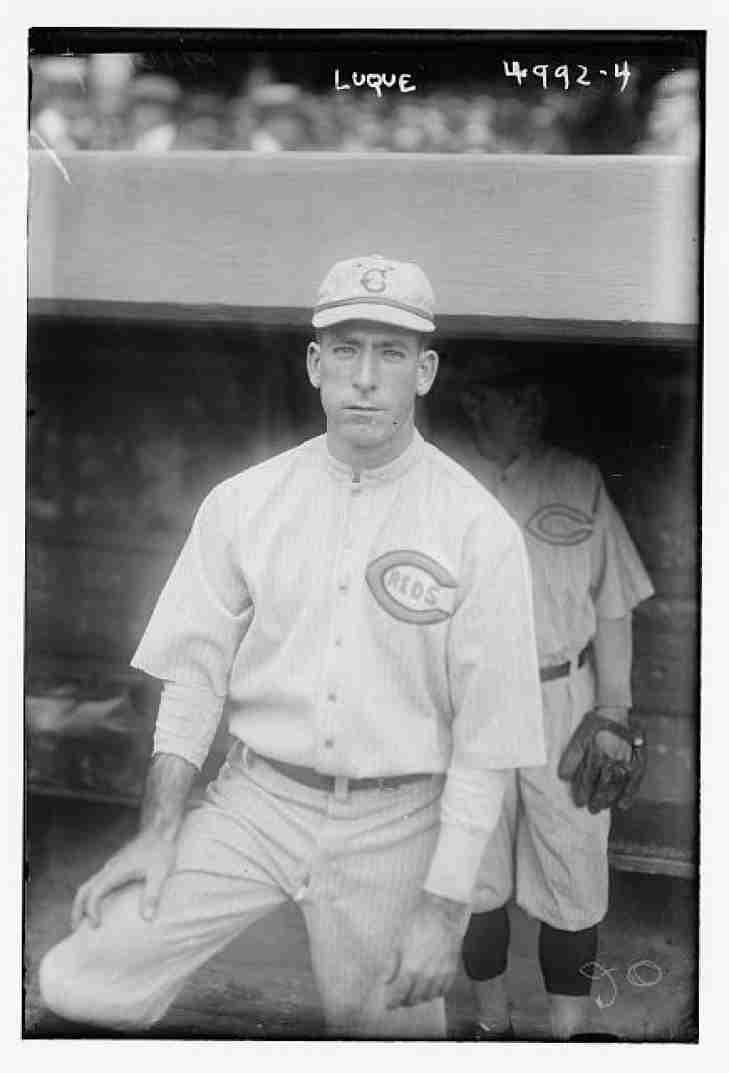
This is the story of a man who treated the batter’s box like a workstation, wielding a piece of lumber that looked more like a bridge timber than a baseball bat. Edd Roush didn’t just hit for the Reds; he mastered the art of contact with a relentless, decade-long consistency that defied the shifting tides of the Deadball and Live-ball eras. While his World Series ring is often discussed through the lens of history’s most famous scandal, his time in Cincinnati was defined by a surgical precision that made him the most feared pure hitter in the National League.
A mid-season trade from the Giants in 1916 proved to be the spark that ignited one of the greatest individual runs in franchise history. Roush arrived in Cincinnati and matured instantly into the league's most reliable offensive engine, famously swinging a massive 48-ounce bat—one of the heaviest ever used in professional play. This choice reflected his approach: he wasn't looking to pull the ball for distance, but rather to punch it through the gaps with a strength and control that few could match. His production was staggering; from the moment he arrived, he never batted below .320 in any of his ten full seasons with the club.
The peak of his career was marked by two National League batting titles in 1917 and 1919. In that 1919 campaign, he served as the catalyst for a Reds team that marched all the way to a World Series championship. While the "Black Sox" headlines often dominate the memory of that Fall Classic, Roush’s .331 career average as a Red serves as proof that his success was no accident of history. He was a hitter who simply could not be struck out, using his heavy bat to spoil good pitches and force the defense to account for every square inch of the outfield.
Roush was the centerpiece of the Cincinnati outfield for years, a three-time league leader in triples and a constant threat on the basepaths. He arrived as a trade piece and left as a legend, concluding his stay with the club with 1,616 hits and a reputation as a player who dictated the terms of every at-bat. He proved that even as the game transitioned toward the power-hitting style of the 1920s, a master of the heavy bat and the line drive could remain an elite force.
The chapter eventually closed on his tenure in early 1927, following a contract dispute that led to a trade back to the New York Giants.
136. Vince Wilfork