


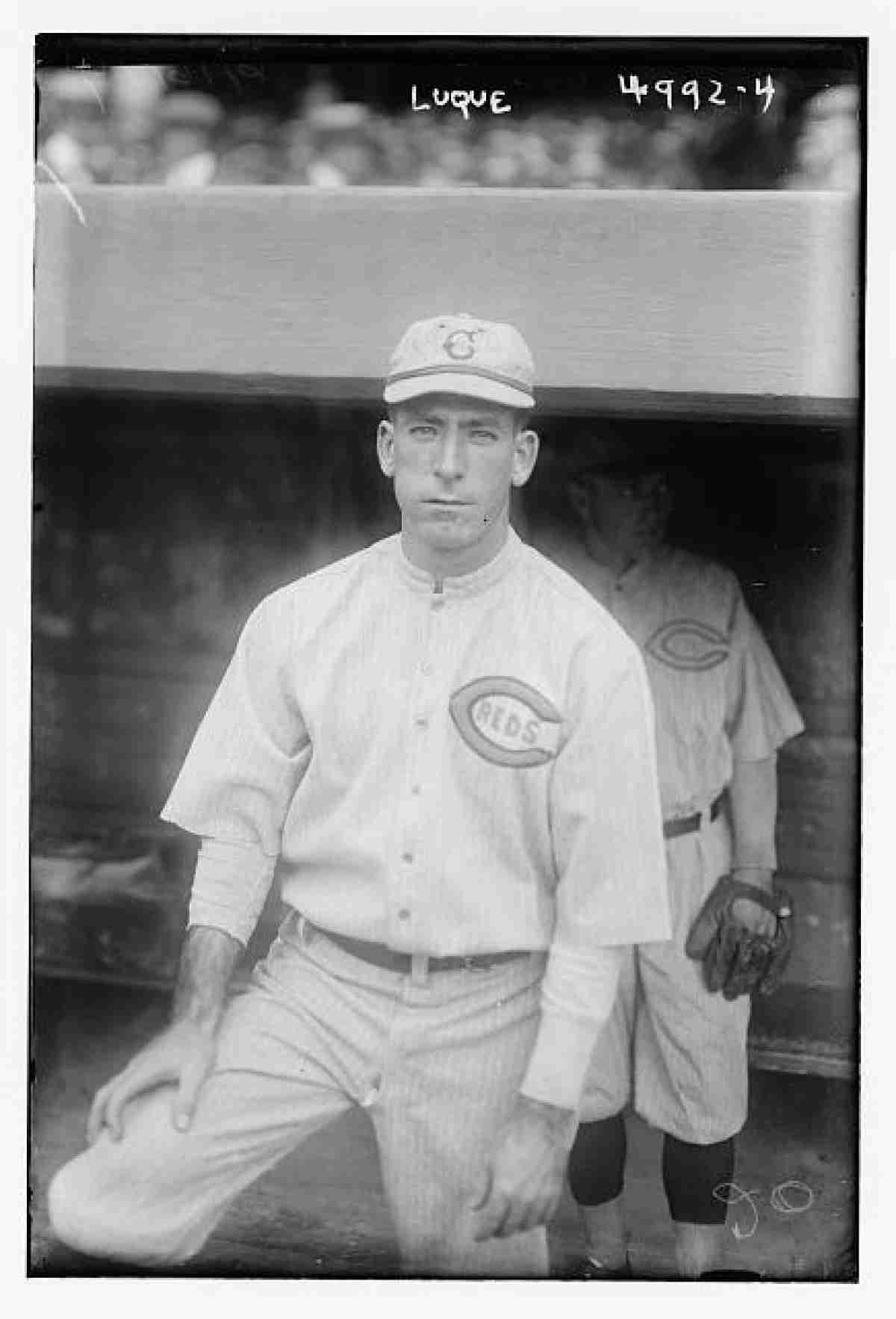


This is the story of a man who treated the batter’s box like a workstation, wielding a piece of lumber that looked more like a bridge timber than a baseball bat. Edd Roush didn’t just hit for the Reds; he mastered the art of contact with a relentless, decade-long consistency that defied the shifting tides of the Deadball and Live-ball eras. While his World Series ring is often discussed through the lens of history’s most famous scandal, his time in Cincinnati was defined by a surgical precision that made him the most feared pure hitter in the National League.
A mid-season trade from the Giants in 1916 proved to be the spark that ignited one of the greatest individual runs in franchise history. Roush arrived in Cincinnati and matured instantly into the league's most reliable offensive engine, famously swinging a massive 48-ounce bat—one of the heaviest ever used in professional play. This choice reflected his approach: he wasn't looking to pull the ball for distance, but rather to punch it through the gaps with a strength and control that few could match. His production was staggering; from the moment he arrived, he never batted below .320 in any of his ten full seasons with the club.
The peak of his career was marked by two National League batting titles in 1917 and 1919. In that 1919 campaign, he served as the catalyst for a Reds team that marched all the way to a World Series championship. While the "Black Sox" headlines often dominate the memory of that Fall Classic, Roush’s .331 career average as a Red serves as proof that his success was no accident of history. He was a hitter who simply could not be struck out, using his heavy bat to spoil good pitches and force the defense to account for every square inch of the outfield.
Roush was the centerpiece of the Cincinnati outfield for years, a three-time league leader in triples and a constant threat on the basepaths. He arrived as a trade piece and left as a legend, concluding his stay with the club with 1,616 hits and a reputation as a player who dictated the terms of every at-bat. He proved that even as the game transitioned toward the power-hitting style of the 1920s, a master of the heavy bat and the line drive could remain an elite force.
The chapter eventually closed on his tenure in early 1927, following a contract dispute that led to a trade back to the New York Giants.

Comments powered by CComment