

Committee Chairman
6. Frank Tanana
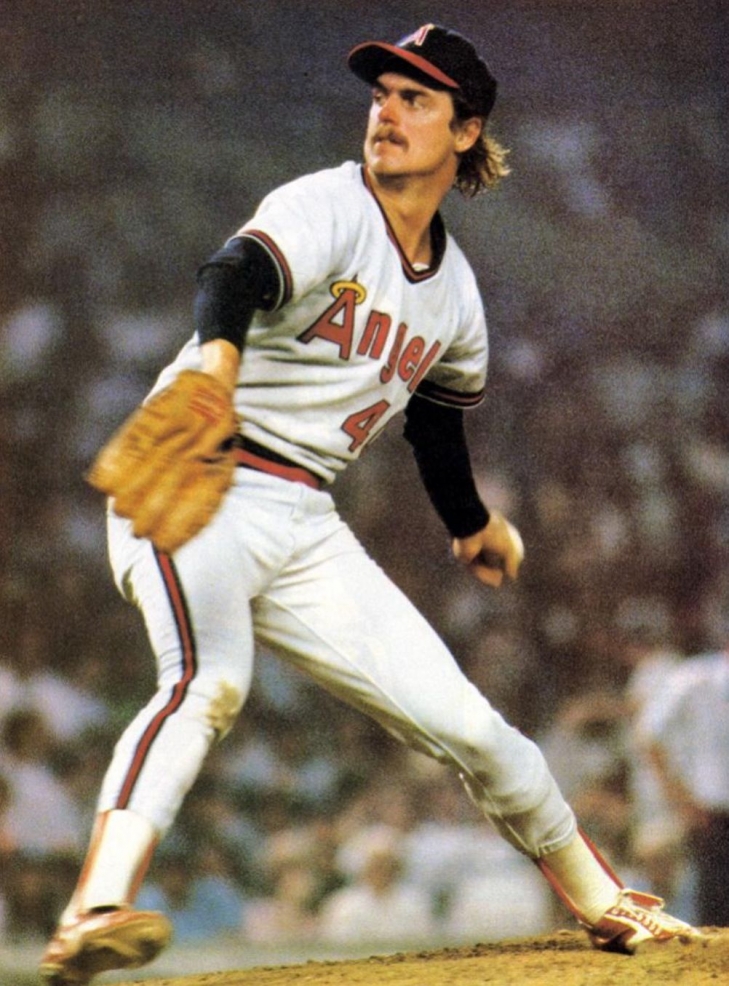
Frank Tanana arrived in Anaheim as a left-handed lightning bolt, a pitcher whose early velocity was so pure it rivaled the thunder of his teammate, Nolan Ryan. While history often places him in the shadow of the "Express," Tanana was a statistical giant in his own right, providing a specialized brand of southpaw dominance that the American League had rarely seen.
Tanana’s rise in California began with a 1973 debut, but he reached a career-defining breakout in 1975. That season, the 21-year-old left-hander led the American League with 269 strikeouts and a league-best strikeout-to-walk ratio, signaling his transition from a young prospect to an elite rotation force. He possessed a focused intensity on the mound, pairing a blistering fastball with a devastating curve that made him a nightmare for hitters across the junior circuit. He provided high-frequency power, recording over 240 strikeouts in three consecutive seasons while keeping his ERA well under the 3.00 mark.
In 1977, Tanana reached a career peak, leading the American League in ERA (2.54) and pitching bWAR (8.3). Despite these massive numbers, the traditional voting of the era overlooked his dominance, placing him ninth in the Cy Young race while favoring relievers and high-win starters. He showed the organization that a pitcher could lead the league in efficiency and workload simultaneously, as he also led the AL in shutouts (7) that year. He demonstrated craftsmanship, proving that his left-handed delivery was every bit as lethal as the right-handed heat coming from the other side of the Angels' rotation.
Everything culminated in 1979, when Tanana provided the veteran-like poise that helped California reach its first-ever postseason. However, the heavy workload of his early twenties began to take a physical toll; a bout of tendinitis forced a tactical shift, as he moved away from his power-pitching roots and began to navigate a different plateau as a finesse artist. He was eventually dealt to the Red Sox before the 1981 season, leaving Anaheim with 102 wins and 1,233 strikeouts.
3. Chuck Finley
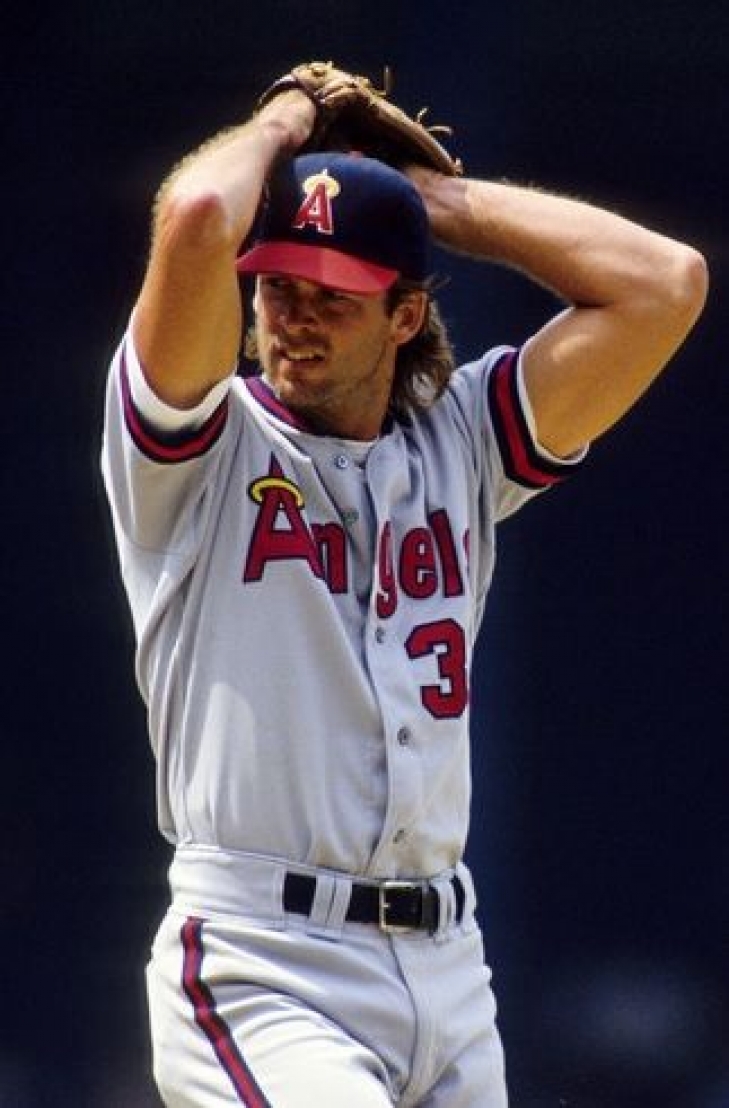
Chuck Finley arrived in Anaheim as a high-velocity southpaw with a localized storm of a split-finger fastball. While he began his journey in the bullpen, he quickly evolved into the most durable workhorse in the history of the franchise. For fourteen seasons, Finley was the left-handed anchor of the Angels' rotation, a player whose longevity and competitive fire allowed him to surpass the win totals of every legend who preceded him in a Halo uniform.
Finley’s ascent in California began with a transition from a relief prospect to a frontline starter in the late eighties. He reached a career-defining breakout in 1989, his first full season in the rotation, where he won 16 games with a 2.57 ERA and earned his first All-Star nod. He followed this with an even more dominant 1990 campaign, winning 18 games and proving that he could maintain elite efficiency over a heavy workload. He possessed a focused intensity and a sharp splitter that made him a nightmare for right-handed hitters, signaling his transition from a young arm into a true franchise pillar.
The core of his tenure was defined by a remarkable professional resilience. After navigating a difficult plateau in 1992, Finley returned to his status as the club's undisputed ace. He reached a new level of consistency between 1993 and 1999, recording at least 10 wins every single season and returning to the All-Star Game in 1995 and 1996. He was a model of physical resilience, routinely logging over 200 innings and leading the American League in starts during the 1996 season. He showed the organization that a pitcher could become a legend through sheer, unadulterated volume, eventually amassing a franchise-record 2,675 innings pitched.
Everything culminated in the late nineties as Finley rewrote the Angels' record books. He reached a career peak for strikeouts in 1998, fanning 212 batters and proving that his stuff hadn't lost its bite even as he entered his mid-thirties. However, the reality of the era’s shifting landscape led to a departure following the 1999 season, when he signed with Cleveland as a free agent. He left Anaheim as the all-time leader in wins (165) and innings, a statistical footprint that has stood the test of time against some of the greatest pitchers in the game’s history.
The story in Anaheim reached its final chapter in 2009 when the Angels inducted him into their Hall of Fame.
2. Nolan Ryan
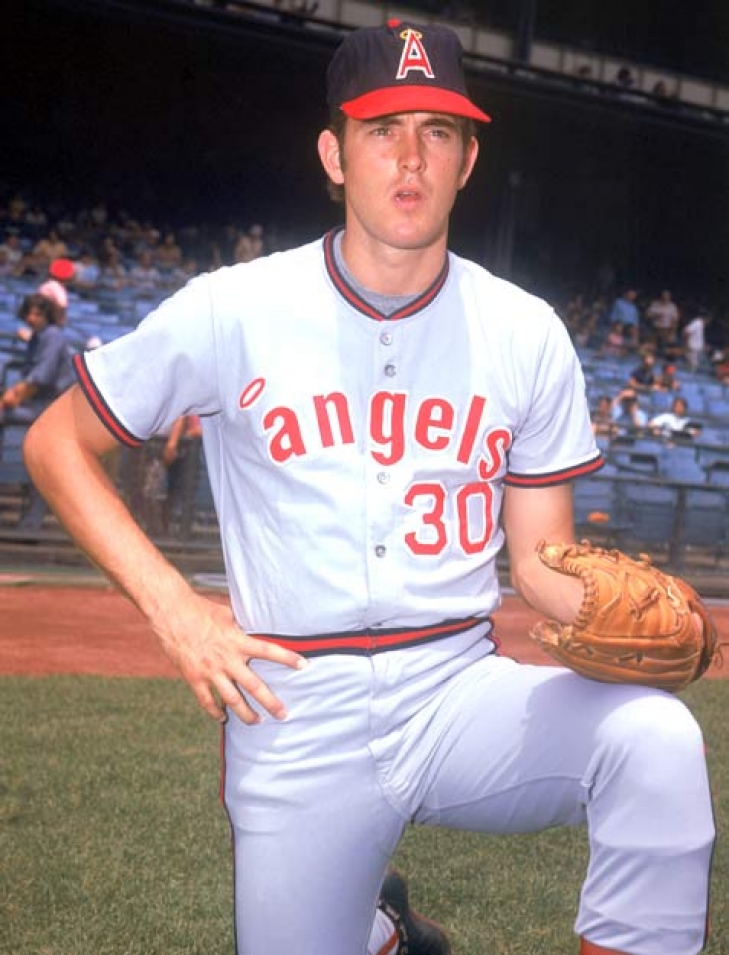
The arrival of Nolan Ryan in Anaheim in 1972 is often cited as the greatest trade heist in baseball history. While the Mets sought a veteran bat in Jim Fregosi, the Angels acquired a lightning bolt in a glove. Ryan didn't just find his footing in California; he transformed into the "Ryan Express," a high-velocity phenomenon that spent eight seasons redefining what was physically possible on a major league mound. While he is a legend in Texas, his years in an Angels uniform were his most explosive, marked by a relentless pursuit of strikeouts and a refusal to let anyone put the ball in play.
Ryan’s tenure in California began with an immediate major turning point for his career trajectory. After years of struggling with his control in New York, he landed in the American League and instantly became its most terrifying outlier. In his 1972 debut season with the club, he reached a new level of dominance, winning 19 games and leading the league with 329 strikeouts and a microscopic 5.3 hits per nine innings. He possessed a focused intensity that turned every start into a potential historical event, a style that reached a career peak just one year later. In 1973, Ryan fanned 383 batters, moving past Sandy Koufax to set the modern single-season strikeout record—a milestone that remains the gold standard of the live-ball era.
The middle of his run was defined by a steady-state of sheer power. Between 1972 and 1974, he averaged over 20 wins and 360 strikeouts per season, cementing his status as the premier flamethrower in the sport. He was a model of physical resilience, famously throwing 235 pitches in a single 13-inning start in 1974, only to return to the mound three days later. Even during a slight dip in his win totals in 1975, he remained a high-frequency threat, leading the American League in strikeouts nearly every year of the late seventies. He showed the organization that a pitcher could become a franchise pillar through intimidation and raw speed, eventually amassing 2,416 punchouts in just eight seasons with the club.
His time in Anaheim also saw him master the art of the no-hitter, tossing four of his record seven gems while wearing the Halo. He reached a crescendo of efficiency in 1977 and 1979, earning two more All-Star nods and proving his arm hadn't lost a tick of its specialized heat. Despite his status as a local icon and a five-time All-Star, the reality of the era’s burgeoning free agency led to his departure. Following the 1979 season, Ryan returned to his home state to sign with the Houston Astros, leaving California as the most prolific strikeout artist in the history of the franchise.
The story in Anaheim reached its closing punctuation in 1992. In a ceremony held while he was still an active player for the Rangers, the Angels retired his number 30 and inducted him into their Hall of Fame.
1. Mike Trout
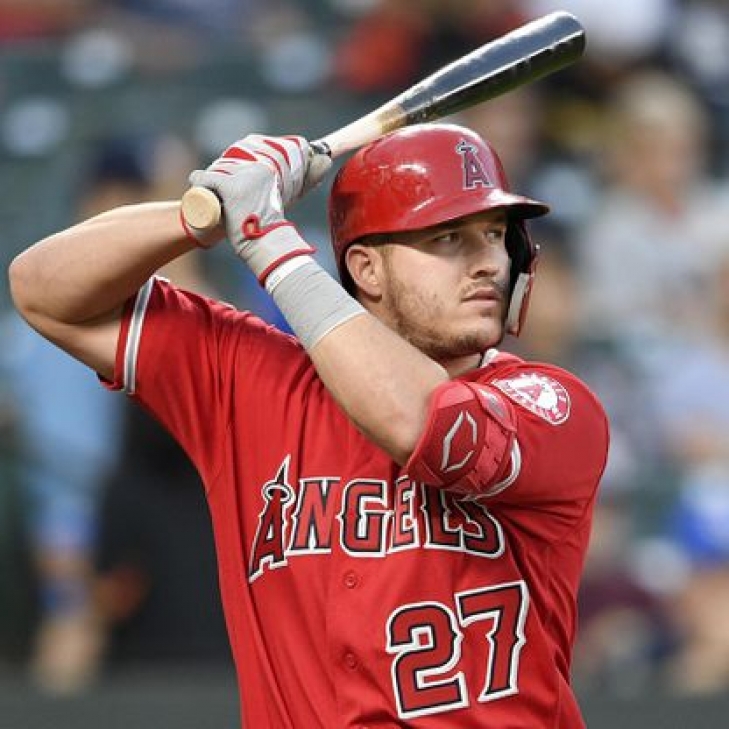
In the modern history of the Anaheim Angels, Mike Trout hasn't just been a superstar; he has been a living, breathing rebuttal to the idea that the "Golden Age" of baseball is behind us. Arriving as a teenager in 2011, he transitioned from a highly touted prospect into a generational force with a speed that caught the league off guard. While he carries himself with a quiet, unassuming dignity, his performance on the grass at Angel Stadium has been a loud, unrelenting display of five-tool mastery. He is the standard by which all other modern outfielders are measured, a player whose true value often feels too massive for a traditional box score to contain.
Trout’s tenure in Anaheim began with a 2012 campaign that fundamentally altered the expectations for a rookie. That summer, he didn't just win the American League Rookie of the Year; he orchestrated a historic debut of production, leading the league in runs (129) and stolen bases (49) while batting .326 with 30 home runs. He finished as the MVP runner-up, a result that signaled the start of a decade-long residency at the top of the ballot. He was a model of specialized excellence, capturing the first of nine Silver Sluggers and proving that a centerfielder could provide the power of a cleanup hitter while maintaining the range of an elite sprinter.
The hallmark of his craftsmanship was a relentless, high-frequency dominance that saw him finish in the top five of the MVP voting for nine consecutive seasons. Trout captured the American League’s highest individual honor three times (2013, 2016, 2019), navigating the 2010s as the most efficient run-producer in the sport. He possessed a specialized ability to impact every phase of the game, blending a triple-digit walk rate with a .582 career slugging percentage. Whether he was famously leaping over the centerfield wall to rob a home run or providing the steady-state offensive engine for the Halos, he competed with a focused intensity that made him a perennial All-Star.
His presence in the organization has been defined by professional resilience as he transitions into the later chapters of his career. Despite a series of high-leverage injuries that limited his availability in the early 2020s, Trout continued to deliver flashes of his classic form.
As the 2026 season gets underway, Trout stands as the undisputed heartbeat of the franchise. He has already secured his status as the greatest player in the history of the club, moving into second place on the Angels' all-time hits and RBI leaderboards during the previous campaign. While his role shifted more toward the designated hitter spot in 2025 to preserve his health, his impact on the field remains a tactical marvel. He showed the organization that when you have the discipline of a scientist and the physical tools of a titan, you don't just play the game, you become its defining figure.
Entering the 2026 season with the Angels, Trout has compiled 1,754 hits, 404 home runs, and 1,018 RBIs while maintaining a career .406 on-base percentage.