








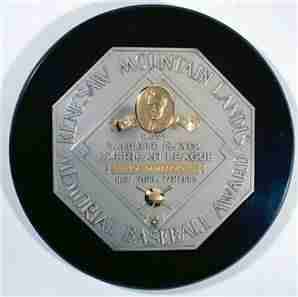


Before the global name recognition, the multi-million-dollar contracts, and the heavy storms of controversy defined his national profile, a generational prodigy in the Pacific Northwest put together arguably the greatest age-indexed start to a career in the sport's history. Selected first overall by the Seattle Mariners in the 1993 amateur draft, Alex Rodriguez was such an advanced physical specimen that he reached the major leagues as an 18-year-old infielder the following summer. Recognizing his immense ceiling, the front office allowed him to refine his daily routine in the minor leagues before unleashing him completely as the everyday starting shortstop in 1996. What followed was a blinding, high-velocity introduction that fundamentally transformed the modern expectation of his position.
His first full summer in Seattle was a remarkable display of offensive power and efficiency. At only 20 years old, Rodriguez dominated American League pitching to win the 1996 batting title with a stunning .358 average, becoming the third-youngest player to earn the title. He set the pace for the entire team, scoring 141 runs, hitting 54 doubles, and hitting 36 home runs while driving in 123 RBIs. This outstanding performance earned him a Silver Slugger Award, an All-Star selection, and a narrow second-place finish in the American League MVP voting.
Although his batting average slightly declined in 1997, he still achieved a .300 average with 23 home runs, earning another All-Star nod. His most notable power boost occurred in 1998, when he combined speed and strength effectively. That year, Rodriguez led the American League with 213 hits, hit 42 home runs, and stole 46 bases—signifying a major development in his game. With these stats, he became only the third player in baseball history to join the 40-40 club, using his sharp spatial awareness to outmaneuver catchers and pitchers. Advanced analytics strongly supported his top-tier status that summer, as he topped the American League in position-player bWAR.
He maintained that frontline authority through an injury-shortened 1999 season, hitting another 42 home runs in just 129 games. His last appearance in a Seattle uniform in 2000 was another exceptional performance; he hit 41 home runs, set a personal best with 100 walks, led the league in bWAR for the second time, and finished third in MVP voting.
To maintain a realistic narrative, Rodriguez faced heavy criticism for his postseason performance, yet his October appearances in the Pacific Northwest proved to be notably clutch. During his three full playoff series with the Mariners, he consistently batted over .300 in each, offering reliable performance during the sport's most significant moments.
Following the 2000 postseason, the inevitable business exit arrived. As a 25-year-old free agent, Rodriguez departed Seattle to sign a historic, record-breaking contract with the Texas Rangers, drawing a definitive curtain on his time in the Emerald City. With Seattle, Rodriguez compiled 966 hits, 189 home runs, and 595 RBIs alongside an exceptional .309/.374/.561 slash line in 794 games.

Comments powered by CComment