

38. Rollie Fingers
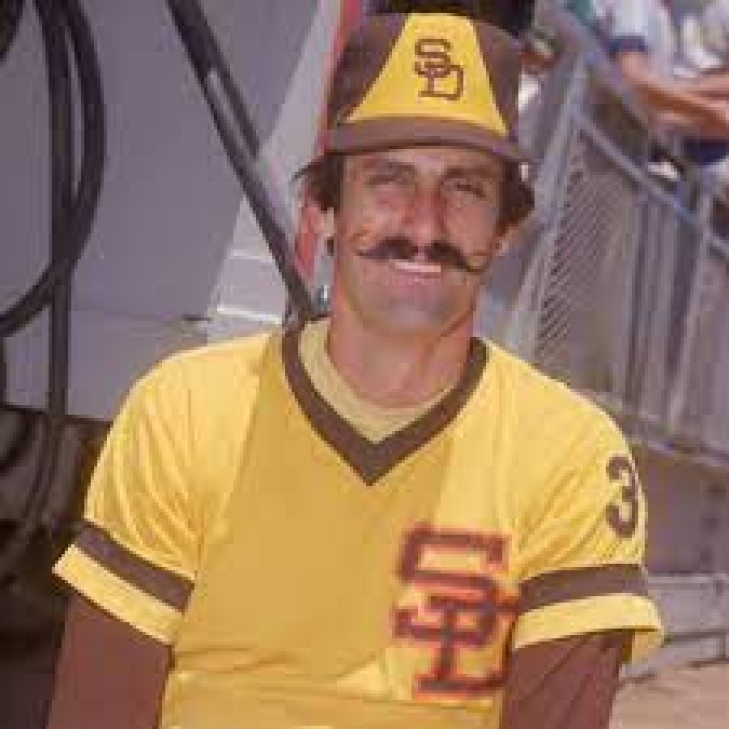
While the legendary, handlebar-mustachioed right-hander is rightfully immortalized for anchoring a historic dynasty in Northern California, many casual fans overlook the fact that he packed up his elite tools to spend four dominant summers stabilizing the early San Diego relief corps. Signed as a high-profile free agent ahead of the 1977 calendar during owner Ray Kroc’s initial wave of financial spending, Rollie Fingers did not merely fulfill his closing duties under the sun; he completely redefined the workload expectations of a senior circuit bullpen anchor.
His debut campaign as a Padre in 1977 quickly set a strong foundation of dependable performance. Fingers made tossing multiple high-pressure innings a regular part of his daily routine, breaking through the franchise's previous relief limits. He consistently shut down National League hitters across an incredible 78 appearances—entirely in relief—covering 132.1 innings to earn an impressive 35 saves, and an 8.1 overall pitching bWAR, helping him earn his first National League Rolaids Reliever of the Year Award.
He impressively followed that with an even more remarkable 1978 season. During that summer, Fingers was like an artist, delivering perfect closing performances by setting a single-season National League record with 37 saves. He also maintained a tiny 2.52 ERA over 107.1 innings, contributing greatly to teammate Gaylord Perry's incredible Cy Young achievement. More than just his save numbers, it was his impressive endurance and relentless effort that made his profile stand out in a detailed analysis. Unlike today's typical three-out specialists, he excelled in tough, multi-inning relief roles.
In addition to his typical save numbers, his substantial physical presence cemented his distinctive analytical profile during a comprehensive algorithmic assessment. Unlike a modern three-out specialist, he excelled in demanding, multi-inning relief roles. In 1980, he appeared in 66 games, earned 23 saves, and led the senior circuit in games finished for the second time while playing for San Diego. He also secured his third National League Rolaids Reliever of the Year award within four years.
Fingers was traded to St. Louis after the 1980 Season and four days later to Milwaukee, where he won the Cy Young and closed out his career. Over his 265 games strictly representing the Padres, he compiled a 28–44 record alongside 108 saves, with a 3.12 ERA and 319 strikeouts over 430.0 innings.
The Baseball Hall of Fame called his name in 1992.
34. Ozzie Smith
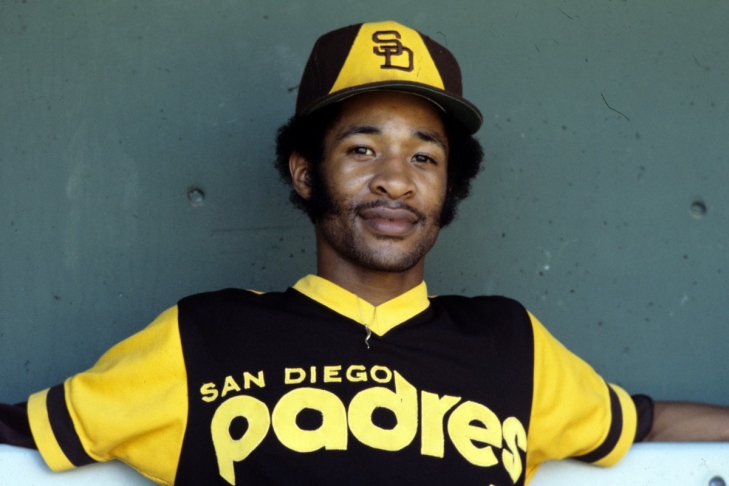
When we look at baseball history over the long haul, it’s easy to fall into the trap of hindsight bias, viewing a legend's career only through the lens of their ultimate success. Many fans forget that Osborne Earl Smith originally flourished on the lush fields of Southern California. Drafted by the San Diego Padres in 1977, this exceptionally agile shortstop didn’t need years in the minors; he jumped straight onto the major league stage, showcasing a uniquely daring and acrobatic style of infield defense. However, reflecting on his career honestly means acknowledging both sides—during his impactful but brief four-year stint in San Diego, he was a figure of both admiration and debate. While his incredible display of athleticism delighted local fans, his inconsistent and low-efficiency batting caused significant concern within the front office, ultimately leading to a historic trade that the organization would regret for many years.
His impressive debut in 1978 truly stands out as a remarkable highlight in his local history. Smith transformed aggressive contact and base running into powerful tools, hitting an admirable .258, stealing 40 bases, and even executing his signature pre-game backflip to finish as the near runner-up for the National League Rookie of the Year award. He consistently dominated opposing running attempts, leading all National League shortstops with a record-breaking 621 assists in 1980, and earning back-to-back Gold Glove Awards in 1980 and 1981. Modern analytics strongly support his outstanding defensive skills during this peak period; he led the entire league with a fantastic 3.8 defensive bWAR in 1980, proving he was an elite defender even before turning twenty-six.
To be fair, when considering his place on the franchise leaderboard, we need to acknowledge the significant offensive leaks that greatly impact his local ranking. After his rookie season, his hitting performance sharply declined, becoming a real challenge. Smith's batting average fell to a disappointing .211 in 1979—famously beginning the summer with an tough 0-for-32 streak—before posting fairly unimpressive numbers of .230 in 1980 and .222 in 1981. Over his 583 games for San Diego, he maintained a challenging .231 batting average, along with a low on-base percentage (.295) and a relatively insignificant .278 slugging percentage.
Management was deeply concerned about the idea that the light-hitting shortstop might never be able to handle the rigors of major-league pitching over time. This worry grew more intense, leading to a sense of desperation for a better player. Things reached a boiling point during a very heated and public contract dispute after the 1981 season. During this tense period, his agent famously placed a newspaper ad, seeking other opportunities for his client. With their relationship completely broken, the team decided to part ways in December 1981. They made a bold move by trading the young shortstop to the St. Louis Cardinals in exchange for Garry Templeton, marking a significant change for both teams.
The Padres thought they were selling high on a one-dimensional hitter; however, Cardinals manager Whitey Herzog unlocked Smith's offensive potential, helping him adjust his swing. Smith amassed over 2,400 career hits, becoming a top leadoff hitter and winning a 1982 world title. He left the Padres with 516 hits, 64 doubles, and 147 stolen bases, primarily known for his early defensive prowess.
While his eventual walk toward the Cooperstown rafters in 2002 features a St. Louis cap on his plaque, the foundational brilliance of "The Wizard" was undeniably forged right on the San Diego infield.
43. Tim Flannery
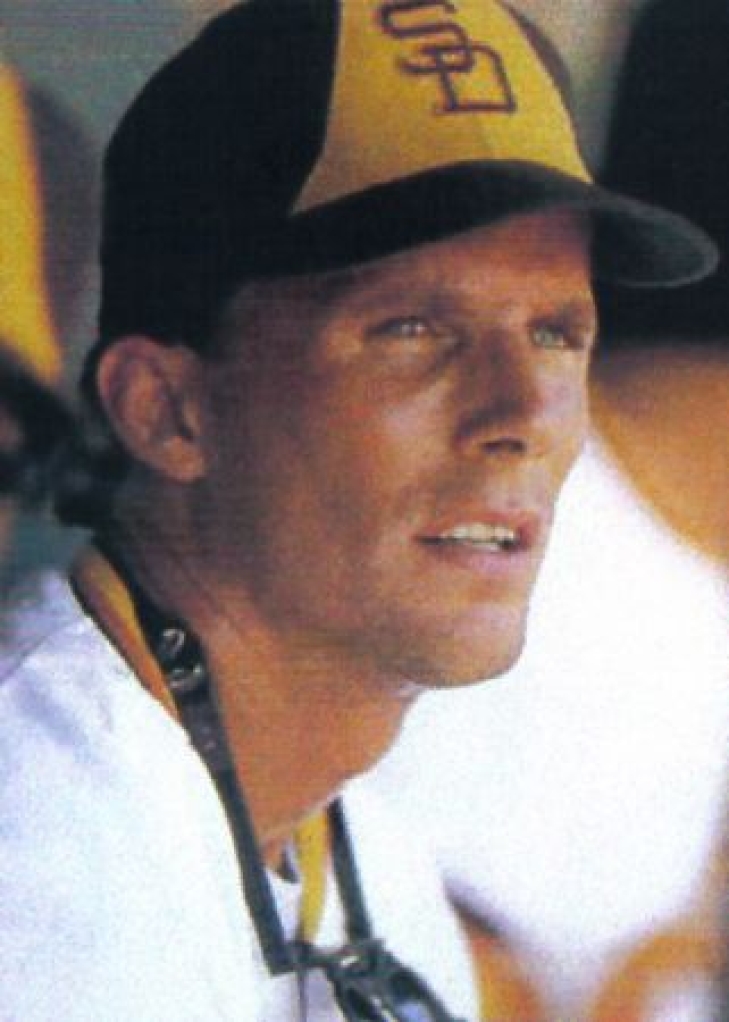
Tracking San Diego Padres history with an algorithm that only scrapes elite box scores and awards will miss the true franchise legacy, which isn't always about 40-home runs or Cy Youngs. It's sometimes rooted in blue-collar loyalty that resonates with a city. For over a decade, a small, gritty left-hander from Oklahoma exemplified local grit. Drafted in 1978, Timothy Earl Flannery lacked superstar tools but embraced his utility role with dedication. During 11 seasons with the Friars, "Flan" combined selflessness and a revered clubhouse presence, becoming one of the team’s most beloved figures.
In the late 1970s, his initial phase was a test of pure professional survival, moving between triple-A and the major leagues before securing a permanent spot on the major league roster. Flannery made a routine of executing high-contact plate appearances and sliding into late-game infield roles. He functioned as a key situational safety net across the dirt, spending substantial time at second, third, and shortstop to support the primary starters.
His best performance as a primary starter came during the historic 1985 season, when he took on the regular second base role and achieved career highs with a .281 batting average, 50 runs scored, and 108 hits, his only season with over 100 hits.
He adeptly complemented his skills with a consistent 1986 encore, hitting 103 times and scoring 48 runs, while drawing 54 walks to achieve an impressive .378 on-base percentage. In addition to his reliable infield abilities, his calm demeanor in clutch moments made him a beloved figure among local fans. Flannery excelled at delivering crucial performances off the bench, notably in Game 4 of the 1984 NLCS against the Chicago Cubs—pinch-hitting in the fifth inning with a sharp single and scoring the tying run, which helped the underdogs secure their first National League pennant.
However, Flannery possessed almost no over-the-fence power, managing just nine home runs across his 972 career appearances, which limited his baseline offensive production and left him with a modest .255 batting average and an 85 career OPS+.
He retired after the 1989 season, with 631 career hits, all as a Padre. Flannery became a Coach and would win three World Series Rings with San Francisco.
29. Fred McGriff
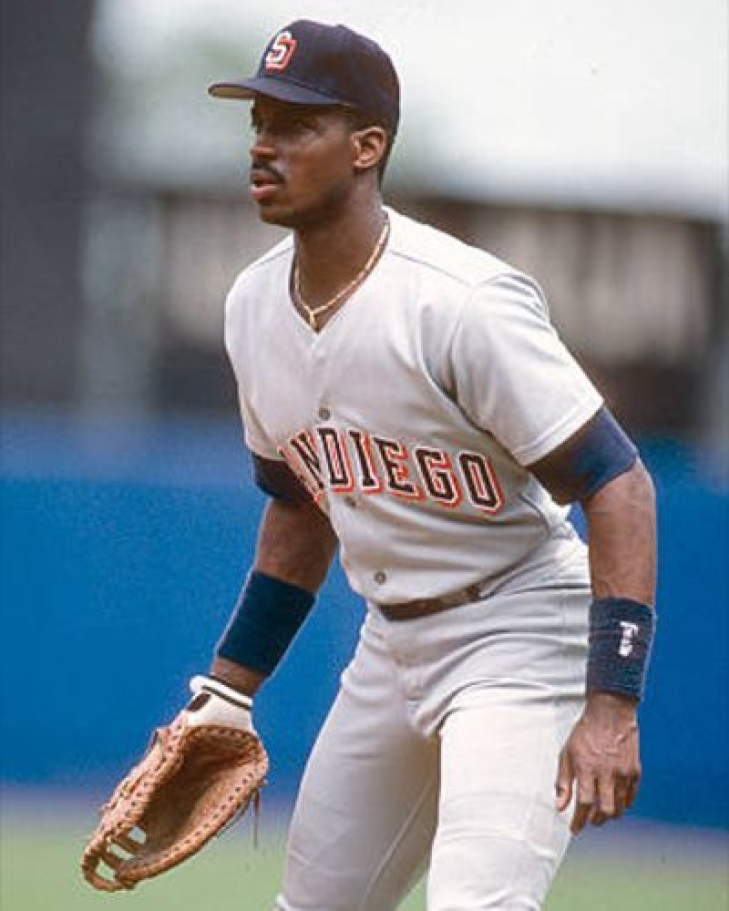
When an ambitious front office decides to shake up the competitive balance of the entire sport, they pull off a winter blockbuster that leaves fans across the country in absolute shock. The San Diego Padres executed precisely that type of franchise-altering maneuver in December 1990, trading homegrown stars Roberto Alomar and Joe Carter to Toronto to land shortstop Tony Fernández and a towering, left-handed premier slugger named Fred McGriff. Universally known as the "Crime Dog"—a classic moniker bestowed upon him by broadcaster Chris Berman—McGriff seamlessly integrated his thunderous, helicopter-follow-through stroke into the heart of the San Diego lineup, treating National League pitching to a masterclass in high-leverage destruction.
His 1991 debut season with the Padres showcased exceptional middle-of-the-order discipline and power. McGriff made run production a daily priority, finishing with 31 home runs and 106 RBIs. His remarkable efficiency was evident; he drew 105 walks, his career high, contributing to a .396 on-base percentage. He consistently controlled deep counts to tire out opposing pitchers, helping the team secure third place in the division and a tenth-place finish in the NL MVP voting.
In 1992, he delivered an outstanding performance, with 152 hits, including 30 doubles and 35 home runs, and 104 RBIs over 152 games. His impressive slash line of .286/.394/.556 resulted in a remarkable .950 OPS, setting a personal best for the veteran first baseman. This achievement earned him his first National League All-Star selection, a Silver Slugger Award, and a sixth-place finish in MVP voting. Most historically significant, his 35 home runs in 1992 earned him the National League home run crown. Because he had previously led the American League with 36 homers for Toronto back in 1989, McGriff carved out a permanent, immortal spot in the baseball history books.
Broader economic conditions prompted a sudden and bittersweet exit. By mid-1993, despite McGriff hitting 18 home runs and driving in 46 runs in 83 games, the front office was instructed to undertake a major payroll cut. The veteran star was the main focus of the notorious San Diego "fire sale," and was traded to the Atlanta Braves in July 1993 for three minor league prospects, none of whom proved successful.
As a Padre, McGriff had 382 hits, 60 doubles, and 254 runs batted in, alongside exactly 84 home runs and a powerful .519 slugging percentage in 388 games. While his stay in San Diego was brief, it helped him earn induction into the Baseball Hall of Fame in 2023.
44. Kevin McReynolds
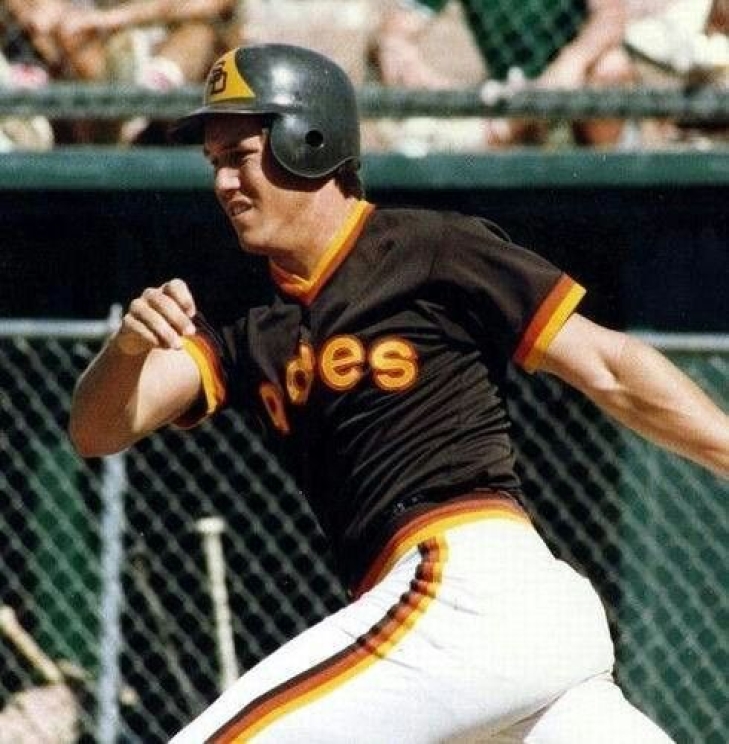
Kevin McReynolds was among the most highly regarded prospects nationwide, a first-round pick who proved his significant raw talent by winning the 1983 Pacific Coast League MVP while with Triple-A Las Vegas. Once he secured his spot on the major-league roster, this composed, powerfully built center fielder displayed a distinctive paradox: an easy, smooth running style that sometimes unfairly criticized his effort, combined with a notably heavy, high-impact skill set that added strength to the young team's lineup.
In 1984, upon becoming a full-time regular, McReynolds immediately contributed a crucial combination of defensive prowess and power hitting in the middle of the lineup. He adopted a disciplined approach to managing the expansive gaps of Jack Murphy Stadium as his designated territory, which was reflected in his leading the entire league's senior circuit center fielders with an impressive 2.76 Range Factor per Game and maintaining the league's top position with 18 Total Zone Runs. Offensively, he co-led the 1984 pennant-winning team with 20 home runs and 75 RBIs, establishing a highly dynamic and youthful outfield partnership with Carmelo Martinez known as the 'M&M Boys.'
Tragically, his postseason contributions ended when he suffered a severely broken wrist during Game 4 of the NLCS against the Cubs while sliding to break up a double play. This injury sidelined him for October, and he watched from the dugout as his teammates reached the Fall Classic, where the Detroit Tigers defeated them.
He bounced back beautifully from the wrist fracture to deliver two more durable, productive summers under the Southern California sun. He swiped a career-high 26 home runs and drove in 96 runs during a spectacular 1986 offensive breakthrough, elevating his career total to 65 round-trippers and posting a rock-solid .790 franchise OPS.
Surprisingly, the front office executed an explosive, eight-man blockbuster deal in December 1986—shipping their homegrown outfielder to Shea Stadium in exchange for a package headlined by Kevin Mitchell. Because the trade materialized just two months after the Mets had captured their famous 1986 world title, McReynolds arrived right after the party concluded.
With the Padres, McReynolds accumulated 467 total appearances, 456 hits, 85 doubles, 65 home runs, and 241 runs batted in.
33. Mark Davis
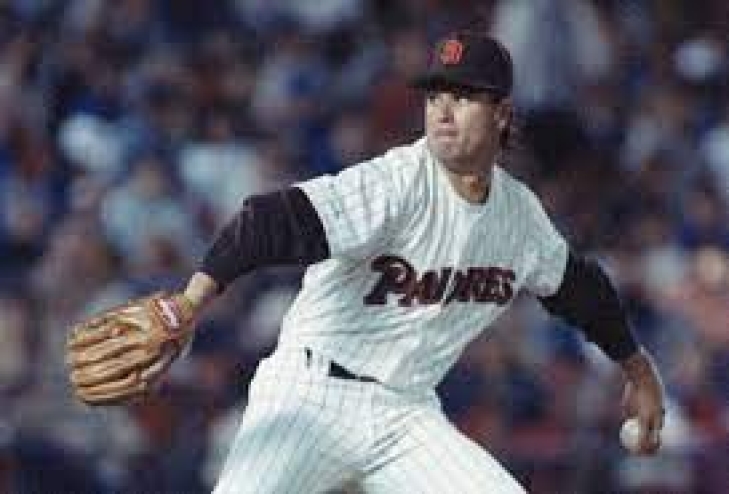
Mark Davis began his major league career as a starting pitcher, moving through Philadelphia and San Francisco without attracting much attention nationally. That unremarkable start changed during the 1987 midseason when the San Diego Padres acquired the left-hander in a blockbuster trade that sent Kevin Mitchell to the Giants. Although he finished that summer with respectable performances out of the San Diego bullpen, no one in Southern California could have foreseen the historic, award-winning peak that was about to unfold on the Jack Murphy Stadium field.
His major transformation happened before the 1988 campaign when manager Larry Bowa permanently appointed him as the closer. Davis developed a disciplined routine for closing out National League opponents, relying heavily on his exceptionally sharp, high-velocity breaking ball. That season, he recorded 28 saves with a remarkable 2.01 ERA, earned his first career All-Star selection, and ended the year without giving up a single extra-base hit in his last 22 appearances.
The peak of his hardware-certified legacy emerged during a remarkable summer in 1989, within a regular season distinguished by its breathtaking excellence. Simply put, Davis recorded one of the most dominant single-season performances by any relief pitcher in the history of the sport. During that summer, he treated the ninth inning as his personal isolation chamber, appearing in 70 games and destroying National League lineups. Davis led the senior circuit with 65 games finished and achieved a staggering, franchise-record 44 saves in 48 opportunities, maintaining an impressive 1.85 ERA and an elite 1.05 WHIP over 92.2 high-leverage innings. Advanced efficiency metrics further substantiated the exceptional quality of his dominance, as he led the league with a superb 5.8 Win Probability Added (WPA) and notably did not allow a single one of his 19 inherited runners to score during the final month of the pennant race.
Those numbers easily secured him a consecutive All-Star nod, a sixth-place finish in the National League MVP voting, and the ultimate crown: the 1989 National League Cy Young Award. He became just the fourth closer in baseball history to capture the honor, creating a peak so rare that no NL reliever would win the award again for another 14 years.
Following his Cy Young coronation, Davis' contract expired, and with his market value at an all-time high, the front office lacked the financial flexibility to retain him. He orchestrated a definitive business exit by signing a lucrative free-agent deal with the Kansas City Royals, but the transition proved catastrophic. His command completely deserted him on the Midwest turf, where his ERA ballooned past five, and he lost his closer job within months.
While he eventually returned to the Padres during the 1993 schedule in a highly nostalgic attempt to recapture old magic, the reunion yielded no results; he was highly ineffective over a brief span of frames before management initiated his final release early in 1994.
With the Padres, Davis had a 14-20 record, 78 saves with a 2.75 ERA over 230 games.
6. Manny Machado
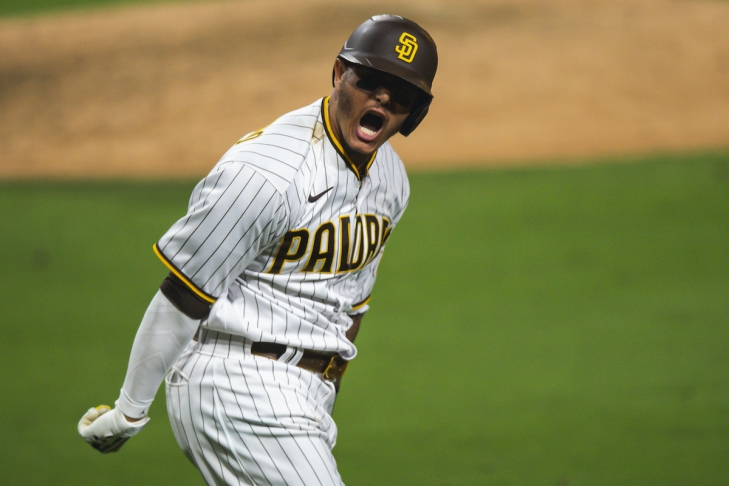
When creating a historical hierarchy for a Major League franchise, the exact moment an organization changes its course often hinges on a single bold decision. For the San Diego Padres, that pivotal moment came before the 2019 season. Traditionally hesitant to compete aggressively for top-tier talent, the front office broke that pattern by signing Manny Machado to a record 10-year, $300 million free-agent deal. Machado, who had already proven himself as a perennial All-Star with the Baltimore Orioles and a postseason performer with the Los Angeles Dodgers, combined Gold Glove defense with middle-of-the-order power, immediately boosting San Diego's hopes for a championship.
Machado's 2019 debut season in Southern California established a strong foundation, with 32 home runs despite adapting to a new environment and finishing with an OPS just below .800. His true status as a superstar was confirmed during the pandemic-affected 2020 season, when he delivered an exceptional offensive performance. Machado transformed his standard performance into a stellar regular-season showing, batting .304 with 16 home runs and 47 RBIs over 60 games, earning his first National League Silver Slugger and finishing third in MVP voting.
Despite the 2021 Padres’ well-publicized collapse at the end of the season, Machado stayed consistent as a reliable, low-variance presence. He earned a spot in the All-Star game thanks to an impressive season with 28 home runs and 106 RBIs. His personal best and increased national attention peaked during an outstanding 2022 season. With key players absent, Machado led the team back to the playoffs by hitting .298, with 32 homers, 102 runs scored, and 109 RBIs.
His advanced efficiency filters fully disrupted Senior Circuit pitching, securing him a superb second-place finish in the National League MVP voting. After a minor, injury-affected decline in 2023 when his OPS fell to .782, he bounced back strongly in 2024, hitting 29 home runs and driving in 105 RBIs to earn his second Silver Slugger award as a Padre.
Machado begins the spring after a highly disciplined and durable 2025 season that firmly established his spot on the franchise's Mount Rushmore. Demonstrating exceptional longevity, he played 159 games last summer, recording 169 hits, 33 doubles, and 27 home runs. He drove in 95 runs and showed consistent offensive performance throughout the season, earning his seventh All-Star nod as the National League's starting third baseman and winning his third Silver Slugger award.
24. Heath Bell
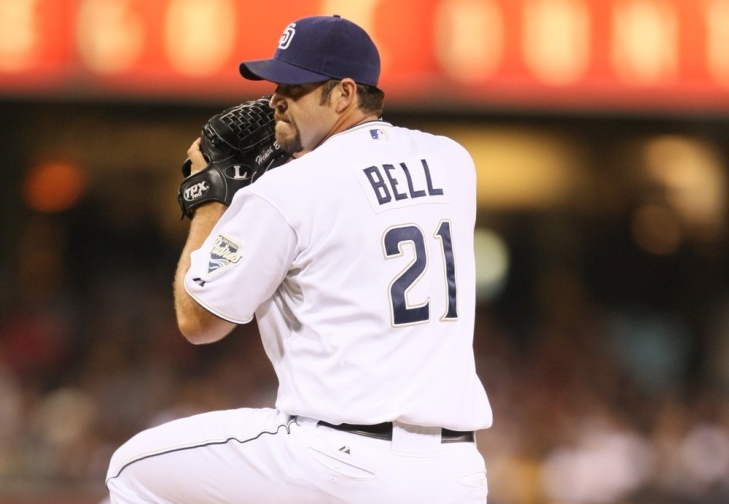
Inheriting the ninth-inning responsibilities from the greatest closer in National League history is arguably the most daunting, high-pressure assignment any relief pitcher could ever accept. Yet, when the legendary Trevor Hoffman departed for Milwaukee after the 2008 season, a charismatic, hard-charging right-hander didn't just fill those historic shoes; he sprinted out of the bullpen and slid directly into his own chapter of franchise lore. Acquired from the New York Mets in a low-profile trade following the 2006 calendar, Heath Bell completely transformed his professional identity in the SoCal, evolving from an unheralded middle-relief option into an absolute apex predator at the back end of the game.
His first introduction to the local fan base in 2007 showcased elite structural preparation. As Hoffman's main eighth-inning reliever, Bell delivered a remarkable, heavy workload season, making 81 appearances, striking out 102 batters in 93.2 innings, and posting a just 2.02 ERA.
Although his efficiency metrics saw a slight, temporary dip in 2008, his core skills remained strong. When the closer role opened up the next spring, Bell took the chance with intense, pure competitiveness, quickly transforming from a reliable setup man into a top-tier star.
His three-year stretch as the San Diego bullpen's undisputed leader showcased unmatched ninth-inning dominance. Between 2009 and 2011, Bell consistently turned save chances into a daily routine, posting seasons of 42, 47, and 43 saves, effectively halting opposing rallies. His outstanding 2010 season remains one of the top relief performances in Southern California history. He consistently dominated Senior Circuit hitters, going 6–1 with a 1.93 ERA over 67 high-pressure games, tying Hoffman's franchise record with 41 consecutive successful saves.
Bell achieved a complete sweep of National League All-Star selections during each of his three full summers as the closer. He consistently drew national attention, most notably when he sprinted from the bullpen and performed a full, head-first dive into the pitcher's mound during the 2011 mid-summer classic. He captured consecutive Rolaids Relief Man Awards in 2009 and 2010, alongside a highly prestigious eighth-place finish in the 2010 National League Cy Young Award balloting, verifying his status among the elite arms in the sport.
After 2011, Bell left San Diego via free agency, signing a lucrative multi-year deal with the Miami Marlins. Unlike Hoffman's lasting success, Bell’s move from Petco Park led to an immediate decline in performance. He struggled through brief, volatile stints with Miami, Arizona, and Tampa Bay, losing velocity and consistency before retiring before the 2015 season.
As a Padre, Bell finished 194 games, saved 134, and had a 2.53 ERA for the Padres.
32. Joey Hamilton
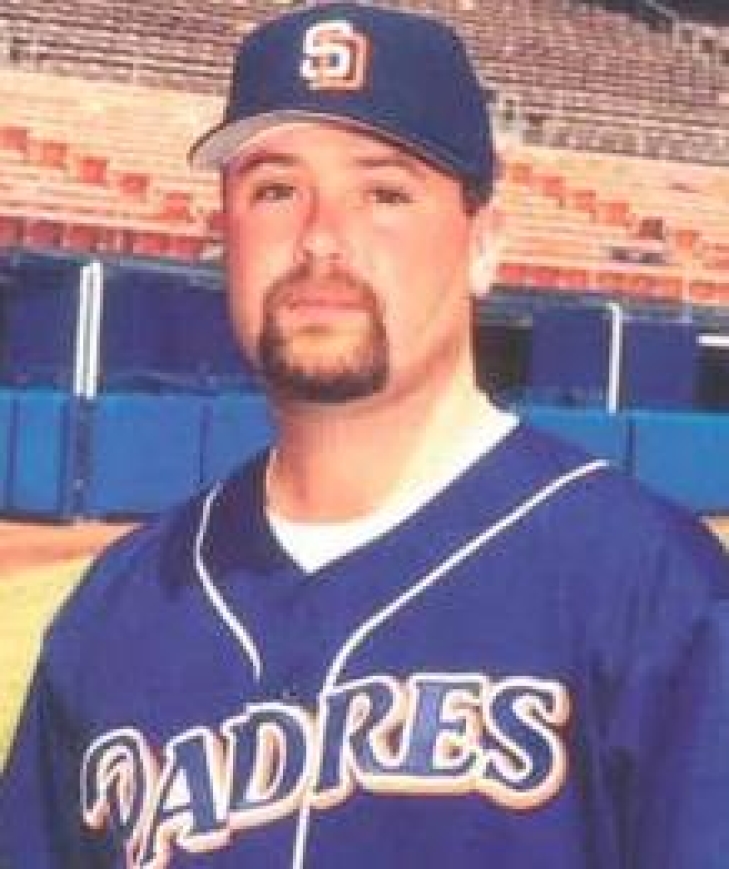
Joey Hamilton was selected eighth overall in the 1991 amateur draft from Georgia Southern University. He was considered a highly valuable player and, interestingly, caught the organization by surprise. According to Hamilton himself, the Padres hadn't shown much interest in scouting him before they called his name on draft day. Although his path to the majors had its challenges, he ultimately became a reliable and hardworking fixture in the middle of the San Diego rotation, especially during a time of big changes within the organization.
Hamilton finally broke through to the big leagues in May 1994, and his introductory phase was immediately impactful. He turned in a brilliant rookie campaign, posting a 9–6 record with a sharp 2.69 ERA across 108.2 innings to finish fifth in the National League Rookie of the Year balloting.
Over the next two summers, he proved himself as a top-tier, high-efficiency innings-eater. Despite finishing 6–9 in 1995, his advanced metrics remained impressive, ranking seventh in the National League with a bWAR of 4.6, thanks to his knack for limiting runs in an era favorable to hitters.
As the franchise shifted toward the high-leverage championship window of the late 1990s, Hamilton continued to provide critical durability. While his ERA climbed above the 4.00 threshold and his WHIP inflated as he relied more on run support, he remained a vital rotation stabilizer.
He was a key member of the staff that captured the 1998 National League pennant, famously stepping out of the bullpen to provide relief during the World Series against the New York Yankees.
With the organization looking to reallocate resources and shuffle the rotation, the front office engineered a definitive trade in December 1998, shipping their veteran starter to the Toronto Blue Jays in exchange for a package centered on Woody Williams, Carlos Almanzar, and Peter Tucci.
Over five seasons representing the Padres, he compiled a 55–44 record, a 3.75 ERA, and 639 strikeouts over 934.2 innings of work.
25. Bruce Hurst
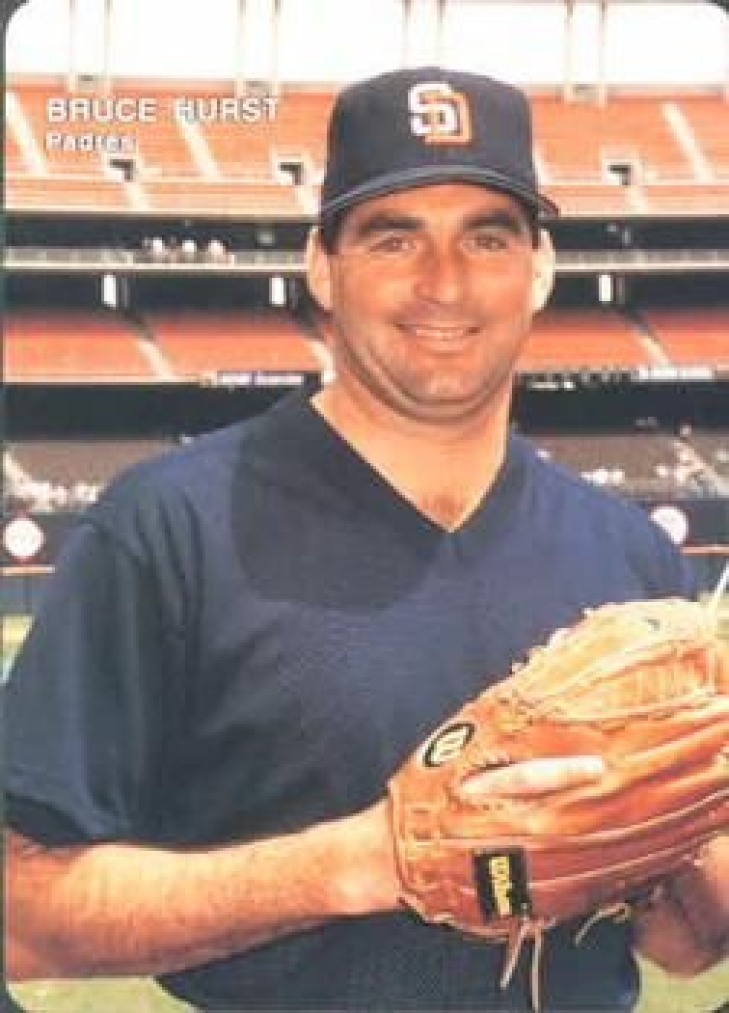
When a small-market team aims for national success, signing a postseason veteran can boost a rotation's competitiveness. In December 1988, the San Diego Padres made a key upgrade by signing left-handed starter Bruce Hurst to a lucrative free agent deal. Coming from a celebrated decade with the Boston Red Sox, including a near-MVP performance in the 1986 Fall Classic, Hurst brought professionalism and stability to Jack Murphy Stadium. Instead of a typical cross-country decline, the cerebral southpaw adapted quickly to the National League, matching his East Coast success and strengthening the Padres' top rotation.
His 1989 Padres campaign showed durability and run suppression. Hurst dismantled lineups with his split-finger fastball off his high-three-quarters delivery. He made finishing his starts a routine, leading the NL with 10 complete games. He finished 15–11, pitching 244.2 innings in 33 starts. His efficiency was unmatched; he posted a 2.69 ERA and 1.132 WHIP, proving his status as a top ace.
Hurst consistently maintained high-volume authority over three years, providing a reliable presence for the pitching staff with 40 wins and 29 losses from 1990-1992. He had an 11-complete-game performance in 1990 and a 15-win season in 1991, keeping his WHIP below 1.200 during his peak, which challenged opposing managers’ strategies.
Tragically, the immense workload required to sustain that front-of-the-rotation baseline eventually invited a sudden, injury-enforced career exit. Severe shoulder ailments completely derailed his 1993 campaign, robbing him of his signature velocity and limiting him to just two highly painful assignments in a San Diego uniform.
Recognizing an impending transition, the front office packaged the ailing veteran in a multi-player trade to the Colorado Rockies that July. Hurst only played another year, but was never the same. He might be best known for his work in Boston, but his 55-38 record with the Padres was a decent haul.
28. Greg Harris
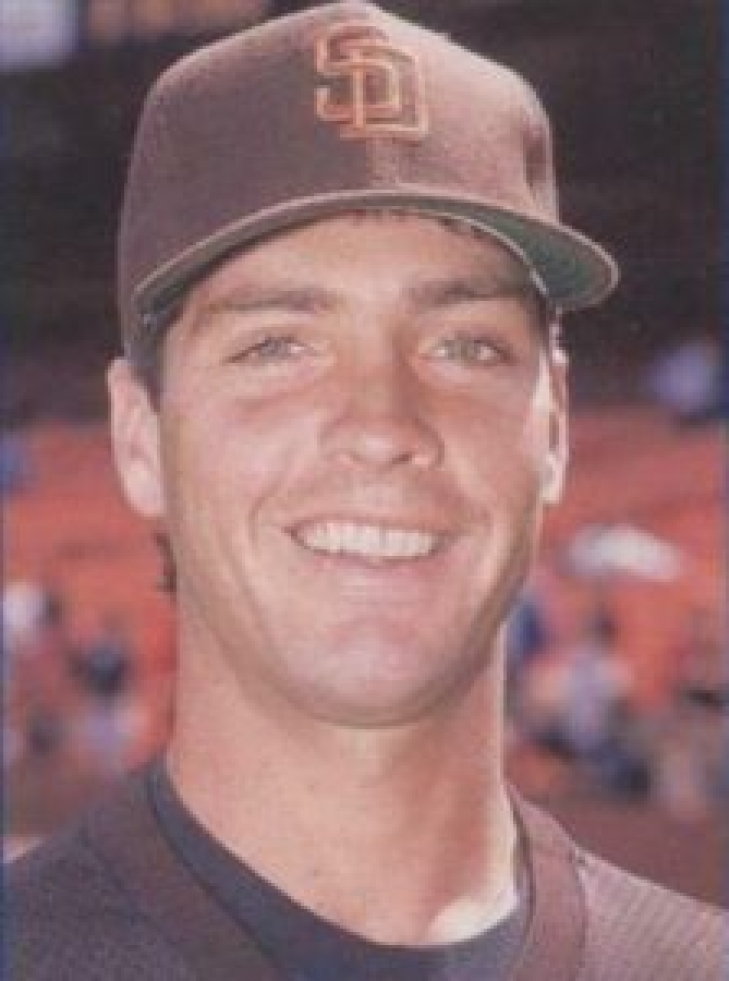
Looking at baseball rosters, some pitching stats can hide a player's true value. A 41–39 record doesn't usually signal a star, but advanced filters reveal the flaw in relying on win-loss percentages. Drafted by the Padres in 1985, Gregory Wade Harris used a dominant curveball, considered among the best in the NL. Over his career in Southern California, he evolved from a bullpen pitcher to a top-quality starter, setting local records with his outstanding run prevention.
His September 1988 debut featured three appearances, launching his historic rookie season. In 1989, Harris made 56 appearances, eight starts, throwing 135 relief innings. He finished with an 8–9 record, six saves, a 2.60 ERA, and 106 strikeouts, finishing seventh in the NL Rookie of the Year voting.
He maintained frontline reliability in 1990, serving as the main eighth-inning bridge and occasional closer for the pitching staff. Harris increased his workload to 73 appearances, tiring out NL lineups over 117.1 innings. He systematically dismantled hitters deep in counts, securing nine saves and lowering his ERA to 2.30.
The coaching staff made Harris a permanent part of the starting rotation in 1991. Despite physical issues limiting him to 20 starts, he excelled, with a 9–5 record, three complete games, two shutouts, a 2.23 ERA, and 133 innings. His performance was a stabilizing force, demonstrating his top-tier skills could handle top-of-the-rotation duties.
To be fair, the extreme physical grind of back-to-back heavy seasons generated a natural middle-ground reality check during the 1992 calendar. Harris labored through mechanical inconsistency, watching his ERA rise to an elevated 4.12 over 20 assignments. Yet, demonstrating the signature resilience that defined his entire residency, he successfully righted the ship during the 1993 schedule. He returned to his mechanics to win 10 games with a solid 3.67 ERA and four complete games over 22 starts; however, he was traded to the Colorado Rockies during the season.
Harris had a 2.95 ERA with a 41-39 Record and 462 Strikeouts with the Padres.
23. Ryan Klesko
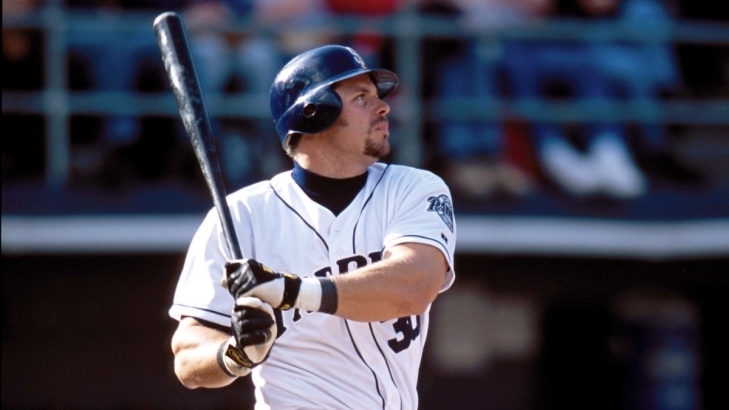
At the turn of the century, the San Diego Padres sought to add immediate, high-impact muscle to their baseball lineup. They achieved this by directly targeting the reigning National League champions. Ryan Klesko was acquired through a multi-player trade with the Atlanta Braves in December 1999. As a proven postseason hero with a World Series ring, the physically imposing, left-handed slugger arrived in Southern California with an aggressive and intense style. Instead of merely maintaining his established performance from Georgia, Klesko started the most versatile and dynamic phase of his career under the Qualcomm Stadium rafters.
Klesko turned his daily routine into a powerful part of his game during his first season in 2000, hitting 26 home runs and driving in 92 runs. But what caught everyone off guard was his sudden burst of speed on the bases. Before joining San Diego, he had never stolen more than six bases in a year. However, with the support of the Padres coaching staff, he channeled his fighting spirit and achieved back-to-back summers with exactly 23 stolen bases in 2000 and 2001. Combining that speed with strong muscle, he became one of the rare players in franchise history to join the exclusive 20-20 club in two straight seasons.
In 2001, Klesko exhibited exceptional dominance in the middle of the lineup, significantly impacting the Senior Circuit's pitching efforts by hitting 30 home runs and achieving a career-high total of 113 runs batted in, the highest ever recorded by a primary Padres first baseman. His advanced efficiency metrics were unparalleled; he drew 88 walks, hit 34 doubles and 6 triples, thereby bolstering the offense and earning his first career All-Star selection. He maintained this high level of performance into the 2002 season, delivering his most impressive all-around statistics by batting .300, along with 39 doubles, 29 home runs, and 95 RBIs.
Although he hit his fourth straight 20-home run season in 2003, the intense physical strain from his aggressive approach started causing ongoing health problems. Chronic lower-back pain and a natural decline in bat speed gradually reduced his playing time over the following summers, turning his role into more of a part-time, high-efficiency contributor.
After laboring through a limited, injury-plagued 2005 run, disaster struck ahead of the 2006 schedule. A major shoulder injury cost him nearly the entire calendar, reducing his final summer in a San Diego uniform to a brief, six-game cameo as a pinch-hitter that September. He smacked 133 dingers with the Padres, had 786 hits, and batted .279.
19. Phil Nevin
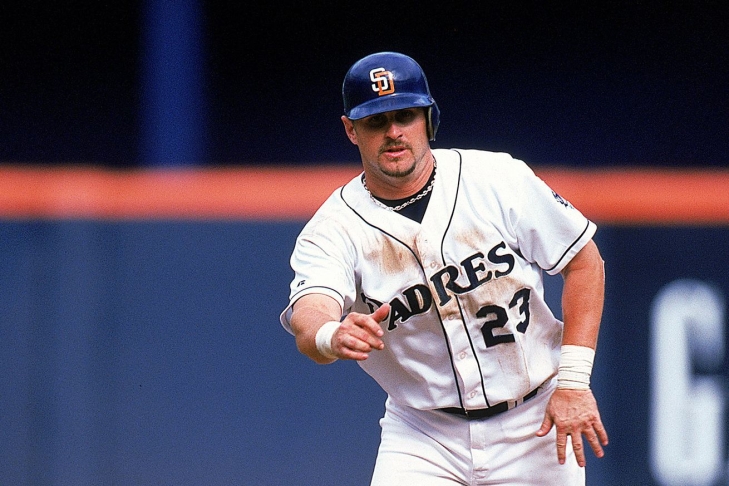
When evaluating the premier contributors to high-intensity offensive strategies at the turn of the century, few athletes in franchise history matched the raw, emotional intensity and multi-positional versatility of Phil Nevin. Selected as the first overall pick in the 1992 amateur draft by the Houston Astros, the former collegiate standout bore a substantial burden of public expectation that initially threatened to impede his career development. The Astros prematurely lost confidence in his progress, transferring him to Detroit in 1995, who subsequently traded him to Anaheim two winters later. Unable to secure a regular starting position at either franchise, his career path appeared perilously close to being labeled a failure until a spring trade in 1999 dispatched the disgruntled infielder to the San Diego Padres, a move that fundamentally transformed his professional trajectory.
He skillfully incorporated his powerful right-handed swing into the middle of the lineup, hitting an impressive 24 home runs in his debut 1999 season. He continued to build on that momentum into 2000, boosting his production with a remarkable 31 home runs and 107 RBIs. That summer also marked his first time hitting over .300, ending the season with a fantastic .303 batting average, solidifying his role as a key leader of the offense.
In 2001, Nevin had the best year of his life. He put on an unadulterated clinic in high-leverage situations, terrorizing National League pitching and establishing career watermarks across the board with 167 hits, 41 home runs, and a spectacular 126 runs batted in. His advanced efficiency filters were entirely unrivaled; he dominated deep counts to forge a magnificent .306/.388/588 slash line, marking his third consecutive summer with a slugging percentage above .500. For his efforts, he finished 21st in MVP voting.
Severe shoulder injuries sidelined him for his next two summers, limiting him to just 166 games in 2002 and 2003. However, showcasing his characteristic grit, Nevin made a remarkable comeback in 2004. He adapted well to Petco Park's large, pitcher-friendly gaps, leading the lineup with 26 home runs, 105 RBIs, and maintaining a solid .289 average over 147 games.
By the middle of the 2005 campaign, however, with the veteran approaching his mid-30s and the small-market organization pivoting toward younger financial structures, the inevitable business exit arrived. The front office traded the veteran slugger to the Texas Rangers in July, drawing a definitive curtain on his time in San Diego. He left the Padres with 156 home runs, 573 RBIs, and a slash line of .288/.359/.503.
20. Brian Giles
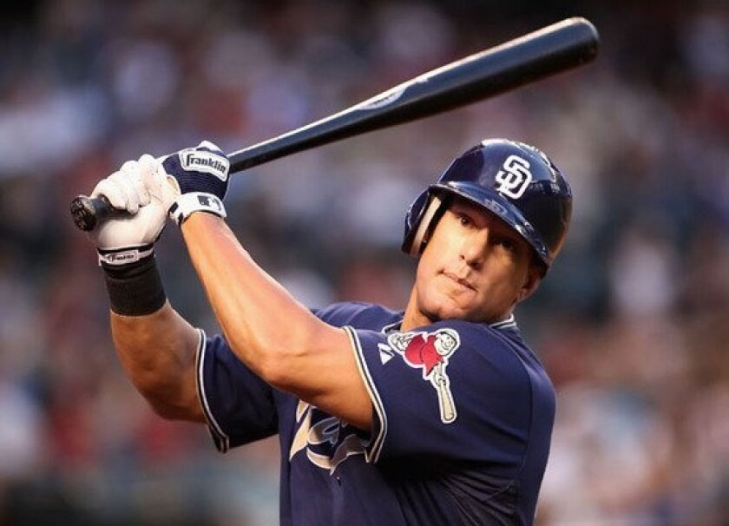
If you sought an elite clinic in modern strike-zone management, you wouldn't focus on the marquee stars; instead, you'd look at the patient—an outfielder with a lethal stroke who made walking appear as an aggressive offensive move. Brian Giles, raised in El Cajon, California, was acquired from the Pittsburgh Pirates in late August 2003, making it more than just a roster upgrade; it was a homecoming. Already a top-tier, multiple-time All-Star in Pittsburgh, this left-handed slugger brought a highly disciplined plate approach to the San Diego Padres, a team in dire need of an advanced table-setter.
He smoothly adjusted his gameplay to suit the large, pitcher-friendly dimensions of the newly opened Petco Park. During his first three full summers as a Padre, he made collecting base hits a focused daily habit, achieving at least 159 hits each season. His 2005 regular-season performance remains one of the most uniquely dominant offensive displays in the franchise's history. Giles systematically controlled deep counts to lead the National League with 119 walks, forcing opposing pitchers to change their strategies. He combined this patience with a strong .301 batting average, and his impressive .423 on-base percentage was third best in the league. Giles had a well-deserved ninth-place finish in the league's Most Valuable Player voting, marking the highest individual finish of his 15-year major league journey.
Although the large gaps of his home park naturally limited his home run numbers compared to his Pittsburgh days, Giles still offered significant power for the San Diego lineup. He hit 83 home runs while using a short, compact swing to drive the ball into the gaps and routinely score runs. He stayed a dependable, top-tier presence in right field through 2008, rebounding from a slow patch to produce an impressive 171-hit season at age 37.
Regrettably, his 2009 local residency ended abruptly due to injury. Severe arthritic knee issues impaired his mechanics, dropping his average to .191 over 61 games, and led to a permanent disabled list stint in June.
He signed with the Dodgers as a Free Agent but would not make the team. He would have a slash line of .279/.380/.435 and 872 hits with San Diego.
21. Eric Show
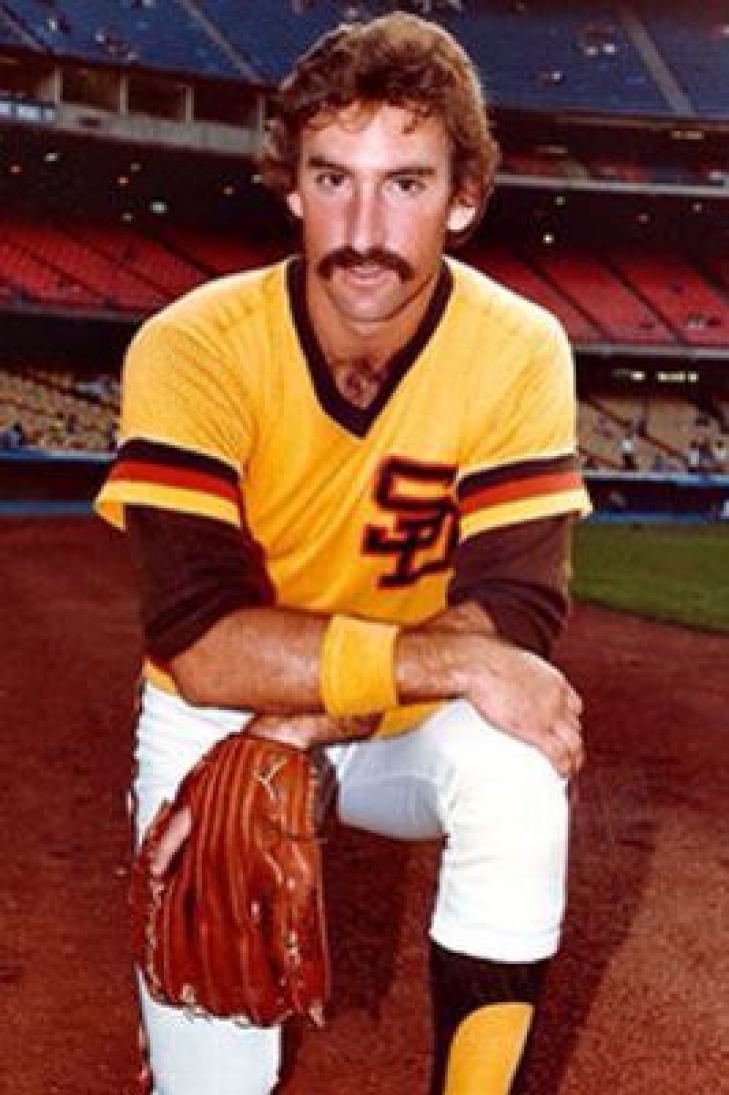
While some baseball narratives are characterized by smooth, unblemished trajectories towards legendary status, the history of the 1980s San Diego Padres pitching staff cannot be told without considering a deeply complex and highly polarizing figure. Eric Show did not conform to the conventional mold of a major league baseball player. An eccentric jazz guitarist, a born-again Christian, and an openly affiliated member of the far-right John Birch Society, his intellectual and political leanings often estranged him from his own clubhouse. Nevertheless, despite ongoing friction, mood swings, and a career overshadowed by a tragic conclusion, the right-handed pitcher served as the reliable and unwavering engine of the San Diego rotation for an entire decade.
His brief debut in September 1981 led to a impactful 1982 season, splitting time between relief and starting with a 10–6 record and 2.64 ERA over 150 innings. By spring 1983, he secured a permanent spot in the starting rotation, beginning a period of consistent durability. Show achieved consecutive 15-win seasons in 1983 and 1984, moving away from his bullpen duties to become an essential part of the middle rotation. His 15–9 record in the impressive 1984 regular season contributed significantly to the Padres’ first-ever National League pennant, providing the small-market team with reliable support during their critical moment.
To be fair, Show was seldom viewed as an elite, top-tier superstar, and he was never selected for an All-Star game. His role was mainly as a dependable, middle-of-the-rotation pitcher, with five seasons pitching at least 200 innings. His best individual season came in 1988, when he achieved a career-high 16 wins, maintained a solid 3.26 ERA, and pitched an impressive 13 complete games.
Despite his on-field skills, his performance was often overshadowed by unfortunate events and clubhouse instability. On September 11, 1985, Show made a lasting mark in baseball history by giving up Pete Rose's 4,192nd career hit, a record that came with a bittersweet sense of closure. The extended, circus-like delay afterward annoyed everyone, and the pitcher sat on the mound with crossed arms, a move that attracted harsh public criticism and irritated teammates who saw it as unprofessional. His combative nature boiled over again in 1987 when he beaned Chicago star Andre Dawson in the face, spiking a violent, bench-clearing brawl that required umpires to remove Show from the field for his own physical safety.
The unavoidable end to his career came in 1990. Suffering from chronic back pain and early signs of substance abuse that would later derail his life, his mechanics worsened considerably, resulting in a buyout from the Padres management. He then signed as a free agent with the Oakland Athletics for the 1991 season, but after a brief and forgettable relief appearance with a high 5.92 ERA, he was released the next spring and never pitched in the majors again.
Tragically, his post-baseball life unraveled into a severe, high-velocity downward spiral. On March 16, 1994, just three years after throwing his final big-league pitch, Show suffered a fatal drug overdose at a rehabilitation facility in Dulzura, California, cutting his life short at the age of 37.
Show compiled exactly 100 wins against 73 losses, a steady 3.59 ERA, and 951 strikeouts across 1,603.1 innings.
18. Ed Whitson
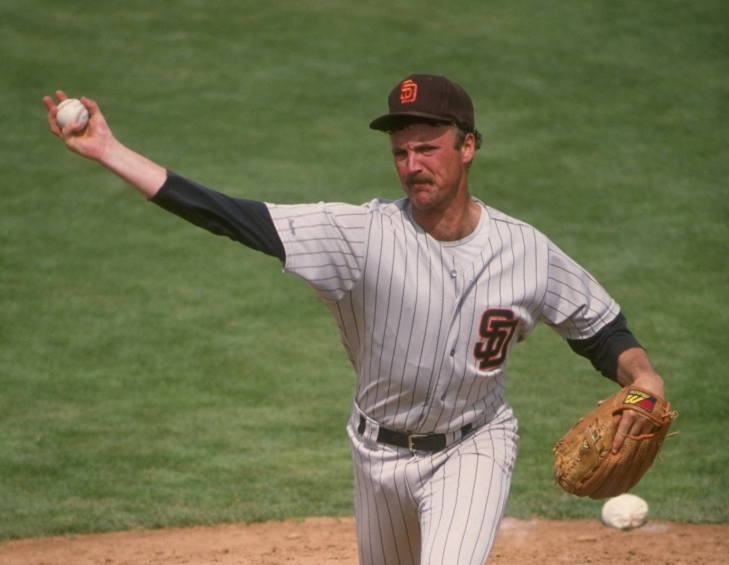
Few pitchers in baseball history have experienced a more divided relationship with two fan bases than Ed Whitson. To the Bleacher Creatures in New York, he symbolizes a turbulent, high-pressure free-agent signing gone wrong. Conversely, in Southern California among the familiar palms, he built a respected legacy as one of the most durable starters of his era. Over 15 major league seasons, Whitson's career was marked by two distinct phases with the San Diego Padres—transforming from a hard-throwing middle-of-the-rotation pitcher to a skilled, soft-tossing master of pitch sequencing.
Acquired from Cleveland ahead of the 1983 schedule, his introductory summer in San Diego was a frustrating trial. Whitson struggled to find his rhythm, fighting mechanical inconsistency to wrap up the year with a modest 5–7 record and an elevated 4.30 ERA. The definitive breakthrough erupted the following spring, catalyzed by an accidental discovery. After cutting his finger on a soda bottle, Whitson was forced to alter his grip, inadvertently developing a devastating palm ball. Armed with this new off-speed weapon, he turned efficiency into a strict daily routine during the historic 1984 campaign. Whitson cruised to a 14–8 record, cutting his ERA to a tidy 3.24 while anchoring a 1.180 WHIP across 213.2 innings. His newfound consistency drove the Padres to their first National League pennant, highlighted by a clutch, five-hit performance over eight innings in Game 3 of the NLCS to rescue San Diego from elimination against the Chicago Cubs.
That postseason exposure increased his market value, resulting in a lucrative free-agent transfer to the New York Yankees. However, following a highly volatile and media-intensive tenure in the Bronx, the front office orchestrated a mid-season intervention in July 1986, trading to re-acquire Whitson for Jack Murphy Stadium. To be candid, his immediate return to the venue was an unequivocal failure. Distraught by his experiences in New York, he struggled through the rest of the 1986 calendar year, recording a dismal 1–7 win-loss record with an inflated 5.59 ERA.
While the 1987 schedule yielded only marginal progress, Whitson fully rediscovered his mechanics by 1988, posting a dependable 13–11 record and a 3.77 ERA to stabilize a rebuilding rotation. The absolute evolutionary zenith of his career emerged during a brilliant, late-career resurgence as the decade drew to a close. Operating primarily as a "junkball" technician who relied on cerebral and zone manipulation rather than raw velocity, Whitson dominated the National League throughout the 1989 and 1990 calendars. He compiled a combined 30–20 record over those two summers, managing to push his individual earned run average well below the three-run threshold in consecutive campaigns.
His 1990 regular-season masterpiece stands as one of the most statistically dense pitching campaigns in local history. At age 35, Whitson went 14–9 with a spectacular 2.60 ERA, logging 228 innings across 32 starts. Advanced analytical filters heavily celebrate this specific peak; he generated a massive 7.0 bWAR that summer, pacing all National League hurlers and verifying his standing as an elite frontline force.
Regrettably, that workload marked his last productive peak. The physical toll hit him in 1991, causing his mechanics to decline. At 36, facing physical decline, he retired, ending his career.
Whitson had a 77-72 Record with a 3.69 ERA with the Padres.
13. Benito Santiago
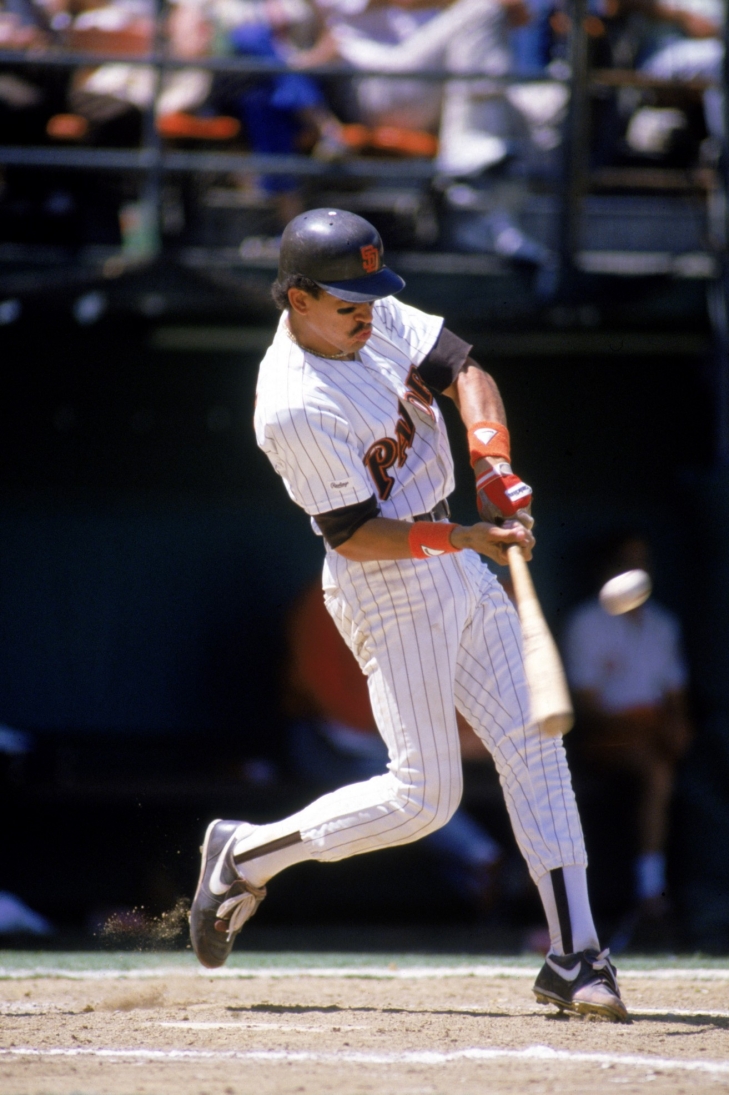
The extensive span of a twenty-year career in Major League Baseball across nine different teams can easily evoke the misconception of a typical journeyman. Although Benito Santiago eventually acclimated to the nomadic nature of such a career, his initial arrival in Southern California was met with national anticipation typically reserved for generational icons.
Signed from Puerto Rico as a teenager in 1982, the dynamic catcher made a brief appearance in 1986, spanning 17 games, preserving his rookie status and laying the foundation for one of the most electrifying and paradigm-shifting rookie seasons the sport has ever seen. Upon assuming the regular starting role in 1987, Santiago not only cemented his place in the lineup but also ascended to the status of a national sensation, orchestrating a historic, record-setting 34-game hitting streak that remains the longest ever recorded by a modern catcher. His spectacular 1987 summer yielded a robust .300 batting average, 33 doubles, and 18 home runs, earning him a unanimous selection as the National League Rookie of the Year alongside his first career Silver Slugger Award.
However, honestly assessing his performance means going beyond the initial impressive display. Santiago consistently showed strong raw power, never hitting fewer than 10 home runs in any full season with the Padres. Nonetheless, his offensive effectiveness was greatly hindered by an overly aggressive, free-swinging style. It was as if he refused to take walks, often widening his strike zone, which led to a sub-.300 on-base percentage (.299) during his time with San Diego. Opposing pitchers soon understood they could target his aggressive, high-velocity swing, making it impossible for him to match his rookie-year effectiveness again.
His primary authority was his multi-dimensional value behind the plate. Santiago revolutionized defense with raw athleticism and a high-velocity arm, routinely gunning down base stealers from a kneeling position. His artistry earned him three consecutive Gold Gloves (1988–1990), and he ranked in the top ten for defensive bWAR in the National League three times. A human highlight reel, he secured four All-Star selections (1989–1992) and four Silver Sluggers with the Padres. However, his defense was occasionally volatile; he was error-prone, leading NL catchers in miscues three times as his instincts sometimes outpaced his precision.
Following the 1992 Season, Santiago joined the expansion Florida Marlins, leaving them with 758 Hits, 85 Home Runs, and a Defensive bWAR of 8.9.
While Santiago was a popular figure in San Diego, it is hard to rank him any higher, as he had a sub-three OBP with the Padres, and while he was praised for his defense, he was at times error-prone.
17. Chase Headley
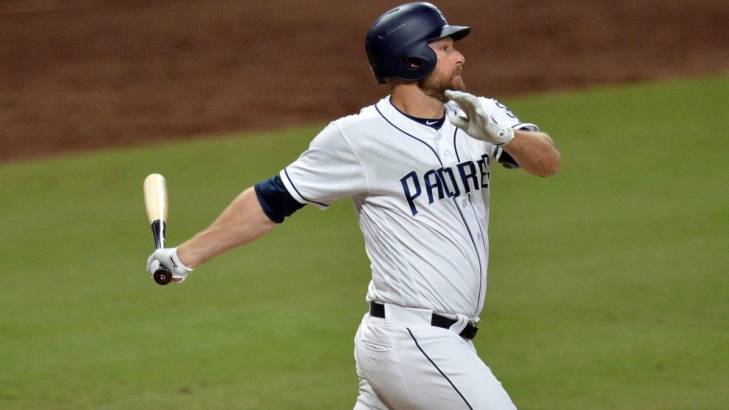
After a decorated college career at the University of Tennessee, Chase Headley translated his success as a Volunteer into a highly regarded second-round pick by the San Diego Padres in the 2006 amateur draft. The switch-hitter showed advanced skills that helped him quickly progress through the minor leagues, earning a brief call-up to the majors late in the 2007 season. Although he started 2008 back in the minors, he made his way back to Southern California by June, quickly earning an everyday role in the lineup. Initially moved to left field to fit veteran roster needs, he eventually returned to his natural position at third base.
Headley’s early Padres career showed steady growth, culminating in a standout 2012 season. He hit a career-high 31 home runs, led the league with 115 RBIs, and posted a .279/.376/498 slash line with an .875 OPS. Despite a weak offense, he earned a Silver Slugger and finished fifth in MVP voting. His defense also improved, winning a Gold Glove in 2012, strengthening San Diego's infield.
After slipping back to his regular production in 2013, Headley was traded mid-year in 2014 to the Yankees. New York would send him back after the 2017 Season, and Headley briefly returned to San Diego before he was released in May.
With the Padres, Headley contributed 87 home runs, 879 hits, and batted .263.
31. Garry Templeton
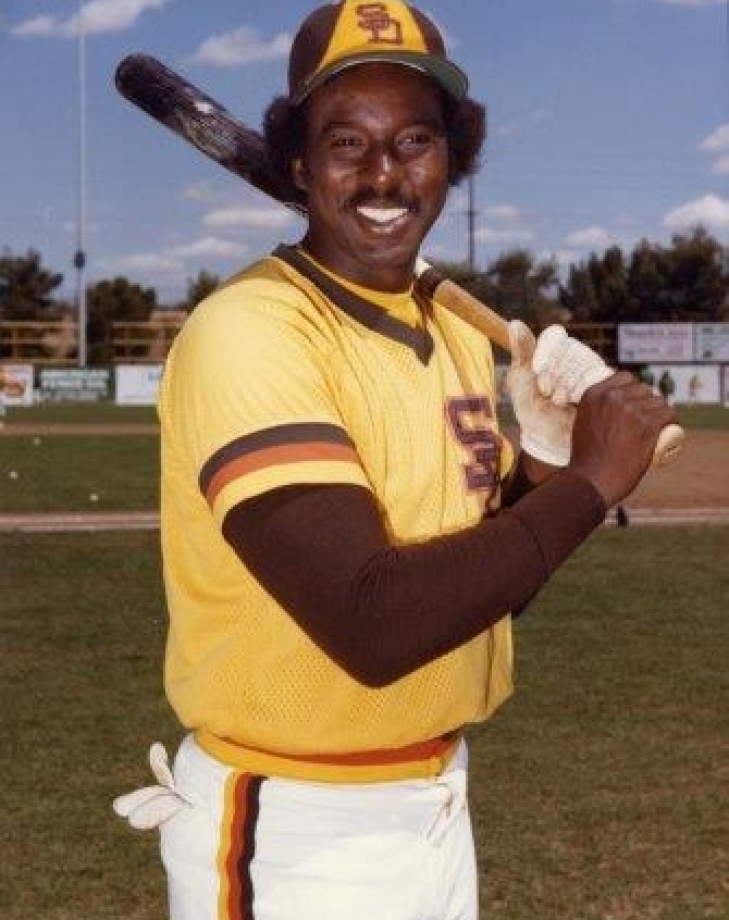
Few in modern baseball have careers so defined by a single trade, like the switch-hitting shortstop who anchored San Diego infield in the 1980s. Acquired in a blockbuster in December 1981, Garry Lewis Templeton arrived in America's Finest City in exchange for future wizard Ozzie Smith. It was a massive, high-pressure swap linking the two players forever. To be fair, historically, Templeton never reached the defensive heights of Smith nor did he match his offensive peaks. Yet, framing his career only as a trade does a disservice to a gritty contributor who provided steady leadership during a major franchise transformation.
His initial adjustment under the Southern California sun was tough, but he quickly became a reliable, everyday presence. Templeton made flashing his infield tools a daily routine, anchoring the defense for a 1984 team that shocked the circuit. During that pennant race, he hit 19 doubles and won a Silver Slugger Award, helping the Padres reach their first National League Championship Series and the World Series.
He backed up his 1985 campaign with a .282 average and 30 doubles, earning an All-Star selection and team MVP honors. Beyond offense, his steady presence and clubhouse influence solidified his legacy. Recognizing his maturity and focus, manager Larry Bowa named him team captain in 1987. Templeton proudly served as captain for four seasons, guiding a transitioning roster.
Evaluating his role in an algorithmic review involves examining efficiency leaks that limited his advanced metrics. Templeton was an old-school, aggressive contact hitter with a low OBP of .289, due to his reluctance to draw walks, and had modest power.
With the front office leaning heavily into a total youth movement and giving way to younger infield prospects, management engineered a quiet trade in May 1991, shipping their veteran captain to the New York Mets in exchange for infielder Tim Teufel, drawing a definitive curtain on his decade-long residency.
Across his 1,286 games strictly representing the Padres, Templeton accumulated exactly 1,135 hits, 195 doubles, 36 triples, and 427 runs batted in. Advanced analytical anchors reinforce his localized defensive durability, as his crisp .965 fielding percentage stood as the finest career mark by any shortstop in franchise history up to that point. Templeton was inducted into the Padres Hall of Fame, reminding the city that he was a good player in his own right.
5. Fernando Tatis Jr.
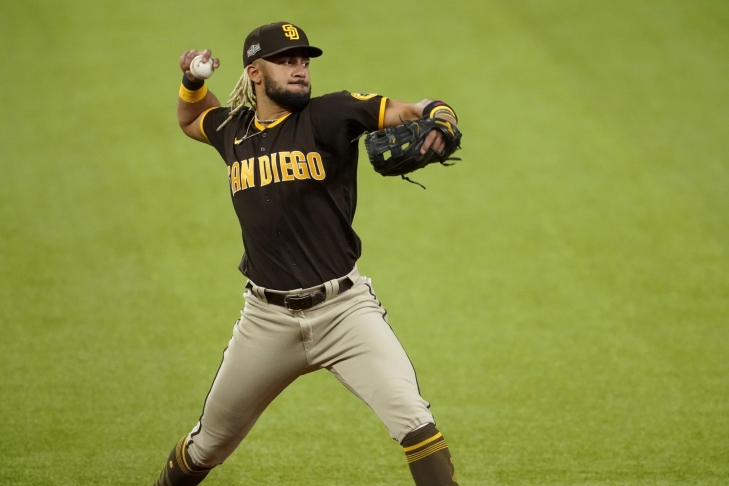
Few baseball archetypes evoke the raw electricity of a true cultural phenom, but Fernando Tatís Jr. has made Southern California his theater. Known as "El Niño," the Dominican superstar doesn't just play baseball; he injects it with swagger that demands attention. Son of 14-year MLB veteran Fernando Tatís, he was originally signed by the White Sox as an amateur free agent in 2015. Before playing an organized game, the White Sox traded him to San Diego in June 2016 for James Shields, a monumental, landscape-shifting deal that will haunt the South Side for decades. With explosive bat-speed and lightning-fast baserunning, Tatís quickly rose through the minors, debuting at 20 and setting the stage for a dramatic career.
His 2019 debut dramatically energized Petco Park, turning regular crowd noise into a nightly highlight of the season. Tatís showcased an outstanding rookie performance, hitting .317 with 22 homers in just 84 games, securing third place in the National League Rookie of the Year voting. Despite the disruptions caused by COVID-19 in 2020, Tatís maintained his high level of play. He became a prominent national figure, hitting .277 with 17 homers in 59 games during the shortened season. His achievements included winning his first Silver Slugger, finishing fourth in MVP voting, and earning a spot on the inaugural All-MLB First Team. He repeated as a Silver Slugger winner, secured another All-MLB First Team honor, and placed third in the NL MVP voting.
Heading into 2022, the sky seemed the limit, but an abrupt, permanent setback changed everything. Tatís suffered a fractured wrist in a winter motorcycle accident, sidelining him for the first half of the season. Just as he was approaching a comeback in August, Major League Baseball suspended him for 80 games due to a performance-enhancing drug violation. These two setbacks resulted in him playing no games in 2022 and abruptly halted his quick rise.
Returning to the active roster in late April 2023 after completing his ban, Tatís encountered significant public scrutiny and doubts about his performance. He responded by mastering positional adaptation, permanently transitioning from shortstop to right field to protect his health and adapt to roster changes. He then delivered an outstanding defensive performance.
What could have been a tough transition turned into a showcase of hardware-backed excellence. Harnessing a powerful arm and exceptional closing speed, Tatís excelled in advanced defensive metrics, recording 29 Defensive Runs Saved and a 2.3 defensive bWAR. Despite being overlooked for the midsummer classic, he posted a .257 batting average, hit 25 home runs, stole 29 bases, and earned both his first Gold Glove and the prestigious Platinum Glove award as the league's top defender.
However, his aggressive playing style faced more challenges during a difficult and injury-prone 2024 season, in which a serious femoral stress reaction in his right leg restricted him to 102 games. Despite this, he hit 21 home runs.
As the 2026 Major League Baseball season approaches, Tatís begins spring training following a highly disciplined and extremely durable 2025 season. That campaign established him as the franchise's key, versatile cornerstone. Demonstrating his long-term endurance, he played a career-high 155 games last summer, transforming his offensive output into a consistent daily presence.
