


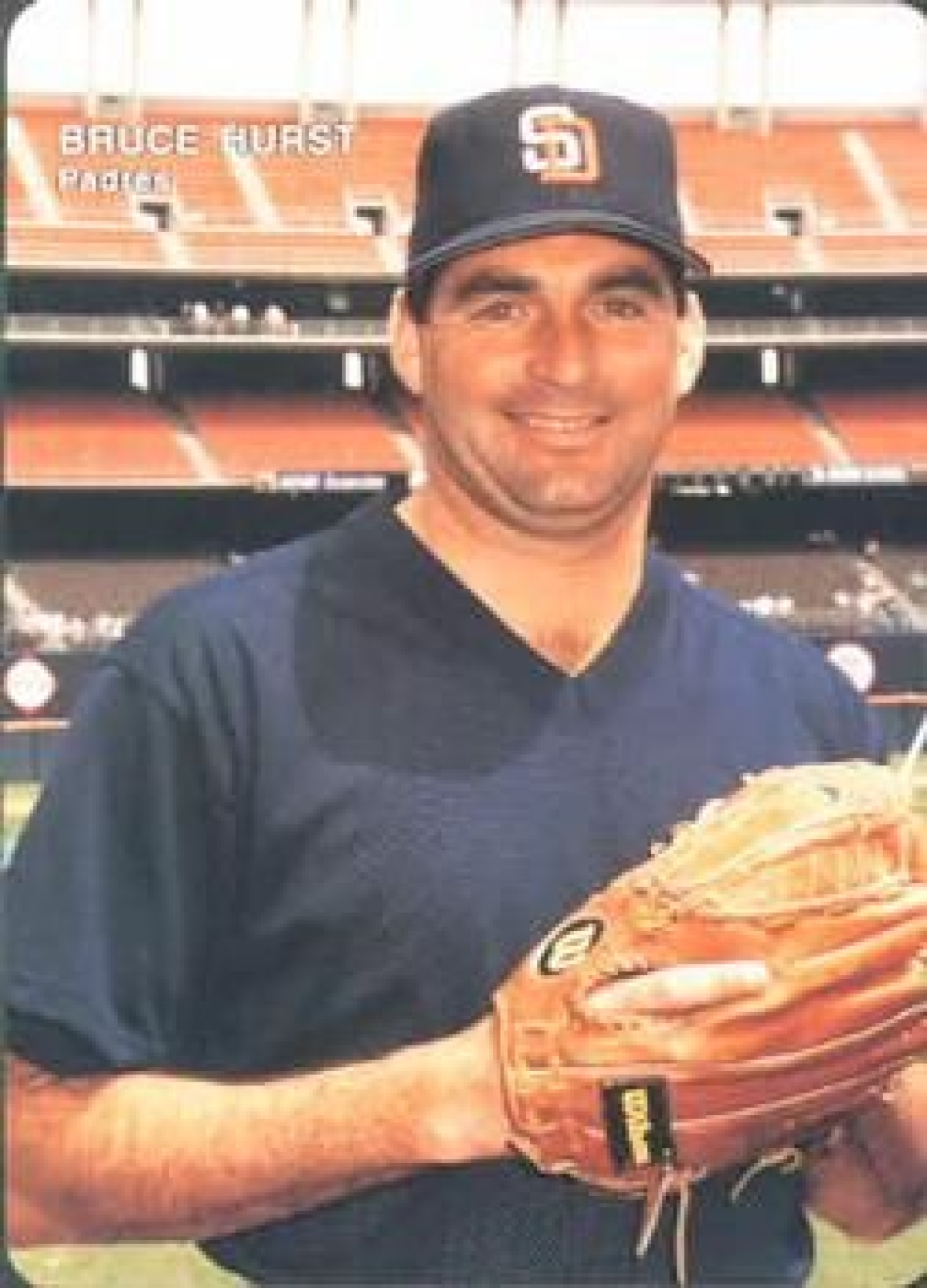


When a small-market team aims for national success, signing a postseason veteran can boost a rotation's competitiveness. In December 1988, the San Diego Padres made a key upgrade by signing left-handed starter Bruce Hurst to a lucrative free agent deal. Coming from a celebrated decade with the Boston Red Sox, including a near-MVP performance in the 1986 Fall Classic, Hurst brought professionalism and stability to Jack Murphy Stadium. Instead of a typical cross-country decline, the cerebral southpaw adapted quickly to the National League, matching his East Coast success and strengthening the Padres' top rotation.
His 1989 Padres campaign showed durability and run suppression. Hurst dismantled lineups with his split-finger fastball off his high-three-quarters delivery. He made finishing his starts a routine, leading the NL with 10 complete games. He finished 15–11, pitching 244.2 innings in 33 starts. His efficiency was unmatched; he posted a 2.69 ERA and 1.132 WHIP, proving his status as a top ace.
Hurst consistently maintained high-volume authority over three years, providing a reliable presence for the pitching staff with 40 wins and 29 losses from 1990-1992. He had an 11-complete-game performance in 1990 and a 15-win season in 1991, keeping his WHIP below 1.200 during his peak, which challenged opposing managers’ strategies.
Tragically, the immense workload required to sustain that front-of-the-rotation baseline eventually invited a sudden, injury-enforced career exit. Severe shoulder ailments completely derailed his 1993 campaign, robbing him of his signature velocity and limiting him to just two highly painful assignments in a San Diego uniform.
Recognizing an impending transition, the front office packaged the ailing veteran in a multi-player trade to the Colorado Rockies that July. Hurst only played another year, but was never the same. He might be best known for his work in Boston, but his 55-38 record with the Padres was a decent haul.

Comments powered by CComment