

47. Tony Pena
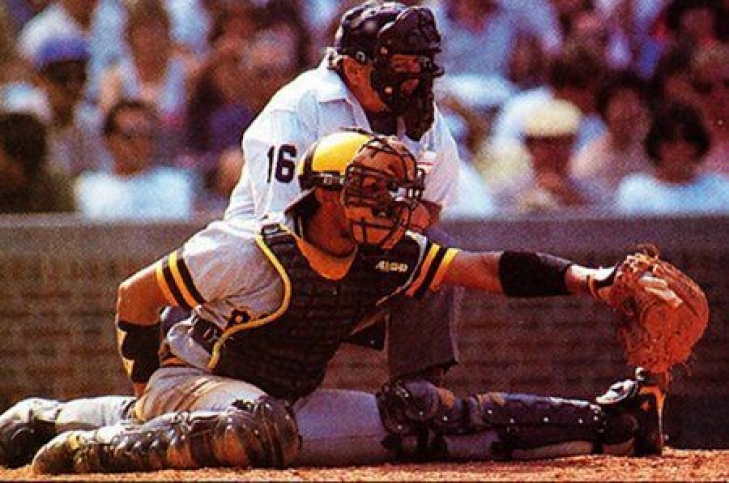
Tony Peña, who signed out of the Dominican Republic as an amateur free agent in 1975, didn't just keep runs from scoring; he revolutionized the catcher role into a showcase of athleticism and charisma. Known for his distinctive crouch, stretching his left leg flat on the dirt with no runners on base, Peña offered pitchers a precise target while maintaining a quick, explosive first step. After steadily advancing through the minor leagues and making his debut with the main team in 1980, this lively catcher revitalized the franchise with a mix of solid contact hitting and dazzling defensive skills, becoming a cherished figure of the 1980s Three Rivers Stadium era.
His true rise to frontline status happened in the 1982 campaign, earning his first National League All-Star invite. He quickly made his offensive volume a routine, using a short, line-drive right-handed stroke to trouble opponents.
The peak of his individual performance and efficiency came in a remarkable 1983 season. Peña showcased his skills at the plate, hitting a career-best .301 with 15 home runs, 153 hits, and 70 RBIs, finishing eleventh in the National League MVP voting—his highest career accolade.
However, concentrating solely on his offensive stats overlooks the exceptional defensive display he showcased behind the plate. Peña utilized a powerful throwing arm, effectively shutting down the running game in the Senior Circuit by leading the National League in baserunners caught stealing in 1984 and 1985.
His exceptional spatial awareness and quick-release skills enabled him to rank in the top ten for defensive bWAR four times as a Pirate, notably leading the league with a 2.5 defensive bWAR in 1984. Recognized for his versatile excellence, he won three straight Gold Glove awards from 1983 to 1985. Not just a fleeting star, this durable catcher was a four-time All-Star and maintained consistent offensive power, hitting double-digit home runs in five consecutive seasons from 1982 to 1986.
As the organization shifted to a complete rebuilding under young Jim Leyland, front-office priorities changed suddenly. In a significant spring trade before 1987, management traded the veteran icon to the St. Louis Cardinals for Andy Van Slyke, Mike LaValliere, and Mike Dunne, a blockbuster that reshaped both teams for the coming decade.
With Pittsburgh, Peña had 821 hits, 126 doubles, 63 home runs, and 340 RBIs alongside a highly respectable .286/.325/.414 slash line across 799 games.
