


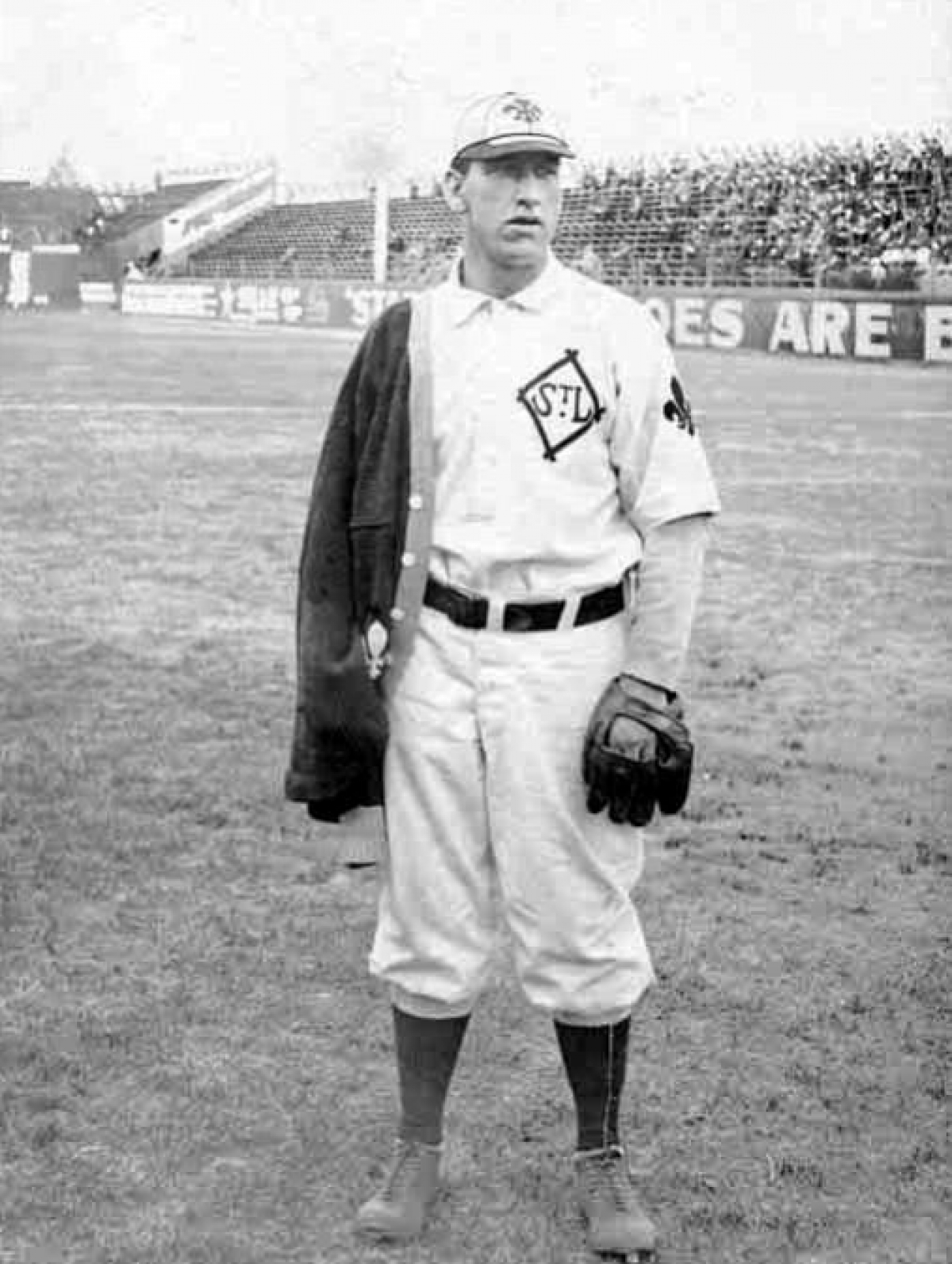
Acquired from the New York Highlanders in 1904, Harry "Handsome Harry" Howell quickly established himself as the premier arm of a struggling St. Louis Browns rotation. Armed with one of the most effective—and dampest—spitballs in the history of the game, Howell embarked on a five-year run of dominance that statistical leaderboards often obscure due to his team's lack of offensive support.
Howell’s consistency was nothing short of elite. From 1904 to 1908, he was a fixture in the American League's top ten for ERA, recording three seasons with a microscopic mark under 2.00. In 1905, he led the league with 35 complete games, an incredible display of durability in which he posted a 1.98 ERA despite losing 22 games—a testament to the "floundering Browns" lineups behind him. During this peak, his WHIP remained consistently under 1.10, proving he was one of the few pitchers who could match the era's legends strike-for-strike.
Beyond the mound, Howell was a versatile athlete who began his career as a legitimate two-way threat, possessing the agility to fill in at third base or the outfield when called upon. However, his legacy took a permanent hit in 1910. Involved in the infamous "Chalmers Award" scandal, Howell was accused of attempting to bribe an official scorer with a new suit to credit a hit to Nap Lajoie, an effort to help Lajoie beat out Ty Cobb for the batting title.
The scandal effectively ended his career in the Majors. Howell left St. Louis with a record of 78–91, 712 strikeouts, and a 2.06 career ERA with the Browns—a mark that, strictly by the numbers, remains one of the lowest in the history of the franchise

Comments powered by CComment