

28. Shannon Stewart
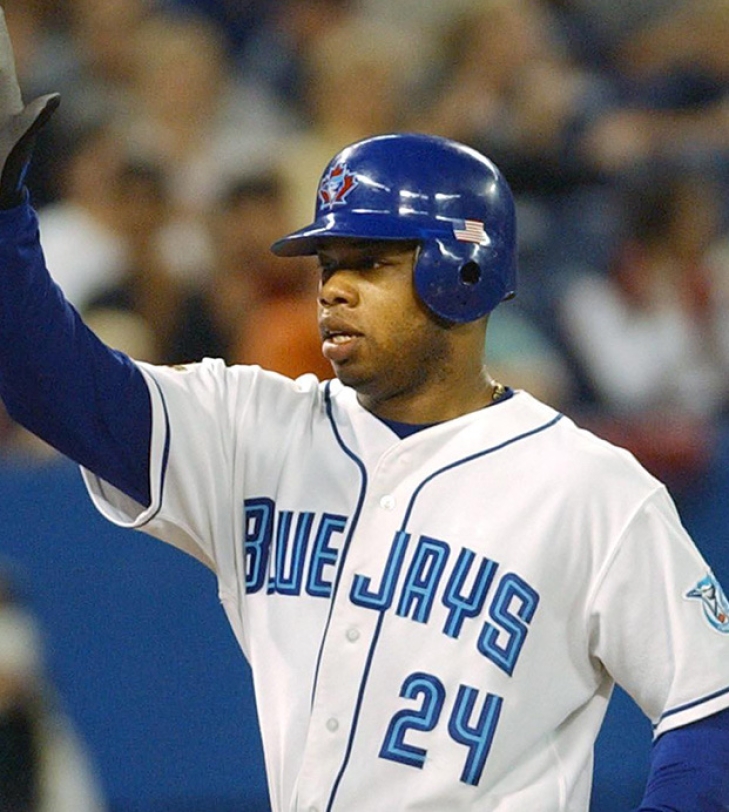
Shannon Stewart joined Toronto baseball during a transitional period after their back-to-back championships. Drafted in 1992, he debuted in late 1995 amid roster changes. Despite adjustments, SkyDome crowds remained lively, and Stewart became a key, energetic leadoff hitter.
His developmental trajectory spanned several seasons of alternating between Triple-A and the major leagues; however, by 1998, Stewart secured a permanent position as a starting player in the Toronto outfield. He promptly demonstrated his capabilities to the American League through an exceptional, high-velocity season. By leveraging his exceptional acceleration, he intimidated opposing catchers by stealing a career-high 51 bases and achieved a commendable batting average of .279.
While that 50-steal peak would stand as his personal high-water mark on the basepaths, his evolution into a pure, elite hitter was only just beginning. Over the next four-and-a-half seasons, Stewart became the ultimate model of line-drive consistency north of the border. He rattled off consecutive seasons batting north of the .300 plateau, showcasing a refined right-handed stroke that effortlessly exploited the turf gaps in Toronto. Far from merely a singles hitter, he also added a substantial layer of power to his game, launching at least 10 home runs in six consecutive seasons for the franchise—culminating in a career-high of 21 home runs during an impressive offensive performance in 2000.
By the early 2000s, the Blue Jays were stuck in a competitive lull, drifting out of the postseason picture despite Stewart's top-of-the-order brilliance. Recognizing his high-leverage value to a contender, the front office traded him to the Minnesota Twins midway through the 2003 season for Bobby Kielty. Stewart instantly sparked the Twins' offense, batting .322 down the stretch to help carry Minnesota into the playoffs and finish a spectacular fourth in the American League MVP balloting.
He accumulated 1,082 hits, 222 doubles, 74 home runs, and 359 RBIs while generating a stellar .298/.365/.431 slash line with Toronto.
14. Roger Clemens
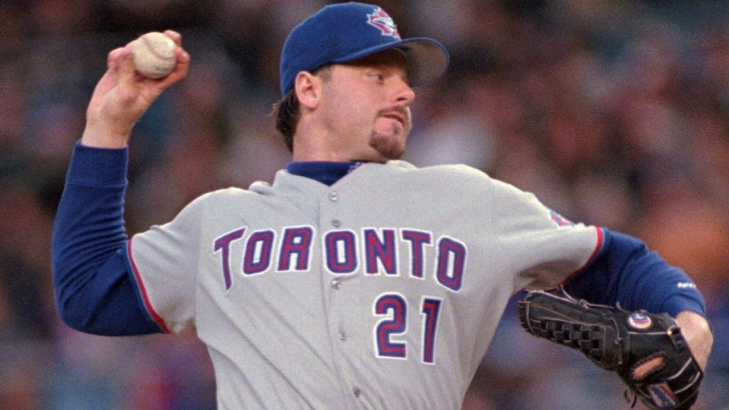
When Roger Clemens signed a lucrative free-agent deal with the Toronto Blue Jays in December 1996, many in baseball doubted the move. Boston general manager Dan Duquette had notably said the ace was nearing the end of his career, allowing the 13-year Red Sox legend to leave after two seasons that hinted his top skills were fading. Determined to disprove his former team, the fiercely competitive pitcher moved north of the border and delivered an extraordinary period of dominance, recording one of the most statistically impressive consecutive pitching performances in Major League Baseball history.
Although modern sports history tends to overlook his short two-season stint with the Blue Jays—and while concerns about performance-enhancing drugs would later cast a shadow on his career—his performance in that uniform marked a remarkable return to his absolute peak.
During the 1997 and 1998 seasons at SkyDome, "The Rocket" transformed his pitching approach, combining a revitalized mid-90s fastball with a deadly, untouchable split-finger fastball. He dominated American League hitters, winning the pitching Triple Crown in both years by leading in wins, strikeouts, and ERA each summer. He earned the AL Cy Young Award twice, leading the league in ERA+ and FIP throughout his tenure and also leading in WHIP during his groundbreaking 1997 debut. No pitcher in Toronto's history, before or since, has achieved such consistent individual dominance.
Every fifth day, Clemens turned a struggling Toronto team into a top-tier competitor, posting a remarkable 41–13 record and recording 563 strikeouts. However, despite his exceptional talent on the mound, the Blue Jays lacked sufficient roster depth to back him up. The team hovered around an equal number of wins and losses, rendering them non-competitive in the fiercely contested AL East pennant race, which was led by his former team and the rising powerhouse in New York.
Realizing his chance to win another World Series ring was slipping away, Clemens asked for a trade to a strong contender after his second consecutive Cy Young Award in 1998. The front office responded in February 1999 by making a major trade, sending Clemens to the New York Yankees in exchange for David Wells, Graeme Lloyd, and Homer Bush.
Because his time in Ontario was compressed into just two summers, his name doesn't sit near the top of the organization's multi-decade career volume leaderboards. Yet, generating an astronomical 20.1 total bWAR in just 67 starts, his blistering, award-winning peak gave Toronto baseball a concentrated injection of historic pitching excellence that remains permanently unmatched. With Toronto, he posted an impressive 41–13 record, a tiny 2.33 ERA, and a 1.06 WHIP. He pitched 508.2 innings, including 20 complete games, five shutouts, and 563 strikeouts.
13. Joe Carter
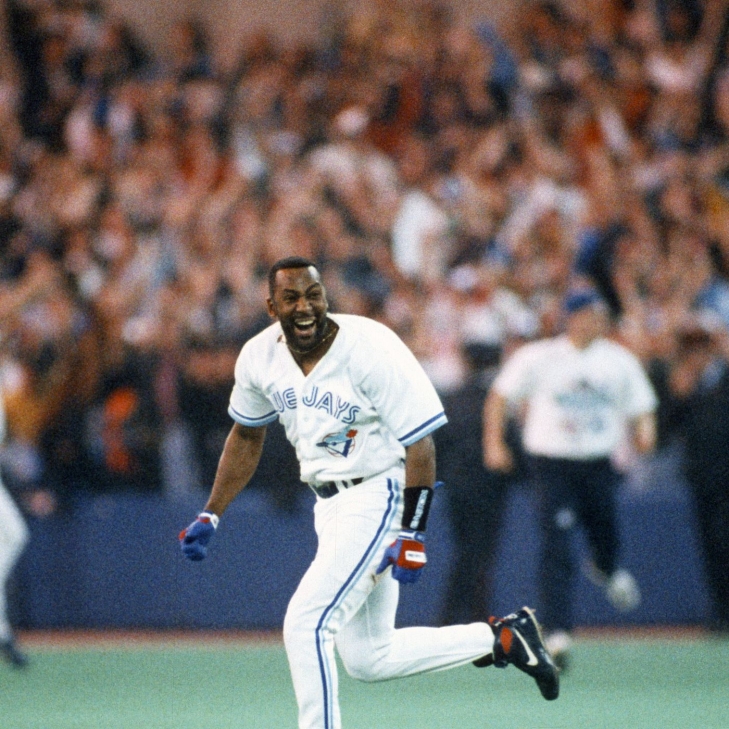
Assessing Joe Carter’s legacy in Canada involves balancing striking cinematic imagery with the concrete realities of contemporary baseball statistics. To many fans, he represents the quintessential symbol of the franchise's zenith. However, upon closer examination of his overall contribution through advanced metrics, a nuanced picture appears of a largely imperfect run-producer whose legendary stature significantly exceeds his analytical impact.
Arriving alongside Roberto Alomar in the historic December 1990 trade that sent Fred McGriff and Tony Fernández to San Diego, Carter immediately provided the Toronto Blue Jays with a formidable, high-profile middle-of-the-order hitter. He delivered precisely what the front office requested: sustained, formidable power. During a seven-season tenure in Ontario, the resilient outfielder averaged nearly 30 home runs annually, culminating in 203 home runs and 736 RBIs. Traditional award voters appreciated his impressive counting statistics; Carter’s consistent performance near the top of the American League in home runs and RBIs earned him two Silver Slugger Awards and consecutive top-five finishes in the AL MVP voting (fifth in 1991 and third in 1992).
His place in baseball immortality, however, was forged entirely in October. After helping propel Toronto to its first world championship in 1992, Carter led the lineup in the 1993 repeat charge. In the bottom of the ninth inning of Game 6 of the 1993 World Series, he connected on a low-and-inside slider from Philadelphia’s Mitch Williams, launching a majestic walk-off three-run home run into the left-field seats to clinch the title. Accompanied by broadcaster Tom Cheek's immortal call—"Touch 'em all, Joe! You'll never hit a bigger home run in your life!"—it remains the defining, most celebrated moment in Canadian sports history.
Yet, looking past the ticker-tape parades reveals the statistical paradox that keeps Carter from reaching the absolute top tier of franchise greats. While he hit cleanup for a powerhouse, his overall offensive efficiency was surprisingly limited. He had an incredibly aggressive, free-swinging approach; in no single season as a Blue Jay did he draw 50 walks or push his on-base percentage above .330. Because he routinely failed to get on base at an elite clip, his overall OPS in Toronto hovered around a sub-.800 mark—an incredibly low baseline for a premier 1990s slugger.
Furthermore, advanced metrics are unkind to his defensive work. Whether stationed in the outfield corners or filling in at first base, Carter was a severe defensive liability, routinely allowing runs. That combination of a low on-base ceiling and negative defensive value severely limited his overall contributions, leaving his lifetime bWAR in Toronto well under 10.
Carter remained an indispensable emotional leader for the club through the mid-1990s transition before finally hitting the open market and signing with the Baltimore Orioles following the 1997 campaign.
While analytical models will always view his overall efficiency with a critical eye, baseball is ultimately a game of moments—and Carter authored the grandest one of all. To ensure his permanent standing as a towering pillar of the organization's identity, the Blue Jays inducted him into the Level of Excellence at Rogers Centre, and he was proudly enshrined in the Canadian Baseball Hall of Fame. Carter had accumulated 1,051 hits, 203 home runs, and 736 RBIs while generating a .257/.310/.473 slash line (104 OPS+) for the club.
15. Edwin Encarnacion

Before arriving in Canada in mid-2009, Edwin Encarnación was mostly seen as a mysterious, unpolished third baseman—a player with remarkable raw power but who often struggled with consistency at the plate and in the field. When the Toronto Blue Jays brought him over from Cincinnati at the trading deadline as part of the deal for Scott Rolen, it seemed like a small risk for a fresh start. With time, patience, and a few twists within the organization, that initial gamble paid off, transforming him into one of the most powerful and intimidating middle-of-the-order hitters in franchise history.
His initial years in Ontario were challenging. Following an inconsistent 2010 campaign, the front office subjected him to waivers, resulting in his claim by Oakland. However, when the Athletics non-tendered him a few weeks later, the Toronto Blue Jays seized the opportunity to re-sign him on a low-risk contract. This decision proved to be a strategic display of patience. While Encarnación continued to contend with defensive limitations in the corner positions, the Toronto staff implemented a permanent structural adjustment by predominantly deploying him as a designated hitter by mid-2011. Freed from defensive concerns, his right-handed batting performance experienced a complete transformation.
That positional shift paved the way for an exceptional breakthrough masterpiece in 2012. Dominating American League pitching throughout the summer, Encarnación established himself as an elite performer by hitting 42 home runs and driving in 110 runs. He combined this formidable power with a sophisticated approach, achieving career-highs across his entire .280/.384/557 slash line and ultimately finishing 11th in the AL MVP voting.
Encarnación, far from being merely a one-season wonder, established himself as the preeminent designated hitter of the mid-2010s. He was renowned for celebrating his home runs with his distinctive "Edwing" arm gesture as he rounded the bases. Throughout an impressive five-year peak, he consistently secured a position in the cleanup spot, surpassing the 30-home run mark each summer and recording a minimum of 98 runs batted in during all those seasons. His continued excellence was exemplified by a remarkable 2016 campaign, during which he led the major leagues with a career-high 127 RBIs. Although he narrowly missed receiving the Edgar Martinez Award amid an era populated with elite designated hitters, traditional voters regularly acknowledged his influence by awarding him MVP votes in four of those five peak seasons.
Most importantly, his heavy-handed run production served as the emotional and statistical engine that lifted the franchise out of its long postseason drought. He anchored back-to-back playoff teams in 2015 and 2016, famously cementing his place in Toronto lore by launching a legendary walk-off three-run home run in the 11th inning of the 2016 AL Wild Card Game against Baltimore, a swing that shook the foundations of Rogers Center.
Following that thrilling postseason run, Encarnación entered the open market as a free agent and eventually signed a lucrative multi-year contract with Cleveland ahead of the 2017 season.
With the Blue Jays, Encarnacion compiled 977 hits, 239 home runs, and 679 RBIs while generating an outstanding .268/.355/.522 slash line (134 OPS+).
10. George Bell
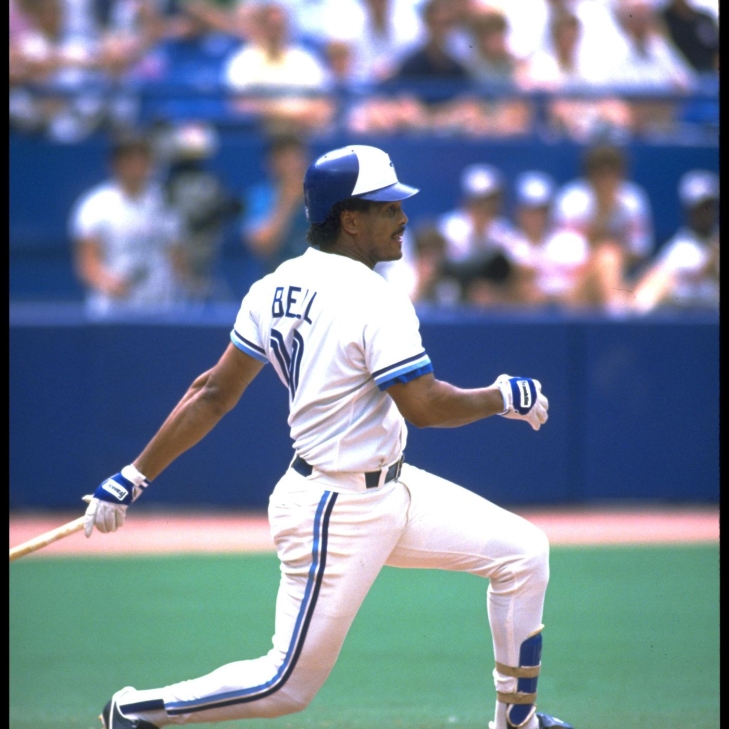
When the Philadelphia Phillies originally signed a raw, teenage George Bell out of the Dominican Republic in 1978, they little realized they were holding the fuse to an absolute offensive explosion that would detonate north of the border. Recognizing his immense, unpolished ceiling, the Toronto Blue Jays plucked Bell away in the 1980 Rule 5 draft. The roster rules forced them to keep the young outfielder on the major league bench for the entire 1981 campaign, well before his pitch recognition was ready, but after a necessary season-and-a-half of refinement in the minors, he returned to Exhibition Stadium for good as the team's everyday left fielder.
Armed with a ferocious, free-swinging right-handed stroke and an intense, combative edge, Bell instantly gave the young expansion franchise a terrifying middle-of-the-order identity. He launched 26 home runs during his first full summer in 1984, followed by a 28-long-ball campaign in 1985 that helped carry Toronto to its first-ever American League East division crown. He sustained that upward trajectory in 1986, hitting a crisp .309 with 31 home runs and 108 RBIs to secure a fourth-place finish in the AL MVP race.
That steady escalation culminated in a spectacular, historic 1987 masterpiece that permanently altered the franchise’s national profile. Battering junior circuit pitching all summer, Bell authored one of the most dominant individual campaigns of the decade, launching a massive 47 home runs and driving in a league-leading 134 runs while batting .308. His breathtaking power display earned him his first All-Star nod, a Silver Slugger, and the 1987 American League MVP Award. For a young organization operating outside the United States, seeing Bell crowned as the absolute best player in the sport was a monumental milestone that signaled Toronto’s arrival as a true baseball powerhouse.
While he never quite replicated those staggering triple-crown metrics, Bell remained a highly productive run producer over the next few seasons, driving in 104 runs in 1989 to steer the Blue Jays back to the postseason and capture another fourth-place MVP finish. Yet, despite his middle-of-the-order consistency, friction began to build behind the scenes. Bell’s fiercely proud, unapologetic temperament frequently clashed with managers, Toronto media, and local fans—particularly when the front office attempted to transition him into a designated hitter role.
Though he earned a second career All-Star selection during a 21-home run campaign in 1990, the emotional distance between the star outfielder and the organization had grown too wide. Following the conclusion of the 1990 season, Bell reached the end of his contract and chose to depart the only major league home he had ever known, hitting the free-agent market to sign a lucrative deal with the Chicago Cubs.
Bell appeared in 1,181 games. He accumulated 1,294 hits, 202 home runs, and 740 RBIs while generating a stellar .286/.325/.486 slash line (122 OPS+). He was inducted into the Canadian Baseball Hall of Fame, and his name was forever enshrined in the Toronto Blue Jays Level of Excellence.
9. Vernon Wells
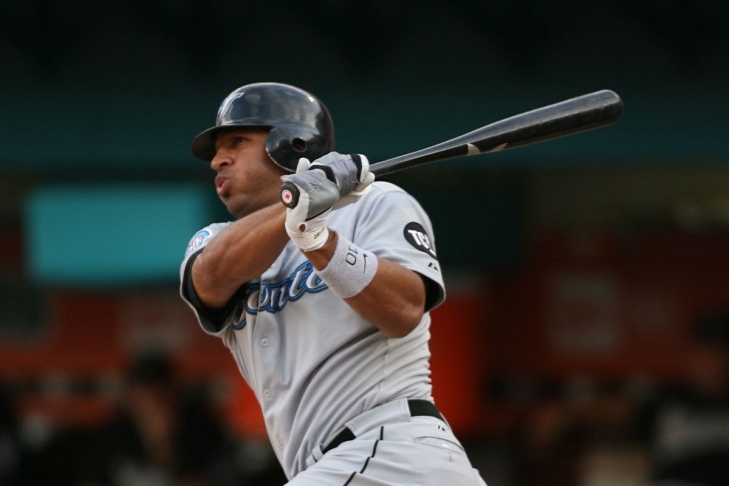
Vernon Wells, chosen fifth overall in the 1997 amateur draft, was intentionally nurtured by the front office to become the flagship of Toronto's future outfield. After gradually advancing through the minor leagues, the Shreveport native took over the starting center field position in 2002 and quickly became one of the most energetic and athletic players in the American League.
His early seasons laid the groundwork for a breakout year in 2003. Throughout the summer, Wells dominated opposing pitchers, having a remarkable season with 215 hits, 49 doubles, 33 home runs, and 117 RBIs. His impressive offensive output resulted in a .317/.359/550 slash line, earning him his first All-Star selection, a Silver Slugger Award, and an eighth-place finish in the AL MVP voting.
While his explosive right-handed bat anchored the top of the lineup, Wells paired his offensive production with premier run prevention. He patrolled the vast turf of Rogers Centre with elite tracking instincts and an exceptional vertical leap, securing three consecutive Gold Glove Awards from 2004 through 2006. He remained a high-ceiling run producer throughout the decade, earning a second All-Star nod during a 32-home-run summer in 2006 and recapturing his elite form in 2010 to smash 31 long balls and land his third career All-Star selection.
Burdened by a massive, back-loaded $126 million contract extension and with the front office eager to reset its payroll flexibility, the Blue Jays shocked the baseball world in January 2011 by orchestrating a blockbuster trade, shipping their long-time franchise center fielder to the Los Angeles Angels.
Wells appeared in 1,393 games with Toronto, accumulating 1,529 hits, 223 home runs, 813 RBIs, and 90 stolen bases while generating a .280/.329/.475 slash line (108 OPS+).
12. Jesse Barfield
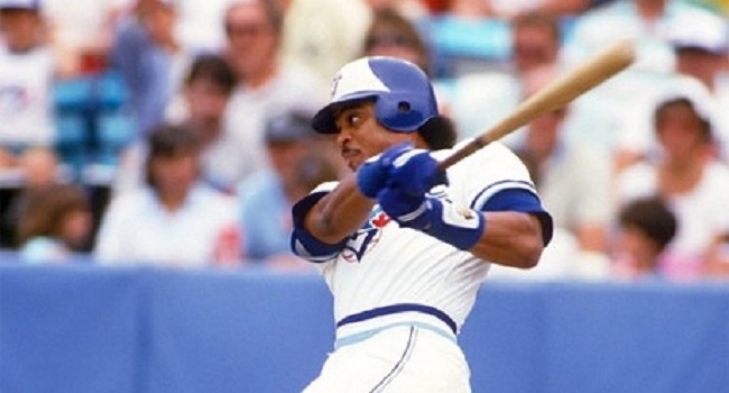
Plucked in the ninth round of Toronto's inaugural 1977 amateur draft, Jesse Barfield was methodically developed by the organization until he reached the majors in late 1981. While he carved out a regular roster spot over the subsequent seasons, it wasn't until 1985 that the fiercely athletic outfielder secured the everyday starting role in right field. Alongside Lloyd Moseby and George Bell, Barfield anchored what became arguably the most complete and feared major-league outfield of the decade.
His true elevation to stardom began during that breakout 1985 campaign. Rocketing into the upper tier of American League run producers, Barfield tallied 189 hits and 27 home runs while leading the expansion franchise to its first-ever division crown and finishing seventh in the AL MVP vote. He immediately eclipsed that stellar baseline with an absolute masterpiece in 1986. Securing his lone career All-Star selection, Barfield weaponized a violent right-handed stroke to blast a league-leading 40 home runs, becoming the first player in Blue Jays history to capture the American League home run crown. The spectacular summer earned him a Silver Slugger Award and a fifth-place finish in the MVP sweepstakes.
Yet, as potent as his bat could be, Barfield’s calling card was an absolute cannon of a throwing arm that struck pure terror into opposing base runners. He didn't merely play right field; he controlled that entire side of the grass, earning back-to-back Gold Glove Awards in 1986 and 1987. His defensive analytics were staggering—he paced the junior circuit in outfield assists four times during his Toronto tenure and twice led all American League outfielders in Total Zone Runs, proving he was criminally under-rewarded with just two physical trophies.
While he added another 28 home runs to his ledger in 1987, his offensive efficiency began a steady decline as strikeout totals mounted. As the front office attempted to re-tool the roster and find a different offensive mix, his long tenure in Ontario came to a sudden conclusion early in the 1989 campaign. On April 30, the Blue Jays executed a straight-up trade, sending their longtime right fielder to the New York Yankees in exchange for left-handed starter Al Leiter.
Barfield accumulated 919 hits, 179 home runs, and 527 RBIs while generating a .265/.335/.484 slash line (120 OPS+) in a Blue Jays uniform.
8. Pat Hentgen
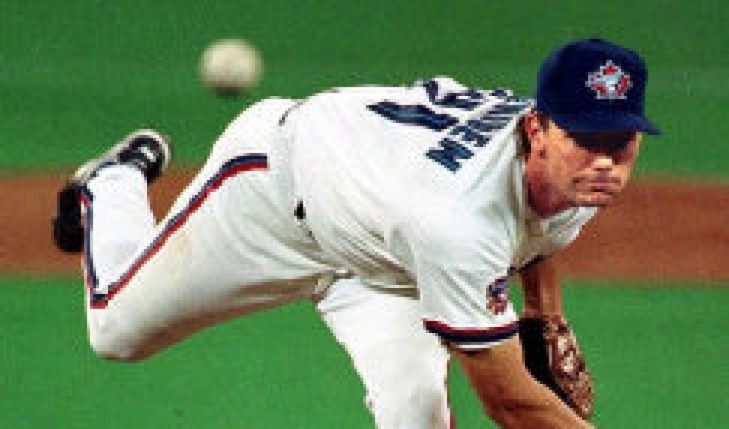
Originally selected by the Toronto Blue Jays in the fifth round of the 1986 draft, Pat Hentgen embarked on a gradual progression through the minor leagues. He made a brief three-game appearance in late 1991 and established a versatile role, appearing in 28 games as a reliever during the historic 1992 World Championship season. Although he was not included on the 1992 postseason roster, the front office recognized his potential as a foundational player. When a spot in the rotation became available the following spring, Hentgen secured it with a determined, competitive spirit that would characterize the next decade of Toronto baseball.
Hentgen’s official breakout during the 1993 season was remarkable. Establishing a reputation for confidently challenging hitters with a robust, sinking fastball and a sharp curveball, he earned a place on the American League All-Star team in his very first summer as a full-time starting pitcher. He achieved an impressive 19–9 record during the regular season, serving as a key component of manager Cito Gaston's rotation. In addition to his outstanding win-loss record, advanced metrics and league voters extensively acknowledged his dominance during that period, resulting in the 24-year-old receiving a distinguished sixth-place ranking in the American League Cy Young Award voting. Unlike the previous autumn, Hentgen was a pivotal factor when October arrived, delivering a masterful six-inning performance to secure the critical Game 3 victory against the Philadelphia Phillies and contribute to Toronto's second consecutive World Series championship.
In the years that followed, the championship core fractured as high-profile veterans departed and the Blue Jays slid into a prolonged mid-1990s rebuild. Yet, Hentgen remained the immovable, local highlight of the entire organization. He beautifully validated his frontline status with a second consecutive All-Star nod during the strike-shortened 1994 campaign, eating up valuable volume while the roster transformed around him.
Everything culminated in his absolute professional masterpiece during the legendary 1996 season. Operating as the undisputed, old-school ace of a rebuilding squad, Hentgen put together an astonishing exhibition of durability. He led all of Major League Baseball by racking up a massive, volume-dense 265.2 innings pitched across 35 starts, throwing an incredible ten complete games and three shutouts. He paired that suffocating workload with a brilliant 20–10 record and 177 strikeouts to comfortably edge out Andy Pettitte for the 1996 American League Cy Young Award, while also claiming The Sporting News Pitcher of the Year honors.
He carried that precise momentum into the 1997 campaign, earning his third career All-Star selection while leading the major leagues yet again in complete games (9), shutouts (3), and total batters faced (1,114). The sheer physical toll of those massive, back-to-back workloads eventually caught up to him over the next two summers, as his efficiency dipped and the front office ultimately traded the veteran workhorse to the St. Louis Cardinals in November 1999. Following successful interleague detours that included an All-Star comeback with Baltimore, Hentgen beautifully returned to Toronto in 2004 to pitch one final, emotional season before officially retiring in a Blue Jays uniform.
His numbers in Toronto showed a 107–85 record, a 4.28 ERA, and 1,028 strikeouts across 307 games. In 2016, he was deservedly enshrined in the Canadian Baseball Hall of Fame.
11. Roberto Alomar
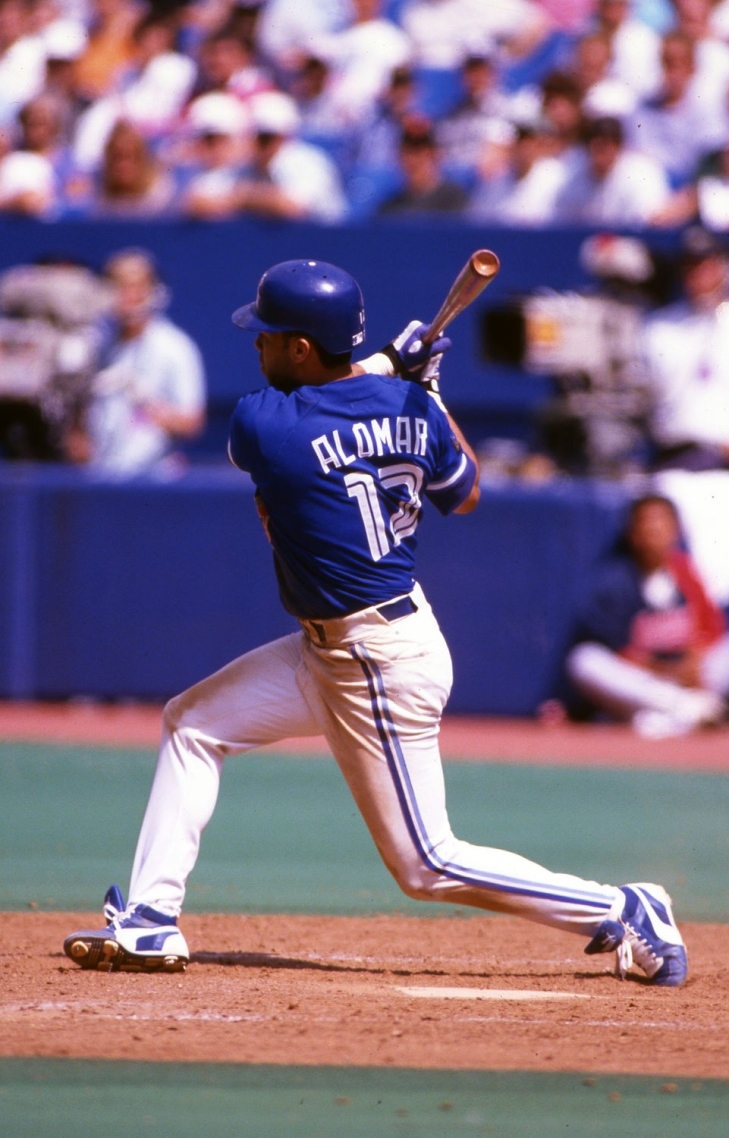
The December 1990 blockbuster trade with San Diego is famously known for bringing Joe Carter, who hit the most iconic home run in Canadian baseball history. However, it was the second player in that deal who truly transformed the franchise's competitive spirit. Roberto Alomar arrived at Toronto alongside Carter, in exchange for Fred McGriff and Tony Fernández, giving the Blue Jays a dynamic, top-tier presence. Over a focused five-year period, he not only strengthened the middle of the infield but also cemented his status as the leading second baseman in the league.
His 1991 summer debut north of the border set a high energetic tone. He stole 53 bases, hit 41 doubles, and achieved 11 triples while leading off the lineup. His vibrant presence drove the Blue Jays to win the AL East and placed him sixth in the AL MVP voting. In 1992, he improved further, batting .310, drawing a career-best 87 walks to boost his on-base percentage to an impressive .405, and scoring 105 runs. He placed sixth in MVP again that fall, but his real highlight was in October. Alomar was named ALCS MVP after a historic, game-tying ninth-inning home run off Oakland's Dennis Eckersley—then scored the series-winning run in the 11th inning of Game 6 of the World Series, leading Canada to its first championship.
The momentum carried directly into a spectacular 1993 masterpiece, marking the absolute apex of his offensive peak. Alomar battered junior-circuit arms all summer, batting a career-high .326 while showing improved power to slug 17 home runs and drive in 93 runs. He added 55 stolen bases to his tally and finished a close third in the AL MVP voting, behind teammate Paul Molitor and winner Frank Thomas.
Alomar earned an All-Star selection and a Gold Glove in every season he played in Ontario, defending the right side of the field with exceptional agility and acrobatic skills that made remarkable plays seem effortless. However, the team's golden era came to a sudden end as the roster aged and the front office shifted toward rebuilding. Frustrated with the team's decline, Alomar, eager to remain competitive, entered free agency after the 1995 season and signed a lucrative contract with the Baltimore Orioles, marking the end of his notable tenure in Toronto.
As a Blue Jay, Alomar secured 832 hits, 55 home runs, 342 RBIs, and 206 stolen bases while authoring a spectacular .307/.382/.454 slash line (123 OPS+),
His accomplishments paved the way for his first-ballot election into the National Baseball Hall of Fame in 2011, as well as his induction into the Canadian Baseball Hall of Fame.
His relationship with the organization changed after an independent investigation into sexual misconduct allegations from his post-playing career, leading MLB to permanently ban him in 2021. The Blue Jays then severed all ties, removing his name from the Level of Excellence, taking down his banner, and un-retiring his number 12 for active use.
7. Jimmy Key
Looking at the early days of the Toronto Blue Jays’ rise in competitiveness, it's tempting to think of their exciting, heavy-hitting offenses. However, the true foundation of their journey from an expansion team to a force in the American League was actually built on the quiet strength of a humble, steady left-hander from Alabama. Jimmy Key didn't need a blazing fastball or dramatic mound antics; he simply outsmarted major-league hitters with careful precision, perfect control, and remarkable mental calmness. He started in 1984 as a flexible rookie reliever, earning ten saves, but the team quickly saw his real potential as a starting pitcher. When he moved into the full-time rotation the next spring, Key became the quietly reliable, highly effective cornerstone of the entire organization.
Key’s emergence as a key front-line pitcher became clear during the groundbreaking 1985 season. In his first summer as a regular starter, the southpaw baffled American League hitters to a 14–6 record, earning his first All-Star selection and leading the Blue Jays to their first-ever American League East division pennant. This breakthrough put him in the spotlight, but his true masterpiece came in the legendary 1987 season. Relying on a devastating slider and a sinking fastball that caused endless weak contact, Key dominated the Junior Circuit. He won the American League ERA Title with a low 2.76 and posted a league-leading 1.057 WHIP, finishing with a solid 17–8 record to place second in the AL Cy Young Award voting and earning The Sporting News Pitcher of the Year honor.
After his outstanding 1987 season, Key had to demonstrate his strong competitive spirit rather than just rely on his usual efficiency. In May 1988, an elbow injury threatened his progress, leading to arthroscopic surgery to remove bone chips. Although he was sidelined for ten weeks, Key made a quick comeback by adjusting his pitching style to overcome any lingering discomfort. He finished the season with an impressive 12–5 record, providing stability for a pitching staff in dire need of his workload.
By 1989, Key pitched a total of 216 innings over 33 starts, securing 13 wins and acting as the steadying force that helped lead the team to the postseason. While players like Dave Stieb made headlines nationally, Key stayed focused on his performance, leading to a personal best of 16 wins in 1990 and anchoring the rotation for a team that was actively building a championship-ready roster.
That consistent development led to a standout 1991 season. With the Midsummer Classic hosted in Toronto, Key achieved his second All-Star nod and was the winning pitcher in the 1991 All-Star Game, played before his home crowd at the newly opened SkyDome. Although Key’s regular-season contributions provided essential stability, his most significant moment came in October 1992. In his last games with the team, he pitched an exceptional Game 4 and secured an important relief win in the 11th inning of Game 6 against Atlanta, giving Toronto its first-ever world championship banner.
Following his 1992 Fall Classic victory, Key entered free agency and signed a four-year deal with the Yankees, maintaining his elite performance with two All-Star selections, a league-leading 17 wins in 1994, and another World Series title in 1996. He finished his 15-year career with the Orioles. His nine-year Toronto stint included a 116–81 record, 3.42 ERA, and 944 strikeouts over 317 appearances.
3. Jose Bautista
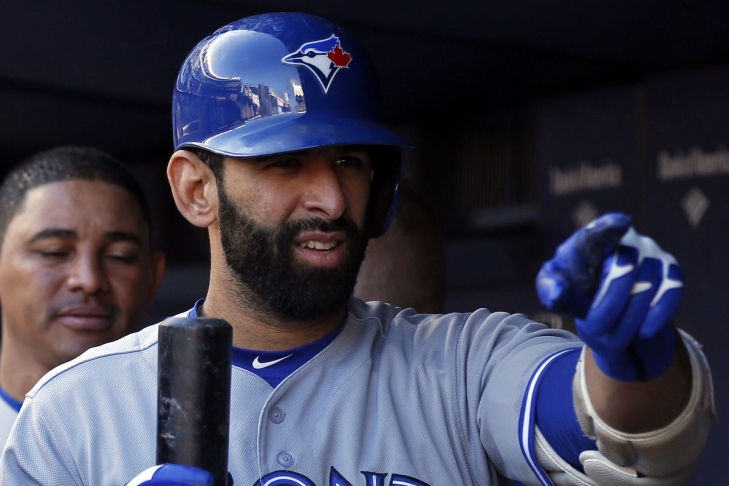
When exploring the unpredictable journey of player development, few stories are as striking as that of a minor-league journeyman suddenly transforming into one of the most formidable power hitters in professional baseball. José Antonio Bautista’s career was a true testament to this, as he was essentially a baseball nomad, moving between teams like Baltimore, Tampa Bay, Kansas City, and Pittsburgh. His big break came when the Toronto Blue Jays acquired him in an overlooked August 2008 trade for a minor league catcher, marking a remarkable turning point in his journey.
Starting the 2009 campaign as an unnoticed fourth outfielder, he dedicated the summer to intense work with hitting coach Dwayne Murphy. Together, they overhauled his swing mechanics, incorporating a bold early leg kick and a swift pull-side bat path. The result was a remarkable transformation—a masterful rebuild of his mechanics—that significantly changed the franchise's direction.
2010 truly marked an incredible season where Bautista showcased his remarkable talent and power. Despite never hitting more than 15 home runs before, he transformed into a home run machine, consistently launching baseballs out of the Rogers Center every day. His extraordinary performance overwhelmed Major League pitching, earning him the home run title with a record-breaking 54 longballs for the franchise. Additionally, he achieved a career-high 124 RBIs, earning a Silver Slugger award and finishing impressively in the MVP voting. All in all, it was a season filled with inspiring achievements and memorable moments.
While some baseball commentators initially doubted his staying power, he proved them wrong in the summer of 2011 with an outstanding season. He proudly claimed his second consecutive home run crown with 43 home runs, and also led the league with 132 walks. His impressive stats included a .608 slugging percentage and a remarkable 1.056 OPS, helping him secure a well-deserved third-place finish in the AL Most Valuable Player voting. His performance truly showcased his incredible talent and determination.
Physical roadblocks temporarily slowed his blistering pace over the next two summers, as highly frustrating wrist and ankle ailments repeatedly cost him playing time in 2012 and 2013—though he still managed to harness enough muscle to clear the 27-homer mark in both abbreviated campaigns.
Once he achieved full, baseline health ahead of the 2014 schedule, his high-leverage production went right back into orbit. He secured his third career Silver Slugger on the strength of a 35-homer, 103-RBI campaign, before blasting 40 home runs in 2015 to lead the Blue Jays out of a 22-year drought and straight back into the postseason.
That intense competitive spirit is what permanently engraved his name into the foundation of Canadian sports history, especially during the dramatic fifth game of the 2015 American League Division Series against the Texas Rangers. As he stepped into the batter's box amidst a chaotic and high-pressure atmosphere, Bautista hit a beautiful, game-winning three-run homer that soared into the left-field sky—releasing a powerful, confident bat flip that shook the stadium and became an iconic symbol in modern Toronto baseball.
Of course, the fierce, energetic nature that helped him rise to fame eventually led to some hit-back moments later in his career. As he lost some of his quickness after the 2016 season, his well-known conflicts with the Rangers sometimes escalated, famously culminating in a surprising punch from Texas infielder Rougned Odor on the infield dirt.
Recognizing a clear physical crossroads, the front office declined to bring him back following a difficult 2017 campaign, initiating a quiet business exit that led to brief, minor cameos with the Braves, Mets, and Phillies before his active journey officially concluded. With Toronto, he accumulated exactly 1,103 hits, 219 doubles, and 766 runs batted in, while trailing only Carlos Delgado with an incredible 288 franchise home runs.
In August 2023, the organization added Bautista to the Level of Excellence.
5. Tony Fernandez
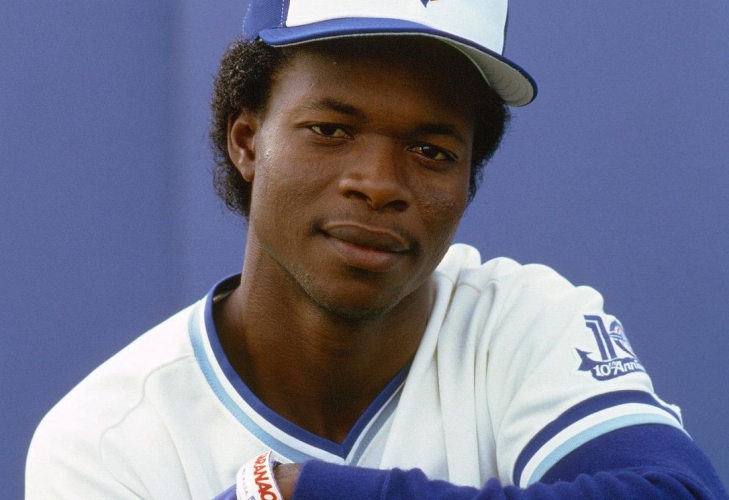
Having discovered and signed out of the renowned shortstop sanctuary of San Pedro de Macorís, Tony Fernandez arrived in Toronto as a slender, highly agile adolescent, destined to redefine the position for an ascending franchise. Making his Major League debut in late 1983, he spent a year in a part-time capacity before definitively assuming the everyday shortstop role in 1985. His timing was impeccable; his first full season at the helm coincided directly with the Blue Jays’ historic breakthrough to their first American League East division title, thereby immediately establishing him as a central figure in the team's transformation from an expansion underdog to a legitimate powerhouse.
From 1985 to 1988, Fernandez established a distinguished period of shortstop performance that garnered the attention of the entire baseball community, earning him consistent votes for the American League Most Valuable Player award. He exemplified exceptional consistency at the plate, achieving at least 160 hits and maintaining a batting average well above .280 in each of those four consecutive seasons. Notably, his 1986 season was extraordinary, during which he recorded a career-high 213 hits—a record for a shortstop in Major League Baseball at that time. His distinctive, low-hand stance and highly disciplined approach rendered him a formidable challenge for opposing pitchers seeking to complete innings.
Although his batting was impressive, it was his defensive prowess on the artificial turf of Exhibition Stadium that elevated his status to that of an icon. Equipped with exceptional flexibility and a unique, sidearm flick throwing motion, Fernandez demonstrated an extraordinary range that enabled him to field ground balls deep in the hole and execute throws across his body with ease. This exceptional defensive skill earned him four consecutive Gold Glove Awards from 1986 to 1989, marking him as the first infielder in Blue Jays history to receive this accolade and supporting a sophisticated defensive strategy that contributed significantly to the success of Toronto's pitching staff.
Fernandez, a three-time All-Star during his initial tenure in Canada, was reluctantly transferred to San Diego following the 1990 season in a major trade intended to reacquire Roberto Alomar and Joe Carter. Nonetheless, his career remained profoundly connected to Ontario. In June 1993, the Toronto Blue Jays orchestrated a mid-season trade to reinstate their cherished shortstop for the final stages of the season. Fernandez responded positively by batting .306 during the concluding period and delivered an exceptional performance in the 1993 World Series, where he set a shortstop record with nine runs batted in, culminating in his first championship victory.
The later stages of his career turned into a nomadic journey through Cincinnati, New York, and Cleveland, but the pull of the True North always brought him back. Fernandez returned for a third stint in 1998, defying Father Time by batting a brilliant .321, followed by a sizzling .328 mark in 1999 that earned him his fifth and final career All-Star appearance. After a brief foray into Japanese baseball, he came full circle in 2001, returning to Toronto one last time to finish his 17-year major league journey exactly where it began, wearing his iconic number 1 uniform.
The Infielder compiled 1,583 Hits, 172 Stolen Bases, and a .297 Batting Average as a Blue Jay and would later be inducted into the Canadian Baseball Hall of Fame. Fernandez is also a member of the Blue Jays Level of Excellence.
2. Roy Halladay

Selected in the first round of the 1995 amateur draft out of high school, Roy Halladay didn't simply soar to major league fame; he had to thoroughly overhaul his entire pitching approach to endure. Making his debut with the Toronto Blue Jays in 1998, the tall right-hander showcased exceptional velocity but lacked a solid technical foundation, leading to a difficult 2000 season with an ERA of 10.64. Instead of panic, he embraced a significant demotion to Single-A to reinvent his arm slot and mindset under pitching expert Mel Queen. From this intense period emerged a masterful pitcher—a relentless, highly efficient sinkerball specialist known as “Doc,” who would become one of the most respected right-handed pitchers of his era.
His breakthrough moment occurred in 2002, marking a decisive year. Halladay made deep, dominating starts a daily habit, pitching 239.1 innings—leading the American League—and finishing with a 19–7 record, which earned him his first All-Star selection.
The pinnacle of his hardware-certified legacy blossomed beautifully during a memorable summer in 2003. That season, Halladay truly showcased old-school resilience and grit. He consistently dominated against junior circuit lineups, leading all of Major League Baseball with an impressive 22–7 record. Additionally, he topped the American League in innings pitched (266.0), complete games (9), and achieved a remarkable 6.38 strikeout-to-walk ratio. These outstanding achievements earned him the highly prized 2003 American League Cy Young Award, truly establishing him as a legendary figure in his organization.
After a challenging two-year period with minor shoulder issues that briefly slowed him down, Halladay bounced back to showcase his elite skills just before 2006. What followed was an incredible four-year streak of dominating performances in the major leagues. From 2006 to 2009, he consistently shut down opposing batters, achieving an impressive 69–33 record. He earned three more All-Star selections, won a WHIP title in 2008, and impressively secured a top-five spot in the Cy Young voting every summer of that period—including a fantastic second-place finish in 2008.
While Halladay was truly exceptional, the small-market team around him wasn't able to break through the tough AL East competition to reach the postseason. Recognizing the natural point in his career to seek new challenges, the beloved ace reached out to management for a fresh start with a team that had a real shot at competing. The front office responded by making a major move, trading him to the Philadelphia Phillies in December 2009 in a blockbuster deal that brought back a talented package including Travis d'Arnaud and Kyle Drabek. Halladay quickly made his mark in his new team’s history, pitching a perfect game and a historic postseason no-hitter on his way to winning his second Cy Young award in the National League.
As a Blue Jay, Halladay accumulated a spectacular 148–76 record, a sharp 3.43 ERA, and 1,495 strikeouts over 2,046.2 innings of work. Advanced analytical anchors heavily reinforce his inner-circle footprint under the dome, anchoring his localized legacy with a magnificent 48.4 franchise pitching bWAR, a total that sits second in club history behind only Dave Stieb. The baseball world was shattered by immense heartbreak in November 2017 when the legendary hurler tragically lost his life in a plane crash over the Gulf of Mexico at just 40 years old.
The final, official acknowledgments of his legendary career on the diamond came precisely as befitted an inner-circle hero. The organization honored his memory by retiring his iconic number 34 on Opening Day in 2018 and inducting him into the Canadian Baseball Hall of Fame and the Blue Jays Level of Excellence.
This was followed by the BBWAA triumphantly electing Roy "Doc" Halladay into the National Baseball Hall of Fame in Cooperstown as a first-ballot legend in 2019.
1. Dave Stieb
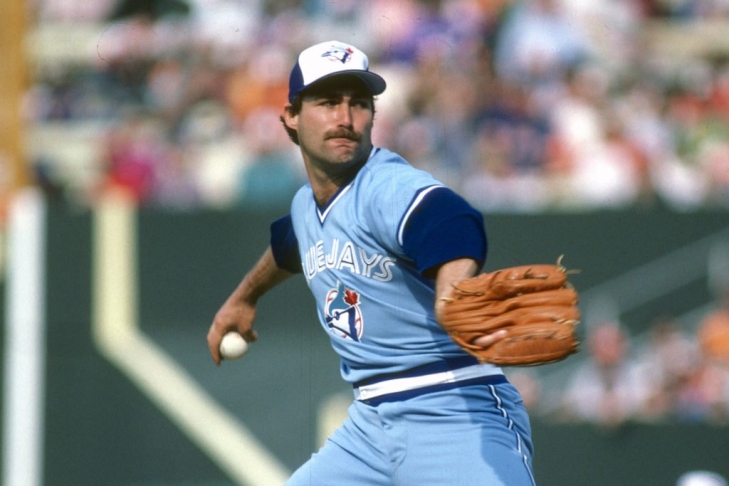
Dave Stieb did not merely lead the original pitching pipeline north of the border; he served as the definitive, formidable cornerstone upon which the entire credibility of the franchise was constructed. Making his Major League debut in 1979 and securing the undisputed ace position the following summer, the former college outfielder combined an exceptionally powerful, high-velocity slider with a renowned determination. Throughout a significant 15-season tenure in Toronto, he established himself as the leading right-handed starting pitcher of the 1980s minor league circuit and the inaugural true superstar in Blue Jays history.
His introductory phase immediately changed opponents’ perceptions of a visit to Canada. Stieb aspired to translate deep-innings durability into a disciplined personal routine, which culminated in his first career All-Star selection in 1980. During the first half of the decade, the young team was burdened by common expansion-roster vulnerabilities, often undermining his exceptional performances and denying him clear opportunities for a 20-win season.
Nonetheless, Stieb's exceptional dominance was incontrovertible; he achieved consecutive 17-win seasons in 1982 and 1983, pitching over 270 innings each summer. Although baseball journalists in the United States frequently overlooked his statistics owing to Toronto's limited media coverage, he commanded significant respect within the sport's community. In 1982, he led the American League with an impressive 19 complete games, which led The Sporting News to officially designate him as the American League Pitcher of the Year. He was a skilled thrower with a sharp arsenal, blending elite movement and an unpredictable temper that sometimes caused friction, but teammates always wanted him on the mound in high-stakes games.
The ultimate pinnacle of his hardware-certified legacy was demonstrated during the historic 1985 campaign. Stieb delivered an exemplary performance in frontline command, systematically neutralizing junior circuit lineups to achieve the American League ERA title with a microscopic 2.48 over 265.0 innings. This accomplishment anchored the Toronto Blue Jays to their inaugural postseason appearance and the East Division championship. He consistently maintained a position at the top of the rotation throughout the remainder of the decade; by the end of the 1980s, no pitcher in Major League Baseball had accumulated more total victories than his 140, with the exception of Jack Morris.
Local historians recognize that his long march toward a championship ring was paved with severe physical heartbreak. On the final afternoon of the 1990 regular season, Stieb righted his historic ledger of narrow near-misses by throwing the first and only official no-hitter in franchise history against Cleveland.
However, a brutal series of chronic back ailments and shoulder problems restricted him to minimal frames in 1991 and 1992. As the front office aggressively constructed the star-studded roster that would ultimately capture the 1992 Fall Classic, their long-time ace was forced into a painful structural backseat, initiating a quiet first business exit that winter when he signed with the Chicago White Sox before a brief 1993 retirement. Though he famously orchestrated a highly nostalgic, four-game comeback cameo with Toronto five years later in 1998, his peak chapters had long since closed.
He continues to be the all-time, undisputed leader of the Blue Jays in numerous categories, including wins (175), innings pitched (2,873.0), strikeouts (1,656), starts (408), and complete games (103). Advanced analytics strongly support his status as an all-time great, highlighting his exceptional career with a remarkable 56.9 career pitching bWAR—the highest in the organization's history, just surpassing Roy Halladay's impressive peak.
The final punctuation on his legacy was his induction into the Toronto Blue Jays Level of Excellence and the Canadian Baseball Hall of Fame, ensuring Dave Stieb's legendary status remains a cornerstone of Toronto baseball lore.
4. Carlos Delgado
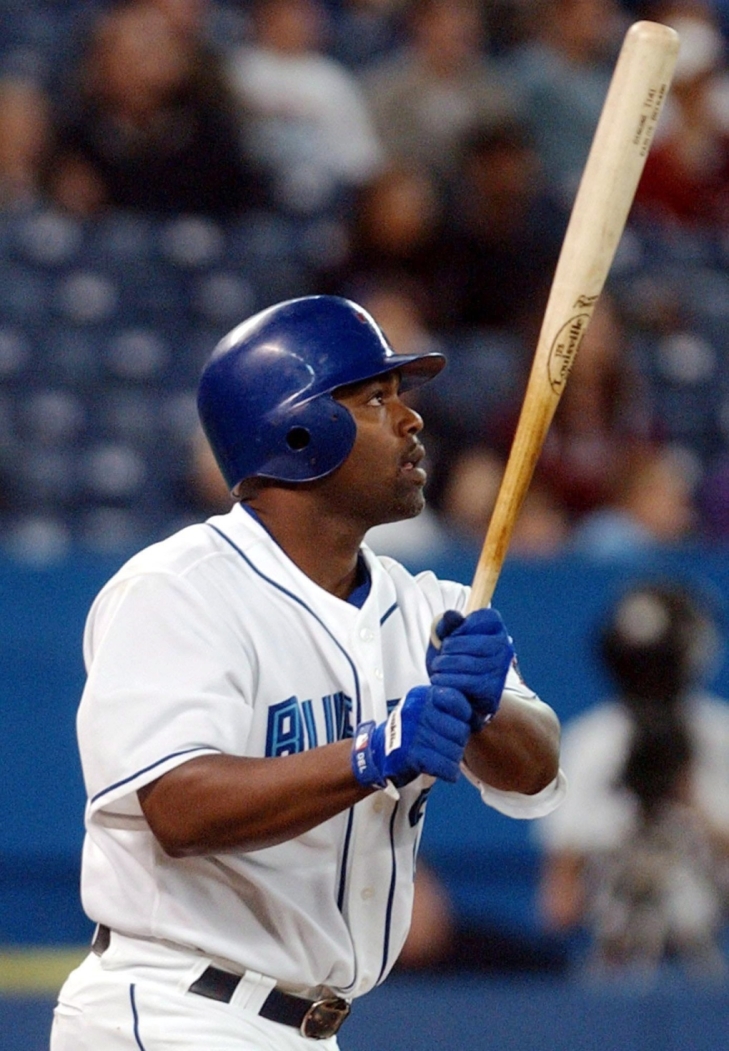
Having departed from Puerto Rico as a teenager in 1988, Carlos Delgado did not merely drift into the middle of the lineup; he had to meticulously analyze and reconstruct his identity to unlock his full competitive potential. Originally recognized as a highly rated catcher, he made brief appearances during the historic 1993 World Championship run—earning a championship ring despite participating in only two regular-season games—and spent the subsequent two summers transitioning through left field and designated hitter roles while adjusting to minor league requirements. Once he firmly secured the first base position ahead of the 1996 season, he evolved into an exceptional force, functioning as the steadfast and elite leader of Toronto’s offense for nearly a decade.
His introductory phase as an everyday threat quickly set a foundation of intense and exciting run production. Delgado made facing major-league pitching a regular part of his daily routine, enjoying an impressive ten-year streak of hitting at least 30 home runs in 1997. He systematically overwhelmed American League lineups, combining powerful swings with an excellent eye, and he surpassed the 100-RBI mark six times while playing for the Blue Jays.
His advanced efficiency filters wowed during a historic 2000 showcase, when he hit .344, 41 home runs, and led with 57 doubles to win the Hank Aaron Award.
He was even more electric in the 2003 season. Delgado delivered an outstanding display of power and skill, especially on a historic September night against Tampa Bay, when he became the only player in baseball history to hit four home runs in a game with just four at-bats. That remarkable season saw him lead Major League Baseball with an impressive 145 runs batted in, along with 42 home runs and a powerful 1.019 OPS. His exceptional performance earned him the prestigious Sporting News Major League Player of the Year Award, his third Silver Slugger, and a very close second for the American League MVP.
While Delgado was an absolute superstar anchoring the middle of the order, the franchise fell into a sharp structural decline following the legendary 1993 triumph, failing to build a legitimate postseason contender around their premier slugger. Despite his historic run production, he never got to experience a single playoff frame north of the border.
By the conclusion of the 2004 contract schedule, the organization was aggressively shedding payroll to engineer a total roster reconstruction under general manager J.P. Ricciardi. With management lacking the fiscal volume to match his elite market valuation, the front office initiated a definitive business exit by letting their icon walk into the open market, paving the way for him to sign a lucrative free-agent deal with the Florida Marlins before cementing his late-career legacy with the New York Mets.
Delgado made 1,423 appearances as a Blue Jay, with 1,413 hits, 343 doubles, and a notable career slash line of .282/.392/.556. He holds franchise records in several categories, including offensive bWAR (39.4), plate appearances (6,018), runs scored (889), home runs (336), and RBIs (1,058). In July 2013, his banner was raised into the Toronto Blue Jays Level of Excellence, and in 2015, he was inducted into the Canadian Baseball Hall of Fame.
286. Edwin Encarnacion
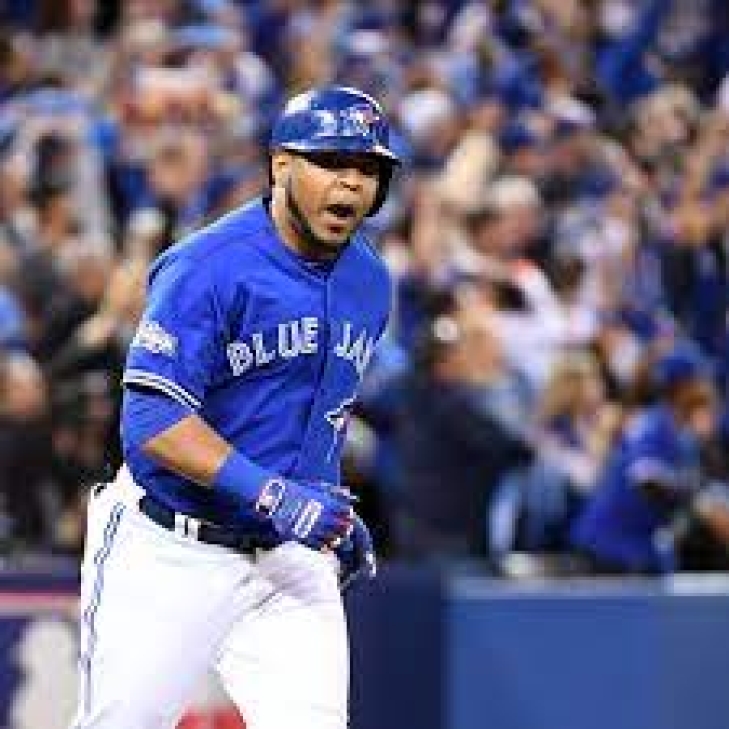
The Texas Rangers drafted Edwin Encarnacion in 2000, but a year later he was traded to the Cincinnati Reds, where he would eventually make his Major League debut for in 2005. With the Reds, the Dominican showed promise, but his hitting never reached its potential, and he was not good in the field. A mid-season trade in 2009 to Toronto changed everything for Encarnacion, though that was not instant.
Toronto was not high on Encarnacion and was forced to take him in the trade. A Free Agent in 2011, Encarnacion did not receive any offers, and Toronto took another chance on him, signing him, but now using Encarnacion mainly as a Designated Hitter. The focus on hitting benefited Encarnacion, who would break out in 2012 with a 42-Home Run/110 RBI year. Encarnacion had another good year in 2013 (36 HR and 104 RBI), proving he was no fluke.
Encarnacion went to his second All-Star Game in 2014, but the year after, where he was not an All-Star selection, he was part of the meat of a contending Blue Jays team. The DH blasted 39 Home Runs and 111 RBIs and had his fourth straight .900 OPS year. He stayed with Toronto one more year, where he went to his third All-Star, matched his highest Home Run total (42), and won his first RBI Title with 127.
Encarnacion signed with Cleveland in 2017 and gave them three 30 HR/100 years, though the last one saw him traded during the year to Seattle. He wound down his career with the Mariners and White Sox for one year in 2020.
Encarnacion has 424 Home Runs and 1,261 RBIs, which for a power hitter is very good and better than many slugging Hall of Famers, but he was not a multi-faceted player, and this will keep him out of Cooperstown.
Could It Be the Blue Jays’ Year?
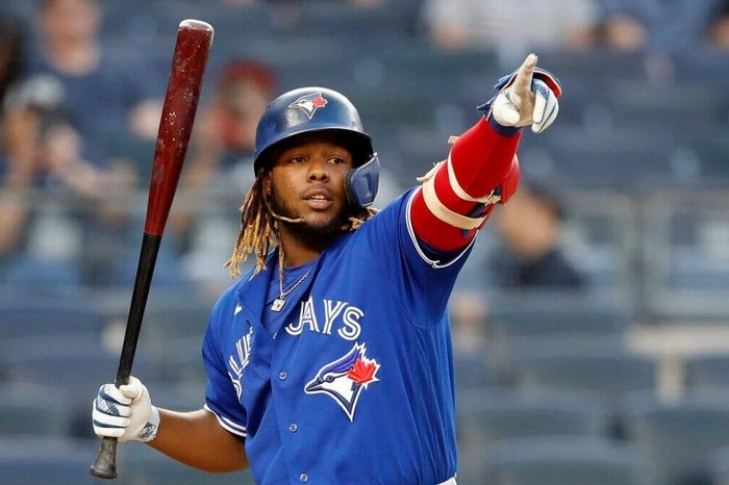
The Toronto Blue Jays are bidding for their first World Series title since 1993. There is confidence within the Canadian city that their long wait for the major prize could end this year.
The Blue Jays, the only team from Canada playing in the Major League Baseball (MLB), have been performing impressively in the American League (AL). They have a winning record of 45-42 (.517), which gives them a strong chance of reaching the playoffs.
Toronto supporters will be hoping their team can go further than they did in 2020. Their World Series dream fell at the first hurdle in the postseason as they were beaten by the number one seeds in the AL, Tampa Bay. The team from Florida went all the way to the World Series where they lost to the LA Dodgers.
The regular season is now well underway and the Blue Jays have MLB odds on bet365 of +2200. Those odds indicate Toronto are not one of the frontrunners for the title. The Dodgers are the favorites in the betting to defend their crown, however, as recent results show, it is no easy feat.
Toronto may enjoy being the underdogs this year. There will be less pressure on their shoulders if they do reach the playoffs. When successful in 1992 and 1993, they were the fourth seeds in the AL, so maybe avoiding one of the top seeds could prove advantageous.
Stats Suggest Toronto Are Better Than Record Indicates
Home runs have not been a problem for the Blue Jays so far in 2021. As of the halfway stage in the regular season, no team in the AL has scored more. If that continues, they are going to prove a dangerous match for any team in the MLB.
Another strong guide for assessing a team's performance on the field is the difference between home runs scored and conceded. Toronto has a +79 record. This would indicate they are a little unfortunate to have a .517 record. If they continue to score so strongly, that percentage should improve.
Their first aim will be to try to win the AL East division. They currently trail Boston Red Sox (604) and Tampa Bay (.589). The series against those two rivals will prove crucial in determining who lands the title.
Vladimir Guerrero Jr Is the Man Who Can Fire Toronto To Success
The standout performer for Toronto in 2021 has been Vladimir Guerrero Jr. He has had an outstanding season with the bat. He was named in the AL’s All-Star team where he was the starting first baseman.
Guerrero Jr, a son of the MLB’s Hall of Famer Vladimir Guerrero Sr, leads the league in On-Base Plug Slugging (OBS). He is one of only three players who are over 1.0 in 2021 along with Shohei Ohtani and Fernando Tatis Jr.
The 22-year-old has an exciting future in the league. Blue Jays fans will be hoping he helps deliver a lot of success with the Canadian franchise, including at the end of the current campaign.
This year’s World Series begins on October 26 and if a seventh game of the series is needed, that will take place on November 3.
275. Devon White
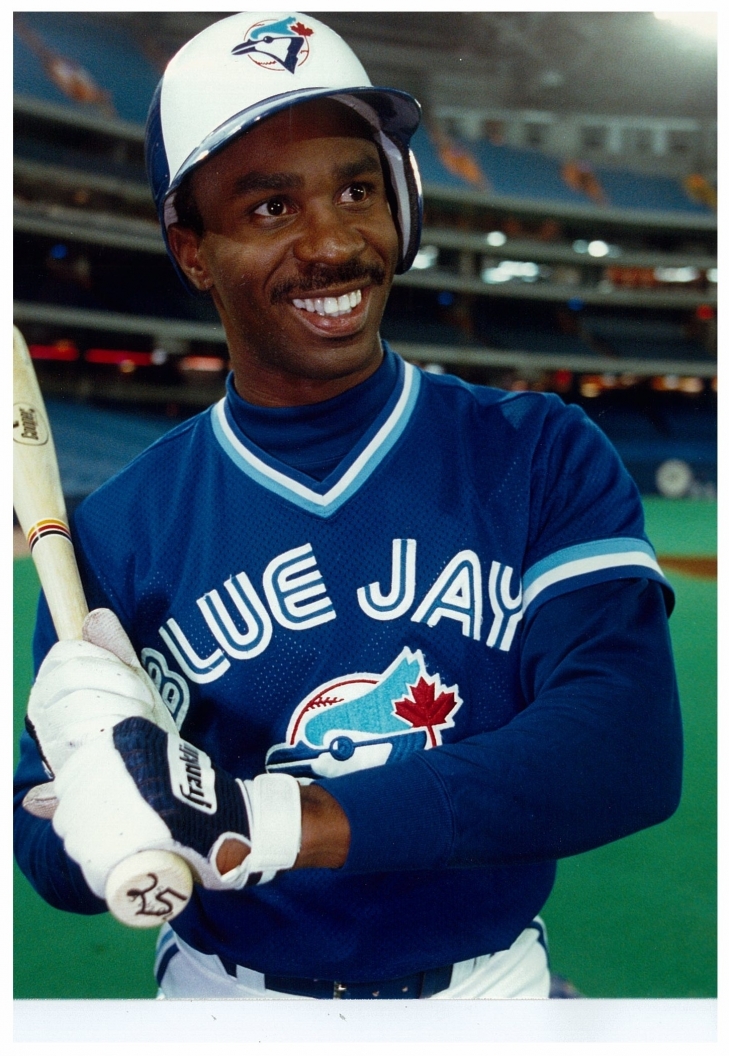
Born in Jamaica and raised in the United States, Devon White had a great career where the Outfielder used his speed and defensive skills to perform at a high-end level for over a decade.
202. Tony Fernandez

Does the city of San Pedro de Macorís in the Dominican Republic have a formula to create infielders for Major League Baseball?
If they do, one of the best ones they ever gave us is Tony Fernandez.
Fernandez was scouted and signed by the Toronto Blue Jays and made his Major League debut in 1983. As the Jays improved in the mid-80s, the Dominican Shortstop was one of their stalwarts. From 1985 to 1988, he would receive MVP votes, showing off strong contact, hitting, and defense. In all of those four seasons, Fernandez was named a Gold Glove winner, and he would at least bat .280 with 160 Hits.
An All-Star for the Blue Jays three times, he was dealt to the San Diego Padres in a major trade after the 1990 season, and Fernandez was an All-Star for the fourth time in 1992. The Shortstop again was a Blue Jay in 1993, when he was part of their first World Series Title.
Following that collection of the ring, he was a Cincinnati Red, New York Yankee, and Cleveland Indian before going back north as a Blue Jay and going to his fifth and last All-Star Game. Fernandez went to Milwaukee and returned to Toronto before retiring in 2001.
The Infielder compiled 2,276 Hits, 246 Stolen Bases, and a .288 Batting Average.
157. Jimmy Key
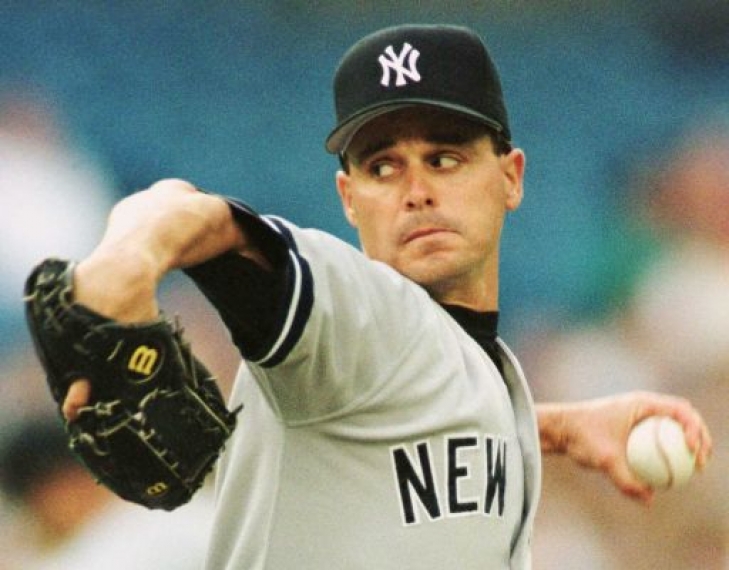
Jimmy Key played his entire career in the American League East, dividing between three teams, Toronto, New York, and Baltimore, finding success with all three clubs.
Key’s foray into the Majors first came with the Blue Jays, where he was used in late relief as a rookie. That year ended his bullpen days, as Toronto promoted him to the starting rotation, and he was an All-Star. Key would remain an essential figure in the Jays’ staff, winning the ERA Title in 1987 when he was the runner-up for the Cy Young. Key was again an All-Star in 1991, and the following year, he helped take the Jays to their first World Series win.
Key was not in Toronto in 1993 to defend their title as he joined their rival, New York, as a Free Agent. The Pitcher went to have the best back-to-back years of his career, earning All-Star nods in pinstripes in both '93 and '94, and finishing fourth and second in Cy Young voting, respectively. In that runner-up year, he led the AL in Wins (17) and was also sixth in MVP voting.
In his final two years in baseball (1997 & 1998), he was with Baltimore and was an All-Star in what was his penultimate year. Key left the game with a 186-117 record.
