

 Not in Hall of Fame News
Yes, we know that this is taking a while! As many of…
 Not in Hall of Fame News
2002 SEMI-FINAL RESULTS: Thank you for your participation in the Pro Football…
 Not in Hall of Fame News
Yes, we know that this is taking a while! As many of…
 Not in Hall of Fame News
We are diligently working away at Notinhalloffame on revising our Football lists…
 Not in Hall of Fame News
We are diligently working away at Notinhalloffame on revising our Football lists…
 Not in Hall of Fame News
We are diligently working away at Notinhalloffame on revising our Football lists…
 From the Desk of the Chairman
Sports fans thrive on calculating strategy, reading momentum, and maximizing every tactical…
 From the Desk of the Chairman
The 2026 NFL season is two weeks old and the division races…
 From the Desk of the Chairman
Sports communities are often built around things that have nothing to do…
 From the Desk of the Chairman
Every hall of fame eventually faces the same problem. The selection process…
 From the Desk of the Chairman
Pete Rose died in 2024. On May 13, 2025, Commissioner Rob Manfred…
 From the Desk of the Chairman
For NFL fans, game day offers much more than three hours of…





100 Active Potential Football Hall of Famers
-
 #8 Overall, Von Miller, Dallas Cowboys, #3 Defensive Lineman/Linebackers: Pass Rushers2025 Pre-Season Rank #6, 2024 Pre-Season Rank #7, 2023 Pre-Season Rank #4, 2022 Pre-Season Rank #7, 2021 Pre-Season Rank #8, 2020 Pre-Season Rank…
 -
 #24 Overall, Budda Baker, Arizona Cardinals, Free Safety, #1 Safety2025 Pre-Season Rank #28, 2024 Pre-Season Rank #43, 2023 Pre-Season Rank #78, 2022 Pre-Season Rank #86, 2021 Pre-Season Rank #113, 2020 Pre-Season Rank…in Safeties
 -
 #1 Overall, Aaron Donald: Los Angeles Rams, Defensive End, #1 Defensive Lineman/Linebackers/Pass Rushers2020 Pre-Season Rank #15, 2021 Pre-Season Rank #5, 2022 Pre-Season Rank #3, 2023 Pre-Season Rank #2. PEAK 2017-21 Well, look who’s back! When…
 -
 #44 Overall, Minkah Fitzpatrick, New York Jets, Free Safety, #3 Safety2025 Pre-Season Rank #43, 2024 Pre-Season Rank #56, 2023 Pre-Season Rank #63, 2022 Pre-Season Rank #99, 2021 Pre-Season Rank #108, 2020 Pre-Season Rank…in Safeties
Visit the Fictitious Halls of Fame!


You May Also Like...
EDITOR’S CHOICE

 DDT's Pop Flies
When the veterans committee (VC), officially convening as the Contemporary Baseball Era…



 Live Music Head
Project/Objectan interview with André Cholmondeleyby Live Music HeadOriginally published at timessquare.com on…

LATEST RANKINGS





MOST POPULAR RANKINGS
















Committee Chairman
Our All-Time Top 50 Cleveland Browns have been revised to reflect the 2023 Season.

Yes, we know that this is taking a while!
As many of you know, we at Notinhalloffame.com are slowly generating the top 50 of each major North American sports team. That being said, we have existing Top 50 lists and consistently look to update them when necessary and based on necessity. As such, we are delighted to present our post-2023 revision of our top 50 Cleveland Browns.
As for all of our top 50 players in football, we look at the following:
1. Advanced Statistics.
2. Traditional statistics and how they finished in the National Football League.
3. Playoff accomplishments.
4. Their overall impact on the team and other intangibles that are not reflected in a stat sheet.
Last year, the Browns returned to the playoffs but could not get past their first game. There were no new entries and two elevations in our Top 50.
As always, we present our top five, which saw no changes:
1. Jim Brown
2. Otto Graham
3. Joe Thomas
4. Lou Groza
5. Ozzie Newsome
You can find the entire list here.
Reigning Defensive Player of the Year, Myles Garrett rocketed to #12 from #32.
Left Tackle Joel Bitonio, on a six-year Pro Bowl streak, climbed to #18 from #24.
Notably, Running Back Nick Chubb remains at #44.
We thank you for your continued support of our lists on Notinhalloffame.com.
11 Important Features to Consider When Choosing a Street Legal Cart
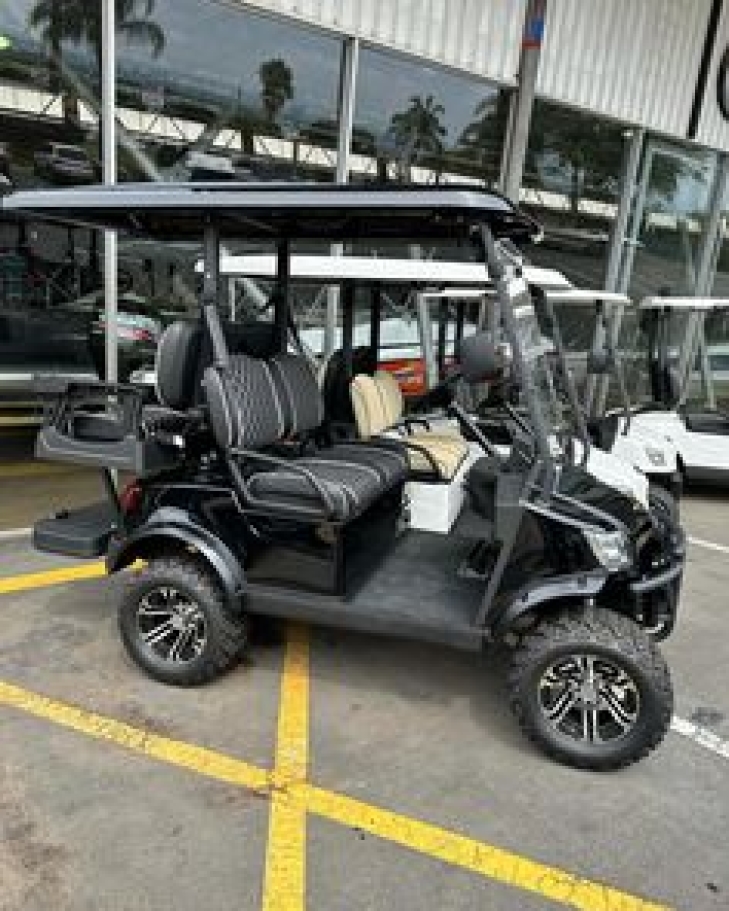
Picking a street-legal golf cart is an exciting choice, offering a novel mix of comfort, style, and functionality. Whether exploring a gated local area, getting things done, or just partaking in a comfortable ride, a street-legal golf cart can be a magnificent investment.
Notwithstanding, with the range of choices accessible, it's fundamental to consider a few basic features to guarantee you select the suitable model for your requirements. This article will dig into eight significant perspectives while picking a street-legal golf cart, giving a comprehensive guide to imminent purchasers.
Battery life and power source
The power source of your golf cart is a crucial variable. Most street-legal golf carts are electric, albeit a few models burn gas. A street legal electric carts are well known for their environmental advantages and lower operating costs. While considering an electric golf cart, consider battery life and charging times closely.
A durable battery guarantees you can travel further distances without frequent re-energizes, making your rides more helpful. Furthermore, consider the accessibility of charging stations if you intend to involve your cart in various regions.
Build quality and durability
Putting resources into a well-constructed, strong golf cart is fundamental for longevity and performance. Search for models produced using excellent materials, such as rust-proof aluminum or steel outlines. The cart's body should endure weather conditions and territory types without significant wear and tear.
Furthermore, look at the suspension system and tires, guaranteeing they are adequately hearty to deal with the streets comfortably. A rugged build will save you from frequent maintenance and replacement costs over the long haul.
Comfort and ergonomics
Comfort is vital, particularly assuming you intend to utilize your golf cart frequently or for broadened periods. Adjustable seats, adequate legroom, and a roomy lodge add to general comfort.
Moreover, consider features like a smooth suspension system and simple to-arrive controls. These components upgrade the comfort level, making your rides charming and decreasing weaknesses.
Customization and accessories
One of the engaging parts of street-legal golf carts is the capacity to tweak them, as indicated by your inclinations. Search for models that offer a scope of accessories and customization choices.
Famous augmentations incorporate weather nooks, updated seating, sound systems, and custom paint occupations. These upgrades customize your cart as well as further develop functionality. For example, adding a weather nook can make your cart usable in different weather conditions, while a sound system can upgrade your general driving experience.
Speed and performance
The speed and performance of your cart are also significant contemplations. Guarantee the cart has a satisfactory speed increase and deals with abilities for protected and productive travel.
Performance can likewise be affected by engine power, weight limit, and, generally speaking, plan. A well-performing golf cart guarantees you can stay aware of traffic and navigate various landscapes effortlessly.
Safety features
Safety should never be compromised; present-day street-legal golf carts have different safety features. Beside the basic requirements, for example, seat belts and mirrors, search for extra safety upgrades. These could incorporate high-level braking systems, steadiness control, and built-up roll cages.
A few models offer safety lights and intelligent materials to develop permeability during night or low-light conditions further. Putting resources into a cart with comprehensive safety features gives an inward feeling of harmony to both the driver and travelers.
Maintenance and warranty
Consider the maintenance requirements and warranty presented by the producer. Customary maintenance is urgent to keep your golf cart in ideal condition. Understanding the simplicity of getting to parts and the administration's accessibility can save you time and bother.
Moreover, a hearty warranty can safeguard your investment, covering fixes and replacements for explicit parts over a specific period. A decent warranty mirrors the maker's confidence in their item's quality and reliability.
Seating limit and setup
Before settling for any street-legal golf cart, it's essential to consider the seating capacity and arrangement to match your necessities. A street legal electric carts range from 2-seater to 6-seater models. Contemplate the number of travelers you intend to ship consistently.
A more giant limited cart with extra seating may be more reasonable for families or gatherings. Furthermore, a few carts offer flexible seating setups, such as back confronting or foldable seats, which can give additional freight space when required.
Storage options
More than adequate capacity is a pivotal component for some golf cart proprietors, particularly if you intend to involve the cart in tasks, driving, or sporting activities. Search for models offering different stockpiling solutions, such as under-seat compartments, back freight boxes, or rooftop racks.
Having adequate capacity permits you to convey food, individual things, or, in any event, sporting gear easily. Think about the kind of stockpiling that best suits your lifestyle and guarantee the cart gives sufficient room to your requirements.
Eco-friendliness
For environmentally-conscious purchasers, the eco-kind disposition of a street-legal golf cart can be a significant thought. Electric golf carts are, by and large, more eco-accommodating than their gas partners because of lower emanations and calmer activity. Notwithstanding, inside the electric classification, there are additional varieties of environmental effects.
A few models offer energy-productive features, for example, regenerative braking, which assists with broadening battery life and lessening energy utilization. Assessing the ecological impression of your golf cart can add to more practical transportation decisions.
Technological features
Present-day street-legal golf carts come outfitted with technological features that upgrade comfort, safety, and enjoyment. Consider models that proposition cutting-edge innovation like GPS routes, Bluetooth networks, and contact screen shows. These features can give constant data, diversion, and improved command over your cart's capabilities.
Furthermore, some golf carts accompany incorporated applications that permit you to screen battery levels, maintenance timetables, and, in any way, shape, or form, control specific cart parts. Embracing these technological advancements can significantly work on your general experience.
Conclusion
Picking the ideal street-legal golf cart requires an intensive comprehension of different features to guarantee it addresses your issues and inclinations. By cautiously evaluating these twelve central issues, you can pursue an educated choice and put resources into a street-legal golf cart that offers reliability, functionality, and enjoyment for quite a long time. Whether for day-to-day drives, sporting use, or cruising around your local area, a well-picked golf cart can be an essential and excellent expansion to your lifestyle.
Our All-Time Top 50 Cincinnati Bengals Have Been Revised to Reflect the 2023 Season

Yes, we know that this is taking a while!
As many of you know, we at Notinhalloffame.com are slowly generating the top 50 of each major North American sports team. That being said, we have existing Top 50 lists and consistently look to update them when necessary and based on necessity. As such, we are delighted to present our post-2023 revision of our top 50 Cincinnati Bengals.
As for all of our top 50 players in football, we look at the following:
1. Advanced Statistics.
2. Traditional statistics and how they finished in the National Football League.
3. Playoff accomplishments.
4. Their overall impact on the team and other intangibles that are not reflected in a stat sheet.
Last year, the Bengals were unable to make the playoffs, though did have a winning record (9-8). 2023 still saw four new names enter the Top 50 with two elevations.
As always, we present our top five, which saw no changes:
1. Anthony Munoz
2. Ken Anderson
3. Geno Atkins
4. Ken Riley
5. Boomer Esiason
You can find the entire list here.
Running Back Joe Mixon, now with the Houston Texans, moved up from #35 to #30.
Quarterback Joe Burrow advanced to #36 from #48.
The four new entries are:
Wide Receiver Tyler Boyd, now a Tennessee Titan, enters at #43.
Linebacker Germaine Pratt debuts at #44.
Three-time Pro Bowler (in only three years) Wide Receiver Ja’Marr Chase comes in at #49.
The last entry is defensive end Trey Hendrickson, another three-time Pro Bowler (again, in only three seasons).
Offensive Lineman Rich Braham, Wide Receiver Darnay Scott, Defensive End Michael Johnson, and Defensive Tackle Mike Reid fell off the Top 50.
We thank you for your continued support of our lists on Notinhalloffame.com.
Tips for Competing in a Casino Online for Real Money in Australia

Casino Tournaments: How to Participate and Win in a Casino Online for Real Money in Australia
Online casinos regularly organize tournaments for their players. These competitions make casino games more exiting. They also help gaming platforms attract new players. Top casinos like zoome3.casino organize different competitions. As a result players with different preferences can choose the right option.
Learn how to participate and win in casino tournaments at legit Australian online casinos.
Types of Online Casino Tournaments
There are many types of casino tournaments. The most popular types are:
- Many gamers play pokies online in Australia. And it is obvious that online casinos that accept Australian players launch slot tournaments. Here players can try new games and win big prizes. Also, this is a good option to find out what's the best online pokies in Australia?
- Table games. Top casinos also organize competitions for various table games. In particular, many players prefer poker tournaments. The prizes in these competitions may be huge.
- Live dealer games. Players often choose live dealer games. Therefore, it is not a surprise that live dealer tournaments are in this top.
Casinos set special requirements for their tournaments. In particular, they can offer free participation or set an entrance fee. In the last case, such participation fees create a prize pool for winners.
How to Participate in Tournaments at Aussie online casinos
You can find tournaments at Aussie online casinos. First, you need to find an interesting tournament. We recommend to look at the following criteria:
- Games that count for this tournament
- Betting limits for these games
- Entrance fees
- Prize pool
When you have found the right tournament, you should carefully learn the rules. If everything is clear, you can register. In most cases you should:
- Create an account on the gaming platform
- Complete a verification procedure and
- Register at a tournament and
- Pay fees if needed
After these steps you can start preparing for the tournament. In particular, you must learn game rules and get familiar with game mechanics. You also should think about your budgets and betting strategies.
Strategies for Winning Online Casino Tournaments
There are several useful strategies that help players to win in casino tournaments. First, you must pay attention to your bankroll. When you manage your bankroll wisely you can stay in the game for a longer period.
You must also create several strategies for various games. For example, you can choose:
- Conservative approach with small bets or
- Aggressive approach with high bets
In addition, you need to check available bonuses for your tournament. Such promotions can boost your bankroll and give you more chances.
Finally, you should remember about your time management. Regular breaks will help you to gamble responsibly and avoid compulsive decisions.
Conclusion: Try Tournaments at legit Australian online casinos
Casino tournaments offer more excitement and they can be a great addition to traditional games. When you play casinos online for real money in Australia, you can also check available competitions.
To get the best gaming experience, gamers should also remember responsible gambling principles.
